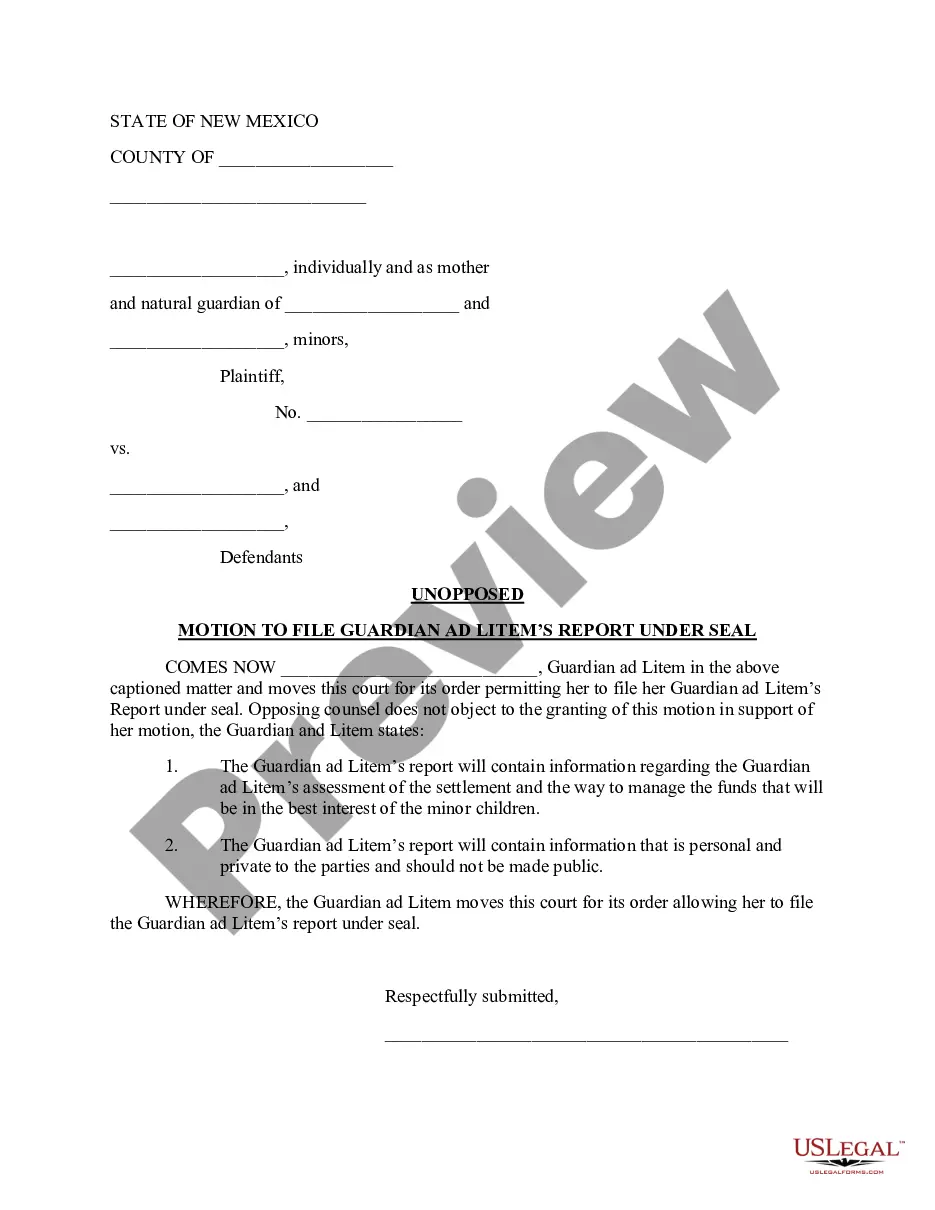
Offense Instruction 35.2 Using or Carrying a Firearm During a Violent Crime or Drug-Trafficking Crime
Understanding this form
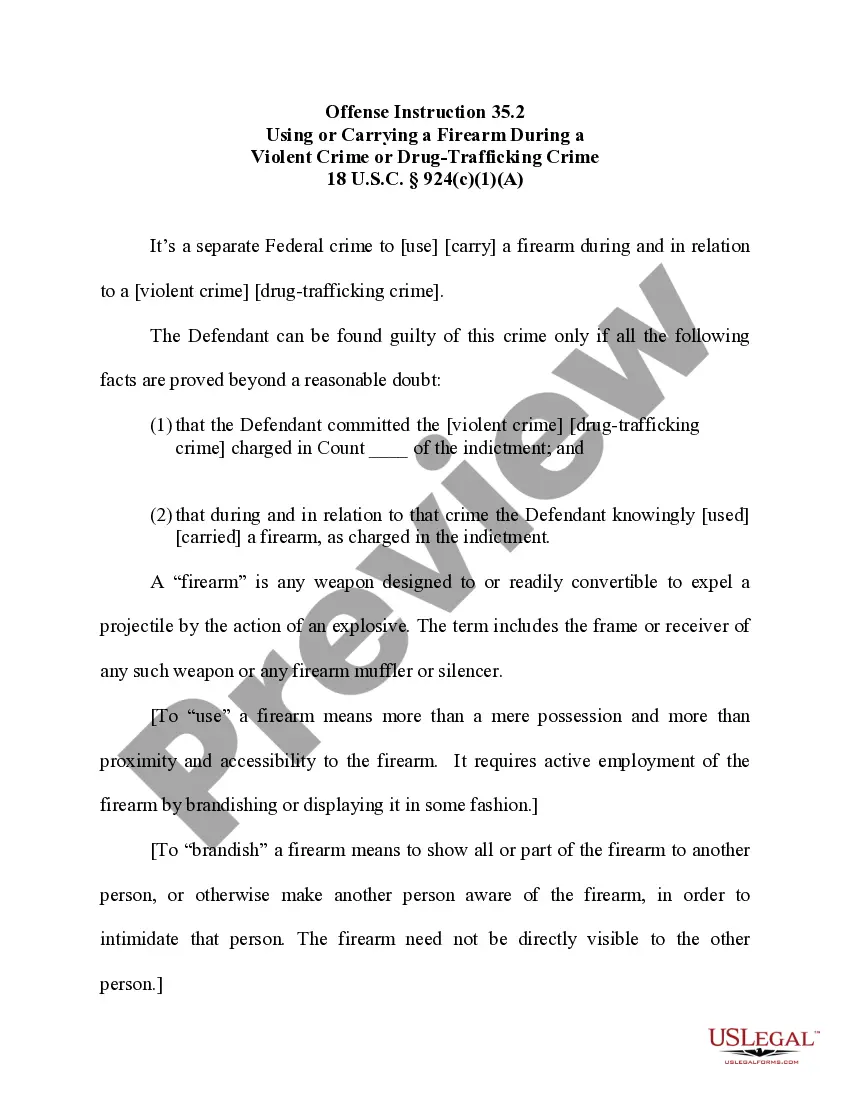
This form is the Offense Instruction 35.2, which outlines the legal implications of using or carrying a firearm during a violent crime or a drug-trafficking crime under federal law. It specifically addresses the criteria needed to establish guilt in these cases. Unlike other legal forms, this instruction is intended for jury considerations, guiding jurors on how to evaluate the defendant's actions concerning firearm use during a crime.
Key parts of this document
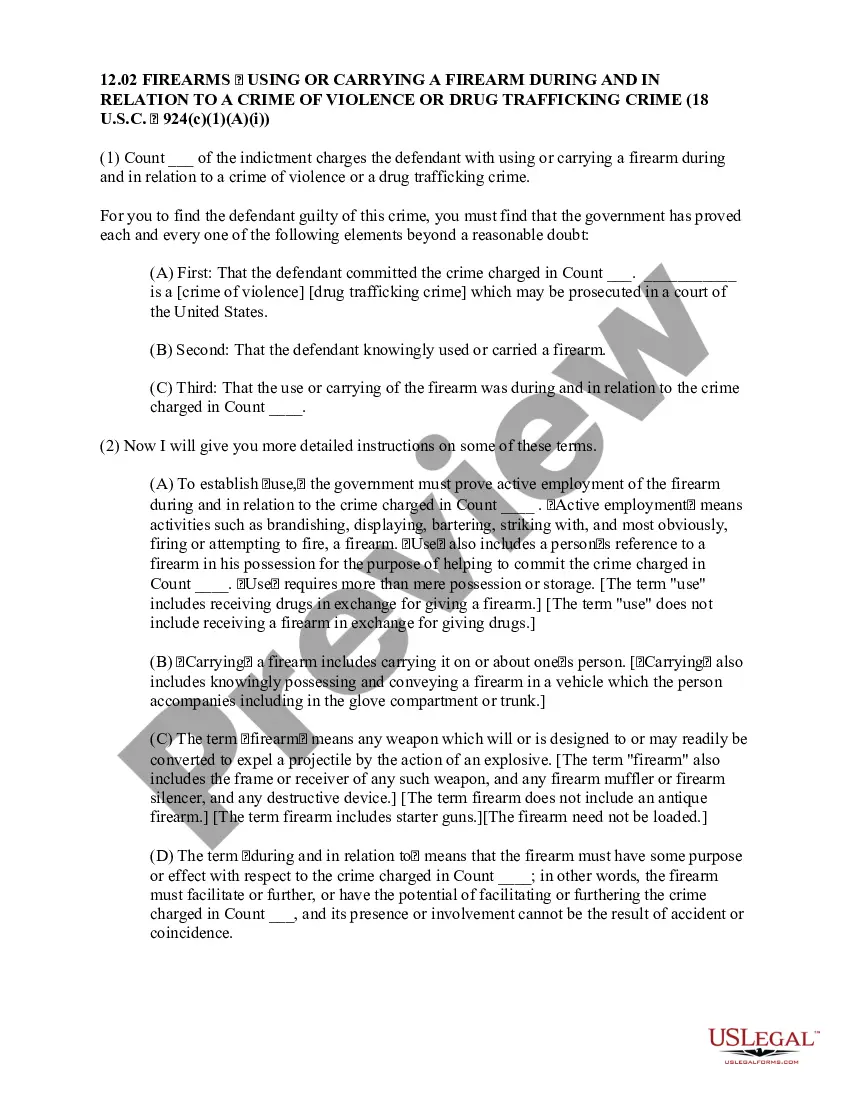
- Definition of the terms "use" and "carry" as they relate to firearms.
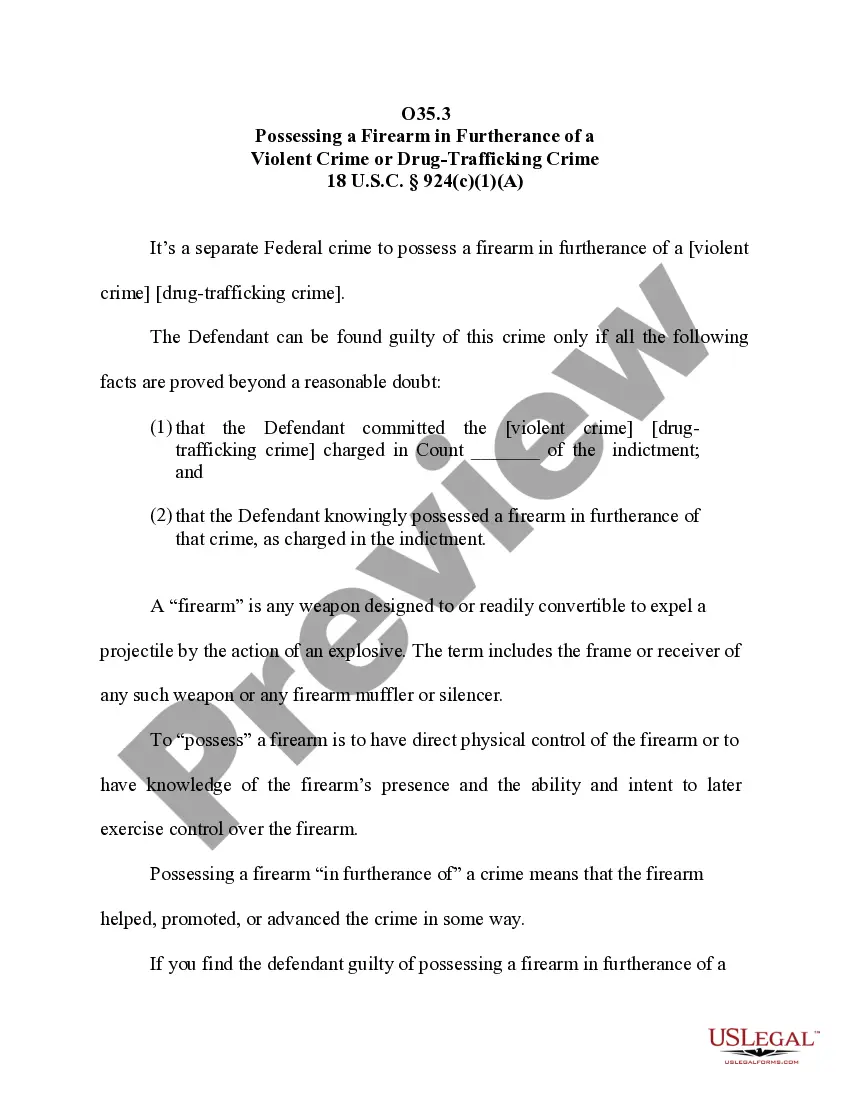
- Criteria for establishing guilt, including the necessity to prove the commission of a violent crime or drug-trafficking crime.
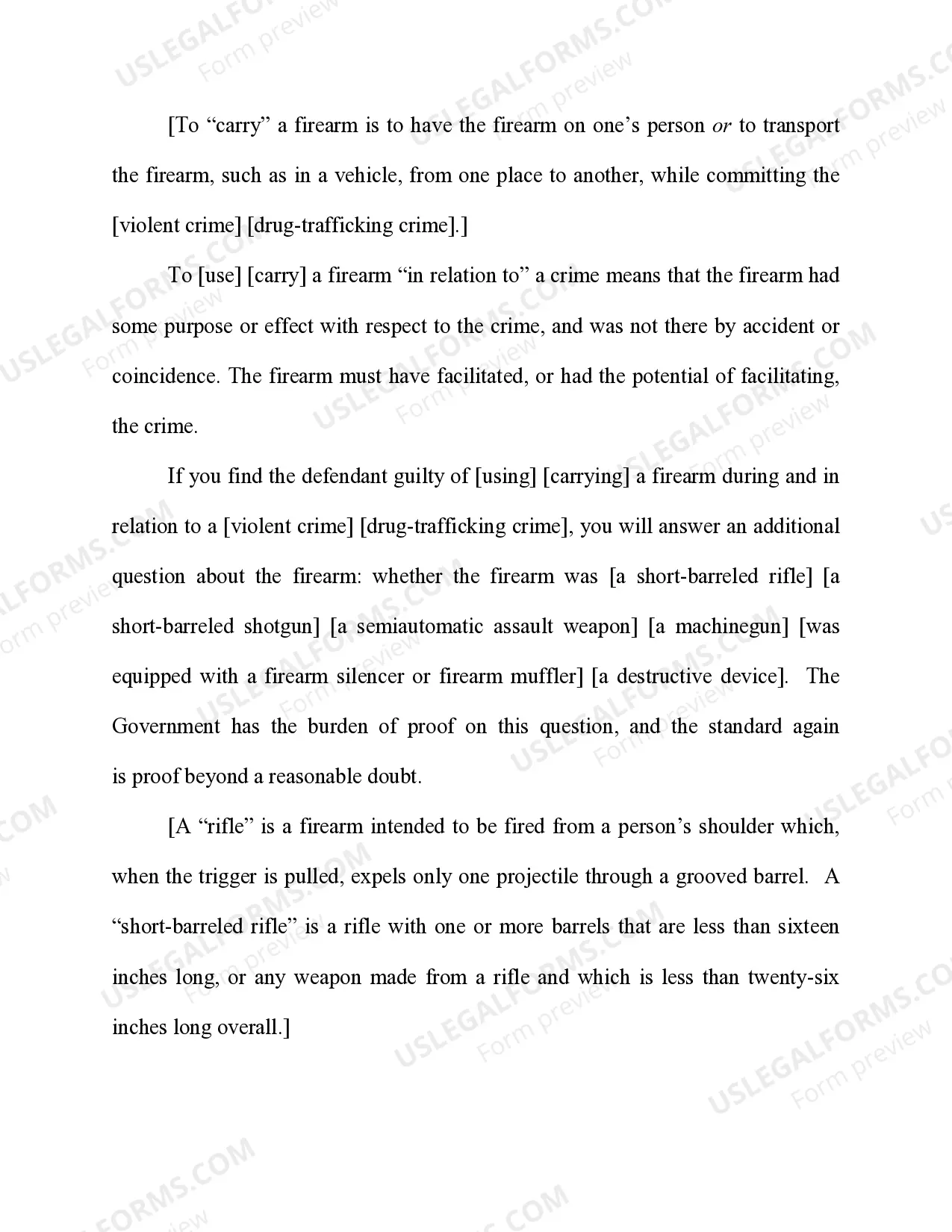
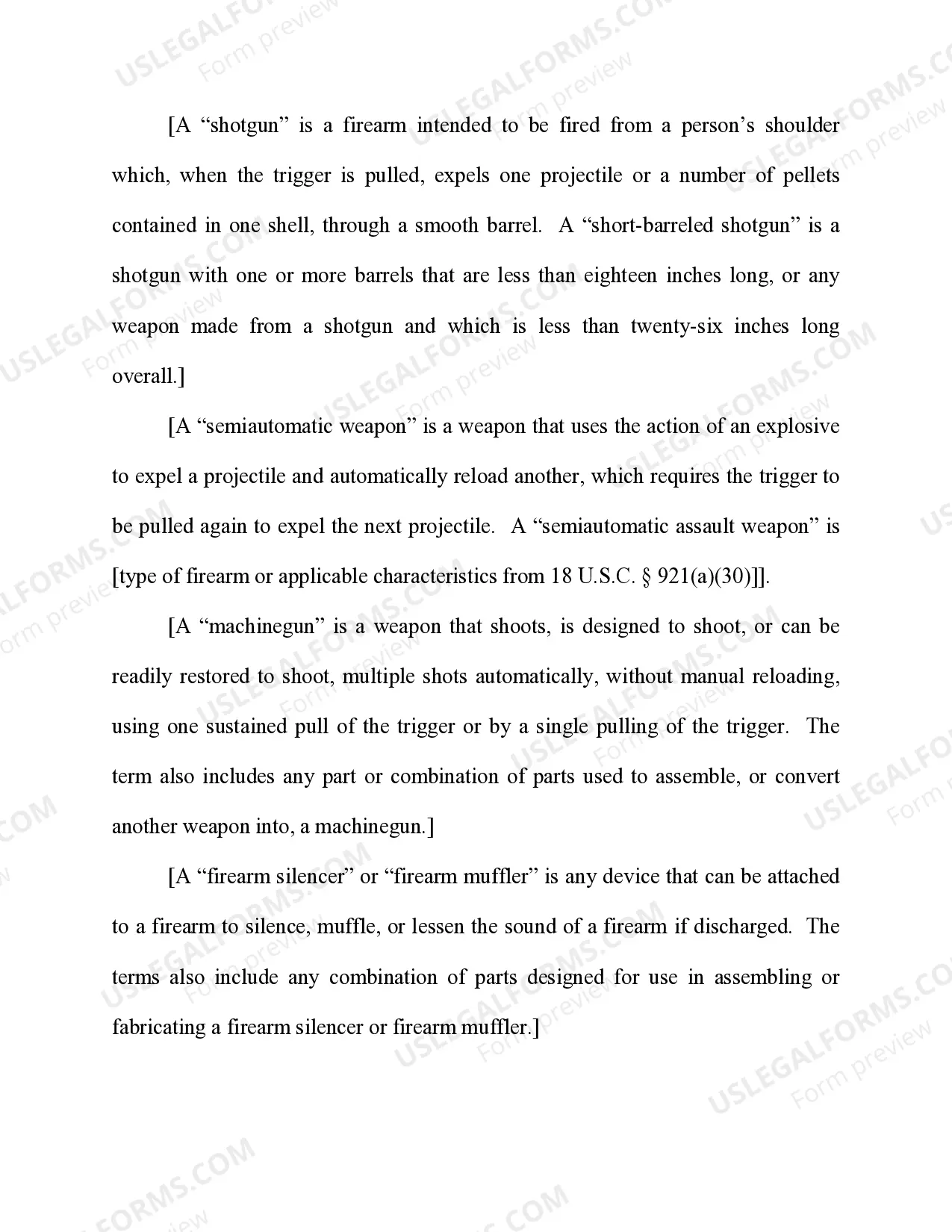
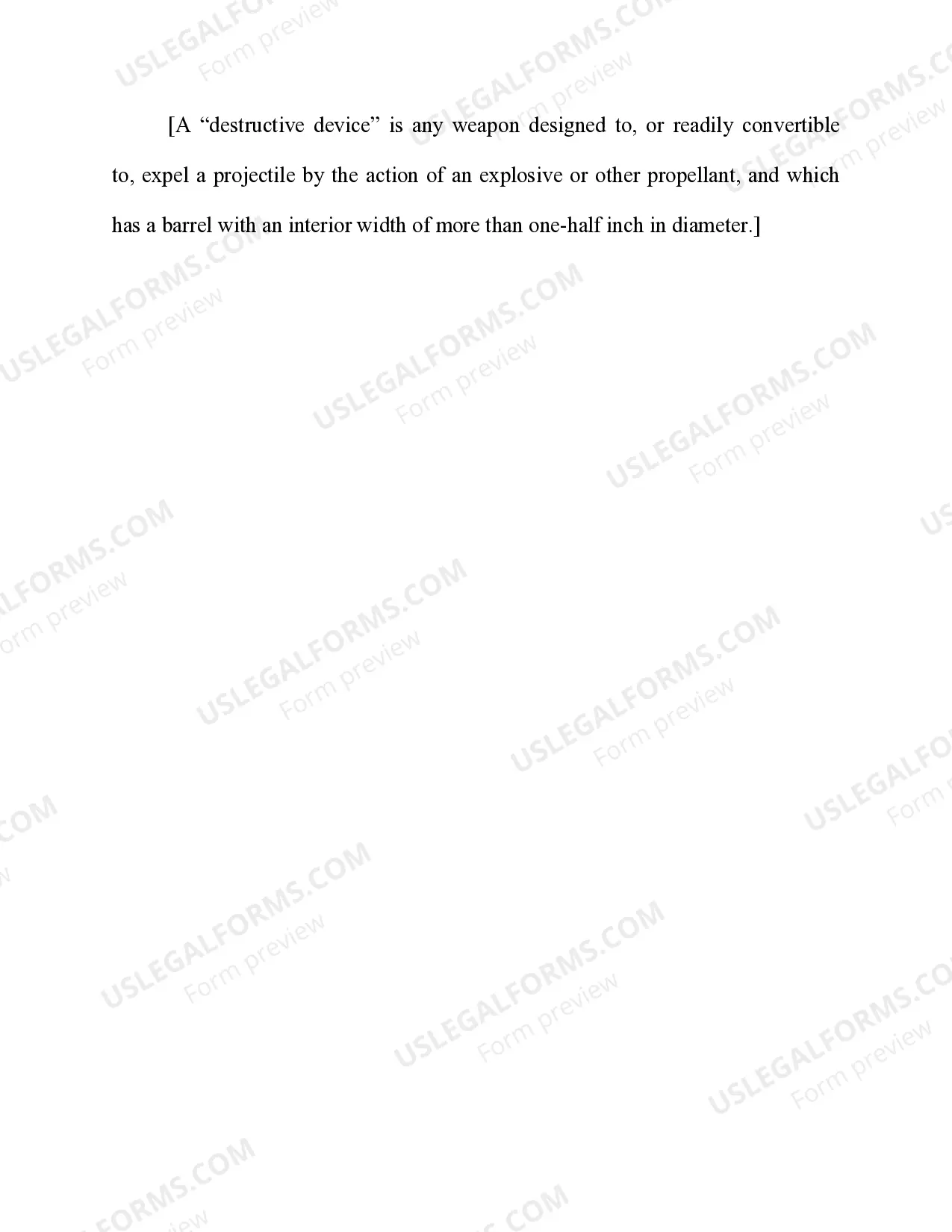
- Clarification on what qualifies as a firearm and its various classifications, including short-barreled rifles and machine guns.
- Specifications for what it means to "use" a firearm in relation to a crime.
- Burden of proof requirements for additional questions about the type of firearm involved.



When to use this document
This form should be used in federal criminal cases where the defendant is accused of using or carrying a firearm during the commission of a violent crime or drug-trafficking offense. It is crucial for guiding jurors in their deliberations and helps ensure that all relevant factors are considered when determining the defendant's guilt.
Who can use this document
- Jurors involved in federal cases concerning violent crimes or drug offenses.
- Legal professionals, including judges and attorneys, who require a clear understanding of the legal standards for firearm use in criminal cases.
- State and federal prosecutors aiming to outline the charges related to firearm use during criminal activities.
Steps to complete this form
- Identify the specific violent crime or drug-trafficking crime charged in the case.
- Determine whether the defendant knowingly used or carried a firearm during and in relation to that crime.
- Assess whether the firearm involved meets the legal definitions provided in the instruction.
- Evaluate the purpose of the firearm's use in relation to the crime.
- Complete any additional inquiries required by the court regarding the firearm's classification, if applicable.
Does this document require notarization?
This form usually doesn’t need to be notarized. However, local laws or specific transactions may require it. Our online notarization service, powered by Notarize, lets you complete it remotely through a secure video session, available 24/7.
Get your form ready online
Our built-in tools help you complete, sign, share, and store your documents in one place.
Make edits, fill in missing information, and update formatting in US Legal Forms—just like you would in MS Word.
Download a copy, print it, send it by email, or mail it via USPS—whatever works best for your next step.
Sign and collect signatures with our SignNow integration. Send to multiple recipients, set reminders, and more. Go Premium to unlock E-Sign.
If this form requires notarization, complete it online through a secure video call—no need to meet a notary in person or wait for an appointment.
We protect your documents and personal data by following strict security and privacy standards.

Make edits, fill in missing information, and update formatting in US Legal Forms—just like you would in MS Word.

Download a copy, print it, send it by email, or mail it via USPS—whatever works best for your next step.

Sign and collect signatures with our SignNow integration. Send to multiple recipients, set reminders, and more. Go Premium to unlock E-Sign.

If this form requires notarization, complete it online through a secure video call—no need to meet a notary in person or wait for an appointment.

We protect your documents and personal data by following strict security and privacy standards.
Common mistakes
- Failing to clearly explain the difference between "use" and "carry" in the context of the crime.
- Neglecting to establish the connection between the firearm and the violent or drug-trafficking crime beyond mere presence.
- Overlooking definitions of firearm classifications that may impact the case's outcome.
Why use this form online
- Accessible 24/7 for immediate download, enabling quick preparation for federal cases.
- Editable forms that allow legal professionals to tailor content to specific case needs.
- Reliability, since all templates are drafted by licensed attorneys to meet legal standards.
Legal use & context
- This instruction is meant for federal jury trials and is critical in ensuring that jurors understand the ramifications of firearm use in criminal cases.
- Failure to correctly apply these instructions can result in improper verdicts, affecting the justice process.
- Jurors must be adequately informed to decide based on the law and evidence presented.
Looking for another form?
Form popularity
FAQ
In order to prove that a defendant is guilty of possessing a firearm by a narcotic addict, a prosecutor must be able to establish the following elements: The defendant knowingly owned, purchased, received or possessed a firearm. AND at the time the defendant did this, he or she was addicted to a narcotic drug.
73 months for offenders convicted only under section 924(c). 132 months for offenders also convicted of an offense not carrying a mandatory minimum. 207 months for offenders determined to be career offenders. 330 months for offenders convicted under multiple counts of section 924(c).
Federal law prohibits gun trafficking and straw purchasing,22 including prohibiting any person from selling firearms to a person the seller knows or has reasonable cause to believe intends to engage in trafficking and straw purchasing.
Without aggravating factors, carrying a loaded firearm in public is a misdemeanor punishable by a maximum sentence of one year in jail and / or a $1,000 fine.
What is the Average Sentence for a Federal Gun Charge? The most common federal weapons charges are for possessing a firearm by a felon or someone otherwise prohibited from possessing one. Penalties for such crimes range from 10 years to life in prison, but the exact penalty varies based on the precise circumstances.
Section 924(c)(1) makes it a crime for anyone to knowingly possess a firearm in furtherance of a drug-trafficking crime or crime of violence. To prove the element of possession, the government must show that a defendant knowingly possessed a firearm and that possession was ?in furtherance? of the underlying crime.
Drug trafficking is generally defined as the production, distribution, and sale of illegal drugs including cocaine, LSD, PCP, heroin, and marijuana. On the other hand, drug possession refers to simply being caught while having illegal drugs.
Federal drug trafficking is a crime that carries significant penalties as anyone convicted of federal drug trafficking in Maryland is subject to mandatory minimum sentencing. Even a first conviction of interstate drug trafficking could bring a minimum sentence of 5 years in prison.