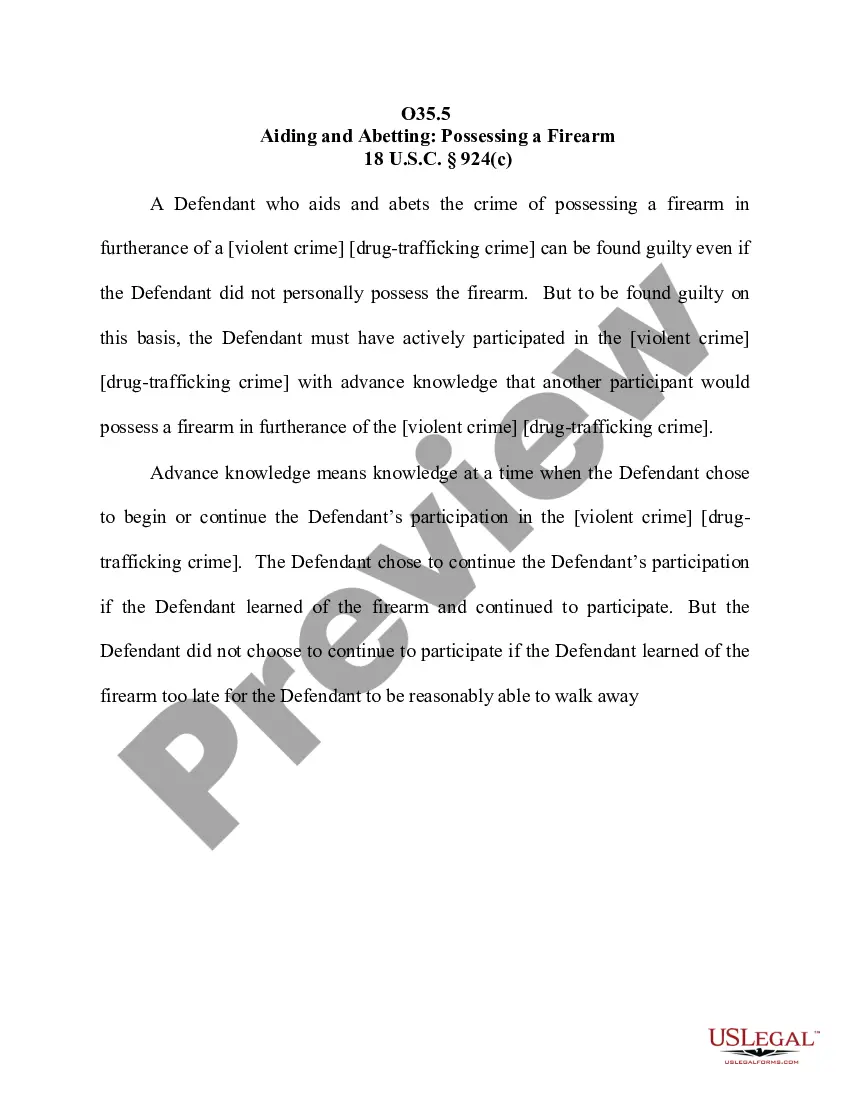
Aiding and Abetting: Possessing a Firearm
Overview of this form
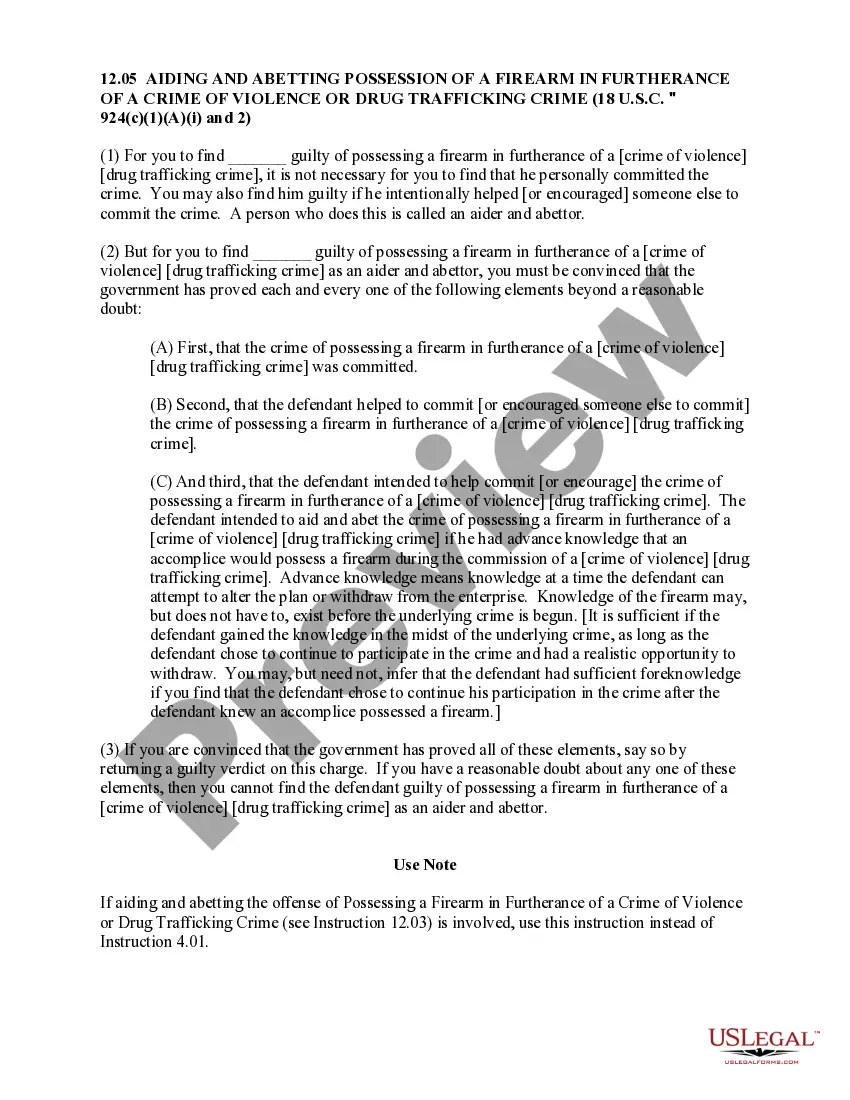
The Aiding and Abetting: Possessing a Firearm form provides important legal instructions regarding the nuances of aiding and abetting someone in possessing a firearm during a violent or drug-trafficking crime. This form distinguishes the legal responsibilities of defendants who may not directly handle a firearm but still play a crucial role in the crime if they have advance knowledge of the firearm's possession. Understanding this form is essential for those involved in cases related to firearm possession in conjunction with criminal activities.
Form components explained
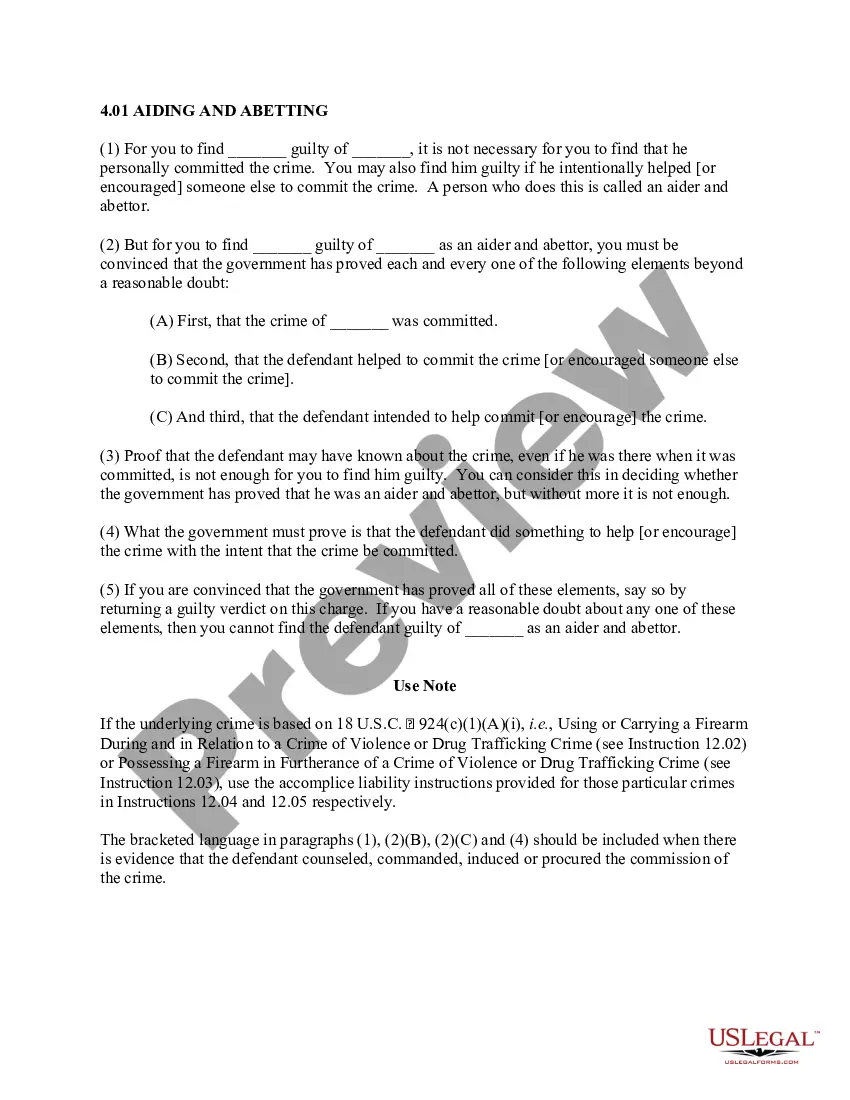
- Definition of aiding and abetting in the context of firearm possession.
- Explanation of the requirement for advance knowledge of the firearm.
- Clarification of how participation in the relevant crime influences legal liability.
- Specification of the nature of the associated violent or drug-trafficking crime.
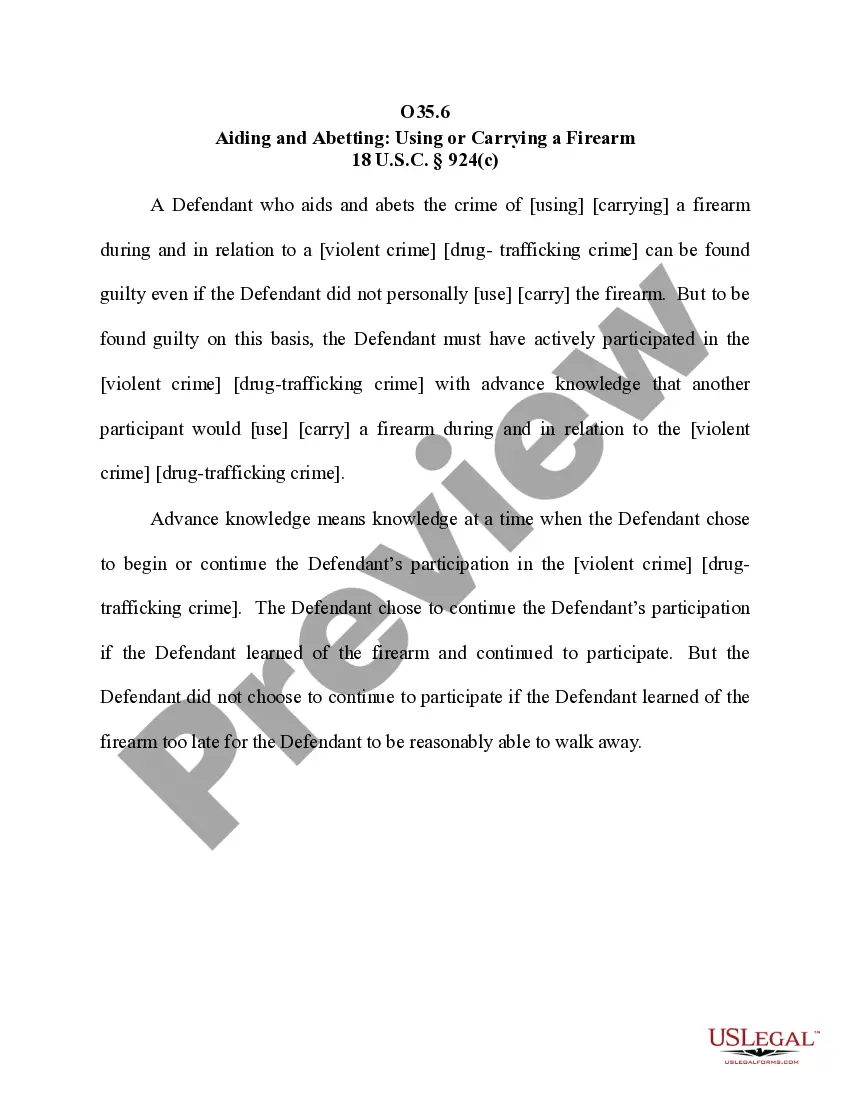
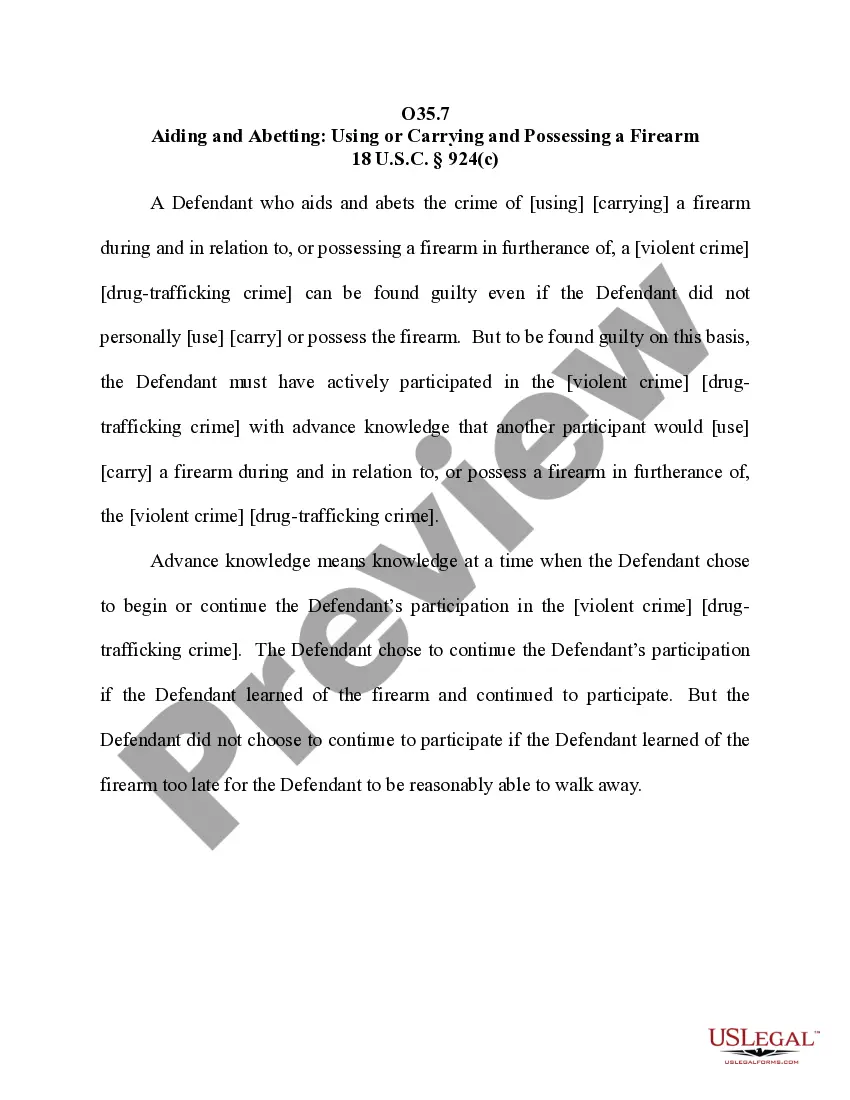
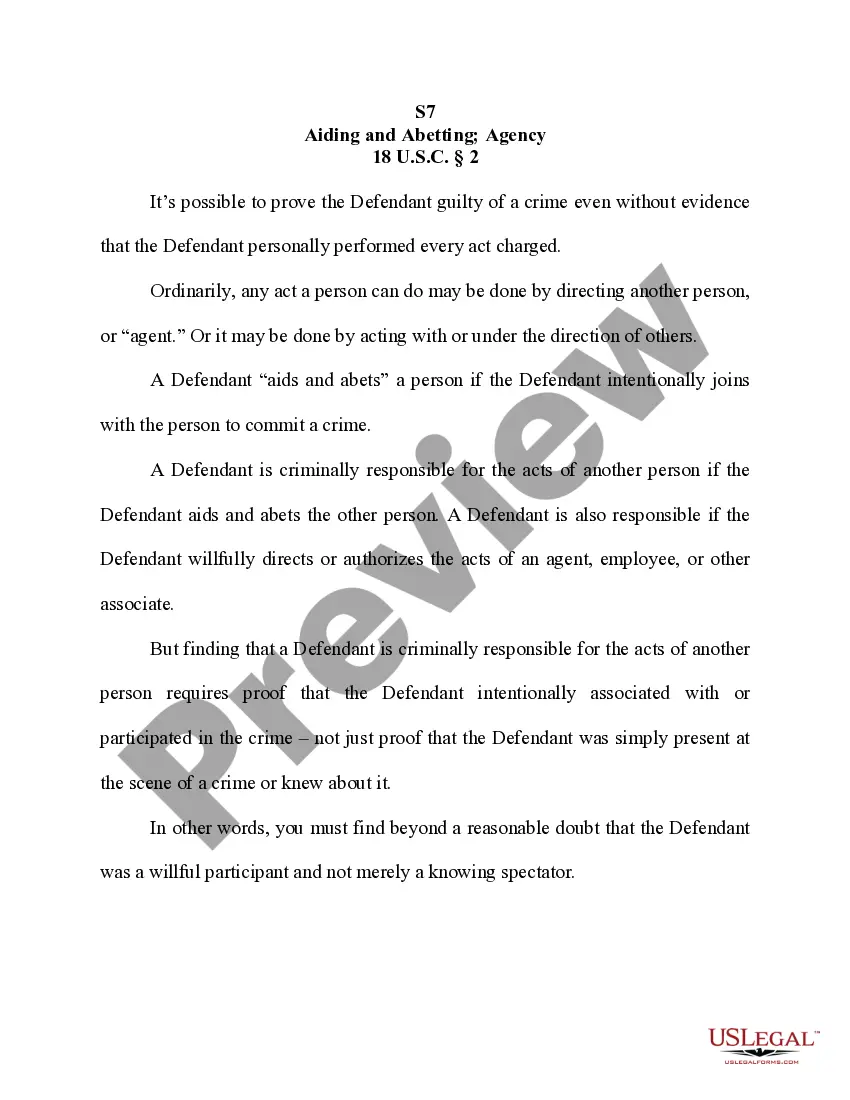
When this form is needed
This form should be used in legal proceedings where a defendant is accused of aiding and abetting another individual in the possession of a firearm during the commission of a violent crime or drug-trafficking crime. It applies in situations where there is a need to establish the defendant's knowledge and involvement in the crime, regardless of direct firearm possession.
Who this form is for
- Defendants facing charges related to firearm possession in support of violent or drug-trafficking crimes.
- Defense attorneys representing clients in such cases.
- Legal representatives needing to understand the implications of aiding and abetting laws.
How to complete this form
- Review the specific charges related to violent or drug-trafficking crimes.
- Identify any pertinent details regarding the defendant's knowledge of the firearm.
- Discuss the nature of participation in the crime with legal counsel.
- Document any evidence that supports or refutes the advance knowledge claim.
- Ensure the completed form is submitted in accordance with applicable legal procedures.
Notarization guidance
This form does not typically require notarization unless specified by local law.
Get your form ready online
Our built-in tools help you complete, sign, share, and store your documents in one place.
Make edits, fill in missing information, and update formatting in US Legal Forms—just like you would in MS Word.
Download a copy, print it, send it by email, or mail it via USPS—whatever works best for your next step.
Sign and collect signatures with our SignNow integration. Send to multiple recipients, set reminders, and more. Go Premium to unlock E-Sign.
If this form requires notarization, complete it online through a secure video call—no need to meet a notary in person or wait for an appointment.
We protect your documents and personal data by following strict security and privacy standards.

Make edits, fill in missing information, and update formatting in US Legal Forms—just like you would in MS Word.

Download a copy, print it, send it by email, or mail it via USPS—whatever works best for your next step.

Sign and collect signatures with our SignNow integration. Send to multiple recipients, set reminders, and more. Go Premium to unlock E-Sign.

If this form requires notarization, complete it online through a secure video call—no need to meet a notary in person or wait for an appointment.

We protect your documents and personal data by following strict security and privacy standards.
Typical mistakes to avoid
- Failing to establish the timeline of advance knowledge regarding the firearm.
- Neglecting to adequately define participation in the associated crime.
- Assuming that lack of direct possession absolves liability without sufficient evidence of involvement.
Advantages of online completion
- Convenience of downloading and accessing the form from anywhere.
- Editability allows for precise customization to fit individual case details.
- Reliability of using attorney-drafted templates ensures legal compliance.
Looking for another form?
Form popularity
FAQ
Convicted Felon, 18 U.S.C. § 922(g)(1) See Statute It is against federal law for a convicted felon to possess a firearm; ammunition that was connected with interstate or foreign commerce.
An accessory is someone who aided or contributed to the commission or concealment of a crime. There are two categories of accessories: accessory before-the-fact and accessory after-the-fact.
Actual possession is when the person has the gun in their hand and the police officer sees it. Constructive possession is a situation where a person is driving their car down the road, they get stopped, their vehicle gets searched, and under the front seat is the firearm.
§ 922(G) Felon in possession of a firearm is a serious criminal offense in the United States. Under 18 U.S.C. § 922(g), it is unlawful for a person convicted of a felony to ship, transport, receive, or possess a firearm or ammunition.
The words aiding, abetting and accessory are closely used but have differences. While aiding means providing support or assistance to someone, abetting means encouraging someone else to commit a crime. Accessory is someone who in fact assists "commission of a crime committed primarily by someone else".
Aiding and abetting is like zigging and zagging. Each has a slightly different meaning but fits together to create a complete crime. Aiding means helping someone to commit a crime while abetting means encouraging or counseling someone to commit a crime.
Examples of being an accessory after the fact include: providing an alibi for a friend who has been charged with driving under the influence (DUI), driving a getaway car after a robbery, and. helping a criminal suspect or felon escape arrest.
The words aiding, abetting and accessory are closely used but have differences. While aiding means providing support or assistance to someone, abetting means encouraging someone else to commit a crime. Accessory is someone who in fact assists "commission of a crime committed primarily by someone else".