Mail Fraud
Understanding this form
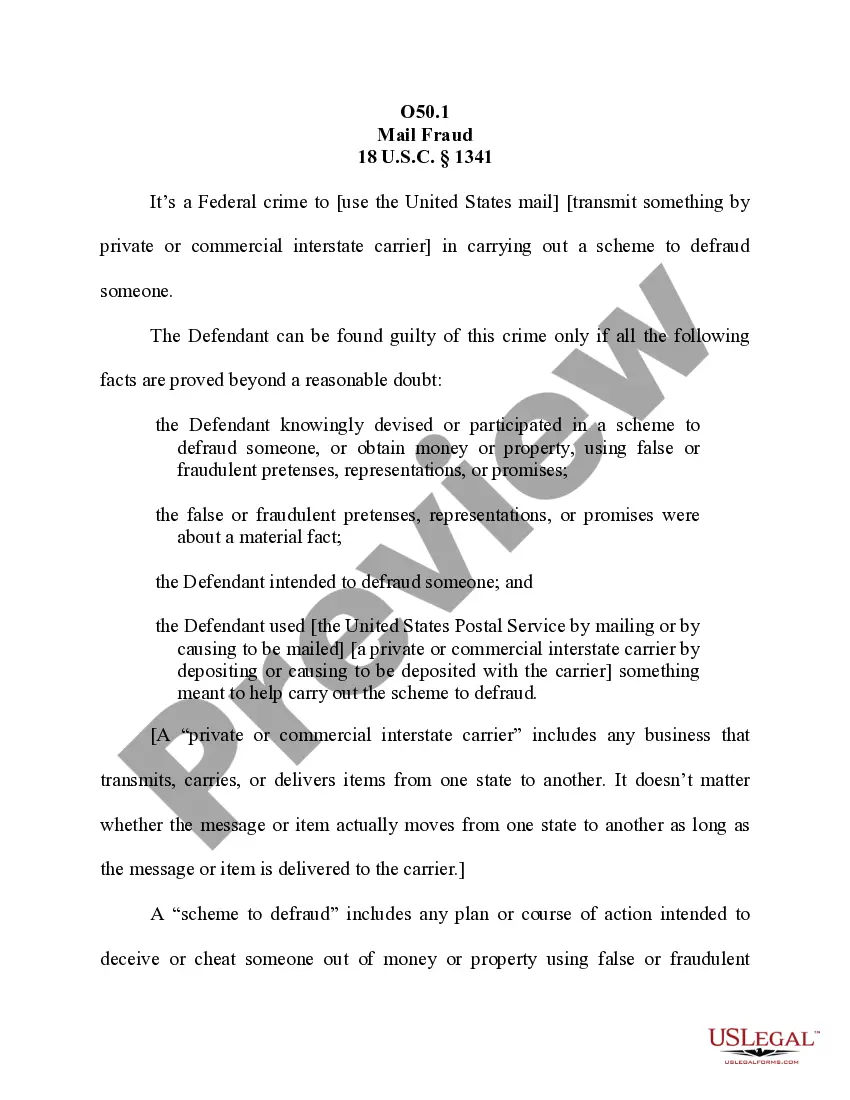
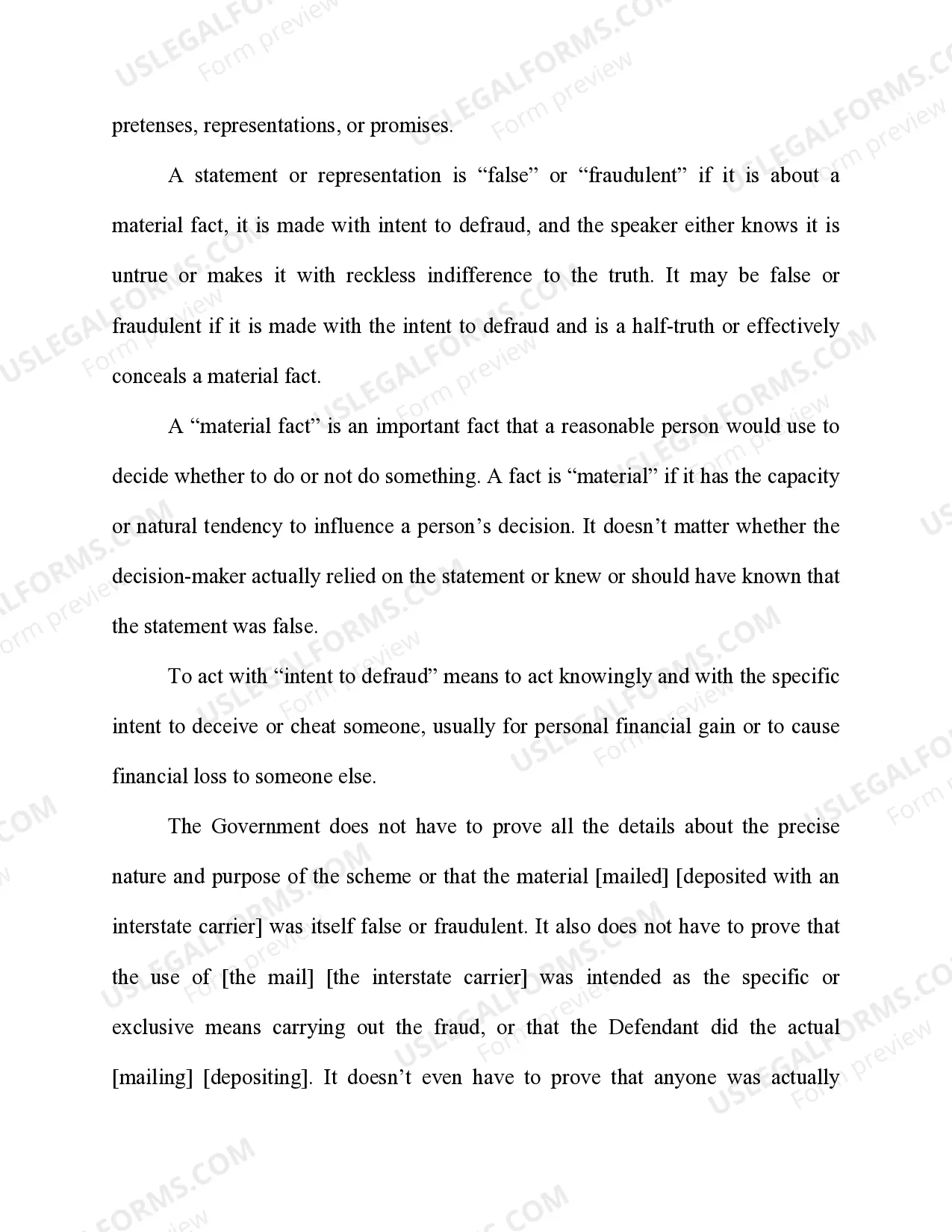
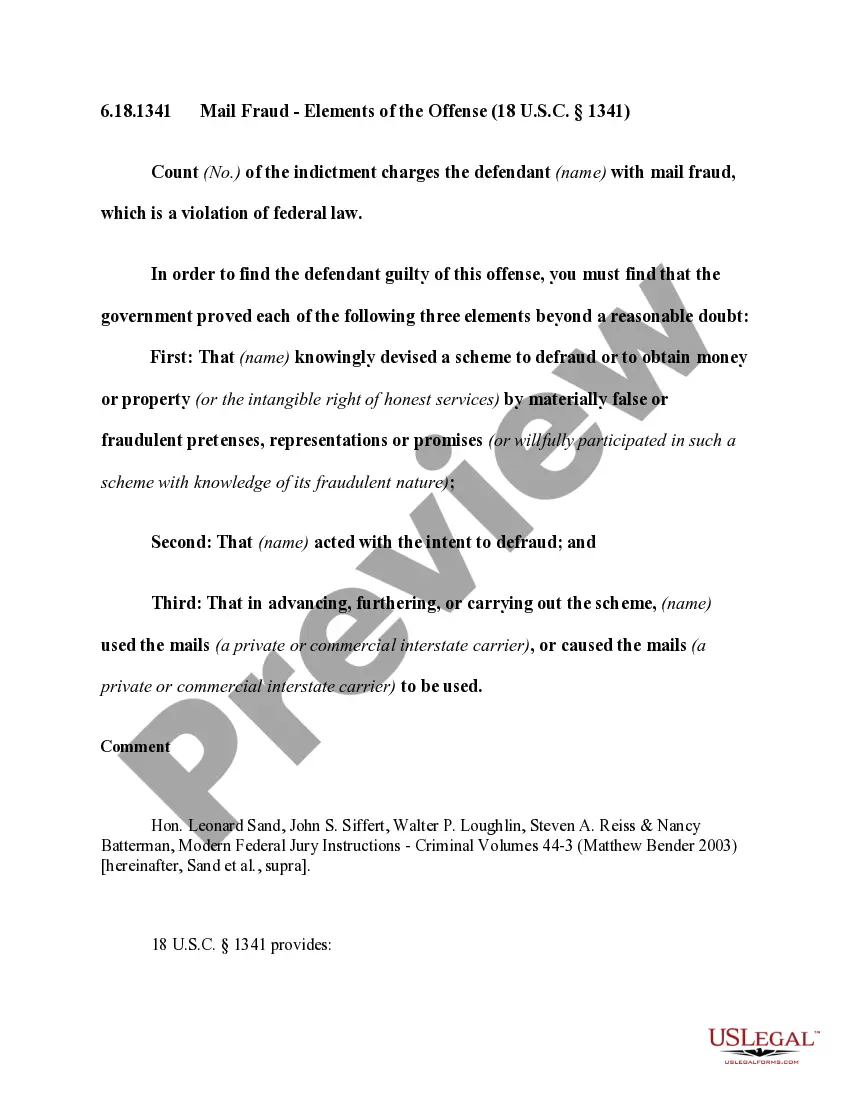
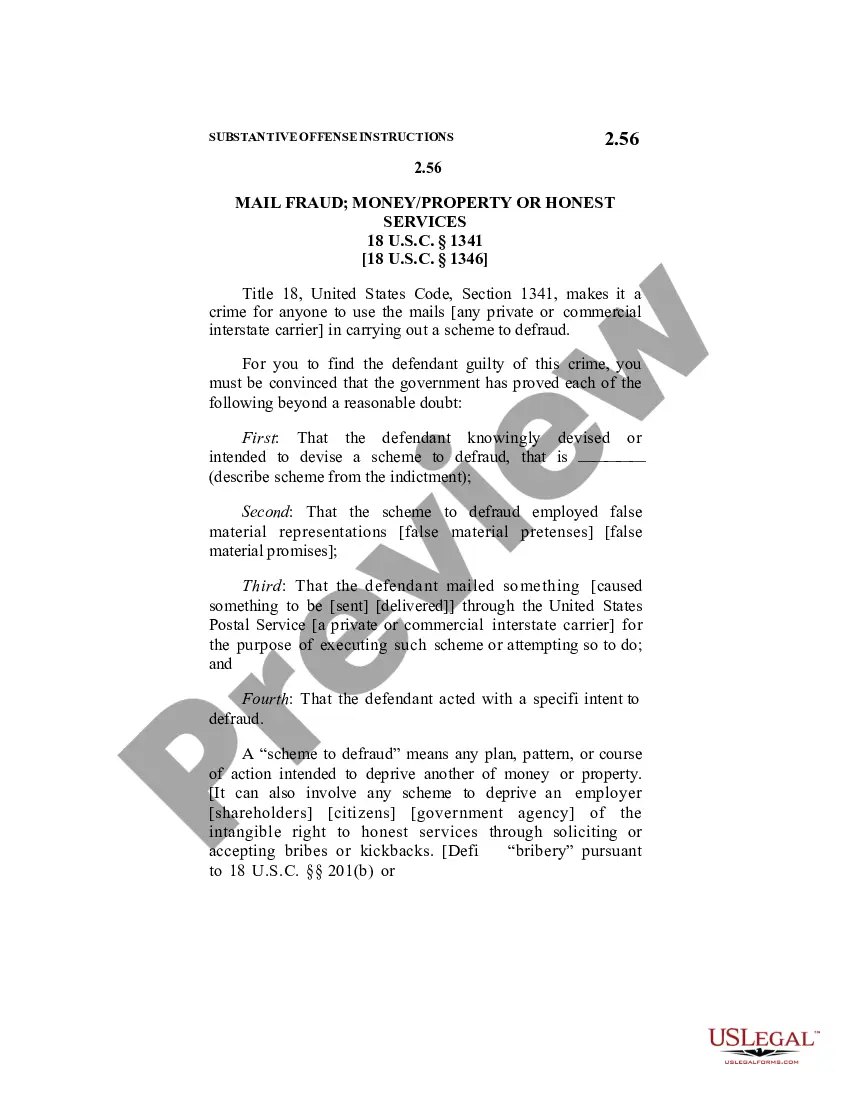
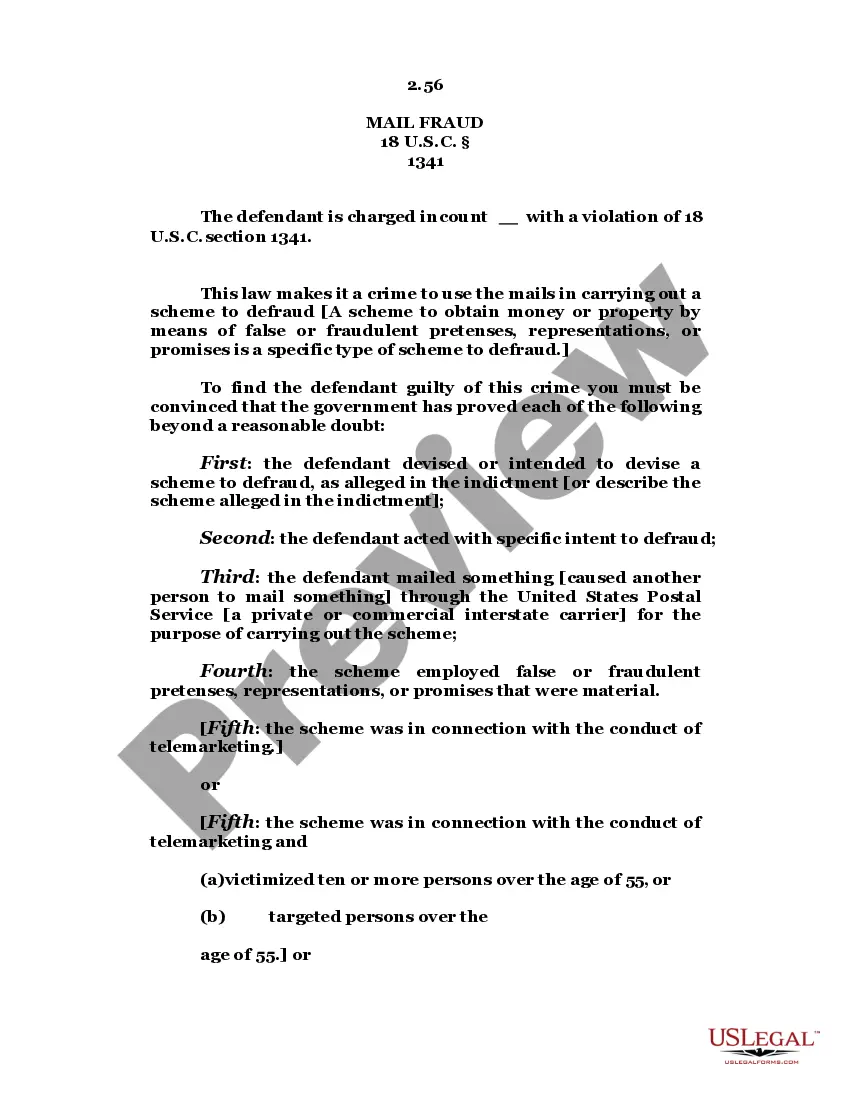
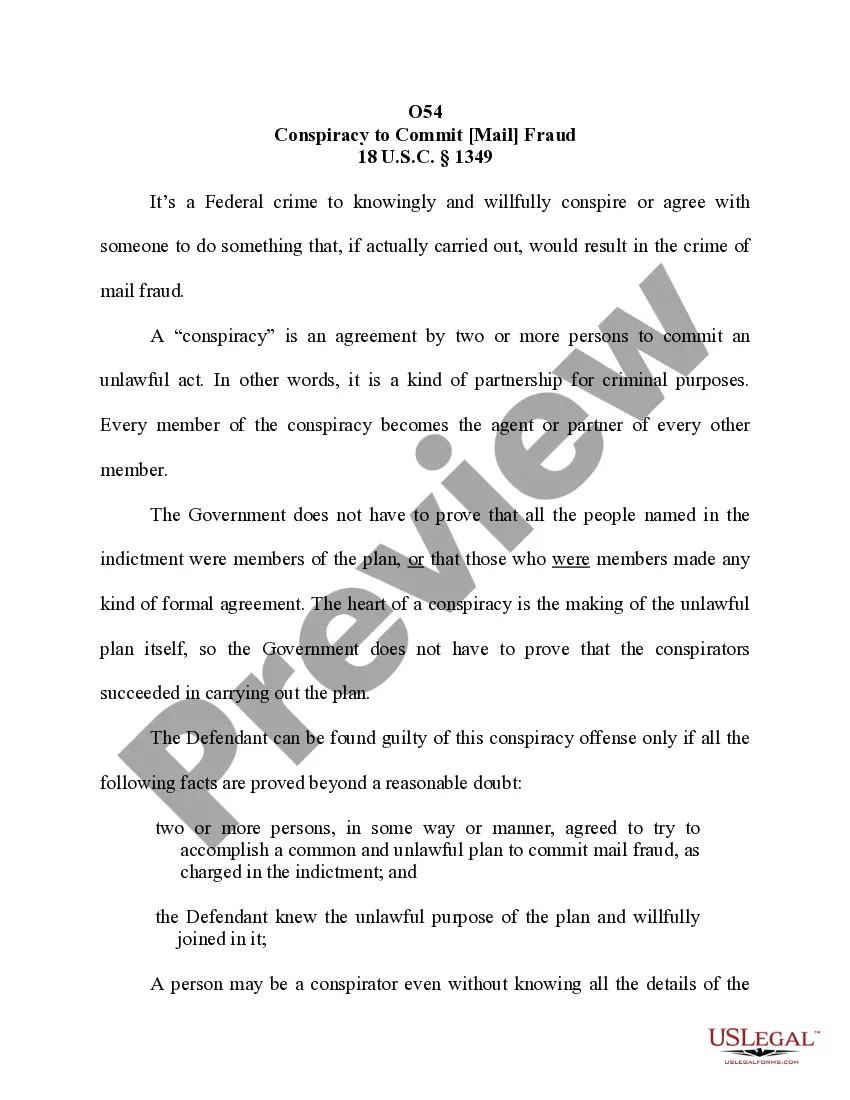
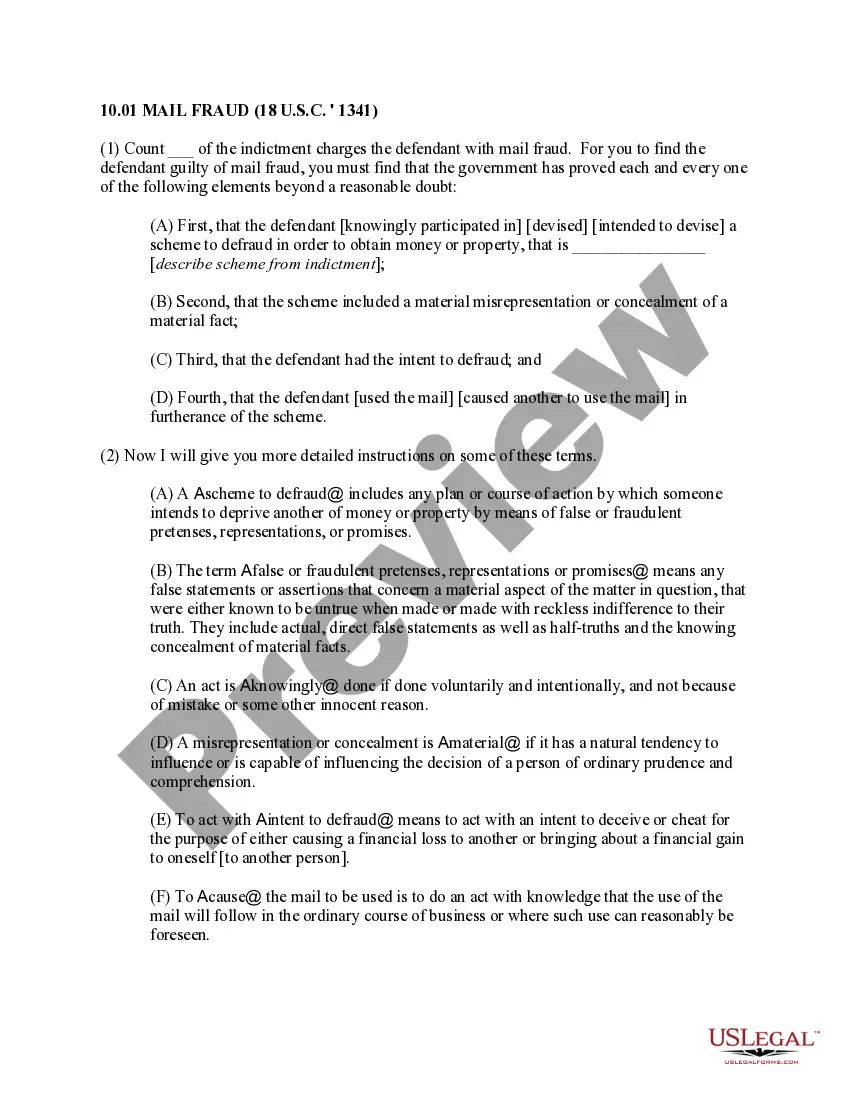
The Mail Fraud form outlines the legal definitions and elements of the federal crime of mail fraud as stated in 18 U.S.C. § 1341. This form is crucial for understanding how to identify, charge, or defend against allegations of mail fraud in a legal setting. It provides a framework for federal prosecutors and defendants regarding what constitutes a scheme to defraud using the United States mail or interstate carrier services.
Key parts of this document
- Definition of mail fraud under federal law.
- Elements that must be proven to establish guilt.
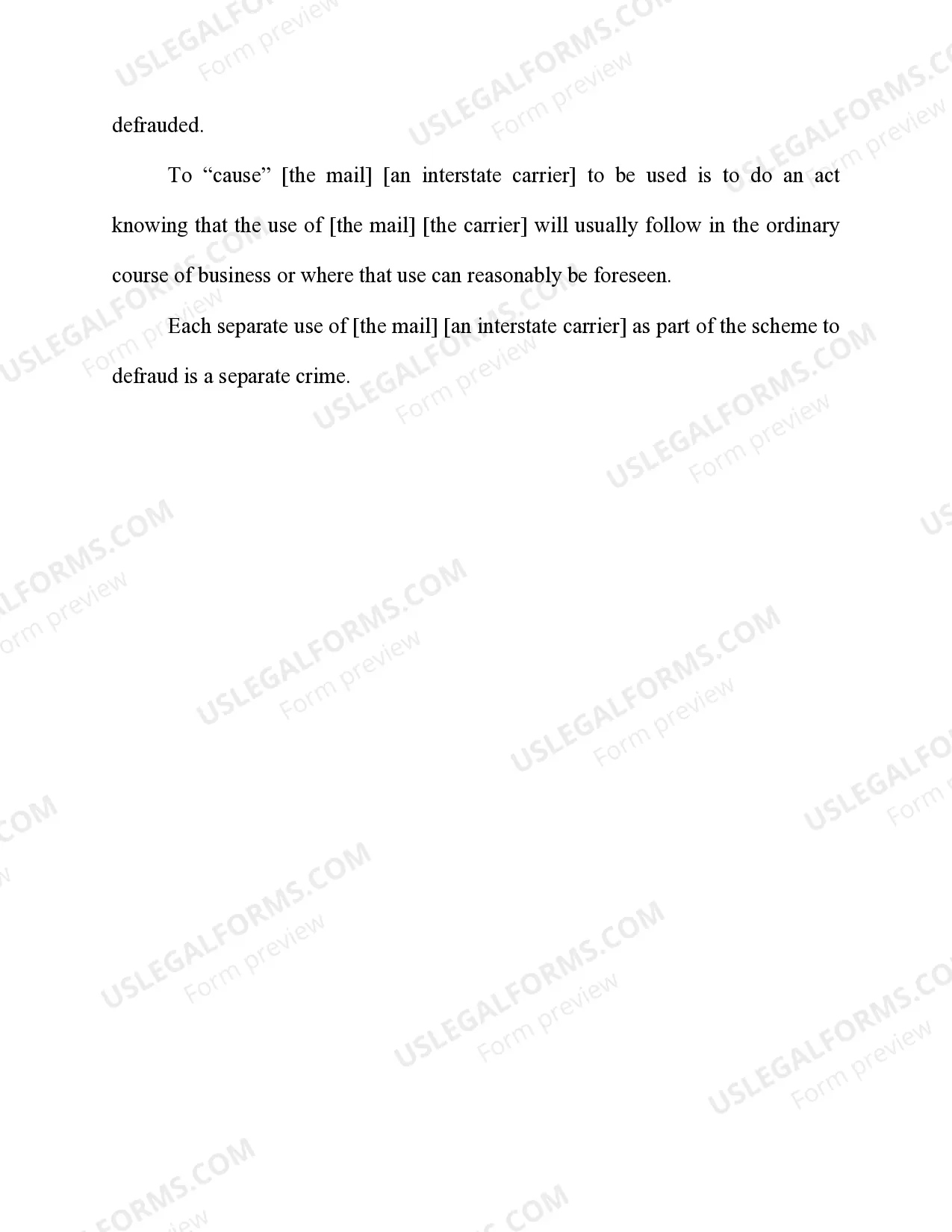
- Clarification of what constitutes a scheme to defraud.
- Explanation of material facts and intent to defraud.
- Details on the postal service and interstate carriers' role in mail fraud.
When this form is needed
This form is relevant when addressing matters related to allegations of mail fraud. It can be used by legal professionals during trials, by defendants preparing for cases, or as a resource for individuals looking to understand the legal ramifications of mail fraud. Situations may include government prosecutions, civil cases involving fraud, and consultations with attorneys regarding potential defenses against such charges.
Who needs this form
- Federal prosecutors seeking to establish charges of mail fraud.
- Defendants accused of mail fraud and their legal representatives.
- Individuals or businesses wanting to understand mail fraud for compliance purposes.
- Legal scholars or students studying federal criminal law.
How to prepare this document
- Familiarize yourself with the legal definition of mail fraud as outlined in the form.
- Identify the elements of the crime you need to prove or defend against.
- Gather any evidence or documentation relevant to the scheme in question.
- Assess whether the communication methods used fall under the United States mail or interstate carriers.
- Prepare to articulate the material facts and intent behind the alleged fraud.
Is notarization required?
This form does not typically require notarization unless specified by local law. However, always consult with a legal professional to ensure compliance with specific legal requirements in your jurisdiction.
Get your form ready online
Our built-in tools help you complete, sign, share, and store your documents in one place.
Make edits, fill in missing information, and update formatting in US Legal Forms—just like you would in MS Word.
Download a copy, print it, send it by email, or mail it via USPS—whatever works best for your next step.
Sign and collect signatures with our SignNow integration. Send to multiple recipients, set reminders, and more. Go Premium to unlock E-Sign.
If this form requires notarization, complete it online through a secure video call—no need to meet a notary in person or wait for an appointment.
We protect your documents and personal data by following strict security and privacy standards.

Make edits, fill in missing information, and update formatting in US Legal Forms—just like you would in MS Word.

Download a copy, print it, send it by email, or mail it via USPS—whatever works best for your next step.

Sign and collect signatures with our SignNow integration. Send to multiple recipients, set reminders, and more. Go Premium to unlock E-Sign.

If this form requires notarization, complete it online through a secure video call—no need to meet a notary in person or wait for an appointment.

We protect your documents and personal data by following strict security and privacy standards.
Typical mistakes to avoid
- Failing to prove every element required for mail fraud beyond a reasonable doubt.
- Misunderstanding what constitutes a material fact in the context of fraud.
- Overlooking the importance of intent when determining guilt.
Advantages of online completion
- Convenience of accessing the form anytime, anywhere.
- Editable content, allowing for personal customization before use.
- Reliability of attorney-drafted content ensuring legal compliance.
Legal use & context
- Mail fraud involves using the postal service or interstate carriers to execute a fraudulent scheme.
- Defendants must be proven guilty beyond a reasonable doubt for conviction.
- The form outlines how mail fraud charges are assessed in federal courts, establishing a clear legal context for claims.
Summary of main points
- The Mail Fraud form provides essential legal guidance on what constitutes fraud through mail.
- Understanding intent and material facts is crucial in mail fraud cases.
- This federal form is applicable in any state, making it universally relevant for legal proceedings.
Looking for another form?
Form popularity
FAQ
The Fraud: A random few of the many, many examples of mail and wire fraud include things like sending invoices, running crooked online auctions, or even something as simple as stealing from a neighbor's mailbox to find checks or prescriptions or credit cards offers and the like.
If a charge of mail fraud turns into a conviction, you face up to $250,000 in fines and imprisonment for up to 20 years. If the mail fraud is in connection with a presidentially declared major disaster or emergency, or one that effects a financial institution, then enhanced penalties will apply.
A person commits mail fraud when he engages in a scheme to defraud, with intent to defraud, and uses the mails in furtherance of that scheme. A scheme to defraud means depriving someone of property by deceitful or dishonest means.
Penalties. Mail Fraud is punishable by imprisonment for 20 years, a fine, or both. There are two subsets of Mail Fraud punishable by a $1,000,000 fine, 30 years' incarceration, or both.
When mail is stolen and used to defraud or steal someone else's property or identity it is a federal crime punishable by long prison sentences. Because mail moves over the entire country the government regulates the mail service and therefore crimes committed involving the mail are federal.