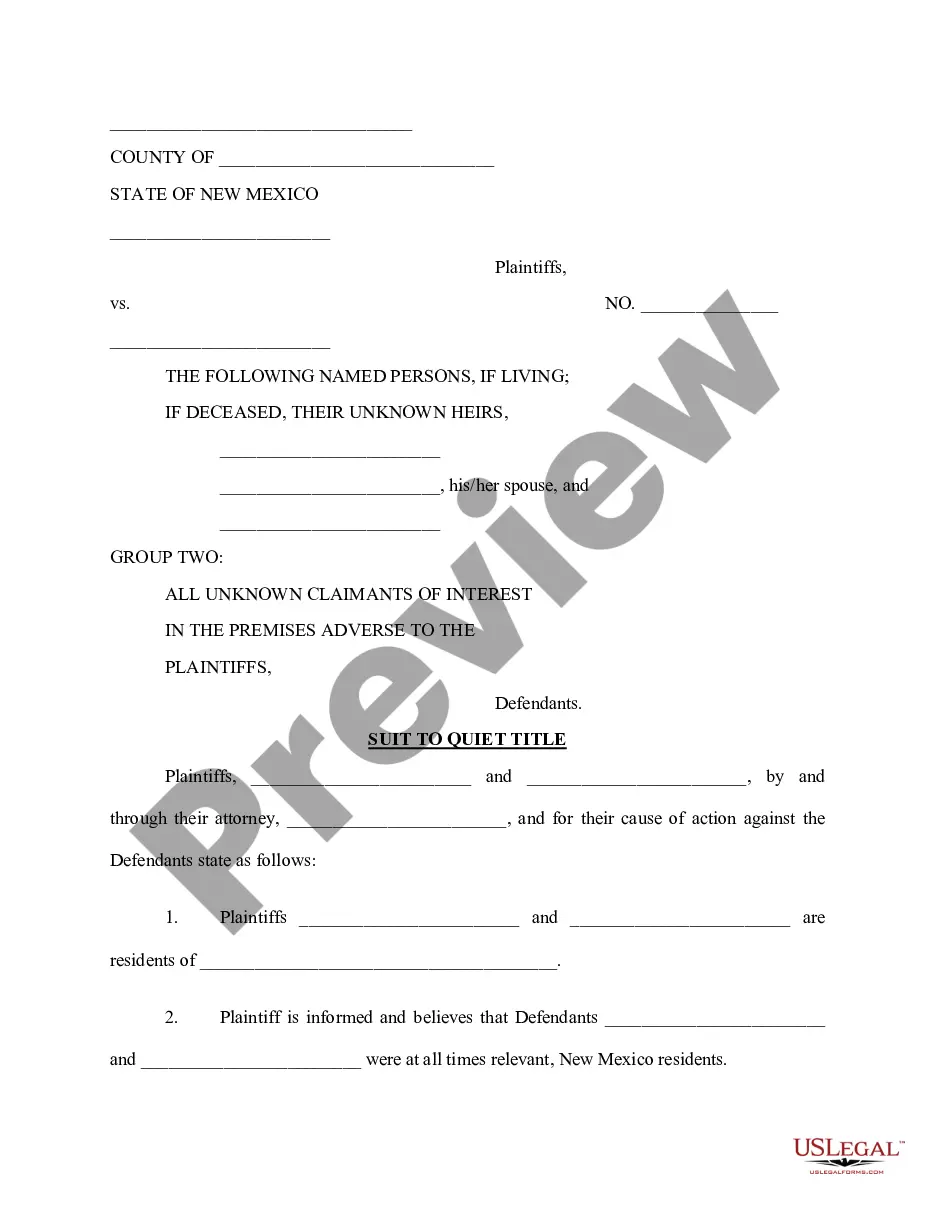
Preliminary Instructions - Criminal Cases
What is this form?
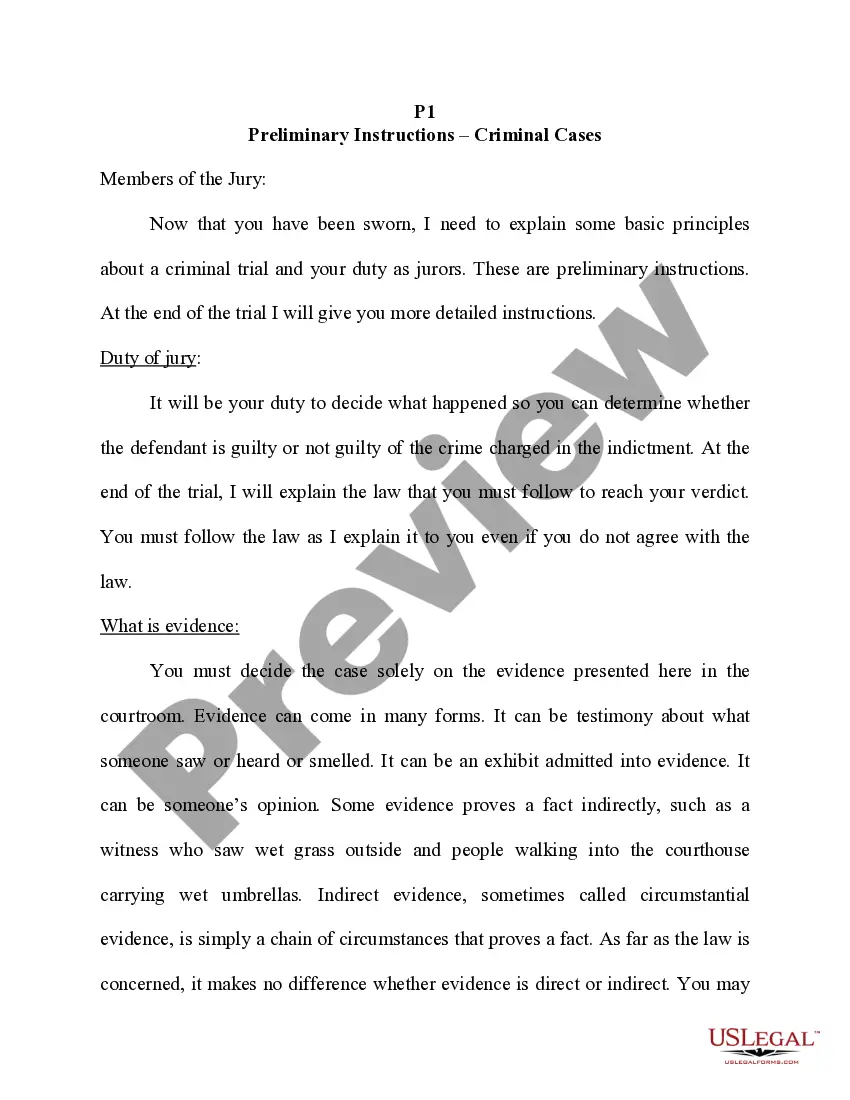
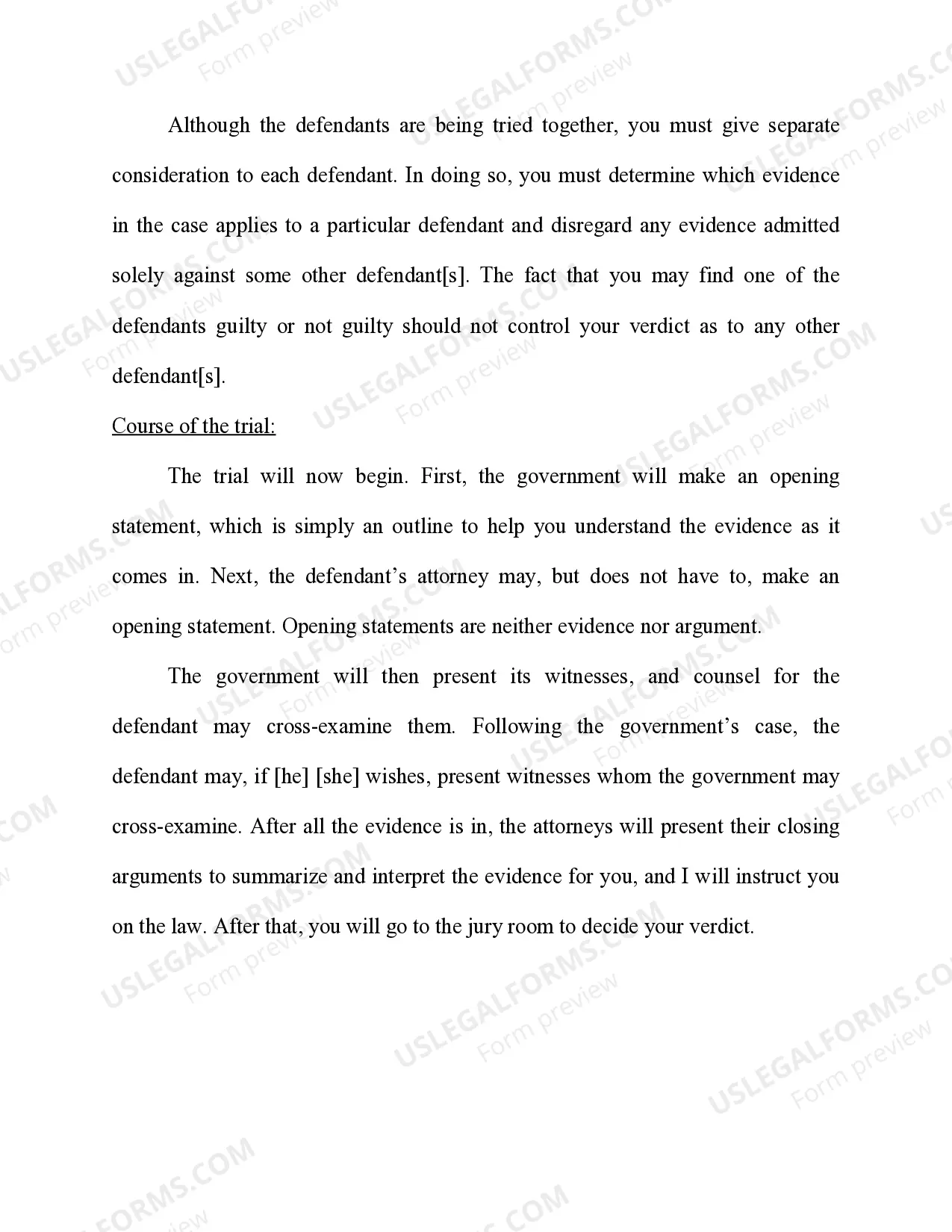
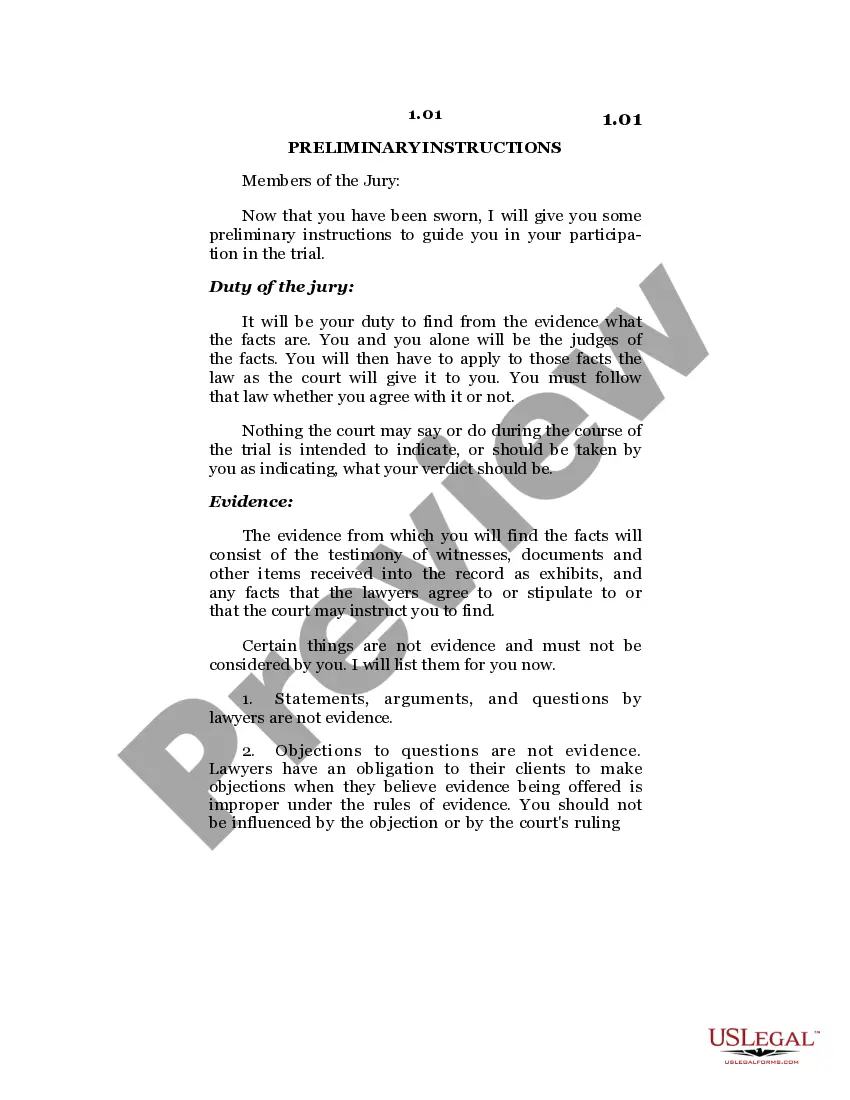
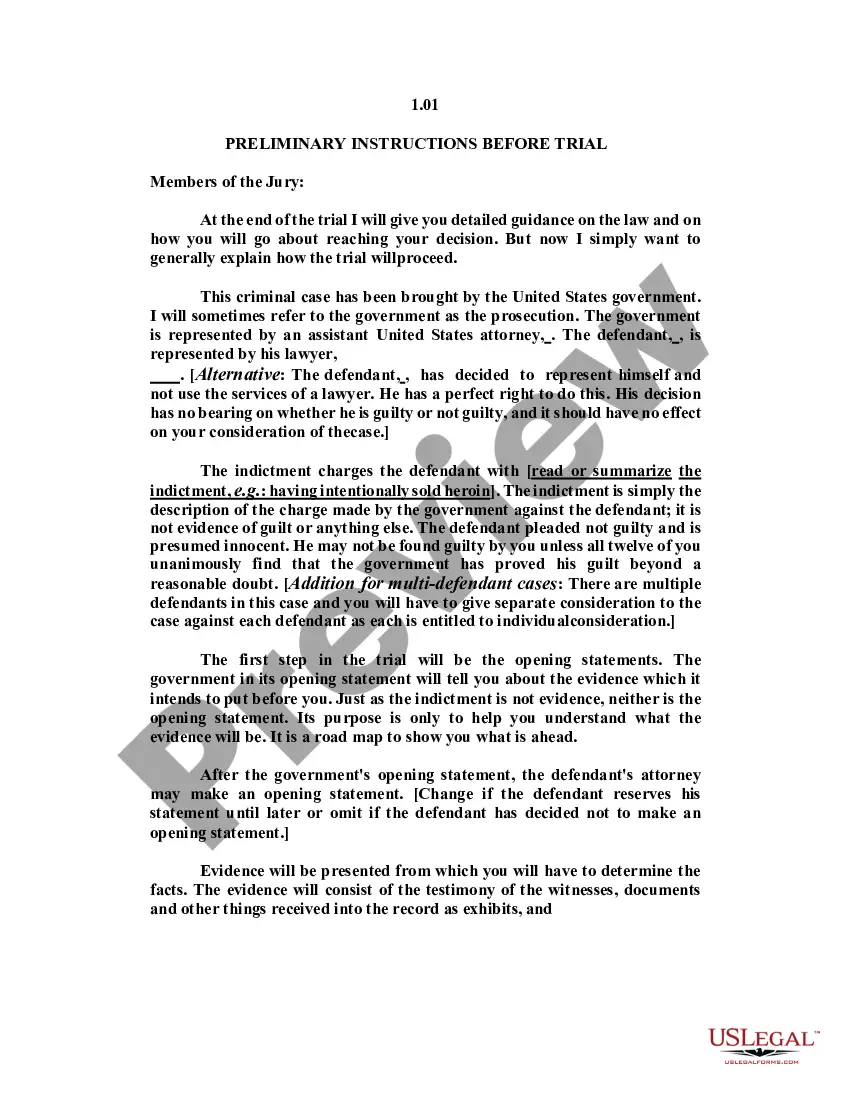
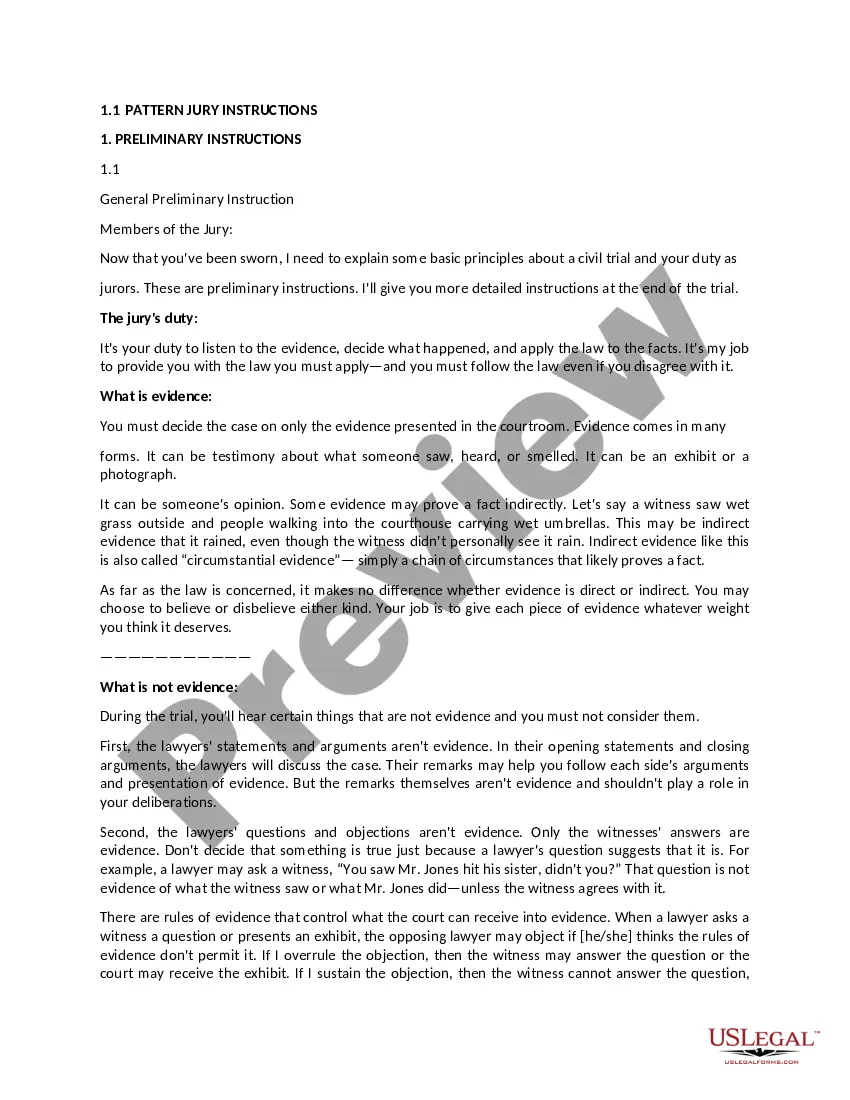
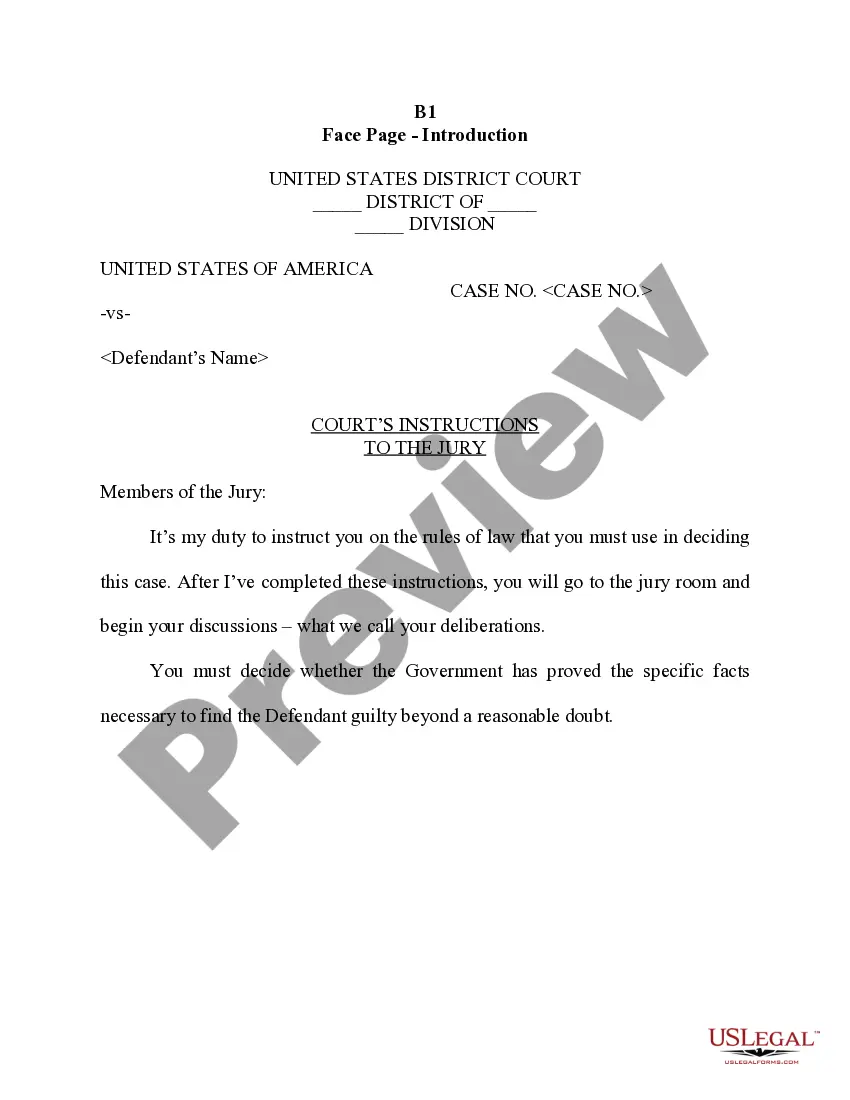
The Preliminary Instructions - Criminal Cases form consists of specific guidelines provided to jurors in a criminal trial. Its purpose is to outline essential principles that jurors must follow when evaluating the evidence and determining the guilt or innocence of the defendant. Unlike other forms, this document emphasizes the jurors' duties, the definition of evidence, and the conduct expected during the trial process.
What’s included in this form
- Explanation of the duty of the jury to determine the verdict based on evidence.
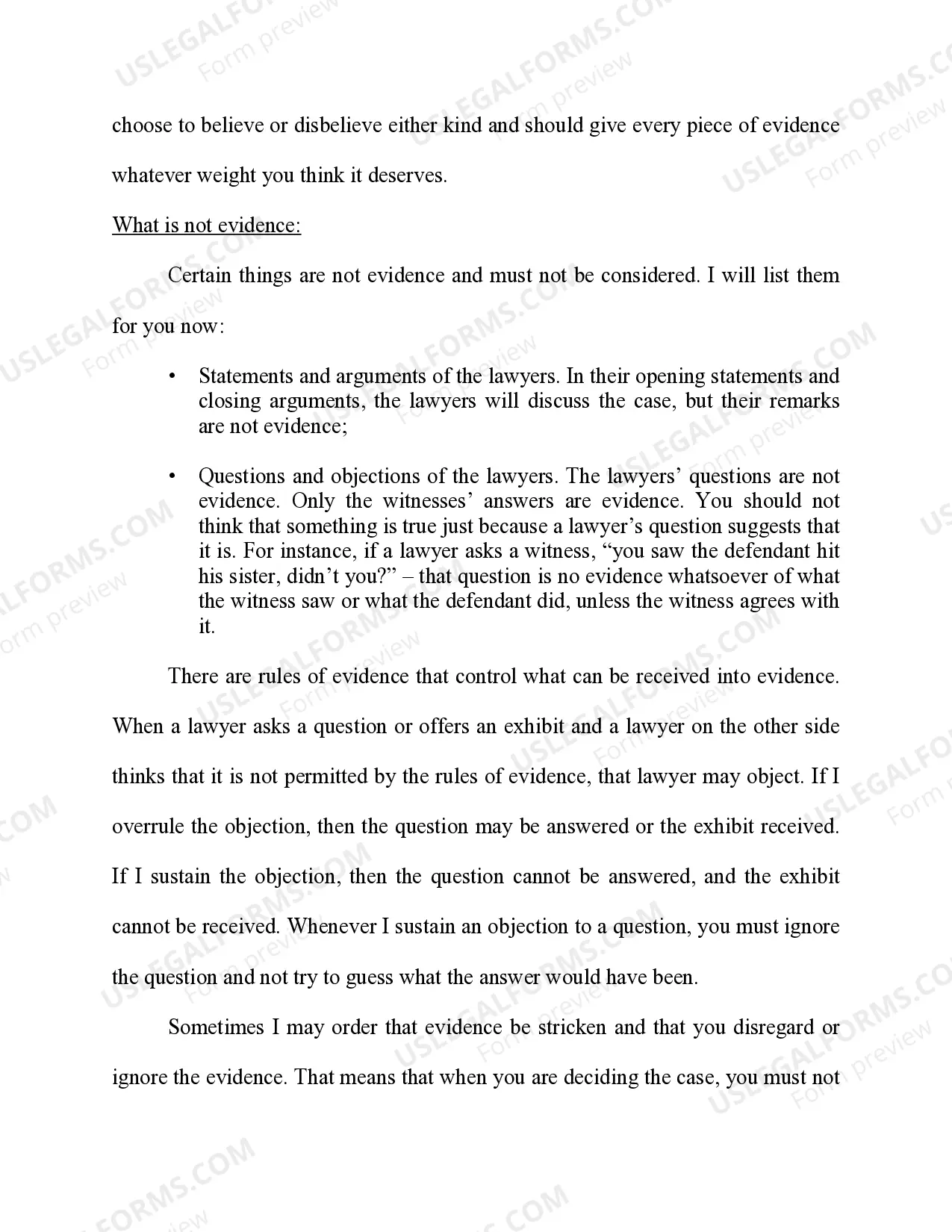
- Clarification of what constitutes evidence and what does not.
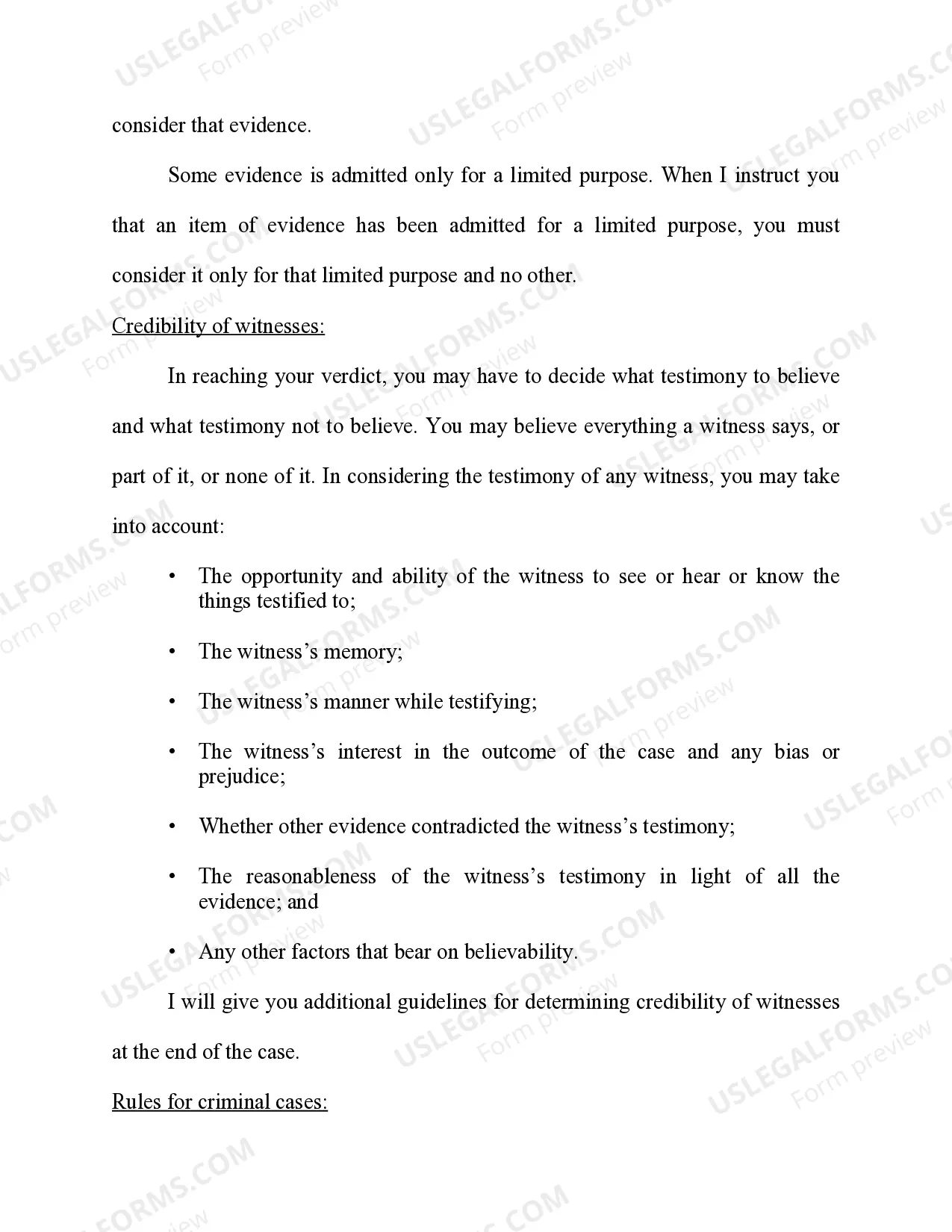
- Guidelines on the credibility of witnesses and factors to consider.
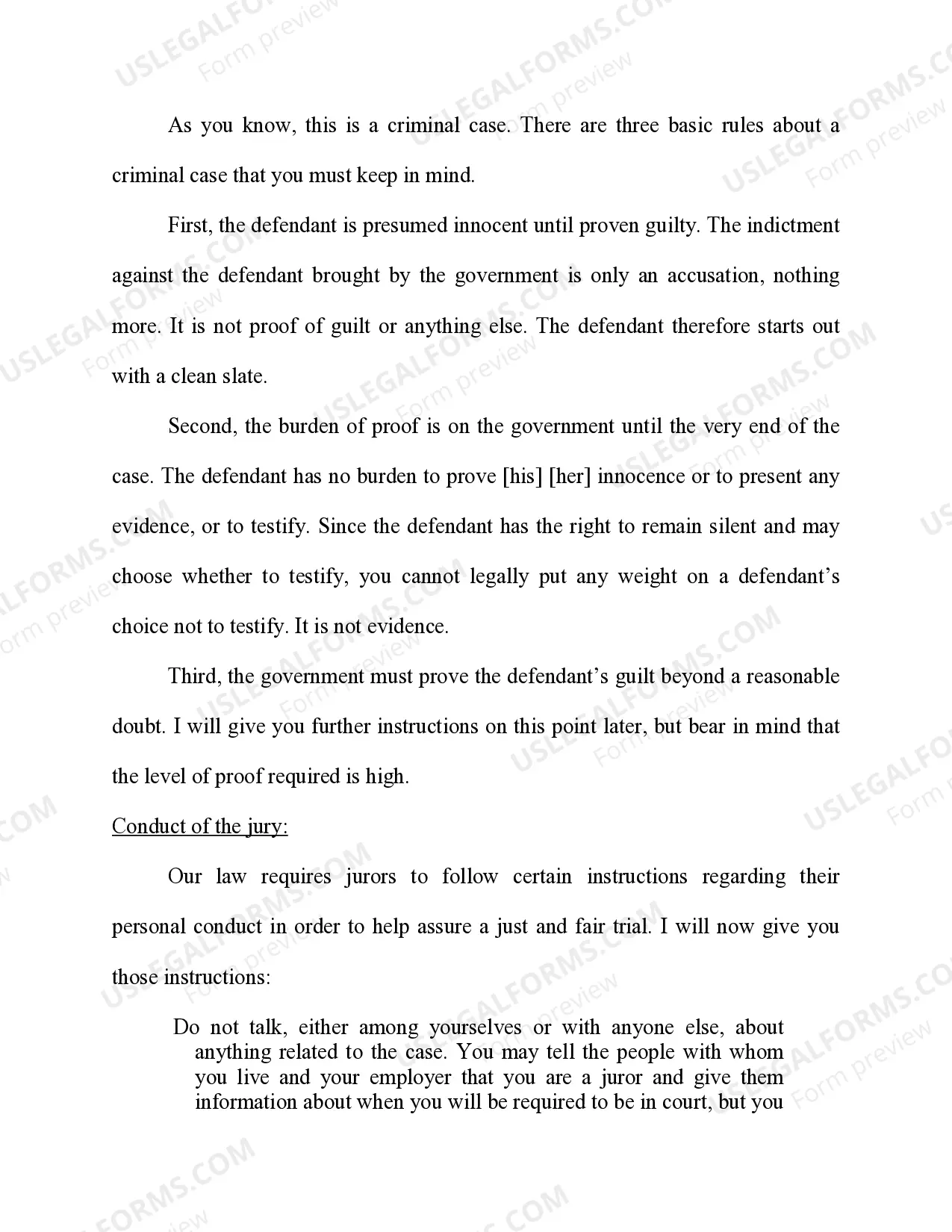
- Emphasis on the presumption of innocence and the burden of proof on the government.
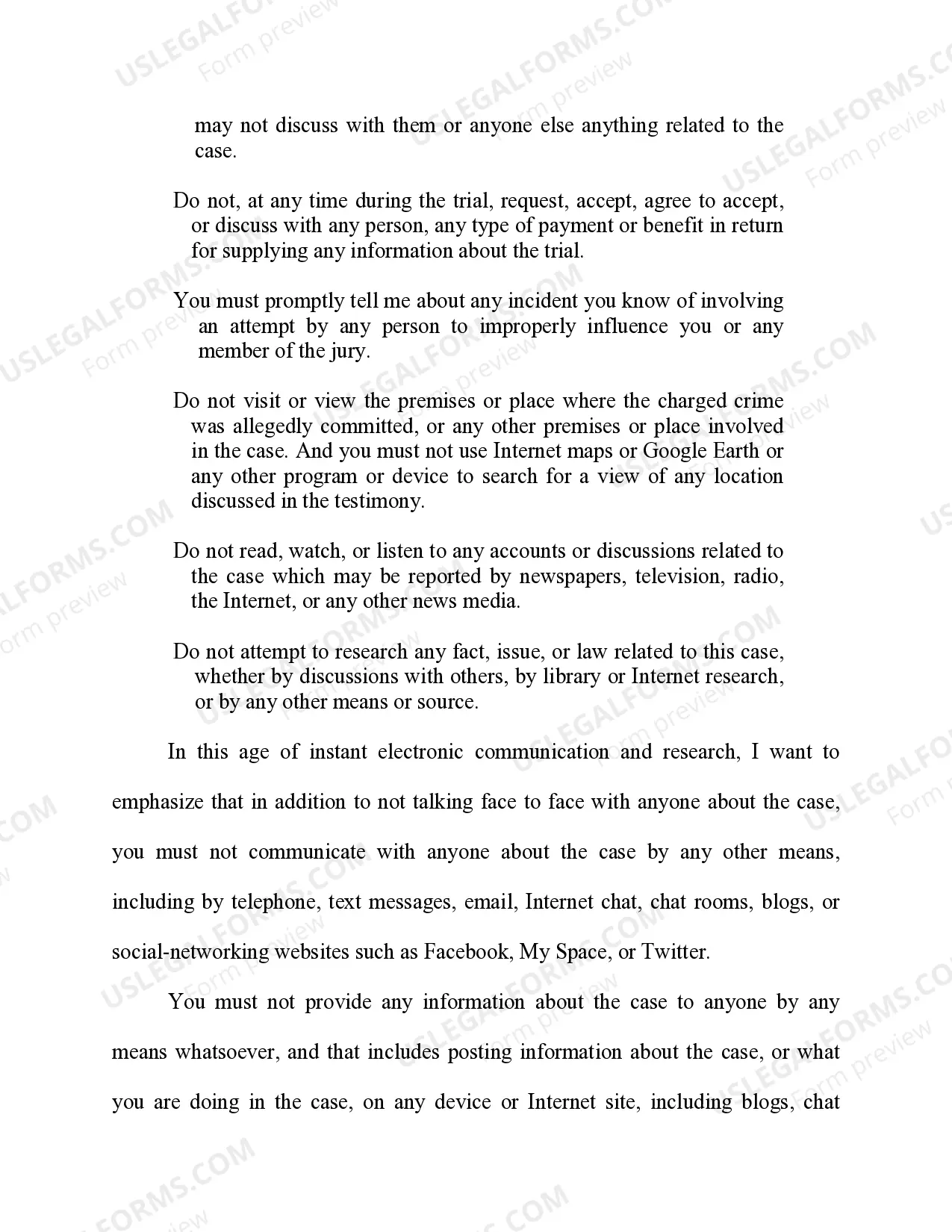
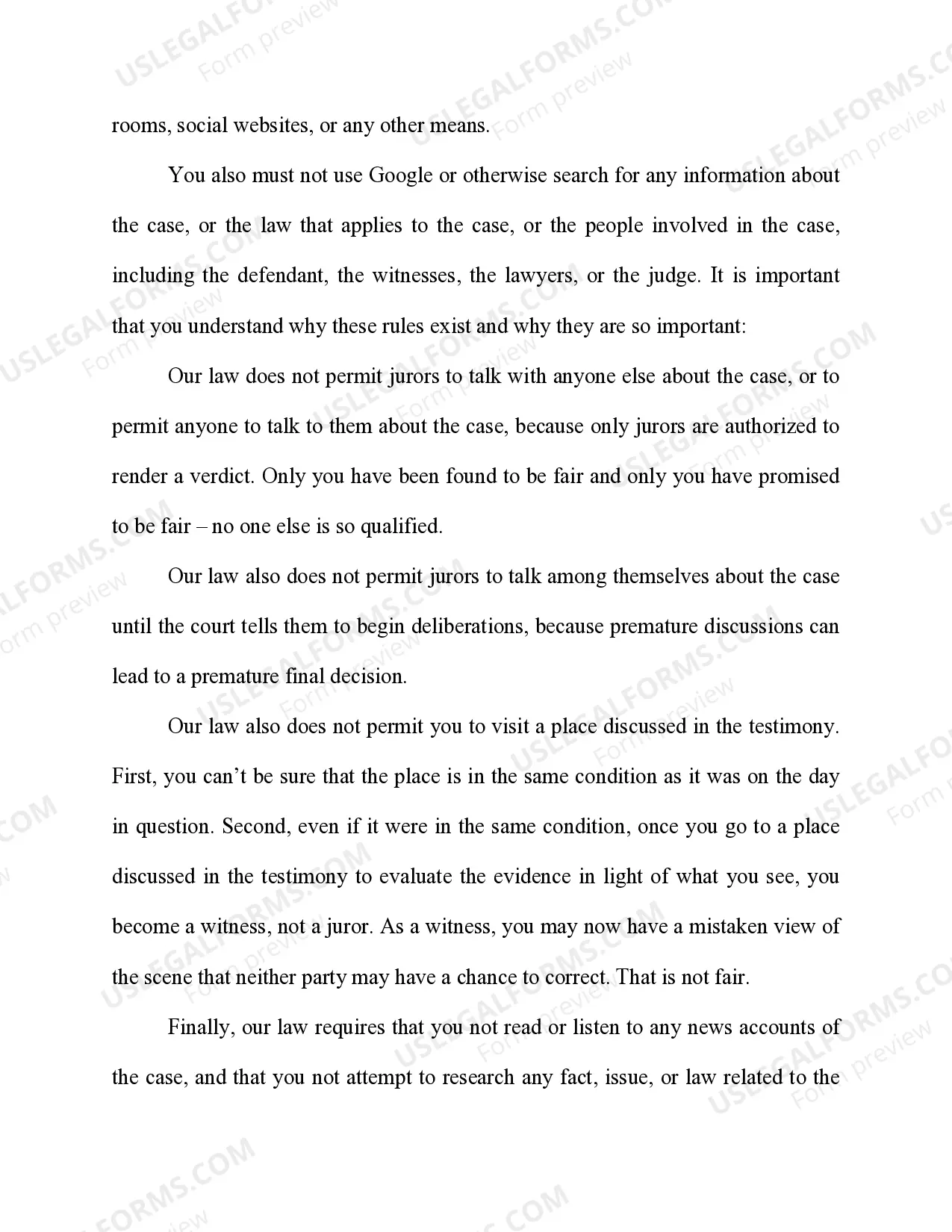
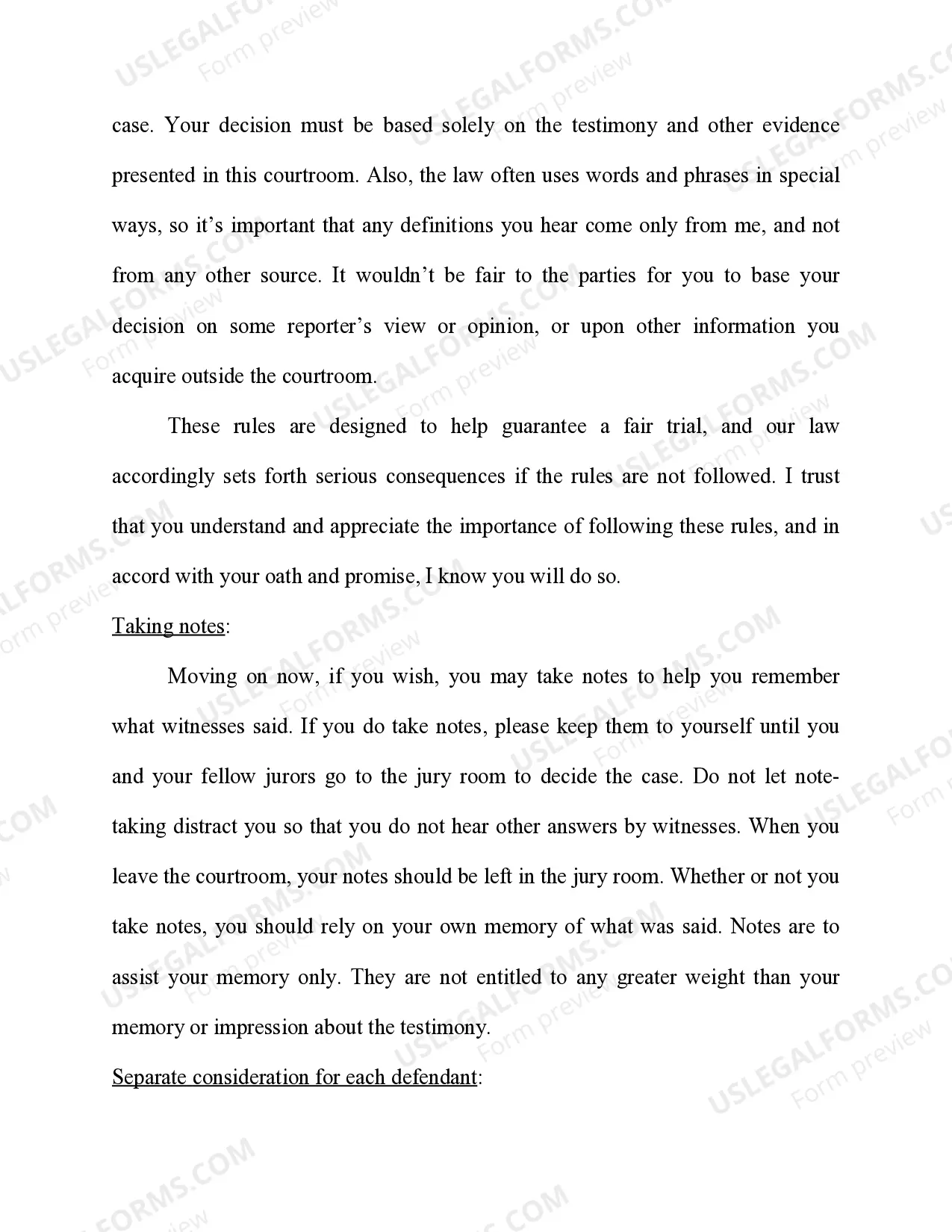
- Instructions regarding juror conduct during the trial.
- Overview of the trial's course, including opening statements and witness examination.
Common use cases
This form is used during criminal trials in the judicial system, where jurors are required to understand their responsibilities and the legal standards they must apply. It is essential when a jury is sworn in and prepares to deliberate on the case presented in court.
Intended users of this form
Eligible users include:
- Jurors selected for a criminal case.
- Court officials requiring guidance on juror instructions.
- Attorneys and legal professionals wanting to ensure jurors understand their roles.
How to prepare this document
- Read all preliminary instructions carefully as provided by the court.
- Understand the duties you hold as a juror to base decisions solely on courtroom evidence.
- Familiarize yourself with the definitions and types of evidence that will be presented.
- Adhere to the rules of conduct set forth regarding discussions and research during the trial.
- Take notes, if desired, to assist your memory, but keep them private until deliberation.
Is notarization required?
This form usually doesn’t need to be notarized. However, local laws or specific transactions may require it. Our online notarization service, powered by Notarize, lets you complete it remotely through a secure video session, available 24/7.
Get your form ready online
Our built-in tools help you complete, sign, share, and store your documents in one place.
Make edits, fill in missing information, and update formatting in US Legal Forms—just like you would in MS Word.
Download a copy, print it, send it by email, or mail it via USPS—whatever works best for your next step.
Sign and collect signatures with our SignNow integration. Send to multiple recipients, set reminders, and more. Go Premium to unlock E-Sign.
If this form requires notarization, complete it online through a secure video call—no need to meet a notary in person or wait for an appointment.
We protect your documents and personal data by following strict security and privacy standards.

Make edits, fill in missing information, and update formatting in US Legal Forms—just like you would in MS Word.

Download a copy, print it, send it by email, or mail it via USPS—whatever works best for your next step.

Sign and collect signatures with our SignNow integration. Send to multiple recipients, set reminders, and more. Go Premium to unlock E-Sign.

If this form requires notarization, complete it online through a secure video call—no need to meet a notary in person or wait for an appointment.

We protect your documents and personal data by following strict security and privacy standards.
Common mistakes to avoid
- Discussing the case with others outside the jury.
- Attempting to research facts or law related to the case.
- Failing to understand the definitions and distinctions of evidence.
- Neglecting to follow courtroom conduct rules, which can lead to consequences.
Benefits of using this form online
- Easy access to essential instructions that guide jurors throughout the trial.
- Convenience in downloading and referring to the instructions as needed.
- Drafted by licensed attorneys, ensuring legal accuracy and compliance.
Legal use & context
- This form is critical in ensuring that jurors' decisions are based solely on courtroom evidence, as mandated by the law.
- It establishes clear rules to prevent jurors from being influenced by outside information or improper conduct.
Main things to remember
- The Preliminary Instructions are crucial for guiding jurors during a trial.
- Jurors must base their decisions on evidence presented in the courtroom.
- Understanding the rules and definitions is vital for a fair trial process.
Looking for another form?
Form popularity
FAQ
Summary: Preliminary substantive jury instructions are instructions provided to jurors at the start of a trial, before the presentation of evidence by the parties, on the elements of a claim or defense.
Jury instructions are the only guidance the jury should receive when deliberating and are meant to keep the jury on track regarding the basic procedure of the deliberation and the substance of the law on which their decision is based.
If a judge gives the jury the wrong legal standards to apply or otherwise improper instructions, they may find a defendant guilty when they should have reached a different verdict. If the judge in your case gave the jury incomplete or incorrect instructions, you may appeal your conviction and seek a new trial.
Petit Jury: A petit jury is a trial jury for both civil and criminal cases. The petit jury listens to evidence offered during a trial and returns a verdict. A verdict in a civil case may be a finding for the plaintiff or for the defendant.
In its current form, Rule 30 requires that the court instruct the jury after the arguments of counsel. In some districts, usually where the state practice is otherwise, the parties prefer to stipulate to instruction before closing arguments.
The judge instructs the jury about the relevant laws that should guide its deliberations. (In some jurisdictions, the court may instruct the jury at any time after the close of evidence. This sometimes occurs before closing arguments.) The judge reads the instructions to the jury.
Beyond a reasonable doubt is the legal burden of proof required to affirm a conviction in a criminal case. In a criminal case, the prosecution bears the burden of proving that the defendant is guilty beyond all reasonable doubt.
In its current form, Rule 30 requires that the court instruct the jury after the arguments of counsel. In some districts, usually where the state practice is otherwise, the parties prefer to stipulate to instruction before closing arguments.