JURORS' DUTIES
Overview of this form
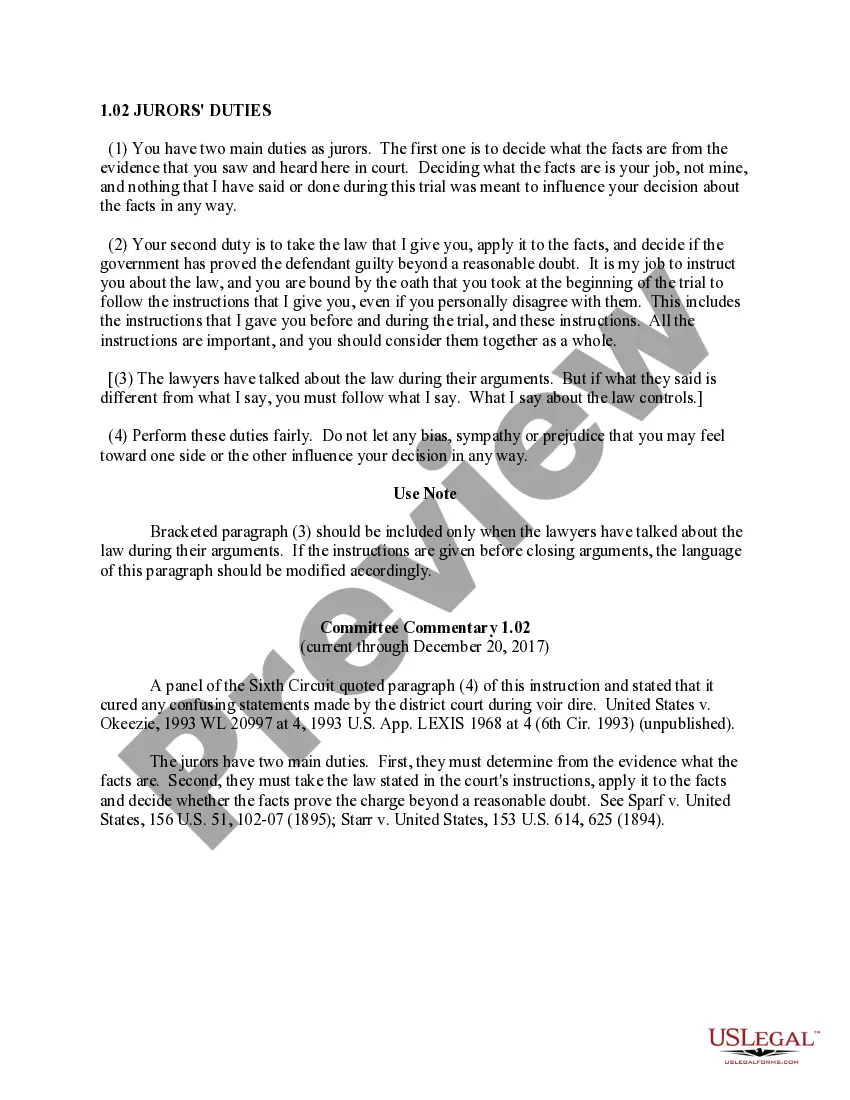
The Jurors' Duties form outlines the key responsibilities of jurors during a trial. This form provides guidance on how jurors should evaluate evidence presented in court and apply the law as instructed by the judge. Unlike other legal forms that focus on contracts or property, this instruction is specifically designed to inform jurors of their obligations and rights within the judicial process. Understanding these duties is crucial for ensuring a fair trial and the integrity of the legal system.
Key components of this form
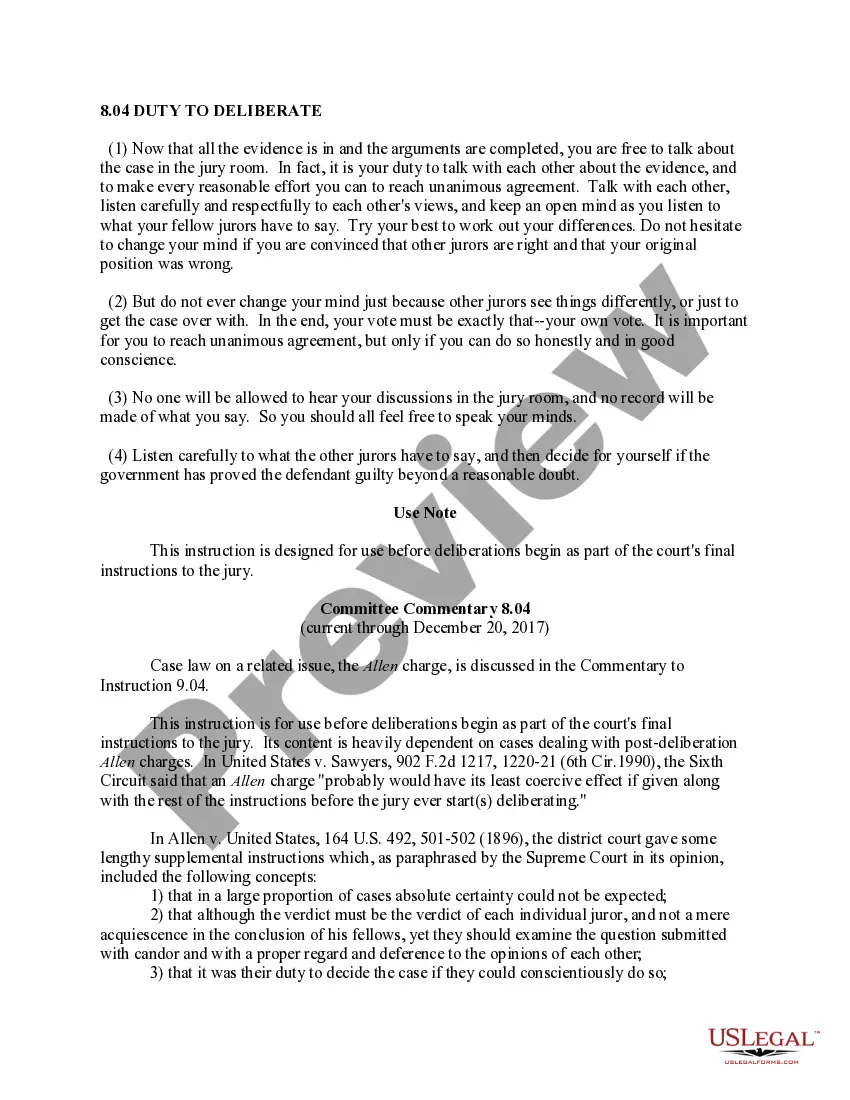
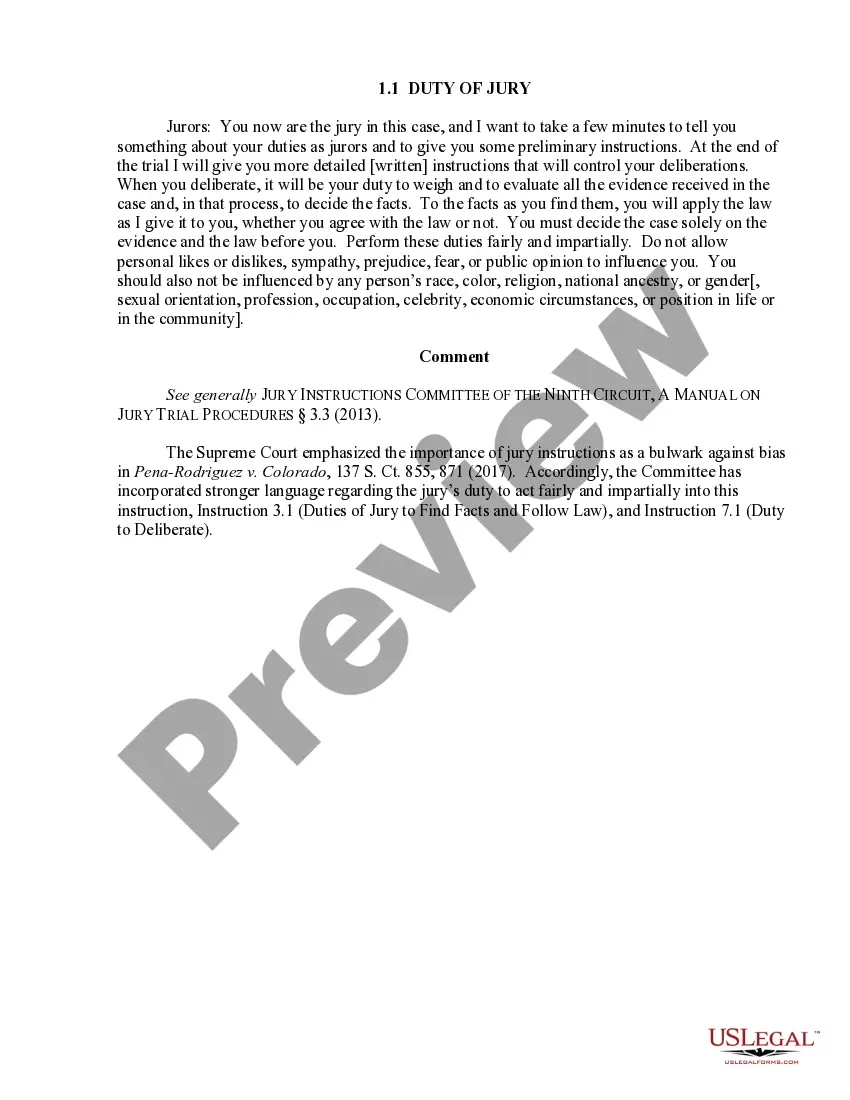
- Jurors' primary responsibility to determine the facts based on evidence.
- Application of law as instructed by the judge to assess the defendant's guilt beyond a reasonable doubt.
- Importance of following instructions from the judge over arguments made by lawyers.
- Expectation of fairness, free from bias or prejudice.
When to use this document
This form is utilized during jury trials when jurors need clear guidance on their responsibilities. It is particularly relevant at the conclusion of a trial, when jurors must deliberate and arrive at a verdict. It helps to clarify the legal standards they must apply while ensuring that the deliberation process remains free from outside influences and personal biases.
Who should use this form
This form is intended for:
- Jurors selected to serve on a trial jury.
- Judges, to offer clear instructions to jurors during trials.
- Legal professionals who are involved in the trial process to understand jurors' duties.
Completing this form step by step
- Review all instructions given by the judge regarding juror responsibilities.
- Identify and note the evidence presented during the trial.
- Deliberate with fellow jurors to reach a consensus based on the facts.
- Apply the law as instructed to these facts when deciding on a verdict.
- Ensure your decision is fair and free of any personal biases or external influences.
Does this document require notarization?
This form usually doesn’t need to be notarized. However, local laws or specific transactions may require it. Our online notarization service, powered by Notarize, lets you complete it remotely through a secure video session, available 24/7.
Get your form ready online
Our built-in tools help you complete, sign, share, and store your documents in one place.
Make edits, fill in missing information, and update formatting in US Legal Forms—just like you would in MS Word.
Download a copy, print it, send it by email, or mail it via USPS—whatever works best for your next step.
Sign and collect signatures with our SignNow integration. Send to multiple recipients, set reminders, and more. Go Premium to unlock E-Sign.
If this form requires notarization, complete it online through a secure video call—no need to meet a notary in person or wait for an appointment.
We protect your documents and personal data by following strict security and privacy standards.

Make edits, fill in missing information, and update formatting in US Legal Forms—just like you would in MS Word.

Download a copy, print it, send it by email, or mail it via USPS—whatever works best for your next step.

Sign and collect signatures with our SignNow integration. Send to multiple recipients, set reminders, and more. Go Premium to unlock E-Sign.

If this form requires notarization, complete it online through a secure video call—no need to meet a notary in person or wait for an appointment.

We protect your documents and personal data by following strict security and privacy standards.
Avoid these common issues
- Relying on personal opinions rather than the evidence presented in court.
- Confusing arguments made by lawyers with the judicial instructions.
- Allowing personal biases to influence the deliberation process.
Benefits of using this form online
- Accessibility: Downloadable legal forms allow for immediate access and convenience.
- Editability: Users can modify the form as needed before finalizing their duties.
- Reliability: The forms are drafted by licensed attorneys, ensuring legal compliance and accuracy.
Legal use & context
- The Jurors' Duties form ensures that jurors understand their role in the judicial system.
- Clear instruction helps minimize misunderstandings and promotes fair trials.
- This form articulates jurors' responsibilities and powers, emphasizing adherence to judicial guidance.
Summary of main points
- Jurors are tasked with determining facts and applying the law during deliberations.
- They must prioritize instructions from the judge over other statements made during the trial.
- Fairness, impartiality, and adherence to the law are essential duties of jurors.
Looking for another form?
Form popularity
FAQ
If selected, a juror serves an average of three to five days during a term of court. Grand Jurors convene monthly for one to three days during the 12-18 month term of service.
5 Things to Look for in the Jury Selection Process Relevant Life Experiences. In selecting (or de-selecting) a potential juror, one important element to consider is the person's previous life experience as it relates to the case at hand.Social Pressure.Online Activity.Legal Opinions.Ability to Be Impartial.
The judge in a criminal case tells the jury what the law is. The jury must determine what the true facts are. On that basis the jury has only to determine whether the defendant is guilty or not guilty as to each offense charged.
?All rise for the jury!? It's a statement heard in every jury trial in the Cuyahoga County Common Pleas Court when the jury enters or leaves the courtroom. It's a sign of respect for the men and women who have been seated as jurors. Without them, the American justice system would not work.
Jurors tend to be less concerned with technical details and more so with listening to a compelling story and making a decision based on who they believe should win under the circumstances. Meanwhile, judges analyze all the facts, evidence, and details of the case.
At the end of a trial, the judge instructs the jury on the applicable law. While the jury must obey the judge's instructions as to the law, the jury alone is responsible for determining the facts of the case.
In any trial the judge is the ultimate decision maker and has the power to overturn a jury verdict if there is insufficient evidence to support that verdict or if the decision granted inadequate compensatory damages.
In American courts, JNOV is the practice whereby the presiding judge in a civil jury trial may overrule the decision of a jury and reverse or amend their verdict. In literal terms, the judge enters a judgment notwithstanding the jury verdict.