MAIL FRAUD
Understanding this form
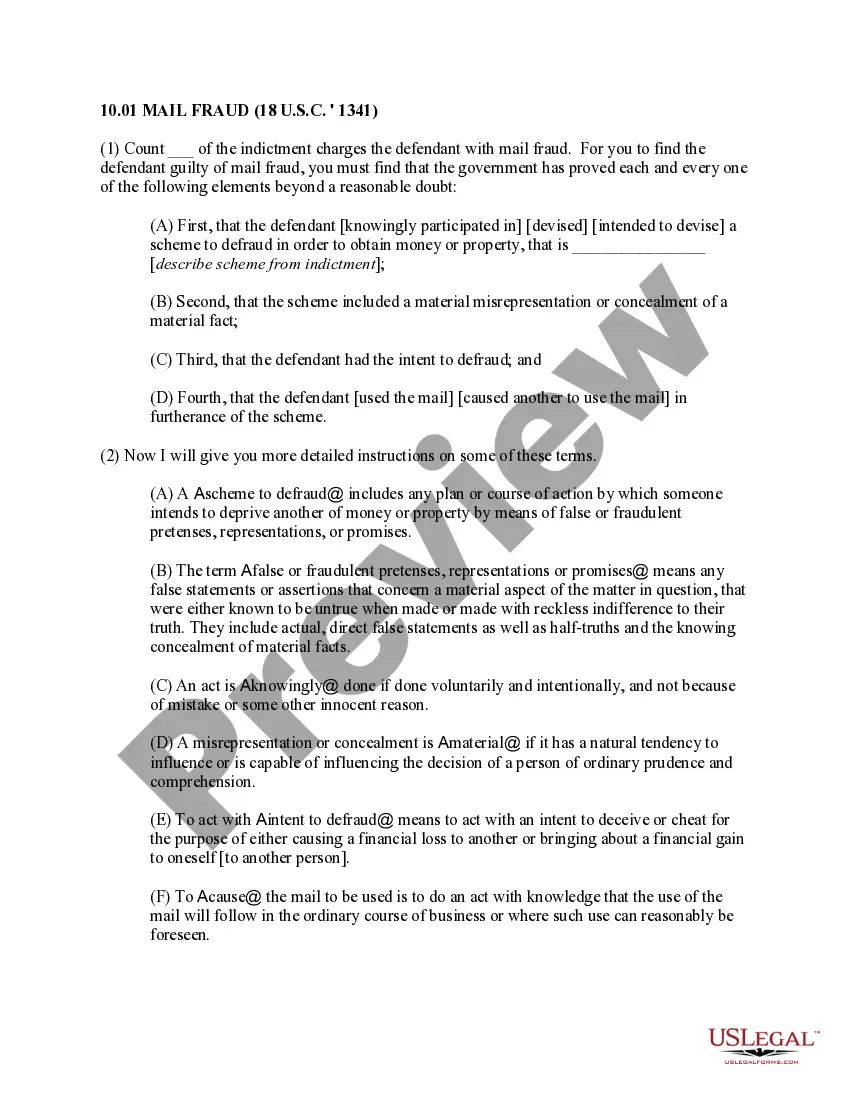
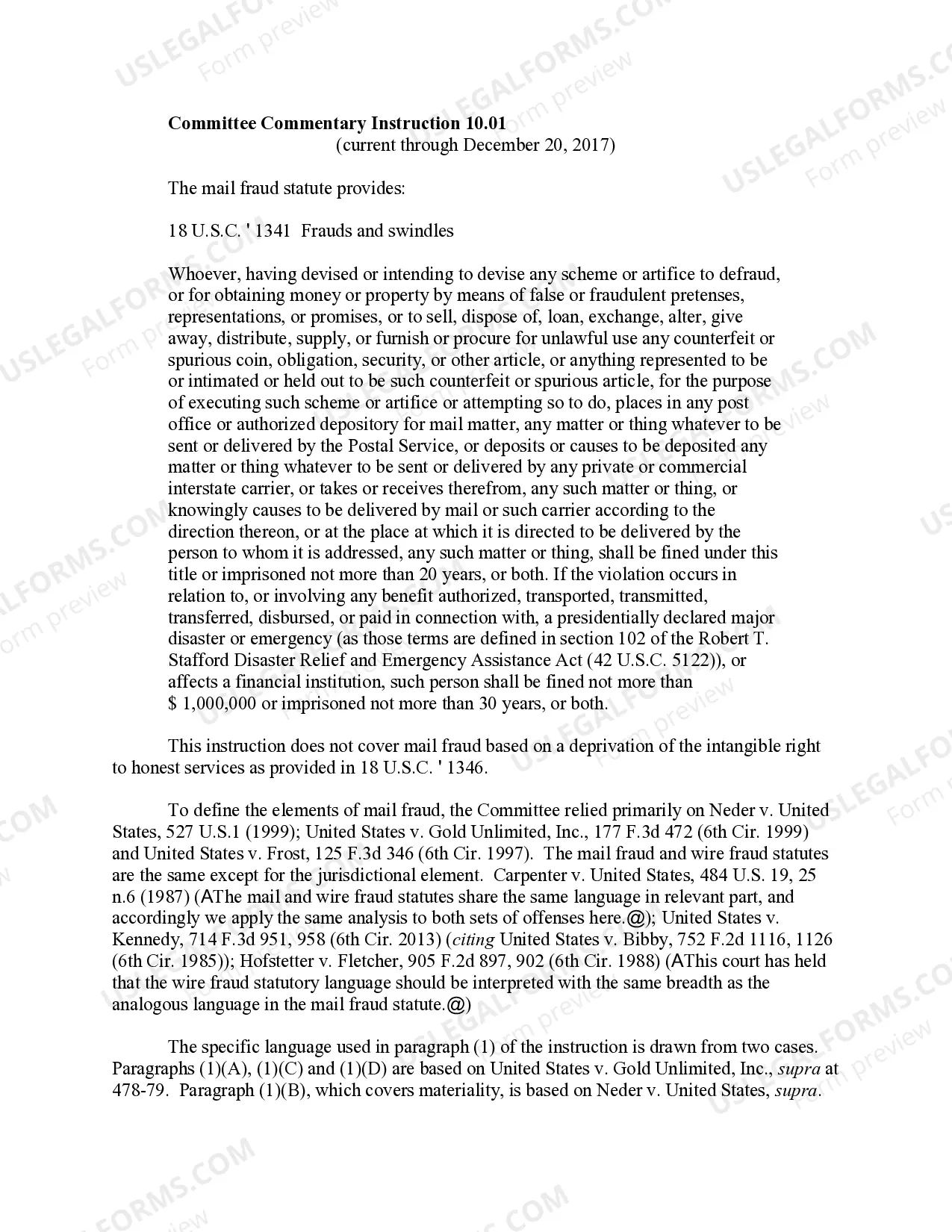
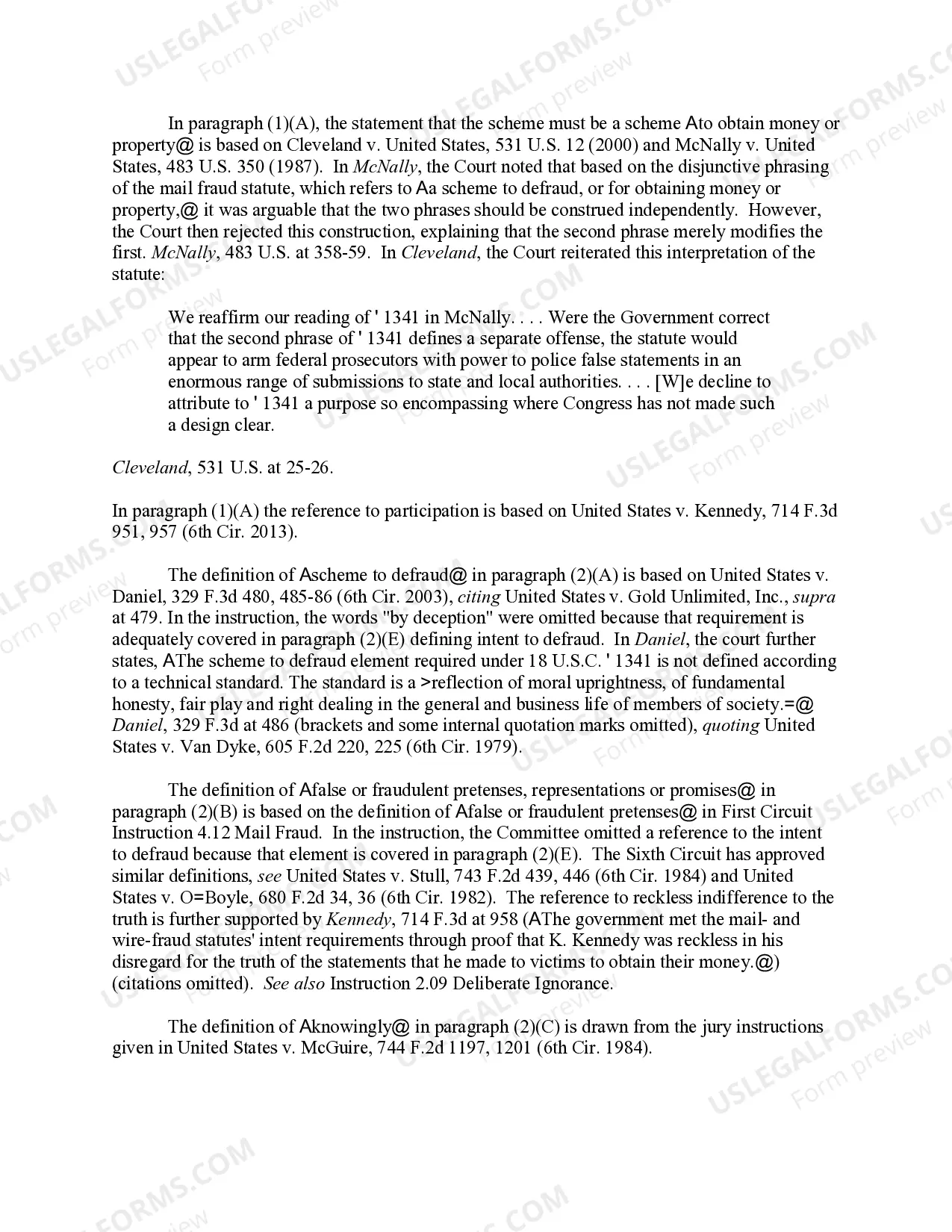
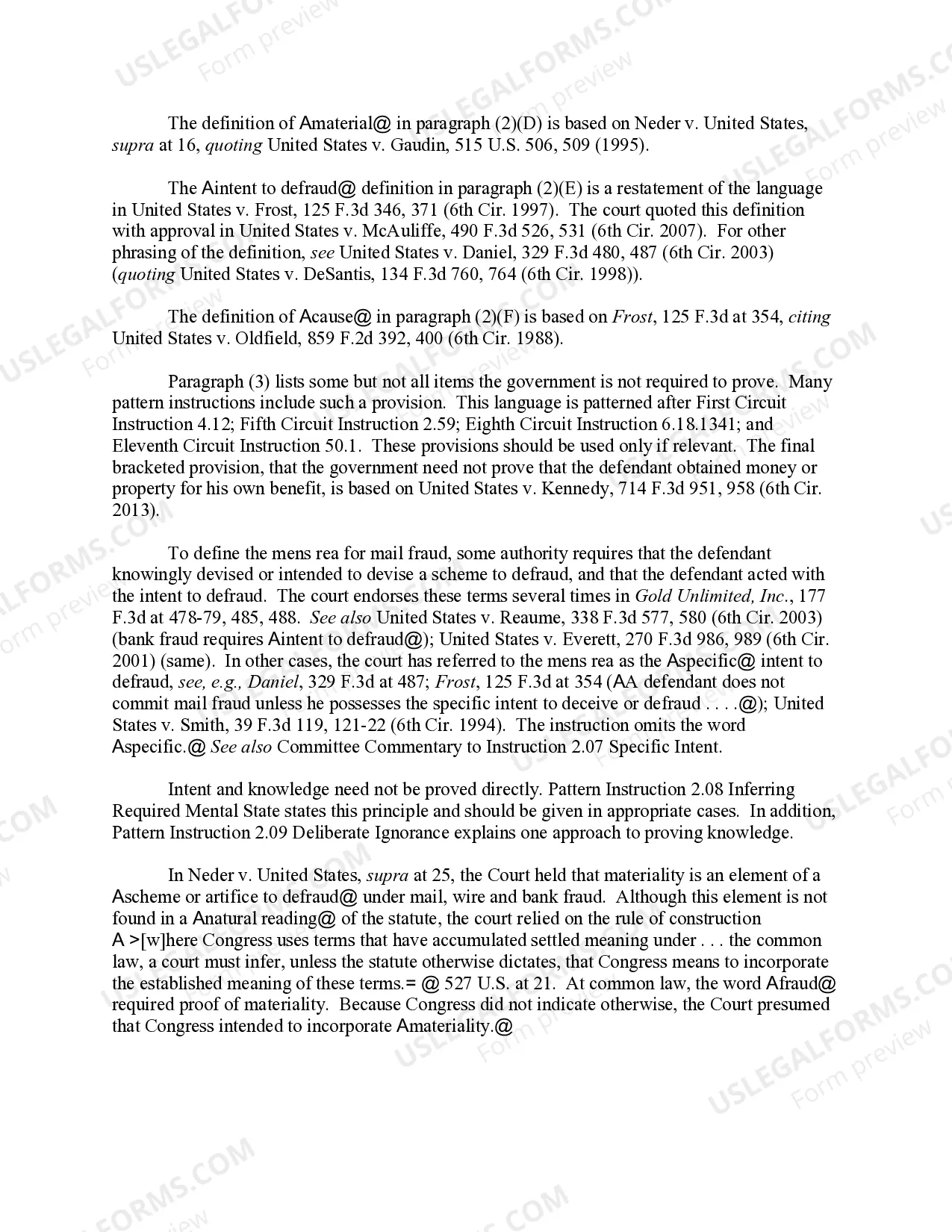
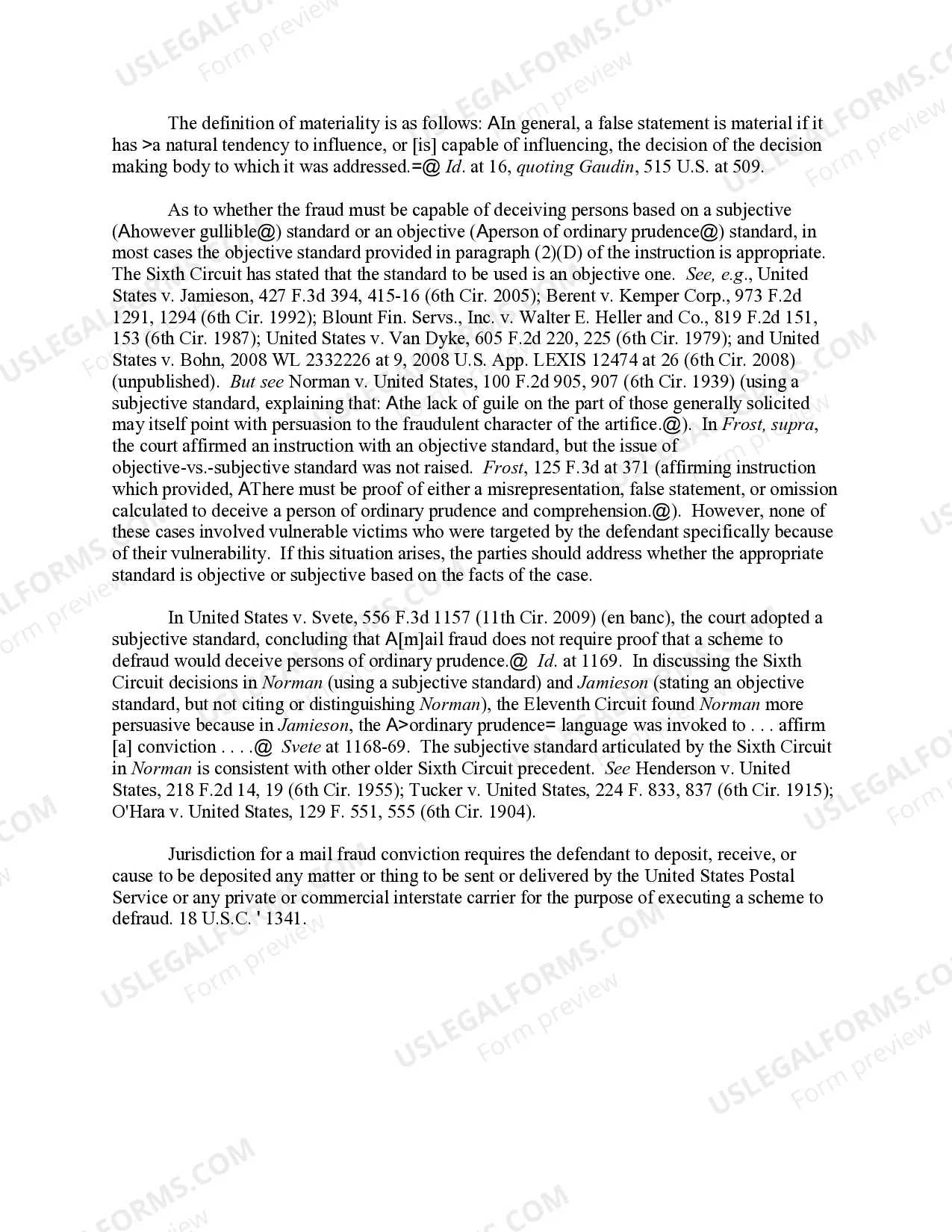
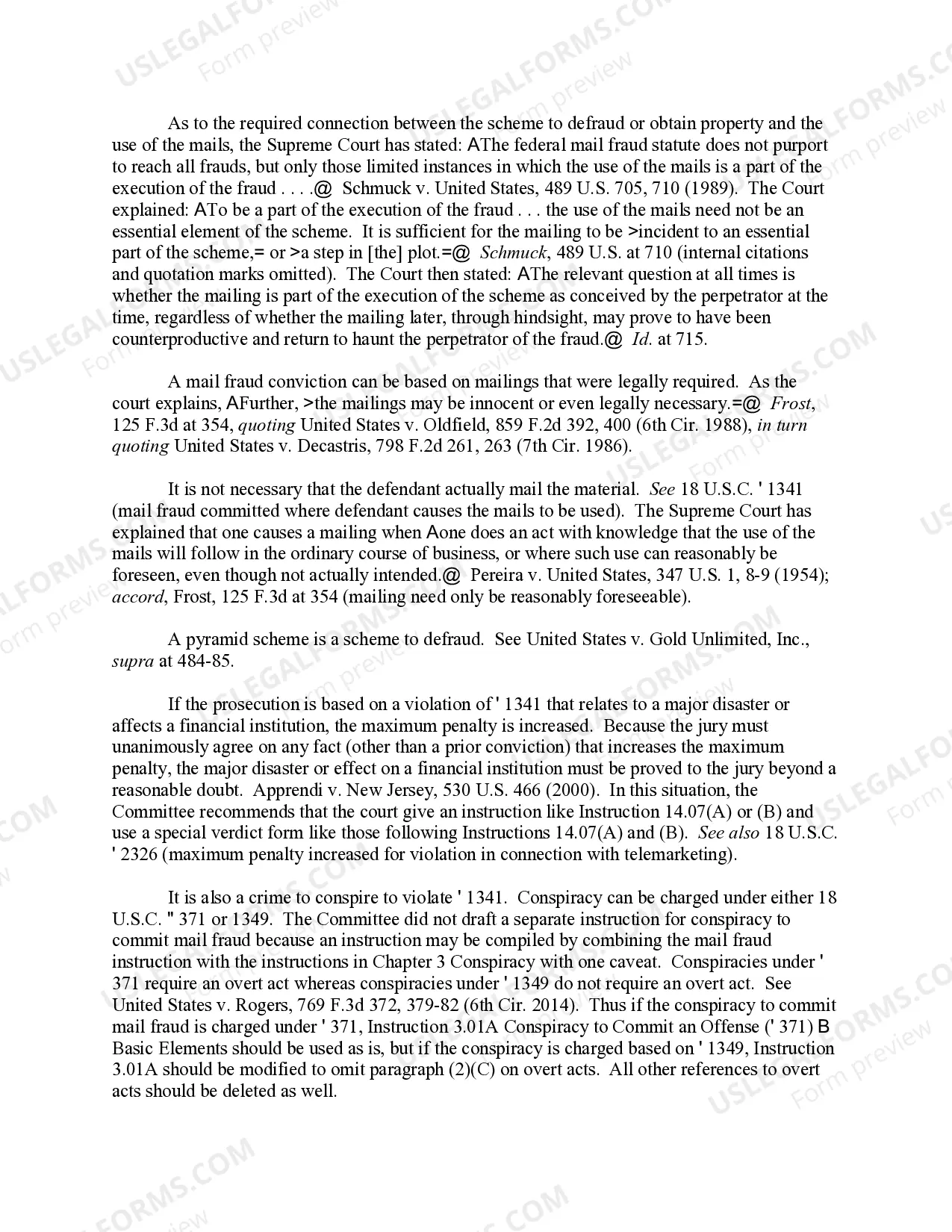
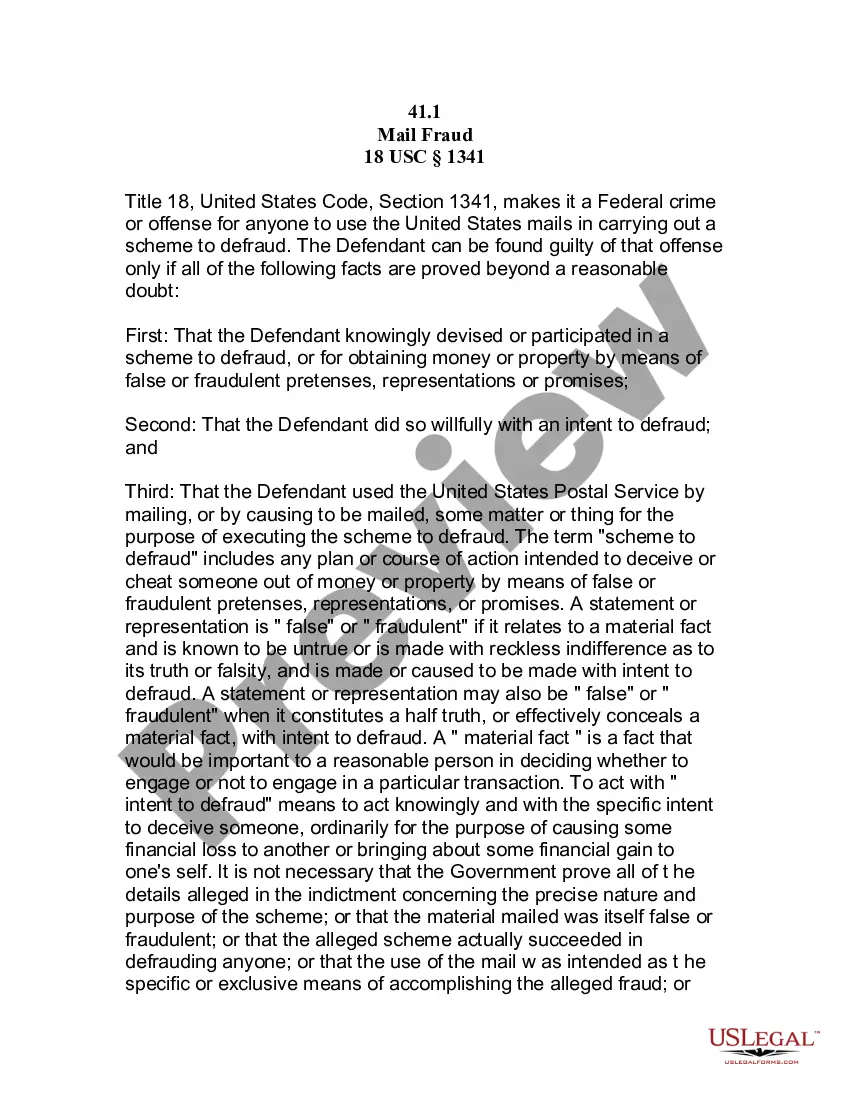
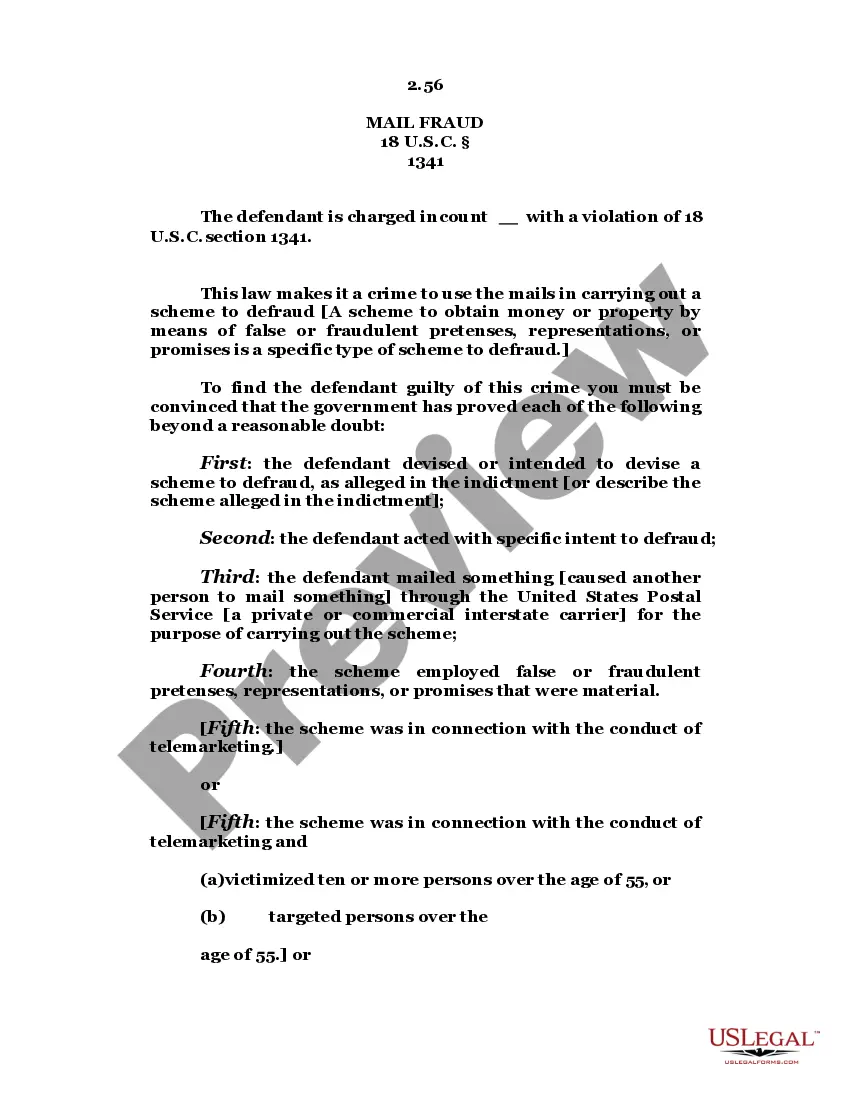
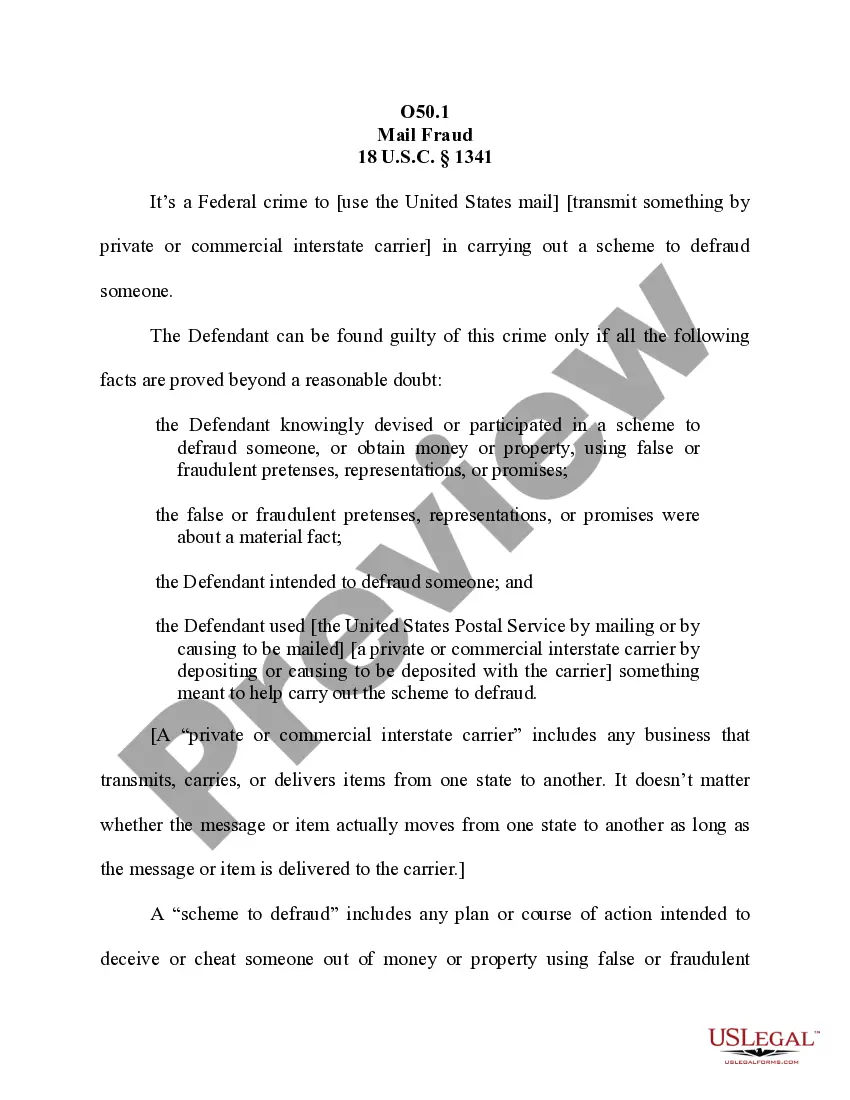
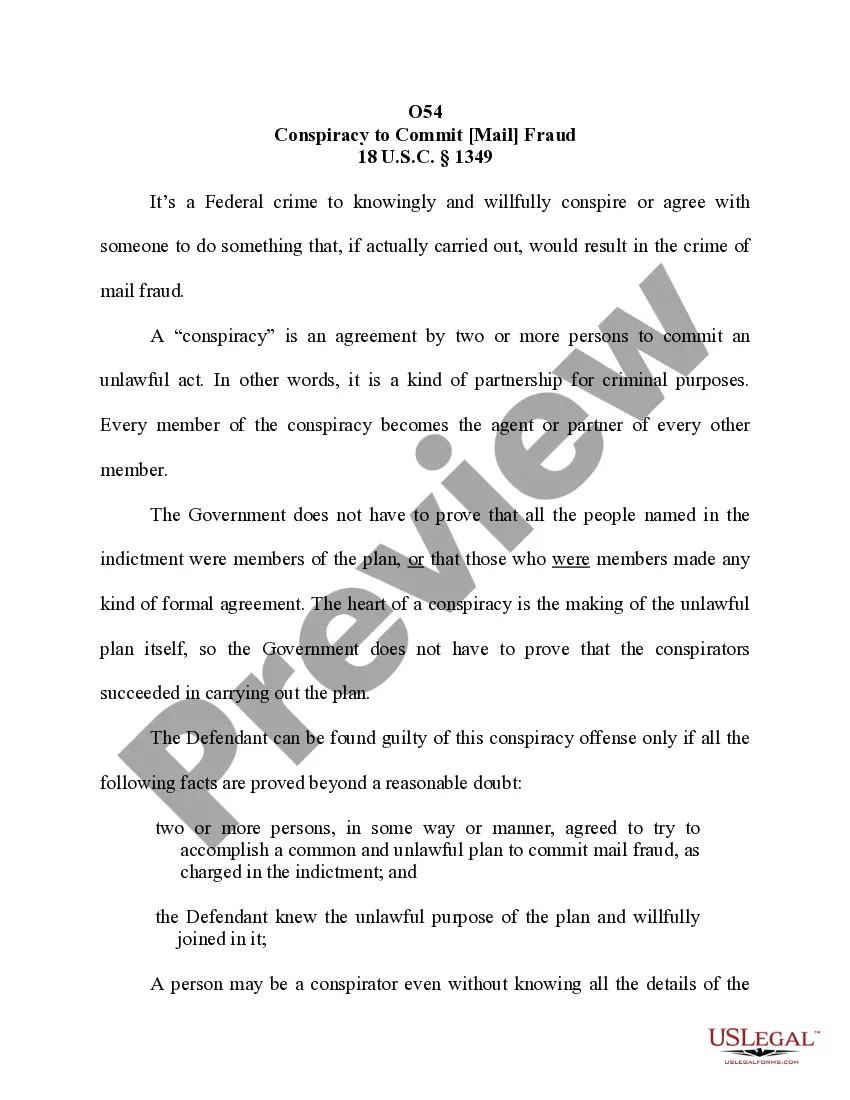
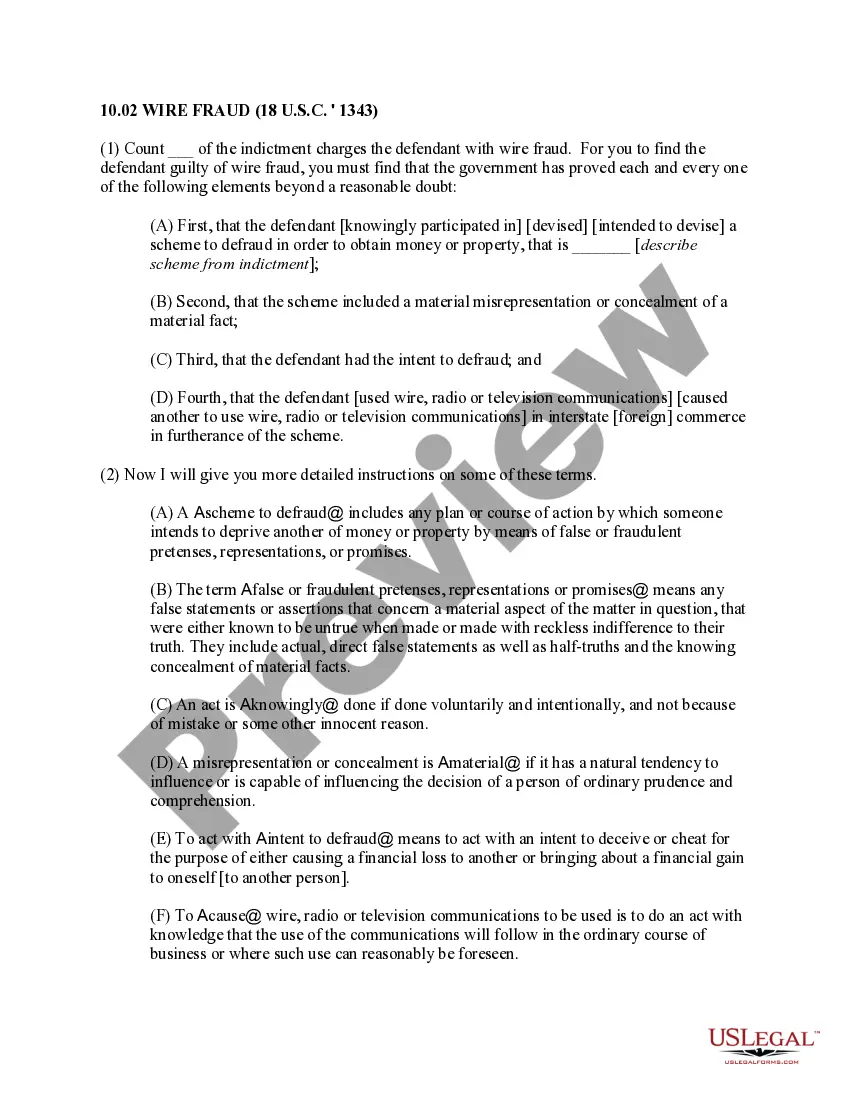
The Mail Fraud form is a legal document designed to outline the elements of the crime of mail fraud, as defined under 18 U.S.C. § 1341. This form serves as a guide for juries to evaluate the evidence presented against a defendant accused of engaging in fraudulent schemes using the mail system. It clearly delineates the necessary criteria that must be proven for a conviction, distinguishing it from other forms of fraud, such as wire fraud or securities fraud, which have different legal definitions and implications.
What’s included in this form
- Count designation for the indictment charges against the defendant.
- Clear definitions of each element required to prove mail fraud, including participation in a scheme and intent to defraud.
- Instructions on material misrepresentation and its relevance in the fraud scheme.
- Specificity regarding the use of mail or commercial carriers in furthering the fraudulent scheme.
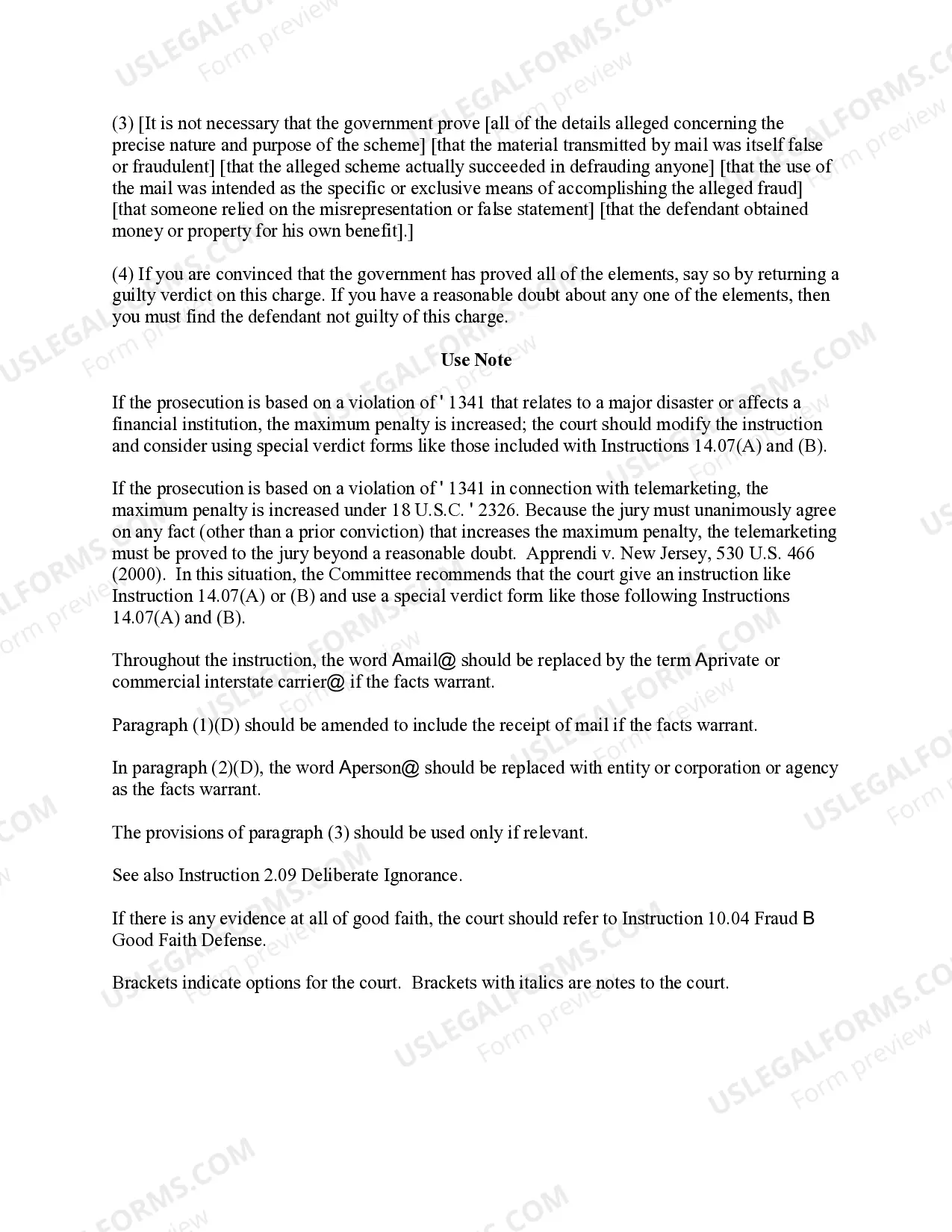
- Clarification on what does not need to be proven for a mail fraud conviction.

When this form is needed
This form is used in criminal cases where an individual is charged with mail fraud. It instructs jurors on how to assess the evidence, ensuring that they understand the legal standards that must be met for a guilty verdict. This form comes into play during trial proceedings when evaluating whether the defendant's actions constitute mail fraud as defined by federal law.
Who can use this document
- Judges overseeing criminal trials involving mail fraud charges.
- Jurors tasked with delivering a verdict in mail fraud cases.
- Legal professionals needing a framework for presenting or defending against mail fraud allegations.
Completing this form step by step
- Review the indictment and specify the count number related to mail fraud.
- Outline the scheme to defraud as described in the indictment, detailing the nature of the deception.
- Articulate any material misrepresentations made during the fraudulent scheme.
- Confirm the defendant's intent to defraud and provide evidence or context for this intent.
- Document how the mail or commercial carrier was utilized in furtherance of the scheme.
Does this form need to be notarized?
Notarization is generally not required for this form. However, certain states or situations might demand it. You can complete notarization online through US Legal Forms, powered by Notarize, using a verified video call available anytime.
Get your form ready online
Our built-in tools help you complete, sign, share, and store your documents in one place.
Make edits, fill in missing information, and update formatting in US Legal Forms—just like you would in MS Word.
Download a copy, print it, send it by email, or mail it via USPS—whatever works best for your next step.
Sign and collect signatures with our SignNow integration. Send to multiple recipients, set reminders, and more. Go Premium to unlock E-Sign.
If this form requires notarization, complete it online through a secure video call—no need to meet a notary in person or wait for an appointment.
We protect your documents and personal data by following strict security and privacy standards.

Make edits, fill in missing information, and update formatting in US Legal Forms—just like you would in MS Word.

Download a copy, print it, send it by email, or mail it via USPS—whatever works best for your next step.

Sign and collect signatures with our SignNow integration. Send to multiple recipients, set reminders, and more. Go Premium to unlock E-Sign.

If this form requires notarization, complete it online through a secure video call—no need to meet a notary in person or wait for an appointment.

We protect your documents and personal data by following strict security and privacy standards.
Avoid these common issues
- Failing to clearly define the scheme to defraud, making it difficult for jurors to grasp the nature of the case.
- Neglecting to provide evidence of intent to defraud which is crucial for conviction.
- Assuming the jury understands legal terms without offering definitions or explanations.
Benefits of completing this form online
- Access to accurate, legally vetted templates drafted by licensed attorneys.
- Convenience of downloading and completing forms at any time without needing to visit an office.
- Formatted for clarity, helping users navigate complex legal language easily.
Legal use & context
- The Mail Fraud form is used as a legal standard for jury instructions in federal court.
- It provides a structured approach to evaluating allegations of mail fraud, reinforcing the necessity of proving specific elements of the crime.
- This form supports the legal process by ensuring that jurors receive comprehensive guidance for decision-making.
Looking for another form?
Form popularity
FAQ
"There are two elements in mail fraud: (1) having devised or intending to devise a scheme to defraud (or to perform specified fraudulent acts), and (2) use of the mail for the purpose of executing, or attempting to execute, the scheme (or specified fraudulent acts)." Schmuck v.
Some examples of mail fraud include Ponzi or pyramid schemes, mail that looks as if it was government issued, and propaganda regarding lotteries or sweepstakes.
A person commits mail fraud when he engages in a scheme to defraud, with intent to defraud, and uses the mails in furtherance of that scheme. A scheme to defraud means depriving someone of property by deceitful or dishonest means.
Penalties. Mail Fraud is punishable by imprisonment for 20 years, a fine, or both. There are two subsets of Mail Fraud punishable by a $1,000,000 fine, 30 years' incarceration, or both.
The statute of limitations for mail fraud and wire fraud prosecutions is five years (18 U.S.C. § 3282), except for mail and wire fraud schemes that affect a financial institution, in which case the statute is ten years (18 U.S.C.
If a charge of mail fraud turns into a conviction, you face up to $250,000 in fines and imprisonment for up to 20 years. If the mail fraud is in connection with a presidentially declared major disaster or emergency, or one that effects a financial institution, then enhanced penalties will apply.