Aggravated Identity Theft
About this form
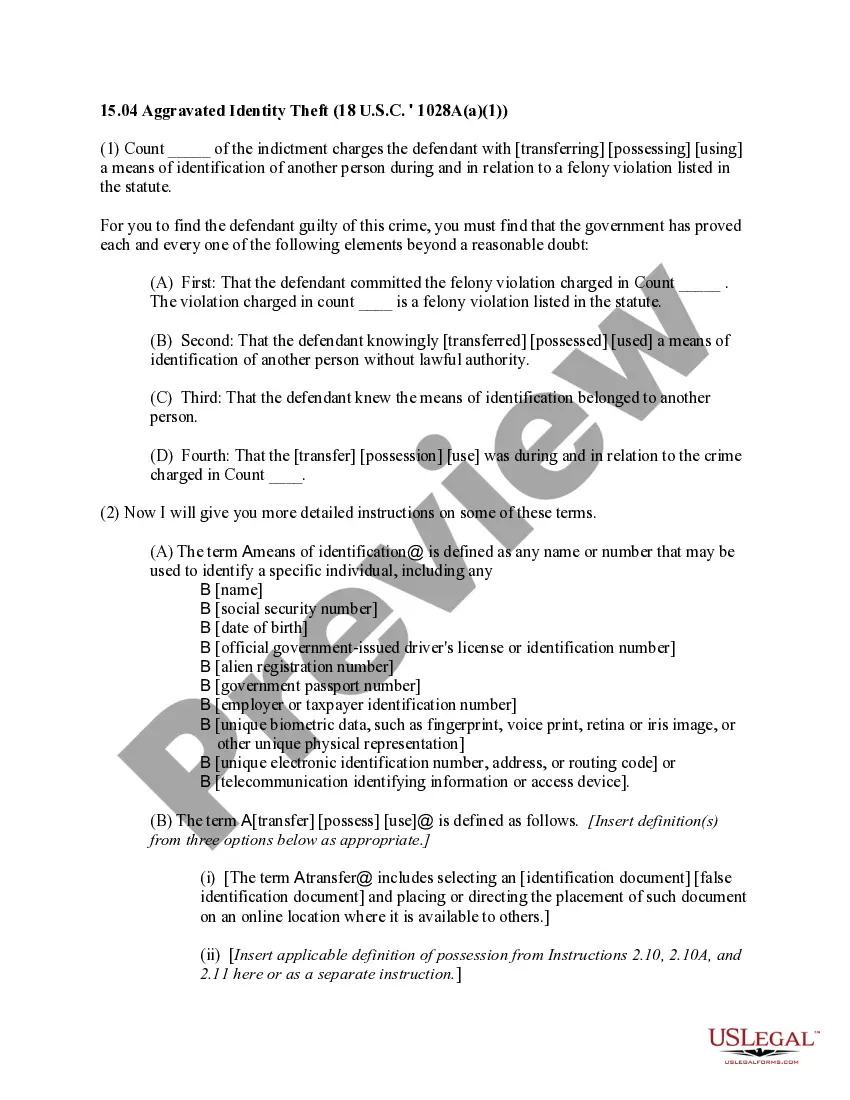
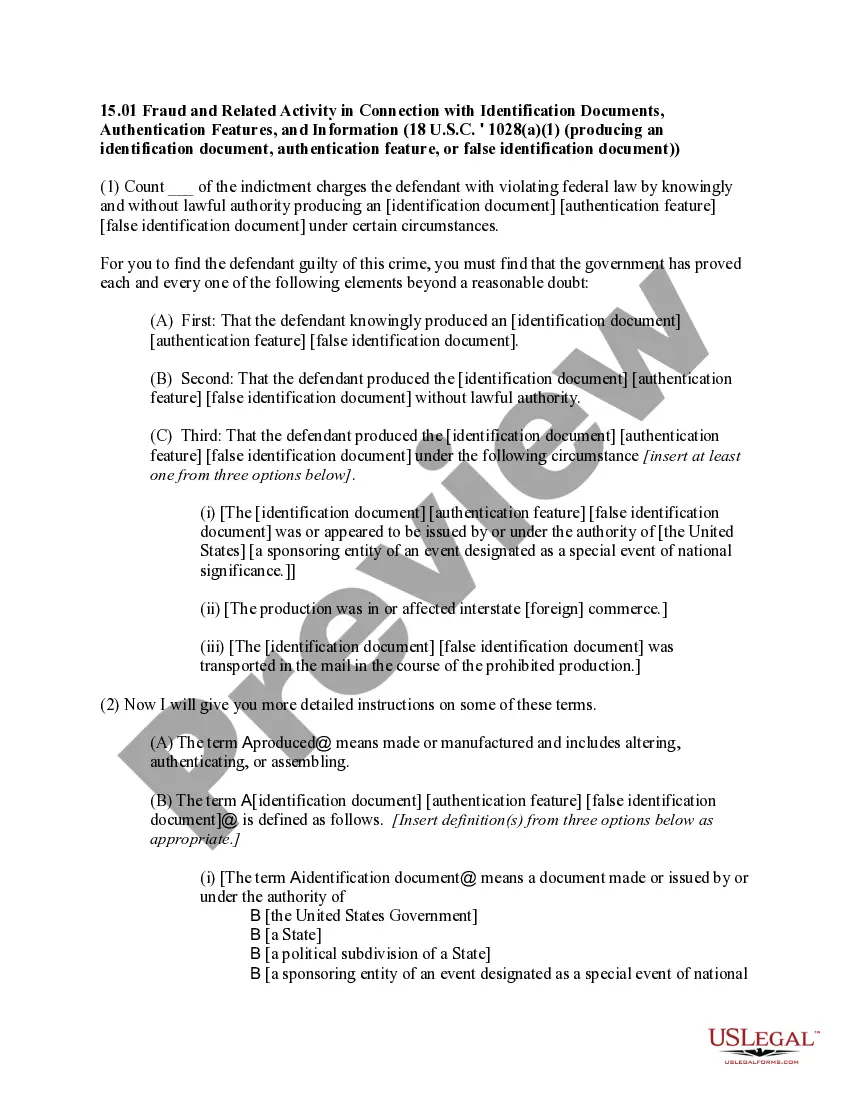
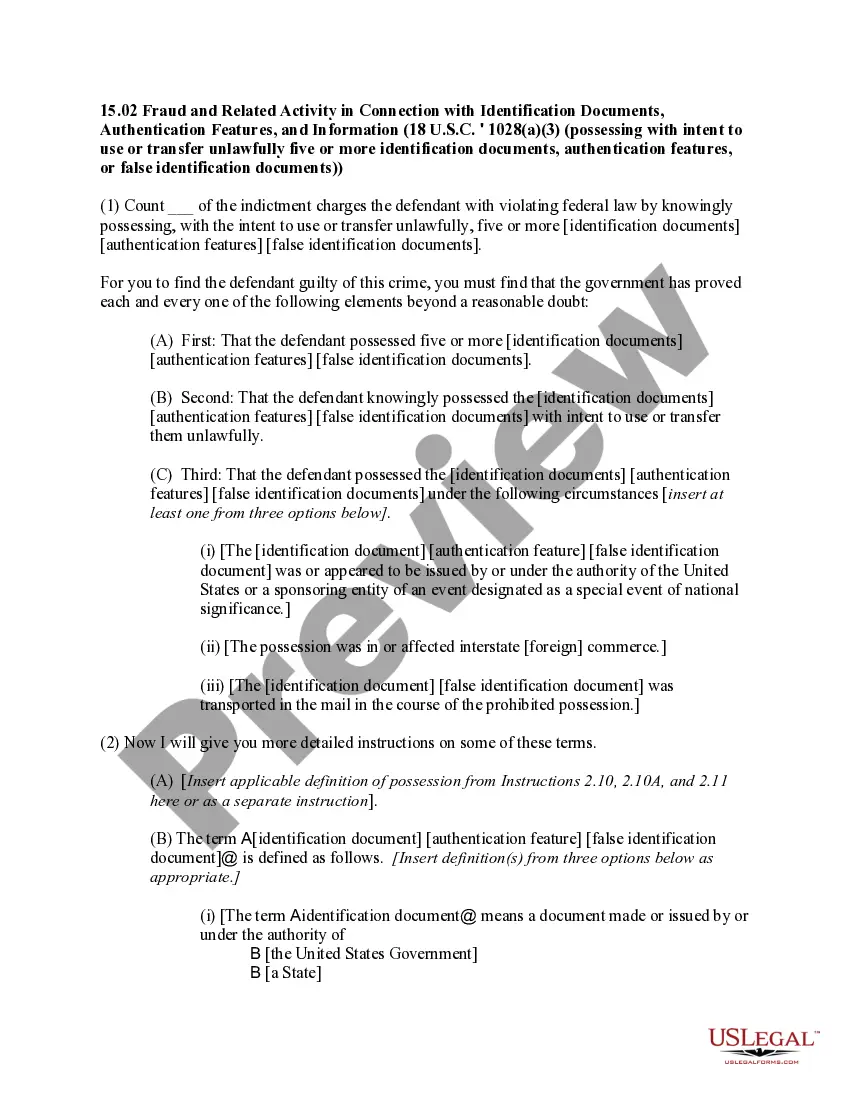
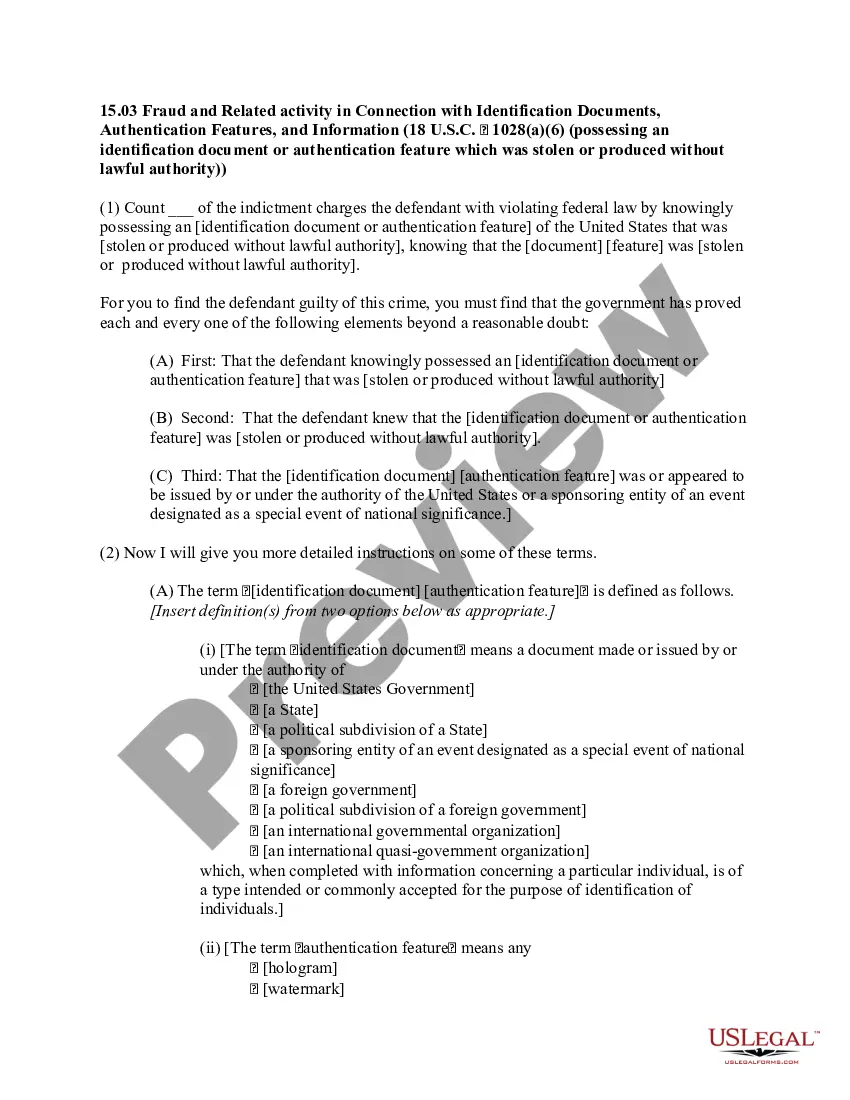
The Aggravated Identity Theft form is a legal document that outlines the charges related to the unlawful use of someone else's identification during the commission of a felony. This form is distinct from other identity theft forms as it specifies the additional penalties that apply when the theft is committed in conjunction with a felony offense, providing a clearer structure for prosecution in these cases.
Key parts of this document
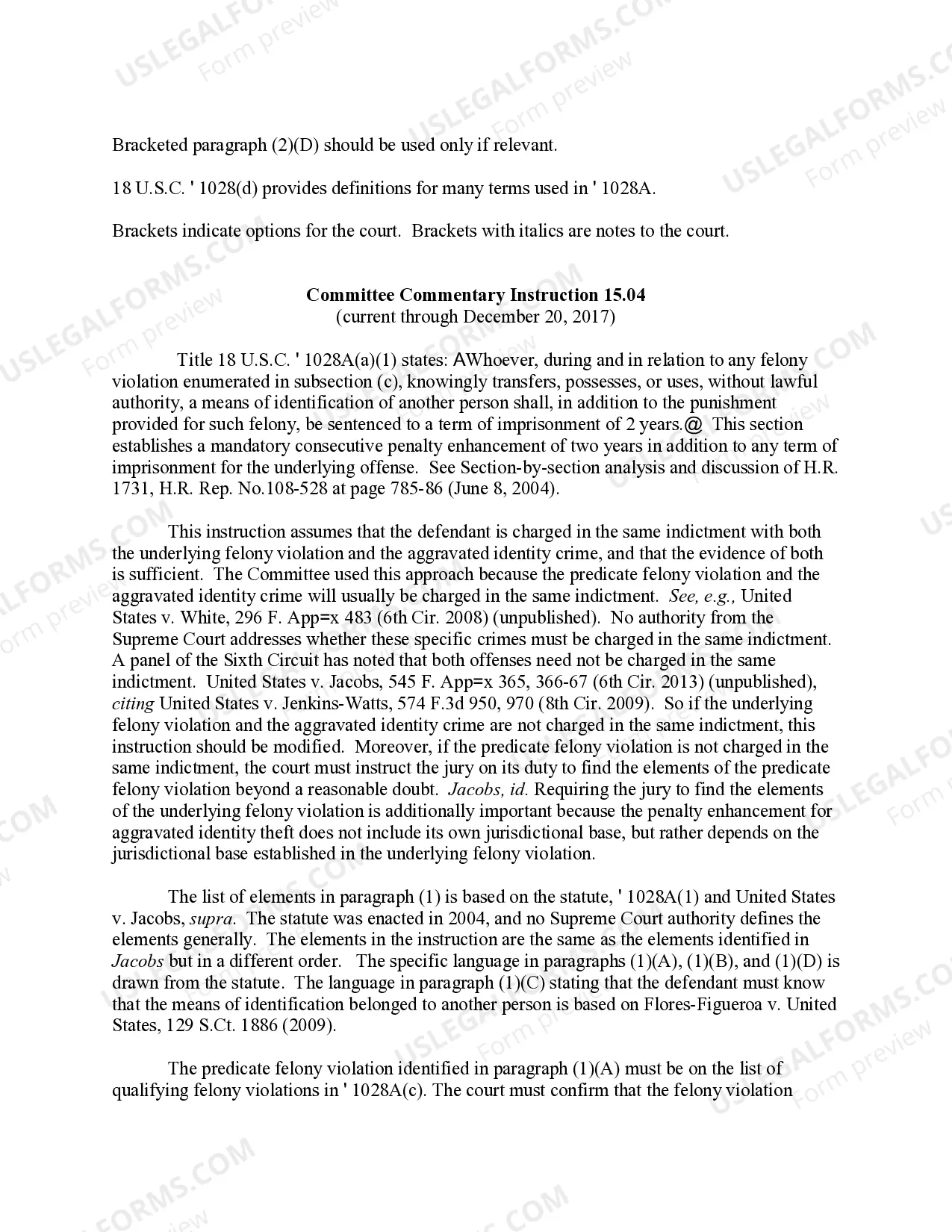
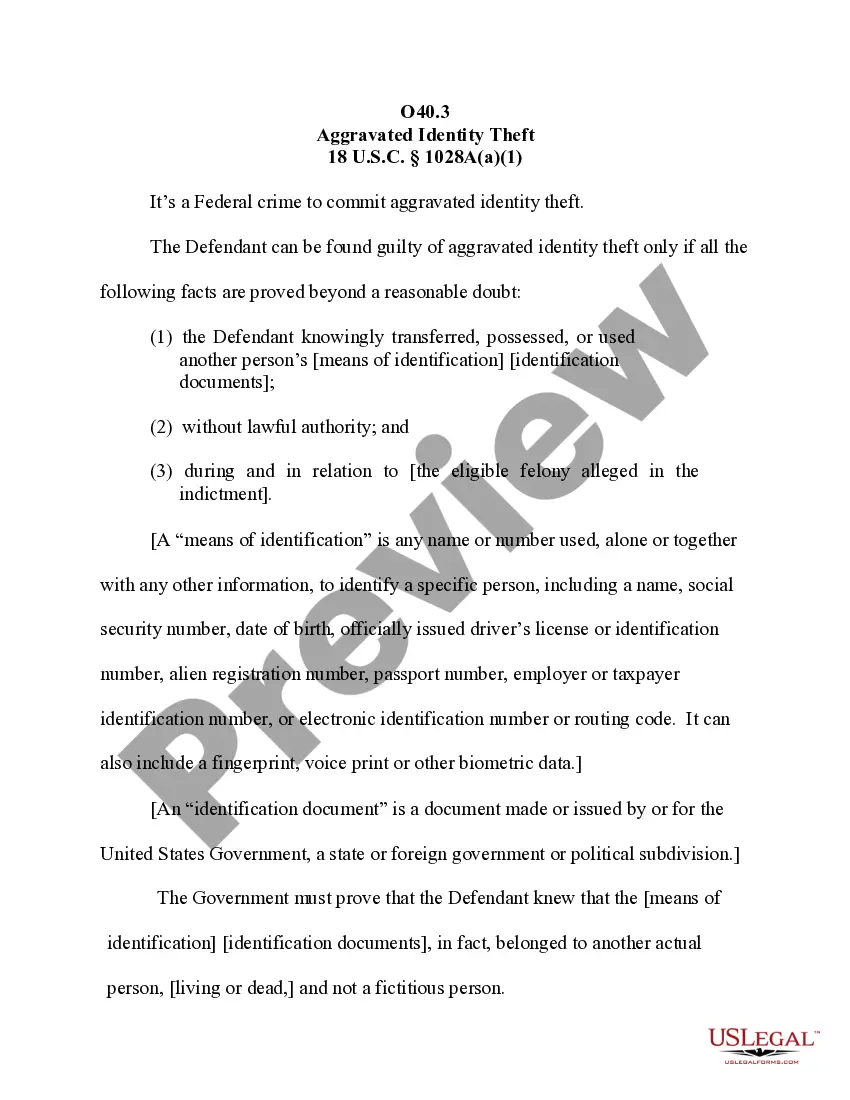
- Defines aggravated identity theft under 18 U.S.C. 1028A(a)(1).
- Lists elements that must be proven, including the commission of a felony and knowledge of using another's identification.
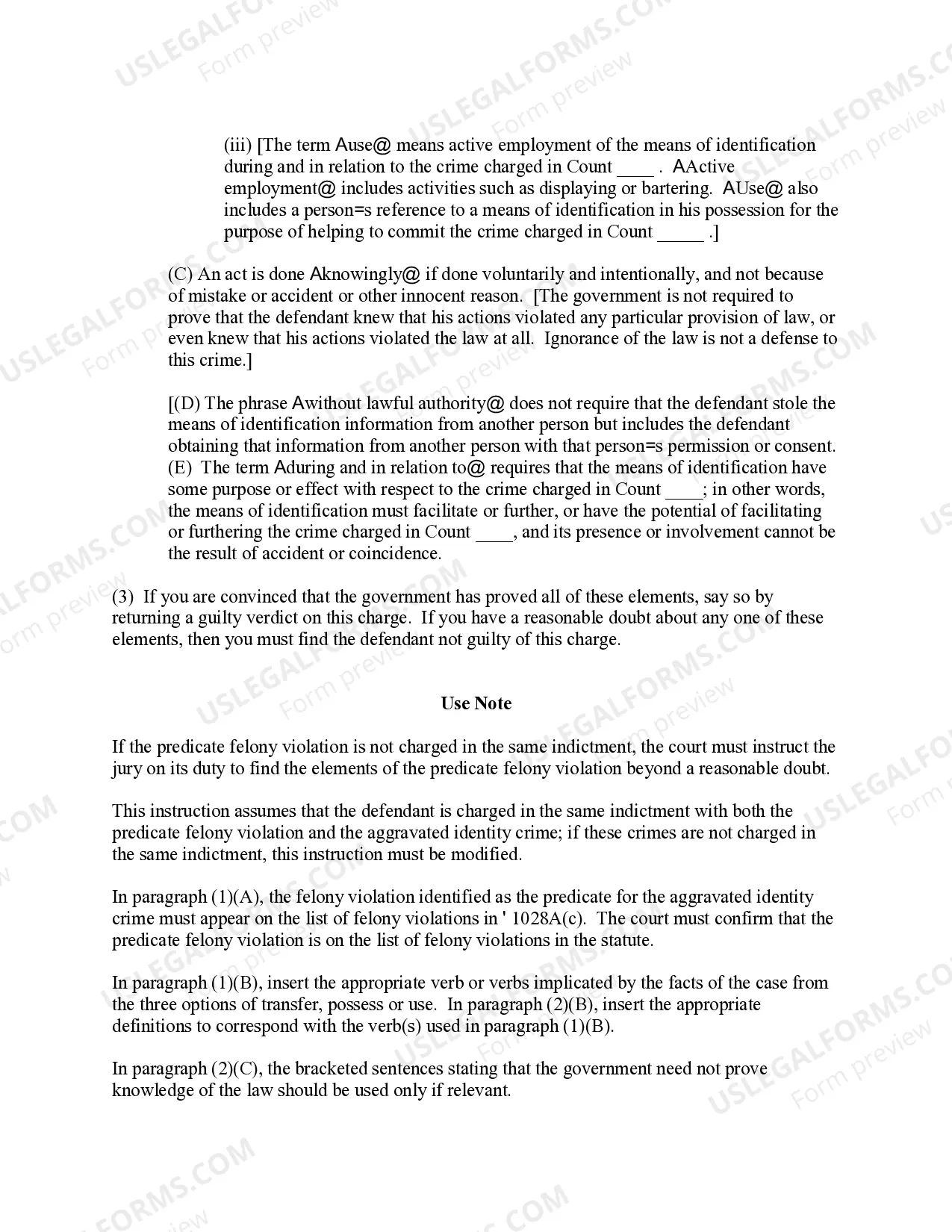
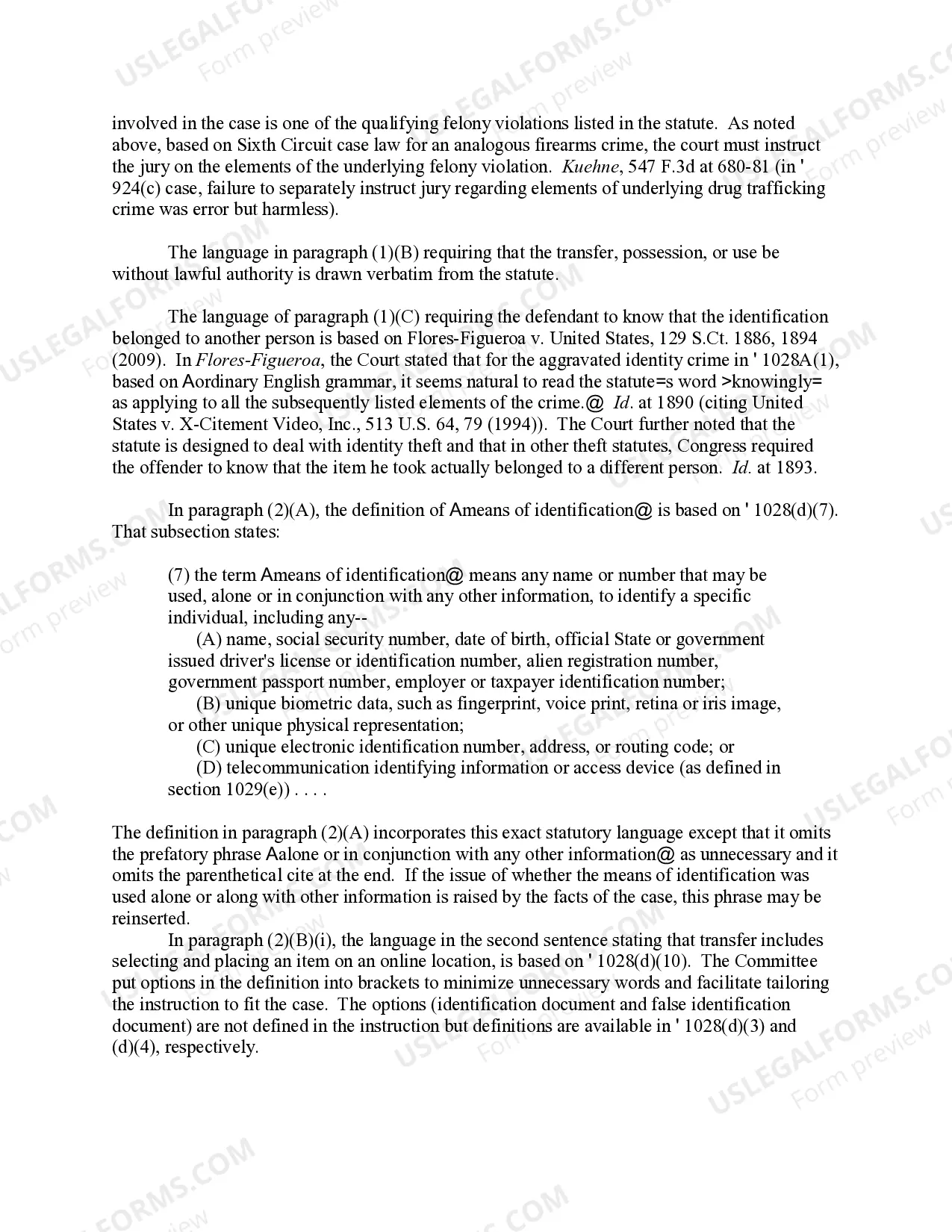
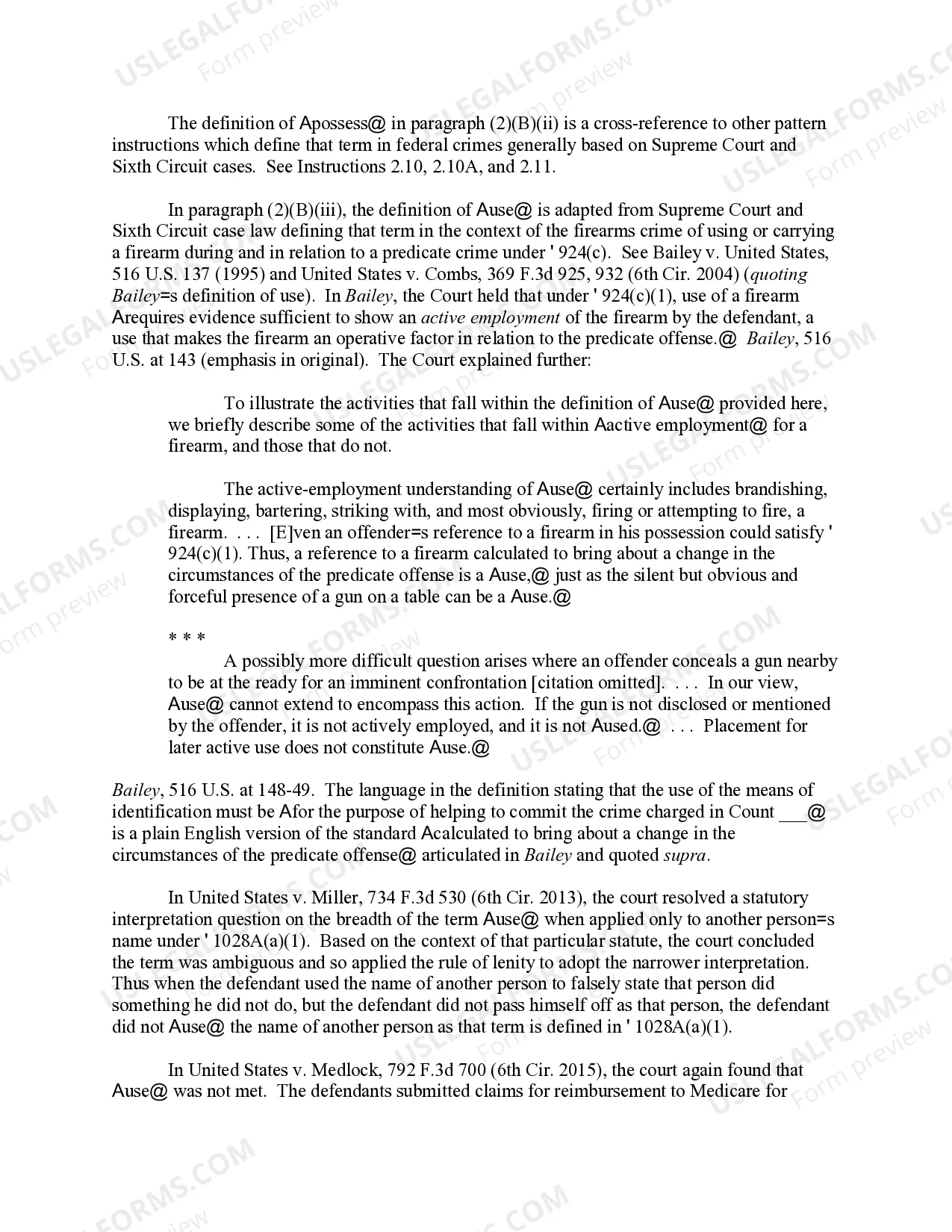
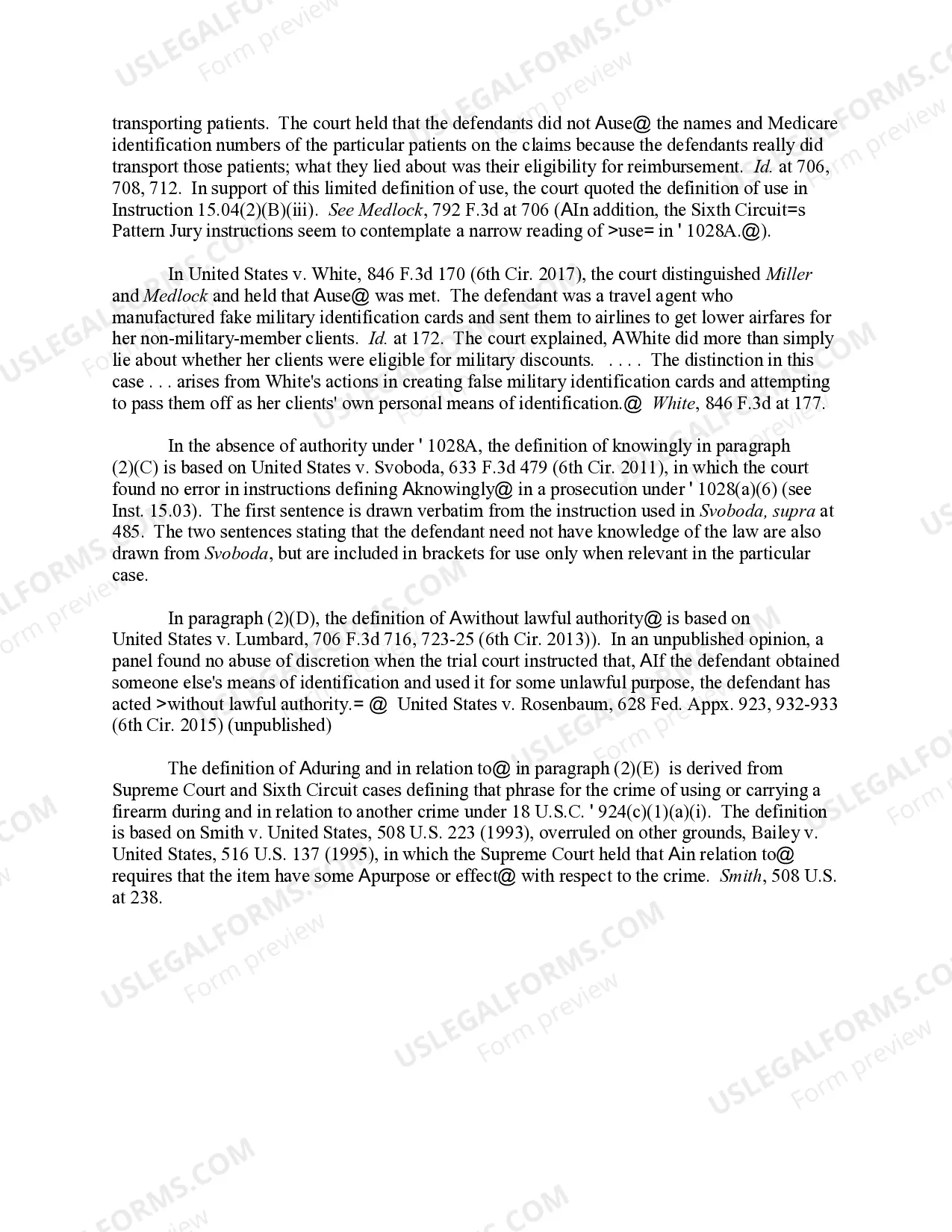
- Clarifies terms such as "means of identification," "knowingly," and "without lawful authority."
- Instructs on the relationship between the identity theft act and the underlying felony charged.
- Details the jury's responsibilities when evaluating the elements of the crime.

Situations where this form applies
This form should be used in criminal cases where an individual is accused of identity theft that occurred during the commission of a felony. It is particularly relevant when the defendant's actions meet the criteria for aggravated identity theft, as laid out in federal law.
Who needs this form
- Prosecutors seeking to charge a defendant with aggravated identity theft.
- Legal professionals representing clients involved in identity theft cases.
- Defendants wanting to understand the charges against them relating to identity theft.
Steps to complete this form
- Identify the defendant and the felony charges associated with the case.
- Specify the means of identification that was unlawfully used or transferred.
- Indicate the knowledge the defendant had regarding the ownership of the identification used.
- Detail how the use of the identification is related to the felony charge.
- Review the legal definitions included in the form to ensure accuracy.
Does this form need to be notarized?
This form usually doesn’t need to be notarized. However, local laws or specific transactions may require it. Our online notarization service, powered by Notarize, lets you complete it remotely through a secure video session, available 24/7.
Get your form ready online
Our built-in tools help you complete, sign, share, and store your documents in one place.
Make edits, fill in missing information, and update formatting in US Legal Forms—just like you would in MS Word.
Download a copy, print it, send it by email, or mail it via USPS—whatever works best for your next step.
Sign and collect signatures with our SignNow integration. Send to multiple recipients, set reminders, and more. Go Premium to unlock E-Sign.
If this form requires notarization, complete it online through a secure video call—no need to meet a notary in person or wait for an appointment.
We protect your documents and personal data by following strict security and privacy standards.

Make edits, fill in missing information, and update formatting in US Legal Forms—just like you would in MS Word.

Download a copy, print it, send it by email, or mail it via USPS—whatever works best for your next step.

Sign and collect signatures with our SignNow integration. Send to multiple recipients, set reminders, and more. Go Premium to unlock E-Sign.

If this form requires notarization, complete it online through a secure video call—no need to meet a notary in person or wait for an appointment.

We protect your documents and personal data by following strict security and privacy standards.
Typical mistakes to avoid
- Failing to establish a clear connection between the identification theft and the underlying felony.
- Neglecting to provide sufficient evidence of the defendant's knowledge of the identification ownership.
- Omitting crucial definitions specified in the statute that clarify the terms used in the charge.
Benefits of using this form online
- Convenient access to legally approved templates that are easy to download.
- Editability allows for customization based on specific case details.
- Reliable format designed by licensed attorneys familiar with current legal standards.
Legal use & context
- Aggravated identity theft charges can lead to significant penalties, including mandatory minimum prison time.
- Requires related felony charges to be present in the indictment for the aggravated identity theft charge to stand.
- Understanding the elements of the charge is crucial for effective defense or prosecution.
Key takeaways
- The Aggravated Identity Theft form is specific to cases involving identity theft associated with felonies.
- It is important to understand all legal definitions and necessary elements for the charge.
- Prosecutors and defendants alike should utilize this form to clarify the charges and ensure proper legal procedure.
Looking for another form?
Form popularity
FAQ
Aggravated identity theft is punishable by imprisonment for two years and by imprisonment for five years, if the offense involves a federal crime of terrorism.
Theft or embezzlement by a bank officer or bank employee. Falsely impersonating a U.S. citizen. False statements made during the acquisition of a firearm. Bank Fraud, Wire Fraud, Mail Fraud.
18 USC 1028A provides that aggravated identity theft occurs when a person commits a crime and also ?knowingly transfers, possesses, or uses, without lawful authority, a means of identification of another person.?
The law says a defendant is guilty of aggravated identity theft when he "knowingly transfers, possesses, or uses, without lawful authority, a means of identification of another person?during and in relation to" one of many predicate offenses, including health care fraud.
The four types of identity theft include medical, criminal, financial and child identity theft. Medical identity theft occurs when individuals identify themselves as another to procure free medical care.
The federal crime is aggravated identity theft under 18 U.S.C § 1028A is defined as: "Anyone who knowingly transfers, possesses, or uses, a means of identification of somebody shall, in addition to the felony penalties, will be sentenced to imprisonment of 2 years, or five years for terrorism."
Aggravated Identity Theft ? 18 U.S.C. § 1028A Aggravated identity theft is different than identity theft because aggravated identity theft involves stealing another person's identity and then committing a crime.
The penalty for aggravated identity theft is a mandatory prison term of 5 years if the underlying felony is a crime of terrorism and a mandatory prison term of 2 years for other felonies.