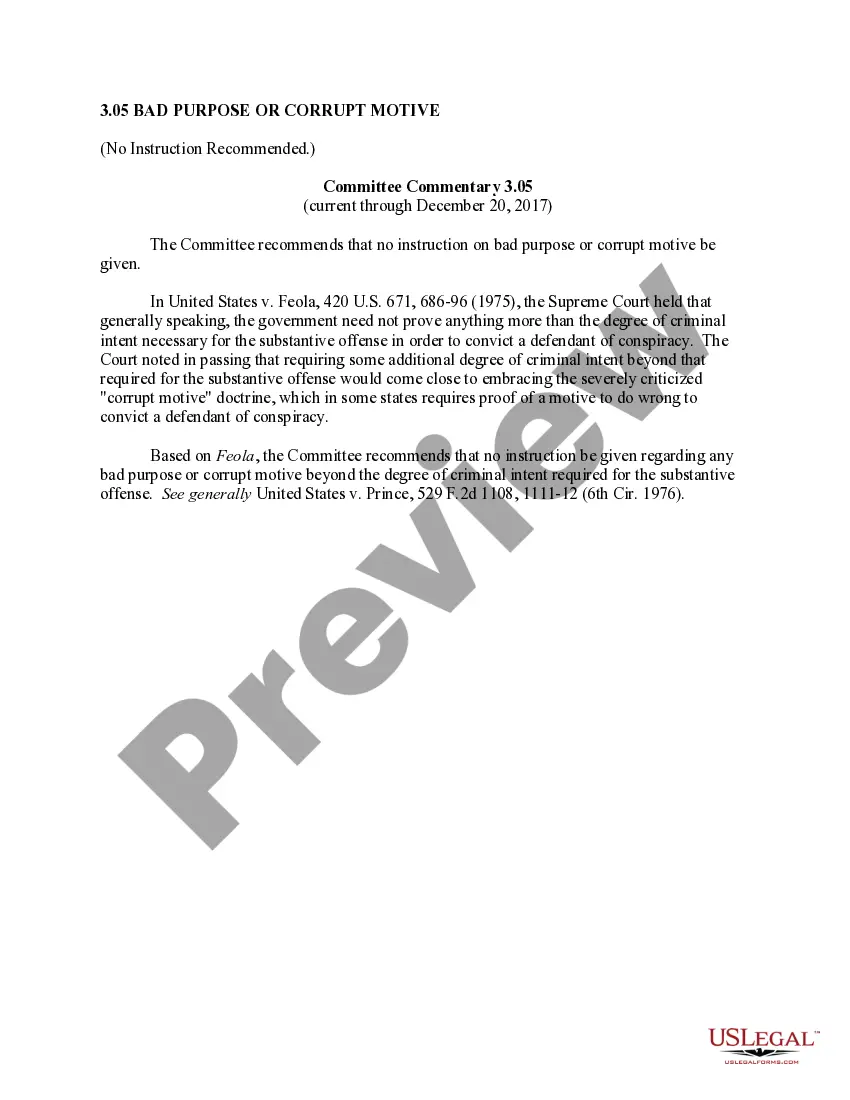
BAD PURPOSE OR CORRUPT MOTIVE
What this document covers
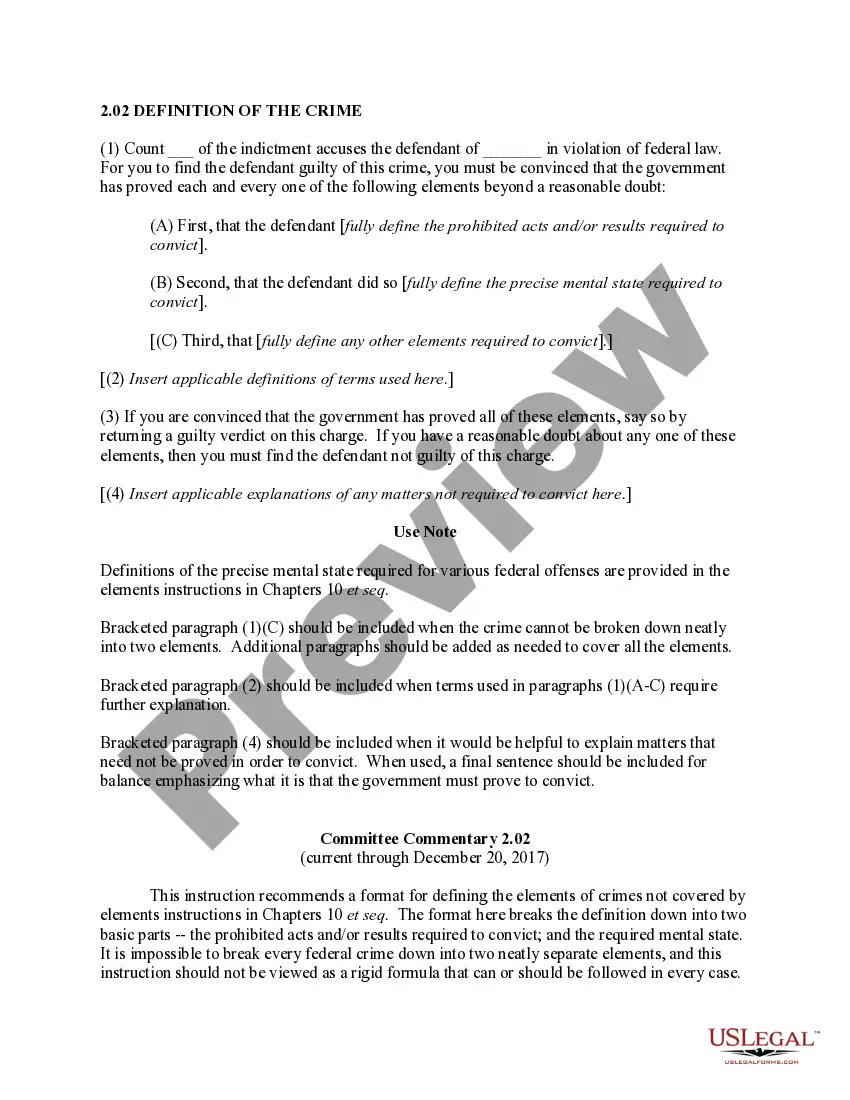
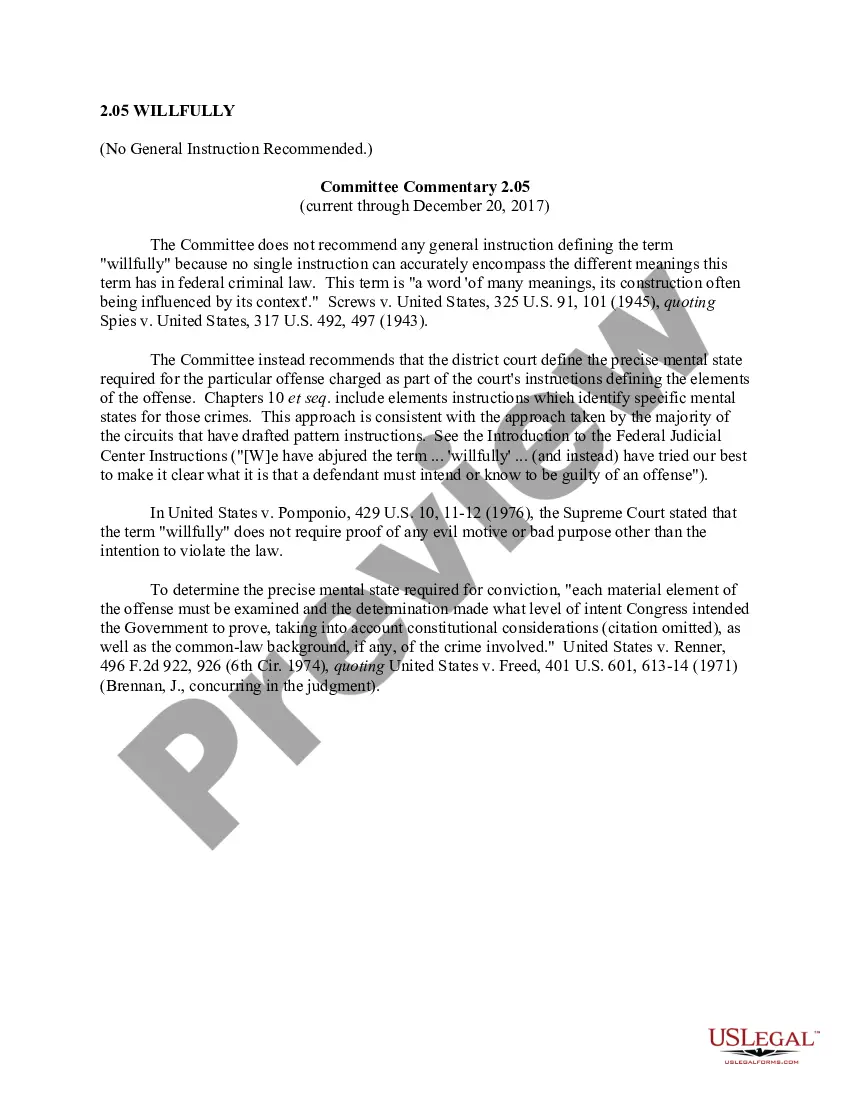
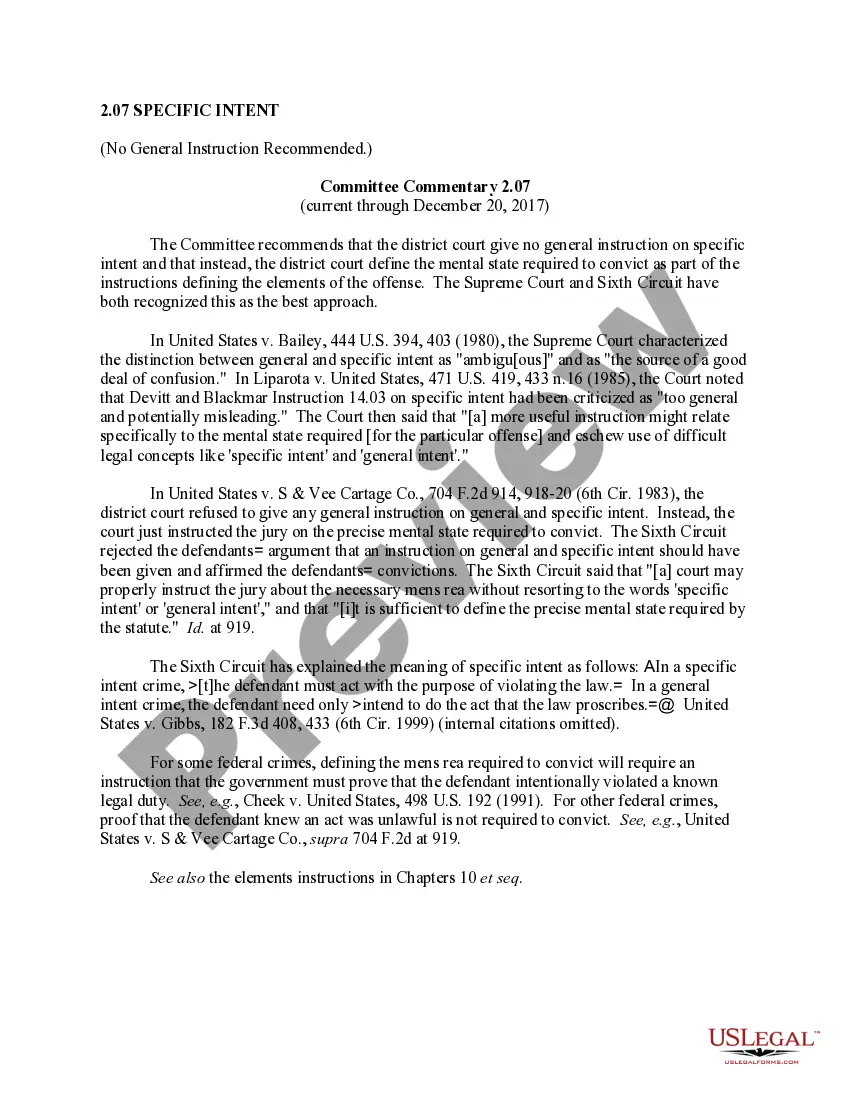
The Bad Purpose or Corrupt Motive form addresses specific legal concepts related to criminal intent in conspiracy cases. It is designed to clarify that no additional proof of bad purpose or corrupt motives beyond the standard required criminal intent is necessary for conviction. This form is particularly relevant in the context of conspiracy law, setting it apart from other legal forms that might require a broader examination of intent or motives. Understanding this form is crucial for individuals involved in legal proceedings where conspiracy charges may apply.
Main sections of this form
- Overview of the legal basis for not requiring additional proof of corrupt motives.
- Reference to relevant case law, particularly United States v. Feola.
- Guidance on how the standard of criminal intent applies in conspiracy cases.
When to use this form
This form is necessary when entering a legal defense concerning conspiracy charges, especially if there is a need to argue against the requirement of proving bad purpose or corrupt motive. Legal representatives may want to incorporate this form in cases where the prosecution's case relies on showing additional criminal intent beyond what is needed for the substantive offense.
Intended users of this form
- Defense attorneys working on conspiracy cases.
- Individuals charged with conspiracy who are preparing their defense.
- Legal scholars analyzing implications of intent in criminal cases.
How to complete this form
- Identify the relevant parties involved in the conspiracy case.
- Specify the allegations being discussed, including the nature of the conspiracy.
- Enter the applicable case law references to support arguments against bad purpose.
- Ensure all legal definitions are cited accurately to reflect the intent standards.
Notarization guidance
Notarization is not commonly needed for this form. However, certain documents or local rules may make it necessary. Our notarization service, powered by Notarize, allows you to finalize it securely online anytime, day or night.
Get your form ready online
Our built-in tools help you complete, sign, share, and store your documents in one place.
Make edits, fill in missing information, and update formatting in US Legal Forms—just like you would in MS Word.
Download a copy, print it, send it by email, or mail it via USPS—whatever works best for your next step.
Sign and collect signatures with our SignNow integration. Send to multiple recipients, set reminders, and more. Go Premium to unlock E-Sign.
If this form requires notarization, complete it online through a secure video call—no need to meet a notary in person or wait for an appointment.
We protect your documents and personal data by following strict security and privacy standards.

Make edits, fill in missing information, and update formatting in US Legal Forms—just like you would in MS Word.

Download a copy, print it, send it by email, or mail it via USPS—whatever works best for your next step.

Sign and collect signatures with our SignNow integration. Send to multiple recipients, set reminders, and more. Go Premium to unlock E-Sign.

If this form requires notarization, complete it online through a secure video call—no need to meet a notary in person or wait for an appointment.

We protect your documents and personal data by following strict security and privacy standards.
Common mistakes to avoid
- Failing to cite relevant case law, such as United States v. Feola.
- Leaving out critical details about the nature of the conspiracy allegations.
- Not clearly differentiating between the required criminal intent and any purported corrupt motives.
Benefits of completing this form online
- Convenient access to legally vetted templates drafted by licensed attorneys.
- Ability to fill out and customize the form according to individual case needs.
- Instant download and accessibility from any device without the need for physical visits.
Legal use & context
This form is grounded in established legal precedents, notably the principles set forth in United States v. Feola. It is designed to assist legal practitioners in navigating conspiracy cases where the prosecution's requirement for additional criminal intent is challenged. Proper use of this form reinforces the importance of adhering to established legal standards.
Looking for another form?
Form popularity
FAQ
This evidence may be admissible for another purpose, such as proving motive, opportunity, intent, preparation, plan, knowledge, identity, absence of mistake, or lack of accident.
Character evidence is admissible in a criminal trial if offered by a defendant as circumstantial evidence?through reputation or opinion evidence?to show their own character, as long as the character evidence the defendant seeks to introduce is relevant to the crime with which the defendant is charged.
4. When character evidence is admissible, Rule 405 says that ?it may be proved by testimony about the person's reputation or by testimony in the form of an opinion.? It may not proved through evidence of specific events that illustrate the character trait in action.
Evidence about the defendant's character is admissible at trial: if defense places character at issue. Evidence about the victim's character is admissible at trial: if the defense is based on self-defense, the violent character of the victim is admissible.
The general rule: CHARACTER EVIDENCE IS NOT ADMISSIBLE. More particularly, character evidence is generally not admissible when offered for the purposes of proving conduct in conformity with the character trait offered.
More particularly, character evidence is generally not admissible when offered for the purposes of proving conduct in conformity with the character trait offered. Character is the actual qualities of an individual; reputation is that person's standing in the community as viewed by other people.
To prove a bribery case, the government must demonstrate that a thing of value was offered and accepted, that there was an illegal intent, and the intent was to pay money and receive something in return that was illegal.
Character Evidence; Crimes or Other Acts (a) Character Evidence. (1) Prohibited Uses. Evidence of a person's character or character trait is not admissible to prove that on a particular occasion the person acted in ance with the character or trait.