AIDING AND ABETTING
About this form
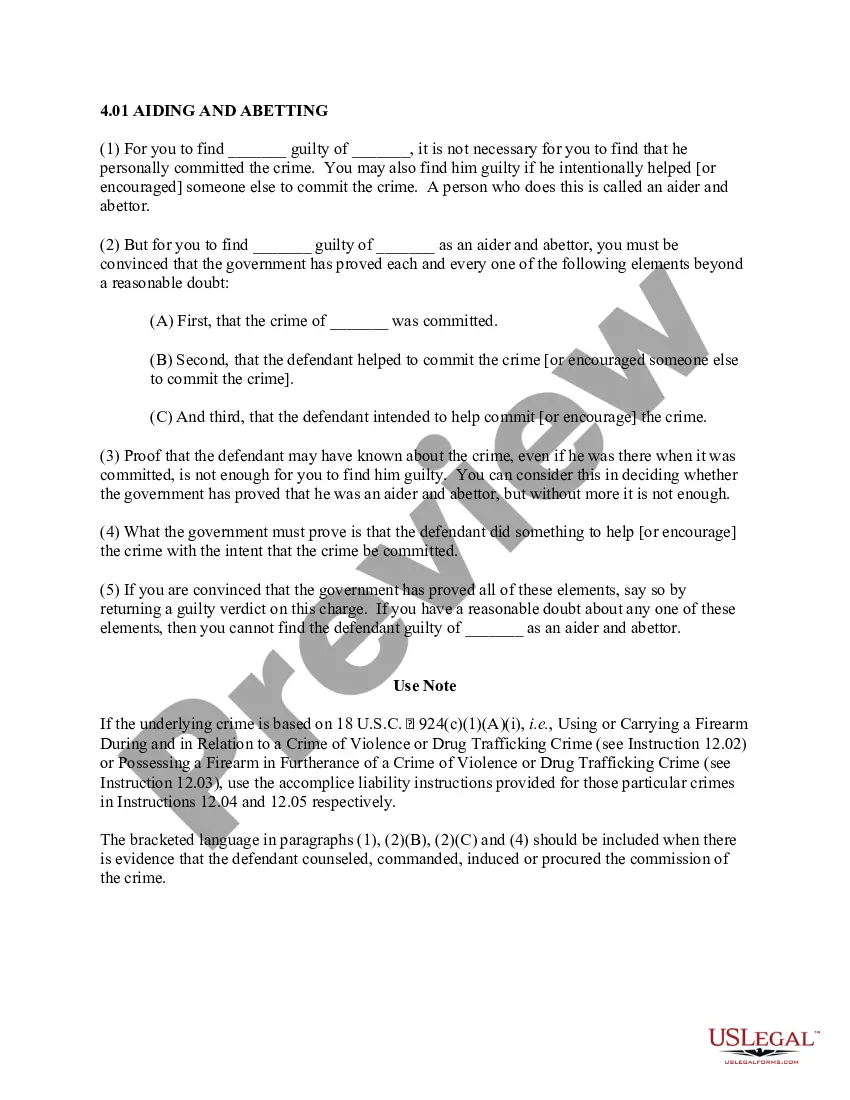
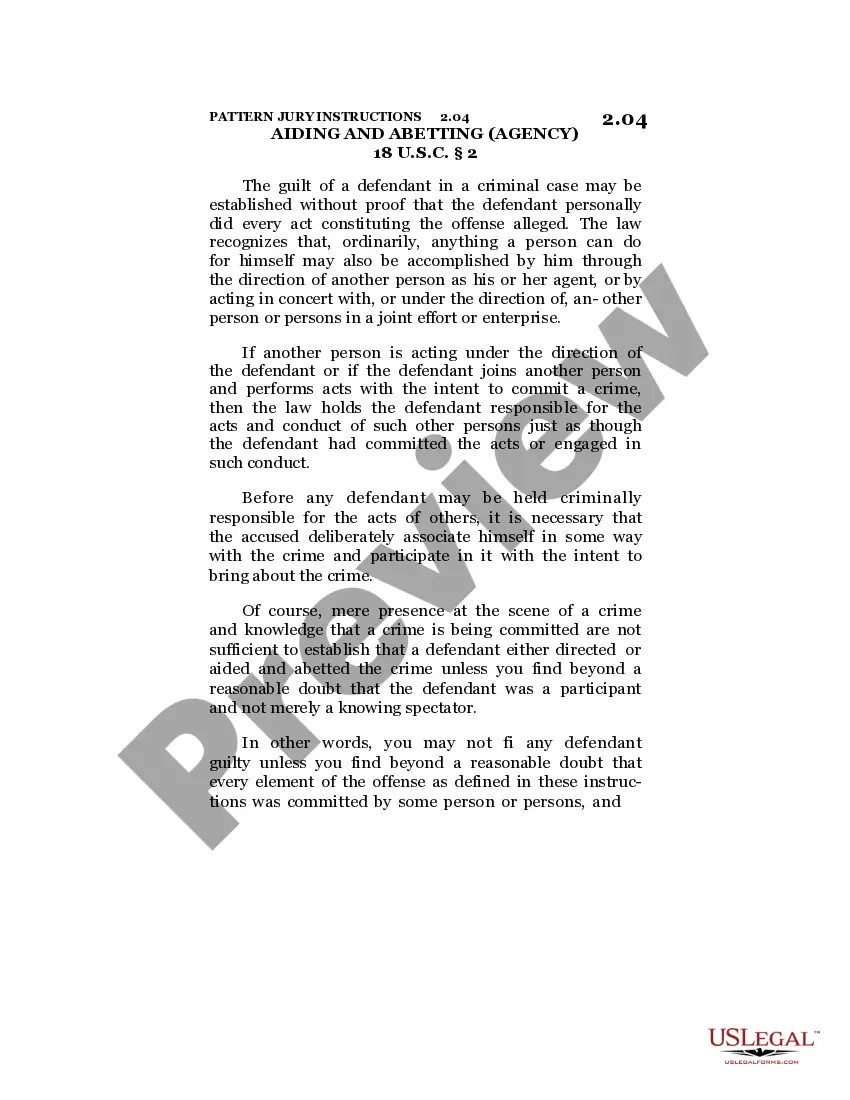
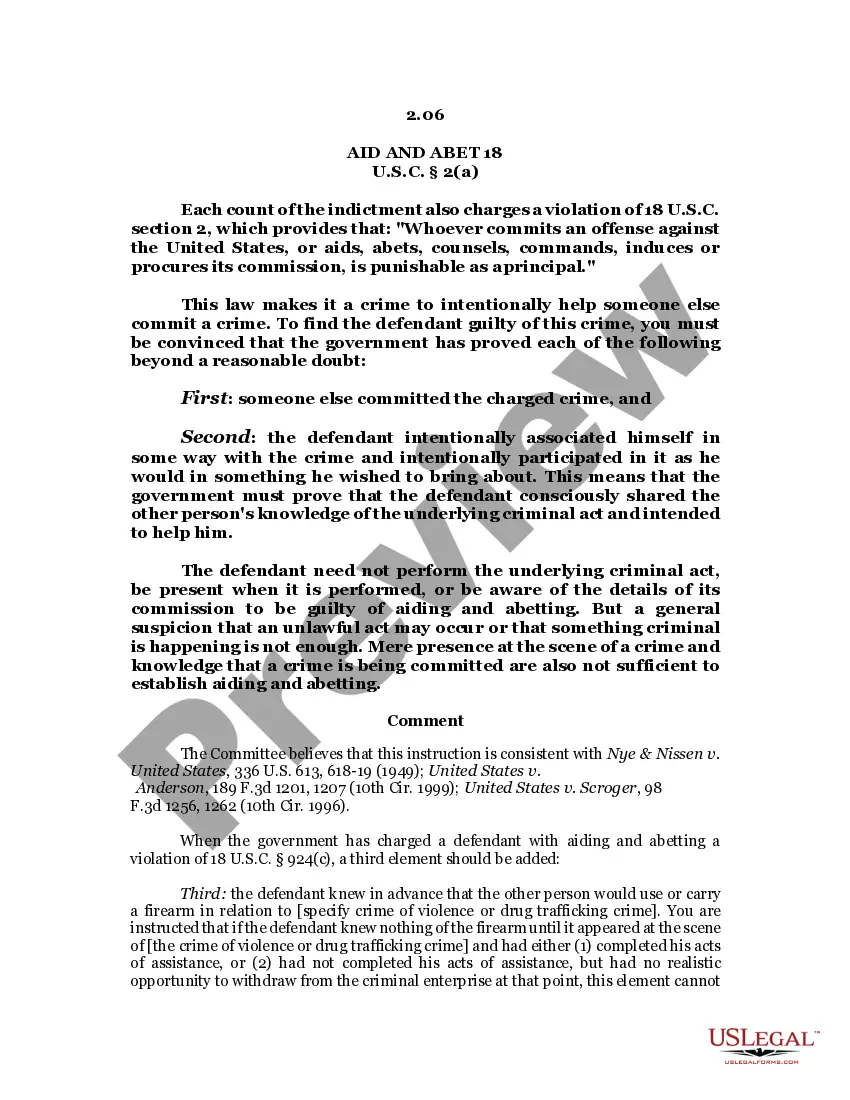
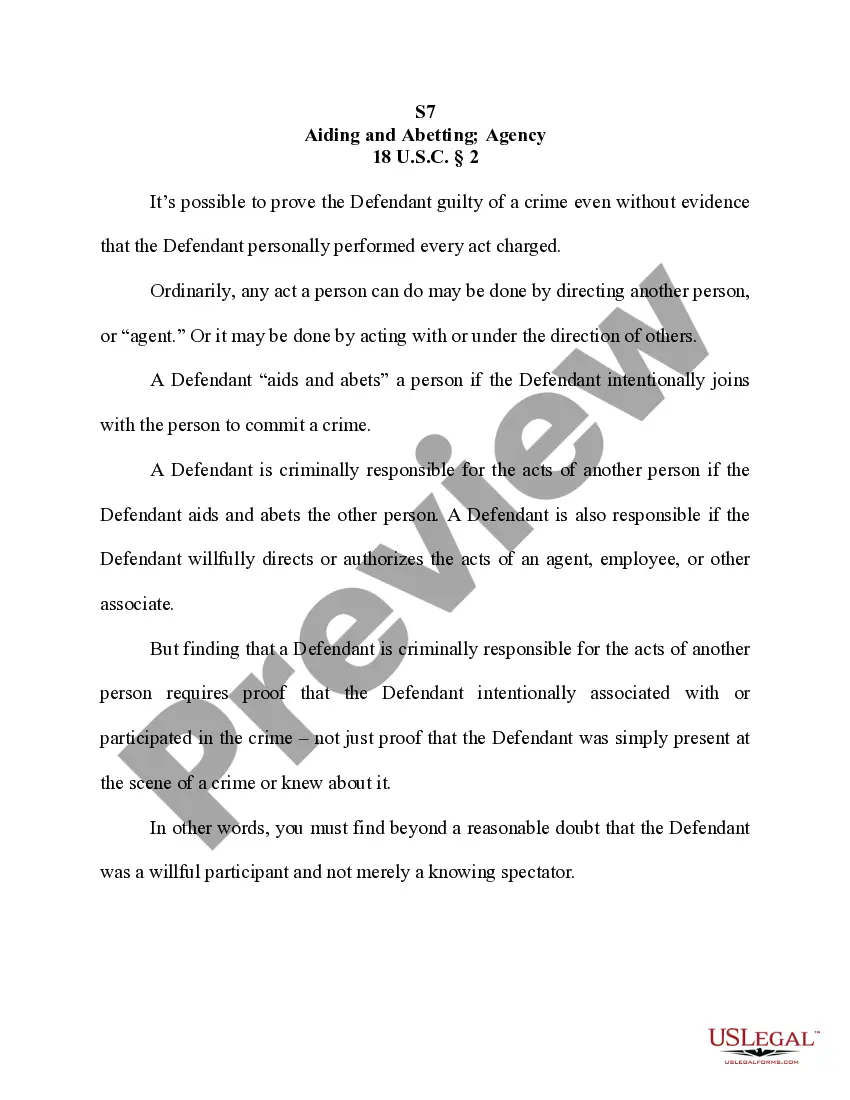
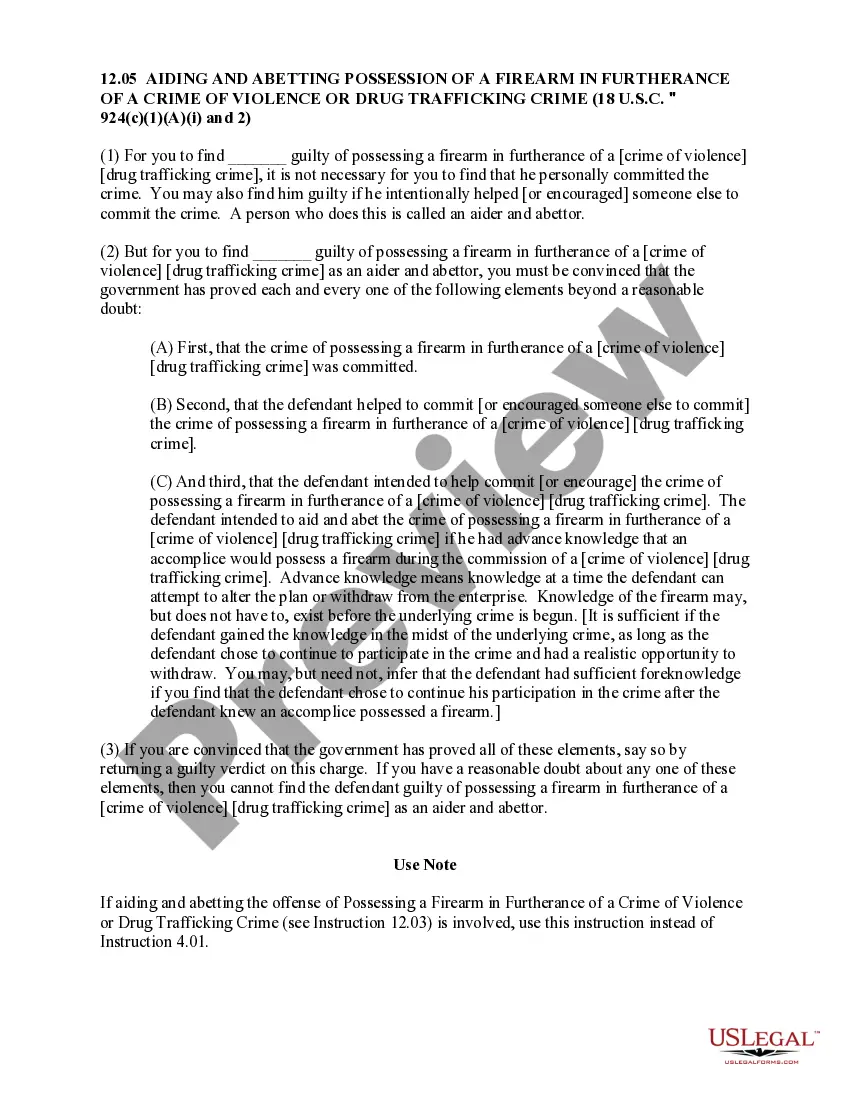
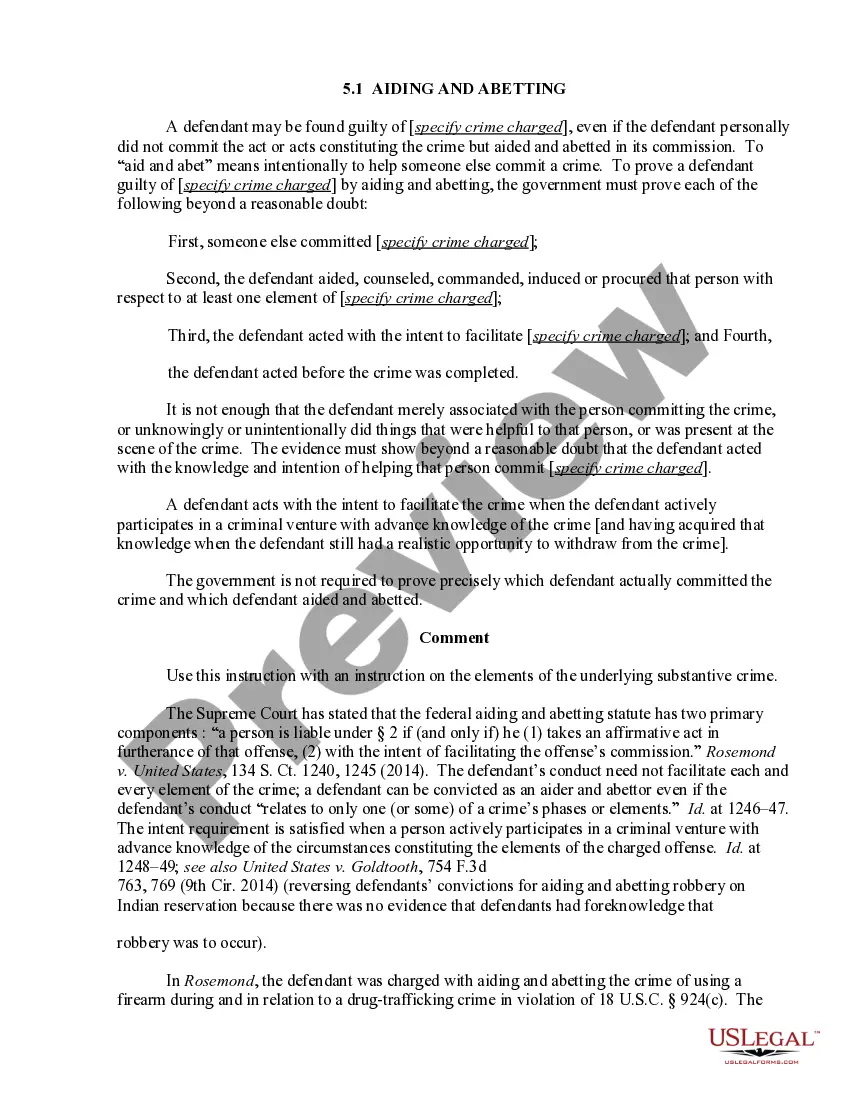
The Aiding and Abetting form outlines the legal standards for holding someone accountable for assisting or encouraging another person to commit a crime. This form is essential in criminal cases where the defendant may not have directly committed the crime but played a role in facilitating it. Understanding this form is pivotal for differentiating between direct involvement in a crime and merely being present or having knowledge of it.
What’s included in this form
- Description of the concept of aiding and abetting.
- Elements that the government must prove for a conviction, including intent and involvement.
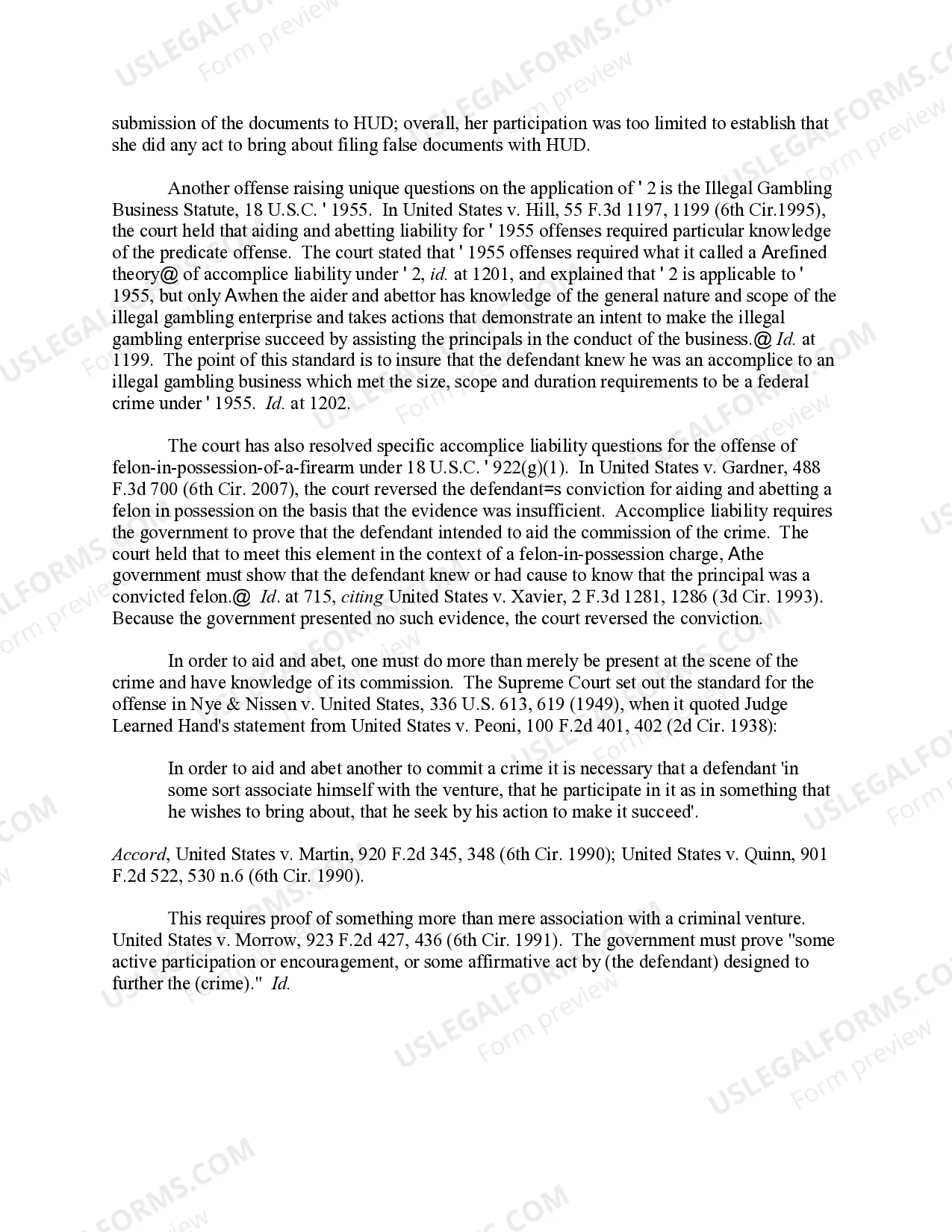
- Guidance on how mere knowledge or presence does not equate to guilt.
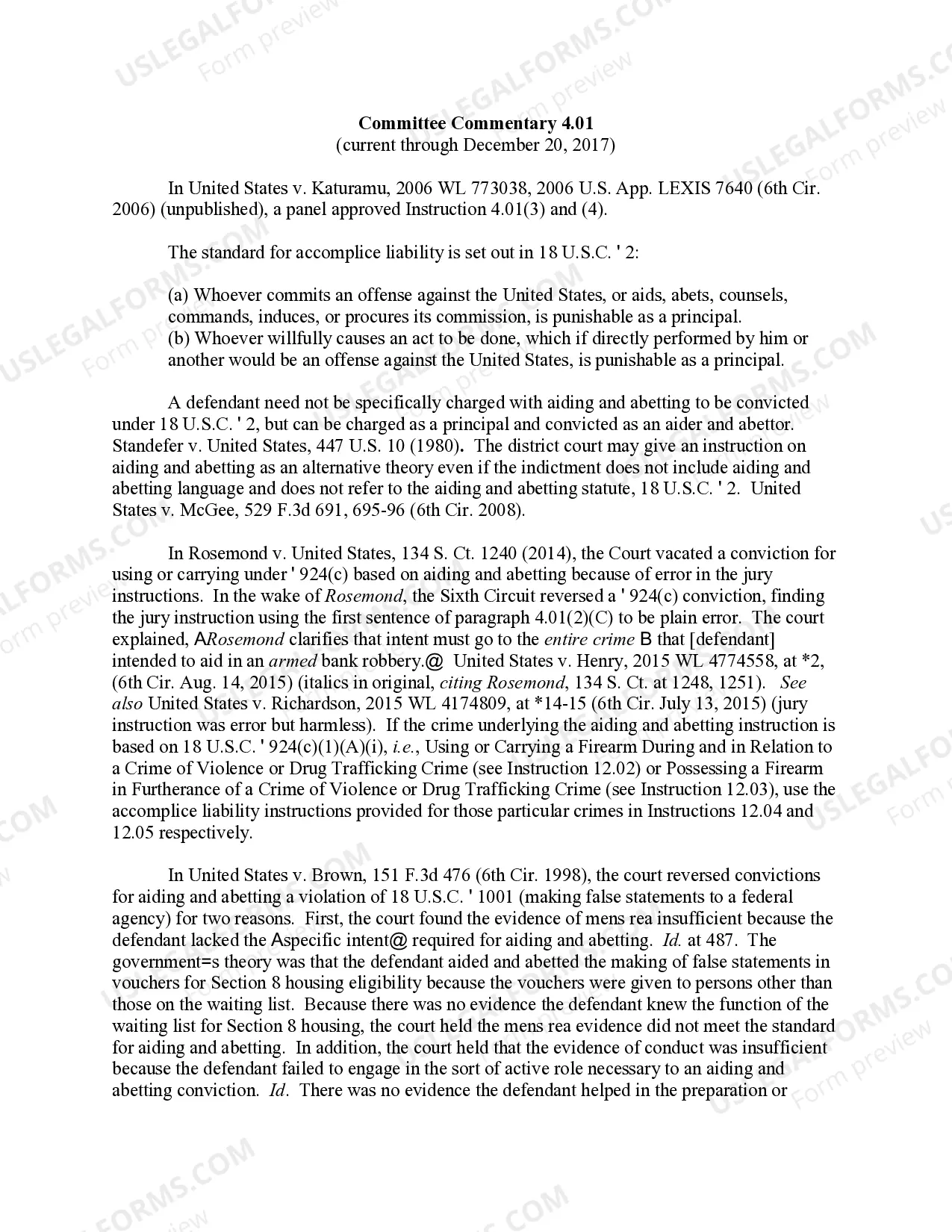
- Clarification that a defendant can be charged as an aider and abettor even if not explicitly stated in the charges.
- Contextual notes for specific crimes under federal law.

When this form is needed
This form is needed when evaluating criminal cases that involve allegations of aiding and abetting. It is commonly used when a person is charged with a crime but is not the primary actor, such as being an accomplice or having encouraged or assisted another individual in committing the crime. It can be critical in court proceedings to clarify the role and intent of the defendant in relation to the main illegal act.
Who should use this form
- Attorneys representing defendants charged with aiding and abetting.
- Legal professionals involved in criminal defense cases.
- Individuals seeking to understand the implications of aiding and abetting as it pertains to their situation.
- Students or scholars studying criminal law and its applications.
How to prepare this document
- Identify the defendant and the underlying crime for which they are being charged.
- Clearly state the nature of the defendant's involvement in aiding or encouraging the crime.
- Provide specific examples or evidence that demonstrate the defendant's intent to assist in the crime.
- Ensure each of the required elements for aiding and abetting is addressed in the context of the case.
- Sign and date the completed form where necessary, ensuring compliance with local legal standards.
Is notarization required?
In most cases, this form does not require notarization. However, some jurisdictions or signing circumstances might. US Legal Forms offers online notarization powered by Notarize, accessible 24/7 for a quick, remote process.
Get your form ready online
Our built-in tools help you complete, sign, share, and store your documents in one place.
Make edits, fill in missing information, and update formatting in US Legal Forms—just like you would in MS Word.
Download a copy, print it, send it by email, or mail it via USPS—whatever works best for your next step.
Sign and collect signatures with our SignNow integration. Send to multiple recipients, set reminders, and more. Go Premium to unlock E-Sign.
If this form requires notarization, complete it online through a secure video call—no need to meet a notary in person or wait for an appointment.
We protect your documents and personal data by following strict security and privacy standards.

Make edits, fill in missing information, and update formatting in US Legal Forms—just like you would in MS Word.

Download a copy, print it, send it by email, or mail it via USPS—whatever works best for your next step.

Sign and collect signatures with our SignNow integration. Send to multiple recipients, set reminders, and more. Go Premium to unlock E-Sign.

If this form requires notarization, complete it online through a secure video call—no need to meet a notary in person or wait for an appointment.

We protect your documents and personal data by following strict security and privacy standards.
Avoid these common issues
- Assuming that mere presence at the scene of the crime constitutes aiding and abetting.
- Failing to provide clear intent behind the actions taken to assist the principal offender.
- Neglecting to prove all elements required for a conviction beyond a reasonable doubt.
- Using vague language that does not clearly define the defendant's role in the crime.
Why use this form online
- Convenience of accessing the form anytime and from anywhere.
- Editable format allowing users to easily input case-specific details.
- Prompt updates to legal language reflecting current laws and standards.
- Reliability from using templates crafted by licensed attorneys, ensuring accuracy.
Legal use & context
- The form serves as guidance within the framework of criminal law regarding accomplice liability.
- Understanding aiding and abetting is crucial for assessing legal defenses and potential outcomes in criminal cases.
- It highlights the importance of intent and active participation in establishing guilt.
Summary of main points
- Aiding and abetting involves being complicit in a crime through assistance or encouragement.
- Intent and active participation are critical in establishing culpability.
- The form is applicable in various jurisdictions but should be adapted based on local laws.
- Mistakes can arise from misinterpretation of mere presence vs. actual involvement in criminal acts.
Looking for another form?
Form popularity
FAQ
To convict as a principal of aiding and abetting the commission of a crime, a jury must find beyond a reasonable doubt that the defendant knowingly and intentionally aided and abetted the principal(s) in each essential element of the crime.
A person who is convicted under an aiding and abetting theory faces the same penalties as the principal perpetrator. In a robbery case, like the example above, the aider and abettor will typically face anywhere from three to nine years in state prison, plus an additional 10 years for the gun enhancement.
Aid and Abet means to assist someone in committing or to encourage someone to commit a crime. Generally, an aider and abettor is criminally liable to the same extent as the person committing the crime.
Title 18, United States Code § 2 now provides: (a) Whoever commits an offense against the United States or aids, abets, counsels, commands, induces or procures its commission, is punishable as a principal.
A charge of aiding and abetting has three requirements. First, someone else must have committed a crime. Second, the defendant must have assisted that person in the commission of the crime. Third, the defendant must have had knowledge of that person's criminal intent or criminal plans.
Common examples of aiding and abetting a crime include: Driving a getaway car; Serving as a lookout; Providing a weapon to be used during the commission of the crime; Giving a false alibi for someone you know has committed a criminal violation; Luring a victim to a physical or sexual assault;
Aiding and abetting means assisting in the commission of someone else's crime. Section 2(a) demands that the defendant embrace the crime of another and consciously do something to contribute to its success. An accomplice must know the offense is afoot if he is to intentionally contribute to its success.