SHAM CONTROLLED SUBSTANCE CASES
Overview of this form
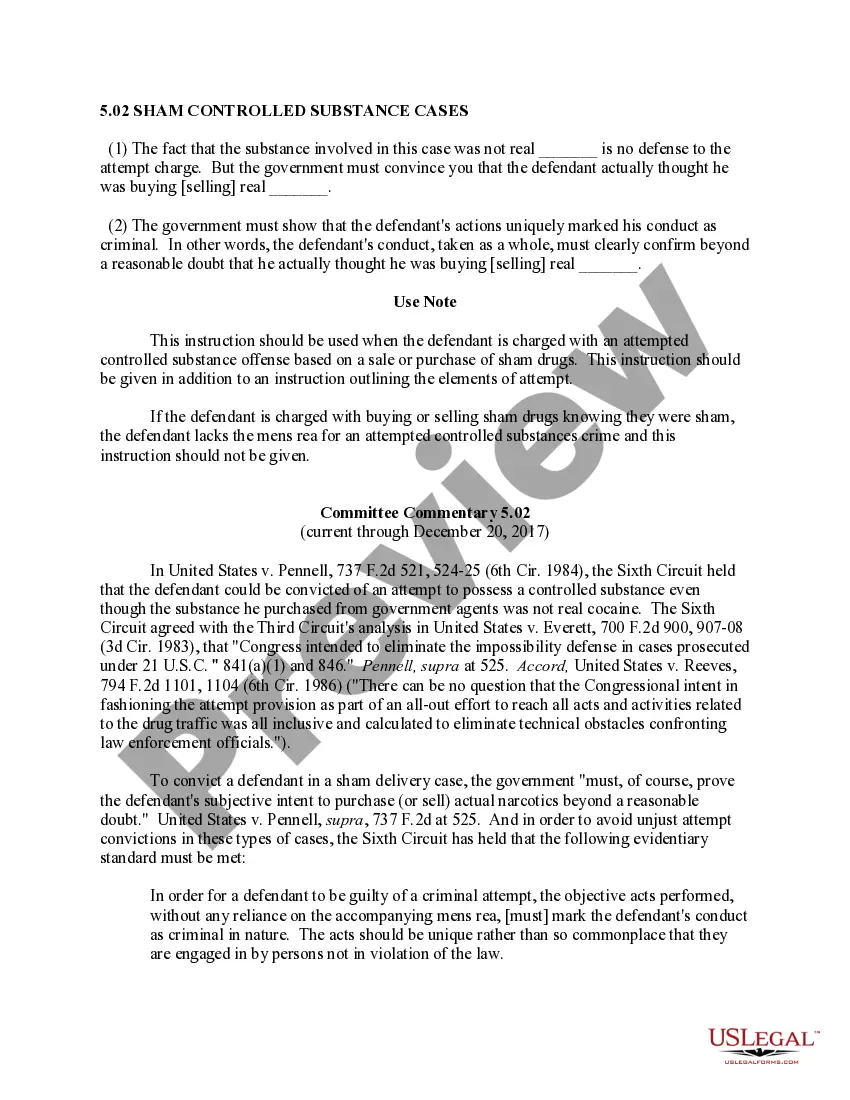
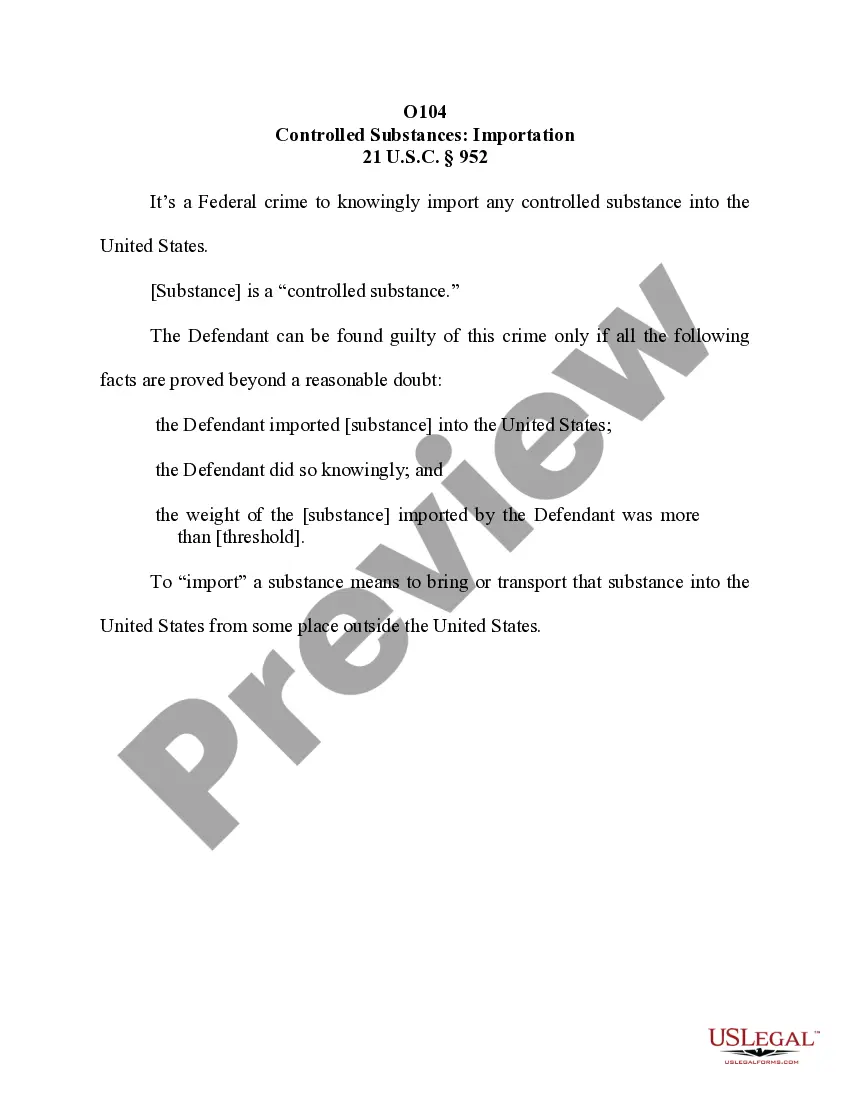
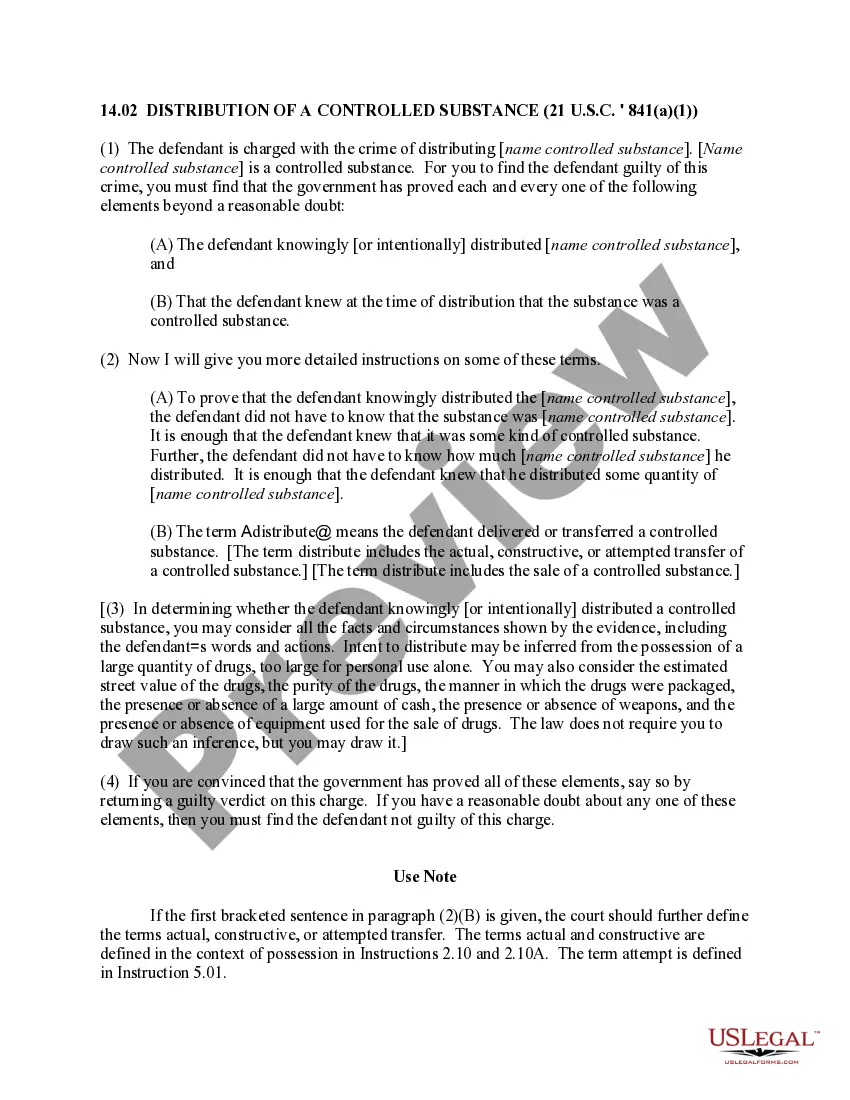
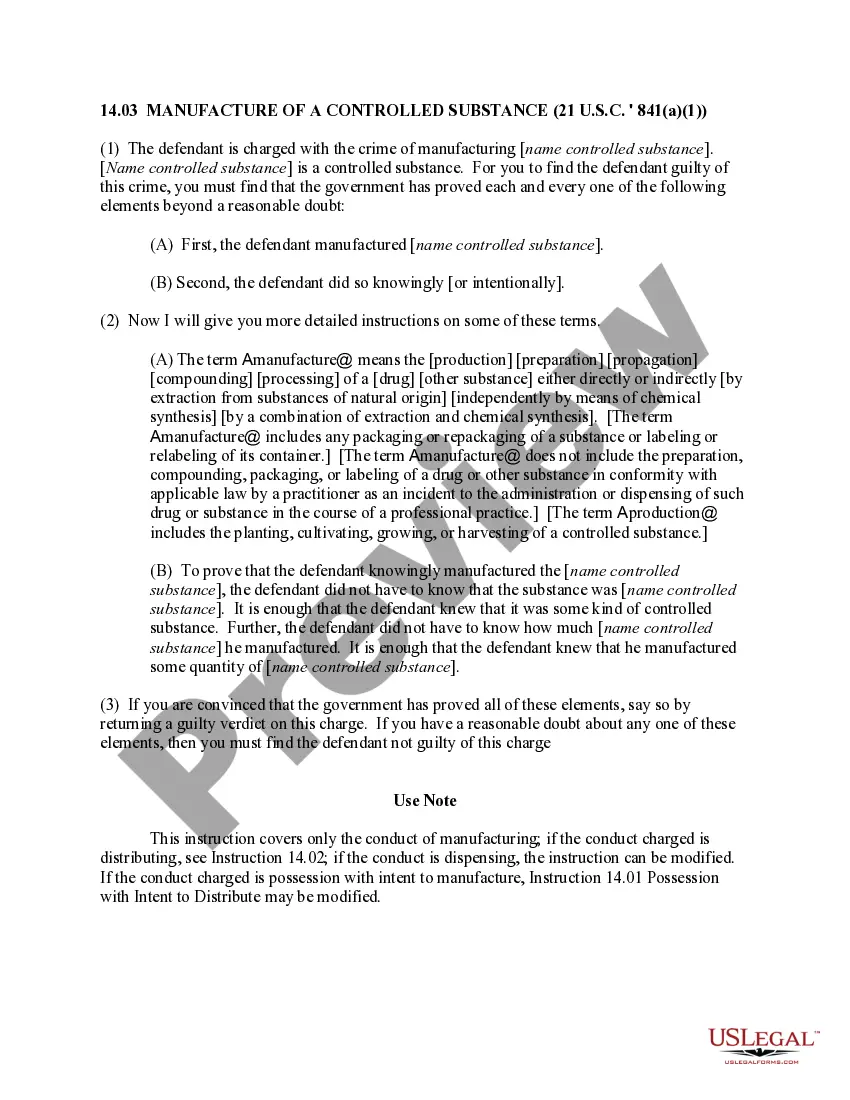
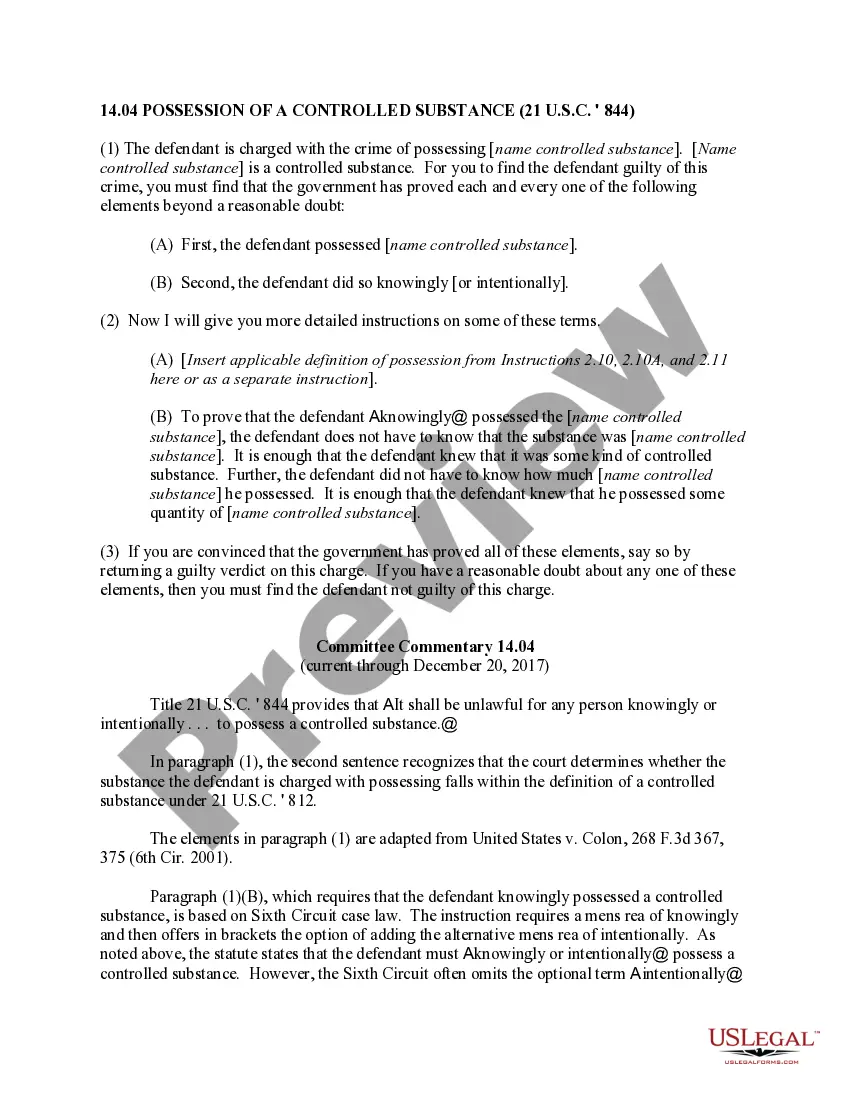
The Sham Controlled Substance Cases form is a legal template used in situations where a defendant is charged with attempting to buy or sell illegal drugs that were not real controlled substances. This form outlines the legal standard for determining a defendant's intent and conduct in such cases. Unlike other legal forms related to drug offenses, this form specifically addresses scenarios involving sham drugs, emphasizing the need for the prosecution to establish the defendant's belief that the substances were real narcotics.
What’s included in this form
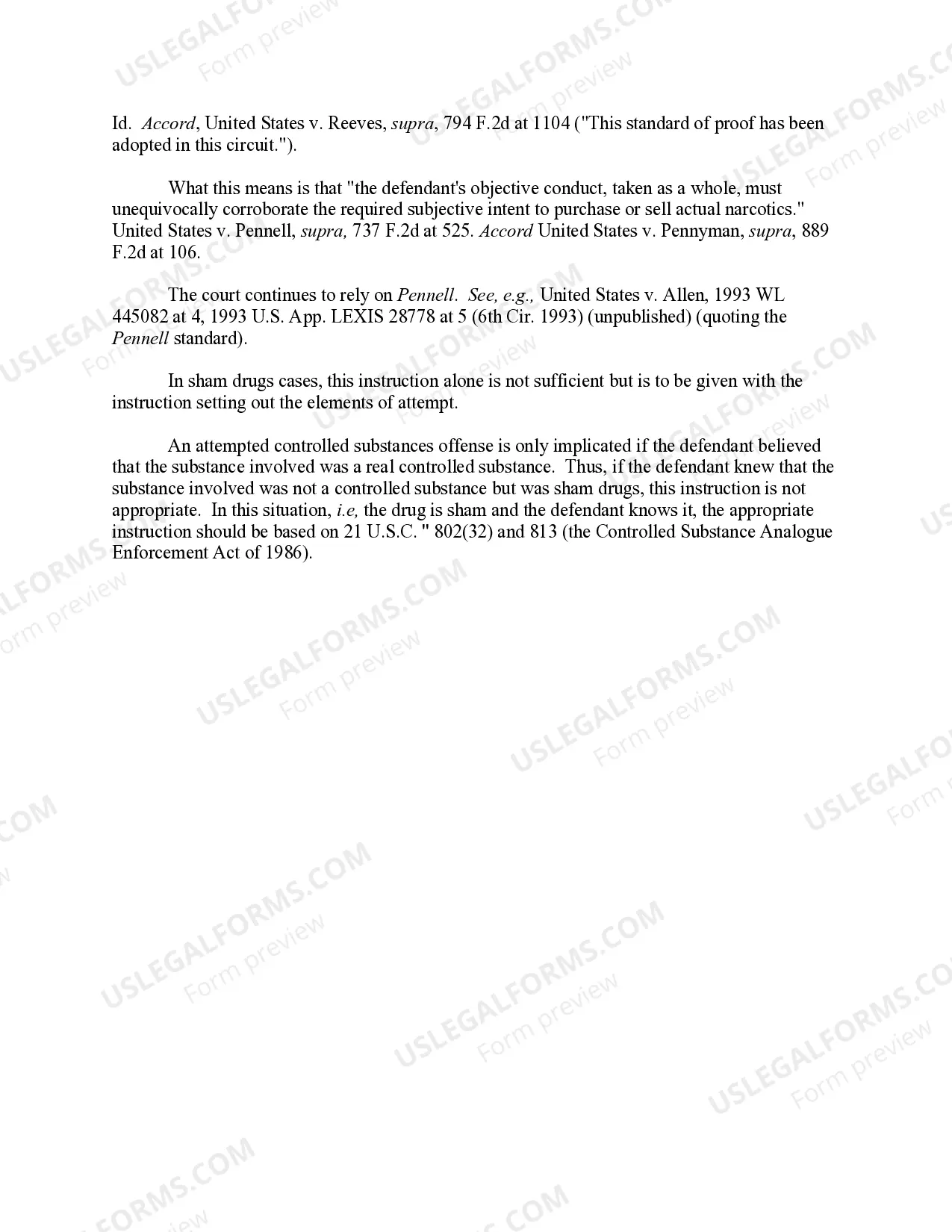
- Requirements for the prosecution to prove the defendant's belief in buying or selling actual narcotics.
- Standards detailing what constitutes criminal conduct in sham drug cases.
- Guidance on when to apply this instruction alongside other legal elements of an attempted drug charge.
- Criteria for excluding this instruction if the defendant knowingly engages with sham drugs.
When this form is needed
This form should be used in criminal cases where a defendant is accused of attempting to purchase or sell counterfeit controlled substances. It is specifically applicable in instances where the substance is alleged to be a sham drug, and the prosecution must demonstrate the defendant's intent to engage in illegal drug transactions. It ensures that proper legal standards are communicated to the jury, distinguishing these cases from other drug offense charges.
Who can use this document
- Prosecutors bringing charges in sham controlled substance cases.
- Defense attorneys representing clients accused of attempting to buy or sell sham drugs.
- Judges presiding over cases involving allegations of drug attempts with sham substances.
Instructions for completing this form
- Identify the parties involved in the case, including the defendant and prosecution.
- Outline the specific charges against the defendant, focusing on attempted drug offenses.
- Specify the alleged sham substance and detail the circumstances of the attempted sale or purchase.
- Clearly establish the defendant's intent, providing evidence of their belief in acquiring real narcotics.
- Ensure proper legal references are included to support the charge within the context of applicable laws.
Notarization requirements for this form
This form usually doesn’t need to be notarized. However, local laws or specific transactions may require it. Our online notarization service, powered by Notarize, lets you complete it remotely through a secure video session, available 24/7.
Get your form ready online
Our built-in tools help you complete, sign, share, and store your documents in one place.
Make edits, fill in missing information, and update formatting in US Legal Forms—just like you would in MS Word.
Download a copy, print it, send it by email, or mail it via USPS—whatever works best for your next step.
Sign and collect signatures with our SignNow integration. Send to multiple recipients, set reminders, and more. Go Premium to unlock E-Sign.
If this form requires notarization, complete it online through a secure video call—no need to meet a notary in person or wait for an appointment.
We protect your documents and personal data by following strict security and privacy standards.
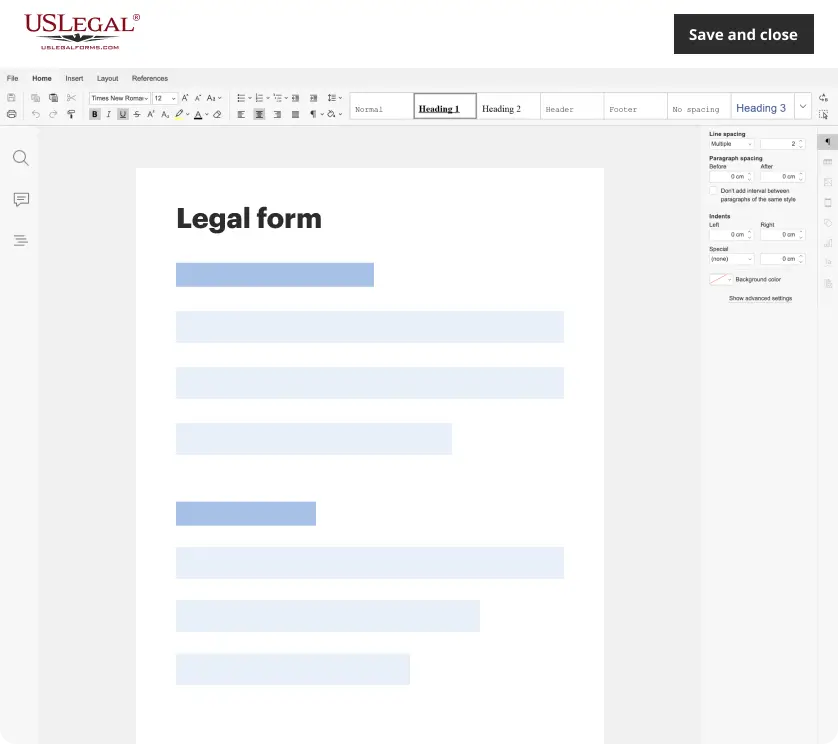
Make edits, fill in missing information, and update formatting in US Legal Forms—just like you would in MS Word.
Download a copy, print it, send it by email, or mail it via USPS—whatever works best for your next step.
Sign and collect signatures with our SignNow integration. Send to multiple recipients, set reminders, and more. Go Premium to unlock E-Sign.

If this form requires notarization, complete it online through a secure video call—no need to meet a notary in person or wait for an appointment.
We protect your documents and personal data by following strict security and privacy standards.
Avoid these common issues
- Failing to establish the defendant's subjective belief about the substance involved.
- Presenting this instruction when the defendant knows the drugs were sham.
- Neglecting to include necessary evidence of the defendantâs conduct marking it as criminal.
Benefits of using this form online
- Convenient access to a legally vetted template prepared by licensed attorneys.
- Easy customization to suit specific case details and legal requirements.
- Secure downloading options for immediate use in legal proceedings.
Legal use & context
- This form is legally recognized in court to outline the standards for attempted drug offenses involving sham substances.
- It helps to prevent unjust convictions by requiring clear evidence of intent and conduct.
- This instruction should only be used in conjunction with other instructions related to the elements of attempted crimes.
What to keep in mind
- The Sham Controlled Substance Cases form is critical for ensuring proper legal interpretation in drug attempt cases.
- Prosecutors must prove the defendant's belief about the substance being real to pursue charges.
- Defendants who knowingly engage with sham drugs lack the requisite intent for an attempt charge.
Looking for another form?
Form popularity
FAQ
The United States Drug Enforcement Administration (DEA) regulates both controlled substances? which are a drugs, other substances, or immediate precursors, included in DEA schedule I, II, III, IV, or V?as well as DEA listed chemicals.
The Drug Enforcement Administration (DEA) issued a temporary rule (Temporary Rule), effective , extending flexibilities regarding the prescribing of controlled substances via telemedicine that have been in place since the beginning of the COVID-19 public health emergency (PHE).
Schedule IV Controlled Substances Examples of Schedule IV substances include: alprazolam (Xanax®), carisoprodol (Soma®), clonazepam (Klonopin®), clorazepate (Tranxene®), diazepam (Valium®), lorazepam (Ativan®), midazolam (Versed®), temazepam (Restoril®), and triazolam (Halcion®).
The goal of the Controlled Substances Act is to improve the manufacturing, importation and exportation, distribution, and dispensing of controlled substances.
The control applies to the way the substance is made, used, handled, stored, and distributed. Controlled substances include opioids, stimulants, depressants, hallucinogens, and anabolic steroids.
The Controlled Substances Act (CSA) places all substances which were in some manner regulated under existing federal law into one of five schedules. This placement is based upon the substance's medical use, potential for abuse, and safety or dependence liability.