UNANIMITY NOT REQUIRED B MEANS
About this form
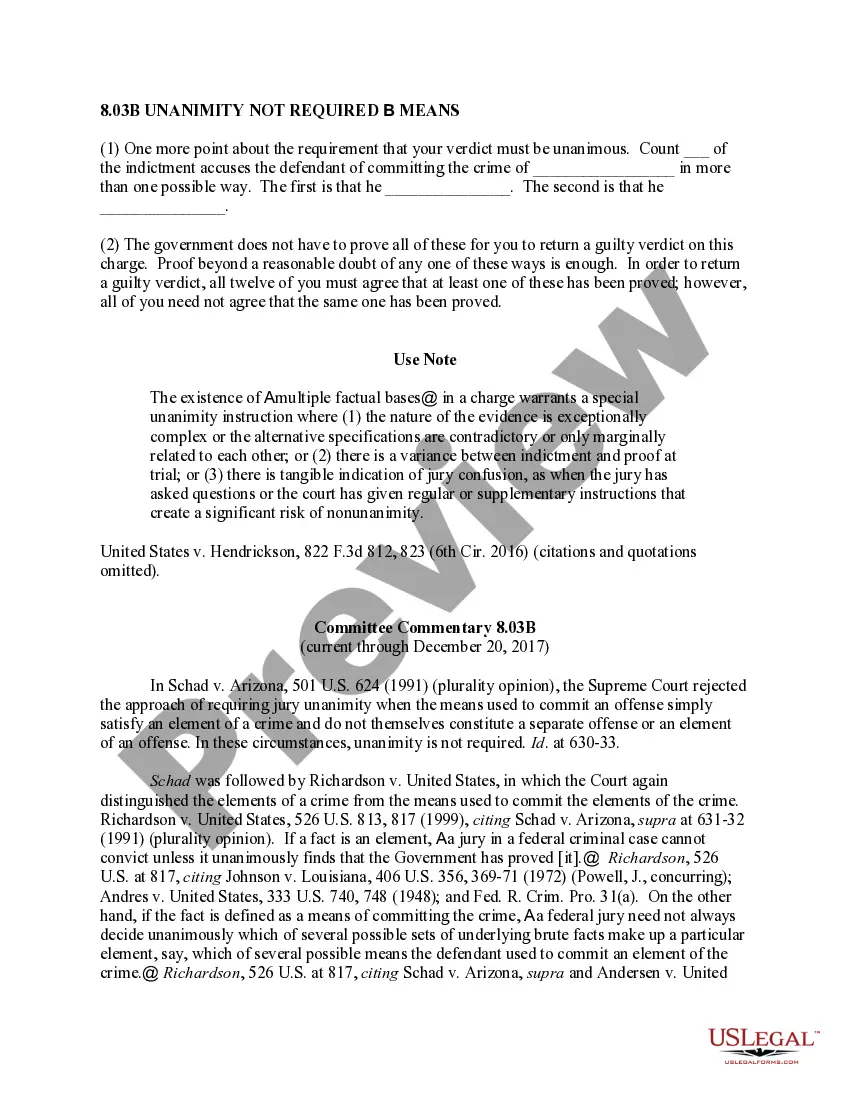
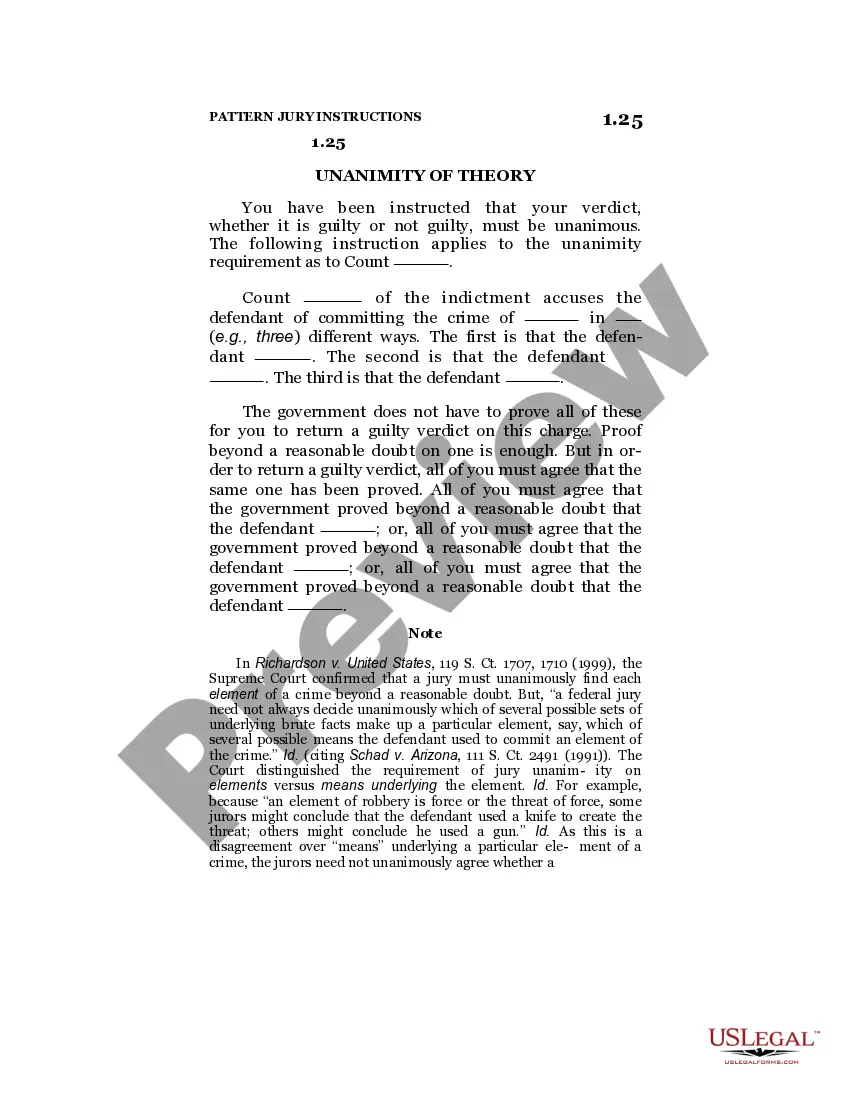
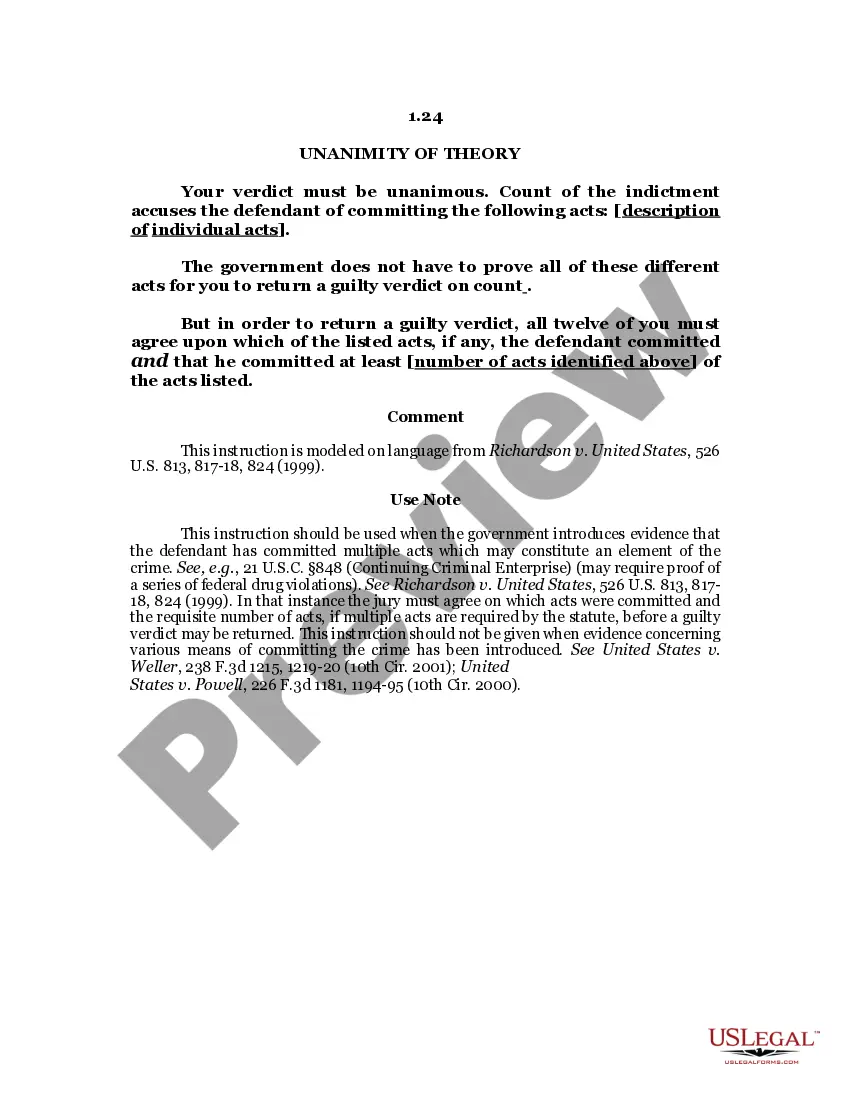
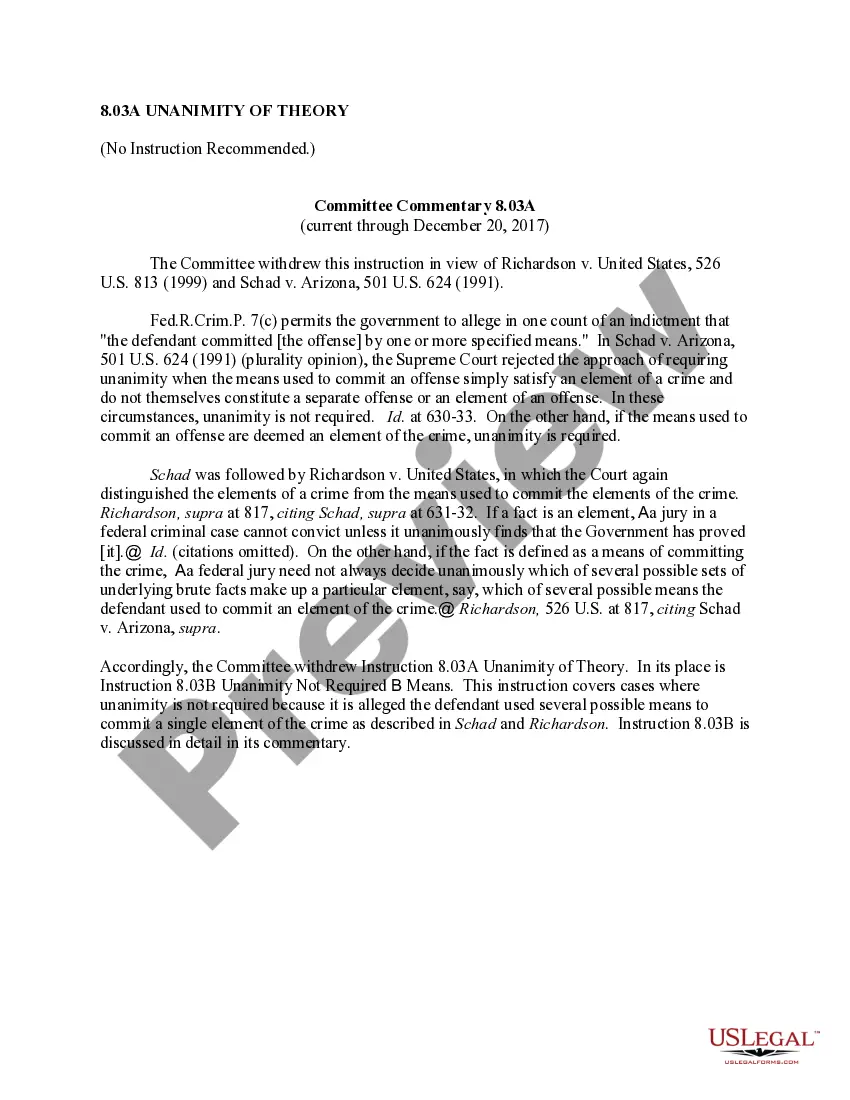
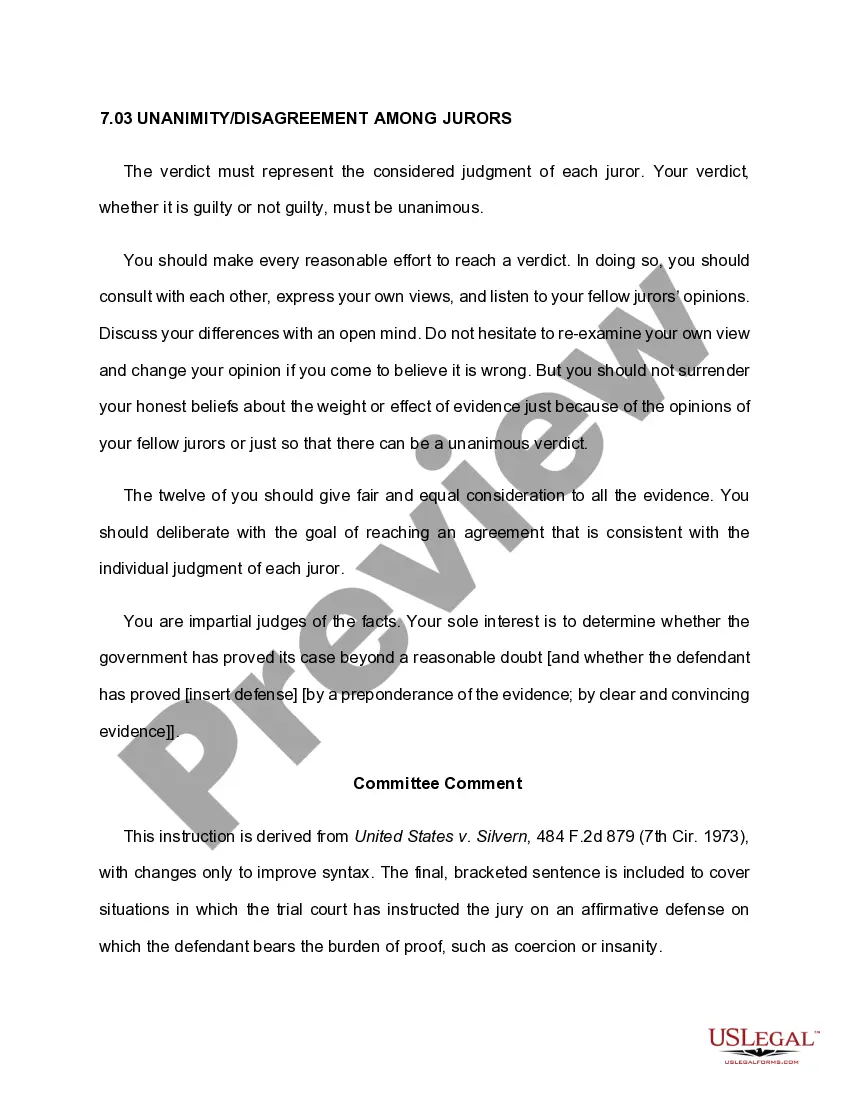
The Unanimity Not Required B Means form provides instructions regarding jury verdict requirements in criminal cases. It clarifies that a unanimous verdict is not necessary when a defendant is accused of committing a crime in multiple ways. This form aims to guide juries on how to interpret their agreement on the elements of a charge, differentiating it from other legal forms that may require unanimous agreement for convictions.
What’s included in this form
- Clarification on jury verdict requirements.
- Information on multiple means of committing a single crime.
- Guidelines for when unanimous agreement is necessary.
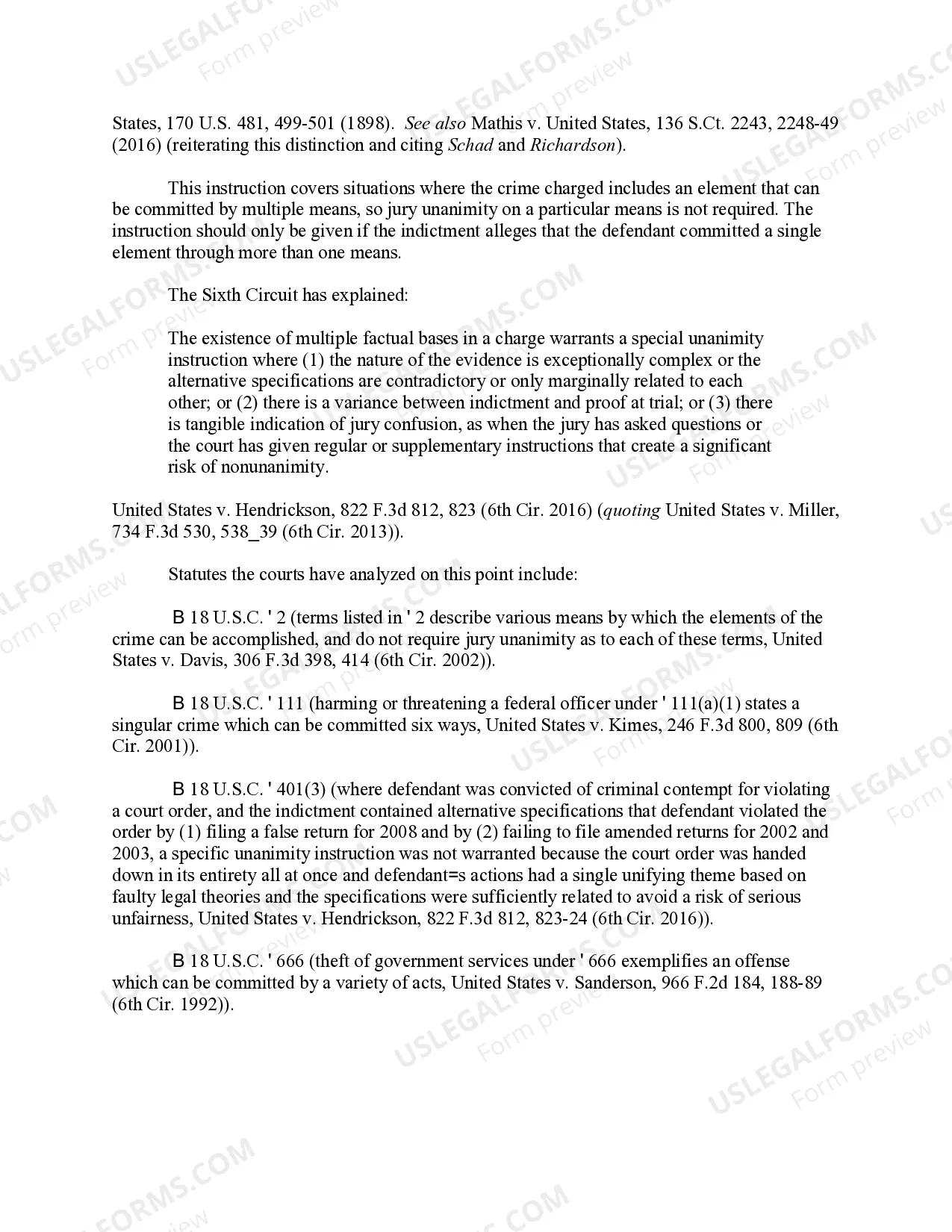
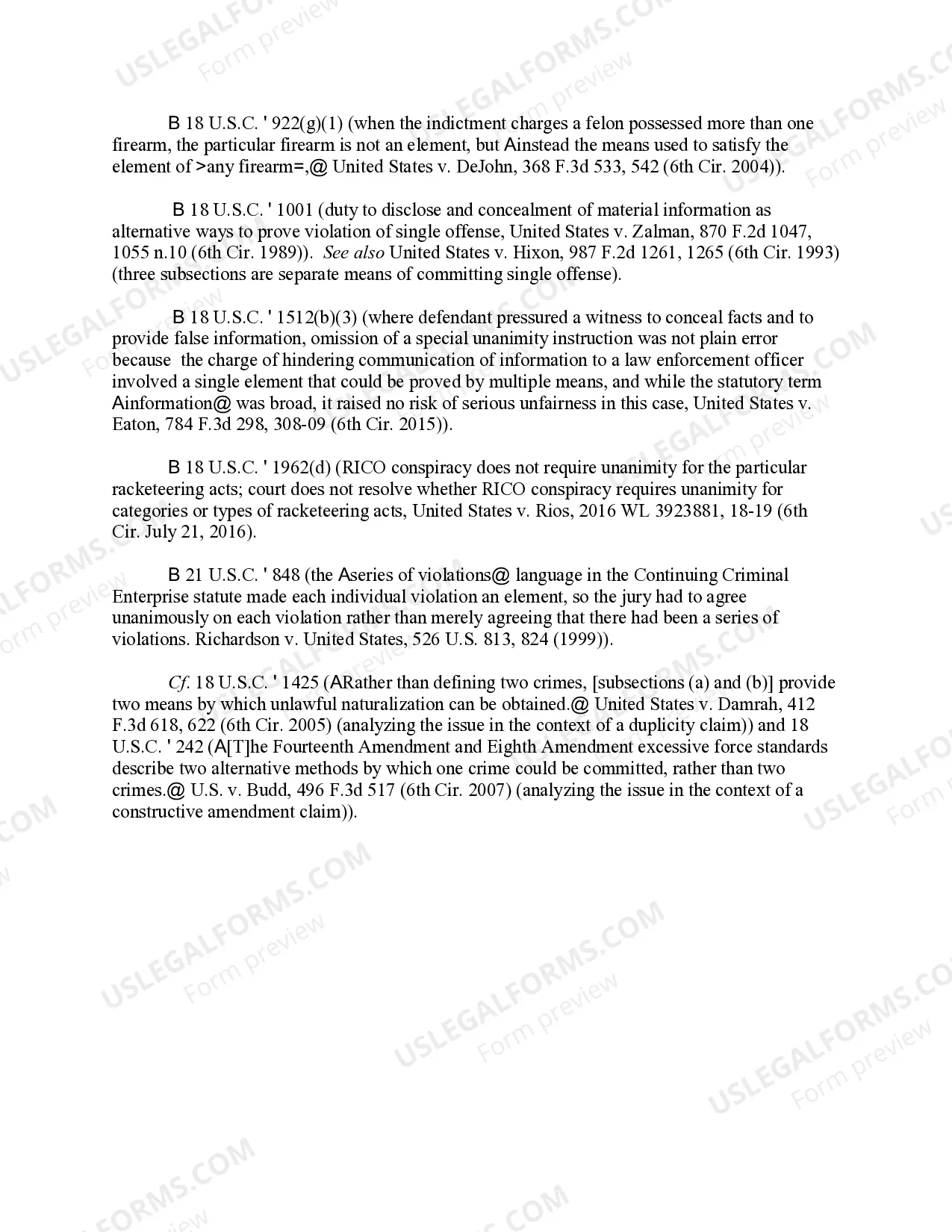
- Legal precedents that inform the use of this instruction.
- Explanations of instances requiring special unanimity instructions.
When this form is needed
This form is typically used during jury deliberations in criminal trials when the indictment presents multiple means by which a defendant could have committed a crime. It is particularly relevant in complex cases where jurors may be confused or when evidence suggests that unanimity is not achievable on a specific means of committing the offense.
Who needs this form
- Jury members involved in deliberation of a criminal case.
- Judges seeking to provide clarity on jury instructions.
- Legal professionals needing to understand jury requirements.
- Defendants and their attorneys exploring defense strategies.
Instructions for completing this form
- Identify the specific indictment and the crime charged against the defendant.
- Determine the different ways the defendant is accused of committing the crime.
- Assess whether the jury can reach agreement on at least one of the ways presented.
- Ensure all twelve jurors understand that they do not need to agree on the same specification to reach a verdict.
- Follow any additional guidelines provided by the court regarding jury instructions.
Is notarization required?
This form does not typically require notarization to be legally valid. However, some jurisdictions or document types may still require it. US Legal Forms provides secure online notarization powered by Notarize, available 24/7 for added convenience.
Get your form ready online
Our built-in tools help you complete, sign, share, and store your documents in one place.
Make edits, fill in missing information, and update formatting in US Legal Forms—just like you would in MS Word.
Download a copy, print it, send it by email, or mail it via USPS—whatever works best for your next step.
Sign and collect signatures with our SignNow integration. Send to multiple recipients, set reminders, and more. Go Premium to unlock E-Sign.
If this form requires notarization, complete it online through a secure video call—no need to meet a notary in person or wait for an appointment.
We protect your documents and personal data by following strict security and privacy standards.

Make edits, fill in missing information, and update formatting in US Legal Forms—just like you would in MS Word.

Download a copy, print it, send it by email, or mail it via USPS—whatever works best for your next step.

Sign and collect signatures with our SignNow integration. Send to multiple recipients, set reminders, and more. Go Premium to unlock E-Sign.

If this form requires notarization, complete it online through a secure video call—no need to meet a notary in person or wait for an appointment.

We protect your documents and personal data by following strict security and privacy standards.
Avoid these common issues
- Underestimating the complexity of the evidence presented.
- Assuming unanimity is needed for each possible means rather than for the overarching charge.
- Failing to communicate effectively among jurors about their interpretations of the crime.
- Neglecting to ask for clarification from the court when confused about the instructions.
Why use this form online
- Easy access to accurate and professionally drafted legal language.
- Convenient download and print options for immediate use in trial preparations.
- Editability to tailor specific aspects to the needs of the case.
- Reliable resources that reflect current legal standards and precedents.
Legal use & context
- The common legal standard states that in certain instances, unanimous jury verdicts are not required.
- The form aligns with significant court rulings that clarify what constitutes a 'means' versus an 'element' in crime.
- This form is essential for ensuring juries understand their responsibilities in cases with complex charges.
- It highlights the legal precedence set by various US court decisions that influence jury instructions.
Looking for another form?
Form popularity
FAQ
2.6. If even one member of the jury panel disagrees with the rest, the jury is hung, and the defendant retains the presumption of innocence. A ?hung jury? results in either: a mistrial (which means there may be a retrial with a new jury), a plea bargain to a reduced charge that carries a lesser sentence, or.
United States, 333 U.S. 740, 748 (1948) ( ?Unanimity in jury verdicts is required where the Sixth and Seventh Amendments apply. In criminal cases this requirement of unanimity extends to all issues?character or degree of the crime, guilt and punishment?which are left to the jury.? ); Maxwell v.
State Court Jury Verdicts: Unanimity Not Always Required For civil trials, almost one-third of states only require a majority for a verdict. Some states require a majority if the money at issue in the trial is below a certain amount, and a unanimous verdict all other times.
If even one member of the jury panel disagrees with the rest, the jury is hung, and the defendant retains the presumption of innocence. A ?hung jury? results in either: a mistrial (which means there may be a retrial with a new jury), a plea bargain to a reduced charge that carries a lesser sentence, or.
United States, 333 U.S. 740, 748 (1948) ( Unanimity in jury verdicts is required where the Sixth and Seventh Amendments apply. In criminal cases this requirement of unanimity extends to all issues?character or degree of the crime, guilt and punishment?which are left to the jury. ); Maxwell v.
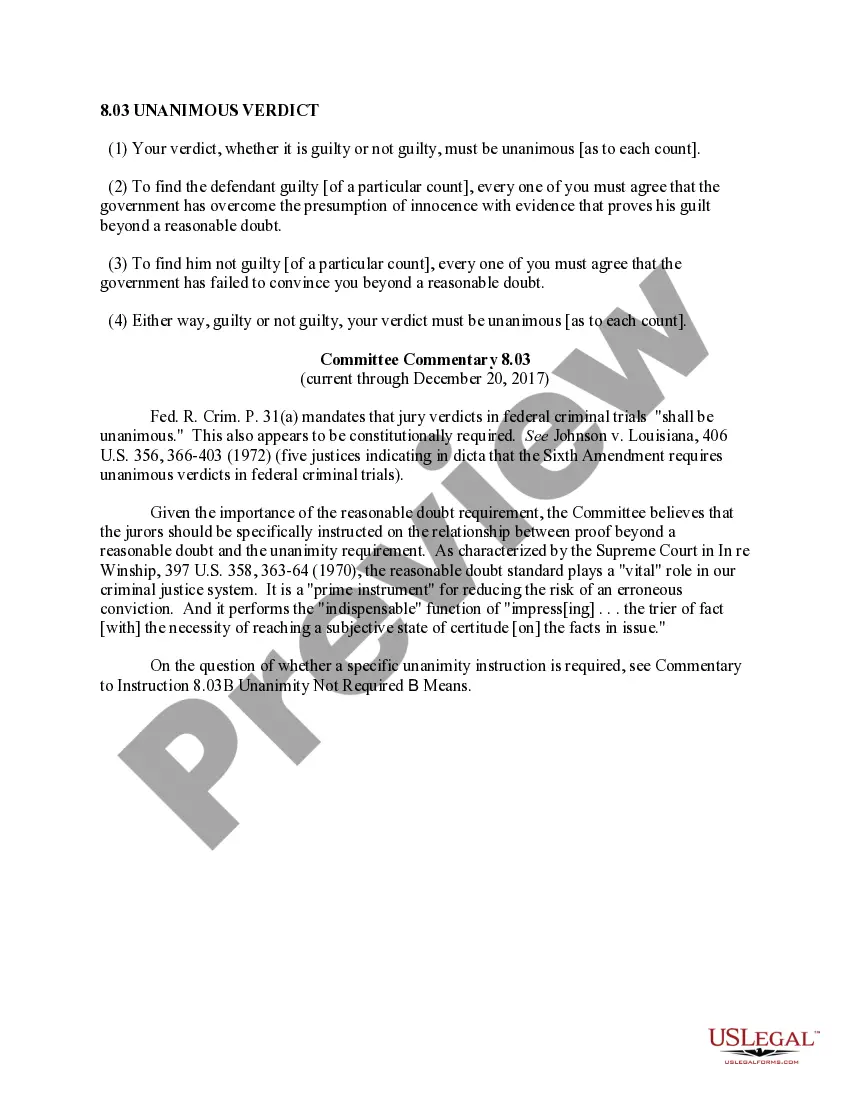
The unanimity requirement as commonly applied means that all the members of the jury must agree upon the verdict?whether for conviction or acquittal. If any of the jurors fail to agree, the jury is "hung"?that is, unable to reach a verdict.
In a civil case, the judge will tell you how many jurors must agree in order to reach a verdict. In a criminal case, the unanimous agreement of all 12 jurors is required.
At common law, the principle of unanimous assent allows shareholders to approve decisions without requiring a properly constituted meeting or without having to observe any other prescribed formalities.