1.14 Prior Inconsistent Statements [or Acts]
What is this form?
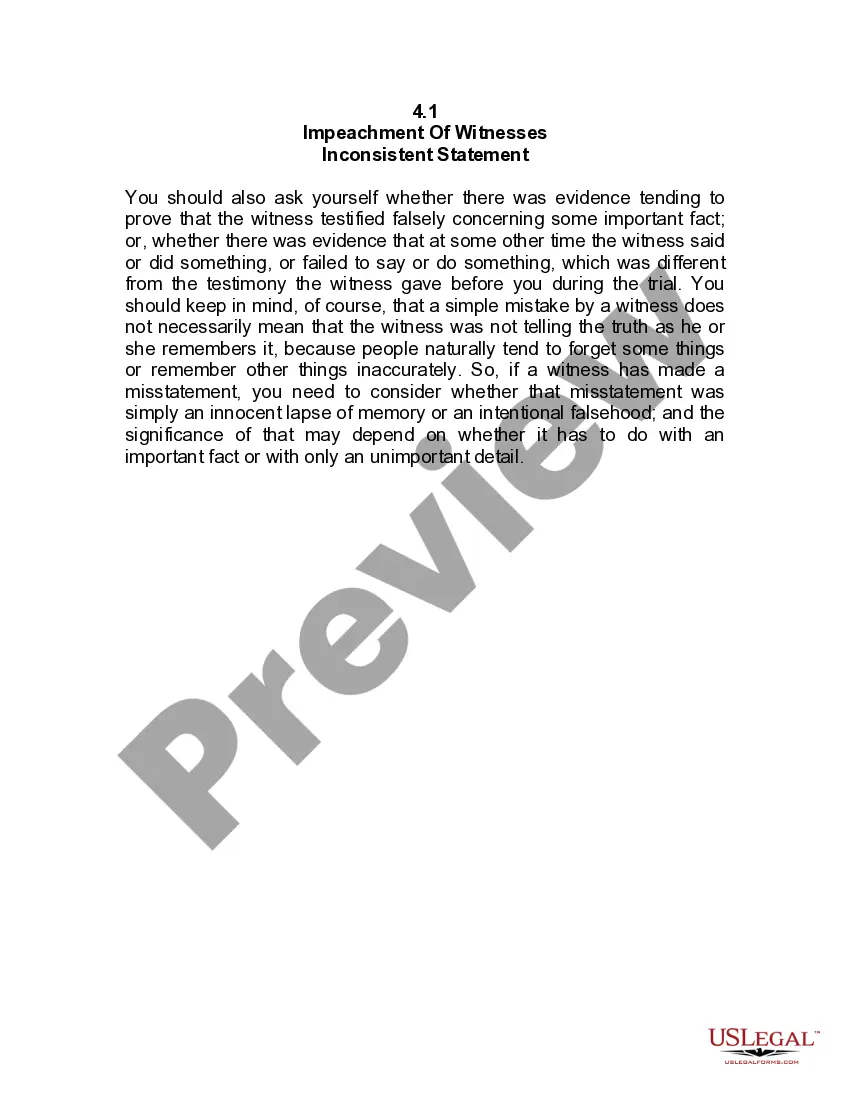
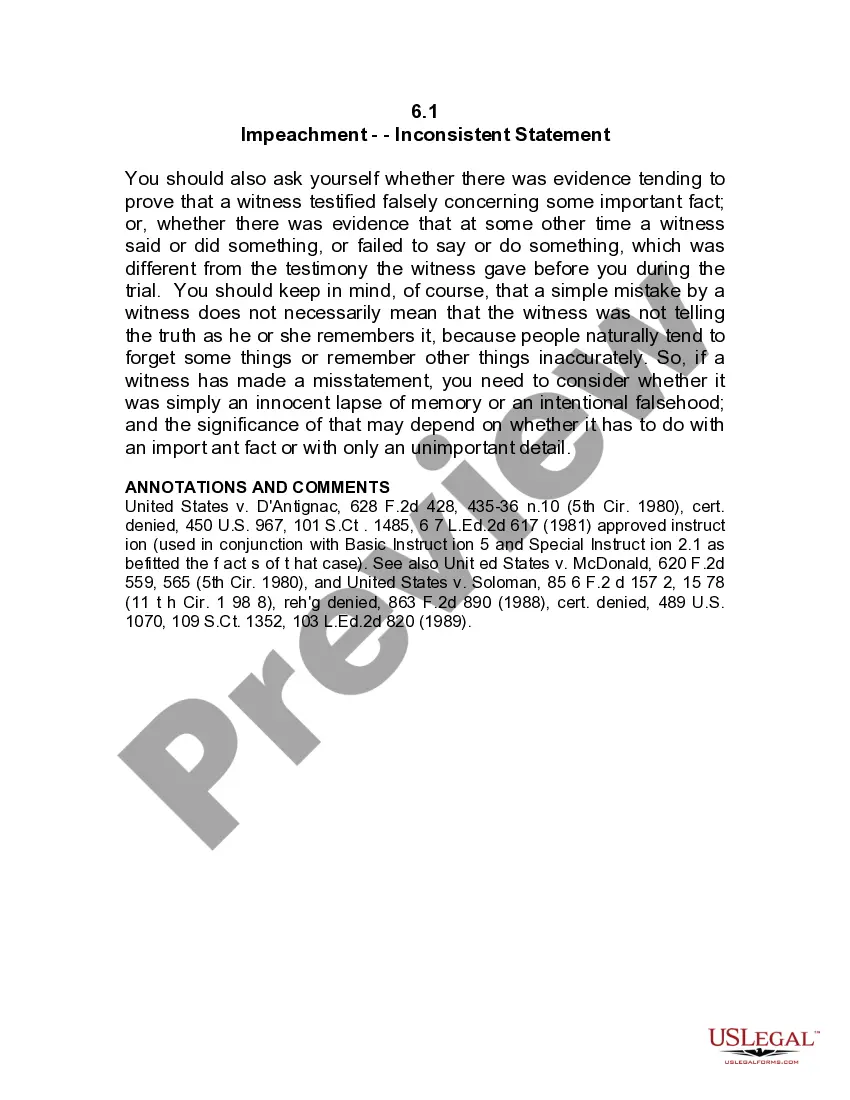
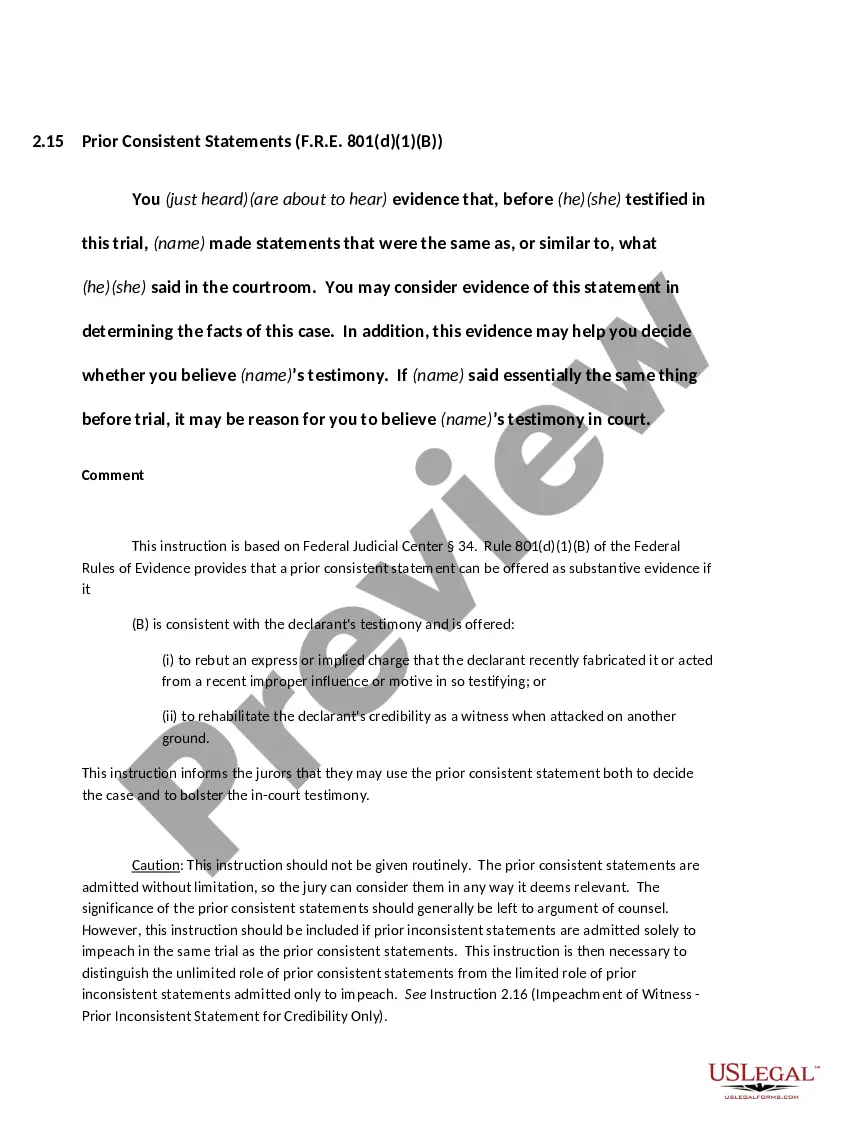
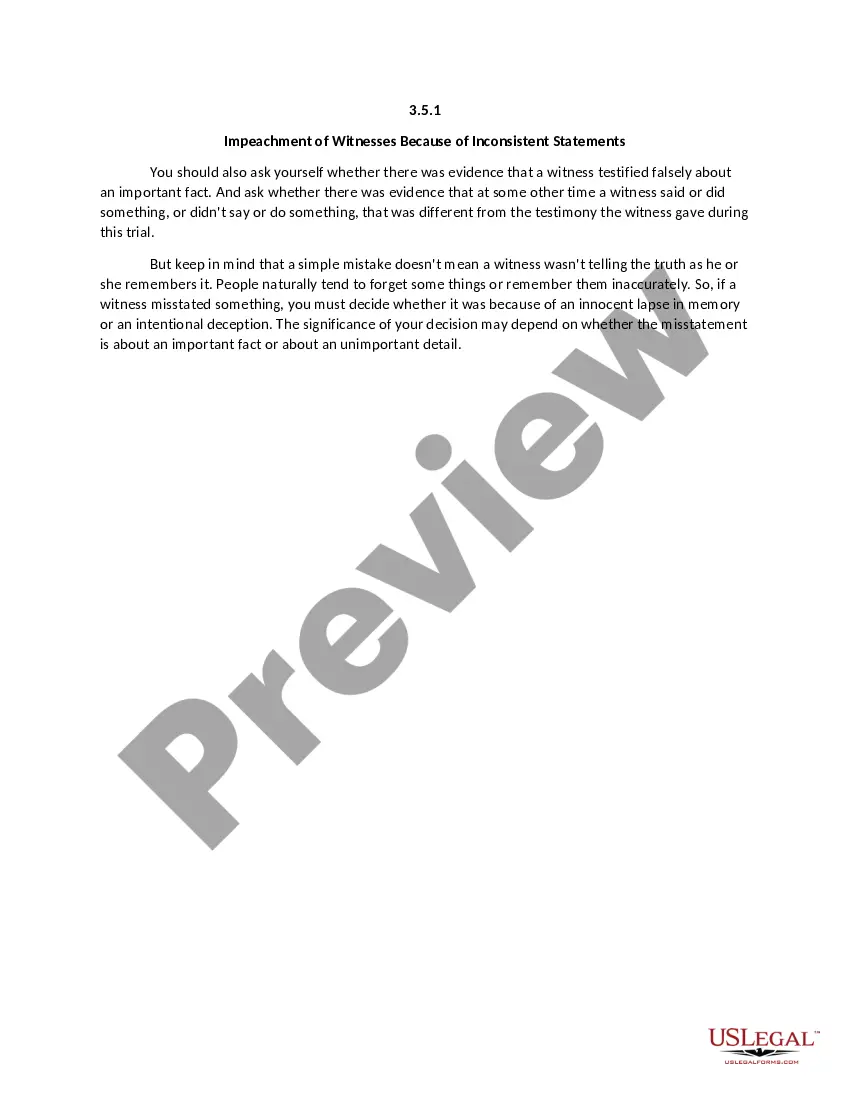
The 1.14 Prior Inconsistent Statements form is a legal instruction used in court to guide jurors on how to evaluate testimony that conflicts with prior statements made by a party or witness. This form is crucial in determining the credibility of witnesses by allowing jurors to assess whether prior statements were made under oath or not, and whether inconsistencies indicate a simple error or intentional falsehood. Unlike other forms, this instruction specifically addresses the treatment of prior inconsistent statements and acts within the context of jury deliberation.
Main sections of this form
- Definition of prior inconsistent statements and their relevance.
- Guidelines for considering statements made under oath versus those not made under oath.
- Criteria for assessing the significance of discrepancies in testimony.
- Instructions on how jurors should weigh the effect of a witness's prior inconsistent conduct.
Common use cases
This form is used in legal proceedings where witness credibility is in question. It is particularly applicable in cases involving conflicting testimonies, where a party or witness has made statements that differ from what is presented in court. This form is essential for guiding jurors on how to appropriately interpret prior statements and inconsistencies, aiding in the fair administration of justice.
Who this form is for
- Judges presiding over legal cases involving witness testimony.
- Lawyers representing clients in trials requiring jury instructions.
- Jury members tasked with evaluating the credibility of witnesses.
Steps to complete this form
- Identify the parties involved in the case.
- Determine which statements were made under oath and which were not.
- Analyze the inconsistencies between prior statements and current testimonies.
- Consider whether discrepancies are due to innocent errors or intentional falsehoods.
- Instruct jurors on how to evaluate the weight of the evidence based on discrepancies.
Is notarization required?
This form usually doesn’t need to be notarized. However, local laws or specific transactions may require it. Our online notarization service, powered by Notarize, lets you complete it remotely through a secure video session, available 24/7.
Get your form ready online
Our built-in tools help you complete, sign, share, and store your documents in one place.
Make edits, fill in missing information, and update formatting in US Legal Forms—just like you would in MS Word.
Download a copy, print it, send it by email, or mail it via USPS—whatever works best for your next step.
Sign and collect signatures with our SignNow integration. Send to multiple recipients, set reminders, and more. Go Premium to unlock E-Sign.
If this form requires notarization, complete it online through a secure video call—no need to meet a notary in person or wait for an appointment.
We protect your documents and personal data by following strict security and privacy standards.

Make edits, fill in missing information, and update formatting in US Legal Forms—just like you would in MS Word.

Download a copy, print it, send it by email, or mail it via USPS—whatever works best for your next step.

Sign and collect signatures with our SignNow integration. Send to multiple recipients, set reminders, and more. Go Premium to unlock E-Sign.

If this form requires notarization, complete it online through a secure video call—no need to meet a notary in person or wait for an appointment.

We protect your documents and personal data by following strict security and privacy standards.
Common mistakes to avoid
- Failing to differentiate between statements made under oath and those made informally.
- Overlooking the importance of context in evaluating discrepancies.
- Not providing clear guidelines for jurors on how to weigh inconsistencies.
Advantages of online completion
- Easy accessibility to the latest legal templates drafted by licensed attorneys.
- Convenient download options allow for immediate use in court preparations.
- Editability ensures the form can be tailored to specific cases, enhancing relevance.
Looking for another form?
Form popularity
FAQ
Under Federal Rule 801(d)(1)(A), prior inconsistent statements may be used for impeachment purposes, as well as substantive evidence, as long as the requirements of the rule have been satisfied: the statement was inconsistent with declarant's testimony and the statement was given under oath.
Impeachment by prior inconsistent statement is used when a witness remembers a fact, but previously made a different statement about that fact.
What is Prior Inconsistent Statements? Prior statements made by the witness that contradict statements made on the witness stand, may be introduced to impeach the witness' credibility; such statements cannot be admitted to prove the truth of the matter asserted but only for impeachment.
There are logical inconsistencies in which the very meaning of the words requires one of the claims to be false. Example: {Everyone left the room. She is someone who is still in the room.} There are inconsistencies with our expectations as in Mark Twain's joke about approving of the funeral.
Rule 801 defines what is and what is not hearsay for the purpose of admitting a prior statement as substantive evidence. A prior statement of a witness at a trial or hearing which is inconsistent with his testimony is, of course, always admissible for the purpose of impeaching the witness' credibility.
613(b) in that extrinsic evidence of a prior inconsistent statement is not admissible unless the statement is shown or disclosed to the witness during the witness's examination. Paragraph (b) is intended to give the witness and the party a fair opportunity to explain or deny the allegation.
?In order to lay the proper predicate for impeachment by prior inconsistent statement, the witness must be advised of the substance of the prior inconsistent statement, the time and place the statement was made, and the person to whom the statement was made.? See Kimble v. State, 537 So. 2d 1094, 1096 (Fla.
![Preview 1.14 Prior Inconsistent Statements [or Acts]](https://cdn.uslegal.com/uslegal-preview/US/US-JURY-7THCIR-1-14/webp/1.webp "Get 1.14 Prior Inconsistent Statements [or Acts]")