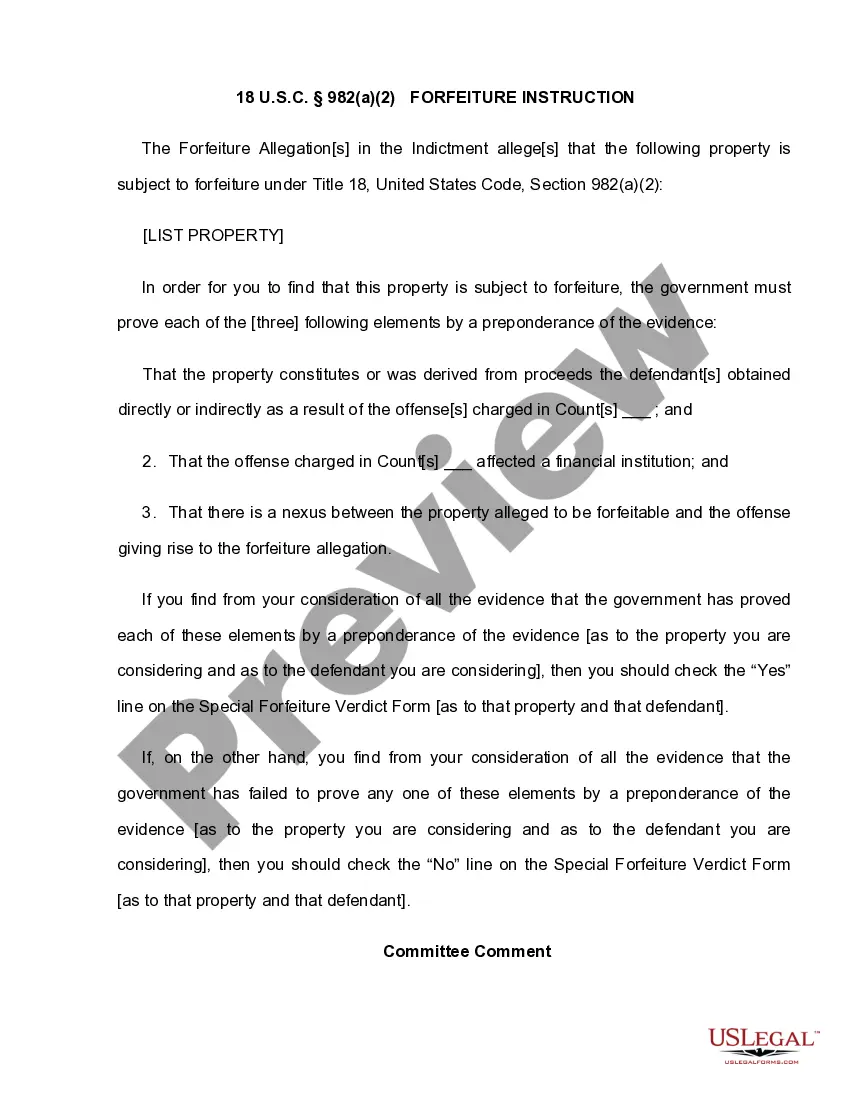
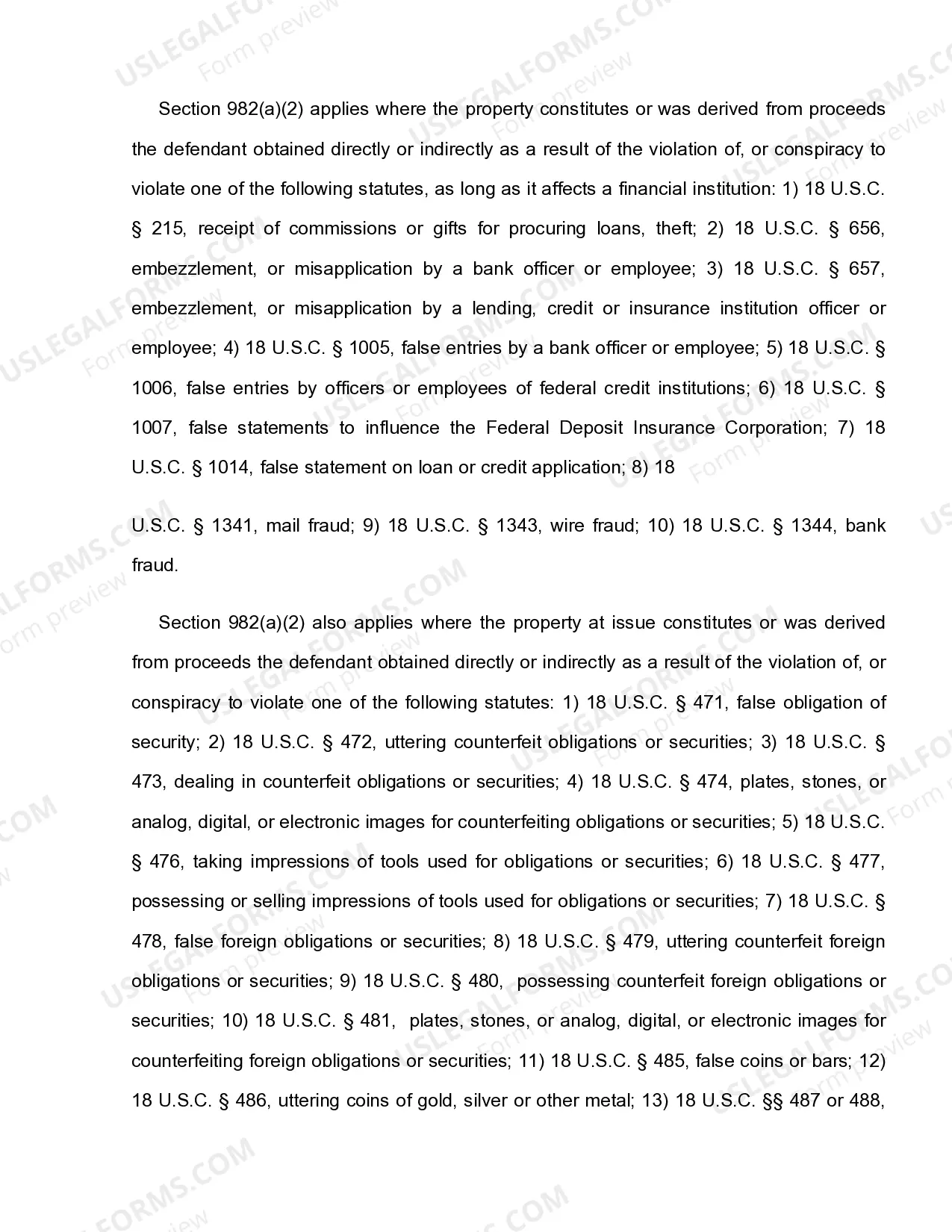
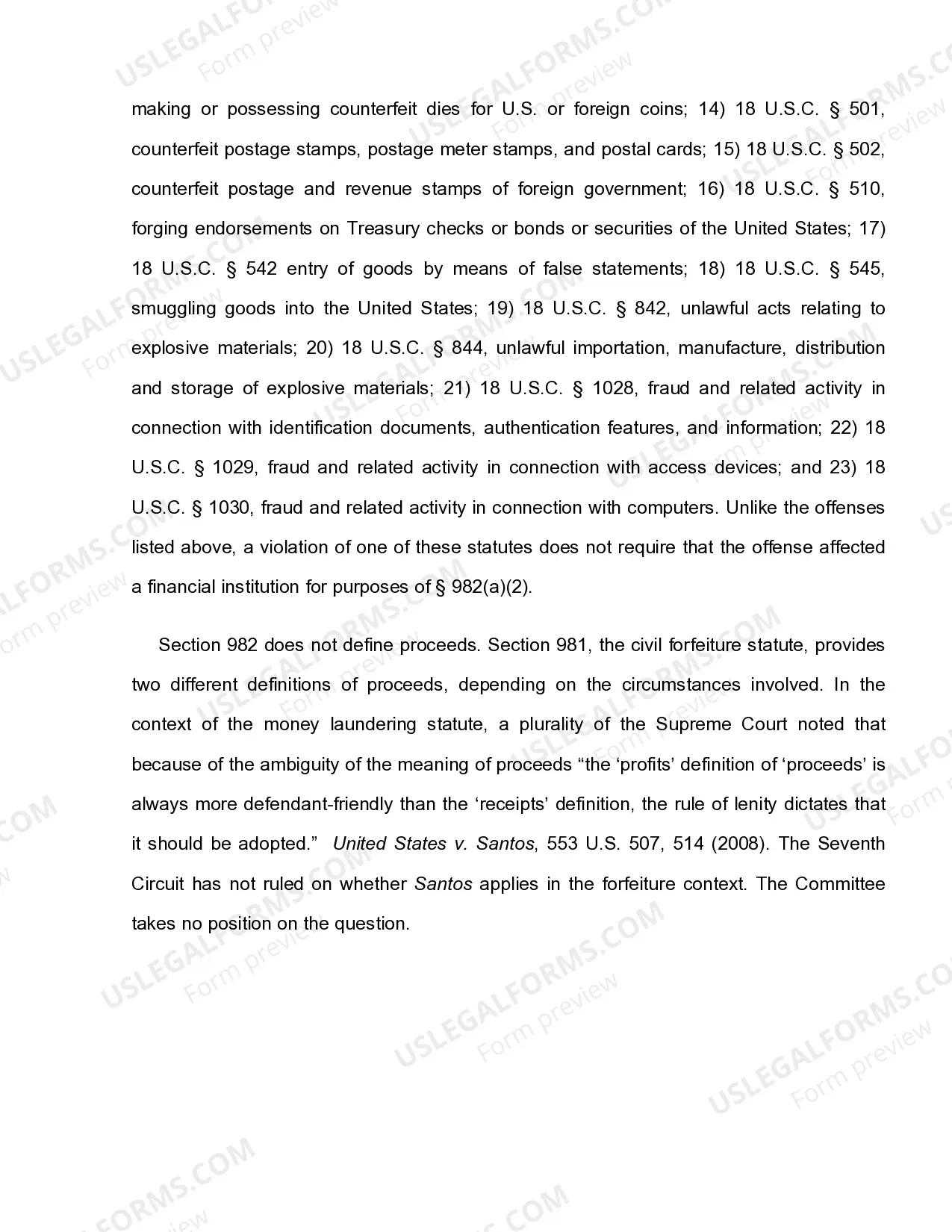
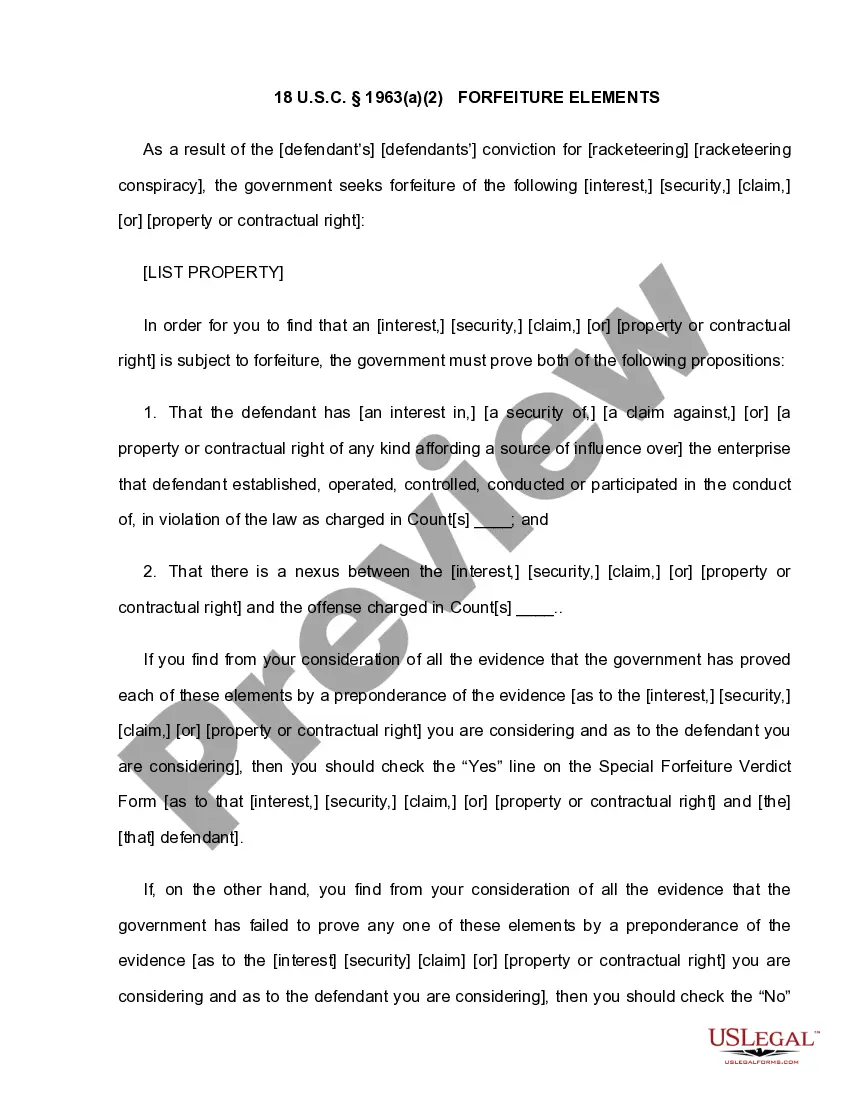
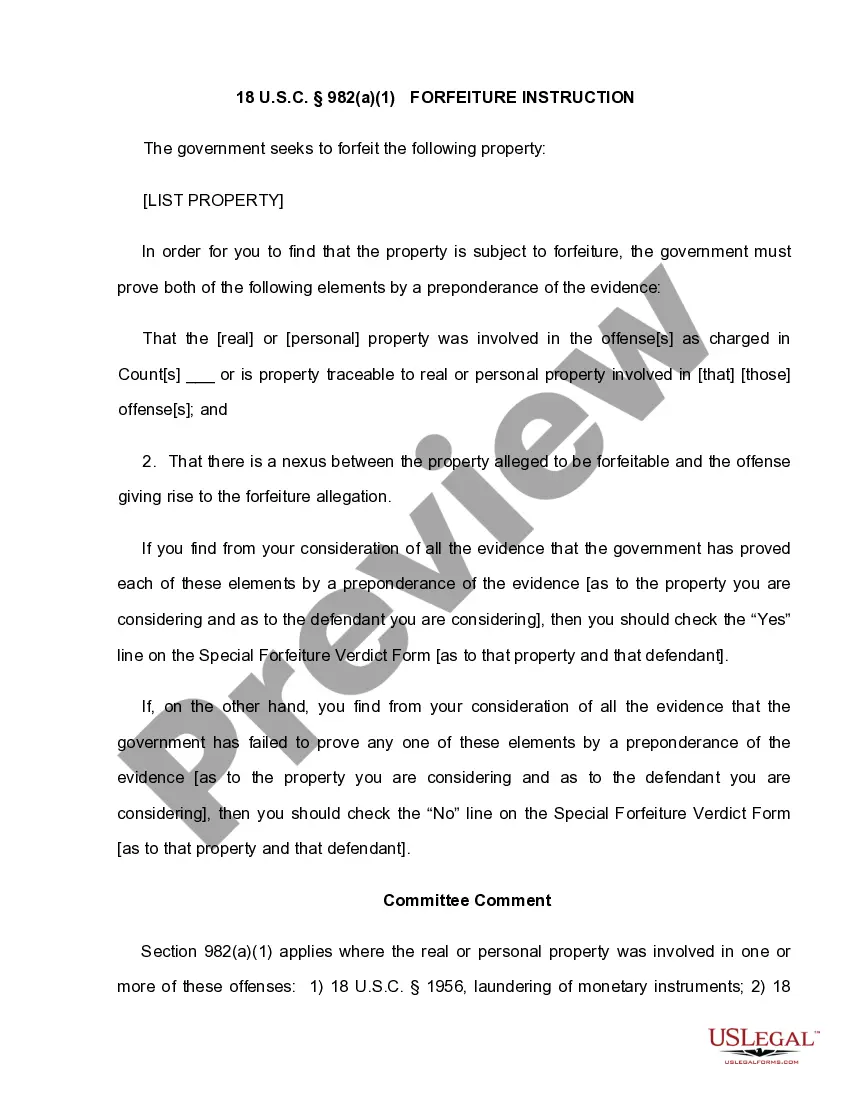
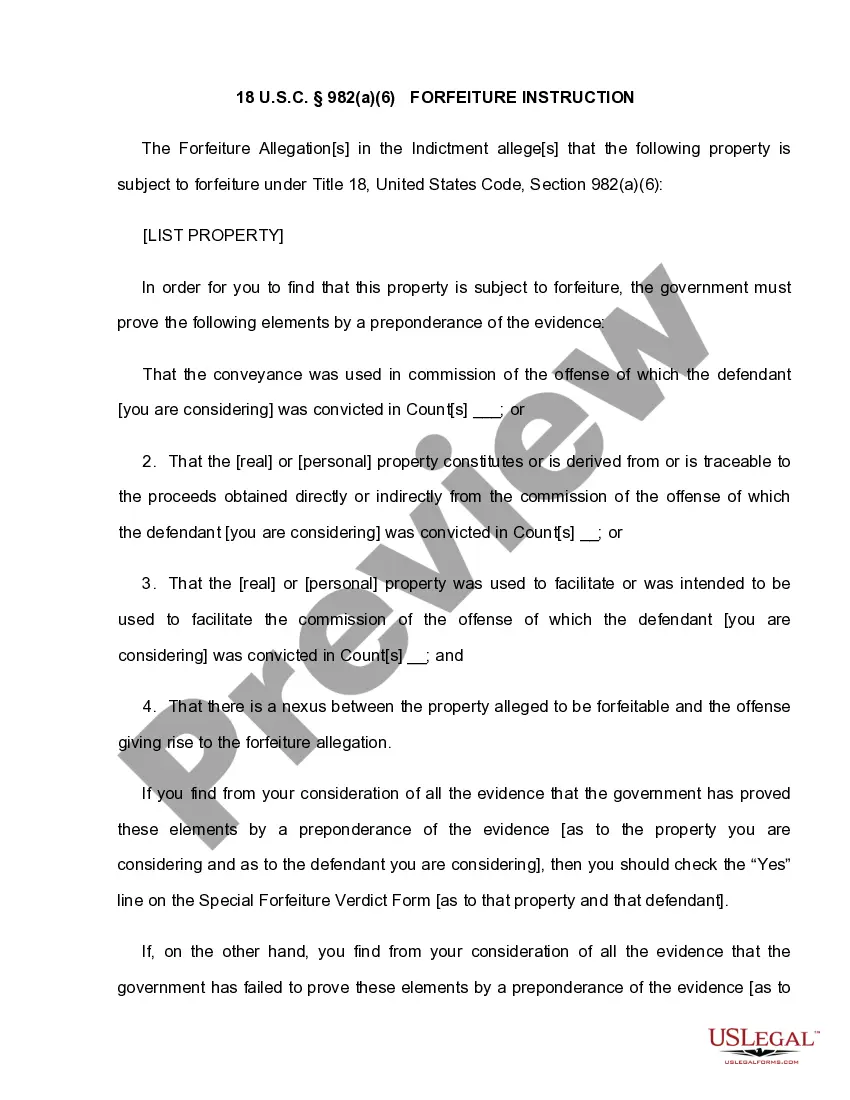
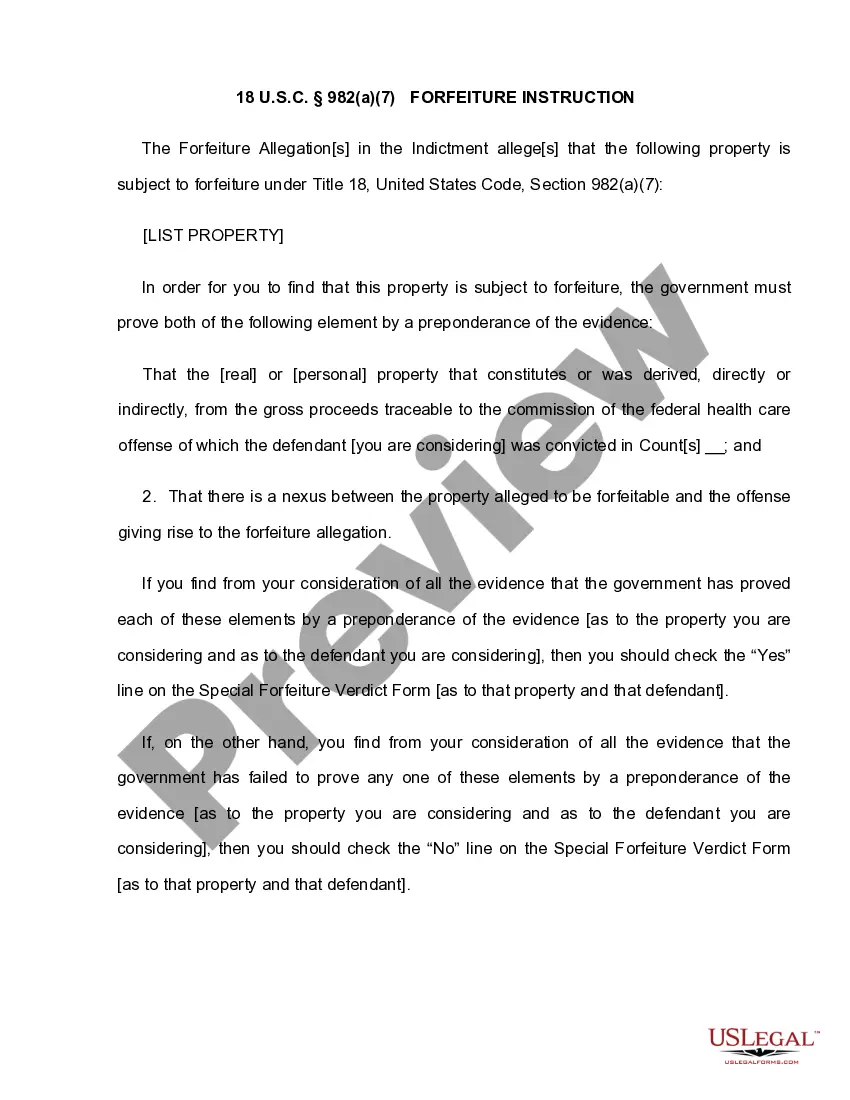
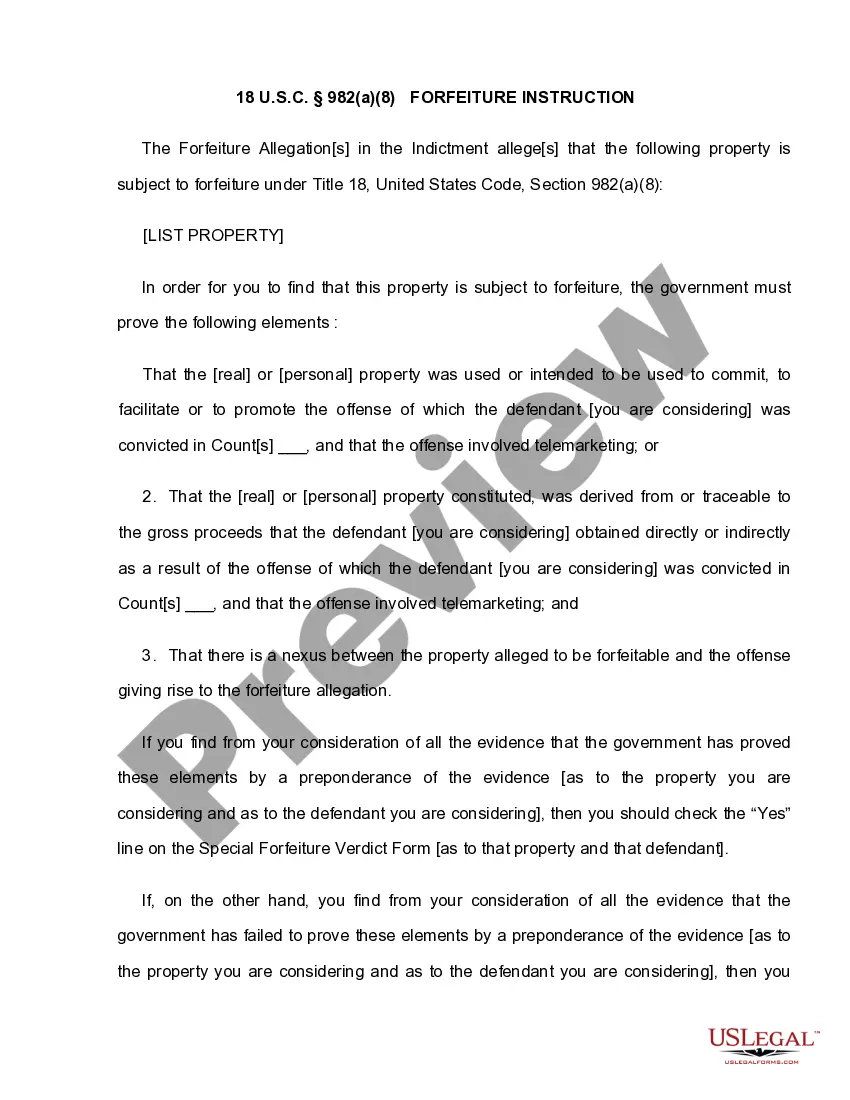
18 U.S.C. Sec. 982(a)(2) FORFEITURE INSTRUCTION
Notarization guidance
Notarization is not commonly needed for this form. However, certain documents or local rules may make it necessary. Our notarization service, powered by Notarize, allows you to finalize it securely online anytime, day or night.
Get your form ready online
Our built-in tools help you complete, sign, share, and store your documents in one place.
Make edits, fill in missing information, and update formatting in US Legal Forms—just like you would in MS Word.
Download a copy, print it, send it by email, or mail it via USPS—whatever works best for your next step.
Sign and collect signatures with our SignNow integration. Send to multiple recipients, set reminders, and more. Go Premium to unlock E-Sign.
If this form requires notarization, complete it online through a secure video call—no need to meet a notary in person or wait for an appointment.
We protect your documents and personal data by following strict security and privacy standards.

Make edits, fill in missing information, and update formatting in US Legal Forms—just like you would in MS Word.

Download a copy, print it, send it by email, or mail it via USPS—whatever works best for your next step.

Sign and collect signatures with our SignNow integration. Send to multiple recipients, set reminders, and more. Go Premium to unlock E-Sign.

If this form requires notarization, complete it online through a secure video call—no need to meet a notary in person or wait for an appointment.

We protect your documents and personal data by following strict security and privacy standards.
Looking for another form?
Form popularity
FAQ
Forfeit or forfeiture means losing a right, privilege, or property without compensation as a consequence of violating the law, breaching a legal obligation, failing to perform a contractual obligation or condition, or neglecting a legal duty.
Under Federal law, there are three (3) types of forfeiture: criminal forfeiture, civil judicial forfeiture, and administrative forfeiture.
Under federal laws of the United States, law enforcement agencies and prosecutors are allowed to seize property and money from people convicted of certain federal offenses, which is called a ?forfeiture,? and most common in drug trafficking and related cases.
Property that the wrongdoer would not have had but for the crime can be forfeited as proceeds. For example, cash acquired through an unlawful activity such as drug dealing, or a car bought with cash from drug dealing can be forfeited under the proceeds theory.
§982. Criminal forfeiture. (a)(1) The court, in imposing sentence on a person convicted of an offense in violation of section 1956, 1957, or 1960 of this title, shall order that the person forfeit to the United States any property, real or personal, involved in such offense, or any property traceable to such property.
Criminal forfeiture is an action brought as a part of the criminal prosecution of a defendant. It is an in personam (against the person) action and requires that the government indict (charge) the property used or derived from the crime along with the defendant.
Property that the wrongdoer would not have had but for the crime can be forfeited as proceeds. For example, cash acquired through an unlawful activity such as drug dealing, or a car bought with cash from drug dealing can be forfeited under the proceeds theory.
Under Federal law, there are three (3) types of forfeiture: criminal forfeiture, civil judicial forfeiture, and administrative forfeiture.