3.12 IDENTIFICATION TESTIMONY
What this document covers
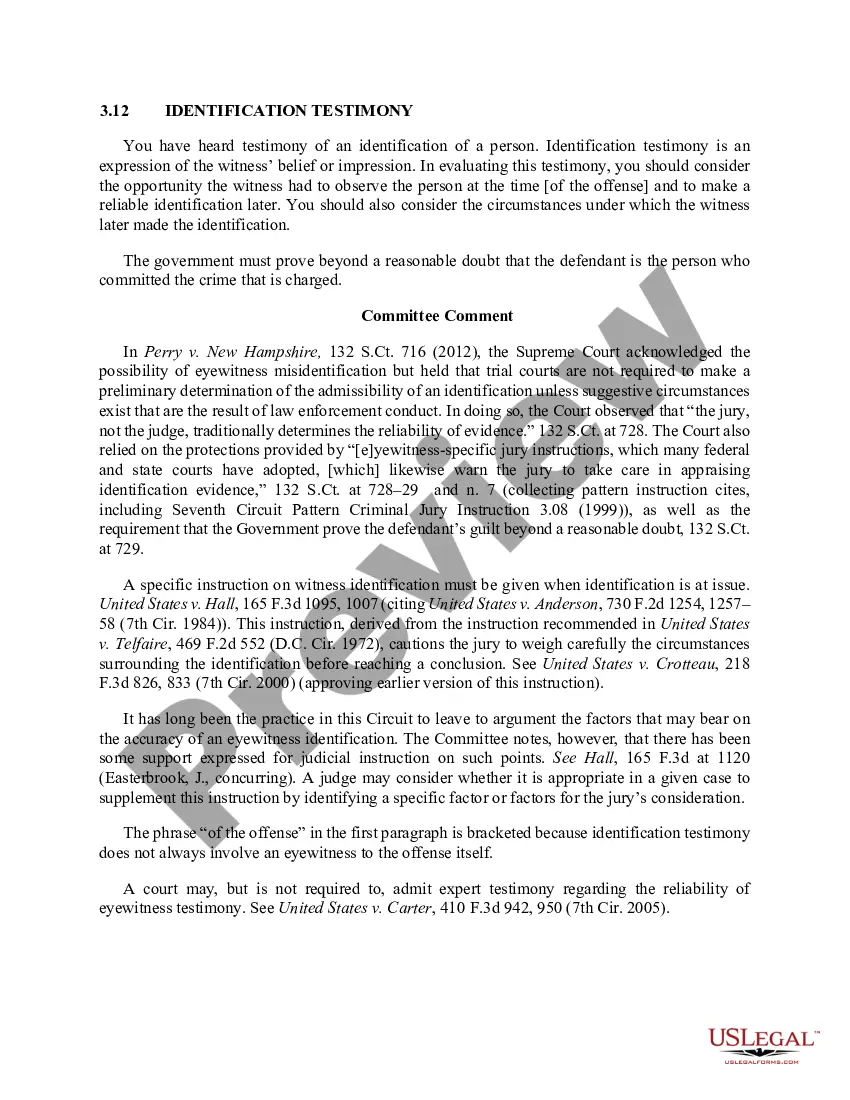
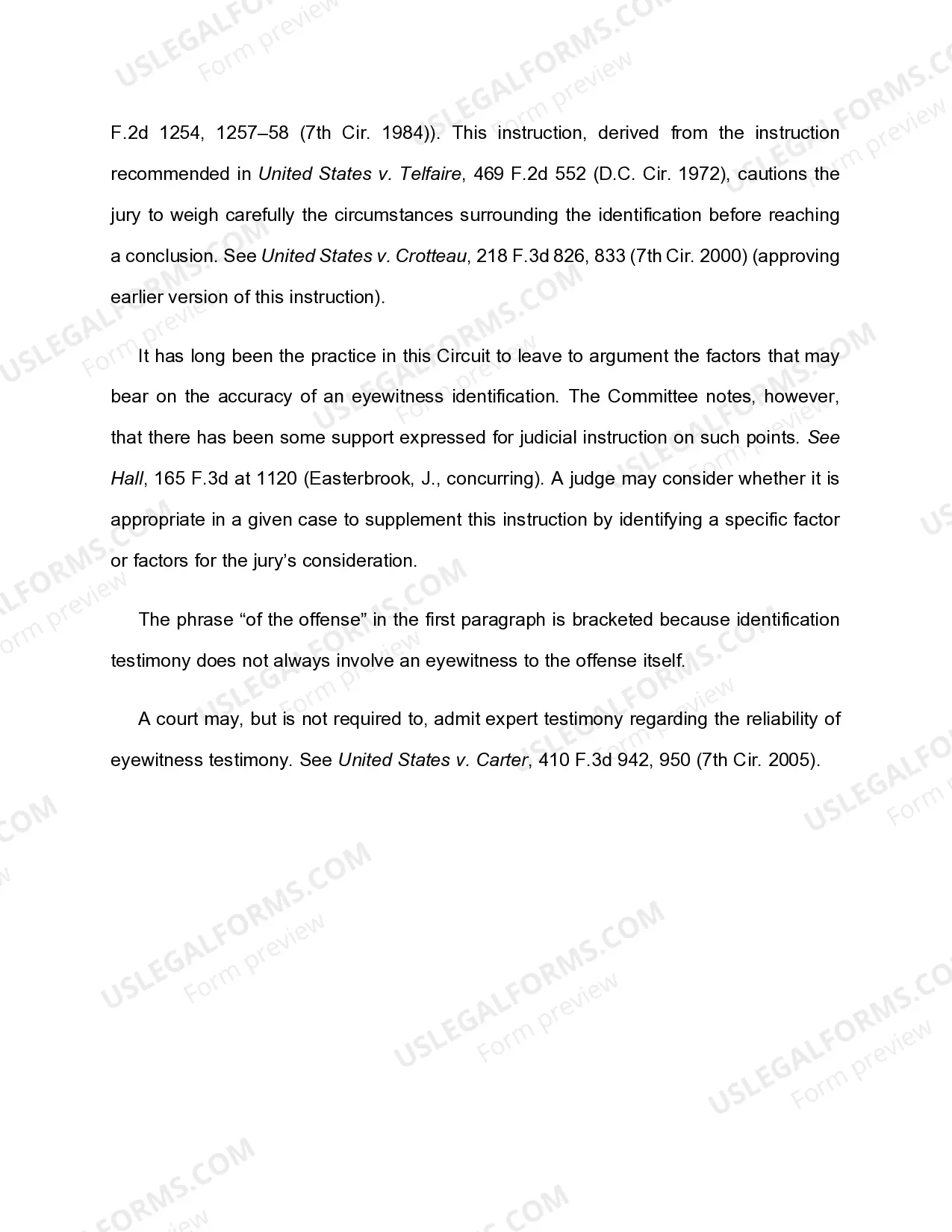
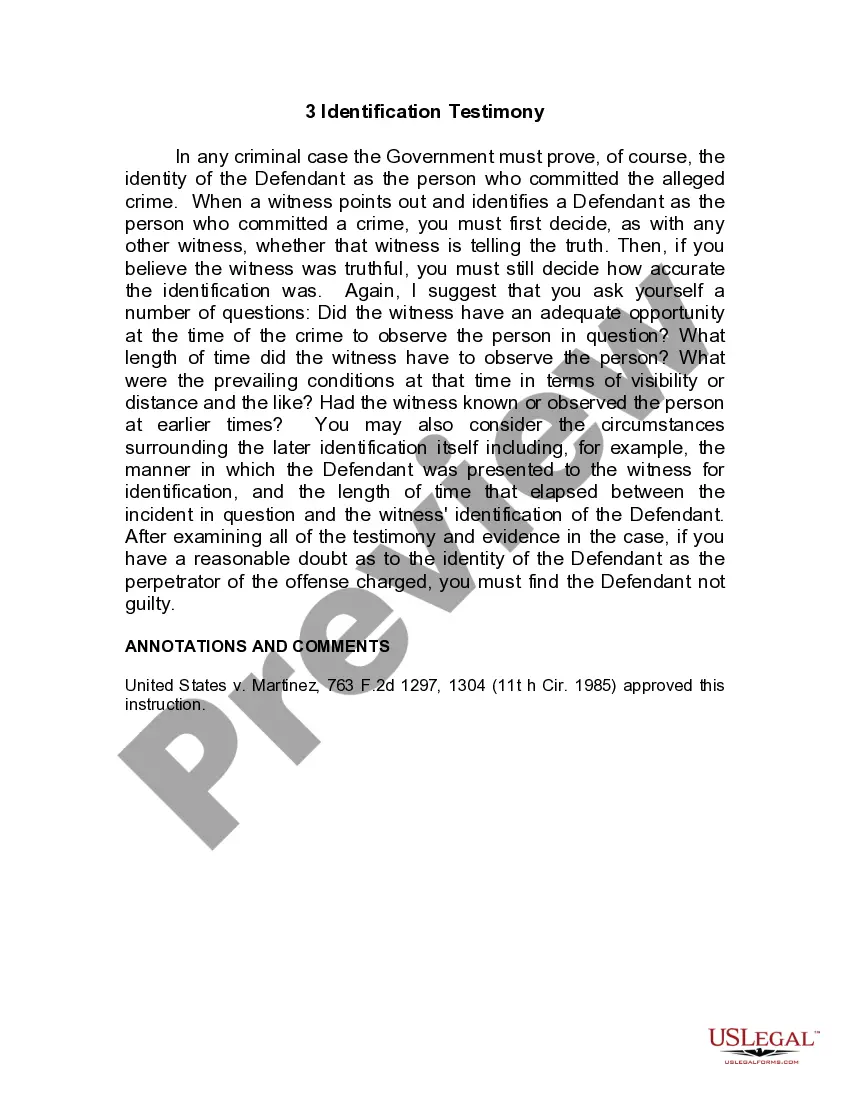
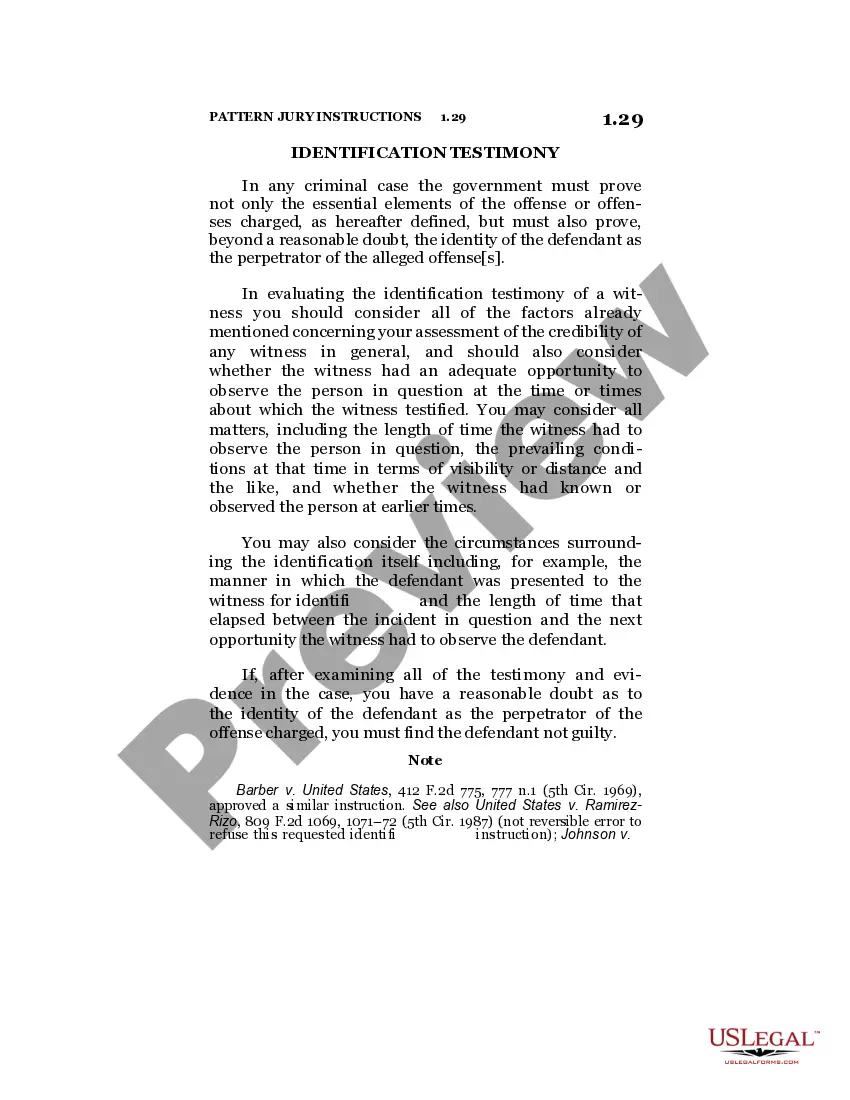
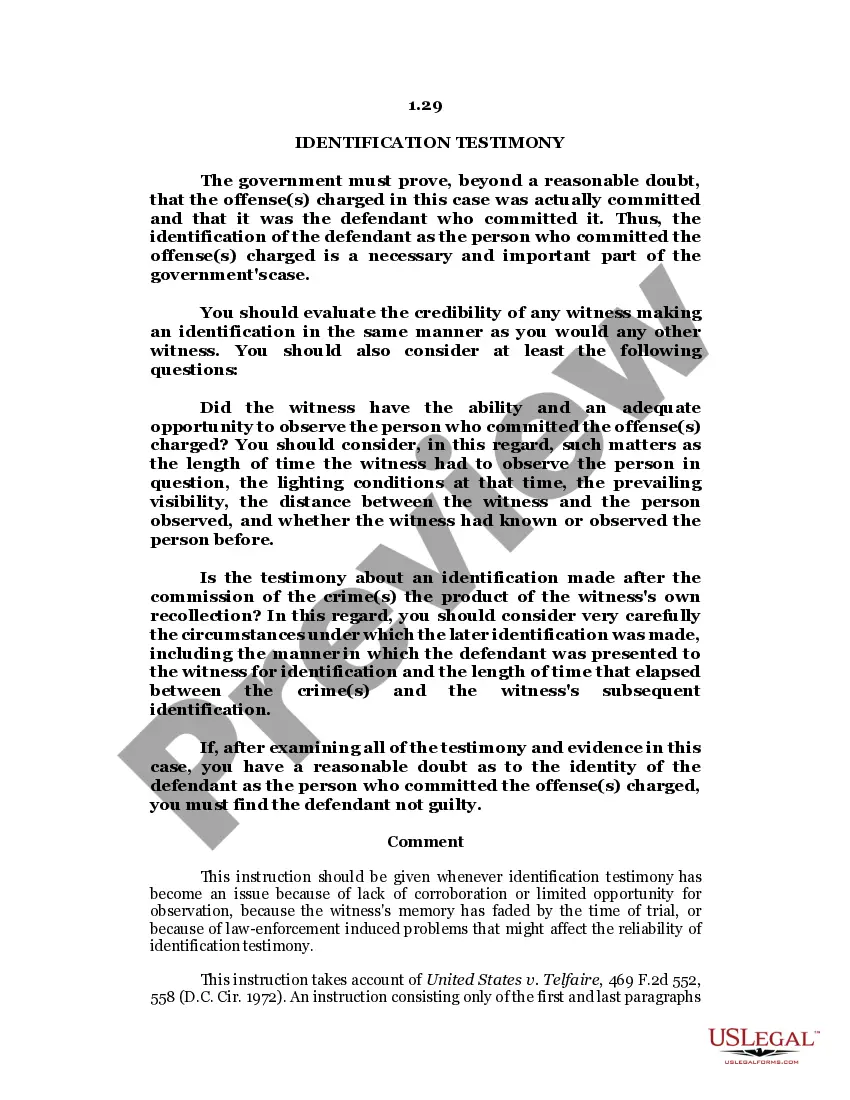
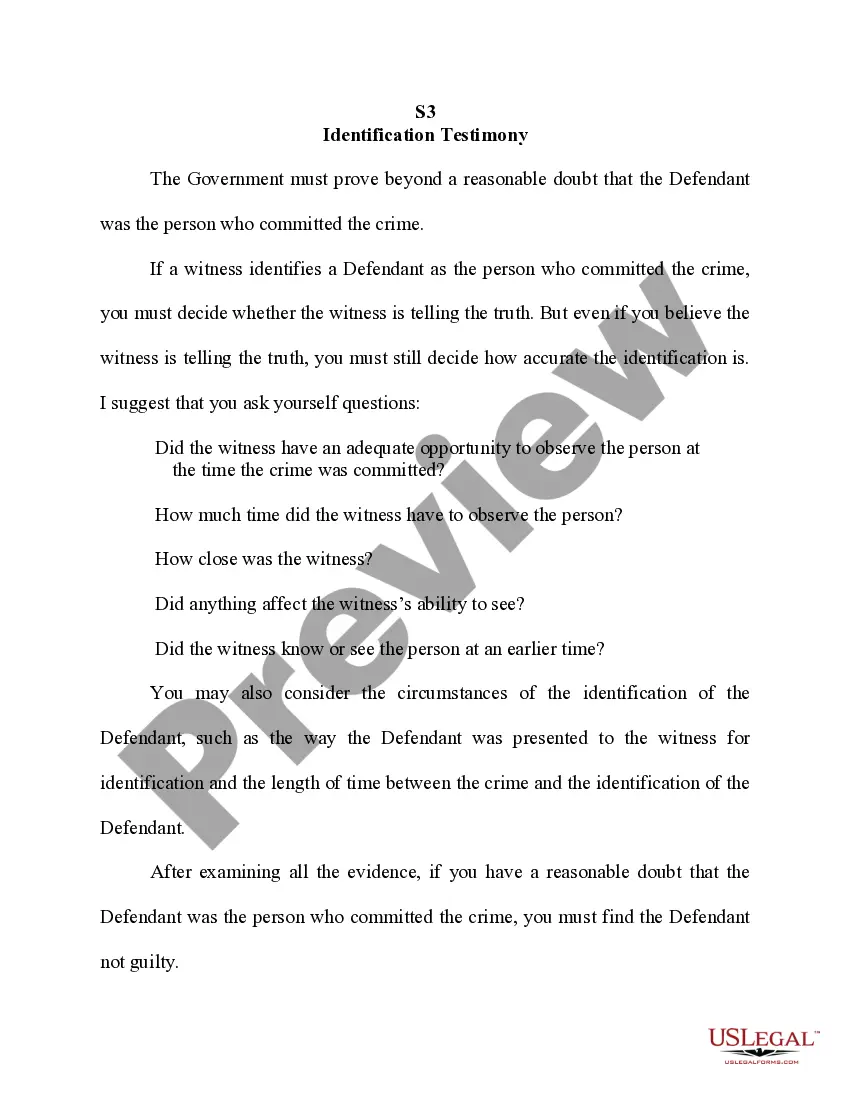
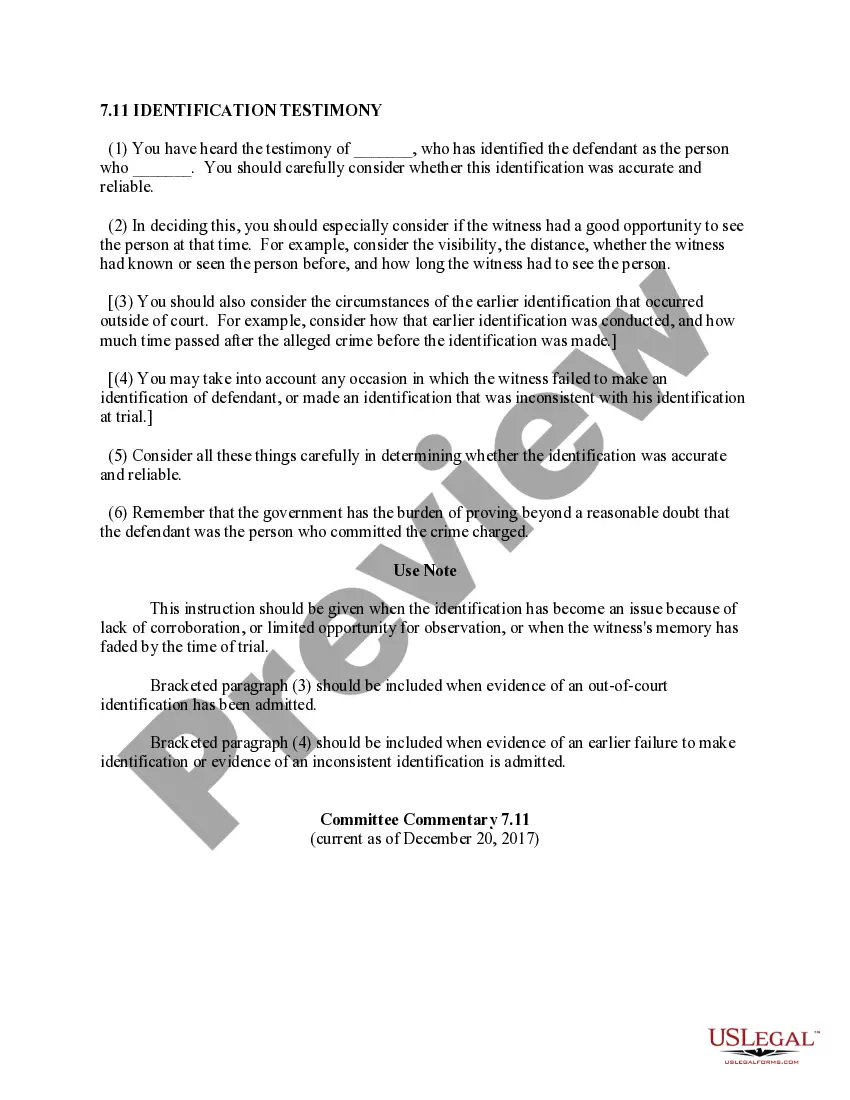
The 3.12 Identification Testimony form is a set of official jury instructions designed for use in federal court cases. It guides jurors in evaluating the reliability of eyewitness testimony regarding the identification of a person involved in a crime. This form is crucial in ensuring that jurors understand the nuances of identification evidence and the importance of considering the circumstances surrounding the identification, thus protecting the rights of the defendant.
Form components explained
- A description of identification testimony and its significance in court.
- Guidelines for jurors on evaluating the reliability of a witnessâs identification.
- The burden of proof required for the government to establish the defendant's guilt beyond a reasonable doubt.
- References to important case law affecting eyewitness identification.
- Cautions for jurors to consider potential misidentification factors.

Common use cases
This form should be used in criminal trials where eyewitness identification is a key piece of evidence. It is applicable when prosecutors present testimony regarding a witness identifying the defendant as the perpetrator of the crime. The form serves to instruct the jury on how to fairly assess the credibility of the identification evidence put forth during the trial.
Who needs this form
- Judges presiding over criminal trials involving eyewitness identification.
- Defense attorneys who wish to ensure proper jury instructions are given regarding identification testimony.
- Prosecutors aiming to accurately convey the legal standards for the jury on identifying the defendant.
- Legal professionals and court personnel involved in jury instruction processes.
How to complete this form
- Clearly define the identification testimony to be presented to the jury.
- Outline the circumstances under which the identification was made.
- Explain the standard of proof required for jurors (beyond a reasonable doubt).
- Reference relevant case law that impacts eyewitness testimony considerations.
- Advise the jury on careful evaluation of the identification evidence surrounding the case.
Notarization guidance
Notarization is generally not required for this form. However, certain states or situations might demand it. You can complete notarization online through US Legal Forms, powered by Notarize, using a verified video call available anytime.
Get your form ready online
Our built-in tools help you complete, sign, share, and store your documents in one place.
Make edits, fill in missing information, and update formatting in US Legal Forms—just like you would in MS Word.
Download a copy, print it, send it by email, or mail it via USPS—whatever works best for your next step.
Sign and collect signatures with our SignNow integration. Send to multiple recipients, set reminders, and more. Go Premium to unlock E-Sign.
If this form requires notarization, complete it online through a secure video call—no need to meet a notary in person or wait for an appointment.
We protect your documents and personal data by following strict security and privacy standards.

Make edits, fill in missing information, and update formatting in US Legal Forms—just like you would in MS Word.

Download a copy, print it, send it by email, or mail it via USPS—whatever works best for your next step.

Sign and collect signatures with our SignNow integration. Send to multiple recipients, set reminders, and more. Go Premium to unlock E-Sign.

If this form requires notarization, complete it online through a secure video call—no need to meet a notary in person or wait for an appointment.

We protect your documents and personal data by following strict security and privacy standards.
Typical mistakes to avoid
- Failing to emphasize the importance of circumstances surrounding the eyewitness identification.
- Neglecting to provide the jury with relevant case law references.
- Overlooking the critical burden of proof required for the government.
- Not giving adequate guidance on evaluating the reliability of eyewitness testimony.
Benefits of completing this form online
- Easy access to official legal language and instructions drafted by licensed attorneys.
- Editable format allows customization as needed for specific cases.
- Saves time and effort compared to drafting similar instructions from scratch.
- Provides clarity on legal standards for juries in complex cases.
Legal use & context
- This form is derived from established legal principles adopted by the Federal 7th Circuit Court.
- It aims to minimize the risk of wrongful conviction based on unreliable eyewitness evidence.
- Insufficient attention to identification testimony may affect the outcome of trials.
Looking for another form?

Form popularity
FAQ
Quick Reference. A procedure used by police to test the ability of witnesses to identify a person they have seen on a previous occasion?usually the perpetrator of an offence.
(a) Definitions. (1) ?Eyewitness Identification? means witness testimony or conduct in a criminal trial that identifies the defendant as the person who committed a charged crime.
There are three primary forms of eyewitness identification: lineup, showup, and photographic identification. These typically are used in combination with one another and with scientific identifications.
The 'witness box' will generate a new fingerprint and find its similarity with the previously stored registration data. A similarity threshold is calculated from the registered fingerprints and if the new fingerprint is above the threshold, the device is authenticated.
The guidelines a witness who is honest may be wrong even if they are convinced they are right; a witness who is convincing may still be wrong; more than one witness may be wrong; a witness who recognises the defendant, even when the witness knows the defendant very well, may be wrong.
: an enclosure in which a witness sits or stands while testifying in court.
There are three primary forms of eyewitness identification: lineup, showup, and photographic identification.
: the place in a court of law where a witness answers questions and promises to tell the truth : the place where a witness testifies in court. ? called also the stand, (British) witness box.