3.13 OPINION TESTIMONY
Overview of this form
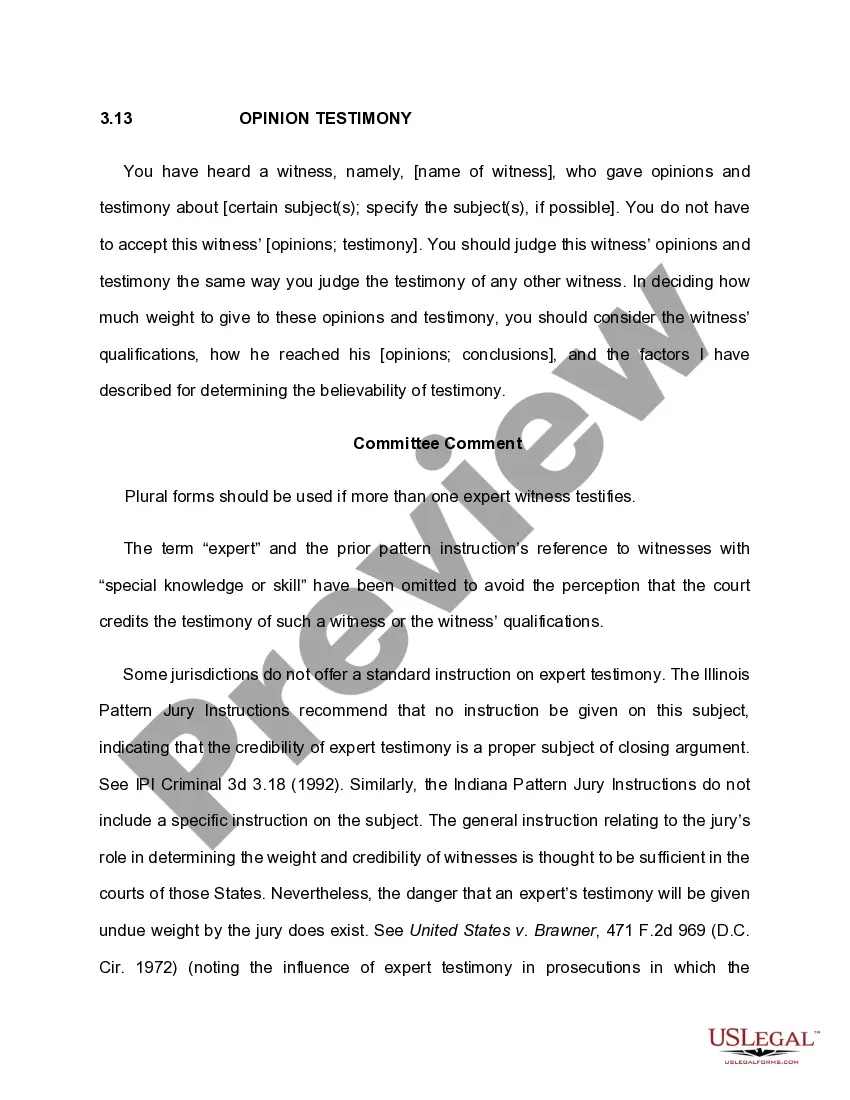
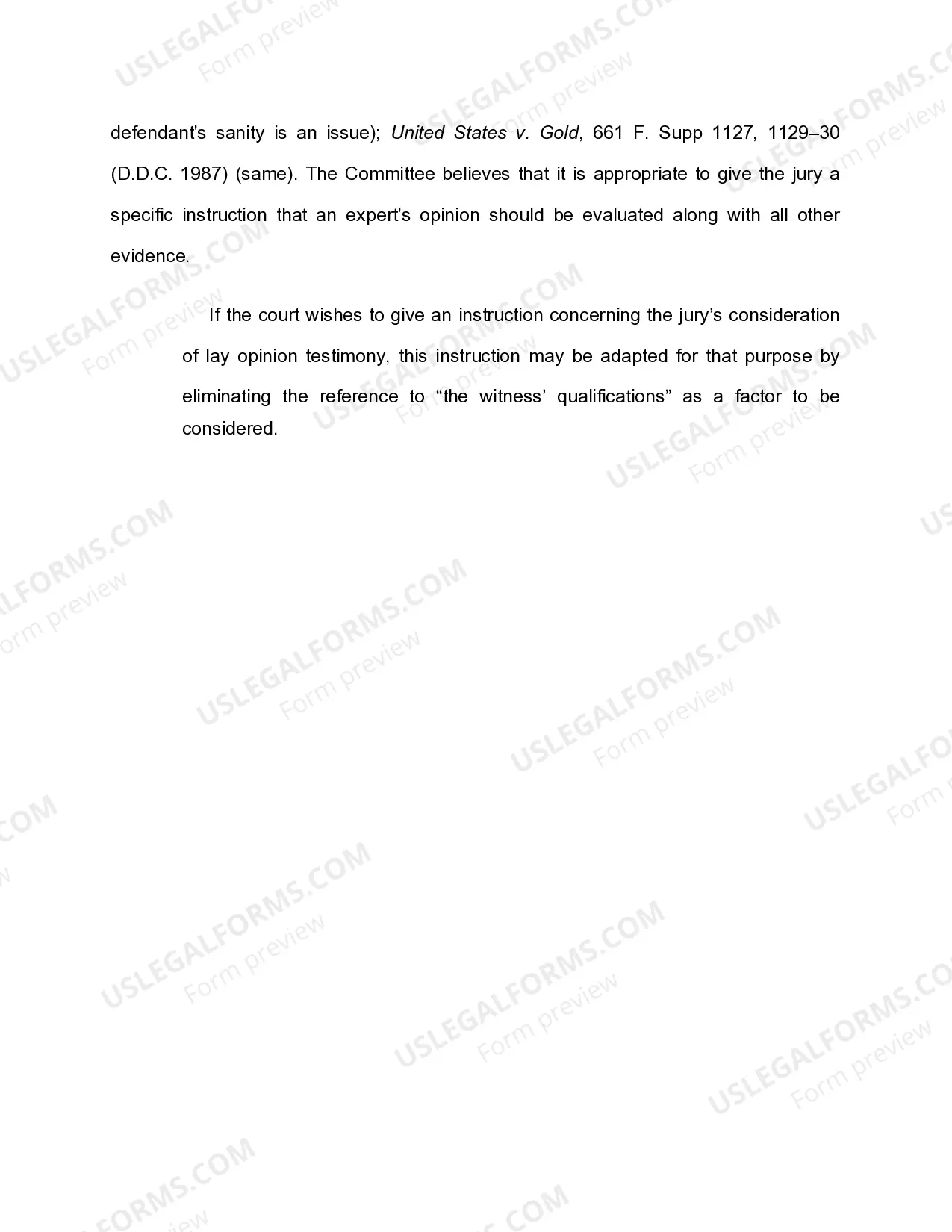
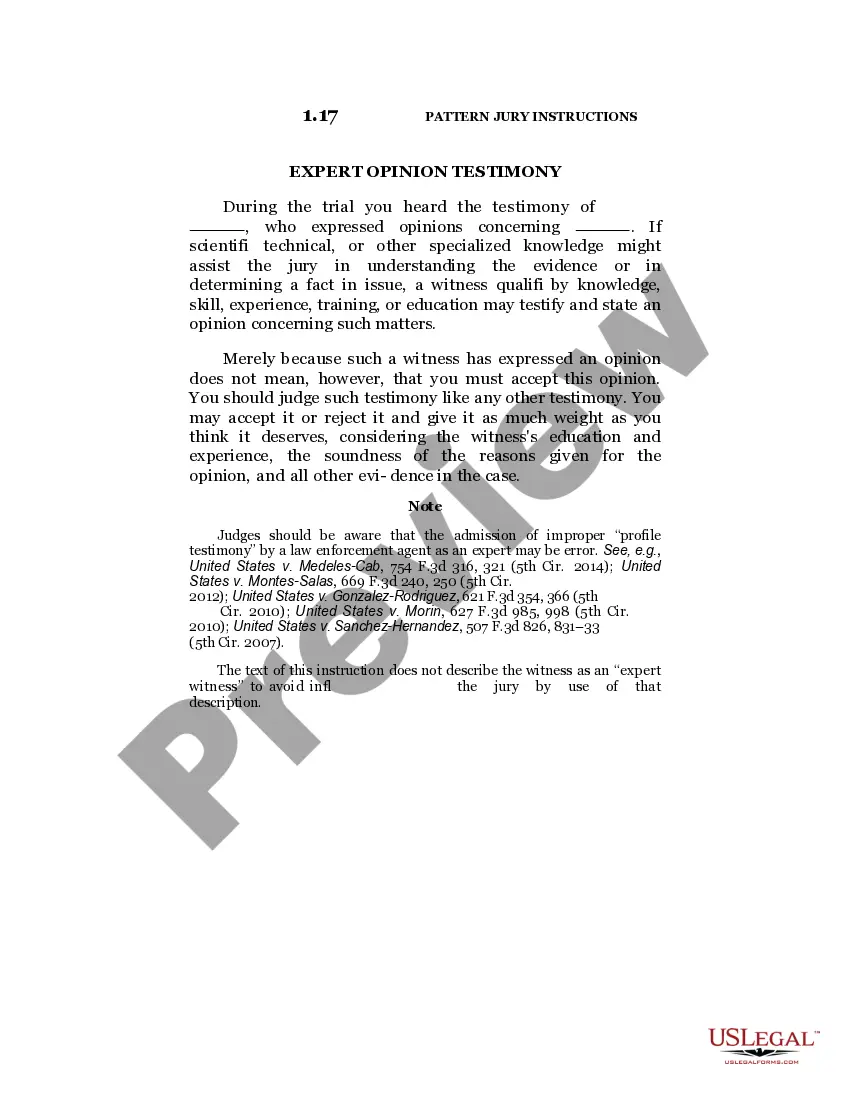
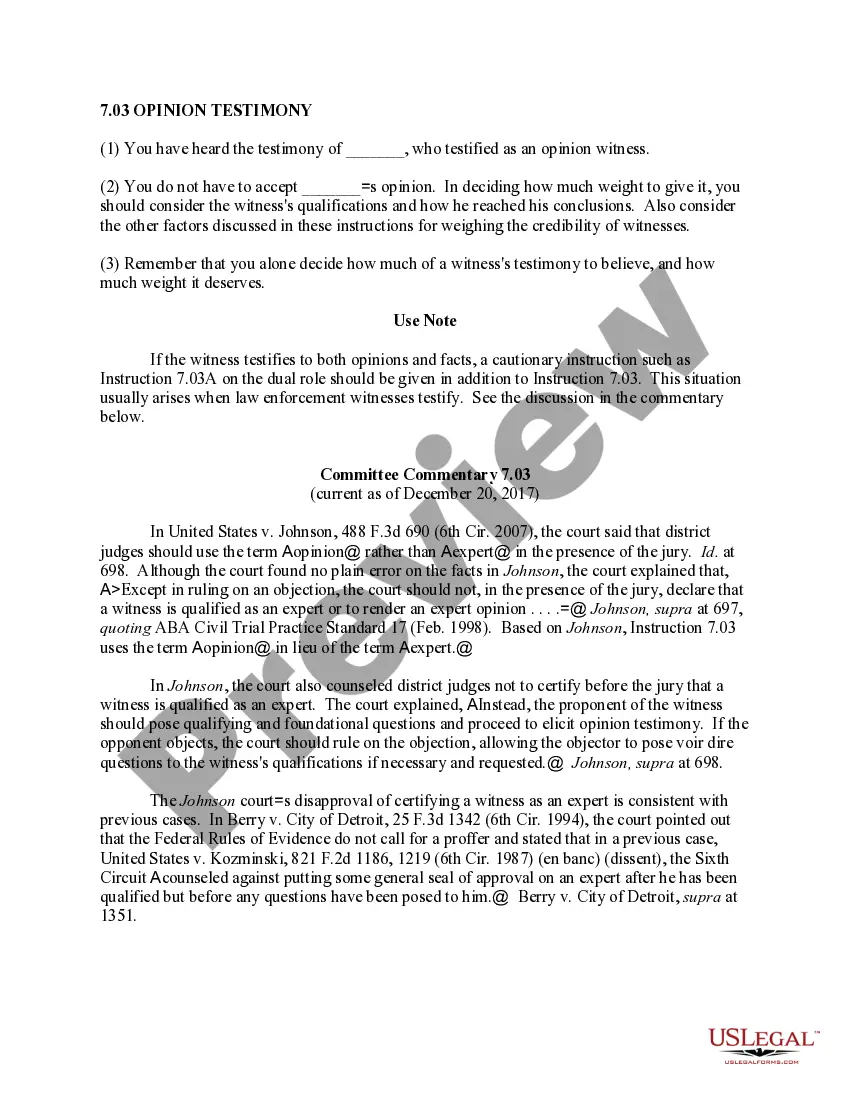
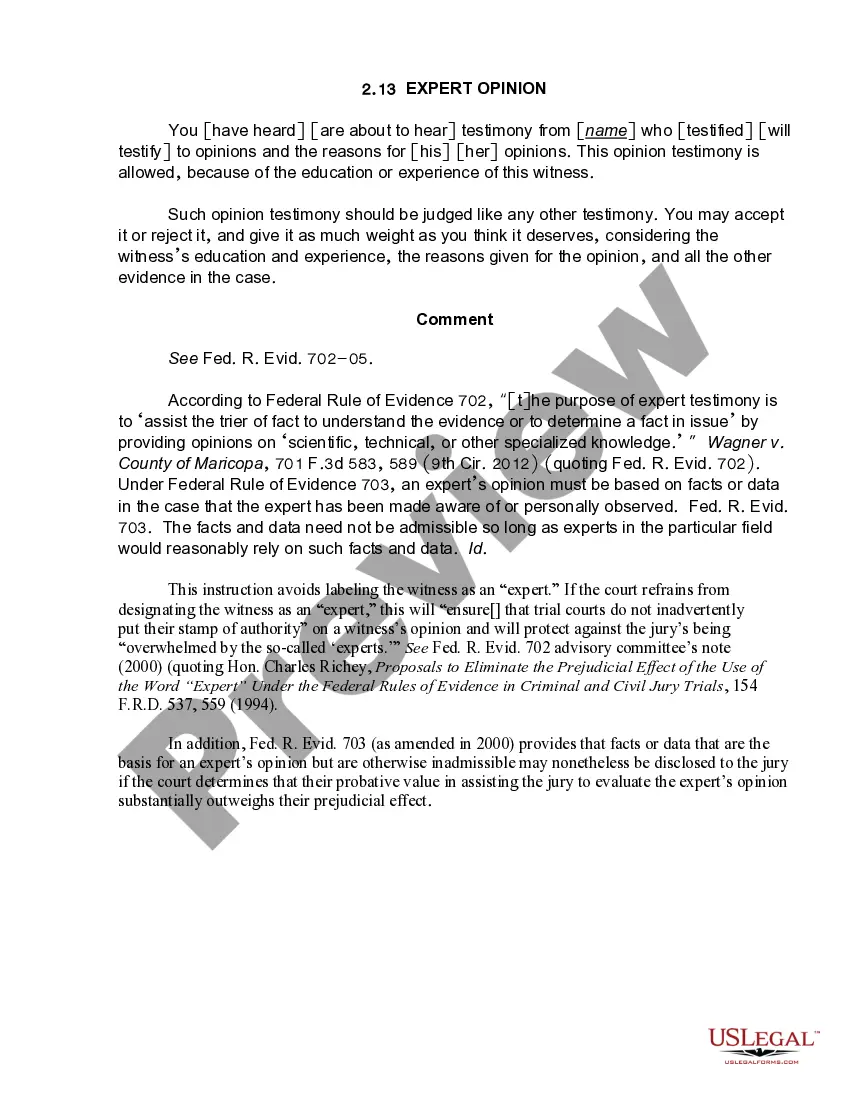
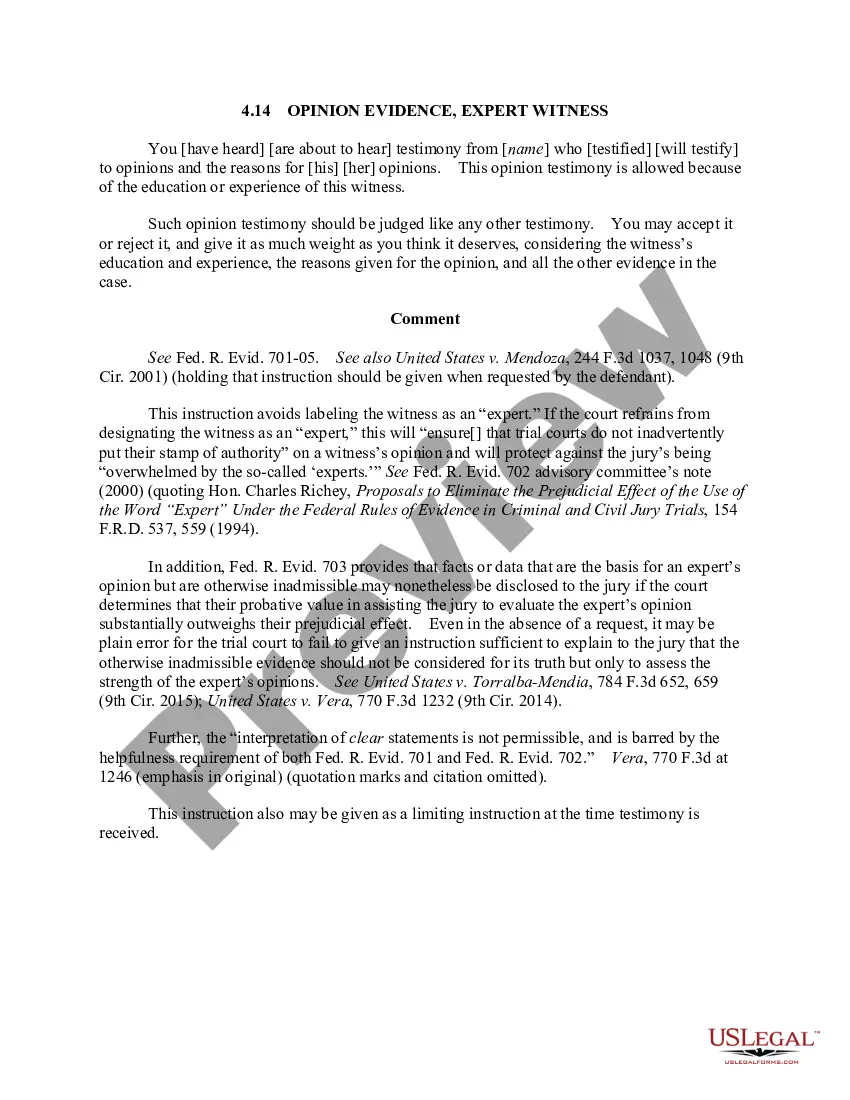
The 3.13 Opinion Testimony form is an official pattern jury instruction that guides jurors on how to evaluate the opinions and testimony provided by witnesses in a legal case. This form differs from other instructions by emphasizing that jurors should assess an expert's opinions just as they would any other witness' testimony. This ensures fair consideration of all evidence presented during a trial.
Form components explained
- Instructions on evaluating witness opinions and testimony.
- Emphasis on judging the credibility of expert witnesses.
- Guidance on considering the witnessâ qualifications and methods of reaching conclusions.
- Clarification that plural forms can be used if multiple experts testify.
- Discussion of jurisdictional variations in handling expert testimony.
When to use this form
This form should be used during legal proceedings where expert testimony is presented. It instructs jurors on how to appropriately weigh the opinions of experts, particularly in cases where the facts hinge on the credibility and expertise of witness testimonies. This form is particularly relevant in trials involving technical or specialized knowledge where expert input is crucial for informed decision-making.
Who this form is for
- Jurors involved in trials requiring evaluation of expert or opinion testimony.
- Judges who must instruct juries on how to assess the reliability of expert witness testimony.
- Legal professionals preparing jury instructions related to witness credibility.
Steps to complete this form
- Identify the witness or witnesses whose opinions need assessment.
- Specify the subject matter of the witnessâ testimony.
- Consider the qualifications of the witness presented.
- Evaluate how the witness reached their conclusions.
- Determine how these opinions fit with the overall evidence presented in the case.
Notarization guidance
This form does not typically require notarization unless specified by local law. It is always advisable to check with local regulations to ensure compliance.
Get your form ready online
Our built-in tools help you complete, sign, share, and store your documents in one place.
Make edits, fill in missing information, and update formatting in US Legal Forms—just like you would in MS Word.
Download a copy, print it, send it by email, or mail it via USPS—whatever works best for your next step.
Sign and collect signatures with our SignNow integration. Send to multiple recipients, set reminders, and more. Go Premium to unlock E-Sign.
If this form requires notarization, complete it online through a secure video call—no need to meet a notary in person or wait for an appointment.
We protect your documents and personal data by following strict security and privacy standards.

Make edits, fill in missing information, and update formatting in US Legal Forms—just like you would in MS Word.

Download a copy, print it, send it by email, or mail it via USPS—whatever works best for your next step.

Sign and collect signatures with our SignNow integration. Send to multiple recipients, set reminders, and more. Go Premium to unlock E-Sign.

If this form requires notarization, complete it online through a secure video call—no need to meet a notary in person or wait for an appointment.

We protect your documents and personal data by following strict security and privacy standards.
Typical mistakes to avoid
- Overvaluing an expert witness's testimony without considering other evidence.
- Failing to adequately evaluate the qualifications of the expert witness.
- Ignoring the context in which the expert's opinions were formed.
Benefits of completing this form online
- Immediate access to professionally drafted legal instructions.
- Easy to download and edit for specific cases or jurisdictions.
- Secure and reliable source for legal document preparation.
Legal use & context
- This form is suitable for cases where expert testimony plays a pivotal role.
- Proper use of this form can enhance the clarity and understanding of jury instructions.
- Courtrooms rely on such precise instructions to mitigate the potential undue weight of expert opinions.
Looking for another form?
Form popularity
FAQ
If scientific, technical, or other specialized knowledge will assist the trier of fact to understand the evidence or to determine a fact in issue, a witness qualified as an expert by knowledge, skill, experience, training, or education, may testify thereto in the form of an opinion or otherwise. ( Pub. L.
For example, a witness may testify that, in his opinion, the car was driving too fast or the person was acting as though she were drunk. These are every-day opinions that laypeople can derive from their observations. ?Expert? witnesses are given more latitude to give their opinions.
Between the expert and the jury is the trial judge, who must decide, outside of their presence, the preliminary question of whether the expert will be allowed to testify. The methodology used by the trial judge when doing so will now be discussed.
Unlike a lay witness, who cannot give an opinion about the topics that require special knowledge, an expert witness can testify their opinion within their expertise. An expert opinion must be based on sufficient facts or data and reliable principles or methods.
A witness may be qualified as an expert based on knowledge, skill, experience, training, or education. The standard is a minimal one. The witness need not be the best available expert or have extensive training. The expert's qualifications must be established on the record before the witness is asked to give opinions.
An expert witness, or an opinion witness, is a person with specialized skill sets whose opinion may help a jury make sense of the factual evidence of a case. Expert witnesses testify as to their opinion about certain facts or events.
The Committee concludes that a judge should not cooperate with a party in becoming an expert witness in such a case, because that would create the appearance of using the prestige of judicial office for the benefit of the party for whom the judge testifies and could also create the appearance of compromising the
A consulting expert has been retained or consulted with by a party in anticipation of litigation or trial, but who will not testify at trial. A testifying expert, on the other hand, may be used at trial to present evidence.