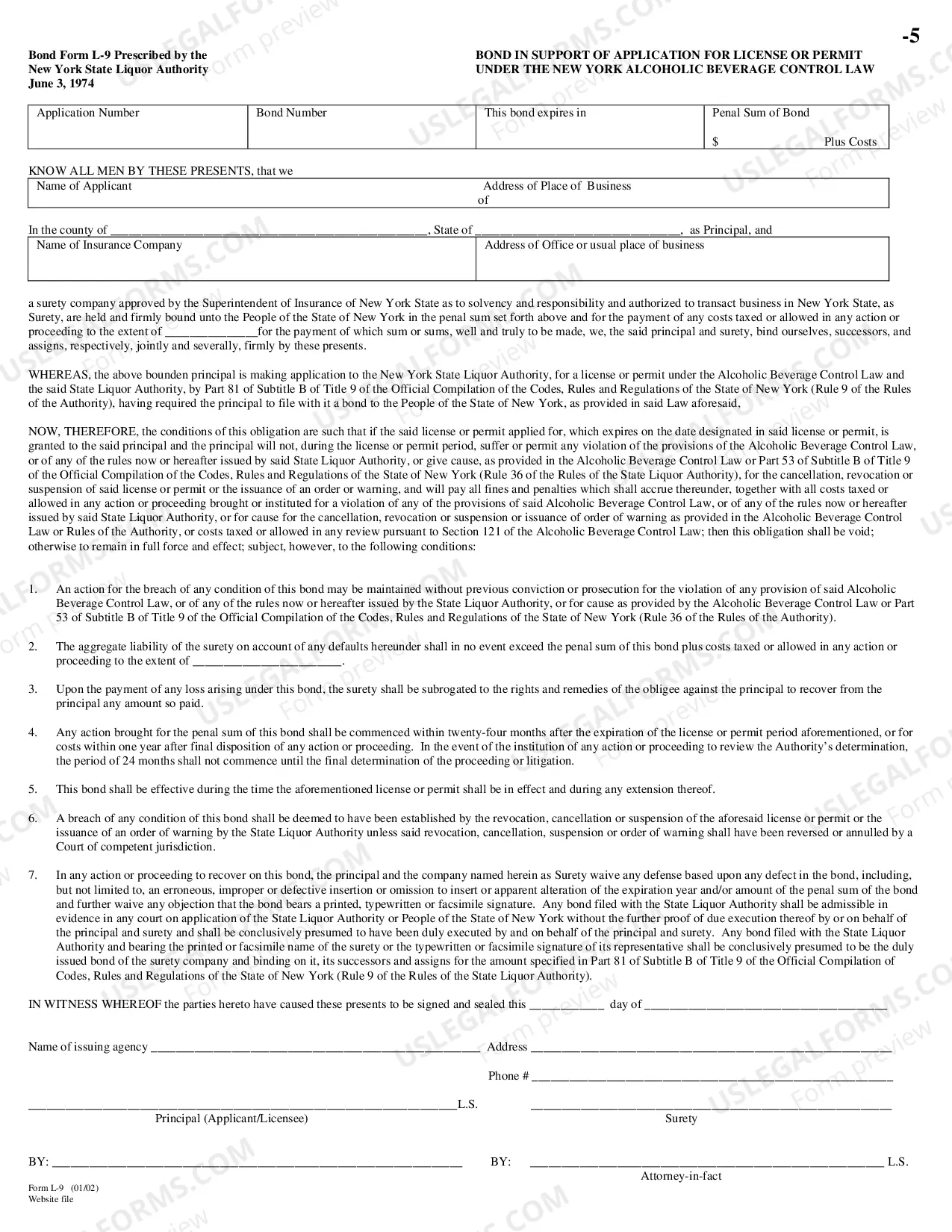
5.14(A) CONSPIRACY - WITHDRAWAL - STATUTE OF LIMITATIONS - ELEMENTS
About this form
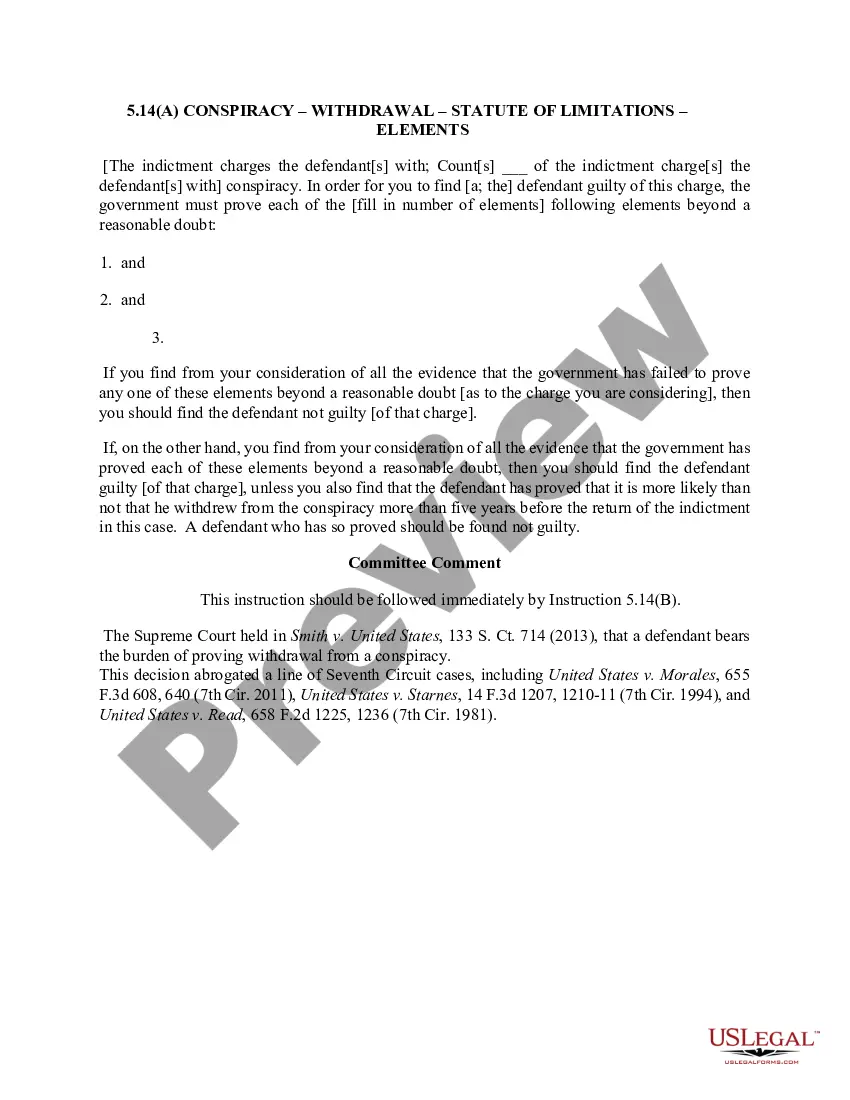
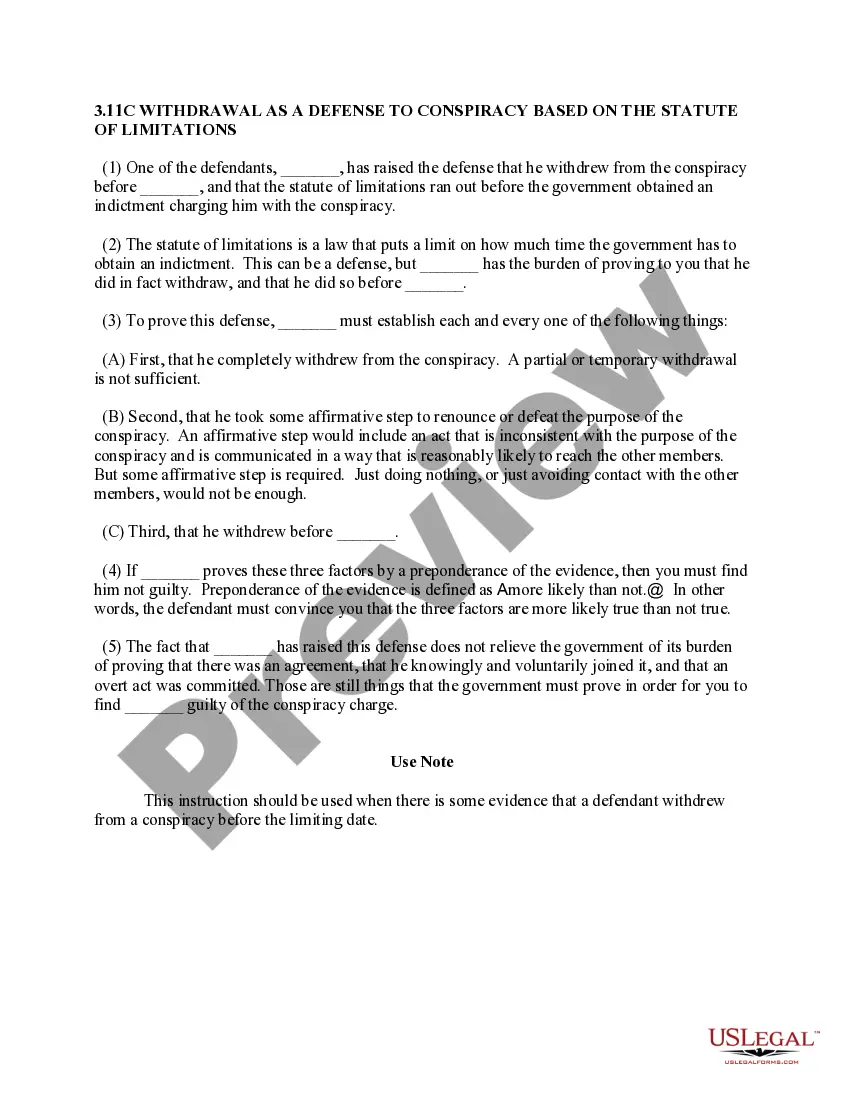
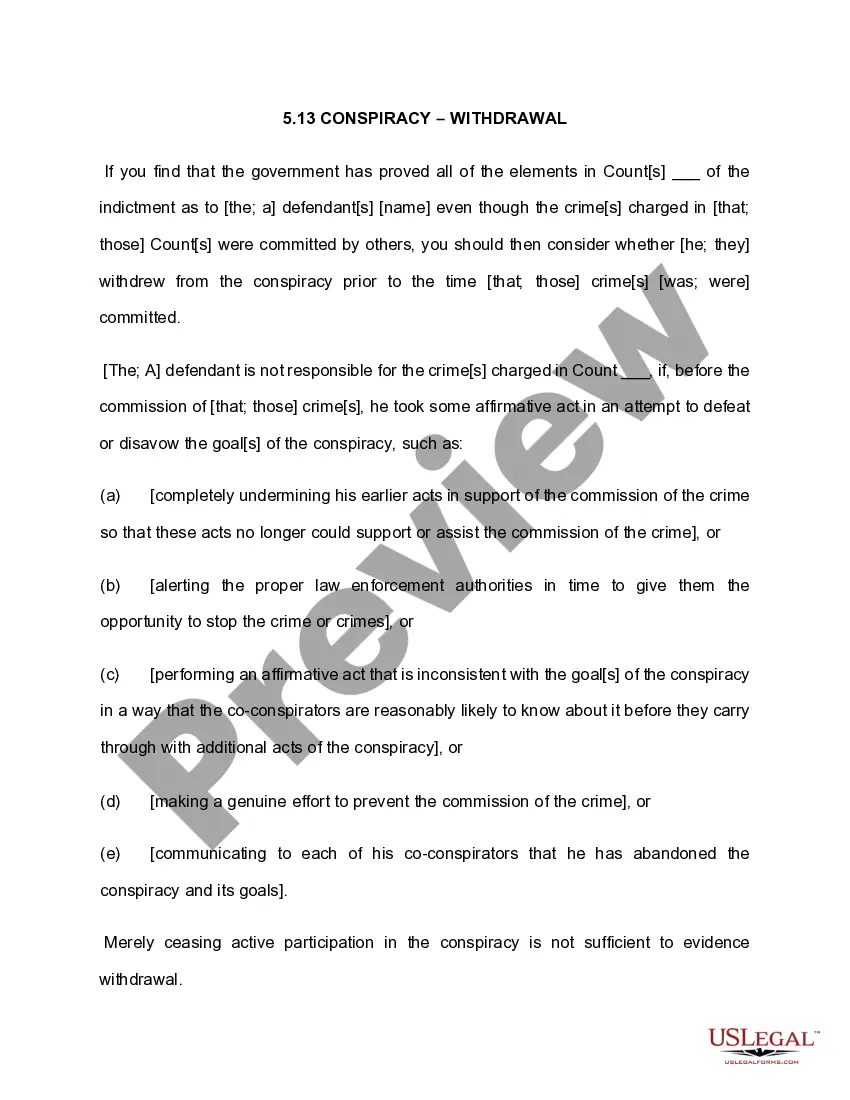
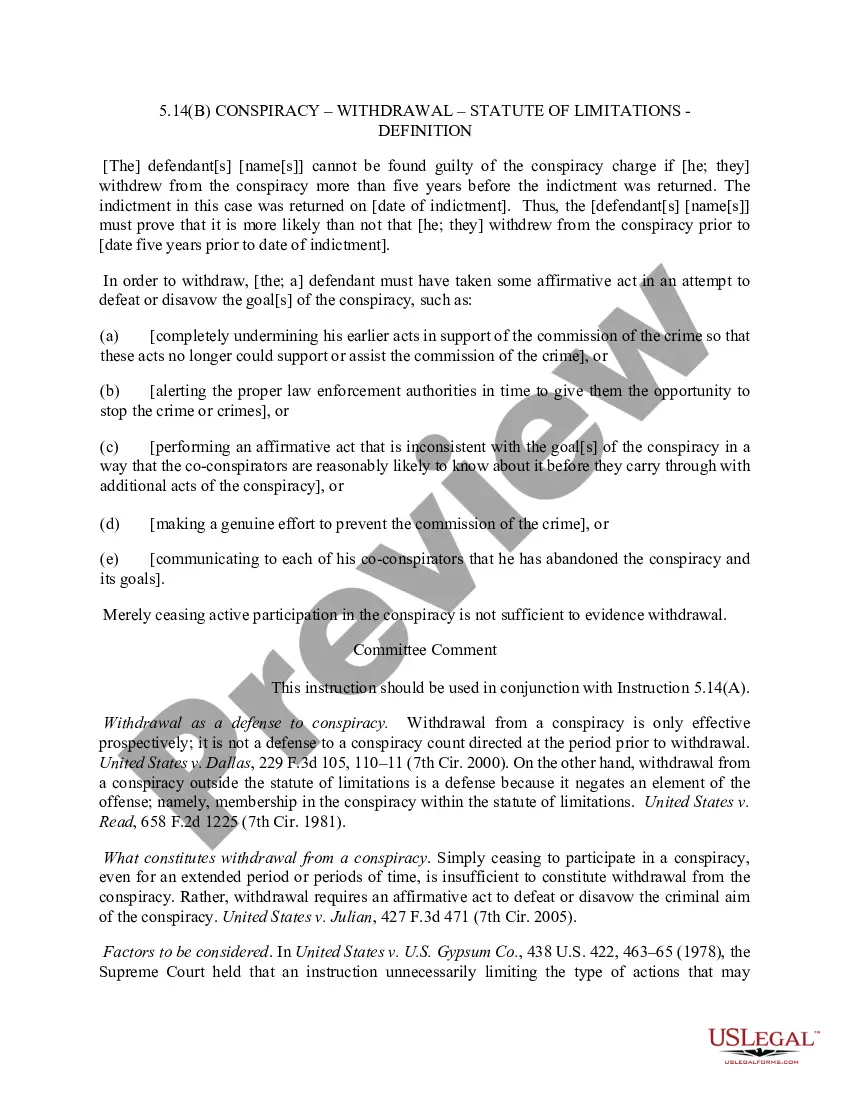
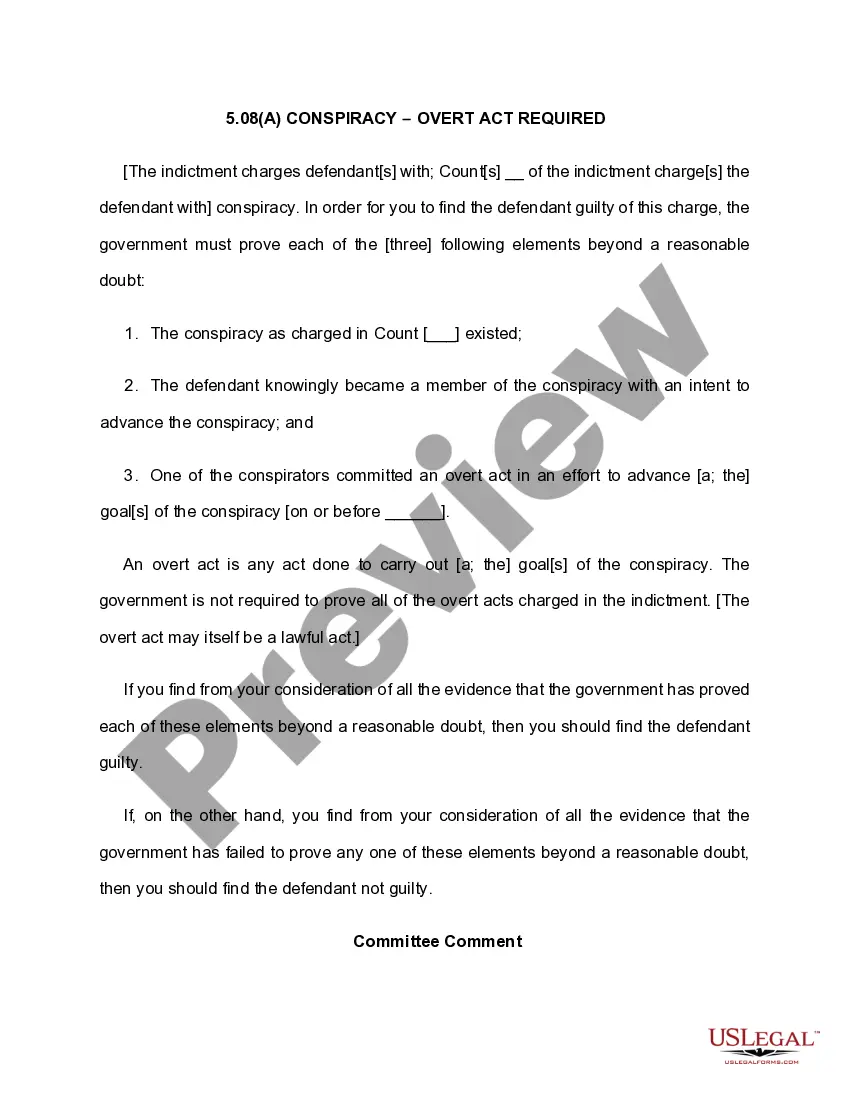
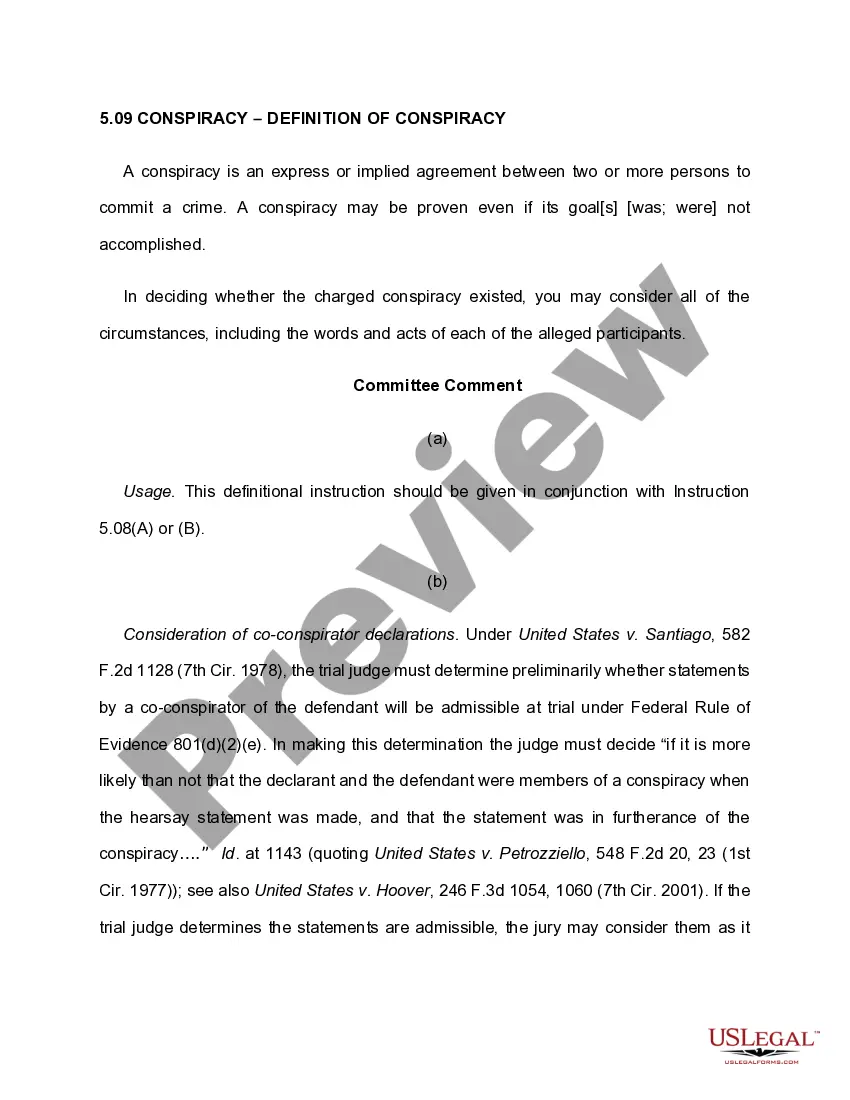
The 5.14(A) Conspiracy - Withdrawal - Statute of Limitations - Elements form provides judges and juries with instructions related to conspiracy charges in the context of withdrawal. This form is essential for ensuring that defendants are judged based on a clear understanding of the legal elements of conspiracy and the requirements for proving withdrawal. Unlike related forms, this one specifically addresses the burden of proof placed on the defendant regarding withdrawal from the conspiracy.
What’s included in this form
- Details the specific elements the government must prove for a conspiracy charge.
- Outlines the procedure for finding the defendant guilty based on the evidence presented.
- States the requirement for the defendant to prove withdrawal from the conspiracy.
- Includes a committee comment on the legal precedence regarding the burden of proof.
Situations where this form applies
This form is utilized in cases where a defendant is charged with conspiracy and claims to have withdrawn from the conspiracy. It is crucial during jury selection and instructions in a trial, ensuring that jurors understand the elements required to establish guilt or innocence concerning conspiracy charges.
Who this form is for
- Judges overseeing conspiracy cases.
- Juries required to decide on conspiracy charges.
- Legal practitioners preparing for conspiracy cases.
- Defendants involved in conspiracy charges seeking to understand their rights and legal obligations.
How to prepare this document
- Fill in the indictment details, including which counts are applicable.
- Clearly outline the elements the government must prove beyond a reasonable doubt.
- Consider the evidence to determine if the government has met its burden of proof.
- Assess whether the defendant has proven withdrawal from the conspiracy, if applicable.
- Conclude with a verdict based on the evidentiary findings consistent with the legal instructions.
Does this form need to be notarized?
Notarization is generally not required for this form. However, certain states or situations might demand it. You can complete notarization online through US Legal Forms, powered by Notarize, using a verified video call available anytime.
Get your form ready online
Our built-in tools help you complete, sign, share, and store your documents in one place.
Make edits, fill in missing information, and update formatting in US Legal Forms—just like you would in MS Word.
Download a copy, print it, send it by email, or mail it via USPS—whatever works best for your next step.
Sign and collect signatures with our SignNow integration. Send to multiple recipients, set reminders, and more. Go Premium to unlock E-Sign.
If this form requires notarization, complete it online through a secure video call—no need to meet a notary in person or wait for an appointment.
We protect your documents and personal data by following strict security and privacy standards.

Make edits, fill in missing information, and update formatting in US Legal Forms—just like you would in MS Word.

Download a copy, print it, send it by email, or mail it via USPS—whatever works best for your next step.

Sign and collect signatures with our SignNow integration. Send to multiple recipients, set reminders, and more. Go Premium to unlock E-Sign.

If this form requires notarization, complete it online through a secure video call—no need to meet a notary in person or wait for an appointment.

We protect your documents and personal data by following strict security and privacy standards.
Common mistakes to avoid
- Failing to adequately consider all elements before determining guilt or innocence.
- Overlooking the burden of proof that rests on the government for conspiracy charges.
- Misunderstanding the requirements for withdrawal from the conspiracy.
Benefits of completing this form online
- Convenient access to legal instructions and templates crafted by licensed attorneys.
- Immediate availability for use in legal proceedings.
- Editable format allows for easy customization to fit specific case needs.
Looking for another form?
Form popularity
FAQ
Properly set forth the essential elements of conspiracy, which are: (1) a mutual agreement or understanding, (2) knowingly entered by the defendant, with (3) an intent to jointly commit a crime.
Only one overt act has to be proven. The government is not required to prove that defendant personally committed or knew about the overt act. It is sufficient if one conspirator committed one overt act at some time during the period of the conspiracy.
Elements of a Conspiracy 1 Two or more people agreed to commit a crime. 2 All conspirators had the specific intent to commit the crime. 3 At least one of the conspirators committed an overt act (most states)
Section 371 conspiracies are subject to the general five-year statute of limitations for non-capital federal offenses set forth in 18 U.S.C. § 3282. This five-year statute of limitations also applies to conspiracies under other federal statutes unless those statutes contain their own limitations periods.
You must have 2 or more persons who 2. Intentionally 3. make an agreement 4. to violate federal law or defraud the United states, and then 5. Commit some overt act in furtherance of the agreement.
To prove a civil conspiracy under Pennsylvania law, a plaintiff must show the following elements: (1) a combination of two or more persons acting with a common purpose to do an unlawful act or to do a lawful act by unlawful means or for an unlawful purpose; (2) an overt act done in pursuance of the common purpose; and
To convict you of criminal conspiracy, prosecutors must demonstrate that: you knowingly agreed to participate or assist in the planned crime; and. someone who was part of the agreement took some action toward carrying out the crime, known as an ?overt act.?
To conspire to defraud the United States means primarily to cheat the Government out of property or money, but it also means to interfere with or obstruct one of its lawful governmental functions by deceit, craft or trickery, or at least by means that are dishonest.