5.14(B) CONSPIRACY - WITHDRAWAL - STATUTE OF LIMITATIONS -- DEFINITION
What this document covers
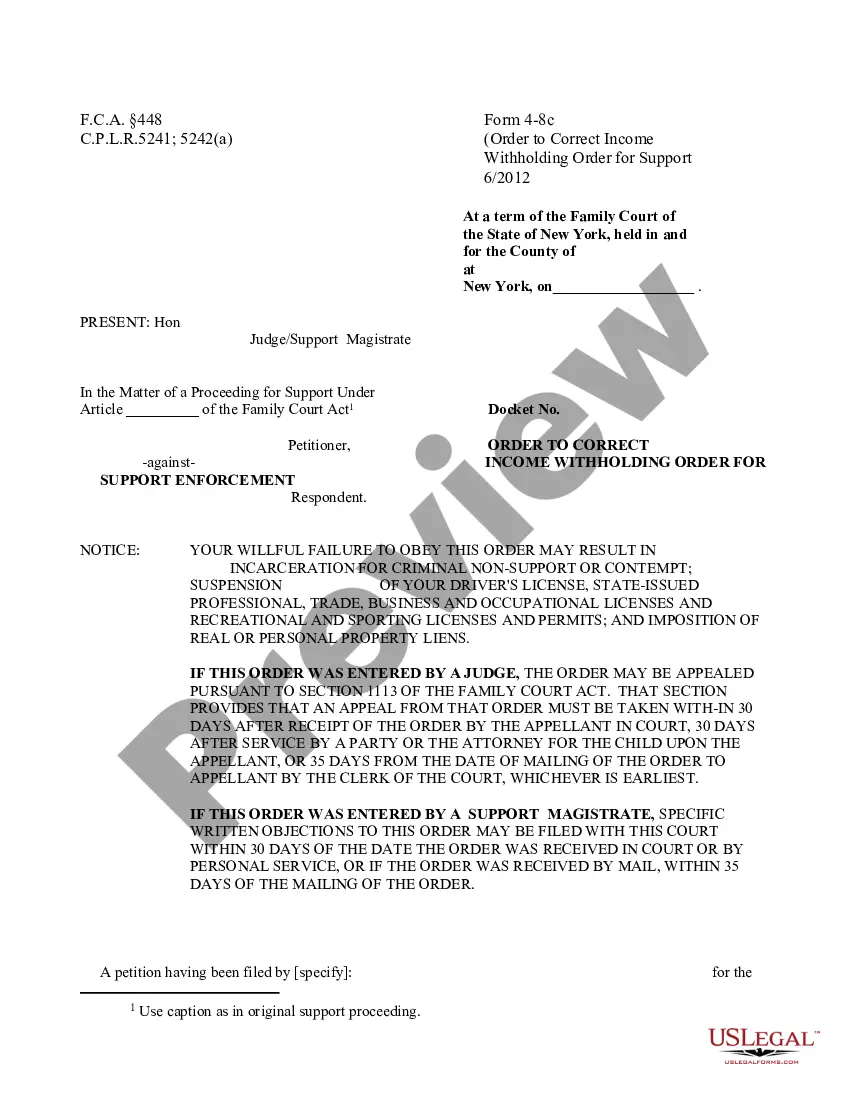
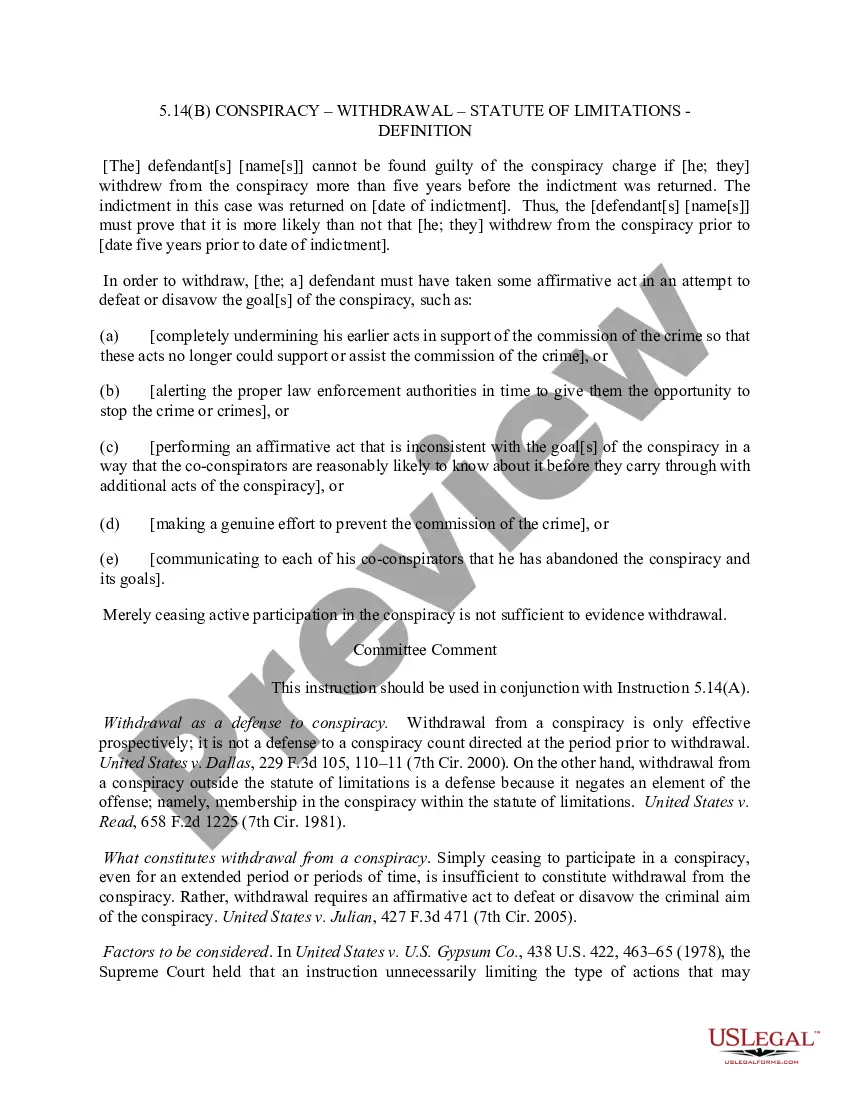
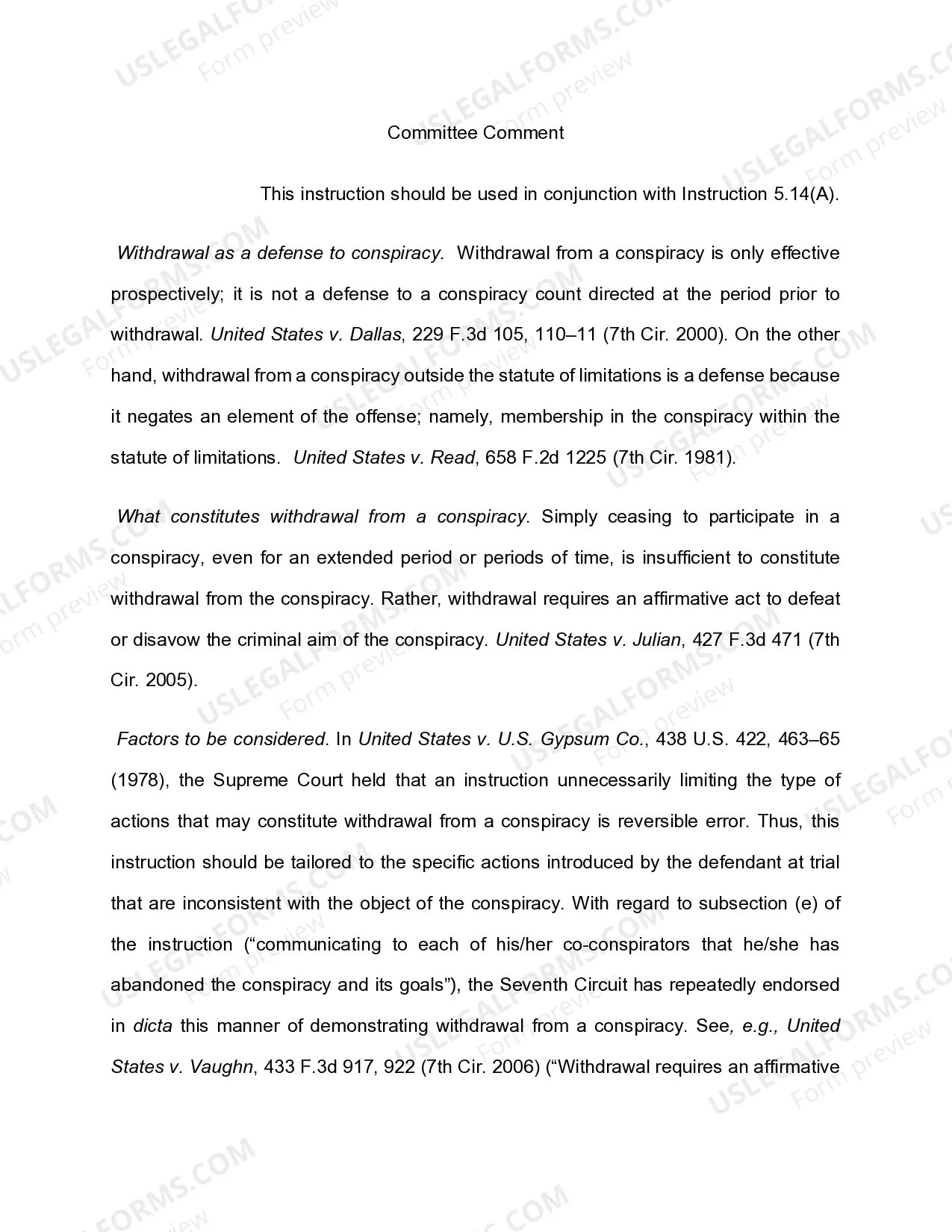
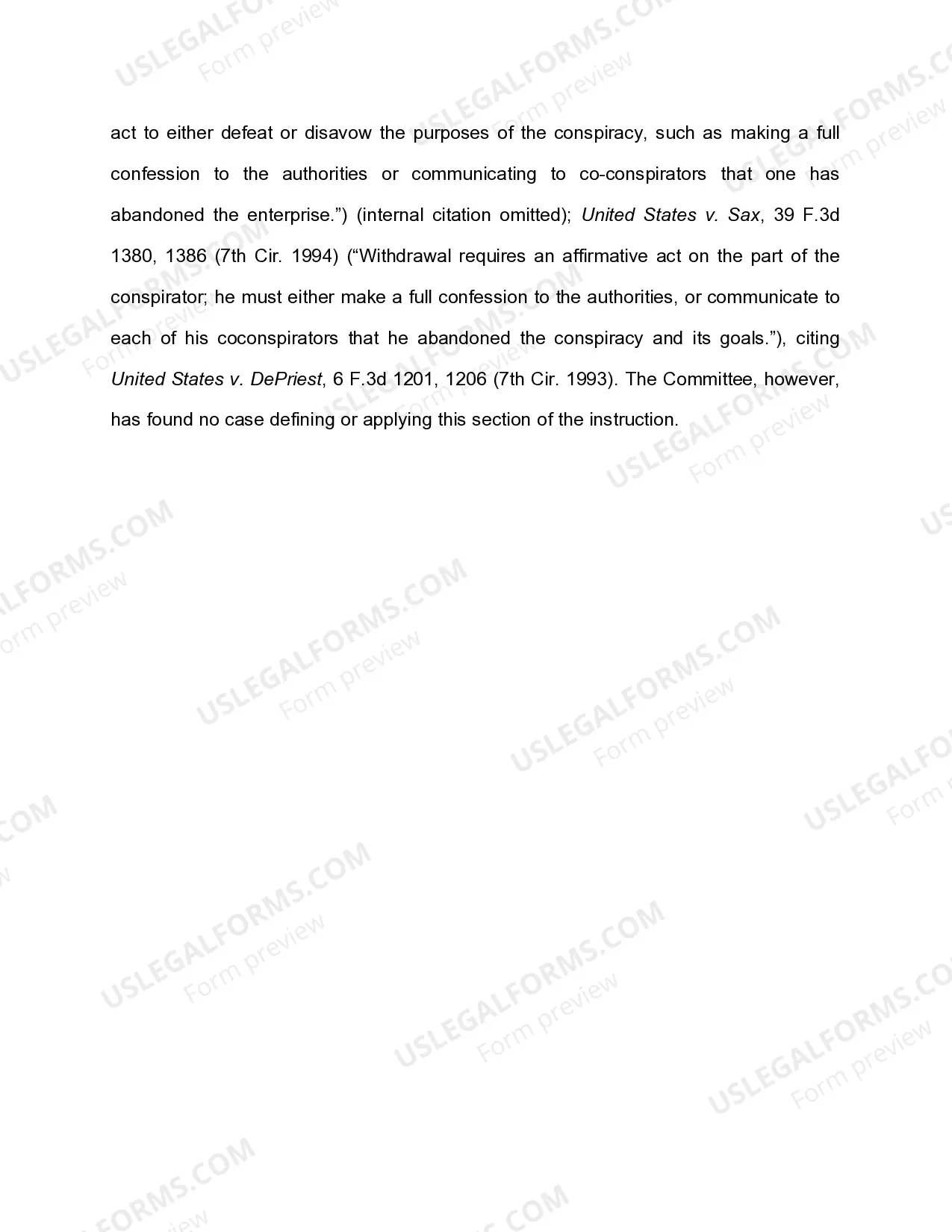
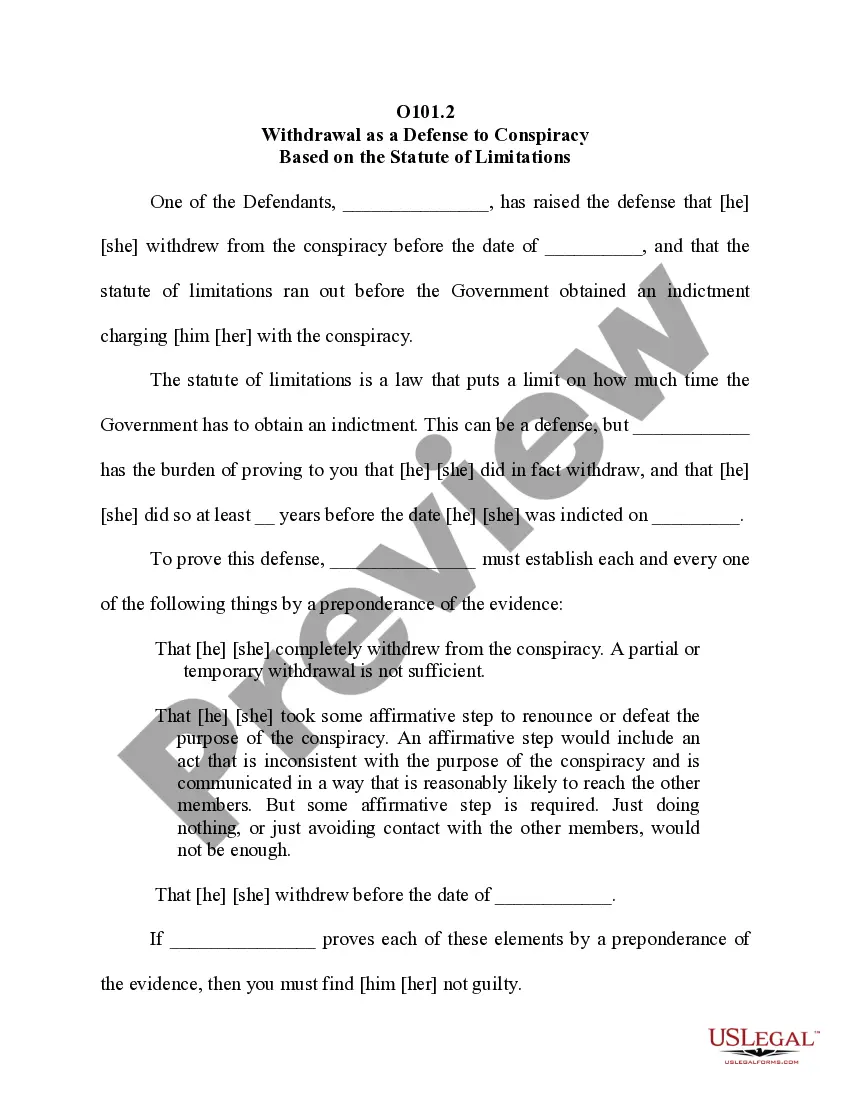
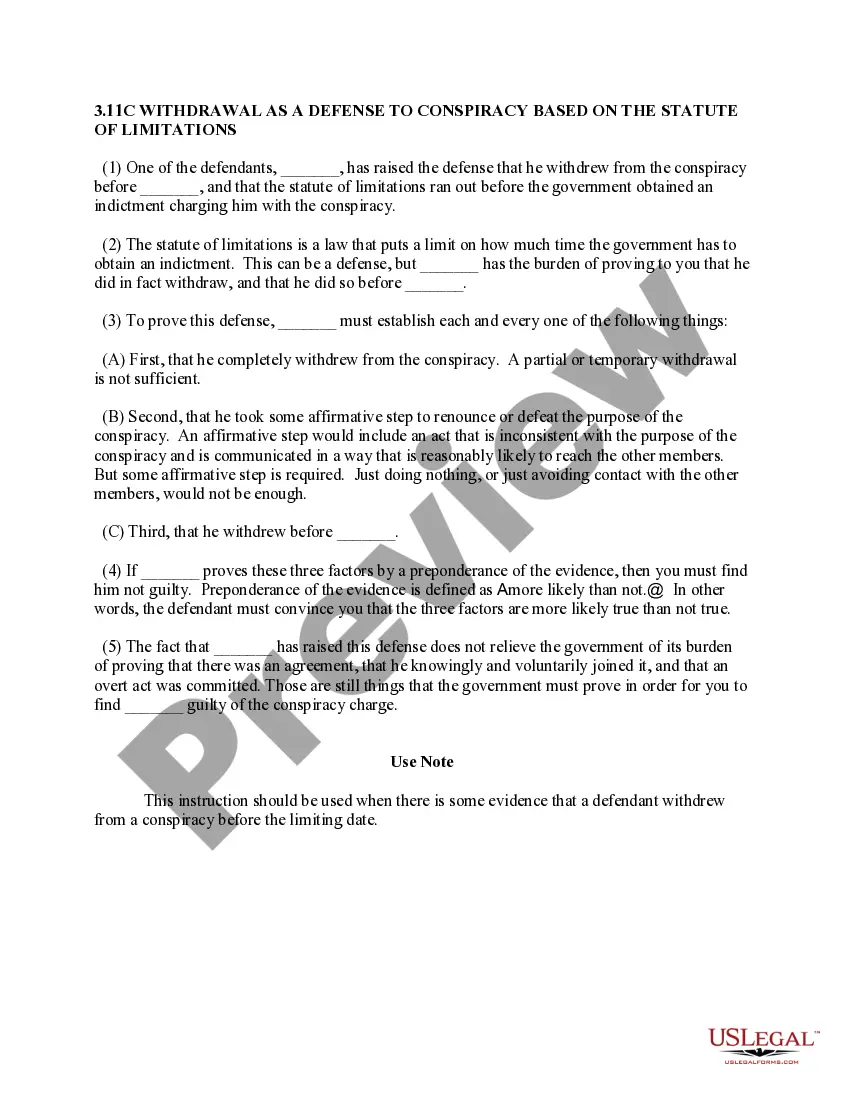
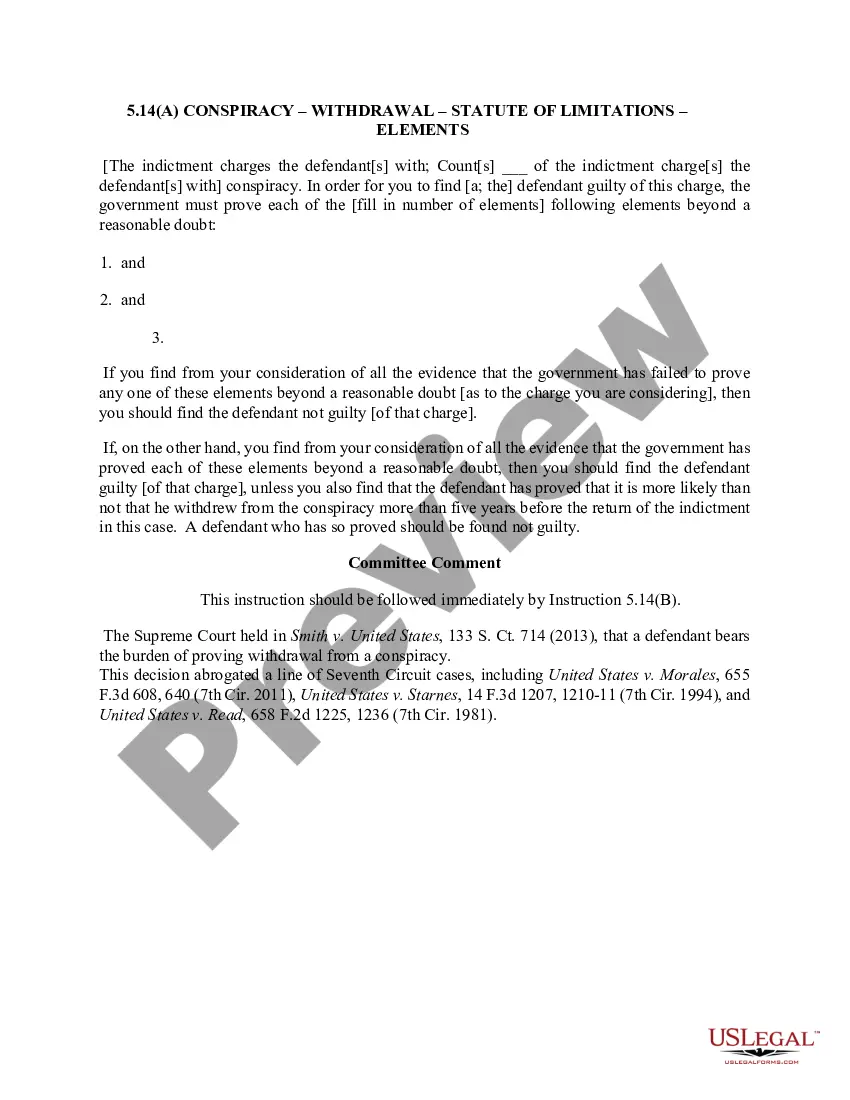
The 5.14(B) Conspiracy - Withdrawal - Statute of Limitations Definition form is a legal document that provides jury instructions regarding the withdrawal from a conspiracy charge. This form clarifies that a defendant cannot be found guilty if they withdrew from the conspiracy more than five years before the indictment was filed. It establishes the necessary criteria for proving withdrawal, distinguishing it from similar forms in that it focuses specifically on the aspects of time and affirmative actions required for effective withdrawal from a conspiracy.
Form components explained
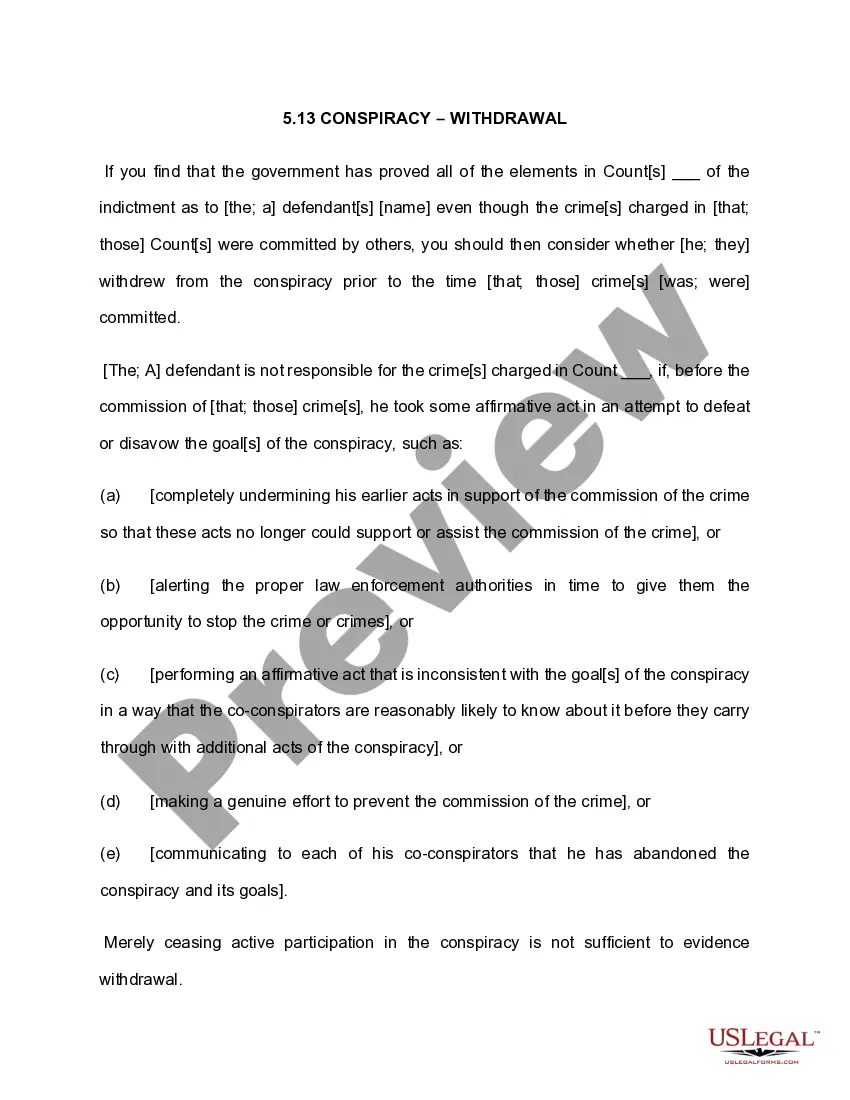
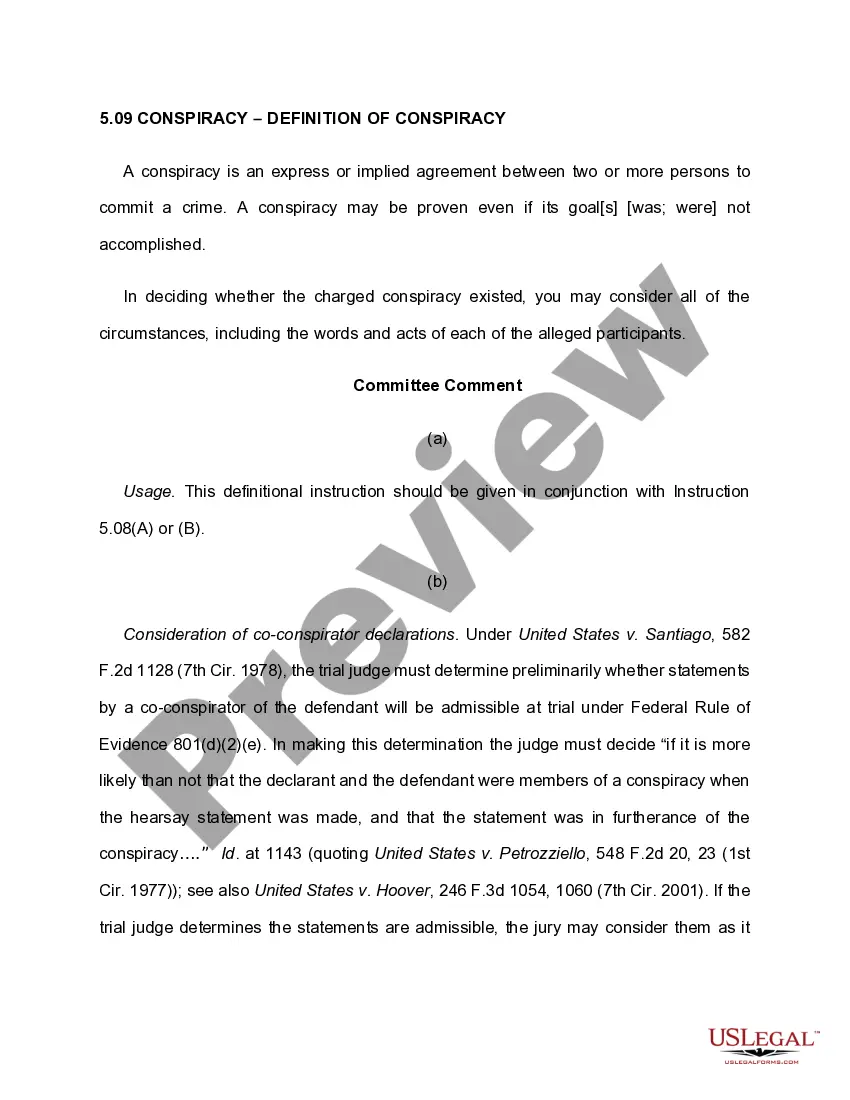
- Definition of conspiracy withdrawal and the significance of the statute of limitations.
- Criteria that defendants must meet to prove withdrawal from conspiracy.
- Examples of affirmative acts that demonstrate withdrawal, such as notifying law enforcement or communicating with co-conspirators.
- Legal references supporting the need for affirmative action to demonstrate withdrawal.
- Clarification that mere cessation of participation does not constitute withdrawal.
When to use this document
This form is used in cases where a defendant is charged with conspiracy but wishes to argue that they withdrew from the conspiracy before the statute of limitations expired. It is relevant in criminal proceedings where withdrawal from a conspiracy needs to be clearly established to prevent a conviction. Legal counsel typically utilizes this form during jury instructions to outline the conditions under which withdrawal is recognized as a valid defense.
Who should use this form
- Defendants facing conspiracy charges in federal court.
- Attorneys seeking to present a defense based on withdrawal from a conspiracy.
- Legal professionals involved in drafting jury instructions for conspiracy cases.
How to complete this form
- Identify the defendant(s) involved in the conspiracy and their role.
- Specify the date of the indictment and determine the critical date five years prior.
- Gather evidence of any affirmative acts taken by the defendant(s) to withdraw from the conspiracy.
- Document any actions taken to communicate withdrawal to co-conspirators or law enforcement.
- Ensure each claim of withdrawal aligns with the legal standards outlined in the committee comments.
Does this form need to be notarized?
This form does not typically require notarization to be legally valid. However, some jurisdictions or document types may still require it. US Legal Forms provides secure online notarization powered by Notarize, available 24/7 for added convenience.
Get your form ready online
Our built-in tools help you complete, sign, share, and store your documents in one place.
Make edits, fill in missing information, and update formatting in US Legal Forms—just like you would in MS Word.
Download a copy, print it, send it by email, or mail it via USPS—whatever works best for your next step.
Sign and collect signatures with our SignNow integration. Send to multiple recipients, set reminders, and more. Go Premium to unlock E-Sign.
If this form requires notarization, complete it online through a secure video call—no need to meet a notary in person or wait for an appointment.
We protect your documents and personal data by following strict security and privacy standards.

Make edits, fill in missing information, and update formatting in US Legal Forms—just like you would in MS Word.

Download a copy, print it, send it by email, or mail it via USPS—whatever works best for your next step.

Sign and collect signatures with our SignNow integration. Send to multiple recipients, set reminders, and more. Go Premium to unlock E-Sign.

If this form requires notarization, complete it online through a secure video call—no need to meet a notary in person or wait for an appointment.

We protect your documents and personal data by following strict security and privacy standards.
Avoid these common issues
- Failing to provide sufficient evidence of affirmative acts for withdrawal.
- Assuming that mere inactivity or absence from the conspiracy suffices for withdrawal.
- Not properly calculating the relevant statute of limitations period.
Legal use & context
- This form is utilized in federal criminal cases dealing with conspiracy charges.
- Withdrawal from a conspiracy must be established as occurring before the indictment date for the defense to apply.
- The court requires clear evidence of withdrawal through affirmative actions, not just passive non-participation.
What to keep in mind
- The defendant must demonstrate withdrawal from the conspiracy before the indictment date to avoid conviction.
- Affirmative actions are required to substantiate claims of withdrawal.
- Understanding the nuances of federal jury instructions is crucial for a defense strategy in conspiracy cases.
Looking for another form?
Form popularity
FAQ
The general Conspiracy statute provides a maximum punishment of not more than five (5) years, as well as a fine up to $250,000.00 for a felony offense. For a misdemeanor offense, the maximum punishment cannot exceed the maximum possible punishment for the misdemeanor.
For example, if you are charged with conspiring to commit a felony, you could face a sentence of life in prison. Many federal conspiracy charges carry a 5, 10 or 20-year mandatory minimum prison sentence.
Is There a Statute of Limitations on Drug Charges? The statute of limitations for drug conspiracy charges varies state by state. However, under the federal drug conspiracy law of 21 U.S.C. Section 846, the government must bring drug charges within five years of committing the crime.
Federal sentencing guidelines for conspiracy charges are based on the crime at the center of the conspiracy. For example, if you are charged with conspiring to commit a felony, you could face a sentence of life in prison. Many federal conspiracy charges carry a 5, 10 or 20-year mandatory minimum prison sentence.
Once a person becomes a member of a conspiracy, that person remains a member until that person withdraws from it. One may withdraw by doing acts which are inconsistent with the purpose of the conspiracy and by making reasonable efforts to tell the co-conspirators about those acts.
Section 371 conspiracies are subject to the general five-year statute of limitations for non-capital federal offenses set forth in 18 U.S.C. § 3282. This five-year statute of limitations also applies to conspiracies under other federal statutes unless those statutes contain their own limitations periods.
Drug trafficking is the illegal transporting of or transacting in controlled substances. Under federal law, Title 21, Section 841 makes it unlawful for any person to knowingly or intentionally ?manufacture, distribute, or dispense, or possess with intent to manufacture, distribute, or dispense, a controlled substance.?