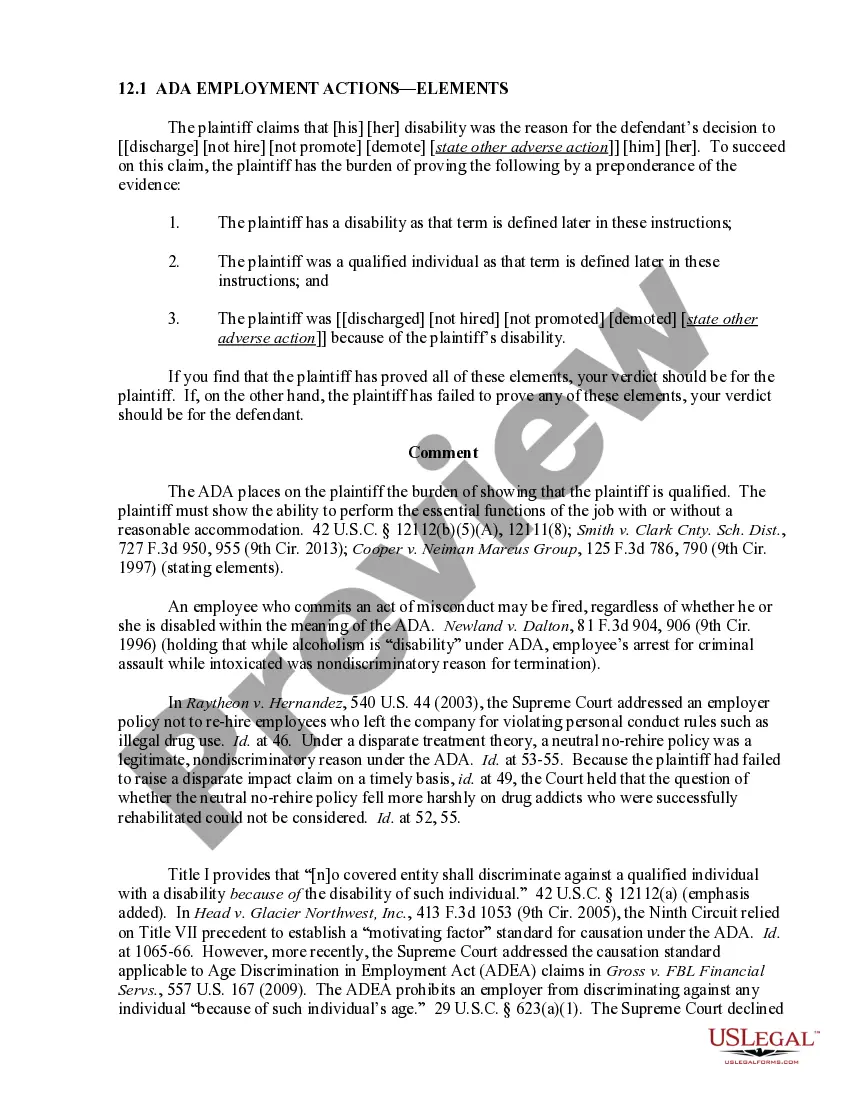
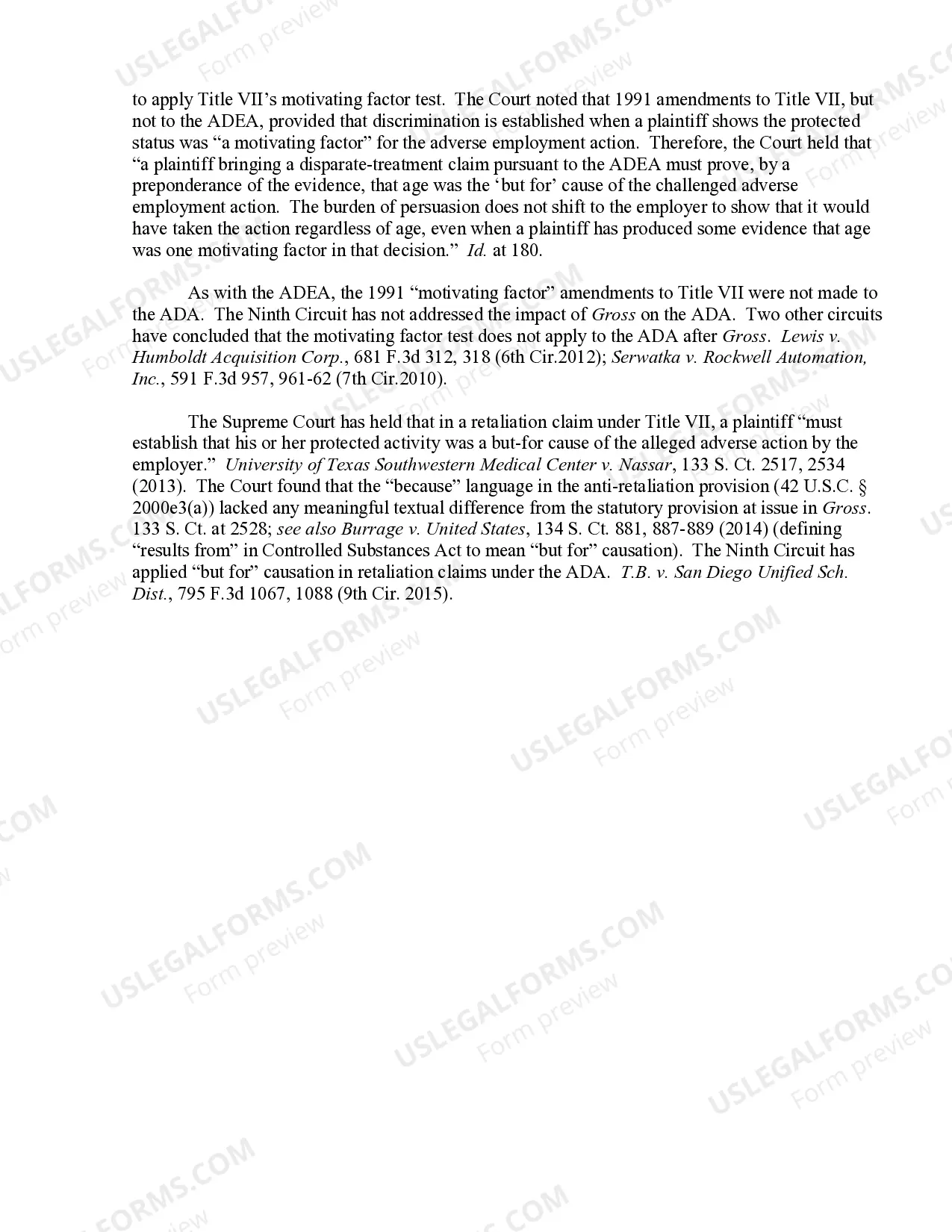
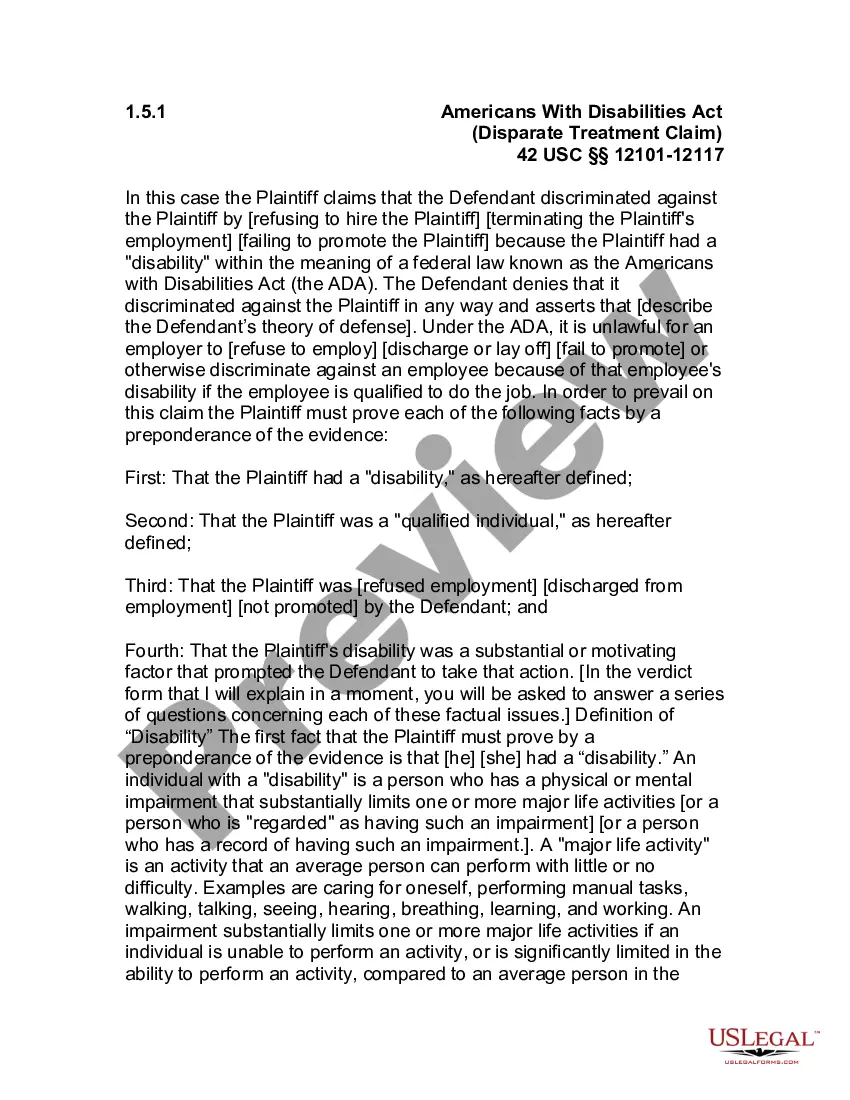
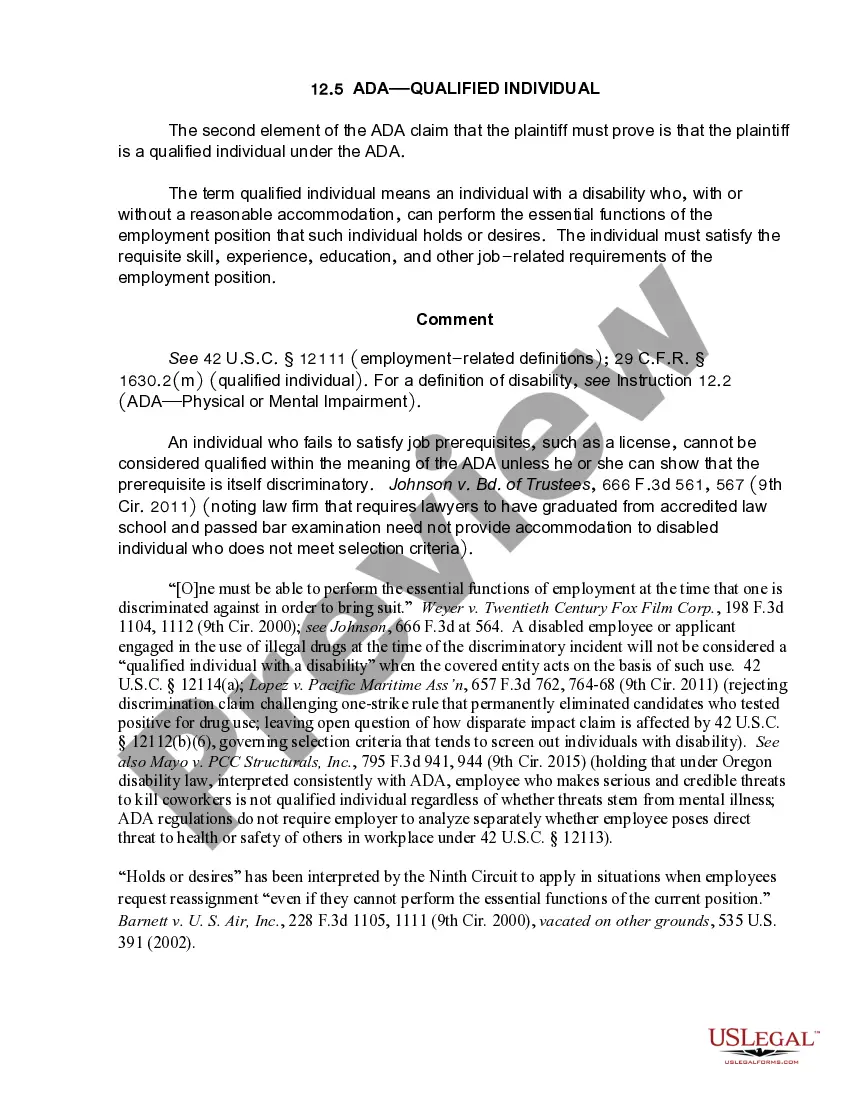
12.1 ADA Employment Actions-Elements
Is notarization required?
This form usually doesn’t need to be notarized. However, local laws or specific transactions may require it. Our online notarization service, powered by Notarize, lets you complete it remotely through a secure video session, available 24/7.
Get your form ready online
Our built-in tools help you complete, sign, share, and store your documents in one place.
Make edits, fill in missing information, and update formatting in US Legal Forms—just like you would in MS Word.
Download a copy, print it, send it by email, or mail it via USPS—whatever works best for your next step.
Sign and collect signatures with our SignNow integration. Send to multiple recipients, set reminders, and more. Go Premium to unlock E-Sign.
If this form requires notarization, complete it online through a secure video call—no need to meet a notary in person or wait for an appointment.
We protect your documents and personal data by following strict security and privacy standards.

Make edits, fill in missing information, and update formatting in US Legal Forms—just like you would in MS Word.

Download a copy, print it, send it by email, or mail it via USPS—whatever works best for your next step.

Sign and collect signatures with our SignNow integration. Send to multiple recipients, set reminders, and more. Go Premium to unlock E-Sign.

If this form requires notarization, complete it online through a secure video call—no need to meet a notary in person or wait for an appointment.

We protect your documents and personal data by following strict security and privacy standards.
Looking for another form?
Form popularity
FAQ
To establish a prima facie case of disability discrimination against an employer under the ADA requires an employee to show four elements: the employer is subject to the ADA; the employee is disabled as defined by the ADA, has a record of impairment, or is perceived to be so by the employer; the employee is able to
Plaintiff has the initial burden of proving that: 1. she has a disability; 2. defendant knew, or should have known, of her disability; 3. the accommodation "may be necessary to afford her equal opportunity to use and enjoy" her dwelling; 4.
Under the ADA, a prima facie case of disability discrimination requires that the plaintiff show that: (1) the defendants are subject to the ADA; (2) the plaintiff has a disability within the meaning of the ADA; (3) the plaintiff was otherwise qualified to perform the essential functions of her job with or without
The ADA places on the plaintiff the burden of showing that the plaintiff is qualified. The plaintiff must show the ability to perform the essential functions of the job with or without a reasonable accommodation. 42 U.S.C. § 12112(b)(5)(A), 12111(8); Smith v.
The ADA requires reasonable accommodations as they relate to three aspects of employment: 1) ensuring equal opportunity in the application process; 2) enabling a qualified individual with a disability to perform the essential functions of a job; and 3) making it possible for an employee with a disability to enjoy equal
You were subject to an ?adverse employment action.? ?Adverse employment actions? include firing, denial of promotion, negative evaluations, and any actions that would deter a reasonable person from reporting ADA violations.
To establish a prima facie case of disability discrimination against an employer under the ADA requires an employee to show four elements: the employer is subject to the ADA; the employee is disabled as defined by the ADA, has a record of impairment, or is perceived to be so by the employer; the employee is able to
Providing an assistant as needed may be a reasonable accommodation for a person with a disability, if this does not impose an undue hardship. Examples include: An assistant may be needed to retrieve items on shelves, file, or selectively assist a person with quadriplegia with other clerical duties.