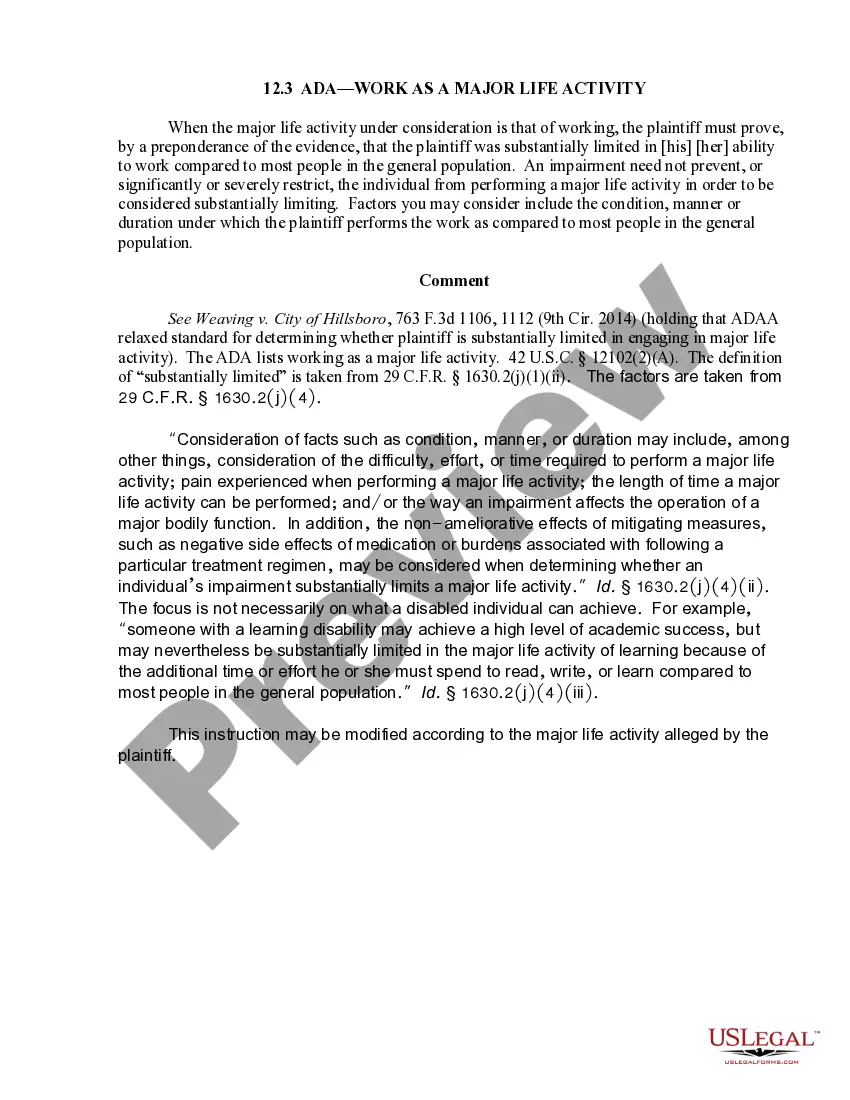
12.3 ADA-Work as a Major Life Activity
Does this form need to be notarized?
Notarization is generally not required for this form. However, certain states or situations might demand it. You can complete notarization online through US Legal Forms, powered by Notarize, using a verified video call available anytime.
Get your form ready online
Our built-in tools help you complete, sign, share, and store your documents in one place.
Make edits, fill in missing information, and update formatting in US Legal Forms—just like you would in MS Word.
Download a copy, print it, send it by email, or mail it via USPS—whatever works best for your next step.
Sign and collect signatures with our SignNow integration. Send to multiple recipients, set reminders, and more. Go Premium to unlock E-Sign.
If this form requires notarization, complete it online through a secure video call—no need to meet a notary in person or wait for an appointment.
We protect your documents and personal data by following strict security and privacy standards.

Make edits, fill in missing information, and update formatting in US Legal Forms—just like you would in MS Word.

Download a copy, print it, send it by email, or mail it via USPS—whatever works best for your next step.

Sign and collect signatures with our SignNow integration. Send to multiple recipients, set reminders, and more. Go Premium to unlock E-Sign.

If this form requires notarization, complete it online through a secure video call—no need to meet a notary in person or wait for an appointment.

We protect your documents and personal data by following strict security and privacy standards.
Looking for another form?
Form popularity
FAQ
If the major life activity is substantially limited, then it would qualify as disability under the ADA. Other forms of major life activities could include being able to drive, or being able to read, or see.
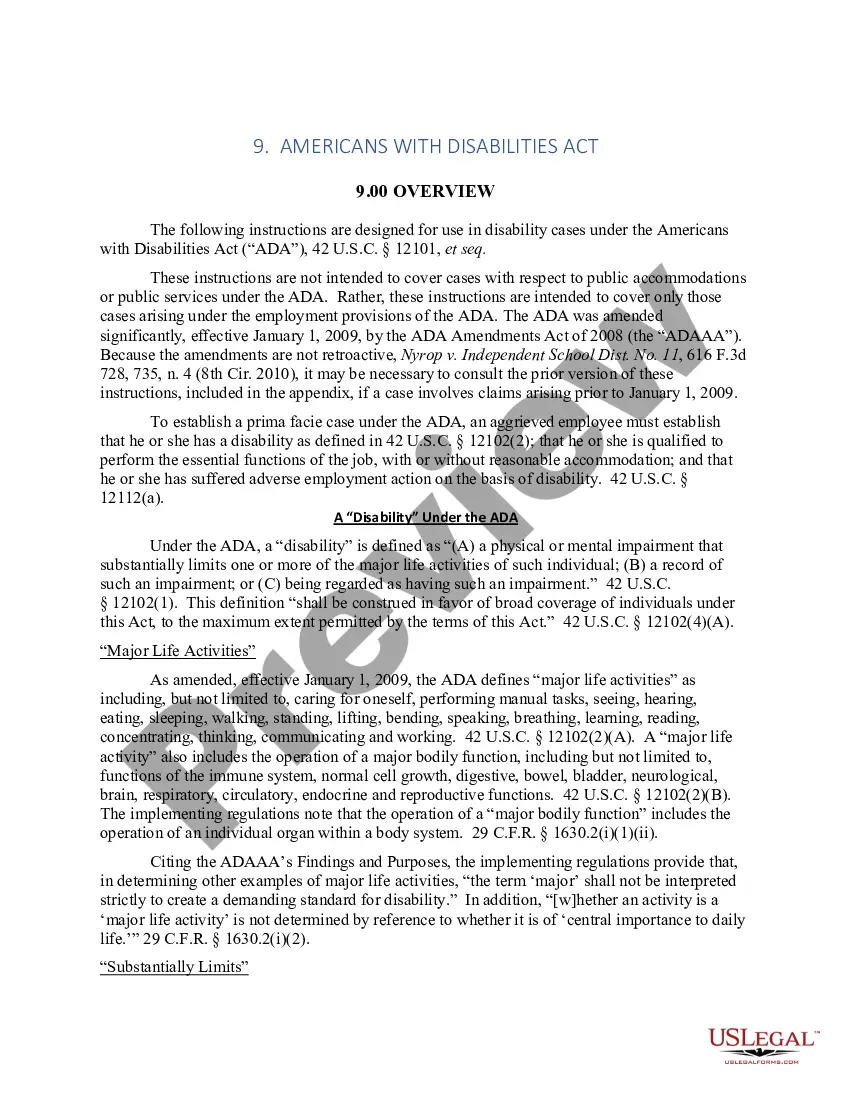
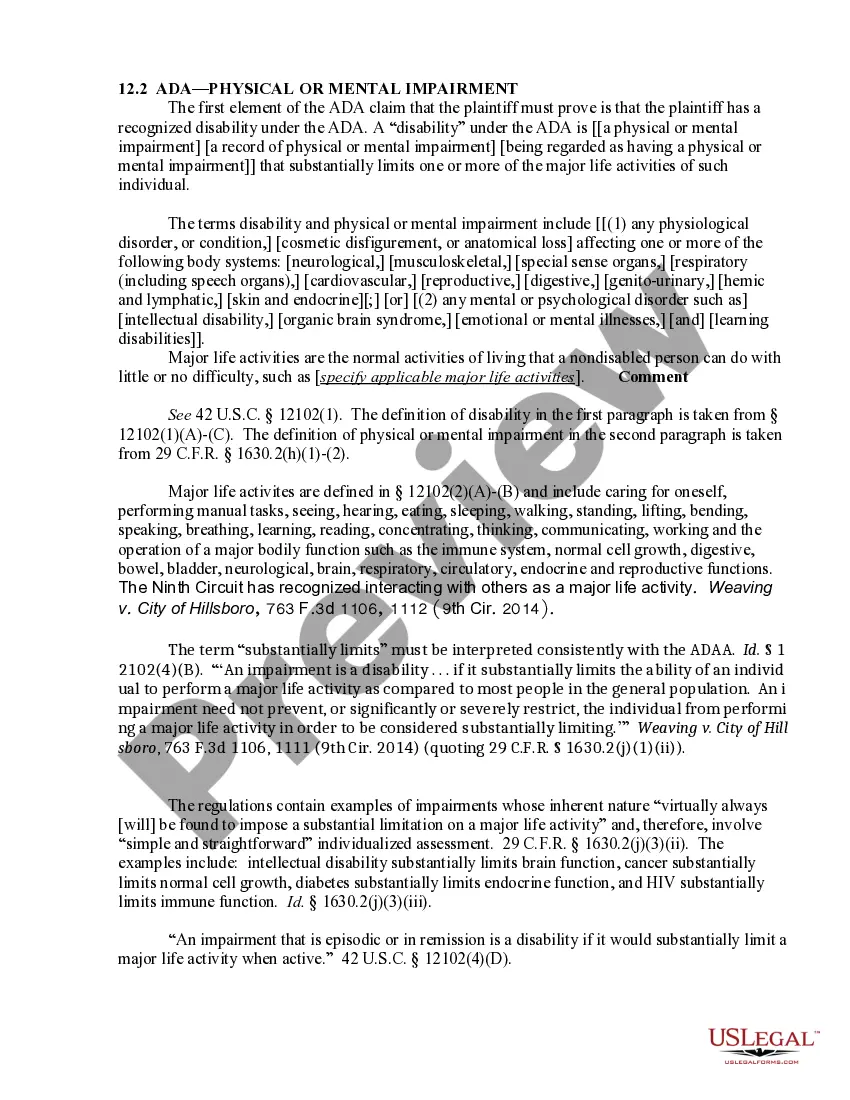
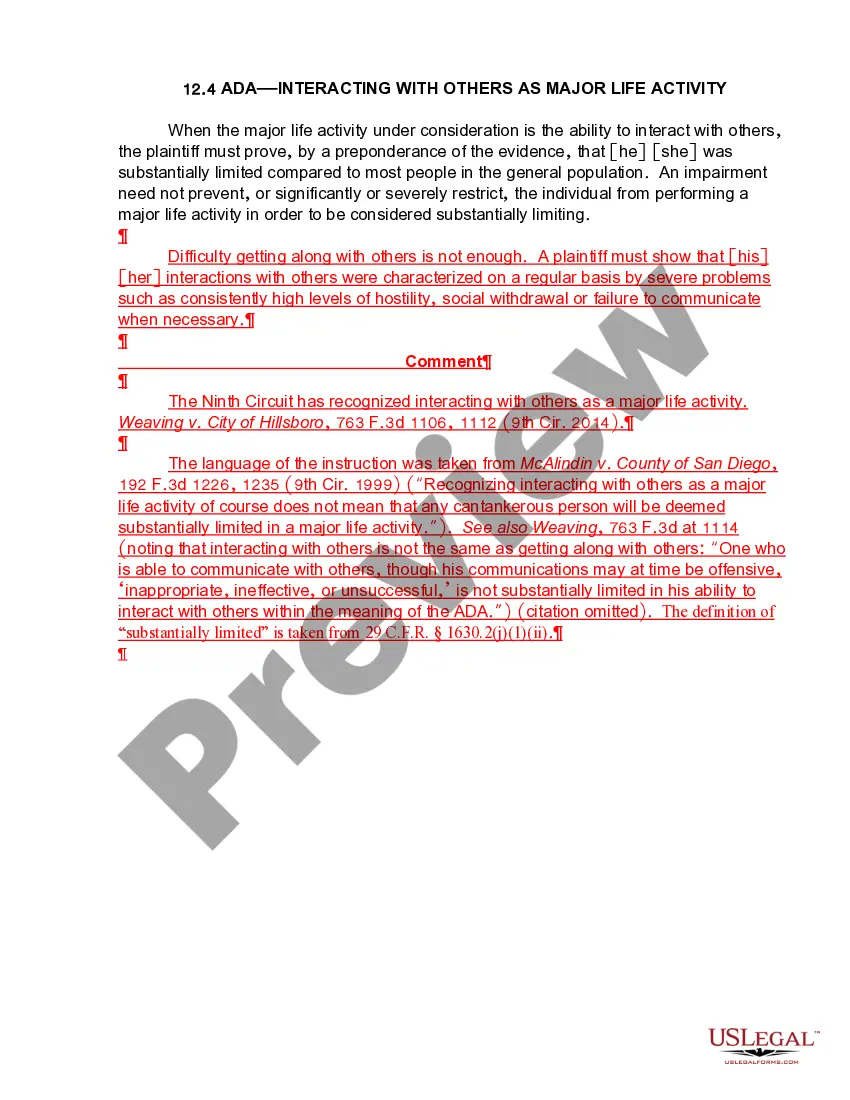
Substantially limits: An impairment is a disability under the ADA only if it substantially limits one or more major life activities. An impairment is substantially limiting if a person is unable to perform an activity as compared to an average person in the general population.
Disability: A physical or mental impairment that substantially limits one or more major life activities, a record of such an impairment, or being regarded as having such an impairment.
The ADA defines a person with a disability as a person who has a physical or mental impairment that substantially limits one or more major life activity. This includes people who have a record of such an impairment, even if they do not currently have a disability.
When does an impairment "substantially limit" a major life activity? To have an "actual" disability (or to have a "record of" a disability) an individual must be (or have been) substantially limited in performing a major life activity as compared to most people in the general population.
"(A) IN GENERAL. ?For purposes of paragraph (1), major life activities include, but are not limited to, caring for oneself, performing manual tasks, seeing, hearing, eating, sleeping, walking, standing, lifting, bending, speaking, breathing, learning, reading, concentrating, thinking, communicating, and working.
The final regulations also state that major life activities include the operation of major bodily functions, including functions of the immune system, special sense organs and skin, normal cell growth, digestive, genitourinary, bowel, bladder, neurological, brain, respiratory, circulatory, cardiovascular, endocrine,
Examples of major life activities are breathing, walking, talking, hearing, seeing, sleeping, caring for one's self, performing manual tasks, and working.