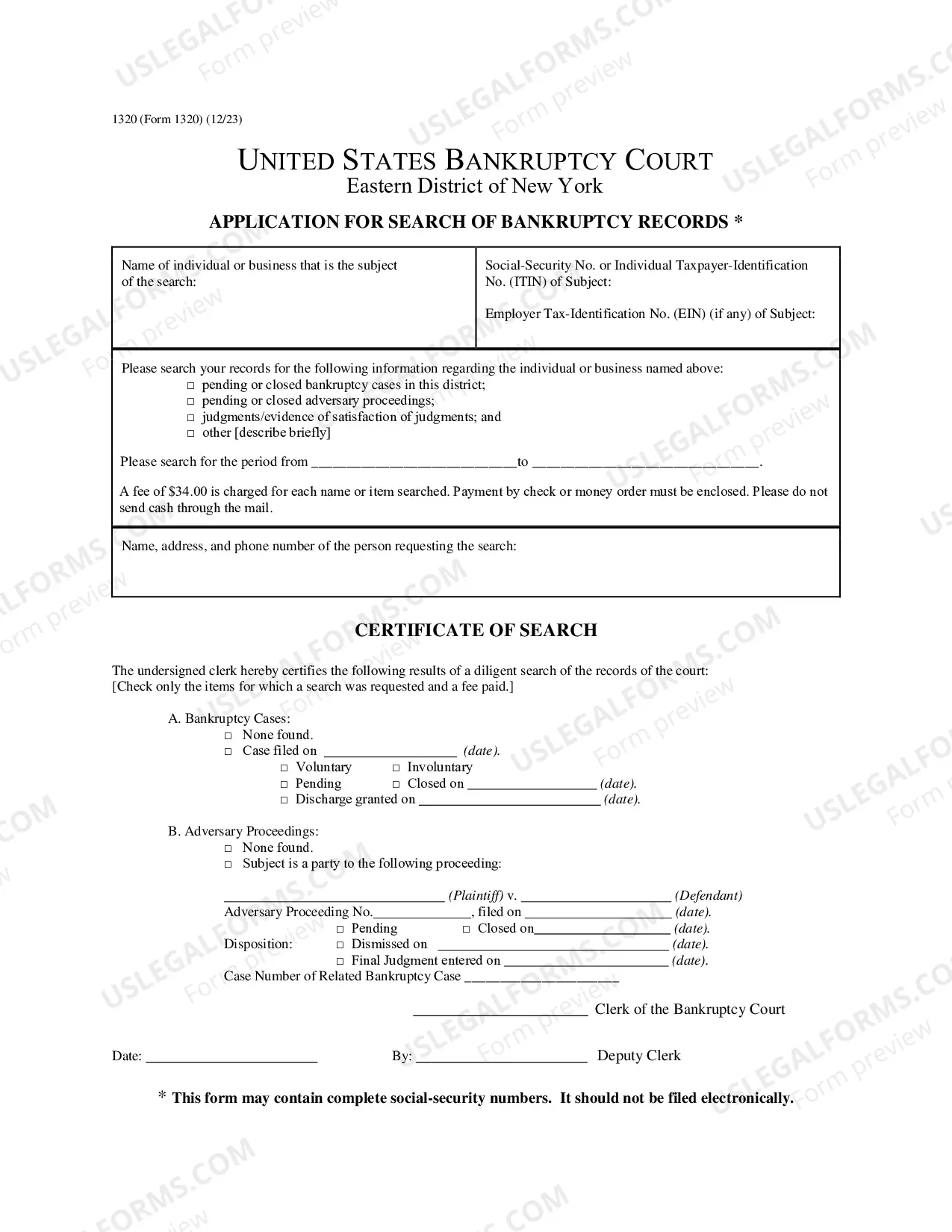
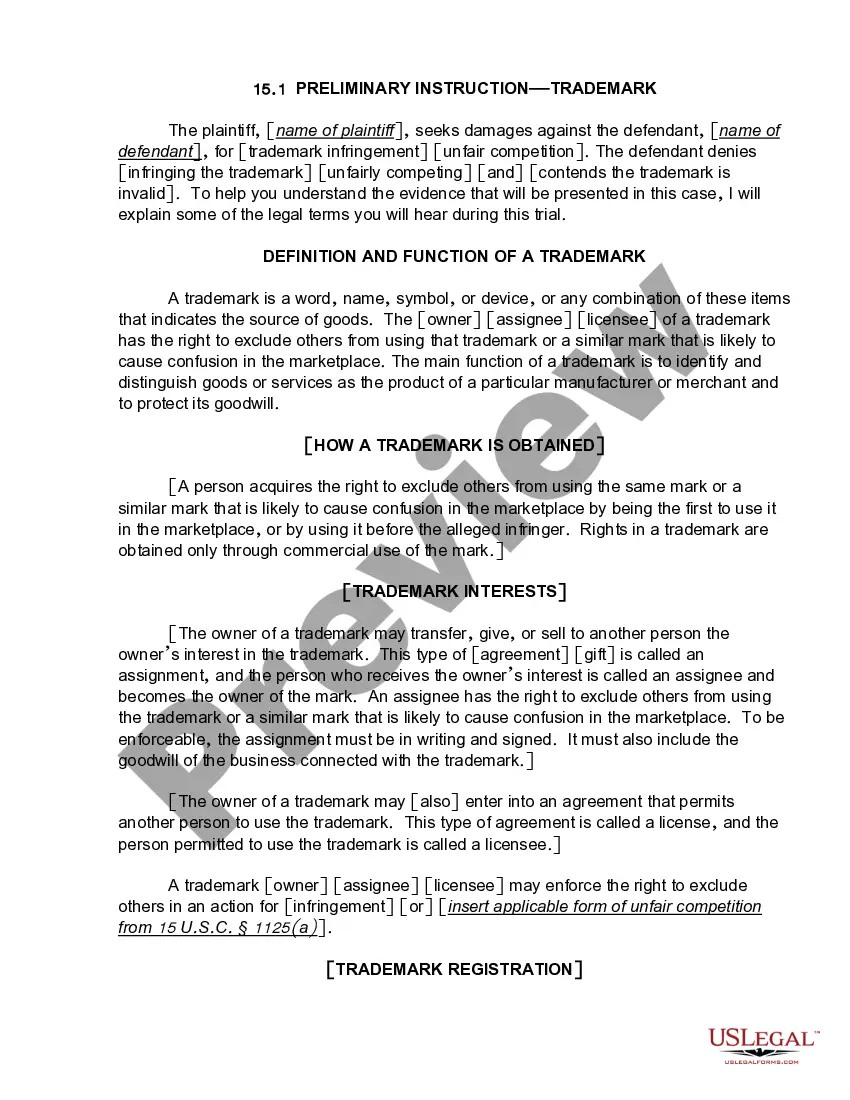
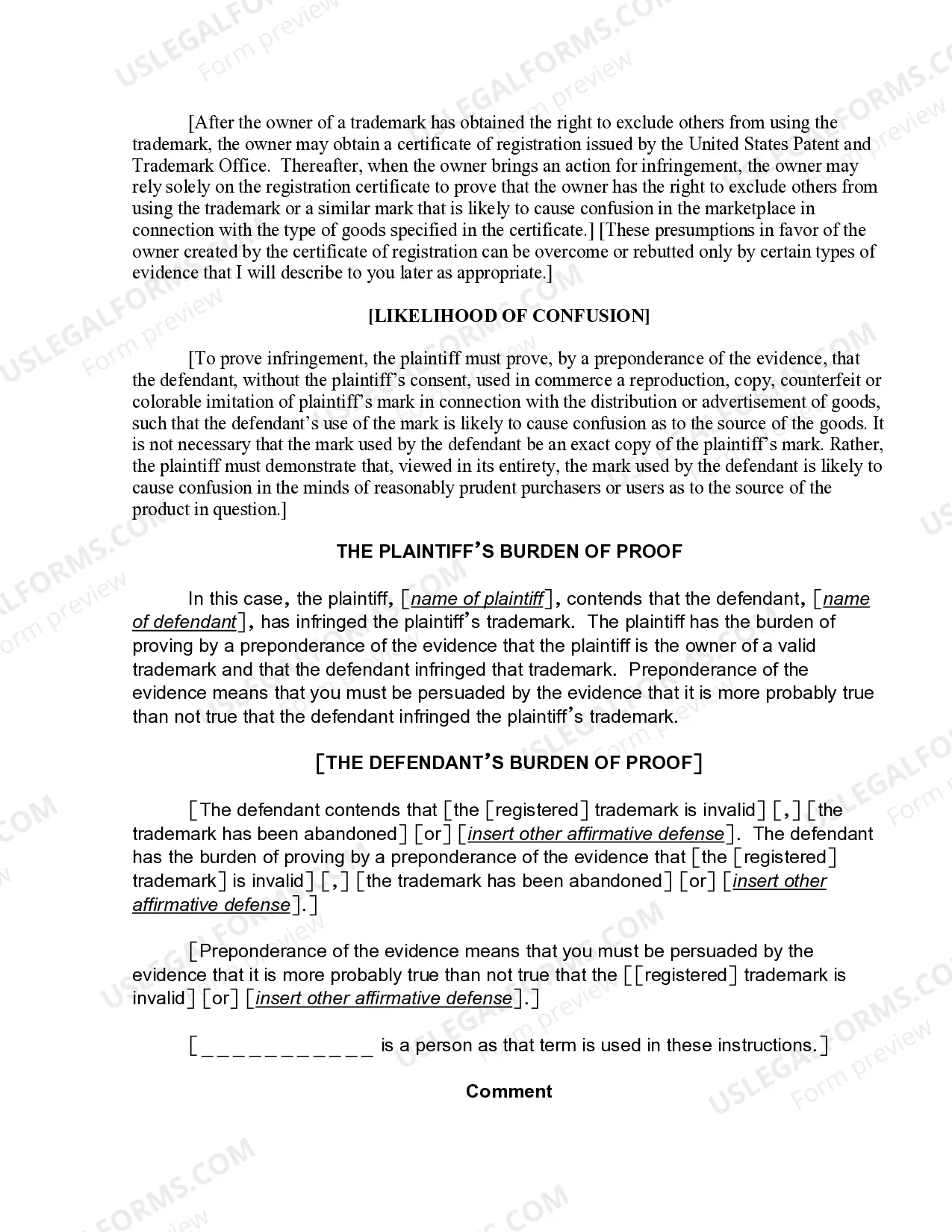
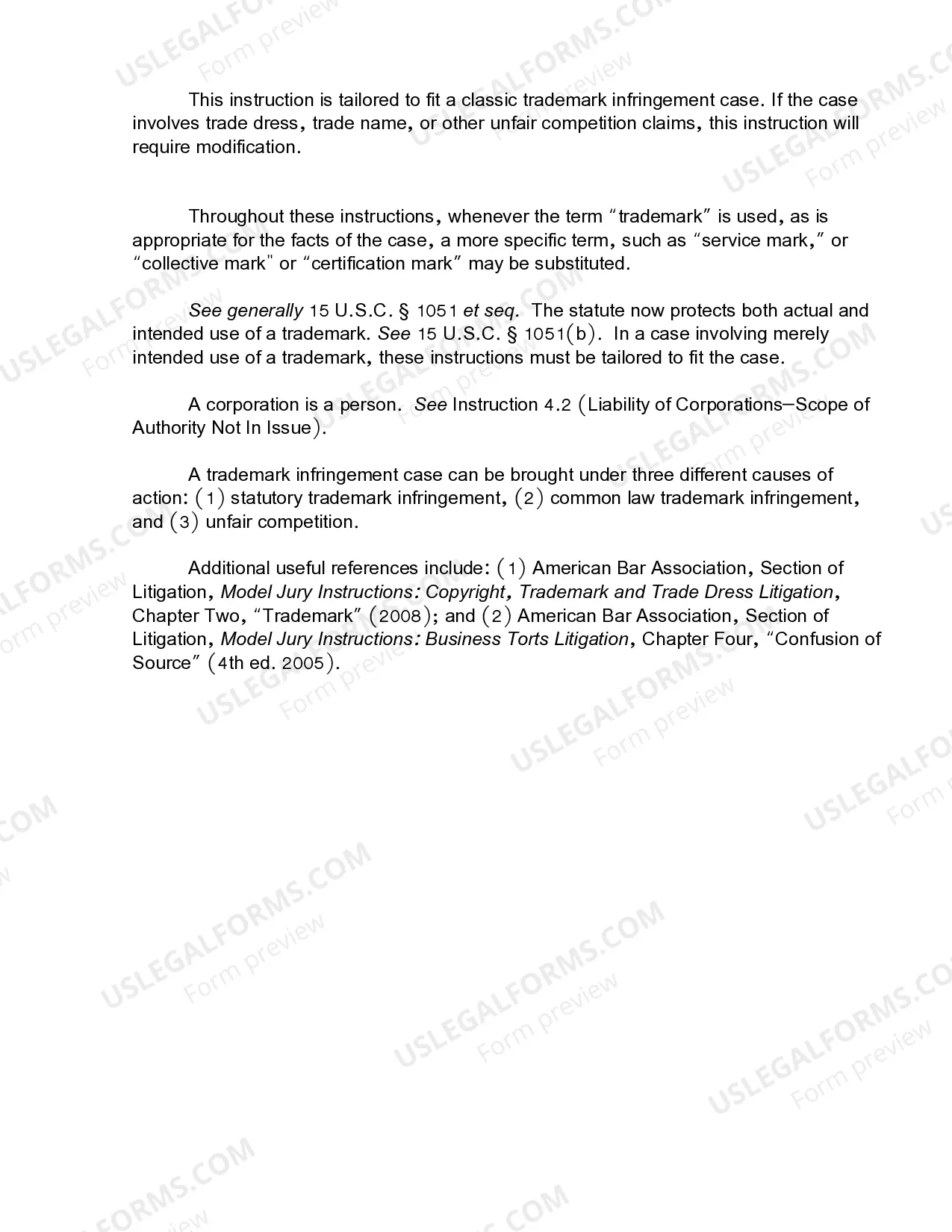
15.1 Preliminary Instruction-Trademark
Notarization requirements for this form
In most cases, this form does not require notarization. However, some jurisdictions or signing circumstances might. US Legal Forms offers online notarization powered by Notarize, accessible 24/7 for a quick, remote process.
Get your form ready online
Our built-in tools help you complete, sign, share, and store your documents in one place.
Make edits, fill in missing information, and update formatting in US Legal Forms—just like you would in MS Word.
Download a copy, print it, send it by email, or mail it via USPS—whatever works best for your next step.
Sign and collect signatures with our SignNow integration. Send to multiple recipients, set reminders, and more. Go Premium to unlock E-Sign.
If this form requires notarization, complete it online through a secure video call—no need to meet a notary in person or wait for an appointment.
We protect your documents and personal data by following strict security and privacy standards.

Make edits, fill in missing information, and update formatting in US Legal Forms—just like you would in MS Word.

Download a copy, print it, send it by email, or mail it via USPS—whatever works best for your next step.

Sign and collect signatures with our SignNow integration. Send to multiple recipients, set reminders, and more. Go Premium to unlock E-Sign.

If this form requires notarization, complete it online through a secure video call—no need to meet a notary in person or wait for an appointment.

We protect your documents and personal data by following strict security and privacy standards.
Looking for another form?
Form popularity
FAQ
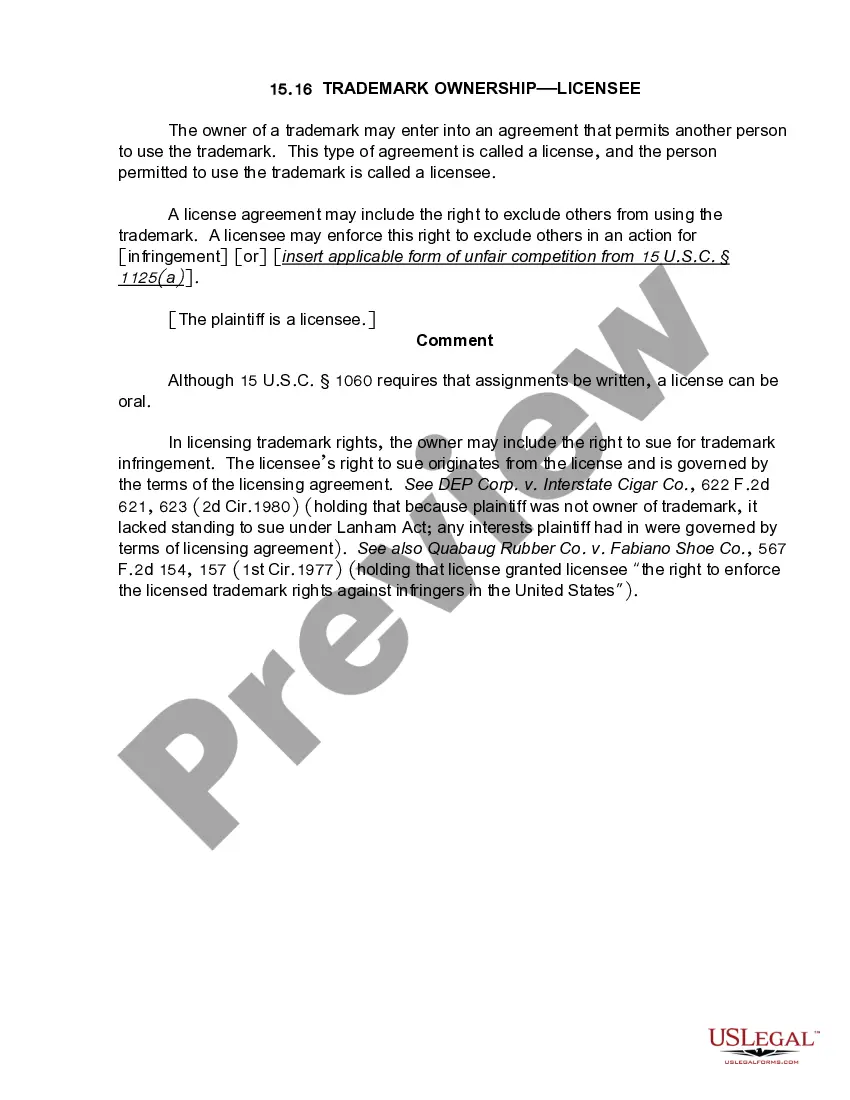
Prior users are given significant protection under the Lanham Act. Once a trademark owner establishes use of the trademark, they are almost guaranteed to have the exclusive rights to use the trademark in the given geographic location of use.
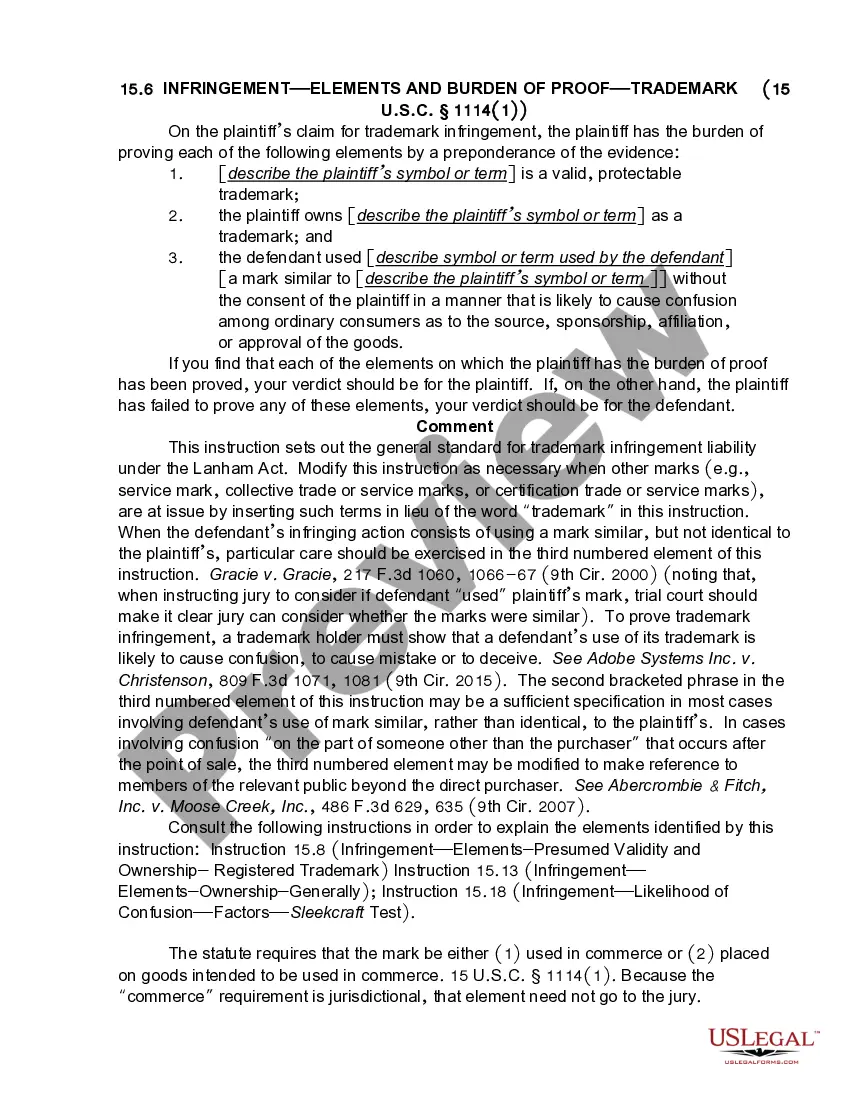
To prevail on a claim of trademark infringement, a plaintiff must establish that it has a valid mark entitled to protection; and that the defendant used the same or a similar mark in commerce in connection with the sale or advertising of goods or services without the plaintiff's consent.
The 5 things you must do to protect your trademark Do your homework. The USPTO won't register your trademark if there is a ?likelihood of confusion" with another registered trademark.Prepare and file a trademark application.Respond promptly to office actions or oppositions.Monitor your trademark.Maintain your trademark.
§ 1125(a), the plaintiff must demonstrate that (1) it has a valid and legally protectable mark; (2) it owns the mark; and (3) the defendant's use of the mark to identify goods or services causes a likelihood of confusion.
After five years of consecutive use from the date of federal registration, a trademark may be declared incontestable. An incontestable mark is immune from challenge except if it has become the generic term for the goods or abandoned for nonuse, or if the registration was acquired under fraudulent conditions.
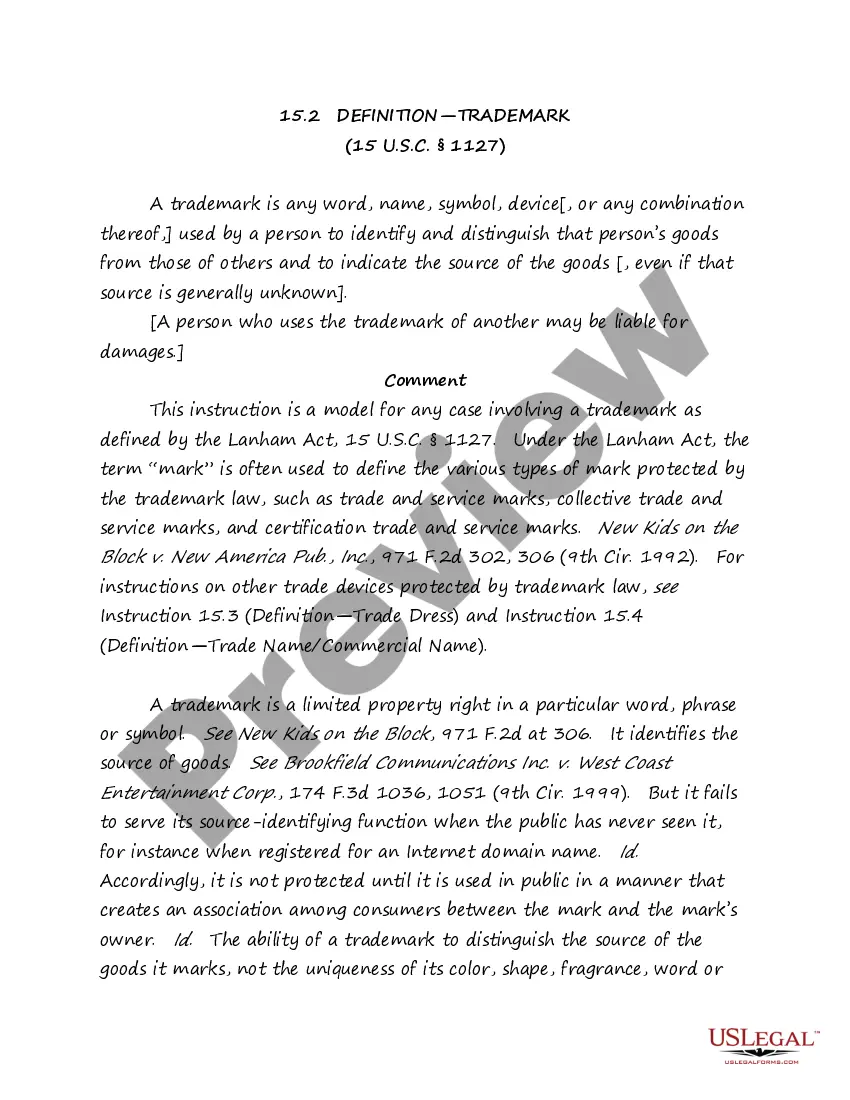
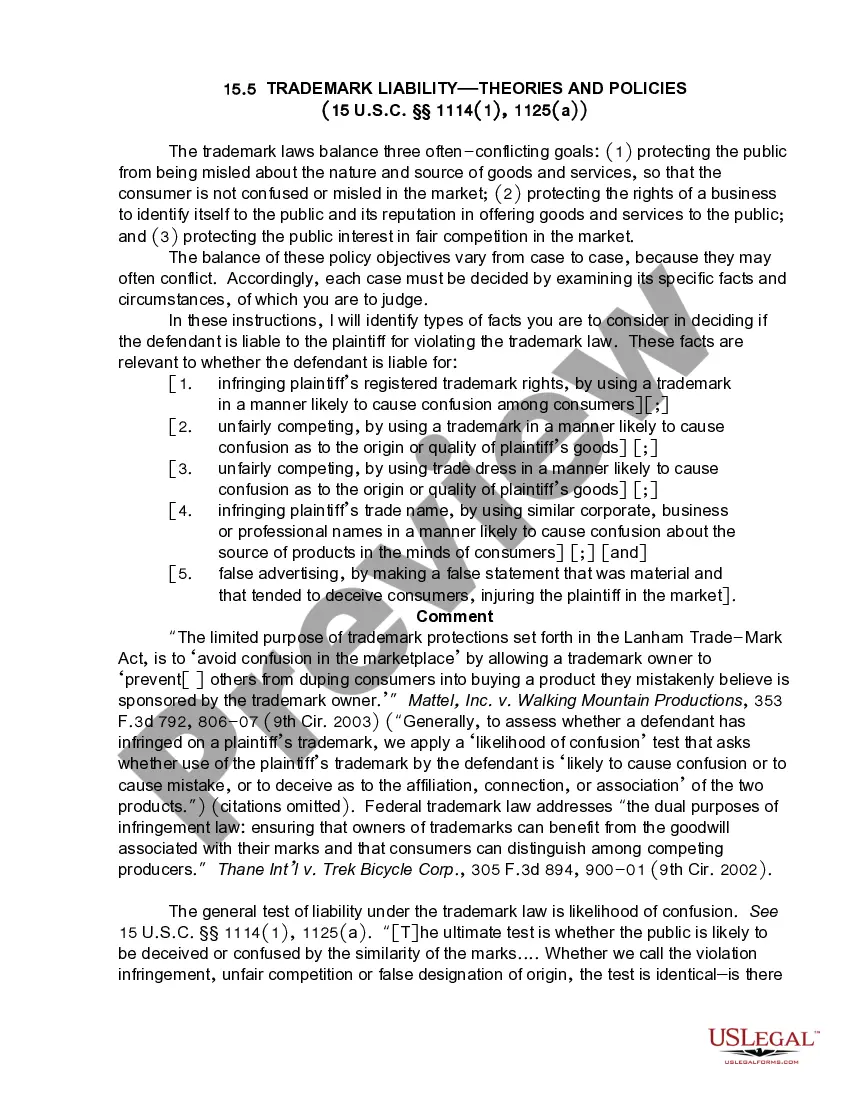
Generally, liability for infringement of a registered trademark is handled under 15 U.S.C. § 1114(1). Unfair competition through infringing an unregistered trademark or infringing trade dress is handled under 15 U.S. C. § 1125(a).
A trademark infringement defense is a legal case brought by a defendant to prove they did not infringe on someone else's (the plaintiff's) trademark. Basically, trademark infringement is the unauthorized use of a trademark or service mark on goods or services that compete or are related.