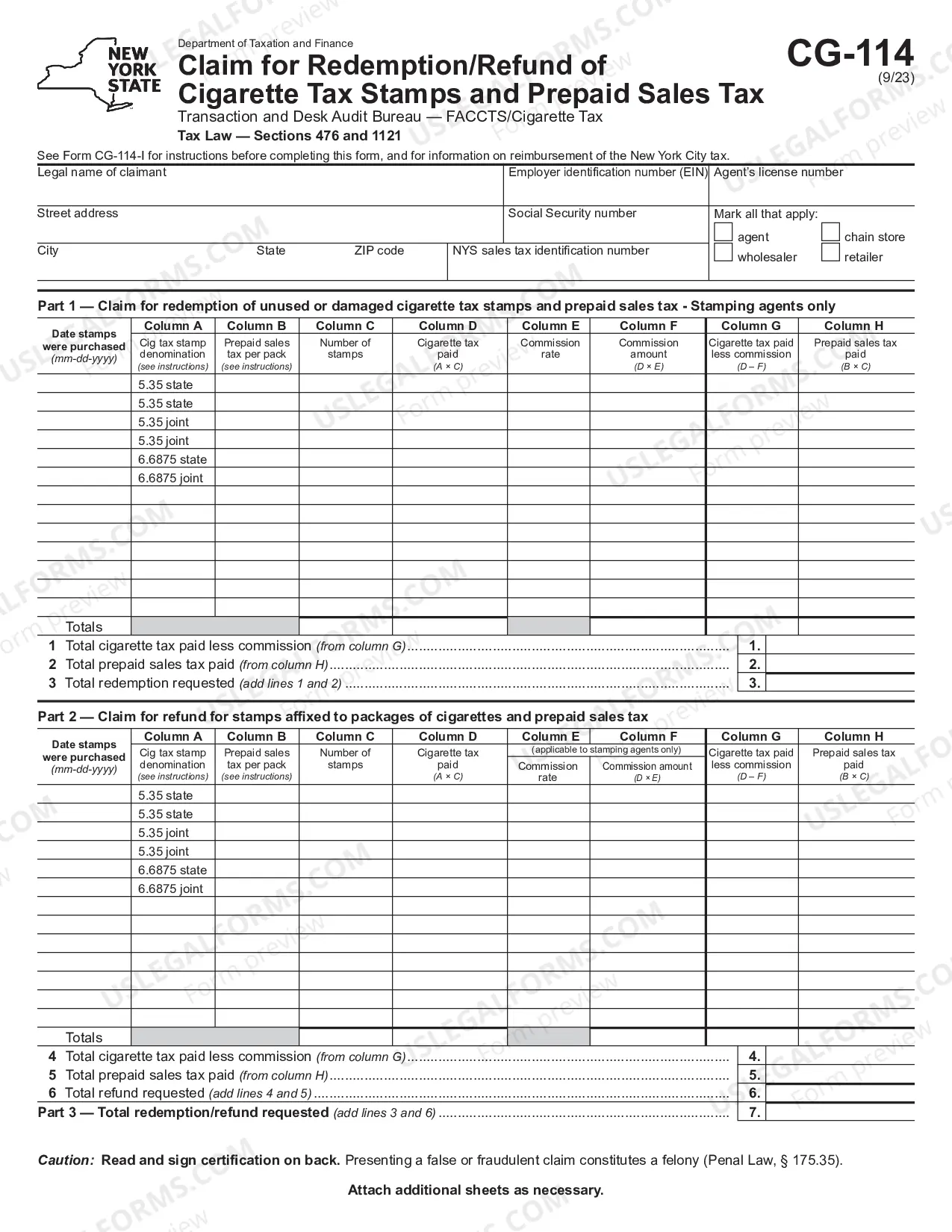
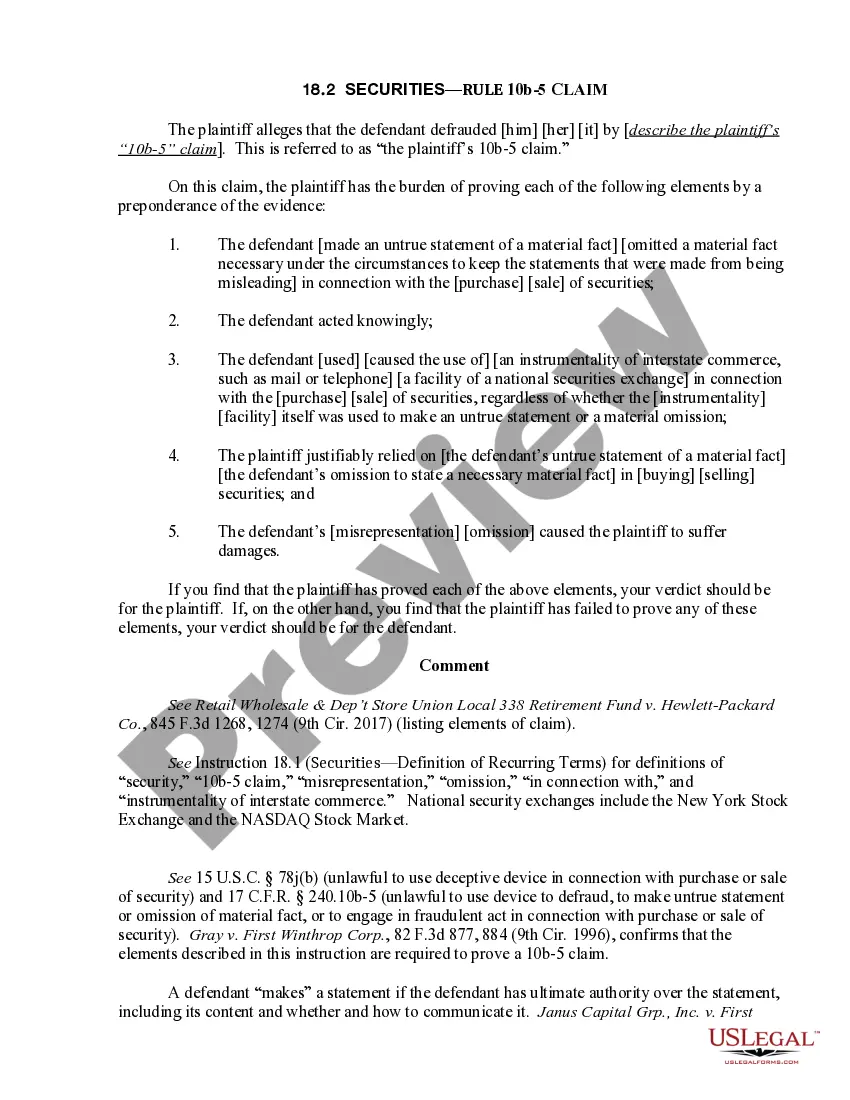
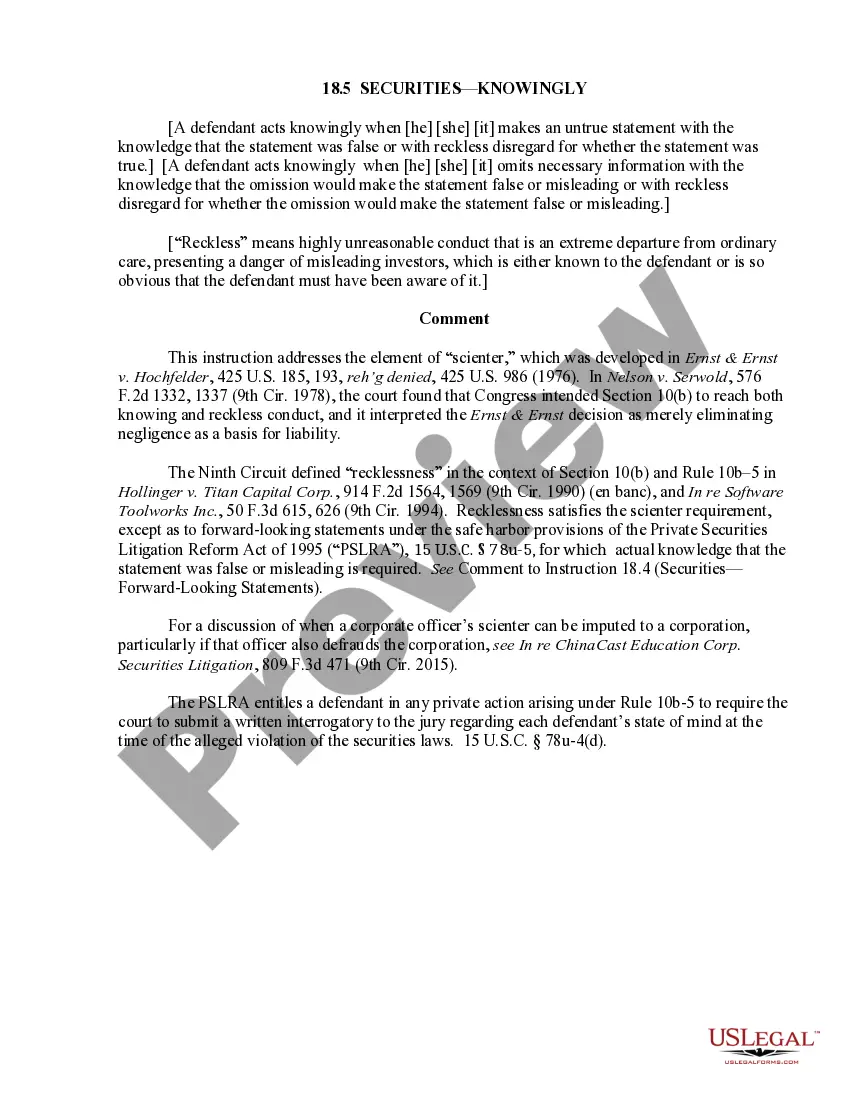
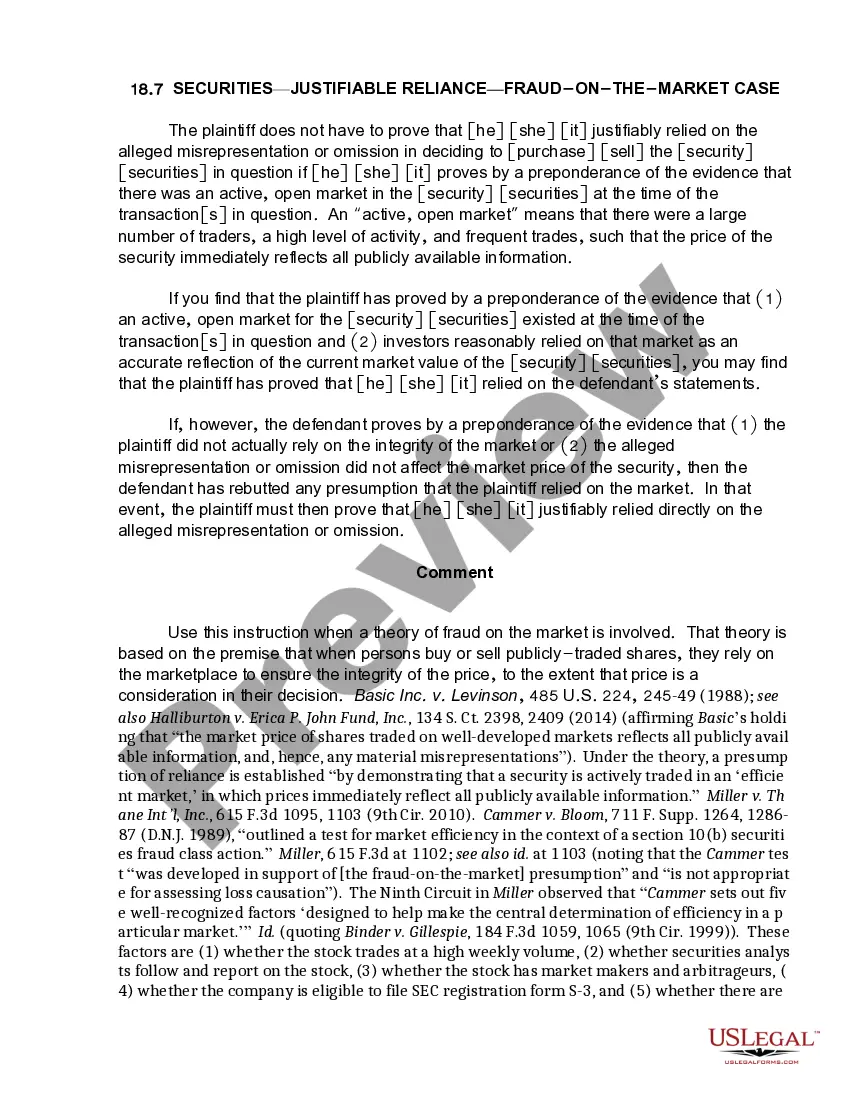
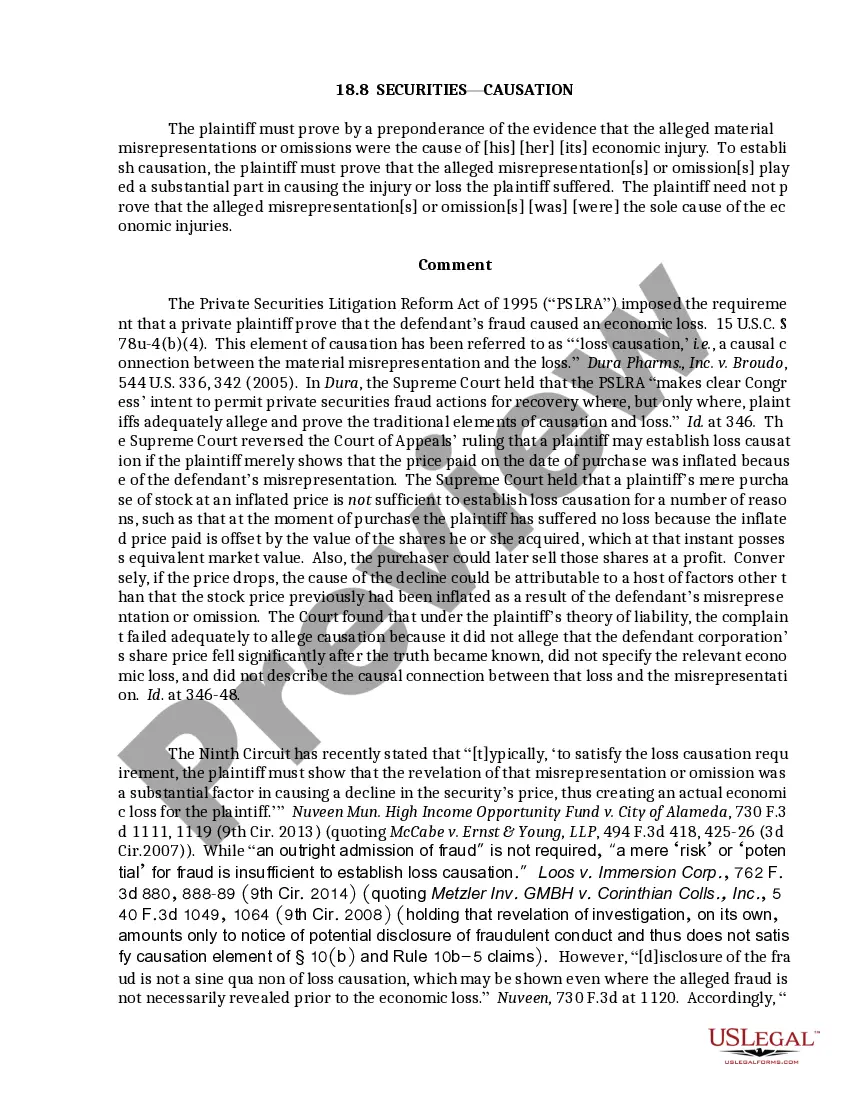
18.6 Securities-Justifiable Reliance Generally
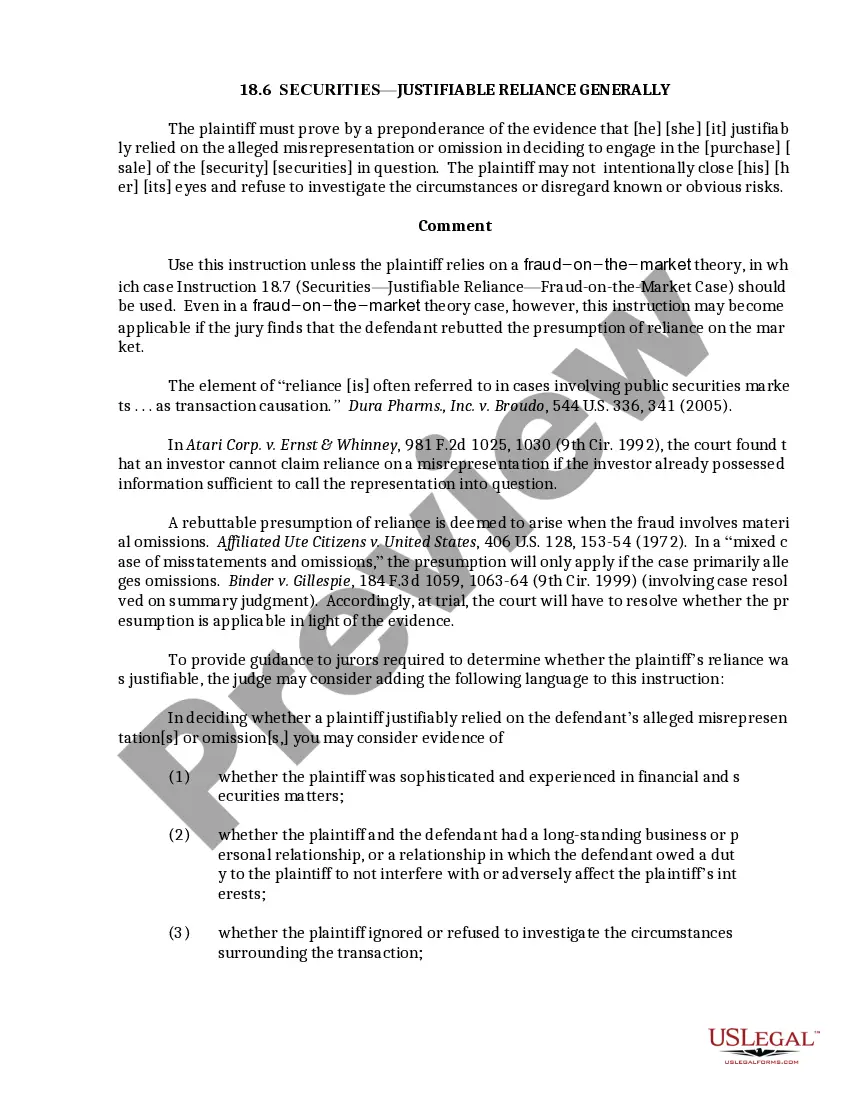
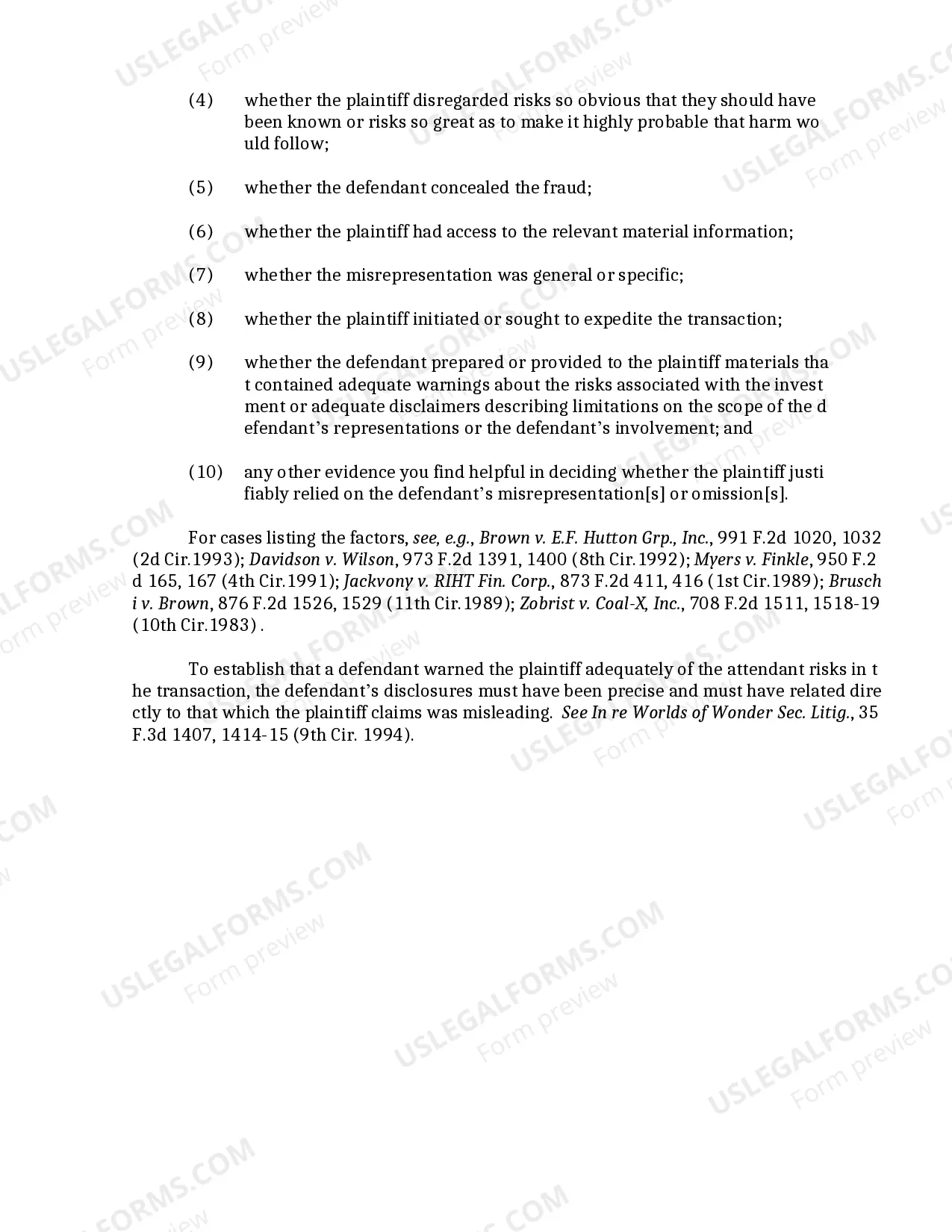
Notarization guidance
Notarization is not commonly needed for this form. However, certain documents or local rules may make it necessary. Our notarization service, powered by Notarize, allows you to finalize it securely online anytime, day or night.
Get your form ready online
Our built-in tools help you complete, sign, share, and store your documents in one place.
Make edits, fill in missing information, and update formatting in US Legal Forms—just like you would in MS Word.
Download a copy, print it, send it by email, or mail it via USPS—whatever works best for your next step.
Sign and collect signatures with our SignNow integration. Send to multiple recipients, set reminders, and more. Go Premium to unlock E-Sign.
If this form requires notarization, complete it online through a secure video call—no need to meet a notary in person or wait for an appointment.
We protect your documents and personal data by following strict security and privacy standards.

Make edits, fill in missing information, and update formatting in US Legal Forms—just like you would in MS Word.

Download a copy, print it, send it by email, or mail it via USPS—whatever works best for your next step.

Sign and collect signatures with our SignNow integration. Send to multiple recipients, set reminders, and more. Go Premium to unlock E-Sign.

If this form requires notarization, complete it online through a secure video call—no need to meet a notary in person or wait for an appointment.

We protect your documents and personal data by following strict security and privacy standards.
Looking for another form?
Form popularity
FAQ
To demonstrate justifiable reliance, a plaintiff must allege (and prove) that he or she relied upon the misrepresentation to his or her detriment.
Reasonable reliance. n. particularly in contracts, what a prudent person would believe and act upon if told something by another. Typically, a person is promised a profit or other benefit, and in reliance takes steps in reliance on the promise, only to find the statements or promises were not true or were exaggerated.
Justifiable reliance refers to a person's justifiable dependence on another's representations. Reliance is not justifiable if another person of similar intelligence, education, or experience would not have relied on the alleged representation.
As we have noted in prior articles, the justifiable reliance element of a fraud claim is often the most challenging one to satisfy. To demonstrate justifiable reliance, a plaintiff must allege (and prove) that he or she relied upon the misrepresentation to his or her detriment.
When determining whether reliance is justifiable, courts consider the various circumstances involved, such as the nature of the transaction, the form and materiality of the transaction, the form and materiality of the representation, the relationship of the parties, the respective intelligence, experience, age,
Reasonable reliance ?connotes something more than simply a bare hope or anticipation.? Where a statement is made under conditions or circumstances where reliance on that statement cannot be reasonably anticipated or foreseen, the plaintiff cannot demonstrate reasonable reliance.
N. particularly in contracts, what a prudent person would believe and act upon if told something by another. Typically, a person is promised a profit or other benefit, and in reliance takes steps in reliance on the promise, only to find the statements or promises were not true or were exaggerated.