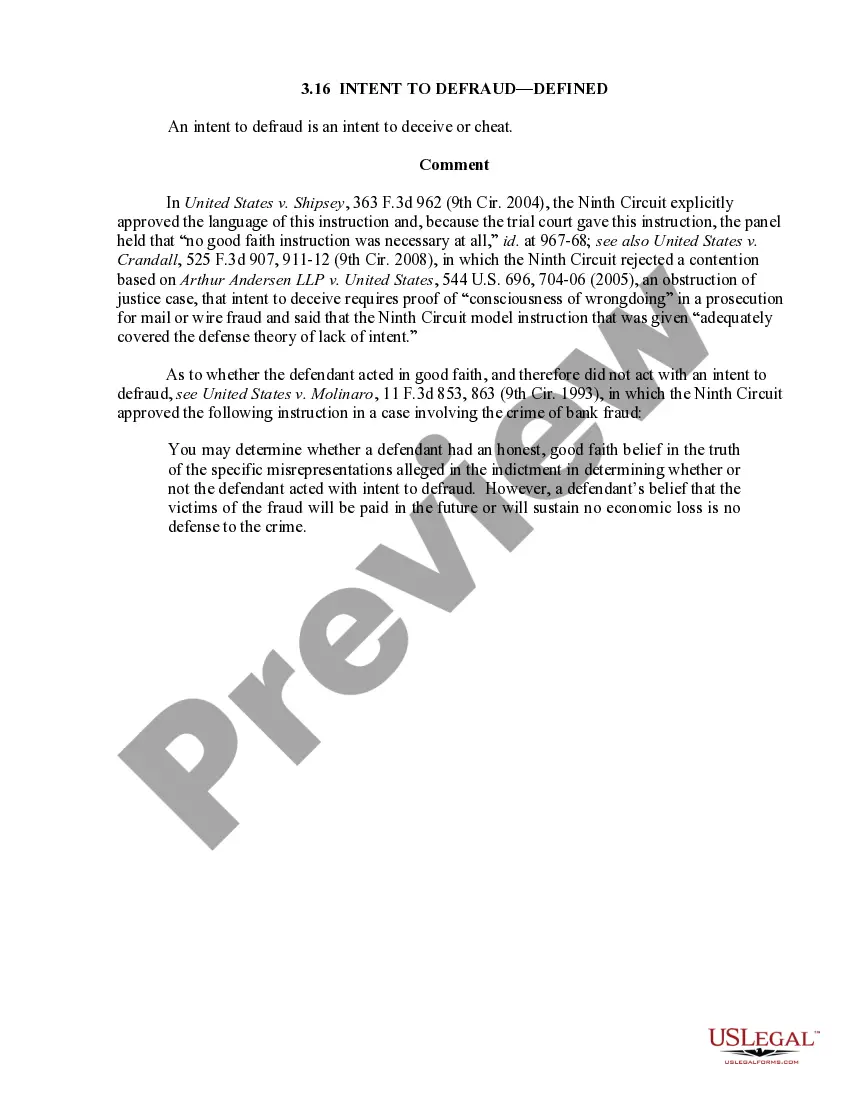
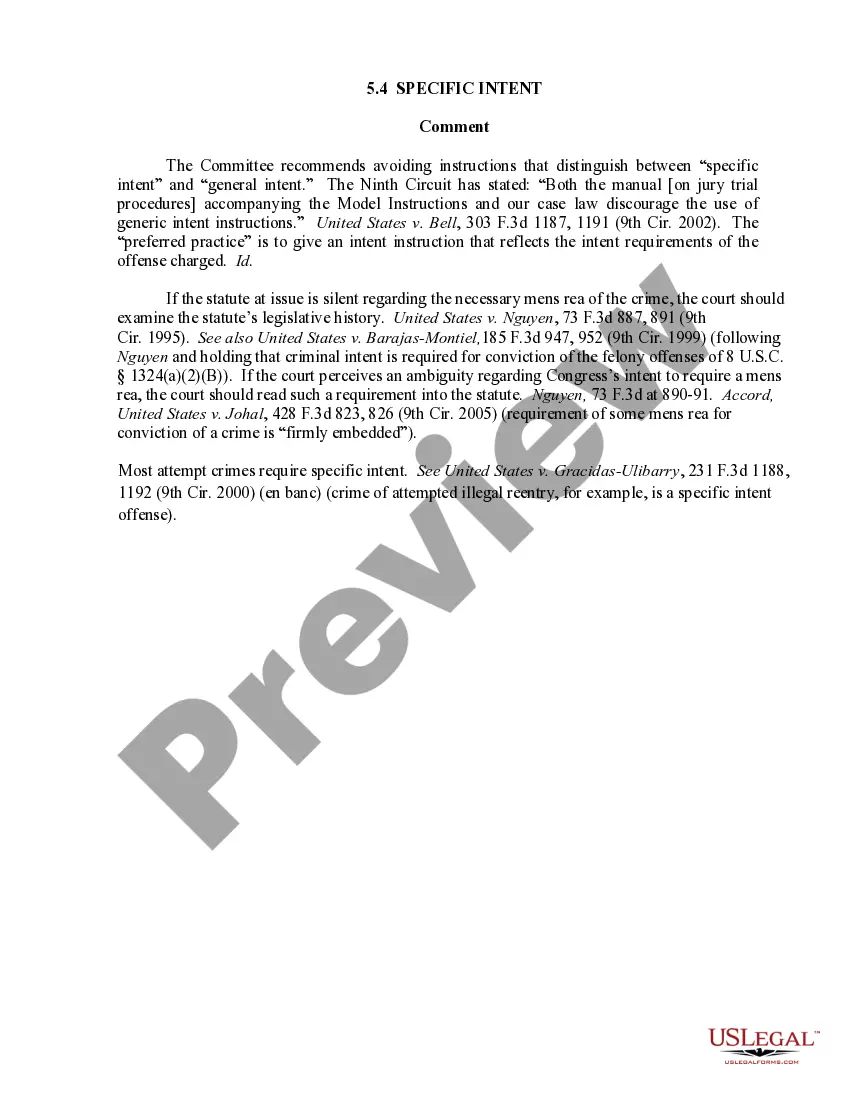
3.16 Intent to Defraud-Defined
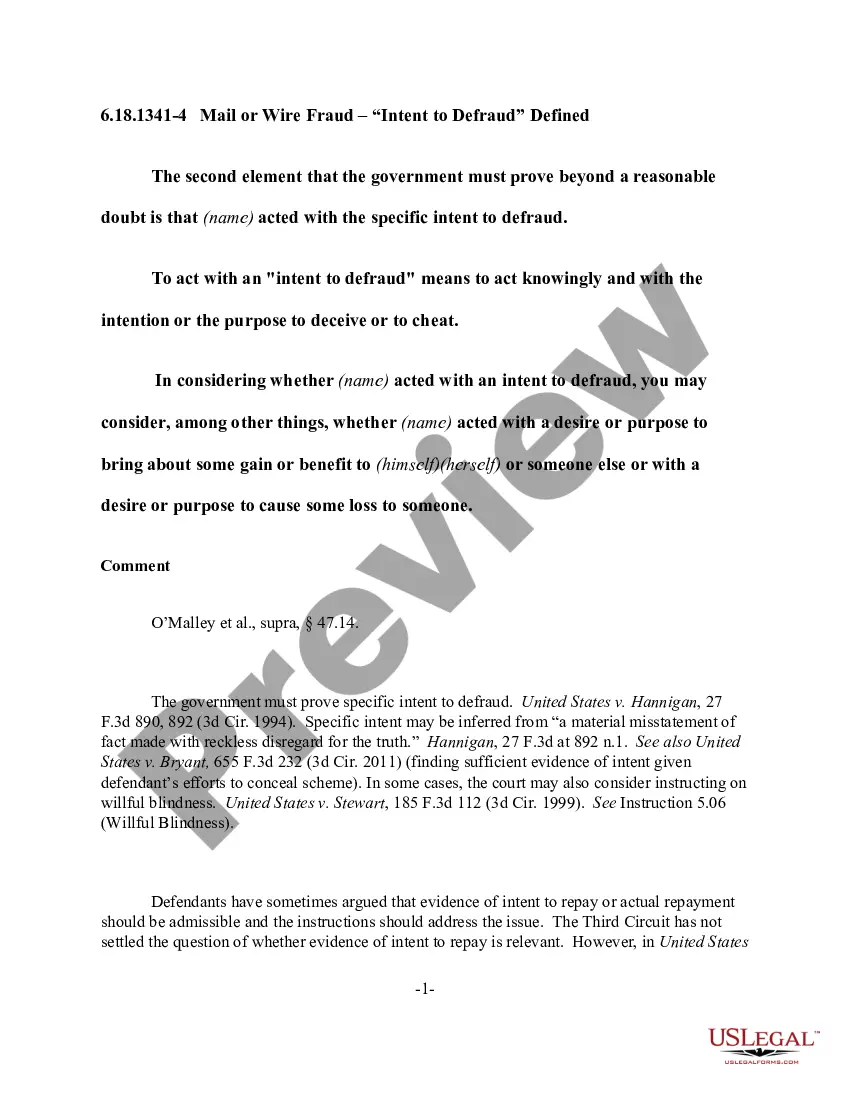
Notarization requirements for this form
Notarization is generally not required for this form. However, certain states or situations might demand it. You can complete notarization online through US Legal Forms, powered by Notarize, using a verified video call available anytime.
Get your form ready online
Our built-in tools help you complete, sign, share, and store your documents in one place.
Make edits, fill in missing information, and update formatting in US Legal Forms—just like you would in MS Word.
Download a copy, print it, send it by email, or mail it via USPS—whatever works best for your next step.
Sign and collect signatures with our SignNow integration. Send to multiple recipients, set reminders, and more. Go Premium to unlock E-Sign.
If this form requires notarization, complete it online through a secure video call—no need to meet a notary in person or wait for an appointment.
We protect your documents and personal data by following strict security and privacy standards.

Make edits, fill in missing information, and update formatting in US Legal Forms—just like you would in MS Word.

Download a copy, print it, send it by email, or mail it via USPS—whatever works best for your next step.

Sign and collect signatures with our SignNow integration. Send to multiple recipients, set reminders, and more. Go Premium to unlock E-Sign.

If this form requires notarization, complete it online through a secure video call—no need to meet a notary in person or wait for an appointment.

We protect your documents and personal data by following strict security and privacy standards.
Looking for another form?
Form popularity
FAQ
"Intent to defraud" means to act knowingly and with a specific intent to deceive for the purpose of depriving another of the intangible right of honest services. Because intent to defraud is an element of honest services fraud, it follows that good faith on the part of a defendant is a complete defense to the charge.
"Intent to defraud" means to act knowingly and with a specific intent to deceive for the purpose of depriving another of the intangible right of honest services. Because intent to defraud is an element of honest services fraud, it follows that good faith on the part of a defendant is a complete defense to the charge.
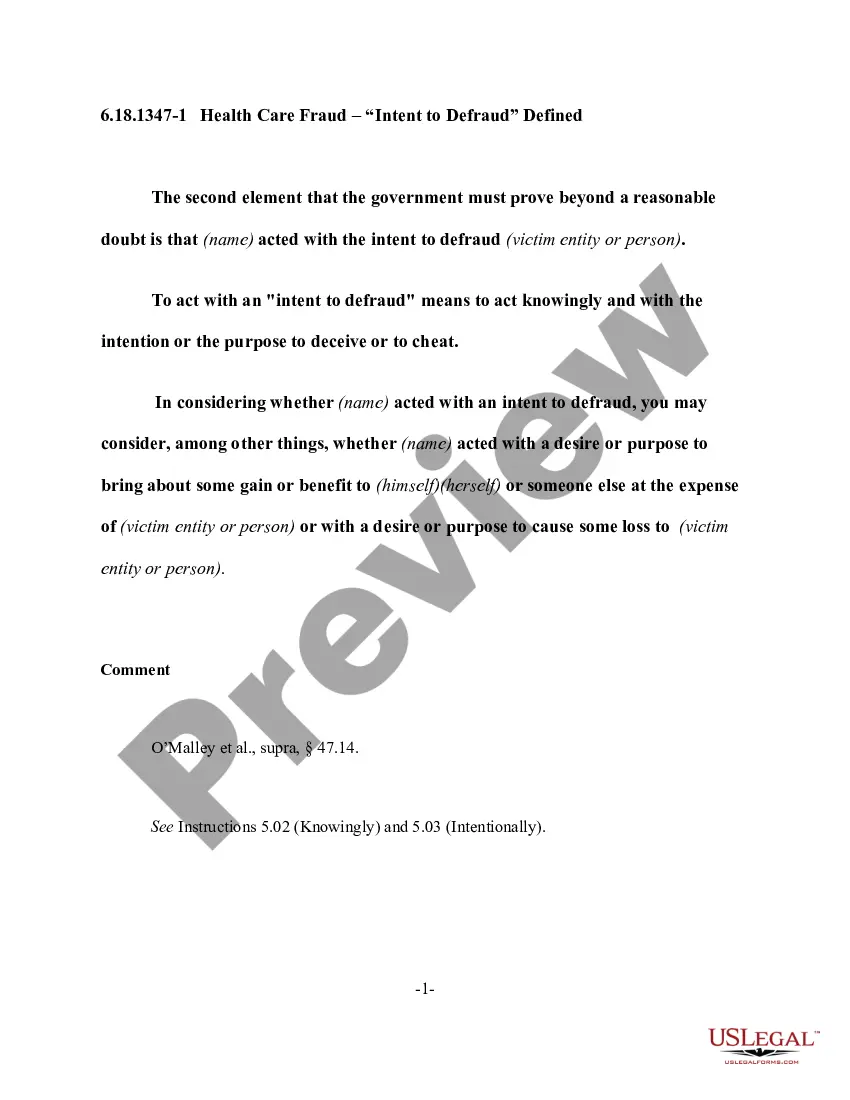
To defraud broadly means trick or deceive someone at the expense of another for personal gain. In the legal sense, to defraud is to commit fraud that leads to civil or criminal liability. In civil litigation, allegations of fraud might be based on a misrepresentation of fact that was either intentional or negligent.
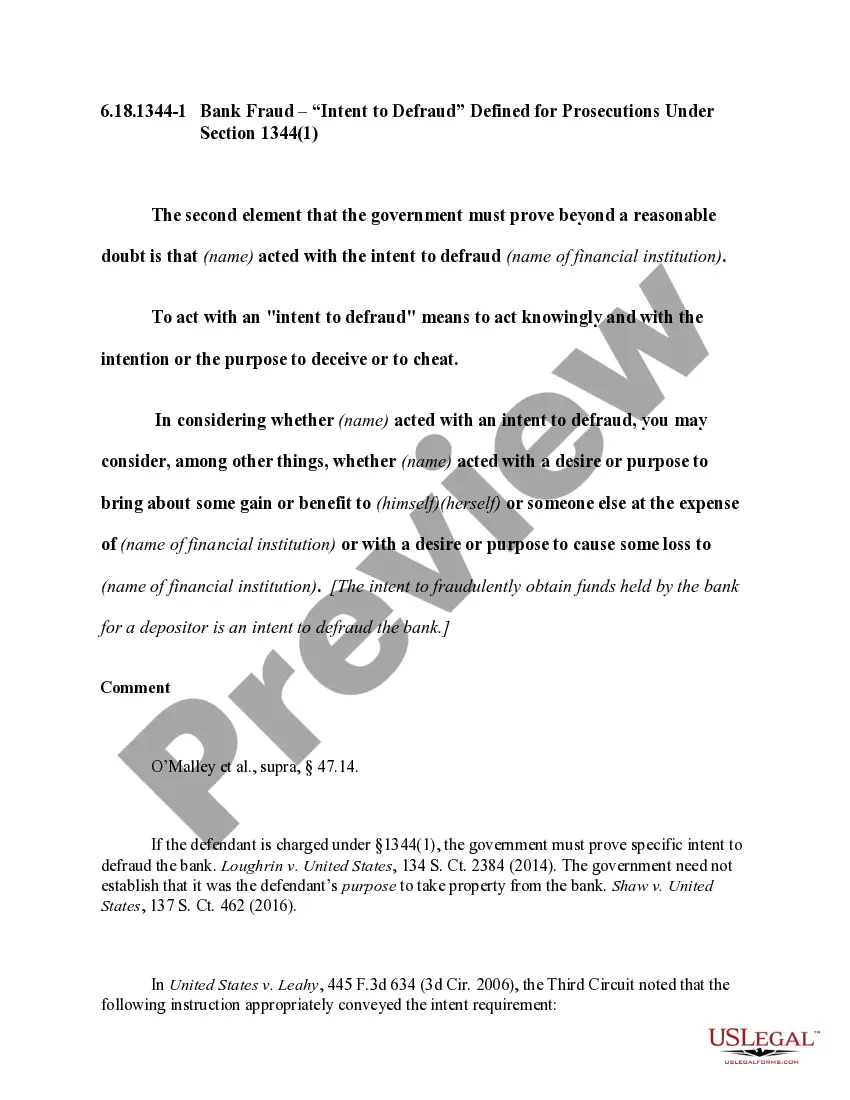
Finally, it is not necessary for the government to prove that any financial institution lost any money or property as a result of the scheme to defraud. An ?intent to defraud? means to act willfully and with the specific intent to deceive and cheat.
?Intent to defraud? is an element of both the misdemeanor (second degree) and felony (first degree) violations of Falsifying Business Records in New York.