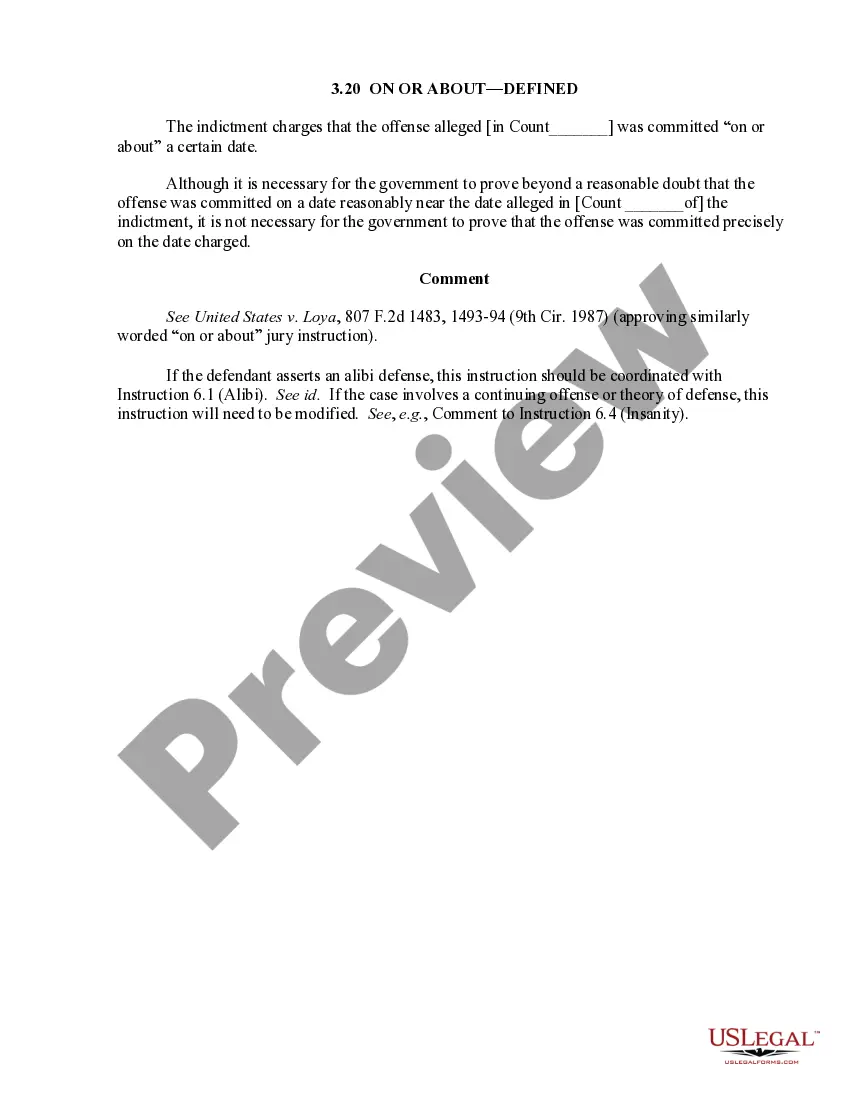
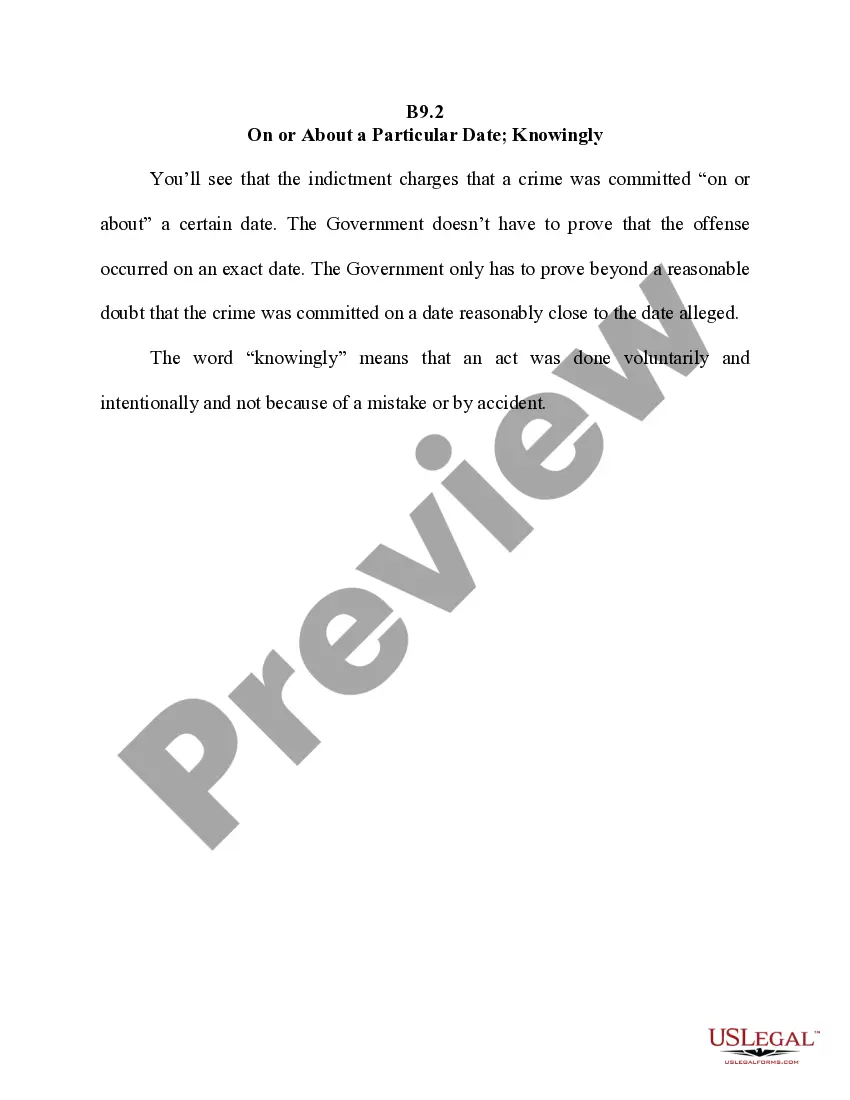
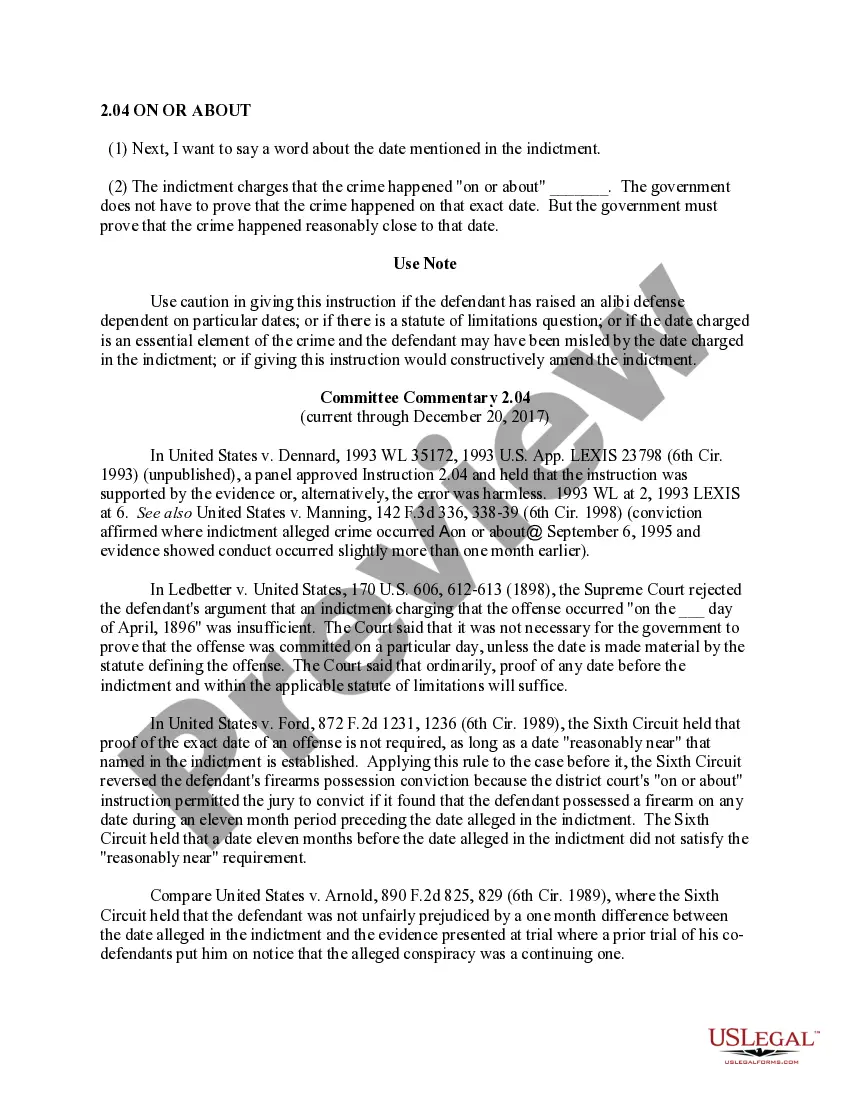
3.20 On or About-Defined
Notarization requirements for this form
Notarization is generally not required for this form. However, certain states or situations might demand it. You can complete notarization online through US Legal Forms, powered by Notarize, using a verified video call available anytime.
Get your form ready online
Our built-in tools help you complete, sign, share, and store your documents in one place.
Make edits, fill in missing information, and update formatting in US Legal Forms—just like you would in MS Word.
Download a copy, print it, send it by email, or mail it via USPS—whatever works best for your next step.
Sign and collect signatures with our SignNow integration. Send to multiple recipients, set reminders, and more. Go Premium to unlock E-Sign.
If this form requires notarization, complete it online through a secure video call—no need to meet a notary in person or wait for an appointment.
We protect your documents and personal data by following strict security and privacy standards.

Make edits, fill in missing information, and update formatting in US Legal Forms—just like you would in MS Word.

Download a copy, print it, send it by email, or mail it via USPS—whatever works best for your next step.

Sign and collect signatures with our SignNow integration. Send to multiple recipients, set reminders, and more. Go Premium to unlock E-Sign.

If this form requires notarization, complete it online through a secure video call—no need to meet a notary in person or wait for an appointment.

We protect your documents and personal data by following strict security and privacy standards.
Looking for another form?
Form popularity
FAQ
O.R. n. short for "own recognizance," meaning the judge allowed a person accused in a criminal case to go free pending trial without posting bail. A person so released is often referred to as having been "OR-ed."
In 1995, for instance, the U.S. Supreme Court issued a decision in Gutierrez de Martinez v. Lamagno that under certain contexts, shall could be construed as may.
Ing to the legal commentators, when used together with ?and,? the word ?or? usually includes ?and? and the ?and/or? phrase means ?either or both of.? Inclusion of the ?/? would not have corrected any error, ambiguity or confusion already inherent in the use of the ?and? ?or? conjunctive-disjunctive.
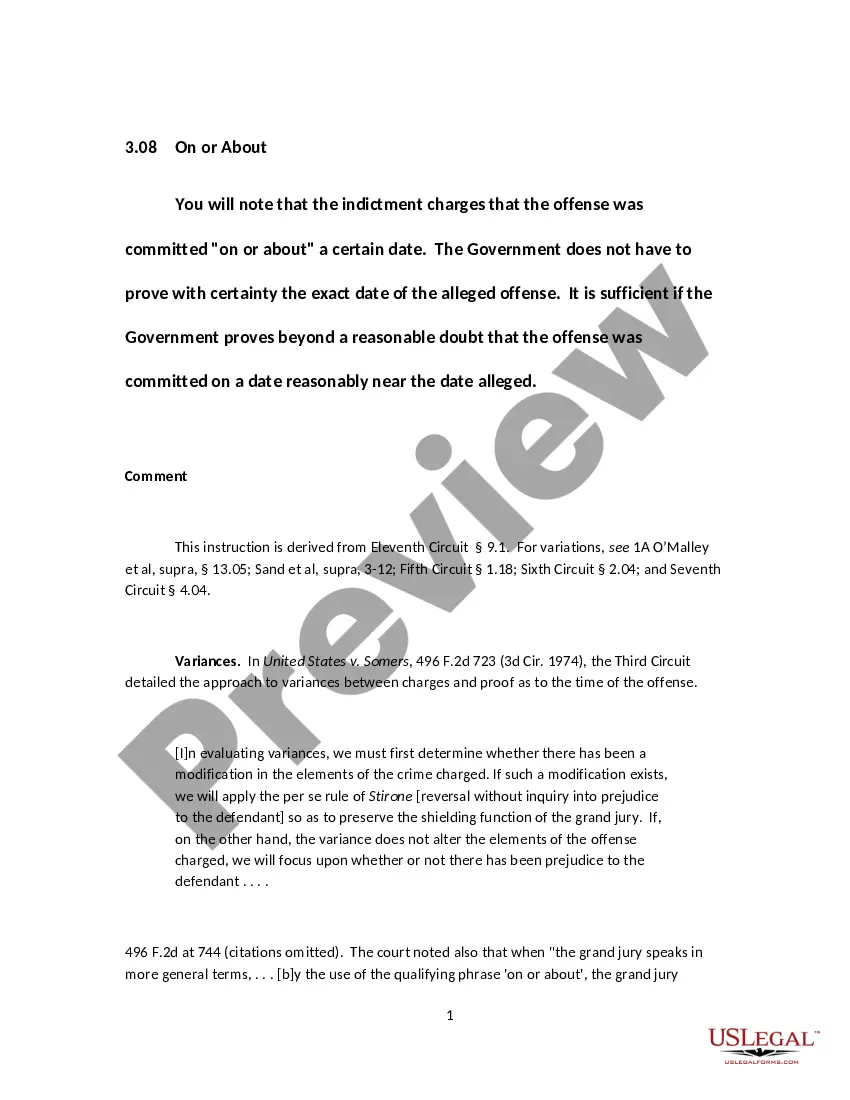
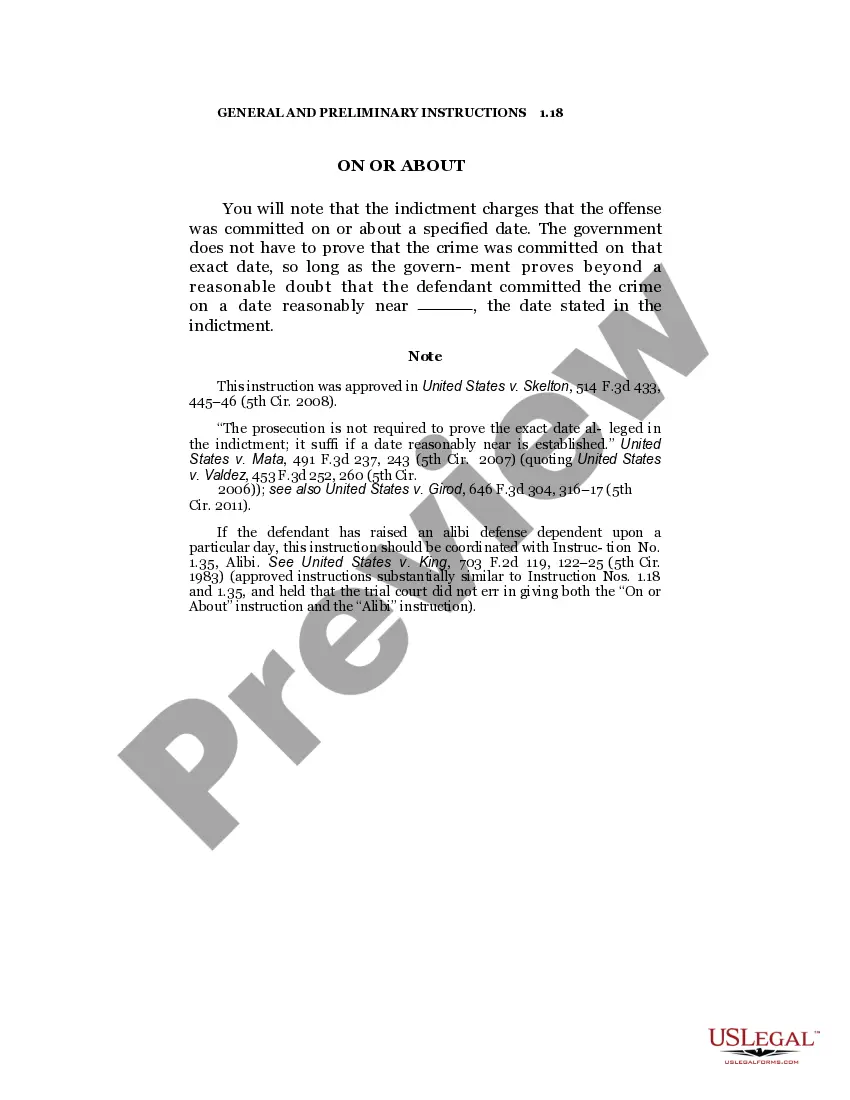
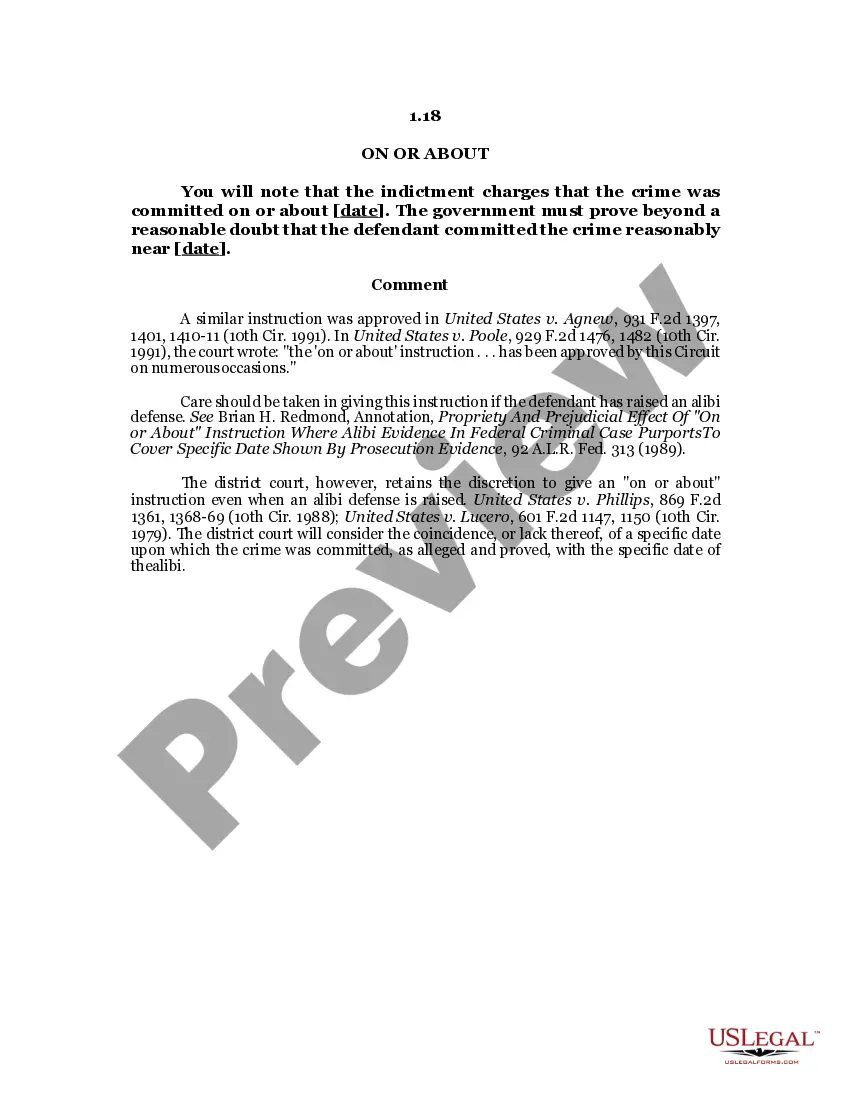
It provides an approximation of a time and/or place and expands the accuracy or coverage of a statement without pointing to an exact date or place that would be more easily challenged. When used to describe a location ?on or about? means anywhere and everywhere on, but not outside of, the locus at issue.
Shall is an imperative command, usually indicating that certain actions are mandatory, and not permissive. This contrasts with the word ?may,? which is generally used to indicate a permissive provision, ordinarily implying some degree of discretion.
The former is a statement about things; the latter, a statement about words.
A phrase that is used throughout civil and criminal legal practice to refer to a specific date or place by narrow approximation. It is often seen either in a civil or criminal complaint, or within legal documents that create obligations or protections for a party.
A term is either of right or of grace; when it makes part of the agreement and is expressly or tacitly included in it, it is of right when it is not part of the agreement, it is of grace; as if it is not afterwards granted by the judge at the requisition of the debtor.