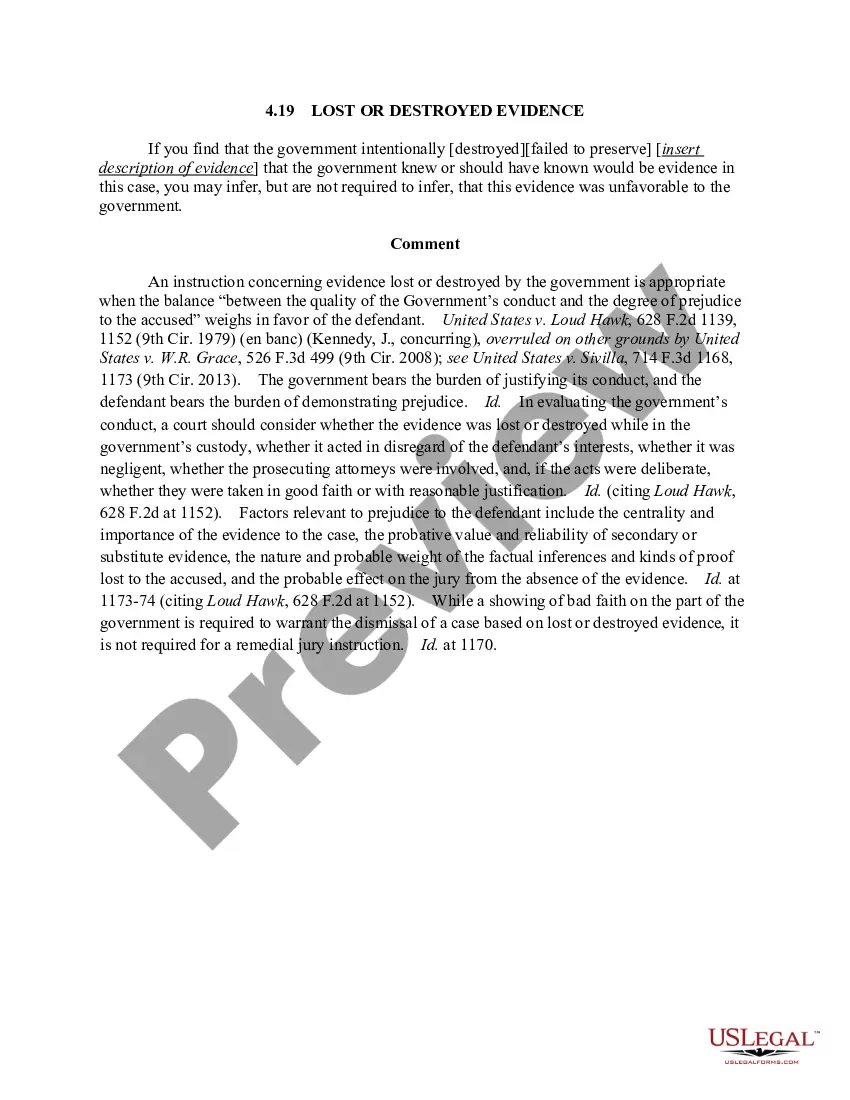
4.19 Lost or Destroyed Evidence
Does this document require notarization?
Notarization is generally not required for this form. However, certain states or situations might demand it. You can complete notarization online through US Legal Forms, powered by Notarize, using a verified video call available anytime.
Get your form ready online
Our built-in tools help you complete, sign, share, and store your documents in one place.
Make edits, fill in missing information, and update formatting in US Legal Forms—just like you would in MS Word.
Download a copy, print it, send it by email, or mail it via USPS—whatever works best for your next step.
Sign and collect signatures with our SignNow integration. Send to multiple recipients, set reminders, and more. Go Premium to unlock E-Sign.
If this form requires notarization, complete it online through a secure video call—no need to meet a notary in person or wait for an appointment.
We protect your documents and personal data by following strict security and privacy standards.

Make edits, fill in missing information, and update formatting in US Legal Forms—just like you would in MS Word.

Download a copy, print it, send it by email, or mail it via USPS—whatever works best for your next step.

Sign and collect signatures with our SignNow integration. Send to multiple recipients, set reminders, and more. Go Premium to unlock E-Sign.

If this form requires notarization, complete it online through a secure video call—no need to meet a notary in person or wait for an appointment.

We protect your documents and personal data by following strict security and privacy standards.
Looking for another form?
Form popularity
FAQ
Examples of destroying evidence in California include obstructing justice by concealing or destroying evidence; destroying evidence to prevent it from being used in a legal process, including a criminal investigation or prosecution; and destroying evidence by burning, mutilating, or disposing of it in an unreasonable
California Penal Code Section 135 PC is the statute that defines the offense of destroying or concealing evidence. It's described as willfully destroying or concealing anything that is going to be produced for a criminal investigation, inquiry, or even a trial.
To establish a claim for spoliation by a non-party, the plaintiff must prove six elements: (1) existence of a potential civil action, (2) a legal or contractual duty to preserve evidence which is relevant to the potential civil action, (3) destruction of that evidence, (4) significant impairment and the ability to
If exculpatory evidence is mishandled, a defendant may be granted a favorable inference. The court may decide to ?assume? that the evidence in question was going to support the defendant.
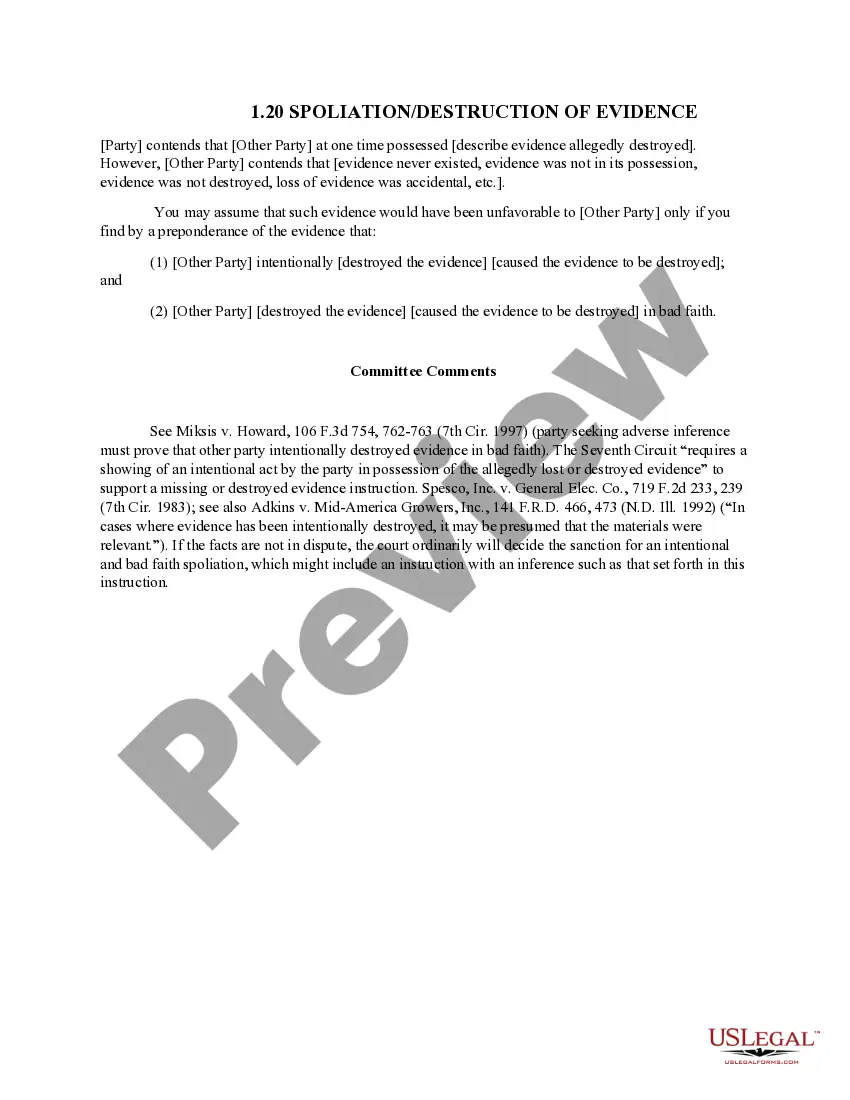
?Spoliation? of evidence occurs when someone with an obligation to preserve evidence with regard to a legal claim neglects to do so or intentionally fails to do so. Such a failure to preserve evidence can take place by destruction of the evidence, damage to the evidence, or losing the evidence.
Spoliation of evidence is the intentional, reckless, or negligent withholding, hiding, altering, fabricating, or destroying of evidence relevant to a legal proceeding.
When a third party loses or destroys evidence, a victim can sue that party for the loss. The problem is showing damages for the destruction of the evidence. To do that, a victim has to show that the destruction deprived them of the ability to win damages in the underlying injury case.
Any intentional, reckless, and/or negligent hiding of evidence by either party to the proceeding is considered to be illegal. These actions are referred to as spoliation of evidence, or tampering with evidence.