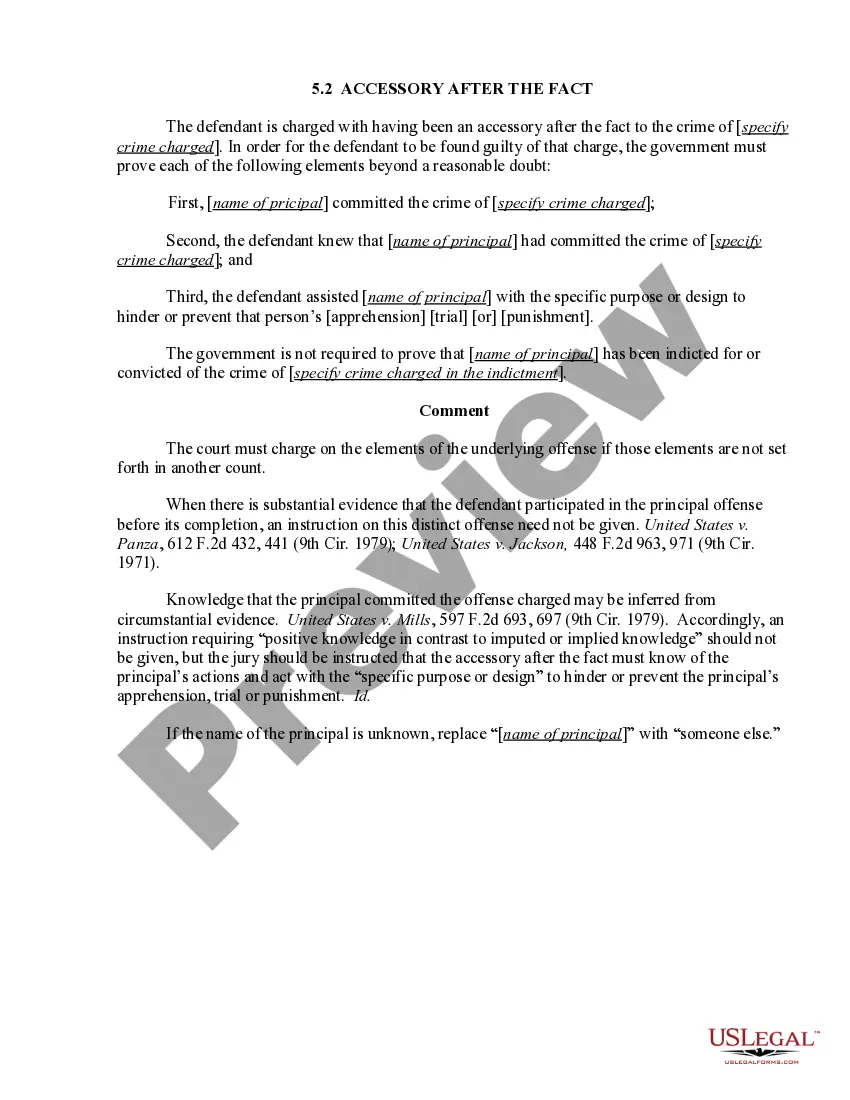
5.2 Accessory After the Fact
Does this document require notarization?
Notarization is not commonly needed for this form. However, certain documents or local rules may make it necessary. Our notarization service, powered by Notarize, allows you to finalize it securely online anytime, day or night.
Get your form ready online
Our built-in tools help you complete, sign, share, and store your documents in one place.
Make edits, fill in missing information, and update formatting in US Legal Forms—just like you would in MS Word.
Download a copy, print it, send it by email, or mail it via USPS—whatever works best for your next step.
Sign and collect signatures with our SignNow integration. Send to multiple recipients, set reminders, and more. Go Premium to unlock E-Sign.
If this form requires notarization, complete it online through a secure video call—no need to meet a notary in person or wait for an appointment.
We protect your documents and personal data by following strict security and privacy standards.

Make edits, fill in missing information, and update formatting in US Legal Forms—just like you would in MS Word.

Download a copy, print it, send it by email, or mail it via USPS—whatever works best for your next step.

Sign and collect signatures with our SignNow integration. Send to multiple recipients, set reminders, and more. Go Premium to unlock E-Sign.

If this form requires notarization, complete it online through a secure video call—no need to meet a notary in person or wait for an appointment.

We protect your documents and personal data by following strict security and privacy standards.
Looking for another form?
Form popularity
FAQ
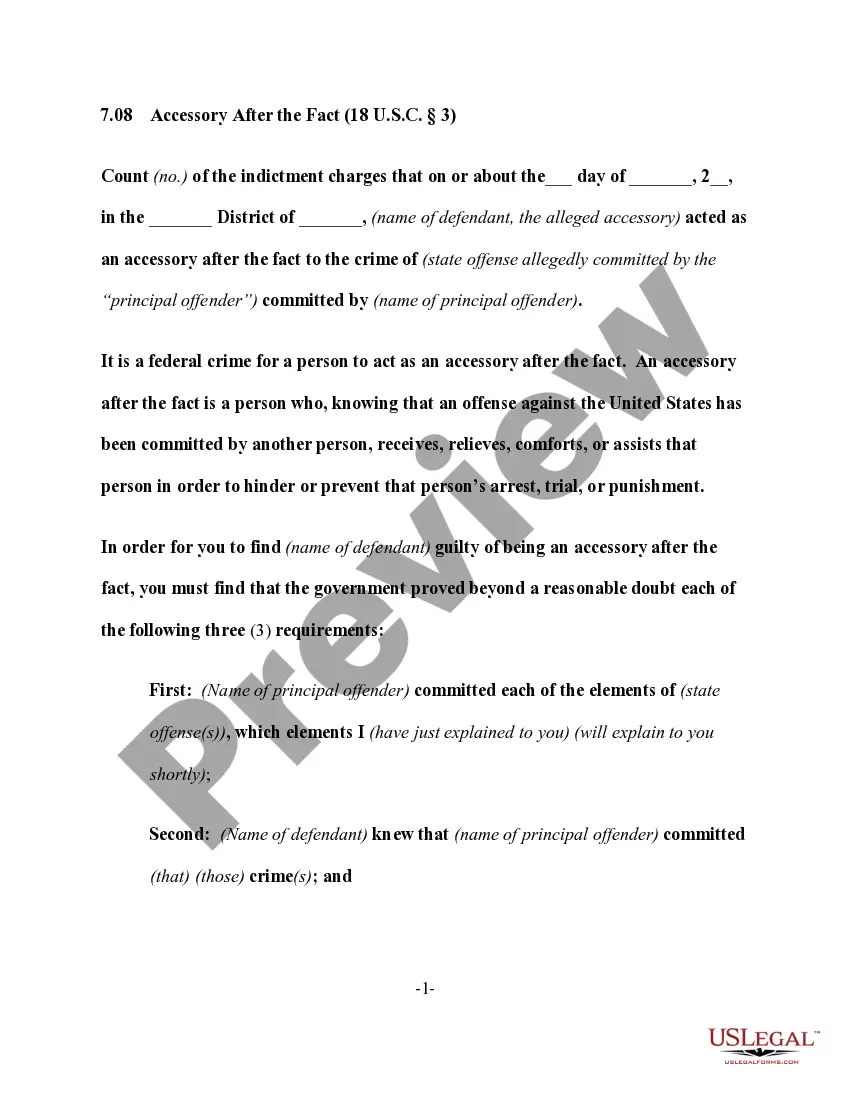
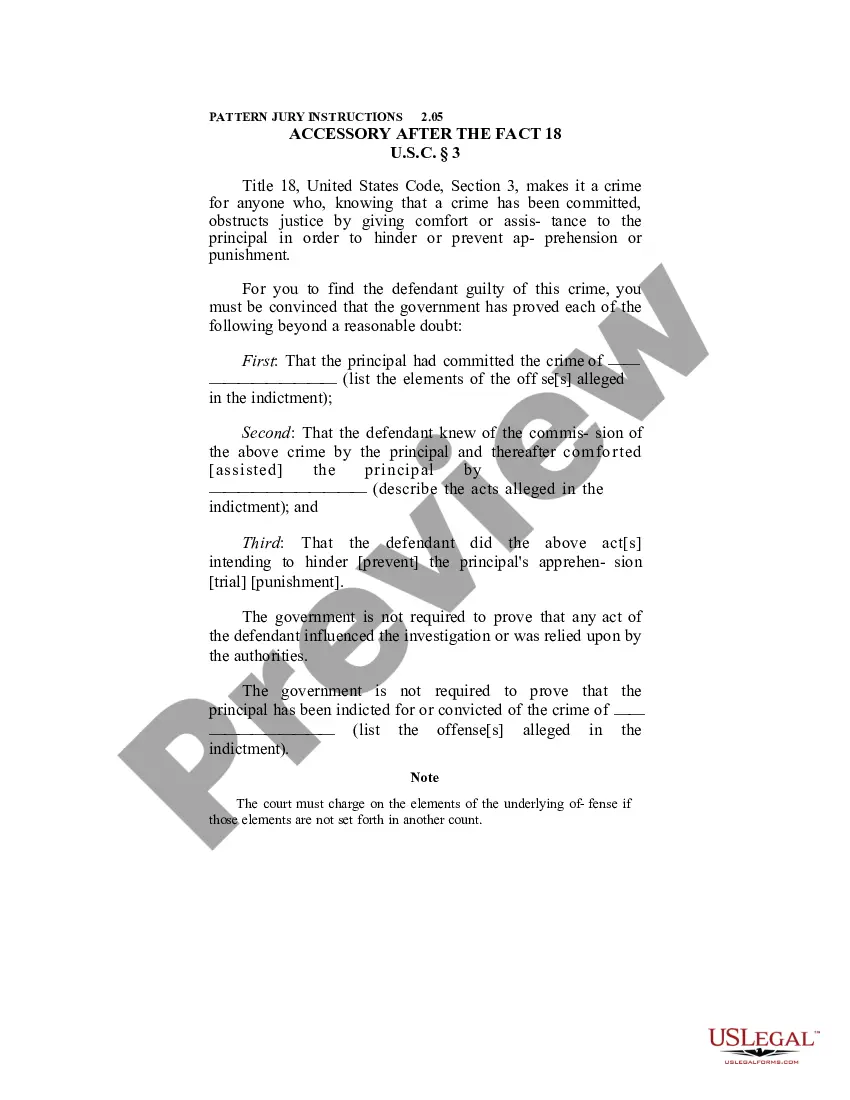
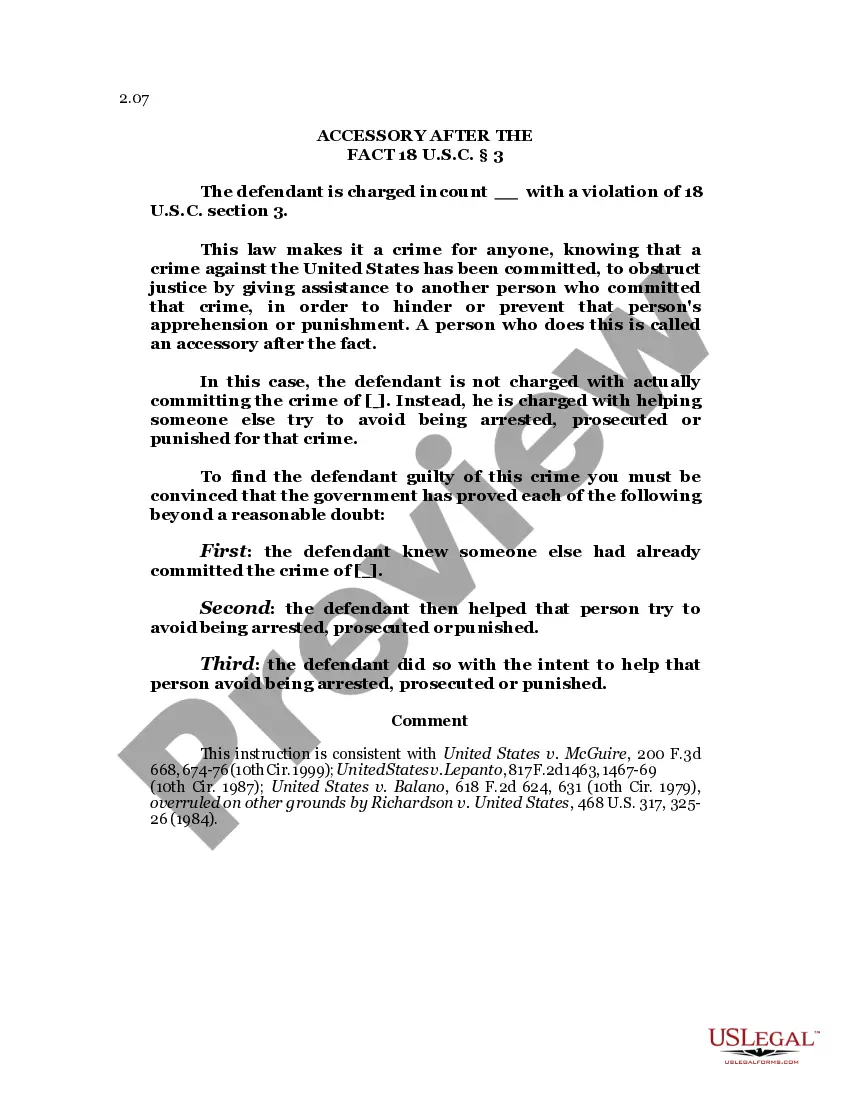
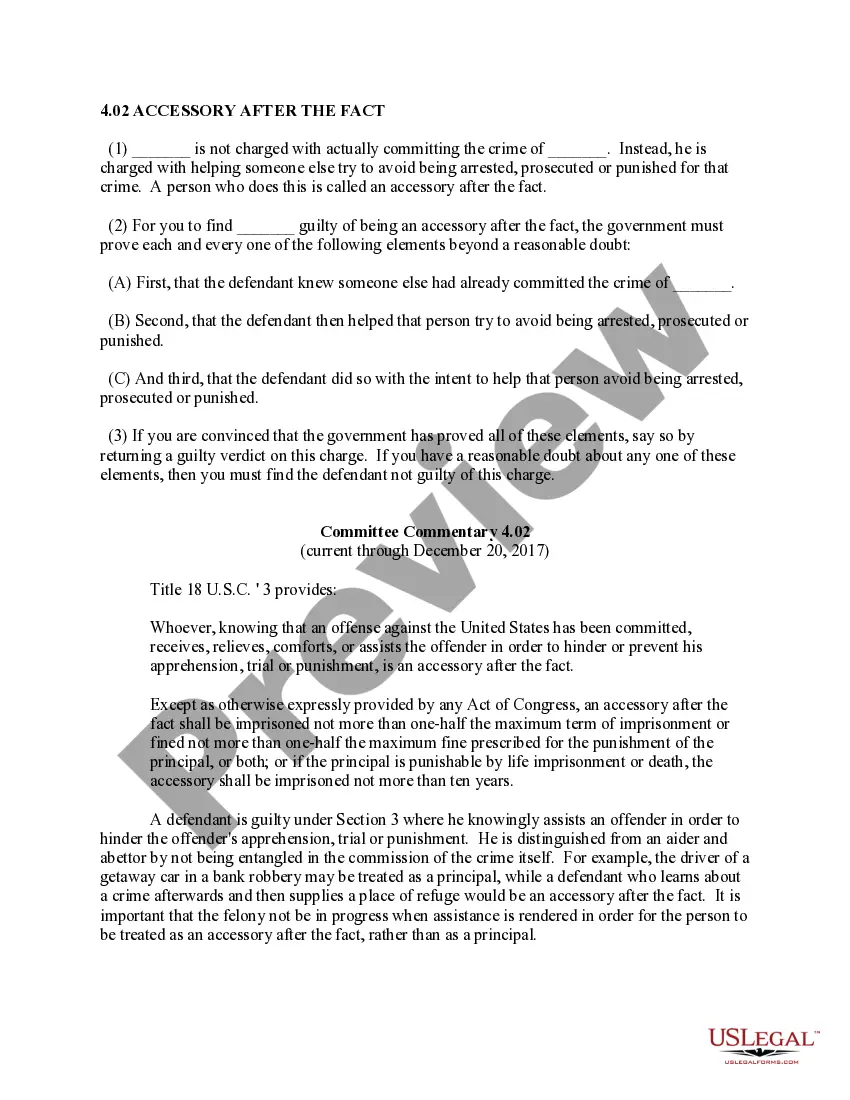
Whoever, knowing that an offense against the United States has been committed, receives, relieves, comforts or assists the offender in order to hinder or prevent his apprehension, trial or punishment, is an accessory after the fact.
An accessory before the fact is defined as someone who ?counsels, hires or otherwise procures a felony to be committed.? An accessory after the fact is defines as someone who, after the commission of the felony, ?harbors, conceals, maintains, or assists the principal felon.? As the names of the crimes suggest, one is
For example, if a person provides a gun to someone who uses it to commit a murder, the person who provided it can be charged with murder as an accessory.
An accessory-after-the-fact is someone who assists 1) someone who has committed a crime, 2) after the person has committed the crime, 3) with knowledge that the person committed the crime, and 4) with the intent to help the person avoid arrest or punishment.
Examples of an accessory after the fact include: intentionally misleading or lying to police, giving a false alibi for another person, helping another person hide evidence, and destroying evidence related to a crime.
Whoever, knowing that an offense against the United States has been committed, receives, relieves, comforts or assists the offender in order to hinder or prevent his apprehension, trial or punishment, is an accessory after the fact.
Common examples of being an accessory before the fact include: serving as a lookout, keeping an engine running in a car, and. supplying the tools necessary for the commission of a criminal offense.