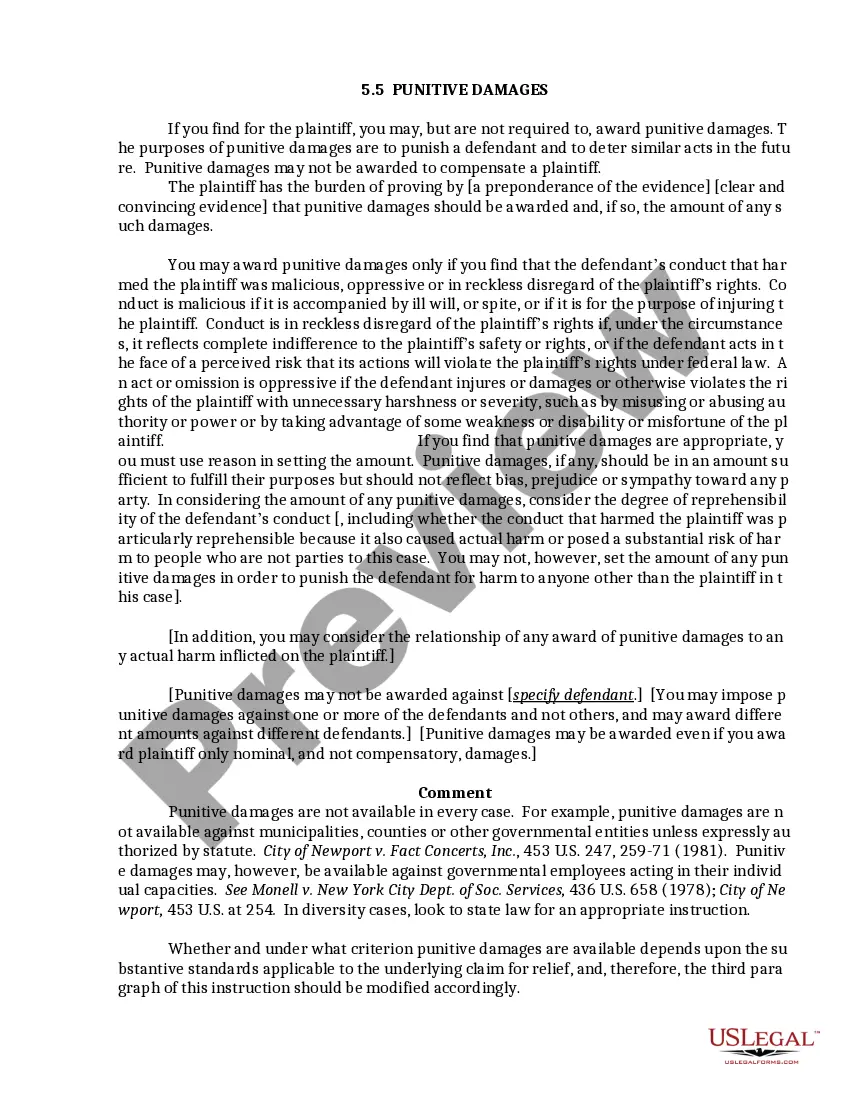
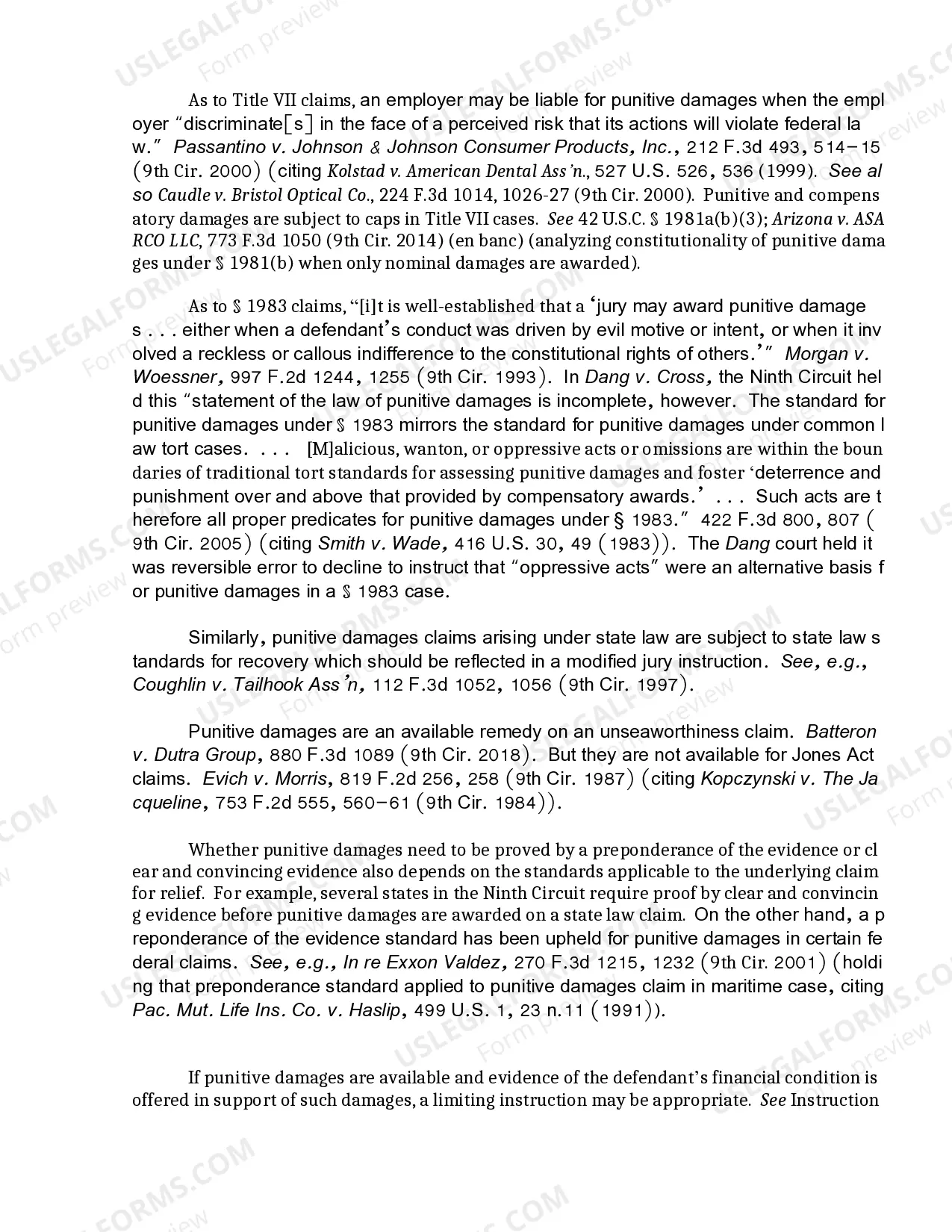
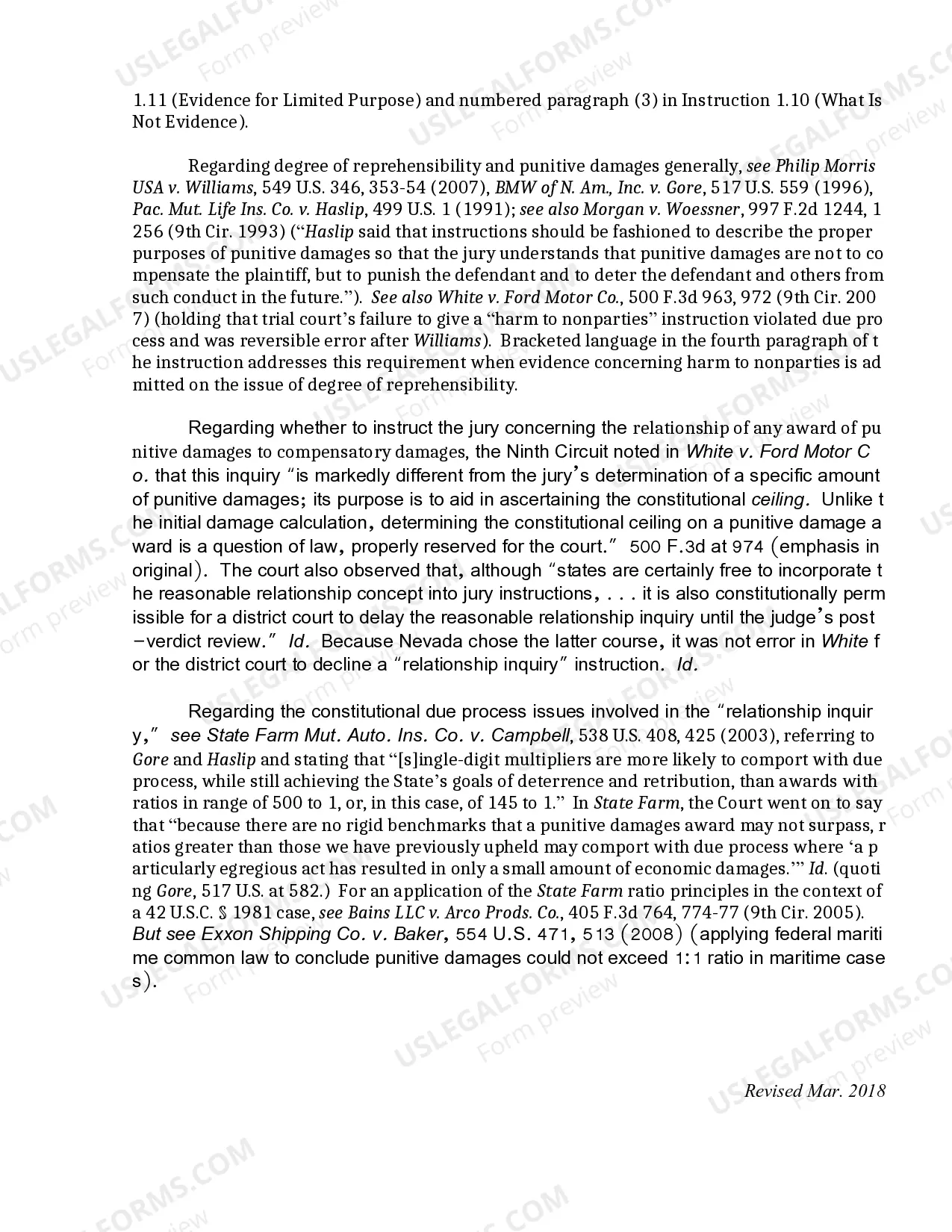
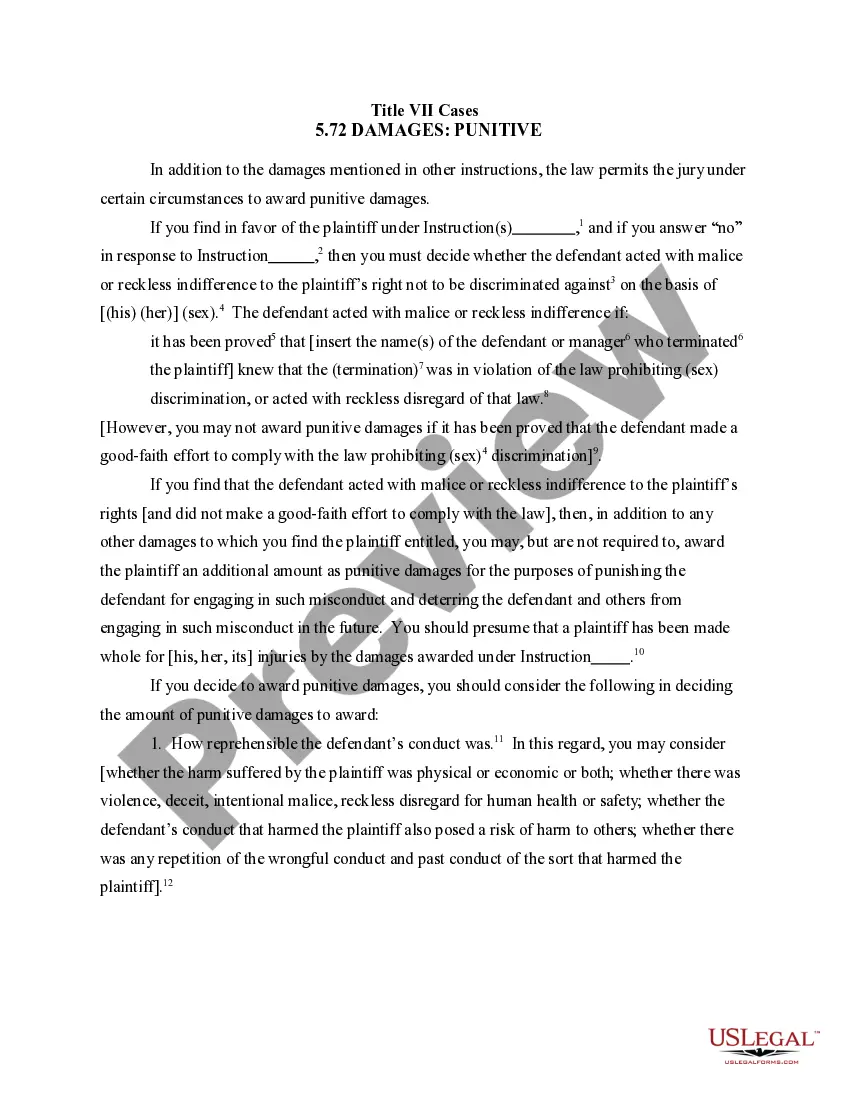
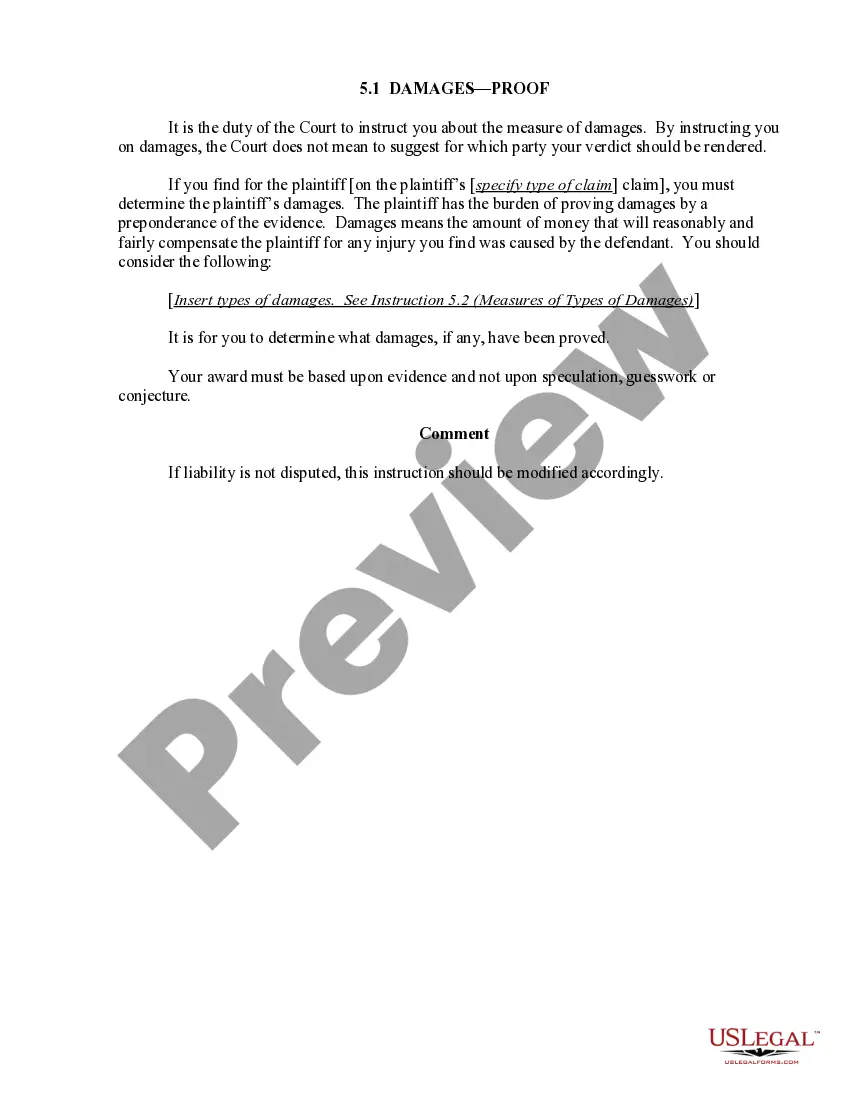
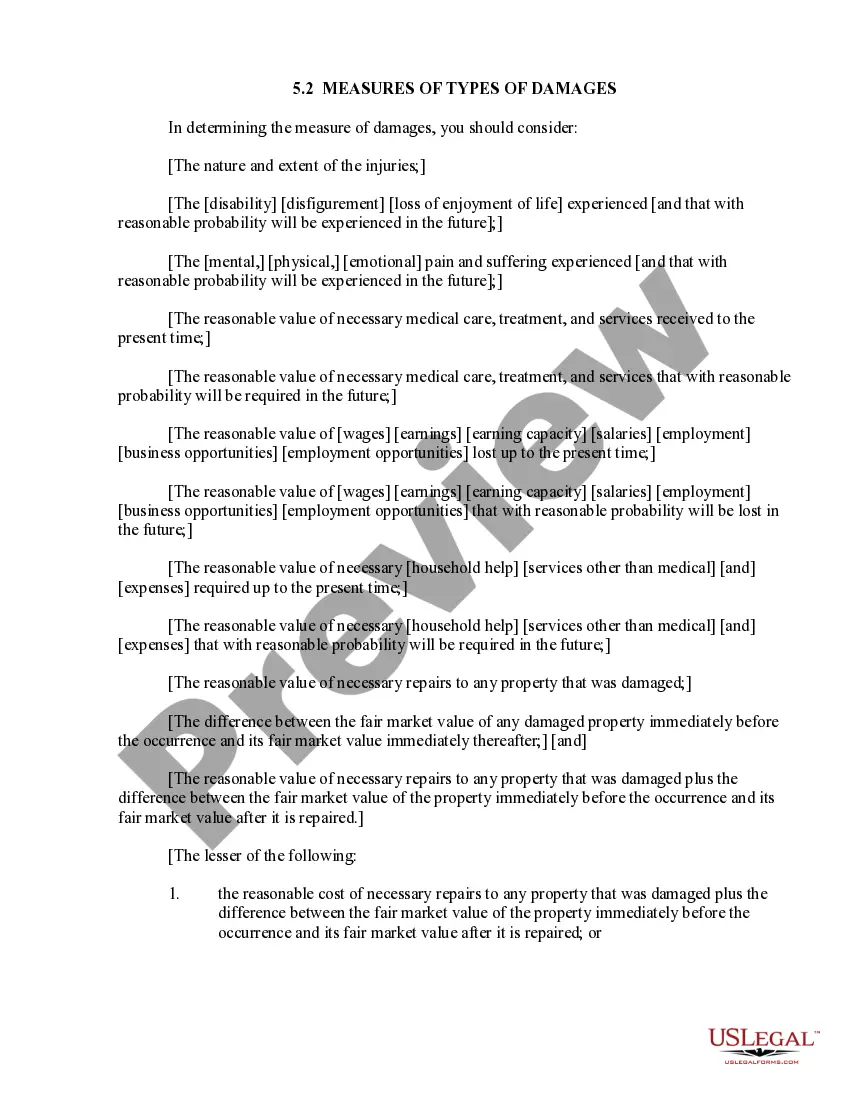
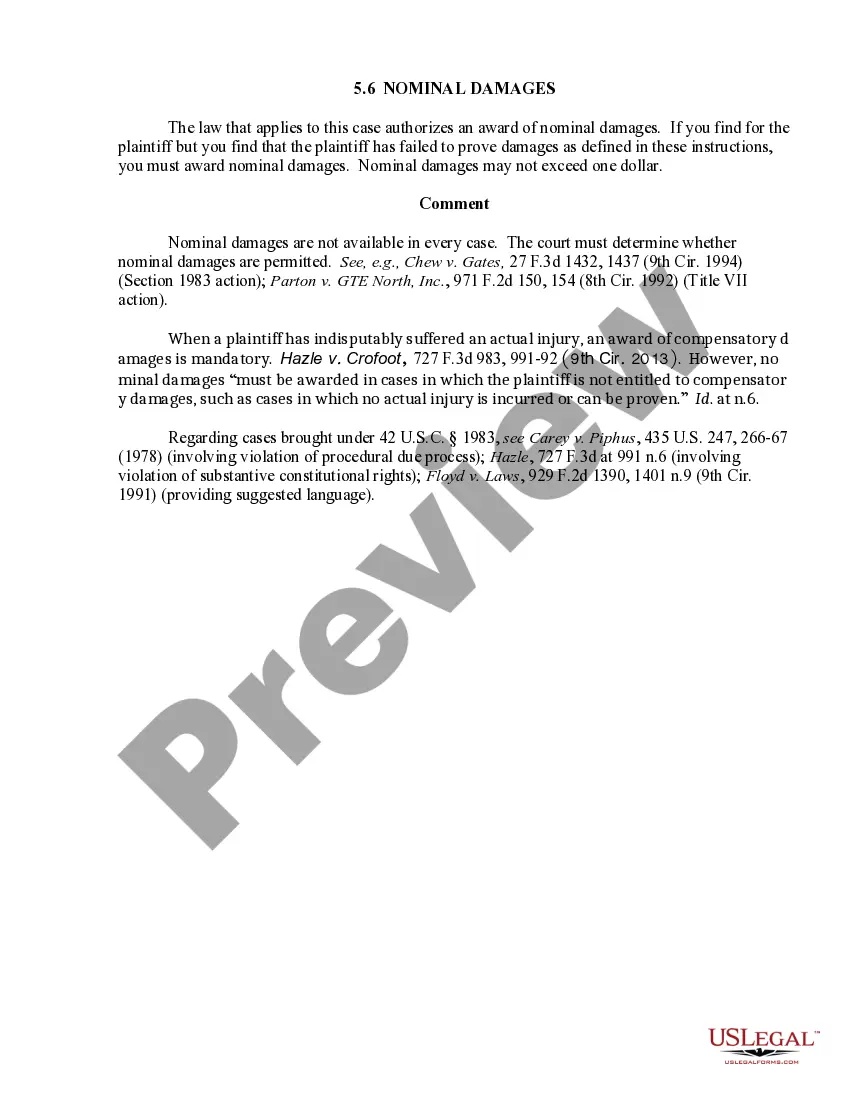
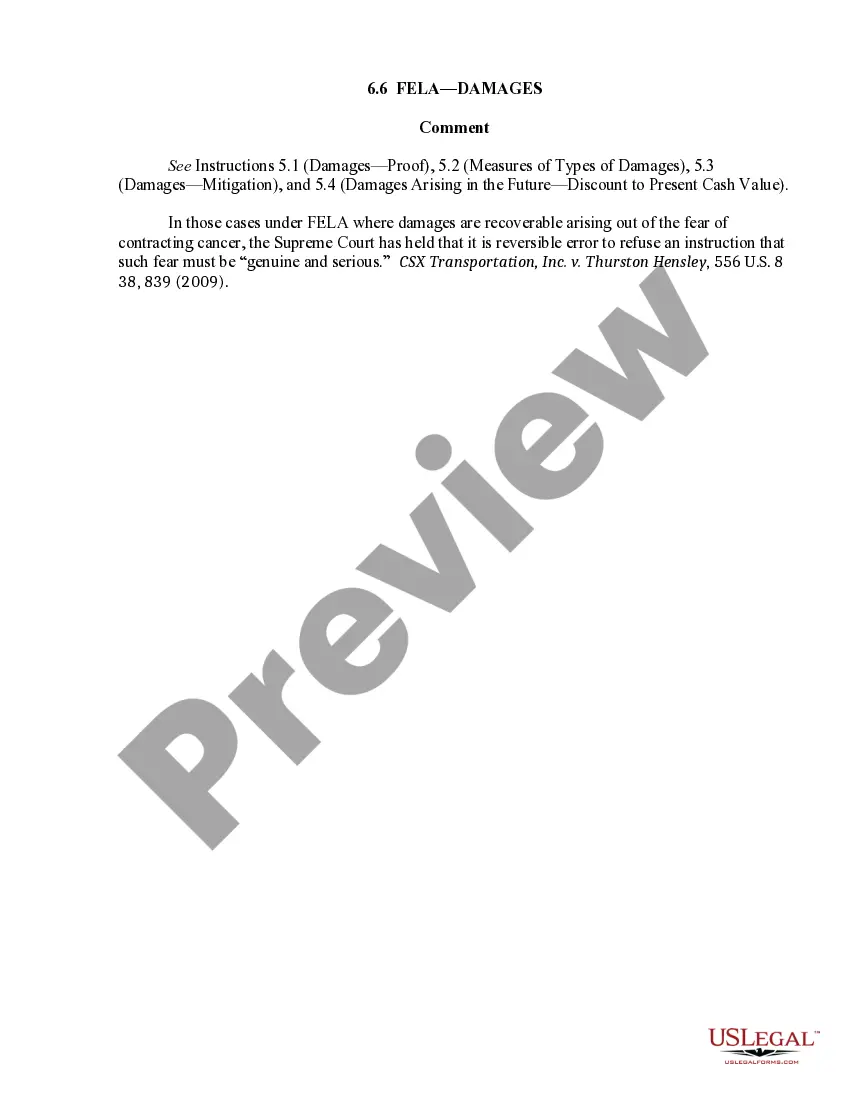
5.5 Punitive Damages
Does this document require notarization?
This form usually doesn’t need to be notarized. However, local laws or specific transactions may require it. Our online notarization service, powered by Notarize, lets you complete it remotely through a secure video session, available 24/7.
Get your form ready online
Our built-in tools help you complete, sign, share, and store your documents in one place.
Make edits, fill in missing information, and update formatting in US Legal Forms—just like you would in MS Word.
Download a copy, print it, send it by email, or mail it via USPS—whatever works best for your next step.
Sign and collect signatures with our SignNow integration. Send to multiple recipients, set reminders, and more. Go Premium to unlock E-Sign.
If this form requires notarization, complete it online through a secure video call—no need to meet a notary in person or wait for an appointment.
We protect your documents and personal data by following strict security and privacy standards.

Make edits, fill in missing information, and update formatting in US Legal Forms—just like you would in MS Word.

Download a copy, print it, send it by email, or mail it via USPS—whatever works best for your next step.

Sign and collect signatures with our SignNow integration. Send to multiple recipients, set reminders, and more. Go Premium to unlock E-Sign.

If this form requires notarization, complete it online through a secure video call—no need to meet a notary in person or wait for an appointment.

We protect your documents and personal data by following strict security and privacy standards.
Looking for another form?


Form popularity
FAQ
The U.S. Constitution limits punitive damages awards in all state and federal courts: punitive damages are permissible only to the extent they are proportionate, reasonably related to the harm the plaintiff suffered, and in response to reprehensible conduct.
Individuals can also be ordered to pay punitive damages that injure someone else due to negligent behavior. Examples of this would be drunk driving or distracted driving. In both cases, the defendant would have made a conscious decision to engage in behavior that could easily harm another person.
Although there is no maximum sum, punitive damages typically do not exceed four times the amount of compensatory damages. For example, if a plaintiff recovers $100,000 in compensatory damages and is awarded punitive damages, they most likely will receive up to $400,000 in punitive damages.
There is no set formula for determining the amount of punitive damages in California, but factors such as the severity of the defendant's conduct, the harm you suffered, and the defendant's financial status are taken into account.
Ratio of Punitive to Compensatory Damages Appropriate, California Court Says.
To determine the amount of punitive damages to award, the Book of Approved Jury Instructions (BAJI) states that the jury should consider: (1) The reprehensibility of the conduct of the defendant. (2) The defendant's financial condition and (3) the relationship to actual damages.
To determine the amount of punitive damages to award, the Book of Approved Jury Instructions (BAJI) states that the jury should consider: (1) The reprehensibility of the conduct of the defendant. (2) The defendant's financial condition and (3) the relationship to actual damages.
These are (1) how reprehensible the defendant's conduct was, (2) the disparity between the harm experienced by the plaintiff and the punitive damages award, and (3) the difference between the punitive damages award and the civil penalties and remedies imposed in similar cases.