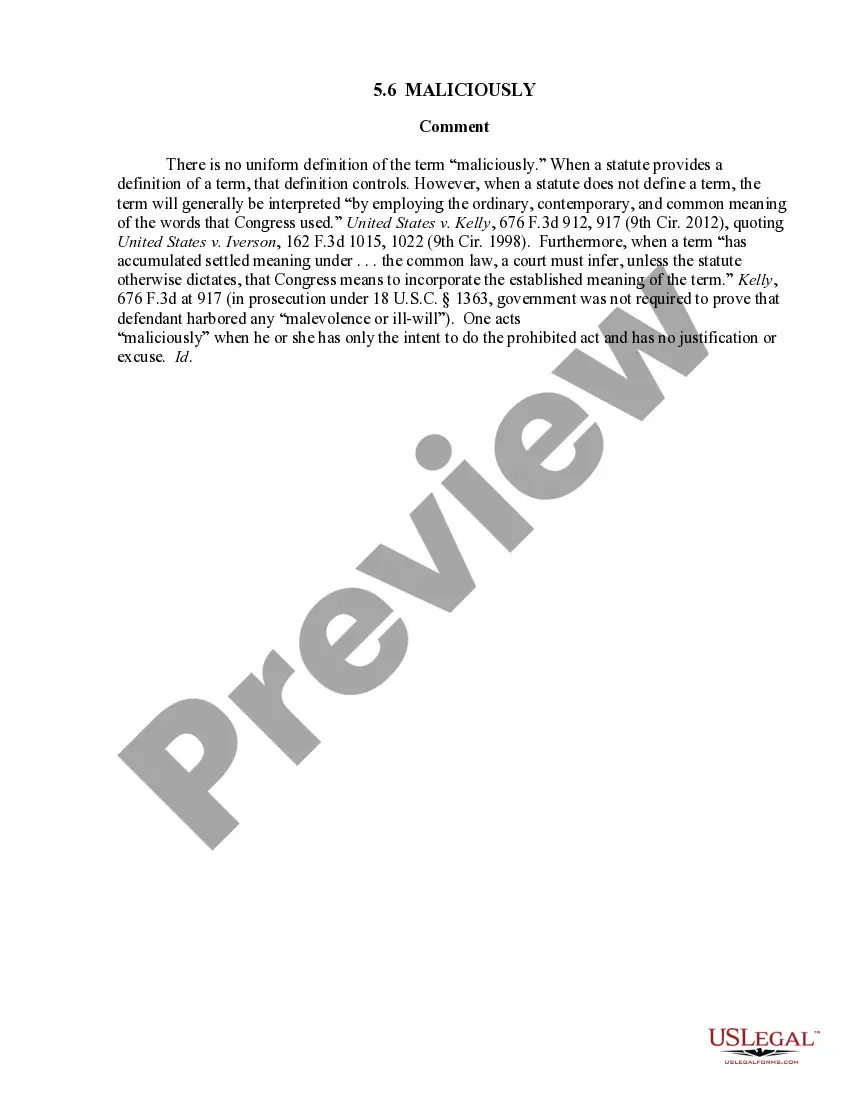
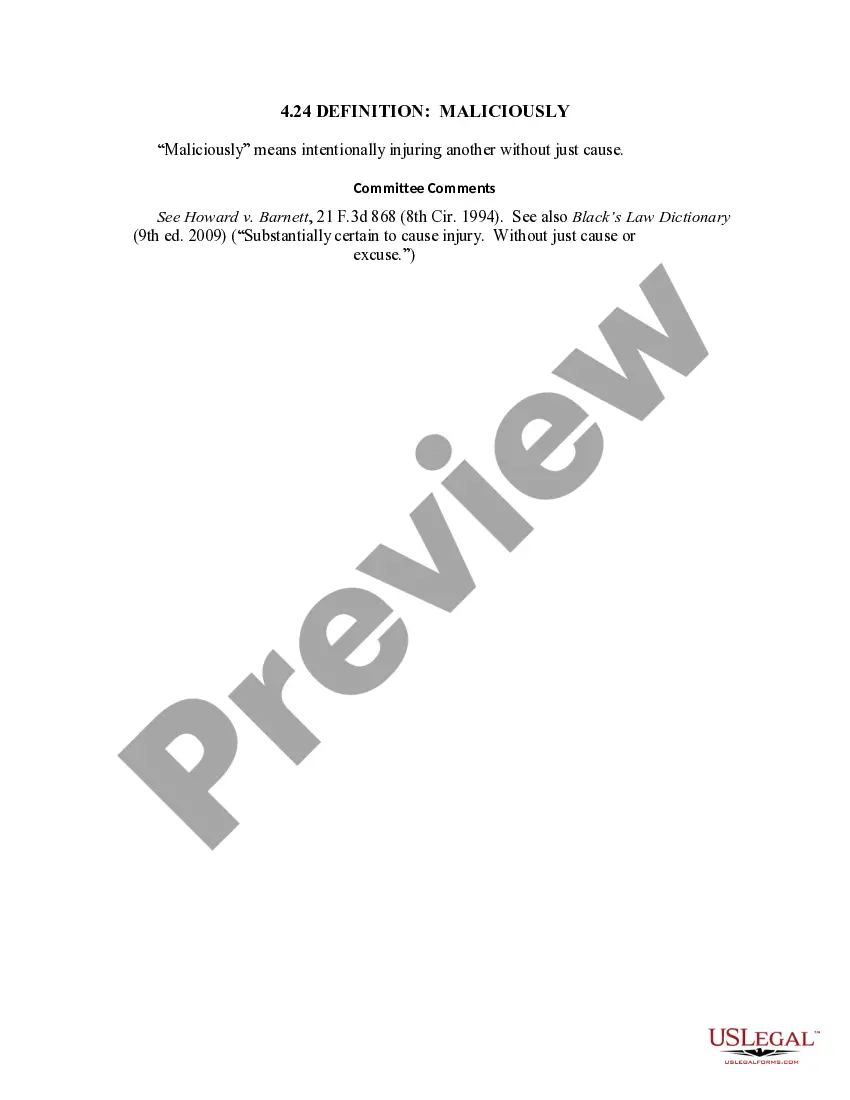
5.6 Maliciously
Is notarization required?
Notarization is generally not required for this form. However, certain states or situations might demand it. You can complete notarization online through US Legal Forms, powered by Notarize, using a verified video call available anytime.
Get your form ready online
Our built-in tools help you complete, sign, share, and store your documents in one place.
Make edits, fill in missing information, and update formatting in US Legal Forms—just like you would in MS Word.
Download a copy, print it, send it by email, or mail it via USPS—whatever works best for your next step.
Sign and collect signatures with our SignNow integration. Send to multiple recipients, set reminders, and more. Go Premium to unlock E-Sign.
If this form requires notarization, complete it online through a secure video call—no need to meet a notary in person or wait for an appointment.
We protect your documents and personal data by following strict security and privacy standards.

Make edits, fill in missing information, and update formatting in US Legal Forms—just like you would in MS Word.

Download a copy, print it, send it by email, or mail it via USPS—whatever works best for your next step.

Sign and collect signatures with our SignNow integration. Send to multiple recipients, set reminders, and more. Go Premium to unlock E-Sign.

If this form requires notarization, complete it online through a secure video call—no need to meet a notary in person or wait for an appointment.

We protect your documents and personal data by following strict security and privacy standards.
Looking for another form?
Form popularity
FAQ
Like the tort of abuse of process, its elements include (1) intentionally (and maliciously) instituting and pursuing (or causing to be instituted or pursued) a legal action (civil or criminal) that is (2) brought without probable cause and (3) dismissed in favor of the victim of the malicious prosecution.
?An action for malicious prosecution has three required elements: '(1) the defendant brought (or continued to pursue) a claim in the underlying action without objective probable cause, (2) the claim was pursued by the defendant with subjective malice, and (3) the underlying action was ultimately resolved in the
What Is the Burden of Proof in a Malicious Prosecution Suit? Since a malicious prosecution case is a type of civil lawsuit, the burden of proof is a preponderance of the evidence.
Malicious prosecution occurs when someone sues you or brings criminal charges against you without probable cause and with harmful intent. Examples could include someone providing false evidence to the police that you committed a crime or someone suing you for hurting them even if you never caused them harm.
To win a suit for malicious prosecution, the plaintiff must prove four elements: (1) that the original case was terminated in favor of the plaintiff, (2) that the defendant played an active role in the original case, (3) that the defendant did not have probable cause or reasonable grounds to support the original case,
A malicious prosecution occurs when a police officer or other government official causes criminal charges to be filed against a person when the official knows probable cause is lacking and the charges are filed because of personal animosity, bias, or some other reason outside the interests of justice.
What must a plaintiff show to sue for malicious prosecution? To sue for malicious prosecution, you must show that criminal or civil proceedings were initiated against you or continued without probable cause and that the case against you terminated in your favor.