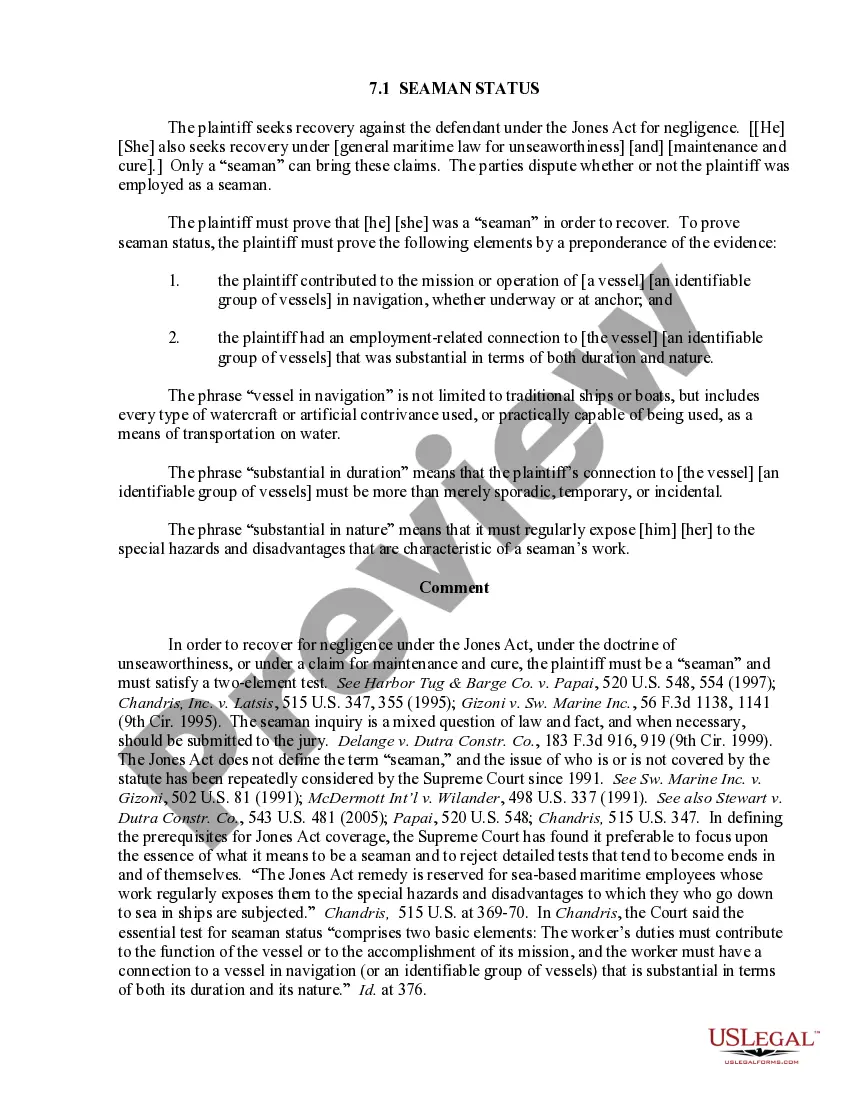
7.1 Seaman Status
Notarization guidance
This form does not typically require notarization to be legally valid. However, some jurisdictions or document types may still require it. US Legal Forms provides secure online notarization powered by Notarize, available 24/7 for added convenience.
Get your form ready online
Our built-in tools help you complete, sign, share, and store your documents in one place.
Make edits, fill in missing information, and update formatting in US Legal Forms—just like you would in MS Word.
Download a copy, print it, send it by email, or mail it via USPS—whatever works best for your next step.
Sign and collect signatures with our SignNow integration. Send to multiple recipients, set reminders, and more. Go Premium to unlock E-Sign.
If this form requires notarization, complete it online through a secure video call—no need to meet a notary in person or wait for an appointment.
We protect your documents and personal data by following strict security and privacy standards.

Make edits, fill in missing information, and update formatting in US Legal Forms—just like you would in MS Word.

Download a copy, print it, send it by email, or mail it via USPS—whatever works best for your next step.

Sign and collect signatures with our SignNow integration. Send to multiple recipients, set reminders, and more. Go Premium to unlock E-Sign.

If this form requires notarization, complete it online through a secure video call—no need to meet a notary in person or wait for an appointment.

We protect your documents and personal data by following strict security and privacy standards.
Looking for another form?
Form popularity
FAQ
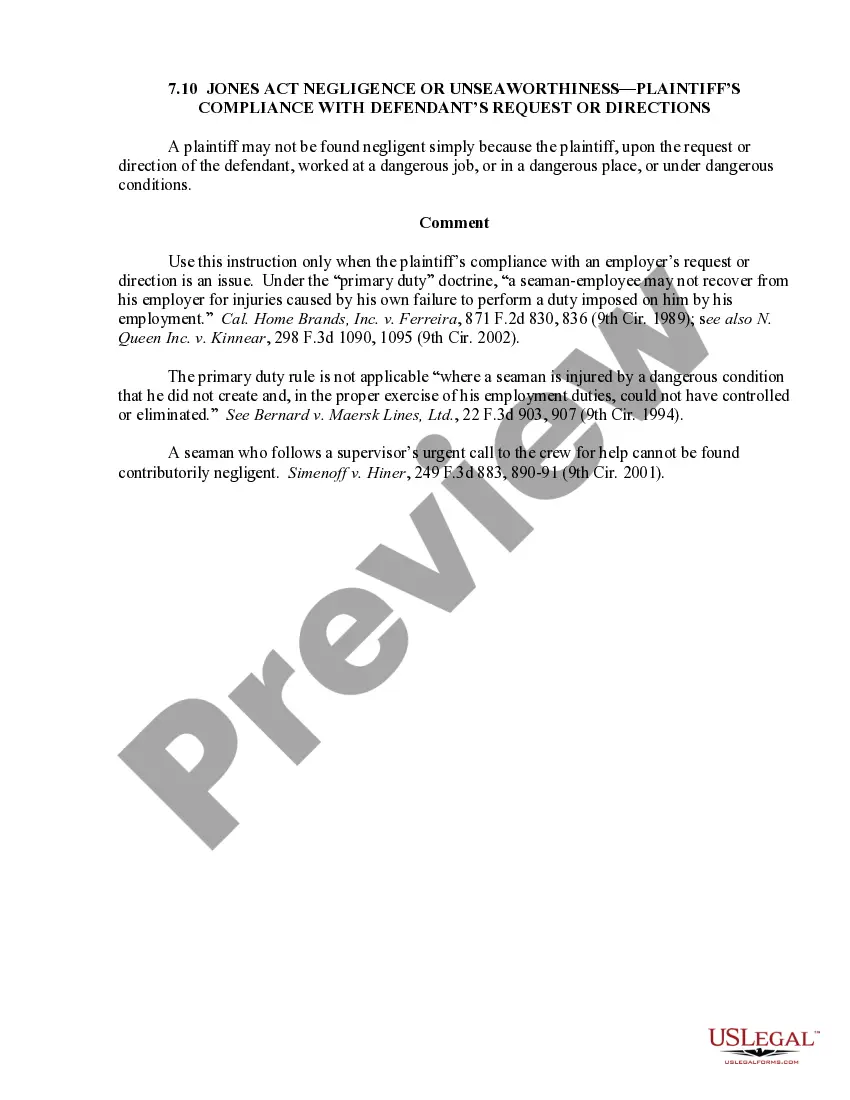
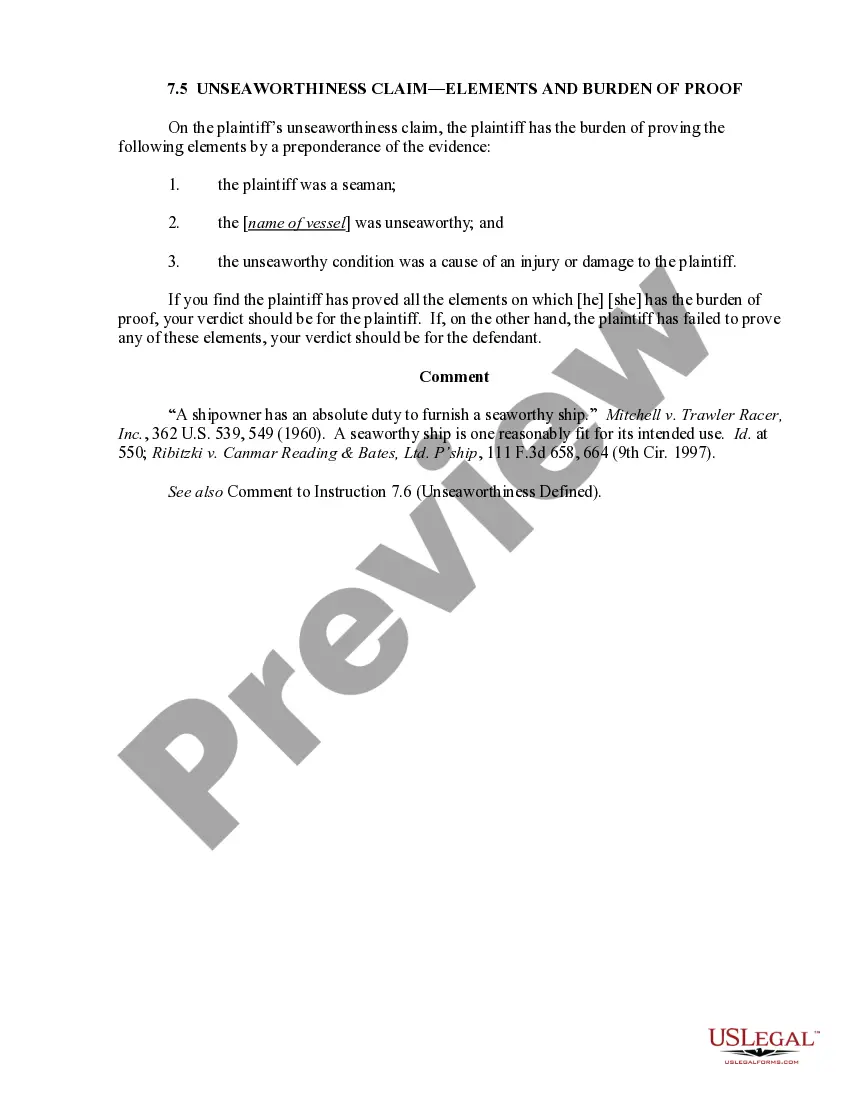
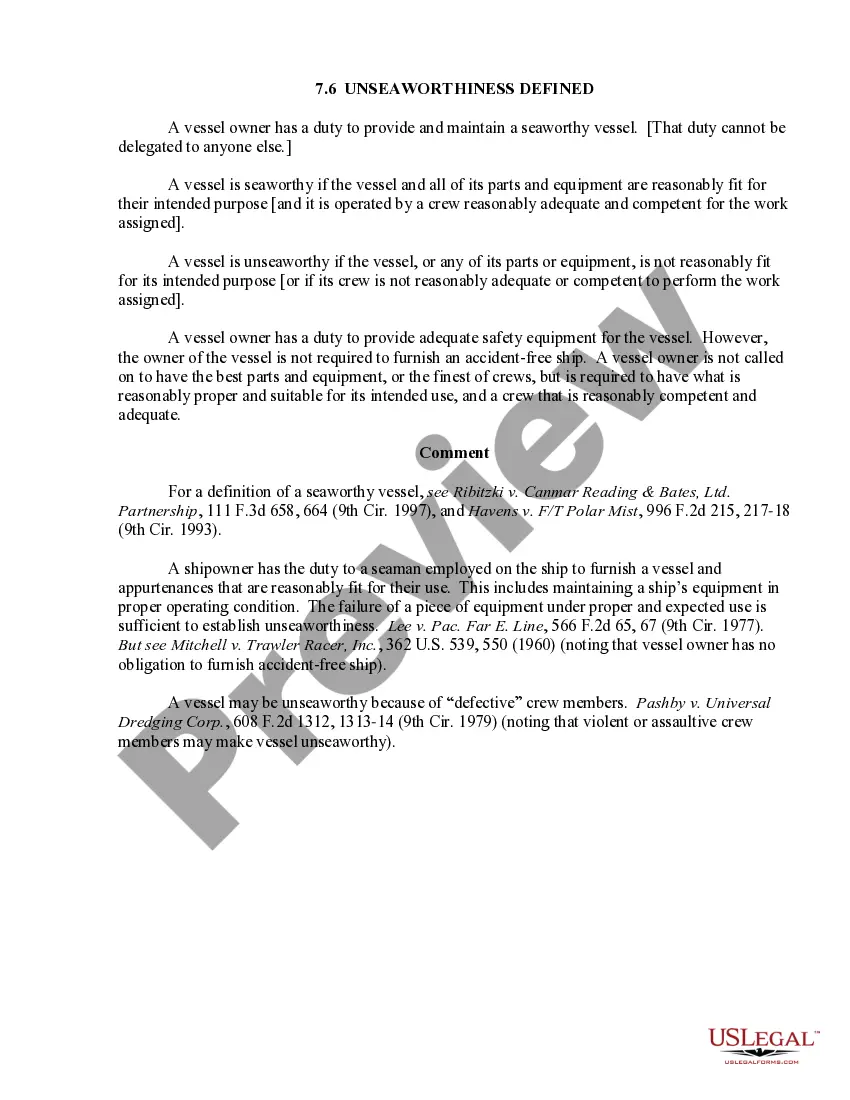
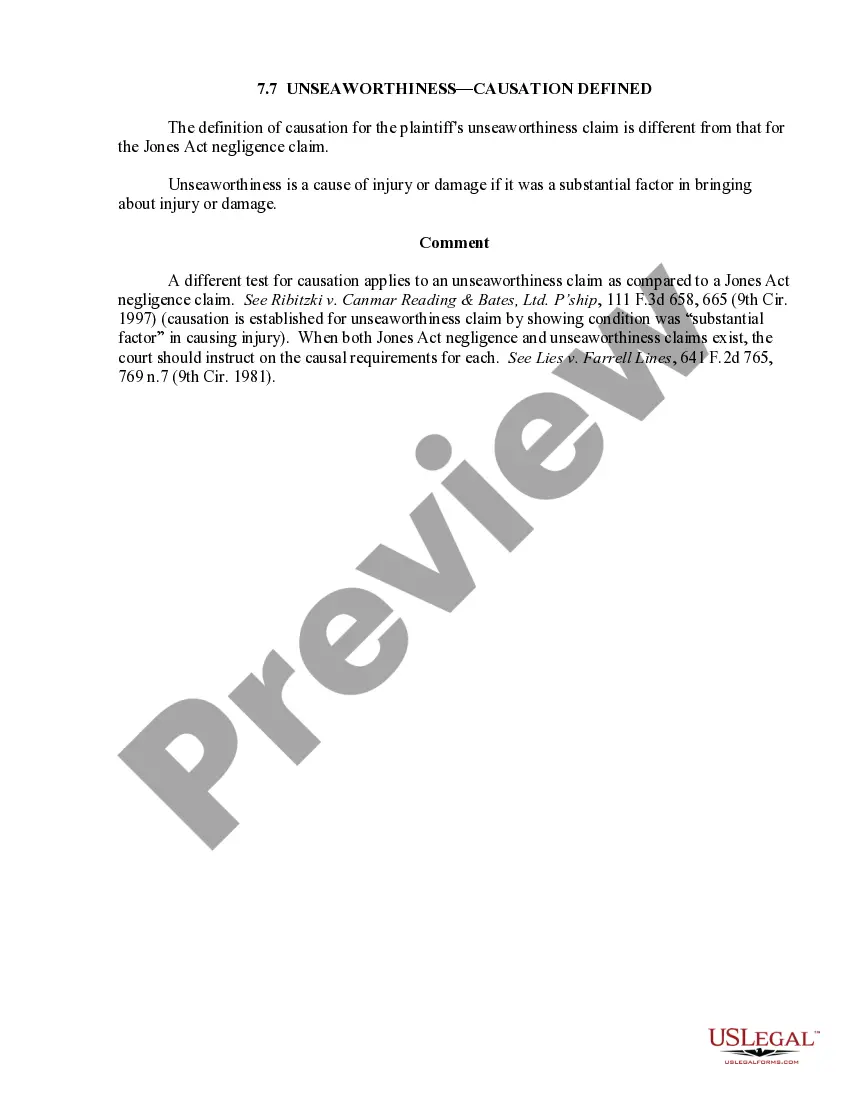
Under general maritime law, seaman are owed transportation, wages, room and board, and medical services for the duration of their voyage. Additionally, if a vessel is deemed to be unseaworthy, an injured maritime worker could pursue a claim against the ship's owner.
The Act enables seamen who have been injured at sea during the course of their employment to bring a personal injury action against their employers. Under the Jones Act, the plaintiff may bring an action in federal district court or in state court.
The status of a seaman in admiralty law provides maritime workers with protections such as payment of wages, working conditions, and remedies for workplace injuries under the Merchant Marine Act of 1920 (Jones Act), and the doctrines of "unseaworthiness" and "maintenance and cure".
The status of a seaman in admiralty law provides maritime workers with protections such as payment of wages, working conditions, and remedies for workplace injuries under the Merchant Marine Act of 1920 (Jones Act), and the doctrines of "unseaworthiness" and "maintenance and cure".
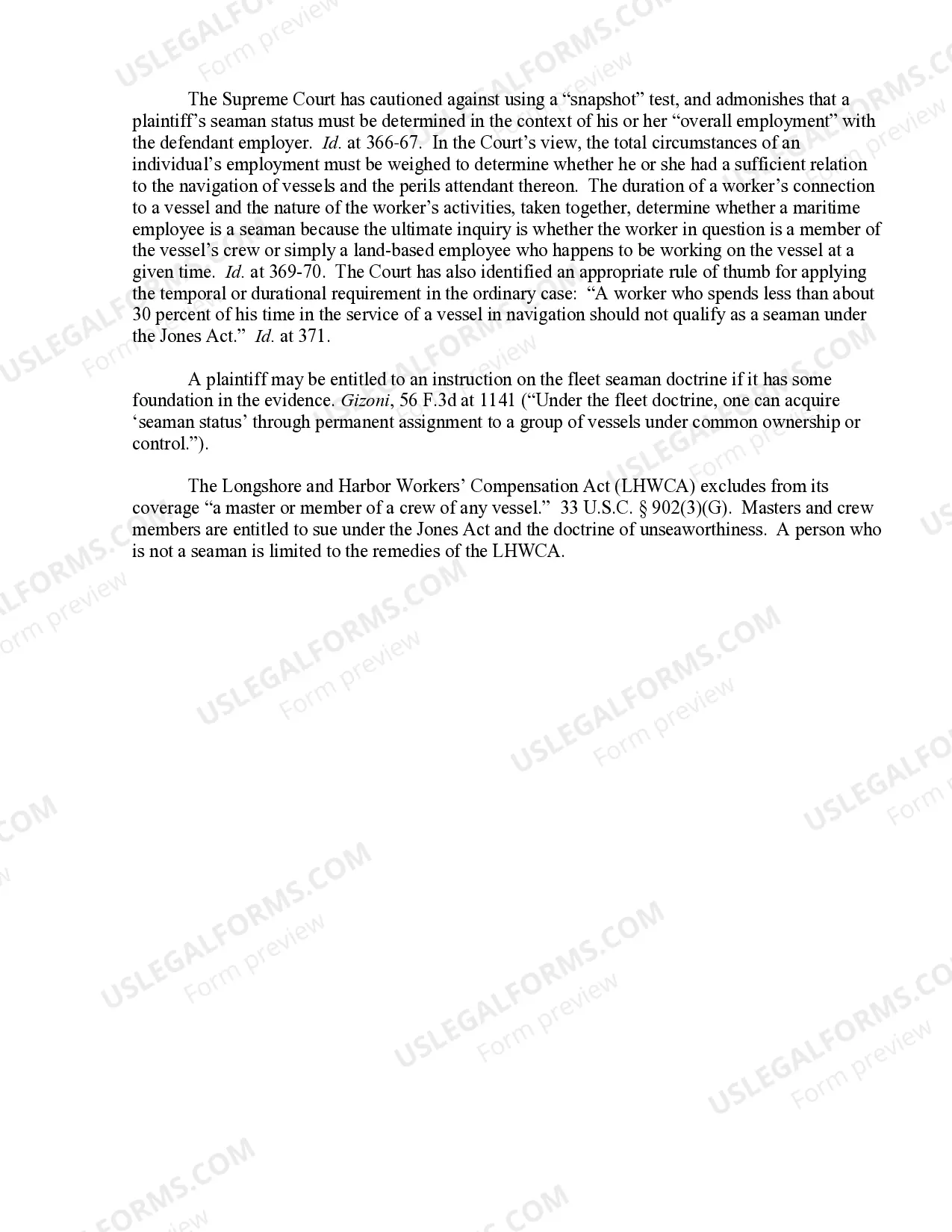
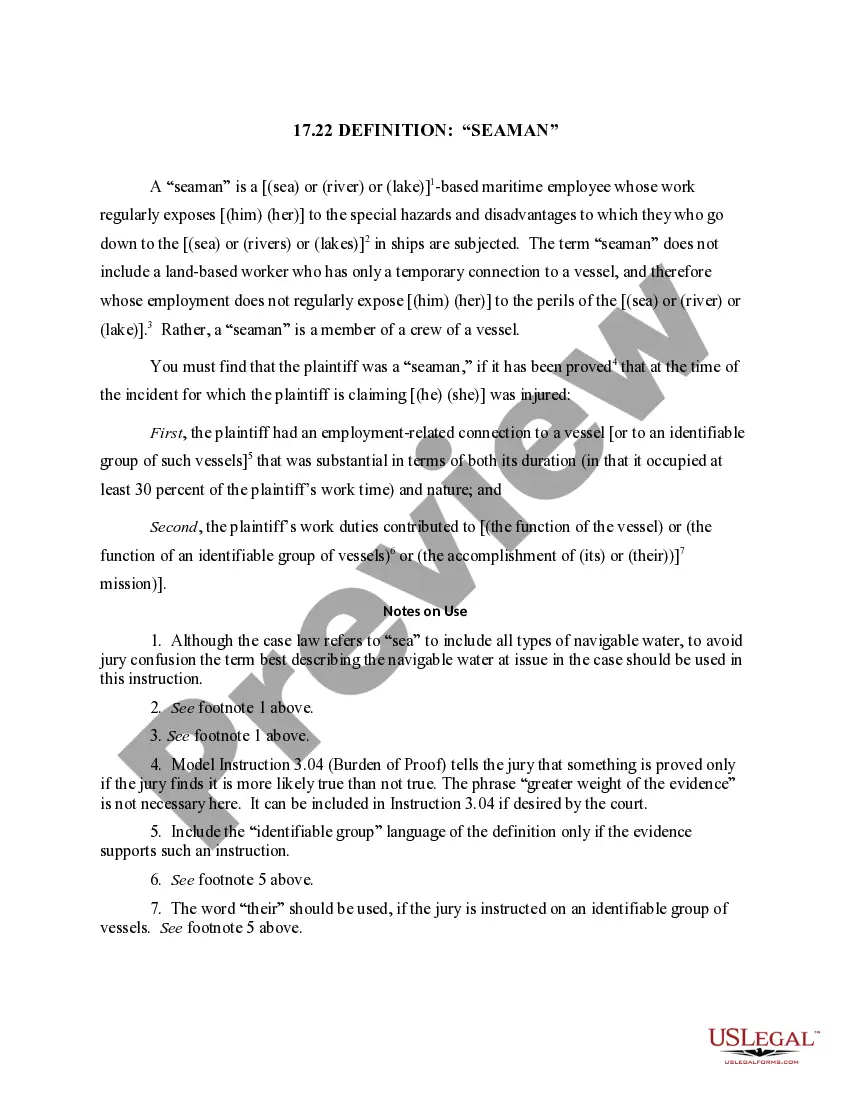
In general, a key qualification to be considered a seaman is that the worker must spend at least 30% of their time on a ?vessel in navigation? (or a fleet of vessels owned by the same employer). A vessel in navigation means it must be afloat, in operation, capable of moving, and on navigable waters.
Legal Qualifications for Jones Act Compensation Per maritime law, a seaman is someone who has an employment-related connection with a specific ship or shipping company. He must spend at least 30% of his working time with that ship or fleet of ships.
The Act enables seamen who have been injured at sea during the course of their employment to bring a personal injury action against their employers. Under the Jones Act, the plaintiff may bring an action in federal district court or in state court.
The doctrine is rooted in the concept that the owner of a vessel has an absolute duty to provide seamen with a ship that is seaworthy. This means that the owner must keep the vessel in good working order and must update or replace any aspect of the ship that could cause injuries.