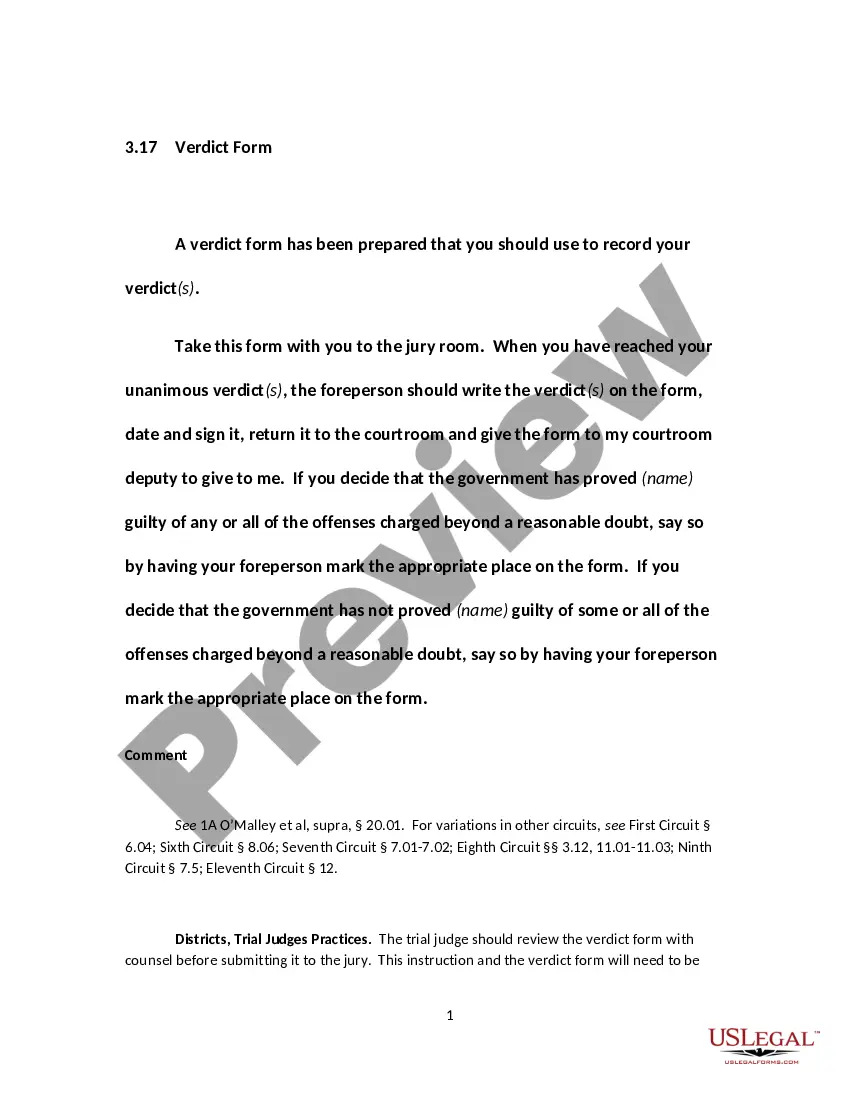
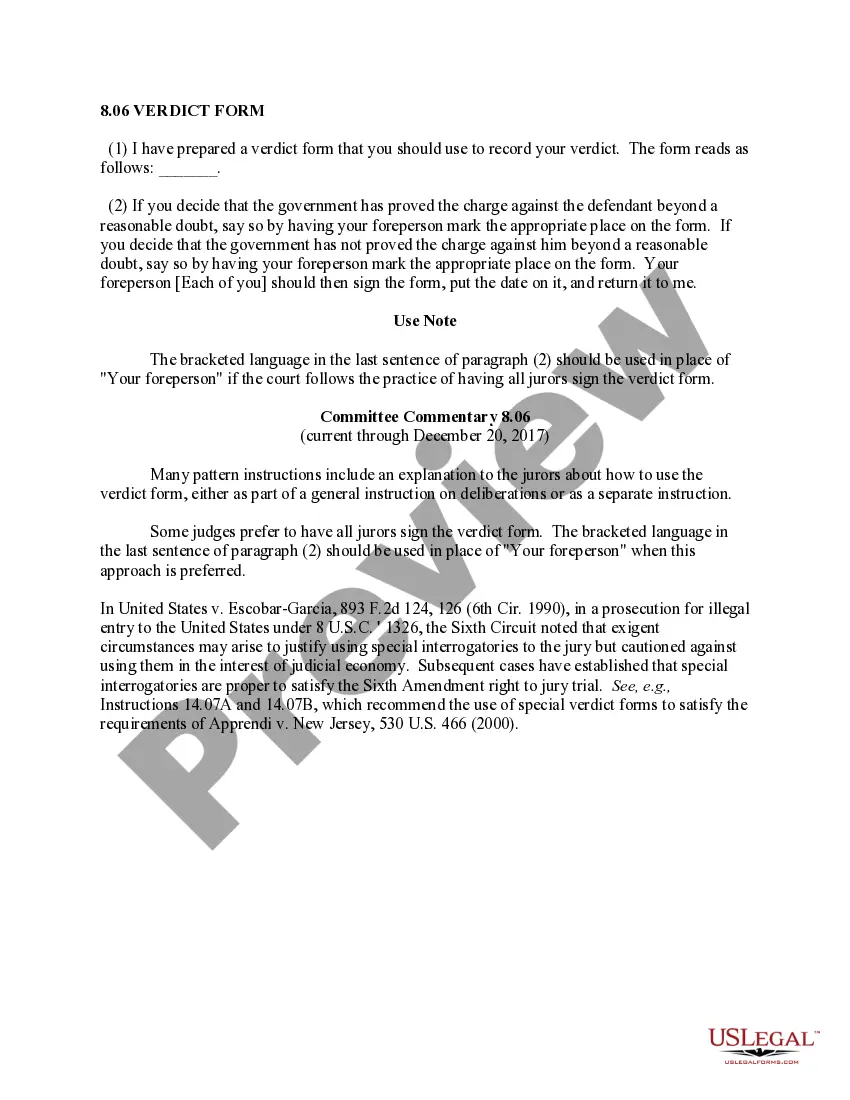
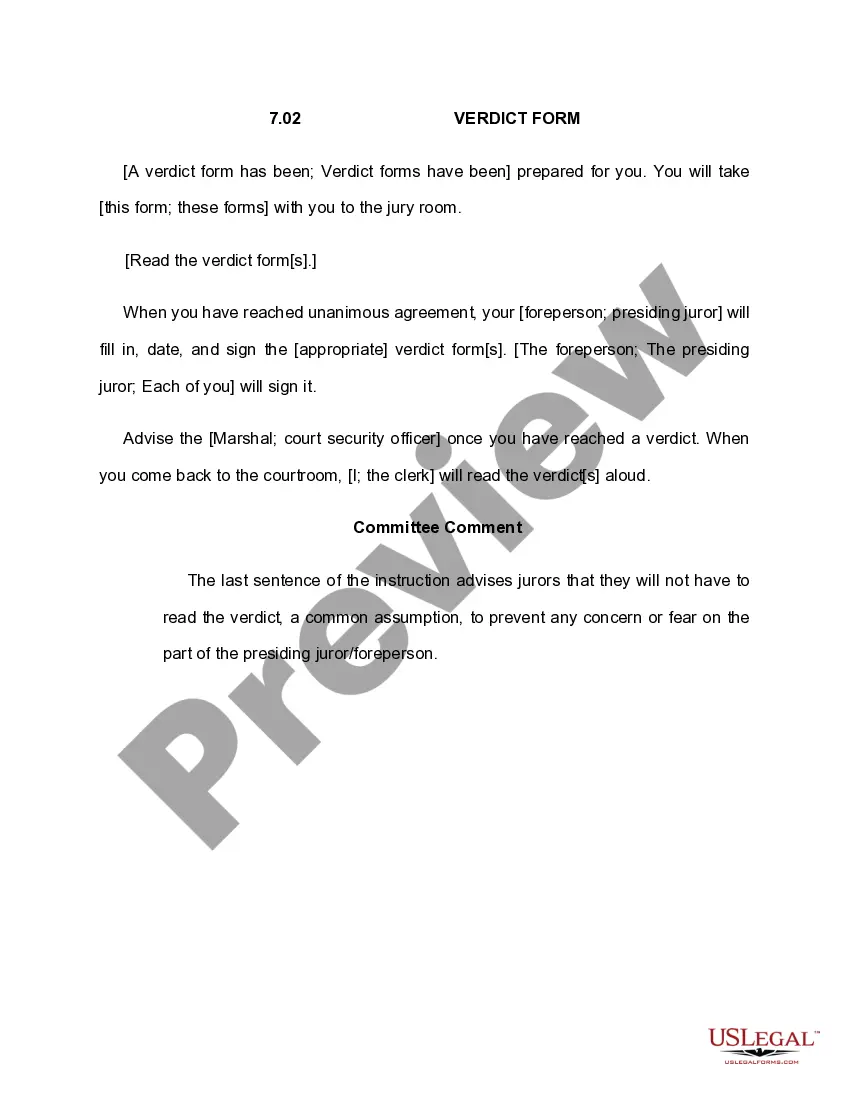
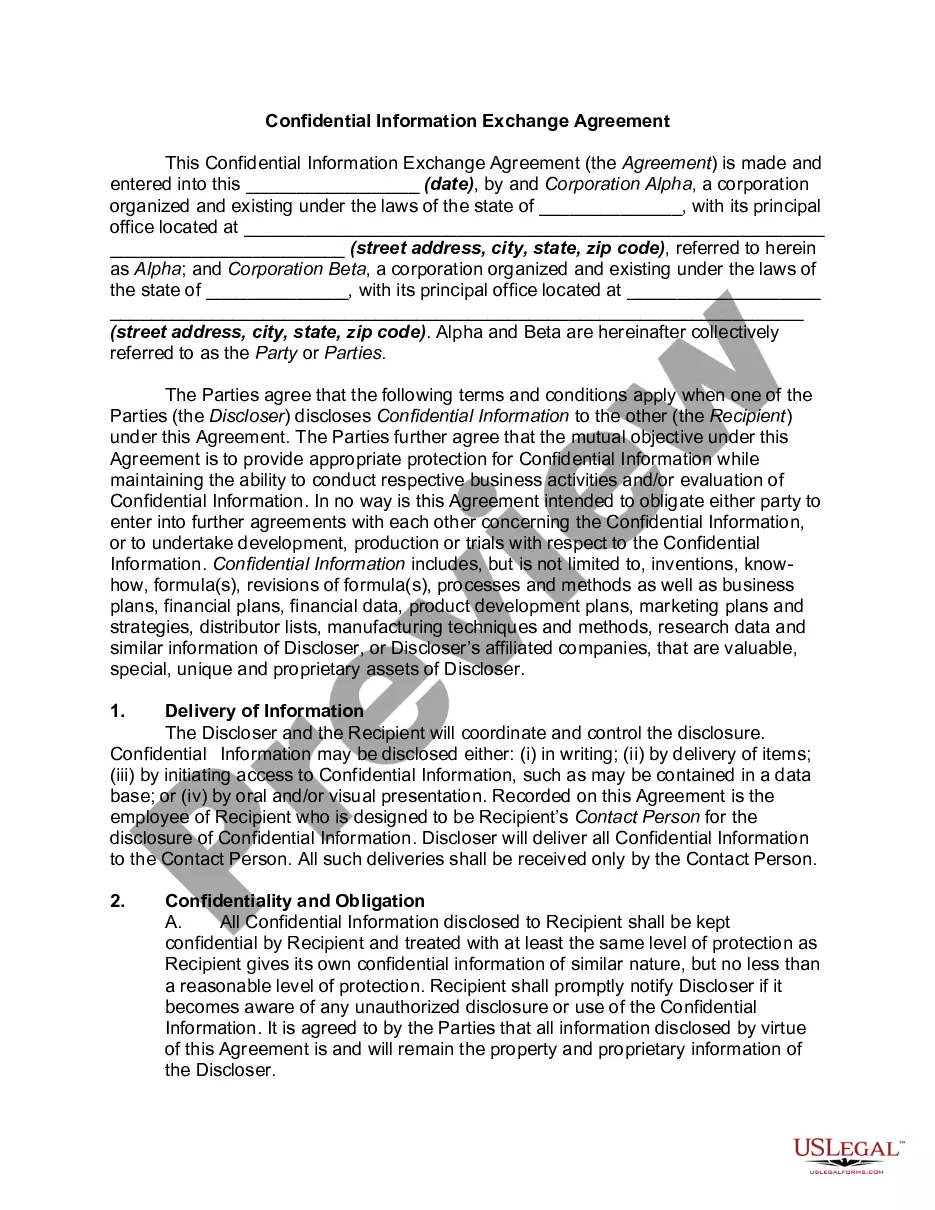
7.5 Verdict Form.
Does this form need to be notarized?
Notarization is generally not required for this form. However, certain states or situations might demand it. You can complete notarization online through US Legal Forms, powered by Notarize, using a verified video call available anytime.
Get your form ready online
Our built-in tools help you complete, sign, share, and store your documents in one place.
Make edits, fill in missing information, and update formatting in US Legal Forms—just like you would in MS Word.
Download a copy, print it, send it by email, or mail it via USPS—whatever works best for your next step.
Sign and collect signatures with our SignNow integration. Send to multiple recipients, set reminders, and more. Go Premium to unlock E-Sign.
If this form requires notarization, complete it online through a secure video call—no need to meet a notary in person or wait for an appointment.
We protect your documents and personal data by following strict security and privacy standards.

Make edits, fill in missing information, and update formatting in US Legal Forms—just like you would in MS Word.

Download a copy, print it, send it by email, or mail it via USPS—whatever works best for your next step.

Sign and collect signatures with our SignNow integration. Send to multiple recipients, set reminders, and more. Go Premium to unlock E-Sign.

If this form requires notarization, complete it online through a secure video call—no need to meet a notary in person or wait for an appointment.

We protect your documents and personal data by following strict security and privacy standards.
Looking for another form?

Form popularity
FAQ
The verdict form, in turn, formalizes the jury's decisions on the case, telling us how it will answer the claims and defenses. Its structure and language could influence the jury's ultimate answers. It may also control what issues may be raised on appeal.
The verdict form, in turn, formalizes the jury's decisions on the case, telling us how it will answer the claims and defenses. Its structure and language could influence the jury's ultimate answers. It may also control what issues may be raised on appeal.
The verdict of a jury is either general or special. A general verdict is that by which they pronounce generally upon all or any of the issues, either in favor of the plaintiff or defendant; a special verdict is that by which the jury find the facts only, leaving the judgment to the Court.
If it makes factual findings in addition to the ultimate legal conclusions, it returns a general verdict with interrogatories. (Ibid.) ?If it returns only factual findings, leaving the court to determine the ultimate legal result, it returns a special verdict.? (Ibid.)
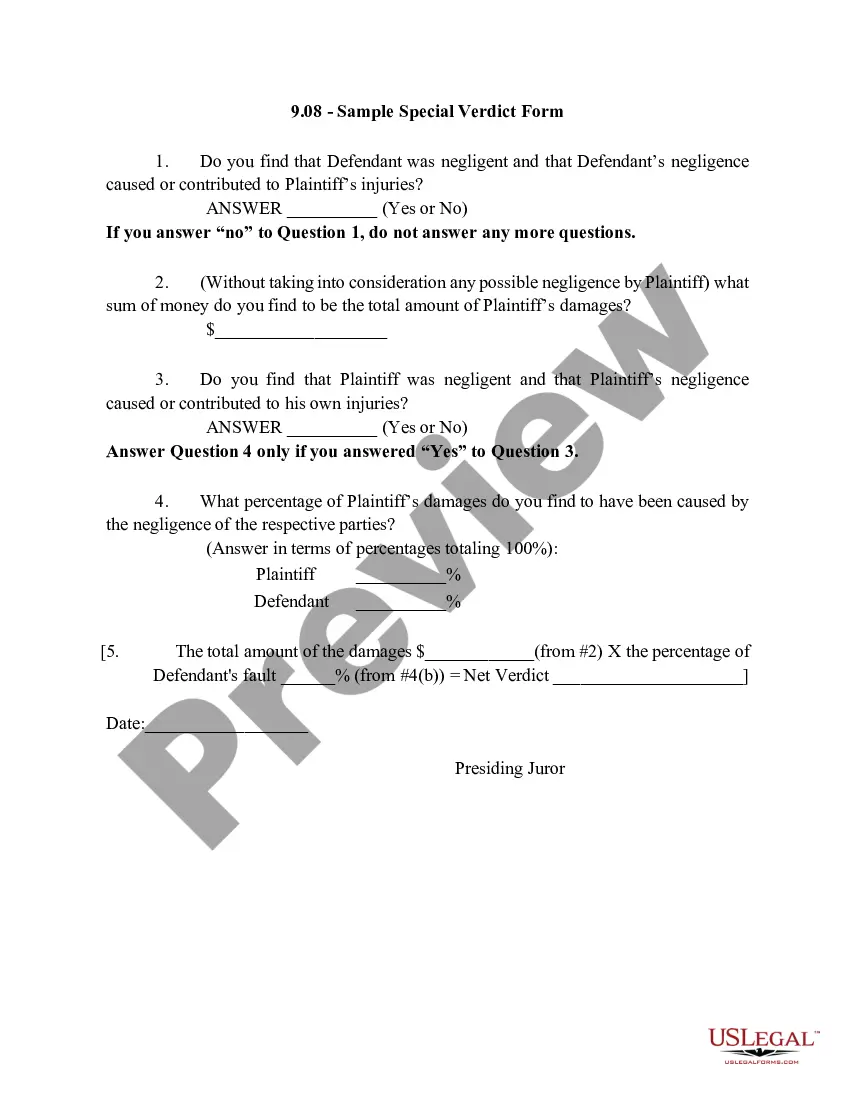
A general verdict is one that decides which party should win but does not make findings on any specific factual issues. A special verdict is one in which the jury provides its findings on specific factual issues.
A verdict in which the jury gives its findings on factual issues in the case, without necessarily stating which party should win.
?We, the Jury, find the defendant, (guilty; not guilty; not guilty by reason of mental disease or defect; or not guilty and not guilty by reason of mental disease or defect) of , as charged in Count 1 of the Indictment/Complaint.?