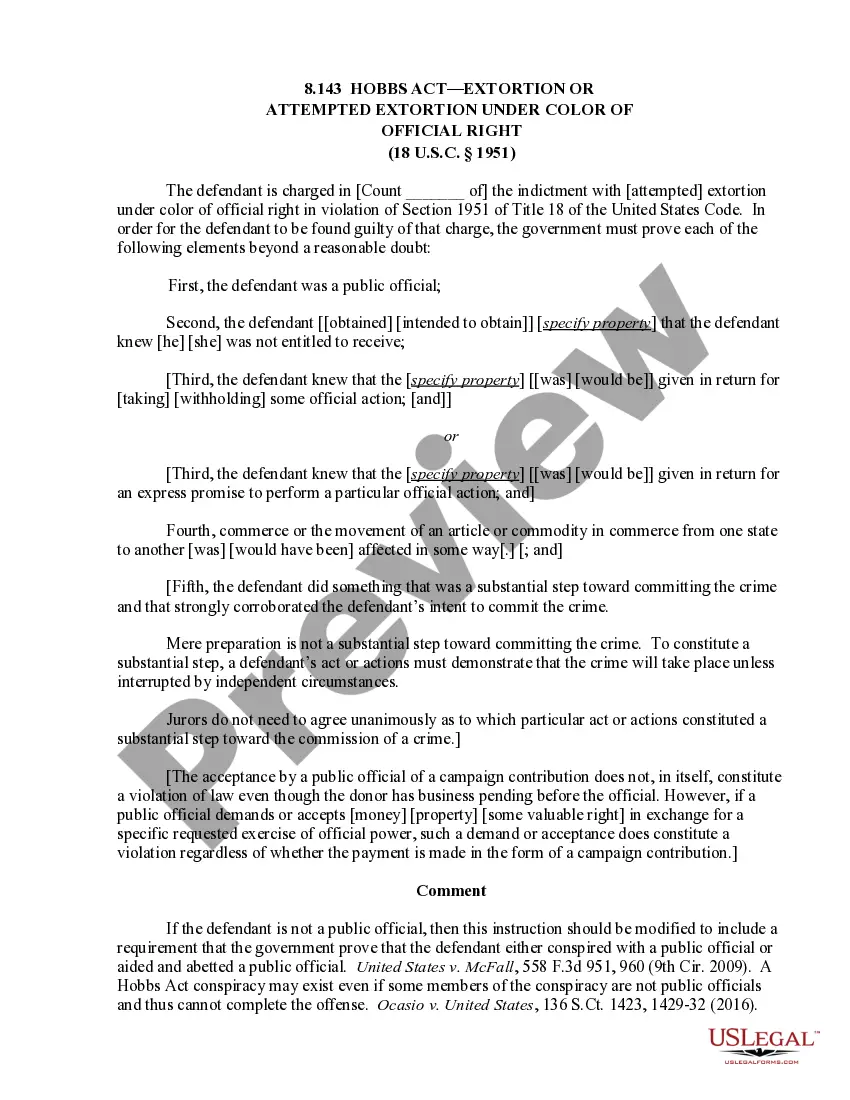
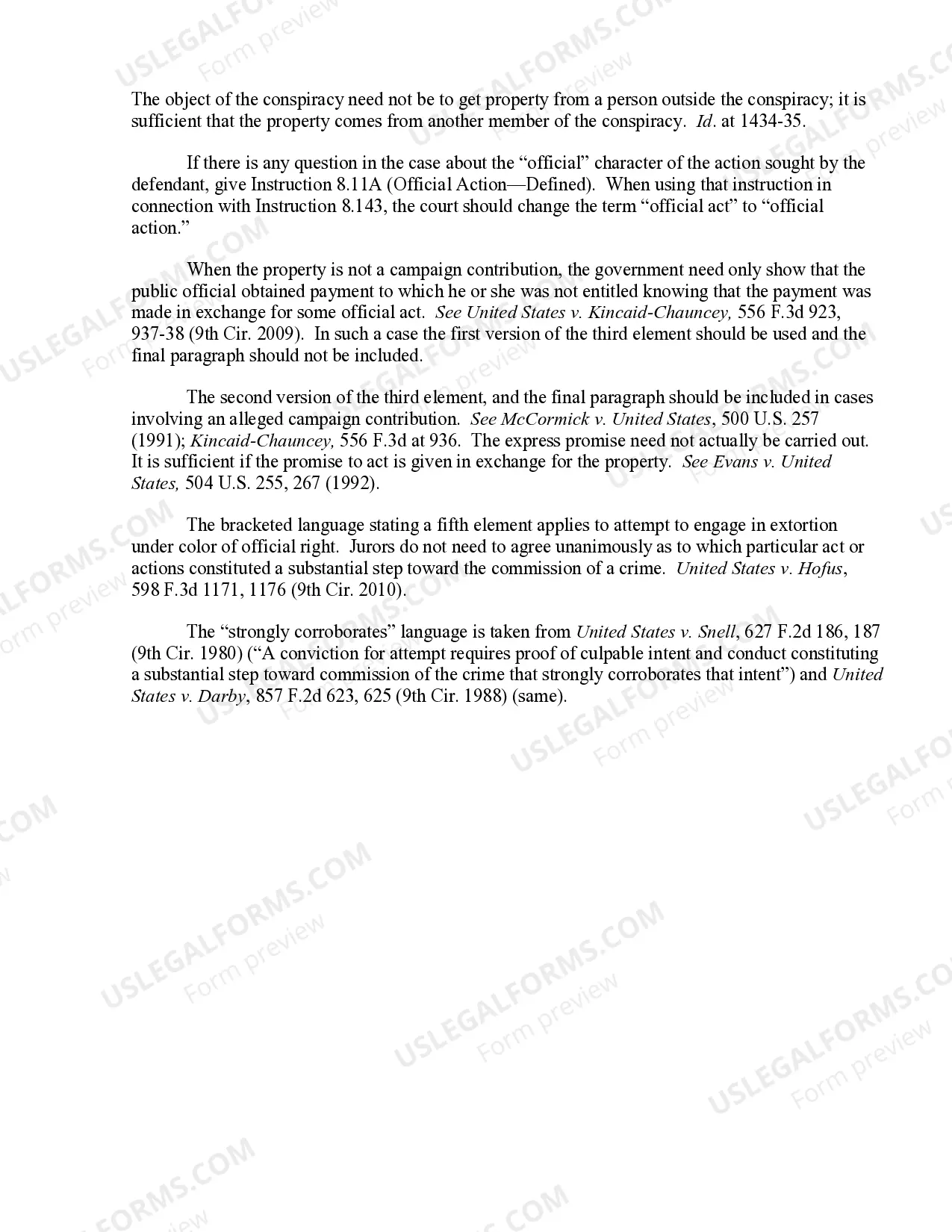
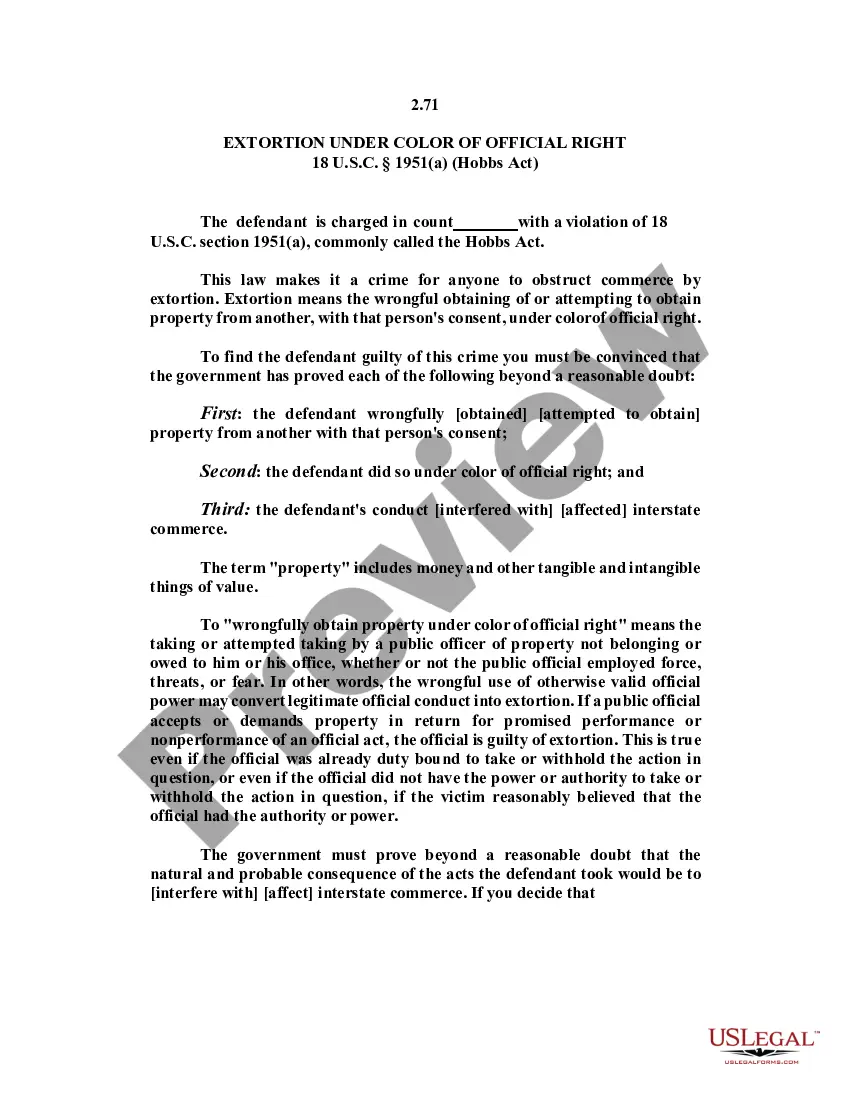
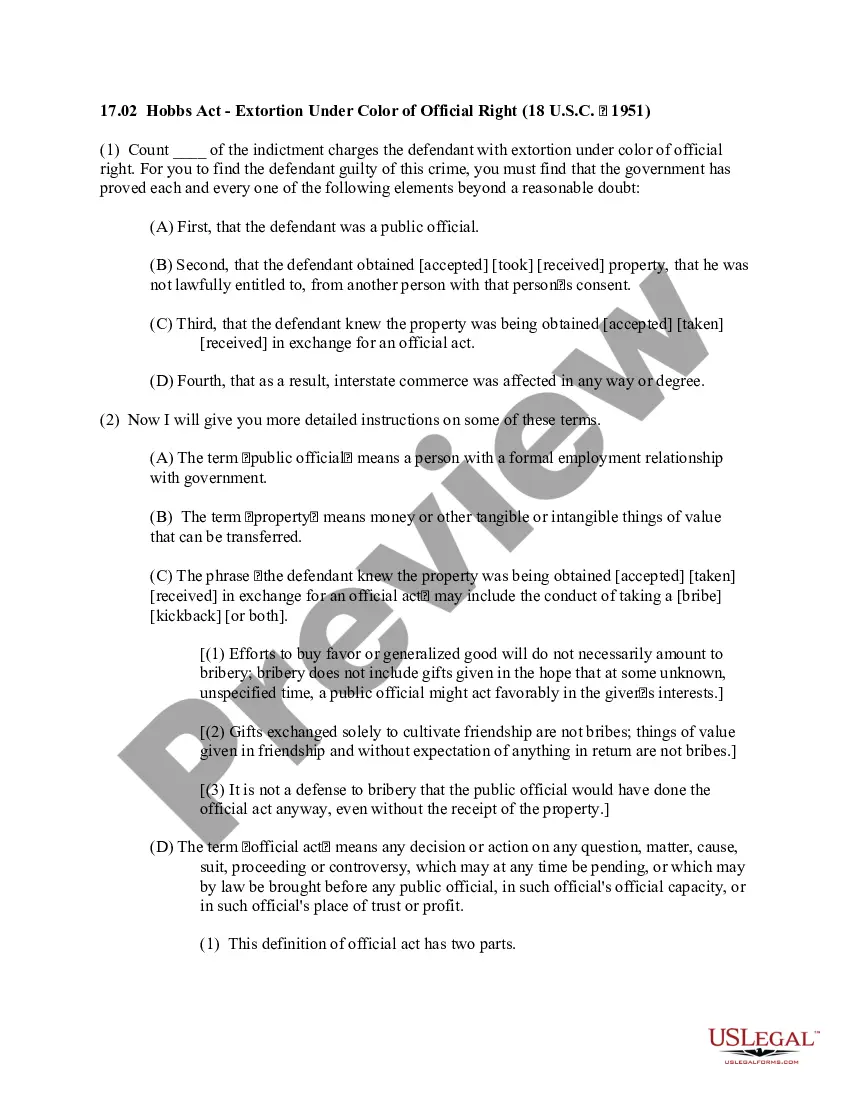
8.143 Hobbs Act-Extortion or Attempted Extortion Under Color of Official Right
Notarization guidance
This form does not typically require notarization to be legally valid. However, some jurisdictions or document types may still require it. US Legal Forms provides secure online notarization powered by Notarize, available 24/7 for added convenience.
Get your form ready online
Our built-in tools help you complete, sign, share, and store your documents in one place.
Make edits, fill in missing information, and update formatting in US Legal Forms—just like you would in MS Word.
Download a copy, print it, send it by email, or mail it via USPS—whatever works best for your next step.
Sign and collect signatures with our SignNow integration. Send to multiple recipients, set reminders, and more. Go Premium to unlock E-Sign.
If this form requires notarization, complete it online through a secure video call—no need to meet a notary in person or wait for an appointment.
We protect your documents and personal data by following strict security and privacy standards.

Make edits, fill in missing information, and update formatting in US Legal Forms—just like you would in MS Word.

Download a copy, print it, send it by email, or mail it via USPS—whatever works best for your next step.

Sign and collect signatures with our SignNow integration. Send to multiple recipients, set reminders, and more. Go Premium to unlock E-Sign.

If this form requires notarization, complete it online through a secure video call—no need to meet a notary in person or wait for an appointment.

We protect your documents and personal data by following strict security and privacy standards.
Looking for another form?
Form popularity
FAQ
What is the sentence for violation of the Hobbs Act? This law imposes fines and a maximum sentence of twenty years for extortion that inhibits interstate commerce by depleting an enterprise's assets that would normally be used for the purchase of goods.
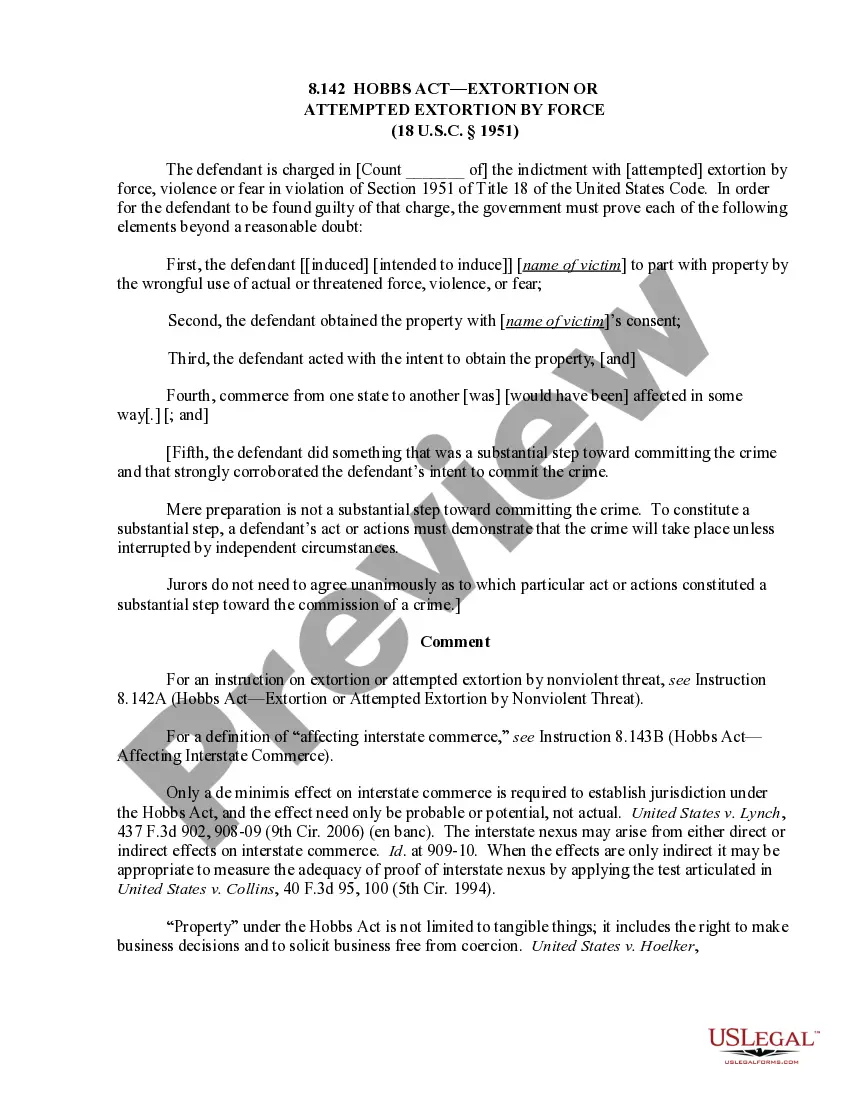
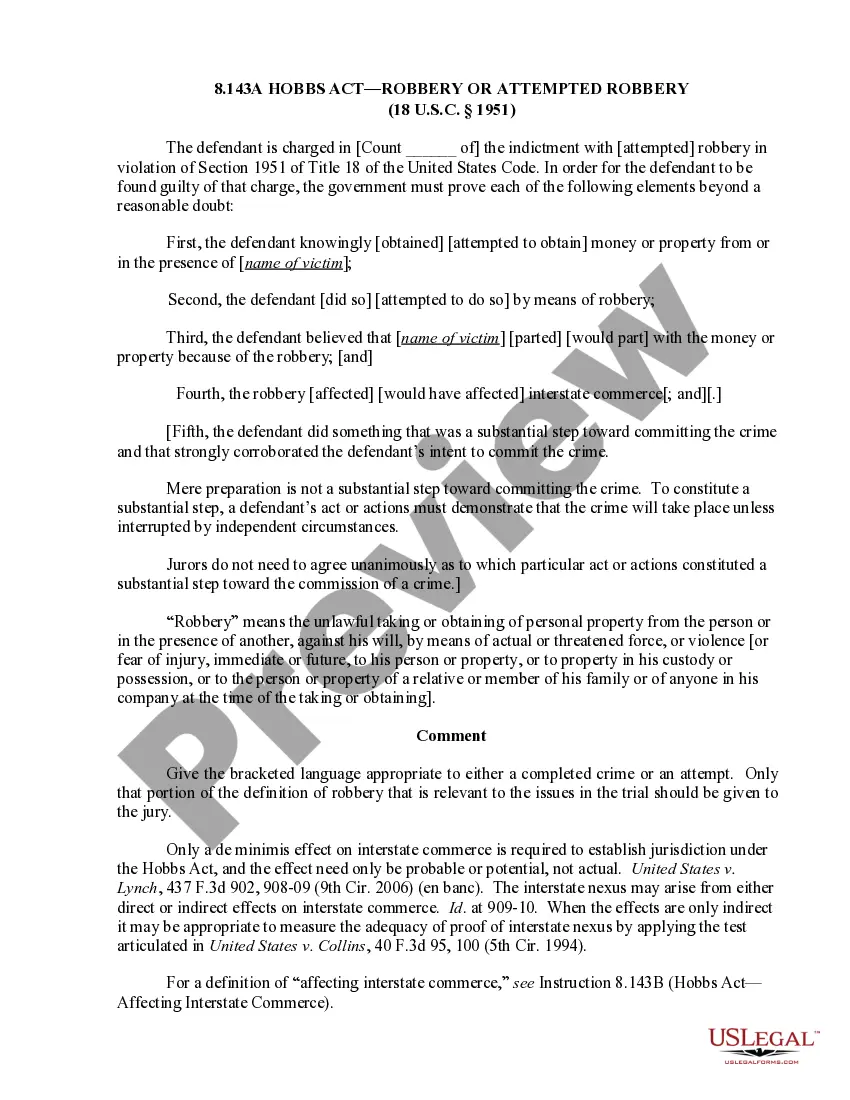
The Hobbs Act prohibits actual or attempted robbery or extortion affecting interstate or foreign commerce "in any way or degree." Section 1951 also proscribes conspiracy to commit robbery or extortion without reference to the conspiracy statute at 18 U.S.C. § 371.
21?102 (U.S. July 26, 2021). Both attempts and conspiracy to commit a Hobbs Act robbery are punishable by the same maximum term of imprisonment of not more than 20 years as for a substantive Hobbs Act robbery.
A conviction under the Hobbs Act requires proof beyond a reasonable doubt that (1) the defendant knowingly or willfully committed, or attempted or conspired to commit, robbery or extortion, and (2) the defendant's conduct affected interstate commerce. See United States v. Powell, 693 F. 3d 398 (3d Cir. 2012).
Extortion under color of official right means that a public official induced, obtained, accepted, or agreed to accept a payment to which he or she was not entitled, knowing that the payment was made in return for taking, withholding, or influencing official acts.
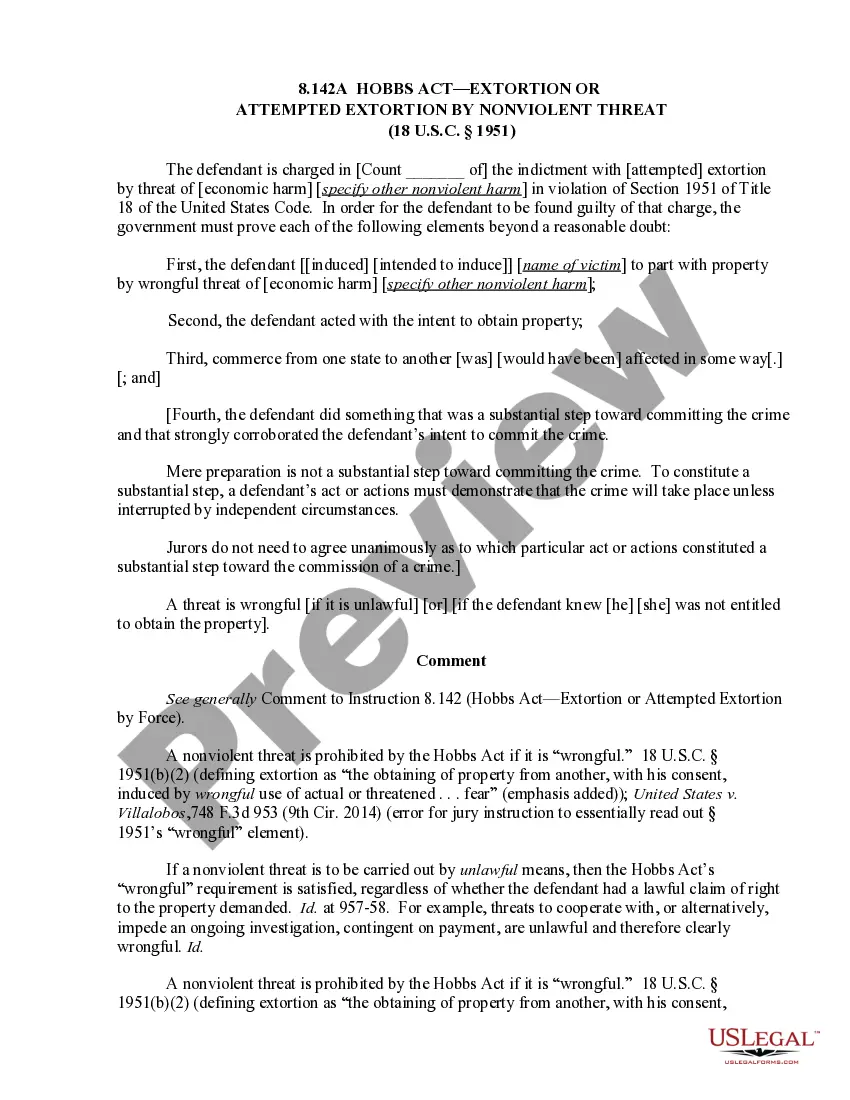
Hobbs Act Defense Lawyer ? 18 U.S.C § 1951 This federal stature prohibits public officials from acquiring property under color of official right or using their authority for extorting property. Further, it prohibits individuals from making threats to use force, violence, or fear to acquire property.
The present Hobbs Act began as the Anti-Racketeering Act of 1934, which Congress initially passed to combat the use of interstate commerce by organized crime, specifically racketeering.
The Hobbs Act prohibits actual or attempted robbery or extortion affecting interstate or foreign commerce "in any way or degree." Section 1951 also proscribes conspiracy to commit robbery or extortion without reference to the conspiracy statute at 18 U.S.C. § 371.