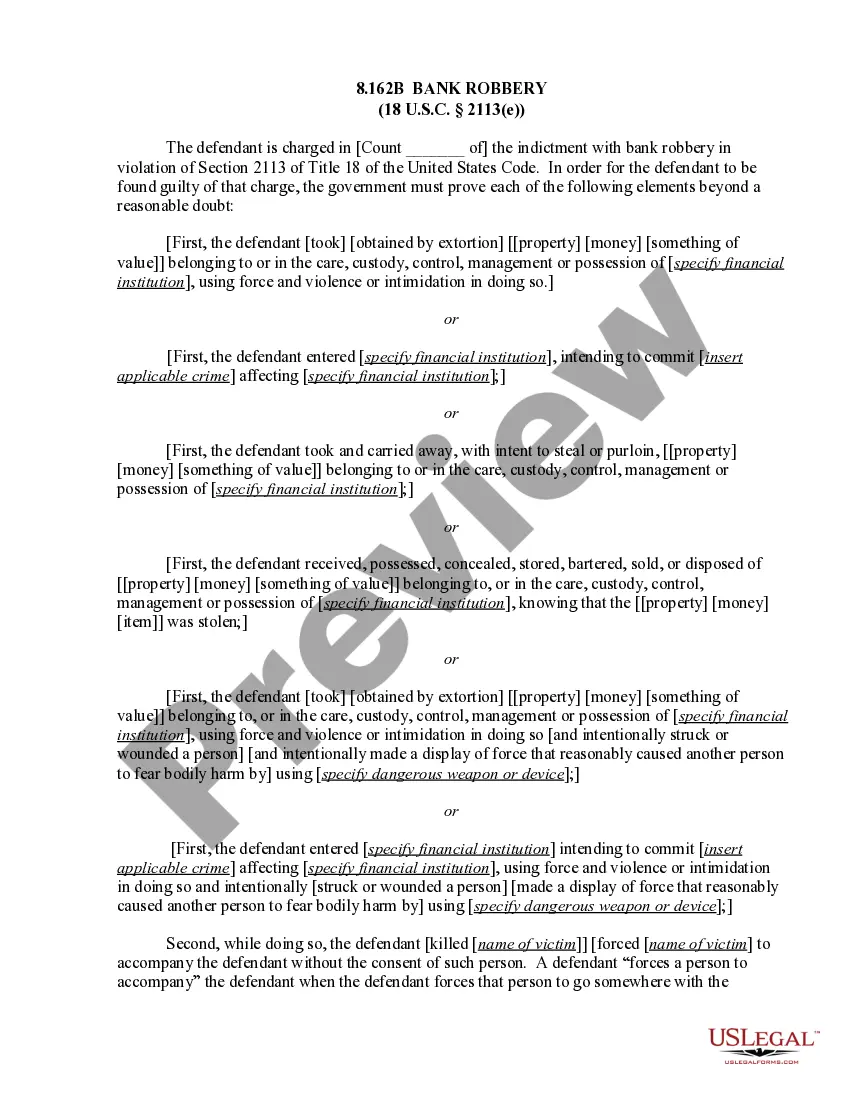
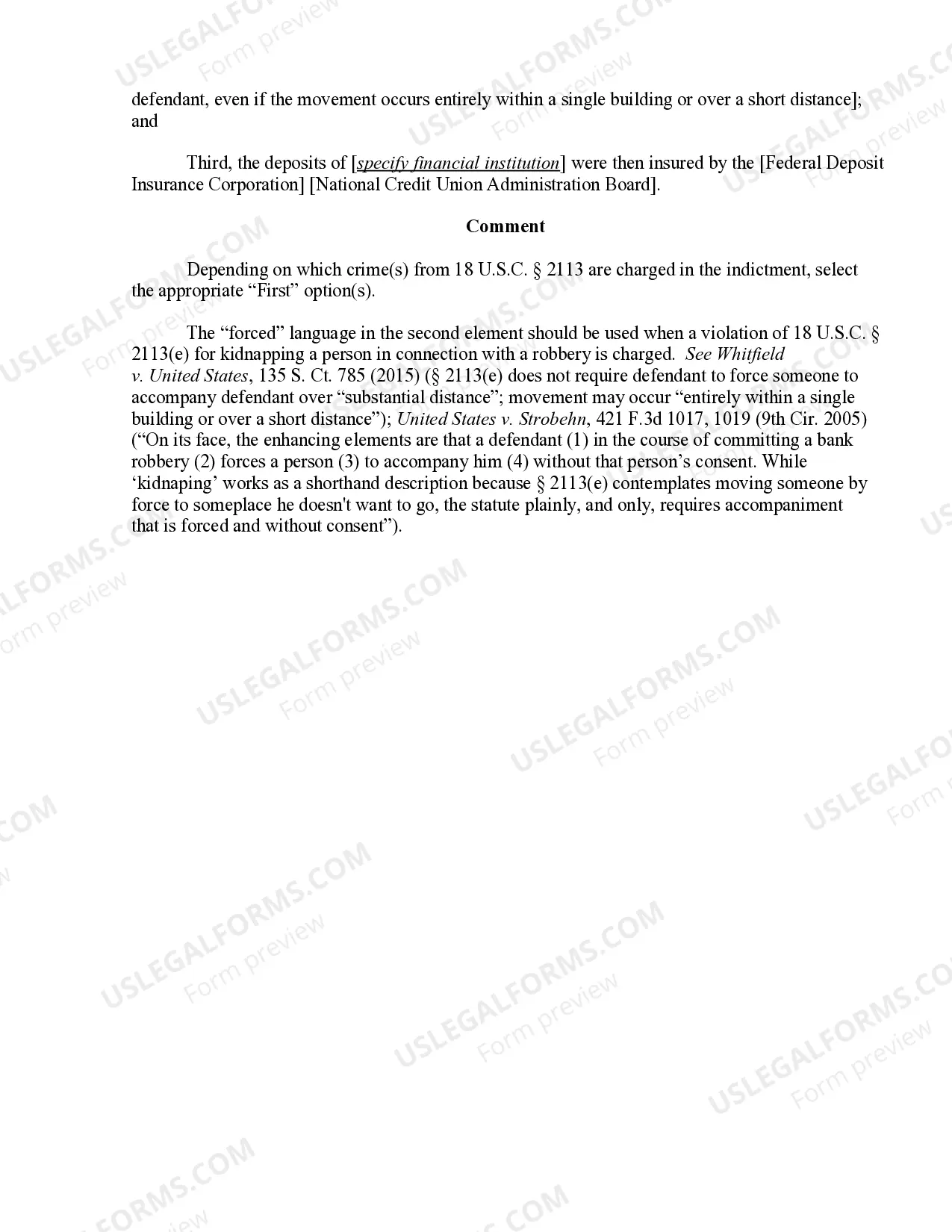
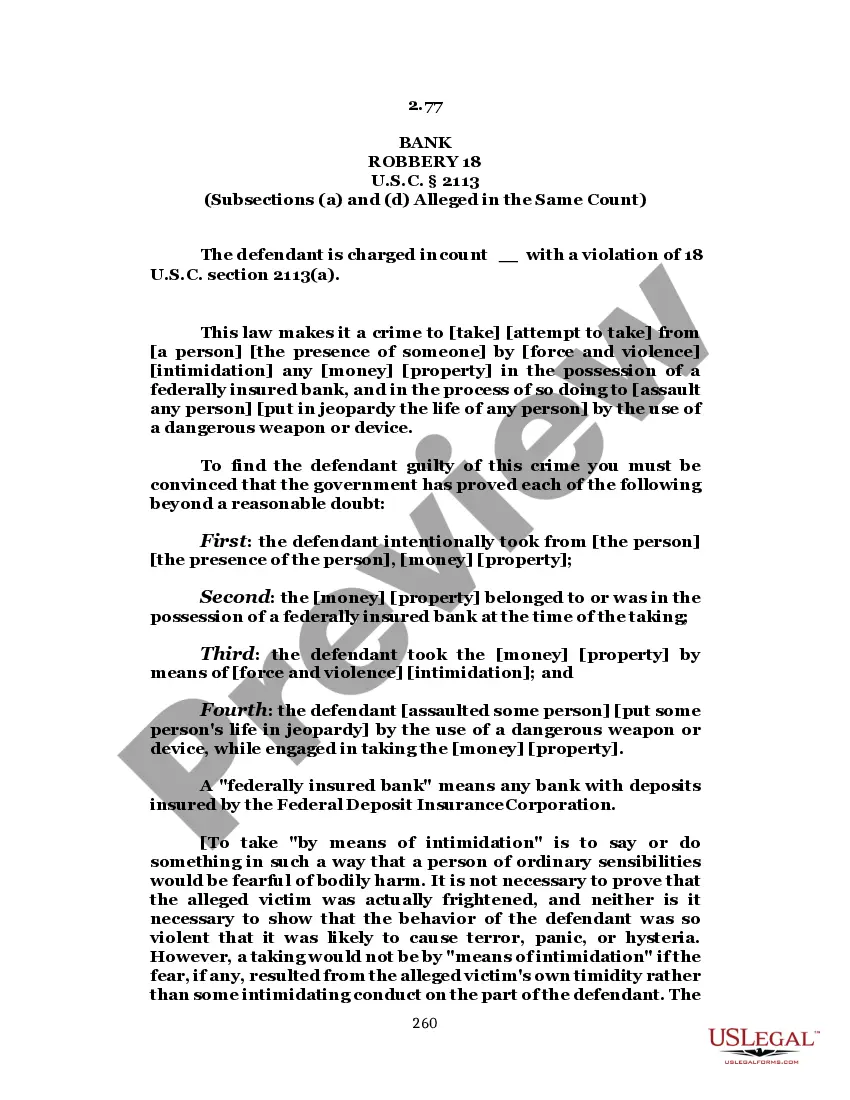
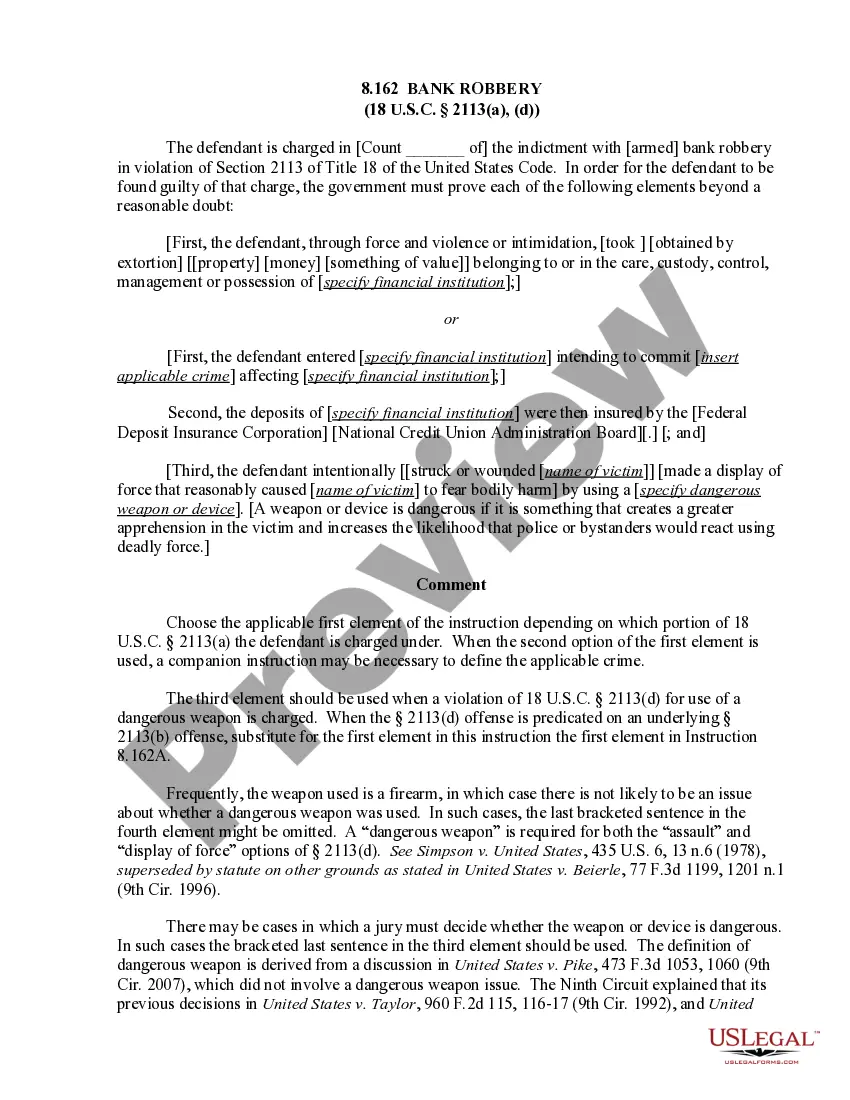
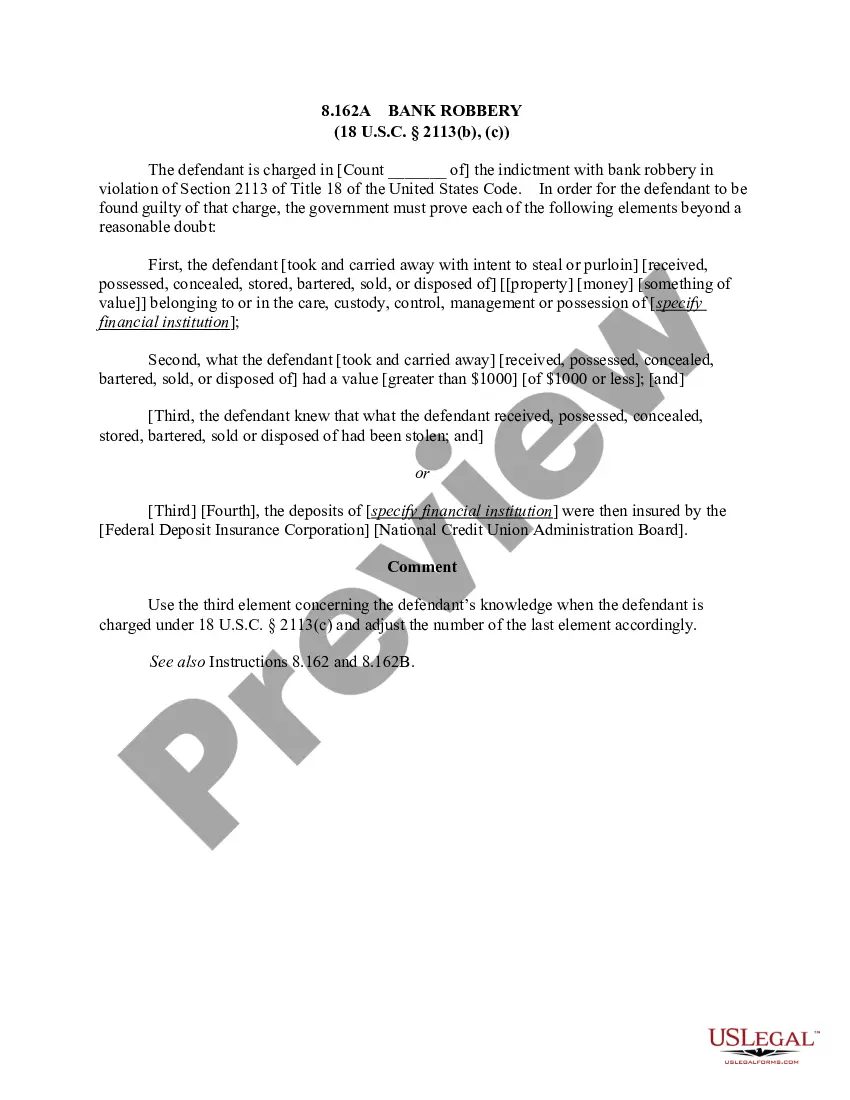
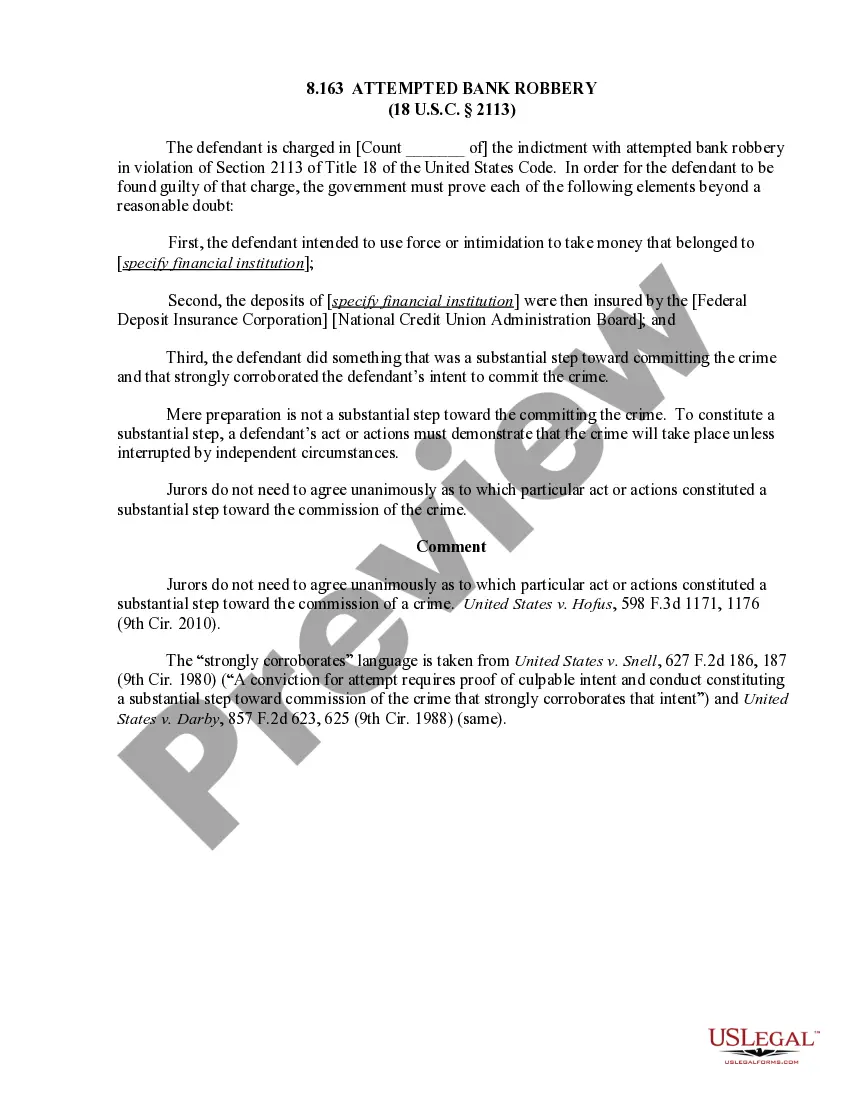
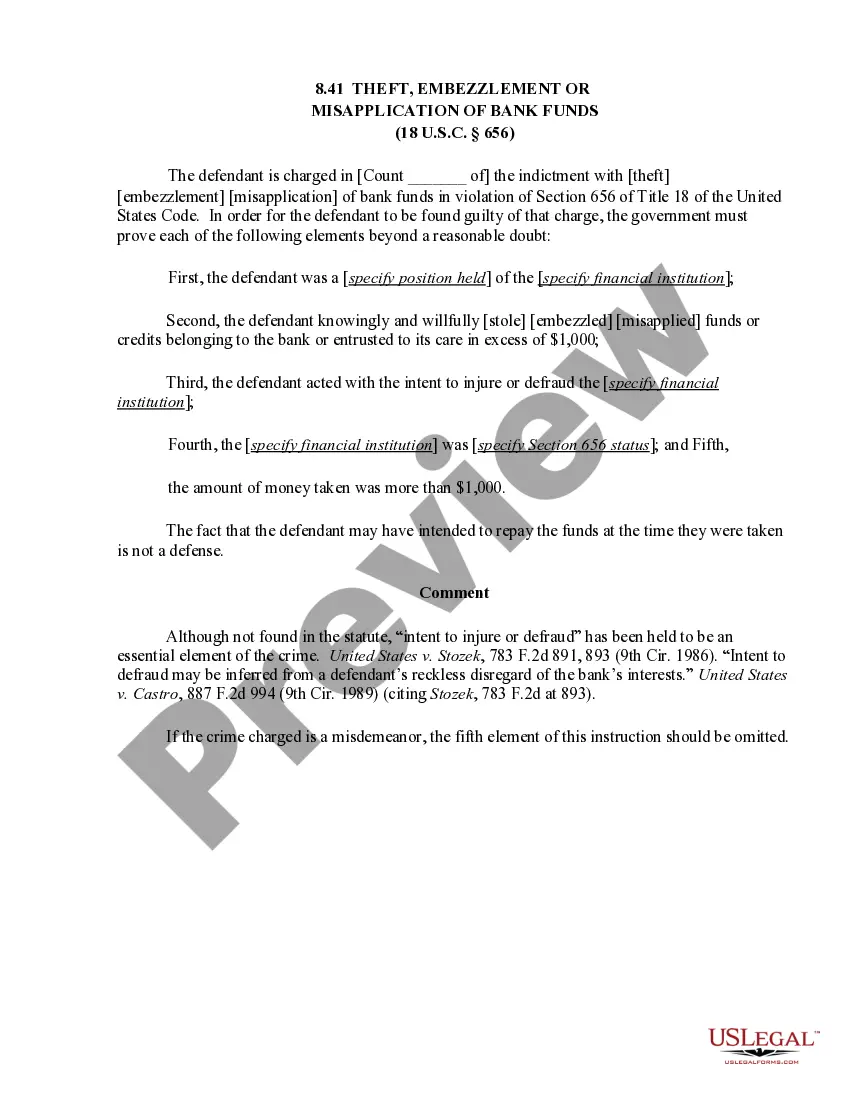
8.162B Bank Robbery (18 U.S.C. Sec. 2113(e))
Notarization guidance
This form does not typically require notarization to be legally valid. However, some jurisdictions or document types may still require it. US Legal Forms provides secure online notarization powered by Notarize, available 24/7 for added convenience.
Get your form ready online
Our built-in tools help you complete, sign, share, and store your documents in one place.
Make edits, fill in missing information, and update formatting in US Legal Forms—just like you would in MS Word.
Download a copy, print it, send it by email, or mail it via USPS—whatever works best for your next step.
Sign and collect signatures with our SignNow integration. Send to multiple recipients, set reminders, and more. Go Premium to unlock E-Sign.
If this form requires notarization, complete it online through a secure video call—no need to meet a notary in person or wait for an appointment.
We protect your documents and personal data by following strict security and privacy standards.

Make edits, fill in missing information, and update formatting in US Legal Forms—just like you would in MS Word.

Download a copy, print it, send it by email, or mail it via USPS—whatever works best for your next step.

Sign and collect signatures with our SignNow integration. Send to multiple recipients, set reminders, and more. Go Premium to unlock E-Sign.

If this form requires notarization, complete it online through a secure video call—no need to meet a notary in person or wait for an appointment.

We protect your documents and personal data by following strict security and privacy standards.
Looking for another form?
Form popularity
FAQ
Robbing a bank is a federal crime because they are government property and are involved in interstate commerce and trade. The resulting penalties are stricter because of this and the perpetrators may see the back of prison bars for many years with elevated fines on top of this.
The average amount of money stolen in a bank robbery in the United States is about $10,000. What percentage of bank robbers are eventually apprehended? Approximately 70% of bank robbers are eventually apprehended, either through the efforts of law enforcement agencies or as a result of public tips.
Under federal law, bank robbery is a serious offense and you could be sentenced for up to 20 years in a federal prison, a fine up to $250,000, or both. If you used violence to accomplish the bank robbery, you could face more severe penalties.
3, 4, or 6 years in prison. if the defendant committed first-degree robbery in an inhabited structure, in concert with 2 or more other people, 3, 6, or 9 years in prison. If it involves serious bodily injury, 6, 7, 9, 10, or 12 years in prison. If a firearm was used, 13, 14, or 16 years.
It's important to note that a few specific elements have to be present in order for a certain crime to be considered a bank robbery. First, there must be a presence of a gun or other type of weapon (or the implication of a weapon). Also, there has to be a threat of injury or death. Finally, money has to be stolen.
In 1934, it became a federal crime to rob any national bank or state member bank of the Federal Reserve System. The law soon expanded to include bank burglary, larceny, and similar crimes, with jurisdiction delegated to the FBI.
(18 U.S.C. § 1519) The government need not prove that the defendant's sole or even primary intention was to obstruct justice so long as the government proves beyond a reasonable doubt that one of the defendant's intentions was to obstruct justice. The defendant's intention to obstruct justice must be substantial.