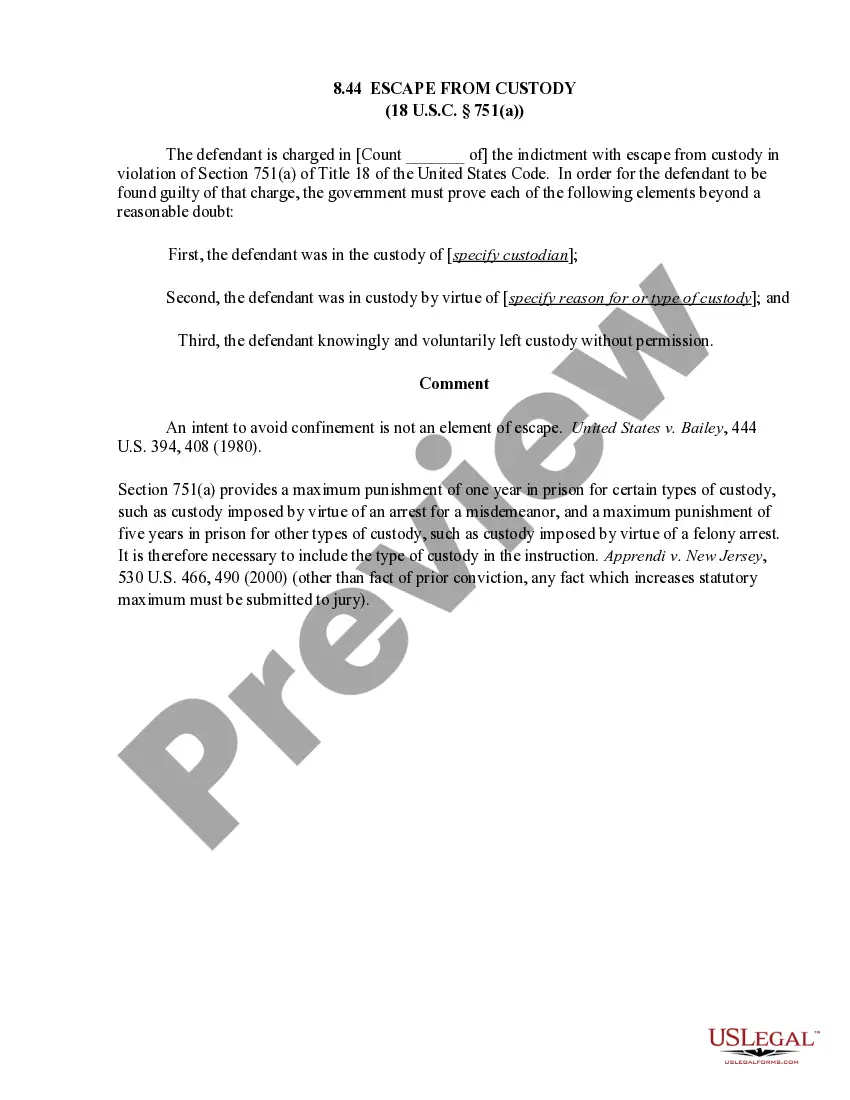
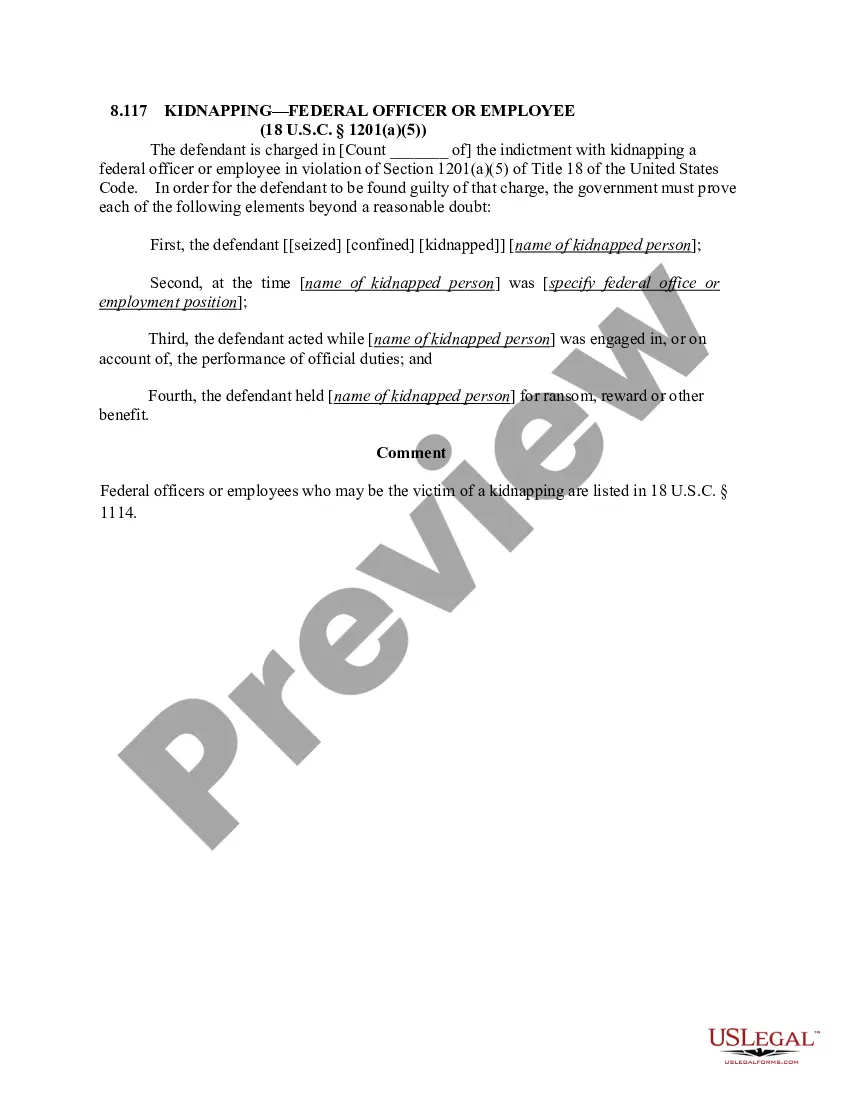
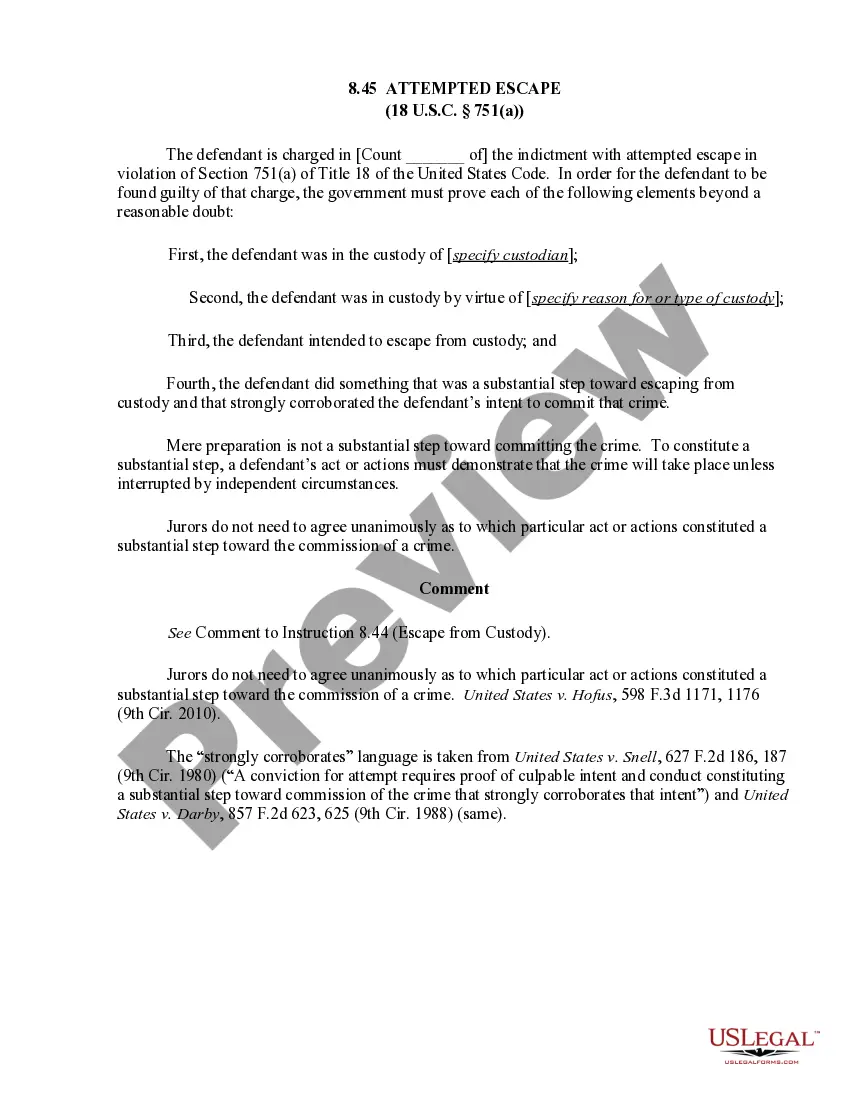
8.44 Escape from Custody (18 U.S.C. Sec. 751(a))
Does this document require notarization?
This form usually doesn’t need to be notarized. However, local laws or specific transactions may require it. Our online notarization service, powered by Notarize, lets you complete it remotely through a secure video session, available 24/7.
Get your form ready online
Our built-in tools help you complete, sign, share, and store your documents in one place.
Make edits, fill in missing information, and update formatting in US Legal Forms—just like you would in MS Word.
Download a copy, print it, send it by email, or mail it via USPS—whatever works best for your next step.
Sign and collect signatures with our SignNow integration. Send to multiple recipients, set reminders, and more. Go Premium to unlock E-Sign.
If this form requires notarization, complete it online through a secure video call—no need to meet a notary in person or wait for an appointment.
We protect your documents and personal data by following strict security and privacy standards.

Make edits, fill in missing information, and update formatting in US Legal Forms—just like you would in MS Word.

Download a copy, print it, send it by email, or mail it via USPS—whatever works best for your next step.

Sign and collect signatures with our SignNow integration. Send to multiple recipients, set reminders, and more. Go Premium to unlock E-Sign.

If this form requires notarization, complete it online through a secure video call—no need to meet a notary in person or wait for an appointment.

We protect your documents and personal data by following strict security and privacy standards.
Looking for another form?
Form popularity
FAQ
California Penal Code 4530 PC prohibits state prison inmates from attempting to escape. Escape from prison is a felony offense carrying up to three or six more years behind bars depending on whether the defendant used force or violence.
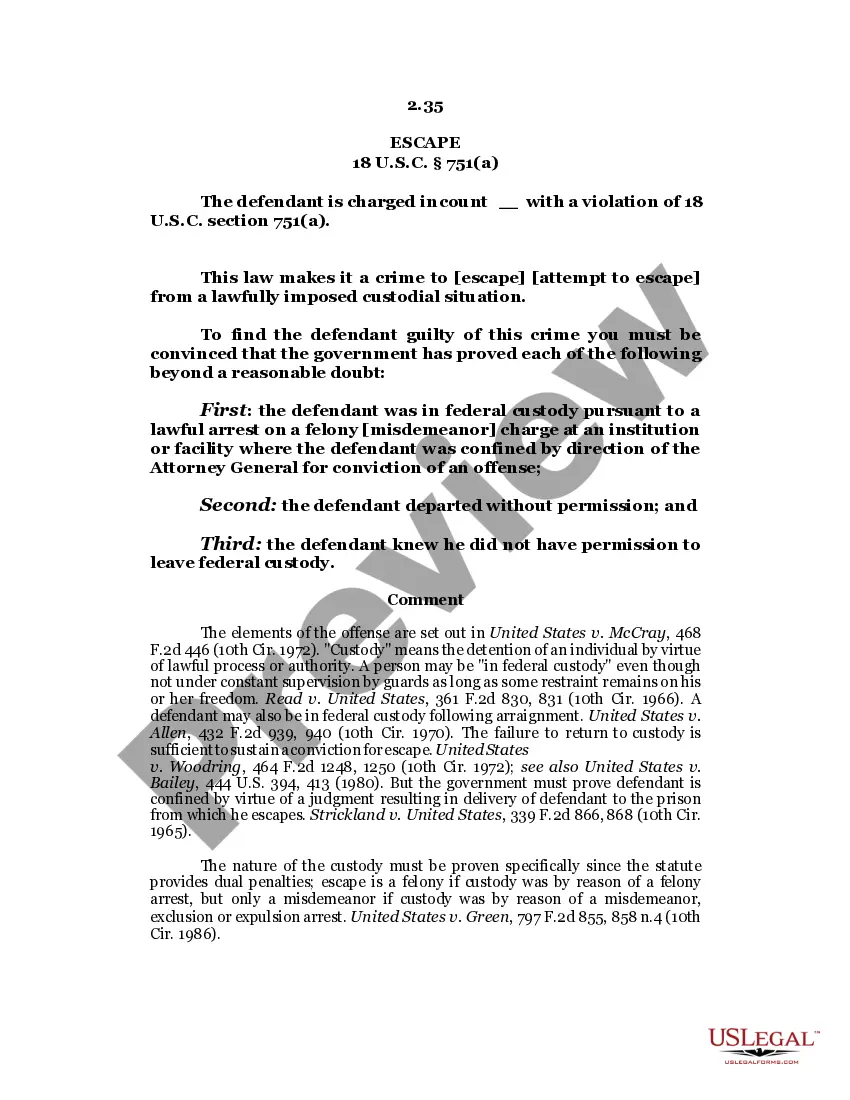
Introduction -- Escape From Custody Resulting From Conviction (18 U.S.C. §751 And 752) This chapter deals with the criminal sanctions for escape or attempted escape from lawful custody or confinement following conviction, or from custody or confinement prior to conviction.
For example, 18 U.S. code section 751 stipulates that it is unlawful to escape, or to attempt to escape, from the custody of the Attorney General; an authorized representative of the Attorney General; or from any institution that the defendant was ordered by the Attorney General to be confined in.
Section 836.6 - Escape (a) It is unlawful for any person who is remanded by a magistrate or judge of any court in this state to the custody of a sheriff, marshal, or other police agency, to thereafter escape or attempt to escape from that custody.
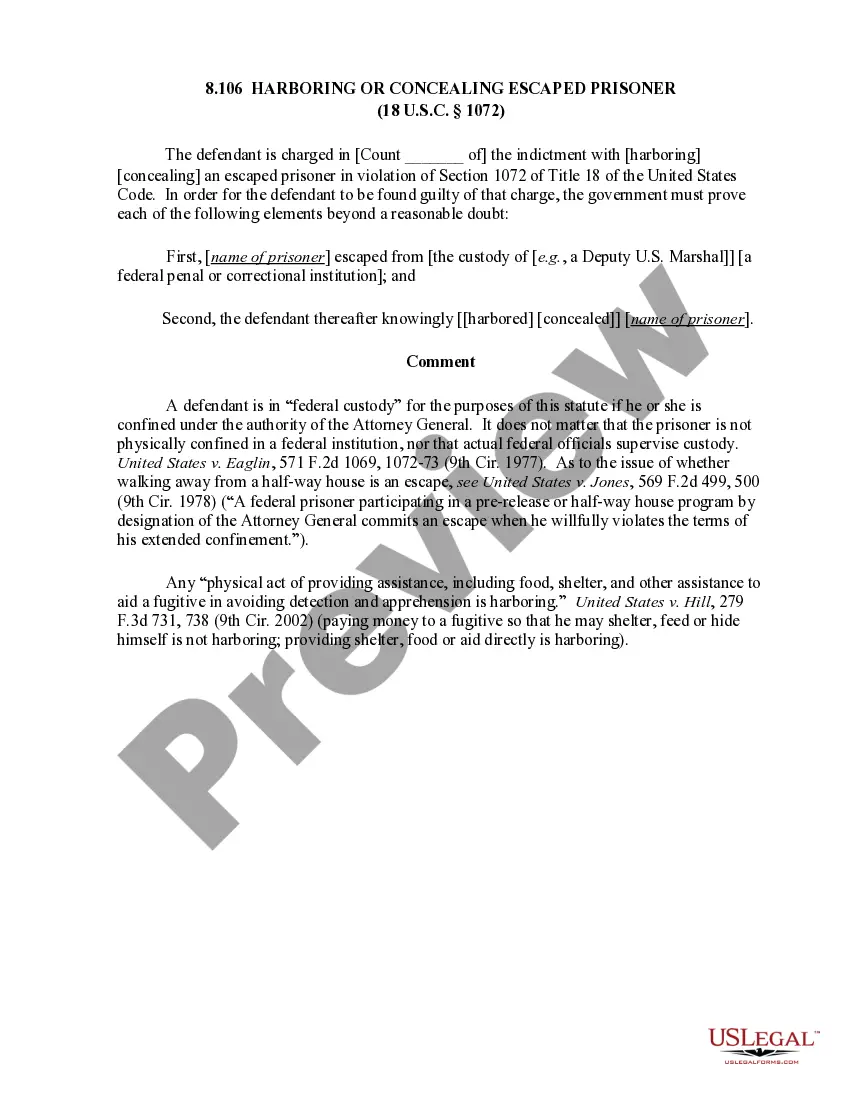
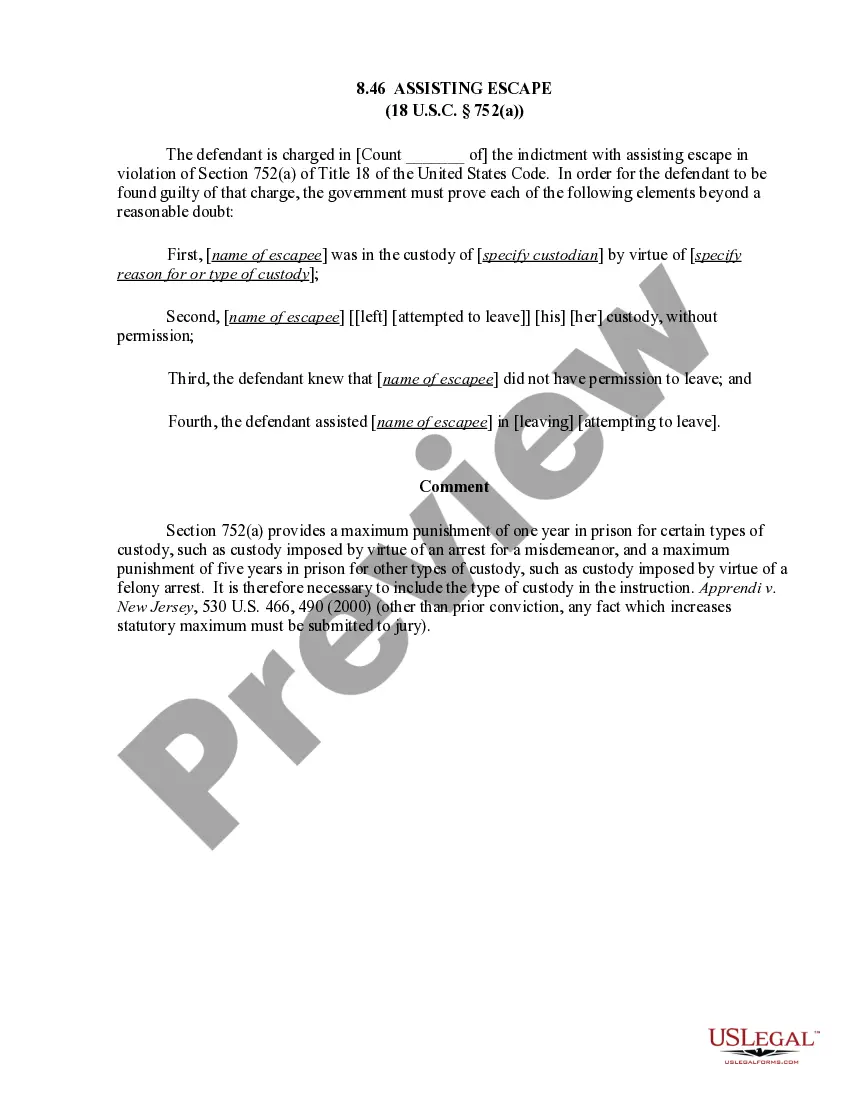
If convicted, you are facing up to five years in prison for helping someone escape custody when they are confined for a felony case, and up to one year in prison on a misdemeanor case, or charges under immigration laws.
Escape from Lawful Custody occurs when a person escapes from the custody of a peace officer after they have been arrested or detained. This offense is typically charged during an arrest or for a person in a halfway house failing to return from their work release program.
First-Degree Misdemeanor ? Up to 180 days in jail and a fine of up to $1,000; Fourth-Degree Felony ? Up to 18 months in prison and a fine of up $5,000; or. Third-Degree Felony ? Up to five years in prison and a fine of up $10,000.