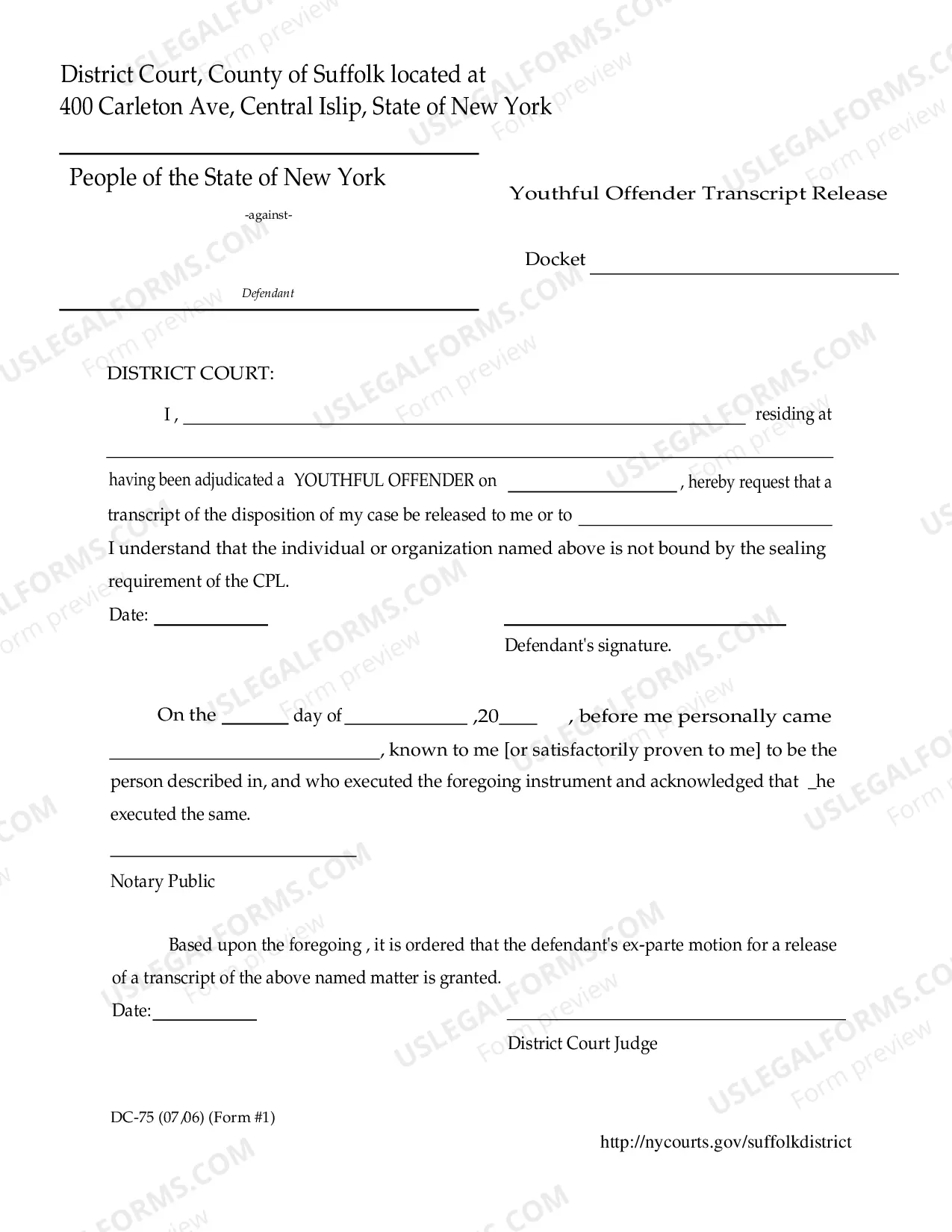
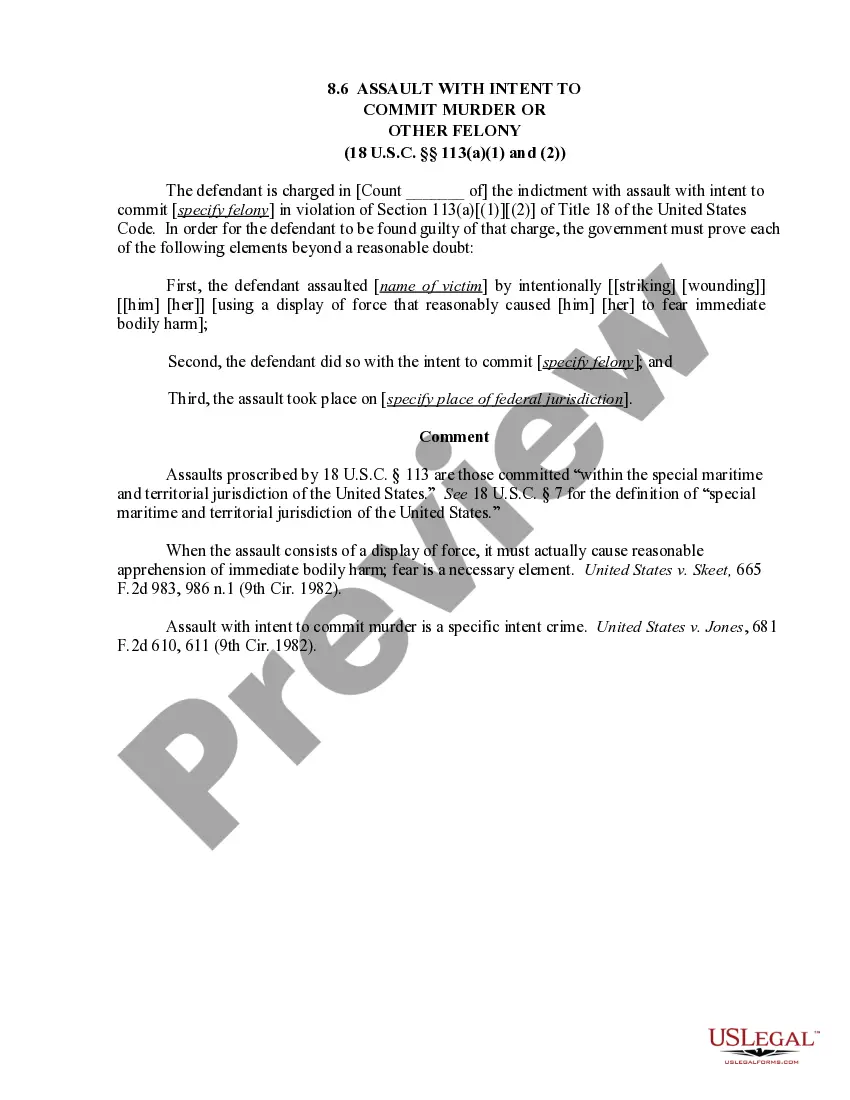
8.6 Assault With Intent to Commit Murder or Other Felony (18 U.S.C. Sec. 113(a)(1) and (2)).
Notarization guidance
This form does not typically require notarization to be legally valid. However, some jurisdictions or document types may still require it. US Legal Forms provides secure online notarization powered by Notarize, available 24/7 for added convenience.
Get your form ready online
Our built-in tools help you complete, sign, share, and store your documents in one place.
Make edits, fill in missing information, and update formatting in US Legal Forms—just like you would in MS Word.
Download a copy, print it, send it by email, or mail it via USPS—whatever works best for your next step.
Sign and collect signatures with our SignNow integration. Send to multiple recipients, set reminders, and more. Go Premium to unlock E-Sign.
If this form requires notarization, complete it online through a secure video call—no need to meet a notary in person or wait for an appointment.
We protect your documents and personal data by following strict security and privacy standards.

Make edits, fill in missing information, and update formatting in US Legal Forms—just like you would in MS Word.

Download a copy, print it, send it by email, or mail it via USPS—whatever works best for your next step.

Sign and collect signatures with our SignNow integration. Send to multiple recipients, set reminders, and more. Go Premium to unlock E-Sign.

If this form requires notarization, complete it online through a secure video call—no need to meet a notary in person or wait for an appointment.

We protect your documents and personal data by following strict security and privacy standards.
Looking for another form?
Form popularity
FAQ
Assaulting, resisting, or impeding certain United States Government officers or employees is an offense under 18 U.S.C. § 111. Simple assault is a class A misdemeanor, but if physical contact occurs, the offense is a class D felony. If a deadly weapon is used or bodily injury is inflicted, it is a class C felony.
Assault is generally defined as an intentional act that puts another person in reasonable apprehension of imminent harmful or offensive contact.
18 U.S.C. 111 makes it a federal crime to assault any federal officer, agent, or employee of a U.S. government agency or member of the uniformed services. This includes government employees on the job; it may consist of former employees (for example, if the assault occurs as an act of revenge).
Title 18 of the United States Code is the main criminal code of the federal government of the United States. The Title deals with federal crimes and criminal procedure.
US Code Title 18 Section 113. (a) Whoever, within the special maritime and territorial jurisdiction of the United States, is guilty of an assault shall be punished as follows: (1) Assault with intent to commit murder, by imprisonment for not more than twenty years.
Assault with a dangerous weapon, with intent to do bodily harm, by a fine under this title or imprisonment for not more than ten years, or both. (4) Assault by striking, beating, or wounding, by a fine under this title or imprisonment for not more than 1 year, or both.
"Whoever forcibly assaults, resists, opposes, impedes, intimidates, or interferes with any person designated in section 1114 of this title while engaged in or on account of the performance of his official duties, shall be fined not more than $5,000 or imprisoned not more than three years, or both.