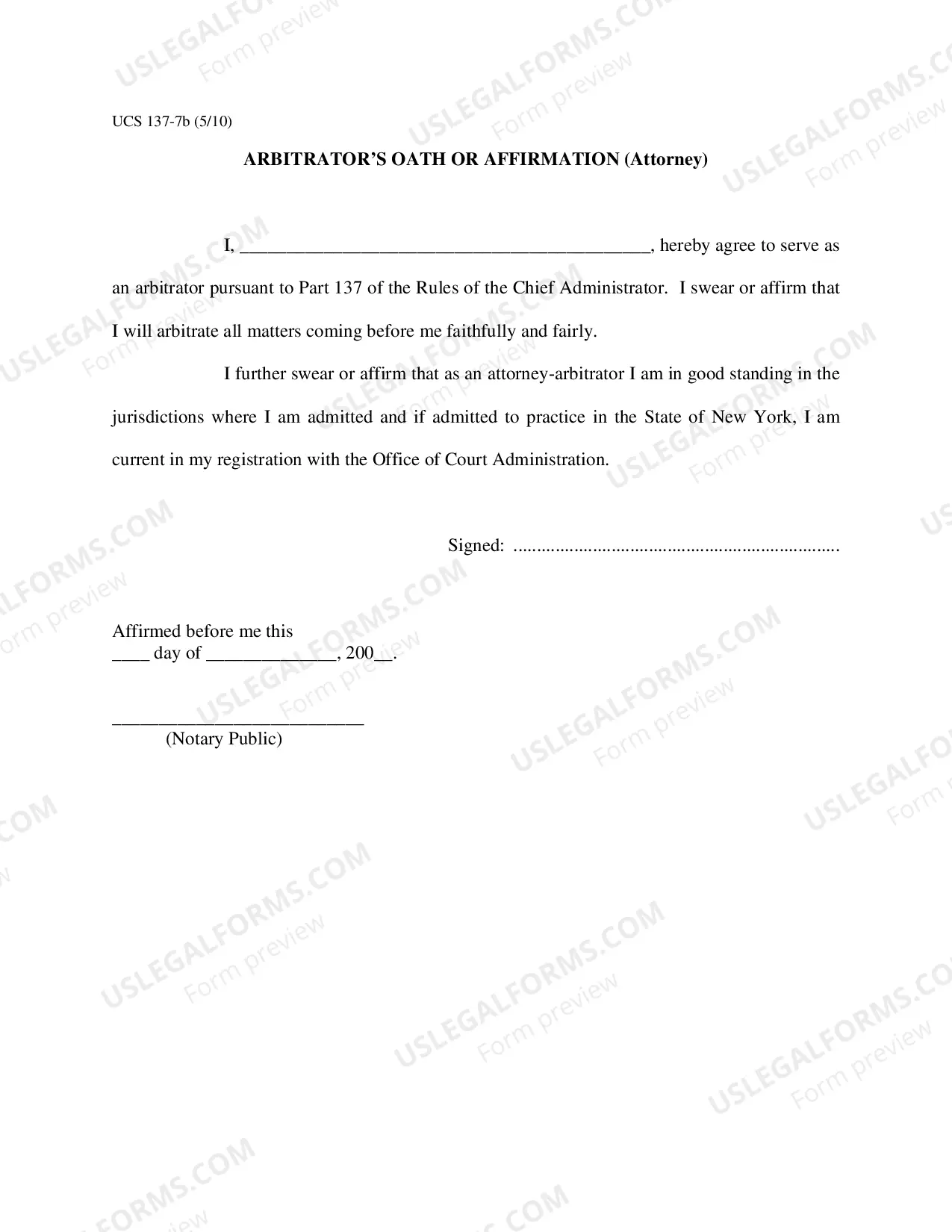
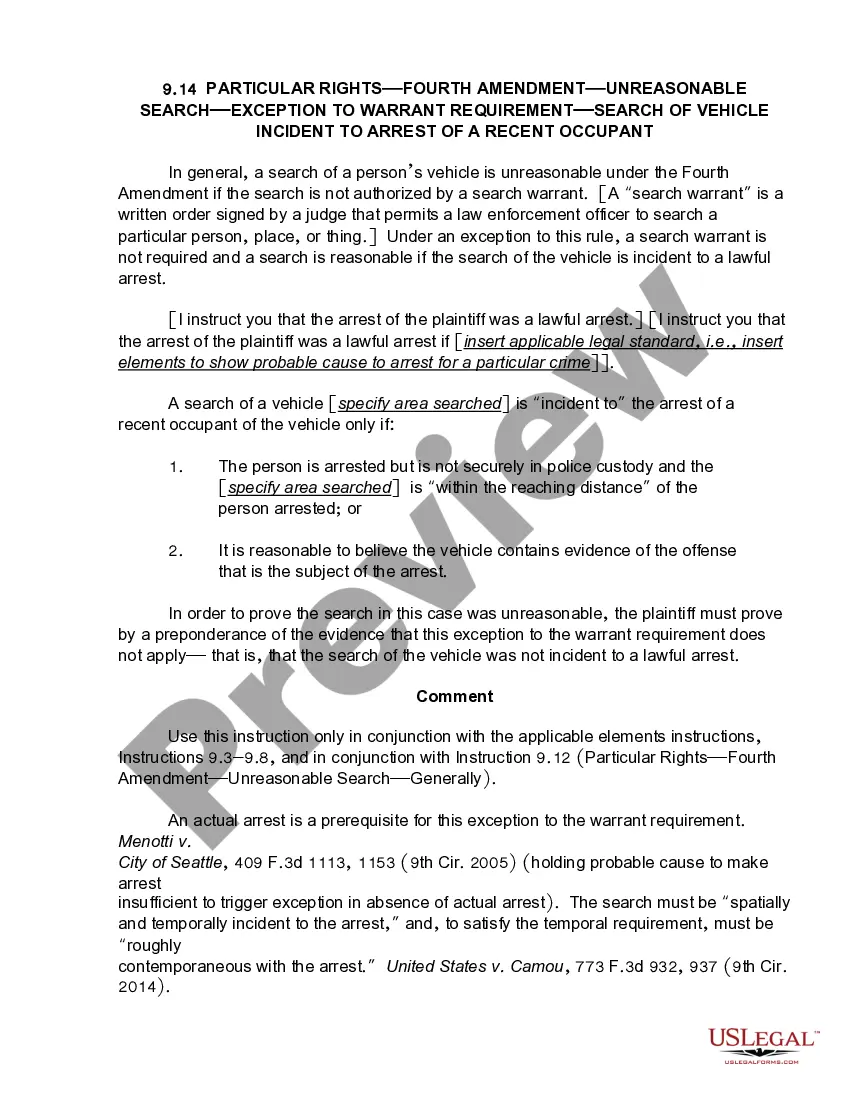
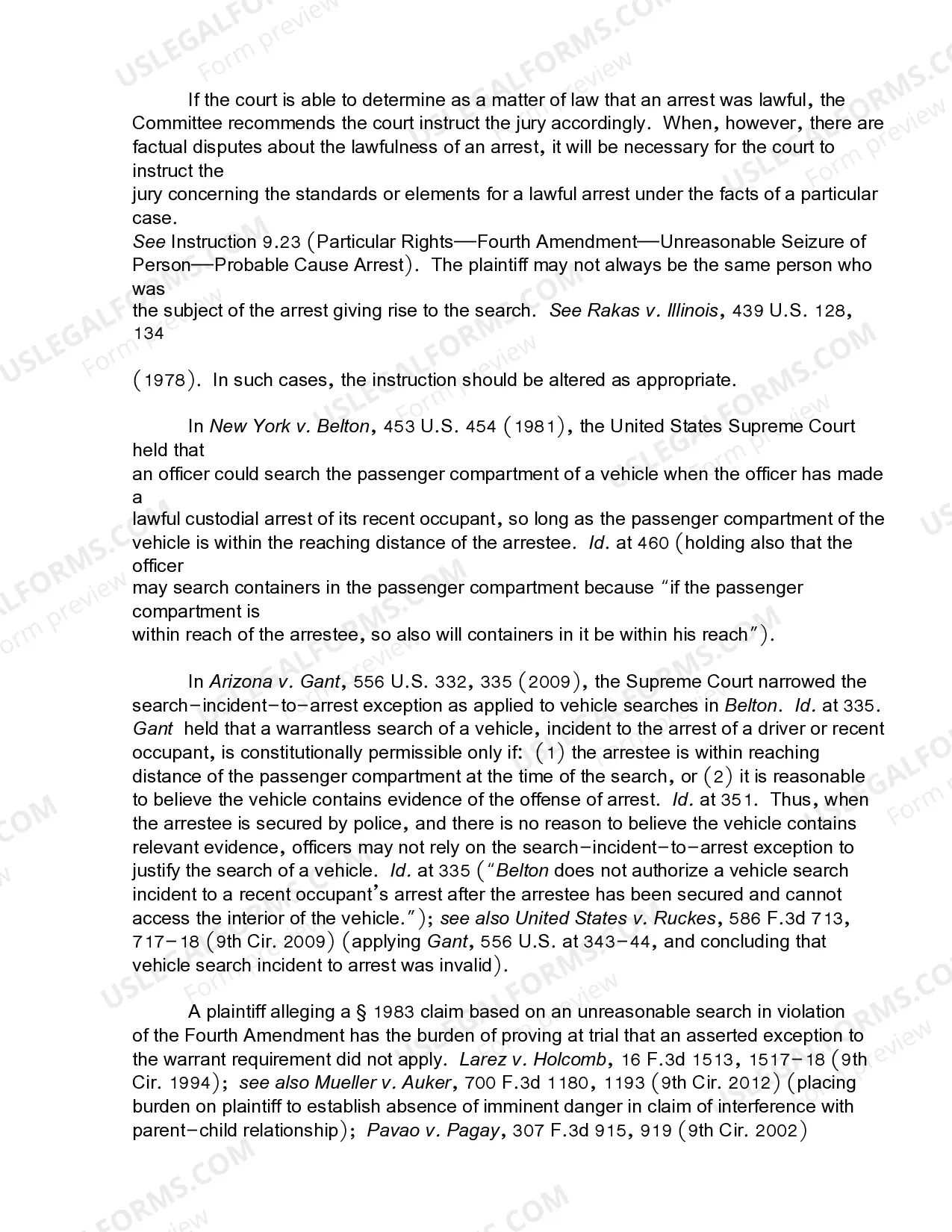
9.14 Particular Rights-Fourth Amendment-Unreasonable Search-Exception to Warrant Requirement-Search of Vehicle Incident to Arrest of a Recent Occupant
Does this document require notarization?
Notarization is not commonly needed for this form. However, certain documents or local rules may make it necessary. Our notarization service, powered by Notarize, allows you to finalize it securely online anytime, day or night.
Get your form ready online
Our built-in tools help you complete, sign, share, and store your documents in one place.
Make edits, fill in missing information, and update formatting in US Legal Forms—just like you would in MS Word.
Download a copy, print it, send it by email, or mail it via USPS—whatever works best for your next step.
Sign and collect signatures with our SignNow integration. Send to multiple recipients, set reminders, and more. Go Premium to unlock E-Sign.
If this form requires notarization, complete it online through a secure video call—no need to meet a notary in person or wait for an appointment.
We protect your documents and personal data by following strict security and privacy standards.

Make edits, fill in missing information, and update formatting in US Legal Forms—just like you would in MS Word.

Download a copy, print it, send it by email, or mail it via USPS—whatever works best for your next step.

Sign and collect signatures with our SignNow integration. Send to multiple recipients, set reminders, and more. Go Premium to unlock E-Sign.

If this form requires notarization, complete it online through a secure video call—no need to meet a notary in person or wait for an appointment.

We protect your documents and personal data by following strict security and privacy standards.
Looking for another form?
Form popularity
FAQ
The right of the people to be secure in their persons, houses, papers, and effects, against unreasonable searches and seizures, shall not be violated, and no Warrants shall issue, but upon probable cause, supported by Oath or affirmation, and particularly describing the place to be searched, and the persons or things
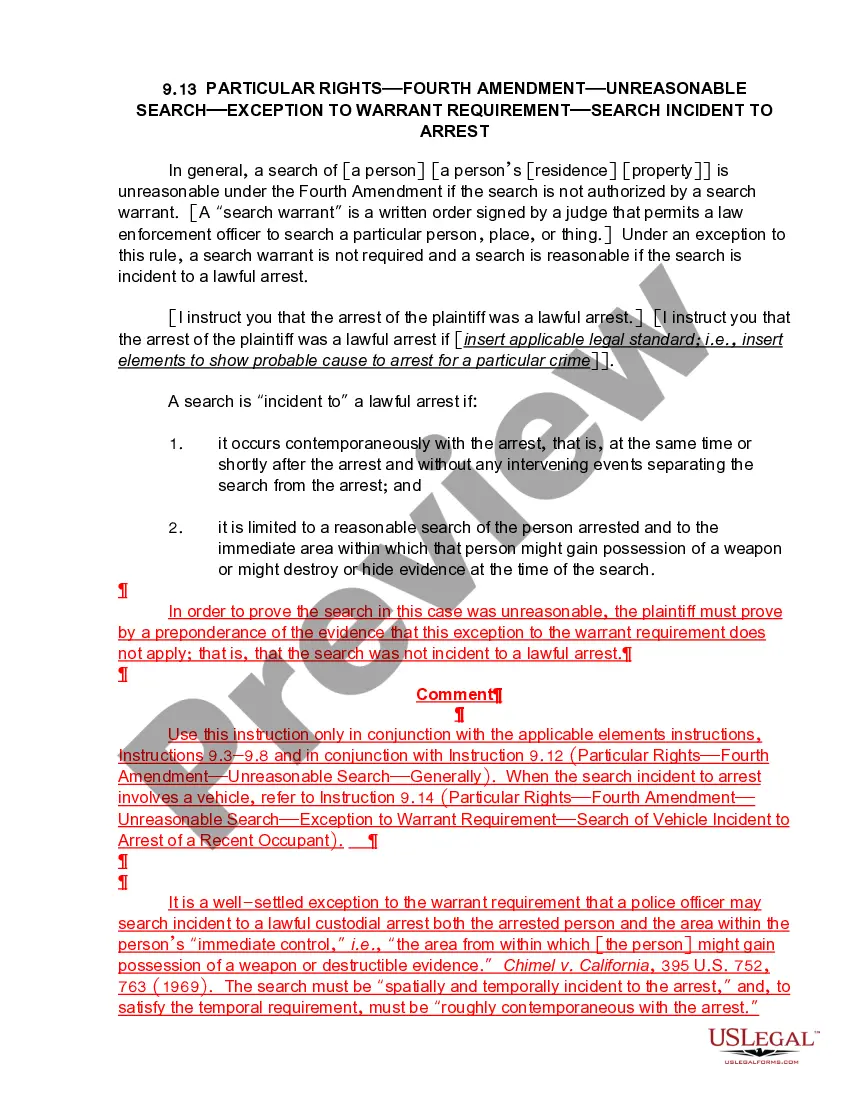
United States v. Robinson (1973) ? The U.S. Supreme Court held that "in the case of a lawful custodial arrest a full search of the person is not only an exception to the warrant requirement of the Fourth Amendment, but is also a reasonable search under that Amendment."
Labron the US Supreme Court stated, "If a car is readily mobile and probable cause exists to believe it contains contraband, the Fourth Amendment permits the police to search the vehicle without more." The scope of the search is limited to only the area that the officers have probable cause to search.
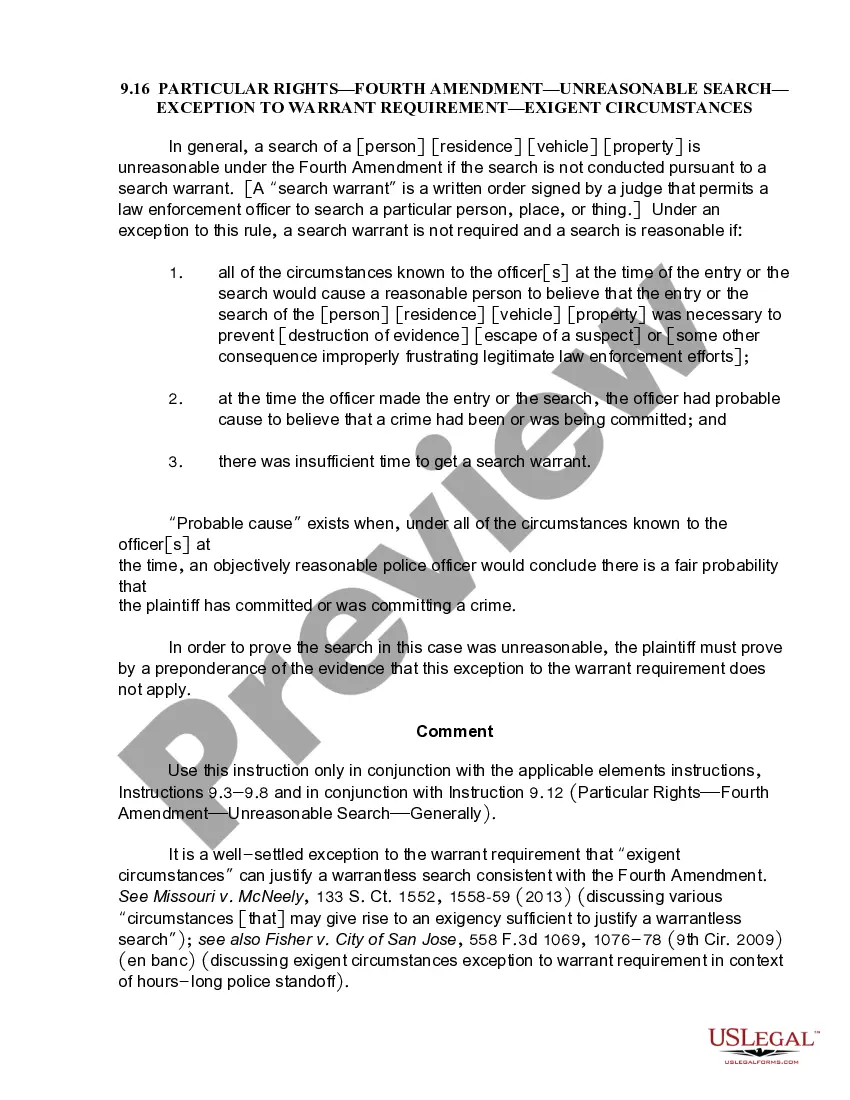
Under the exception, a vehicle may be searched without a warrant when evidence or contraband may possibly be removed from the scene due to the mobility of a vehicle such that it is not practical to secure a warrant without jeopardizing the potential evidence.
Three exceptions to the exclusionary rule are "attenuation of the taint," "independent source," and "inevitable discovery."
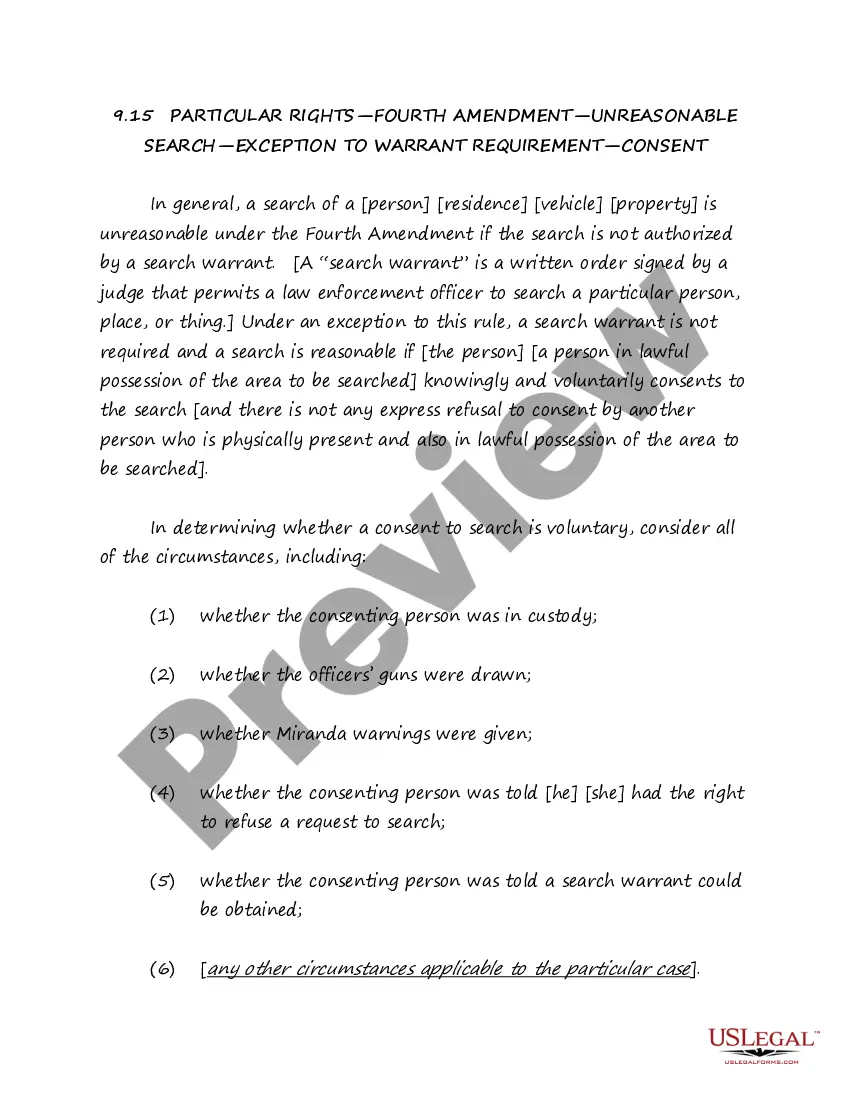
Other well-established exceptions to the warrant requirement include consensual searches, certain brief investigatory stops, searches incident to a valid arrest, and seizures of items in plain view. There is no general exception to the Fourth Amendment warrant requirement in national security cases.
A routine traffic stop is justified if the police officer has a reasonable suspicion that the occupant is unlicensed or the vehicle is unregistered. The officer does not need a reasonable suspicion of the occupant's involvement in criminal activities.
The Fourth Amendment prevents the government from performing unreasonable searches and seizures. A traffic stop would be considered a seizure under the Fourth Amendment and in order to be shown as reasonable, the officer needs to show that there is reasonable suspicion to pull over your car.