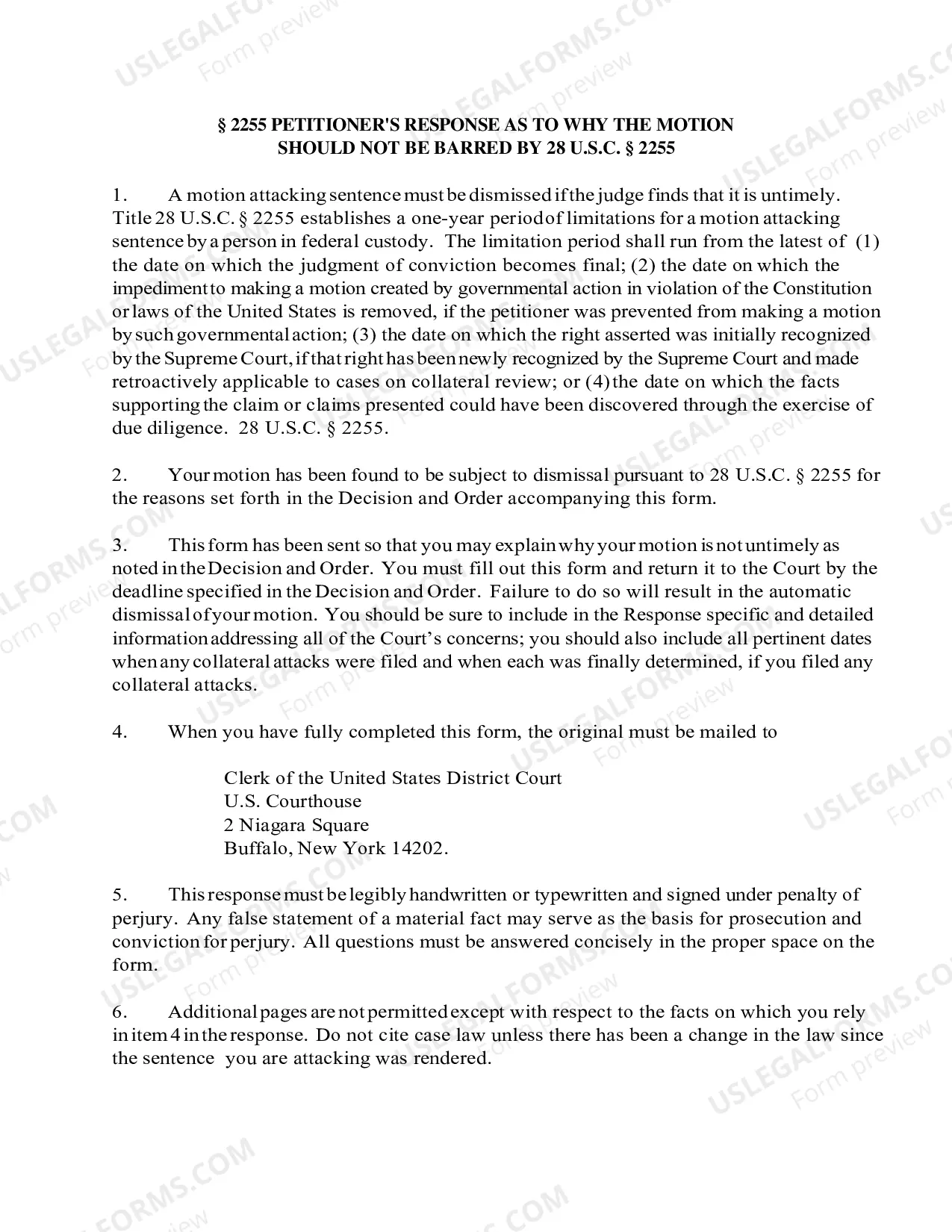
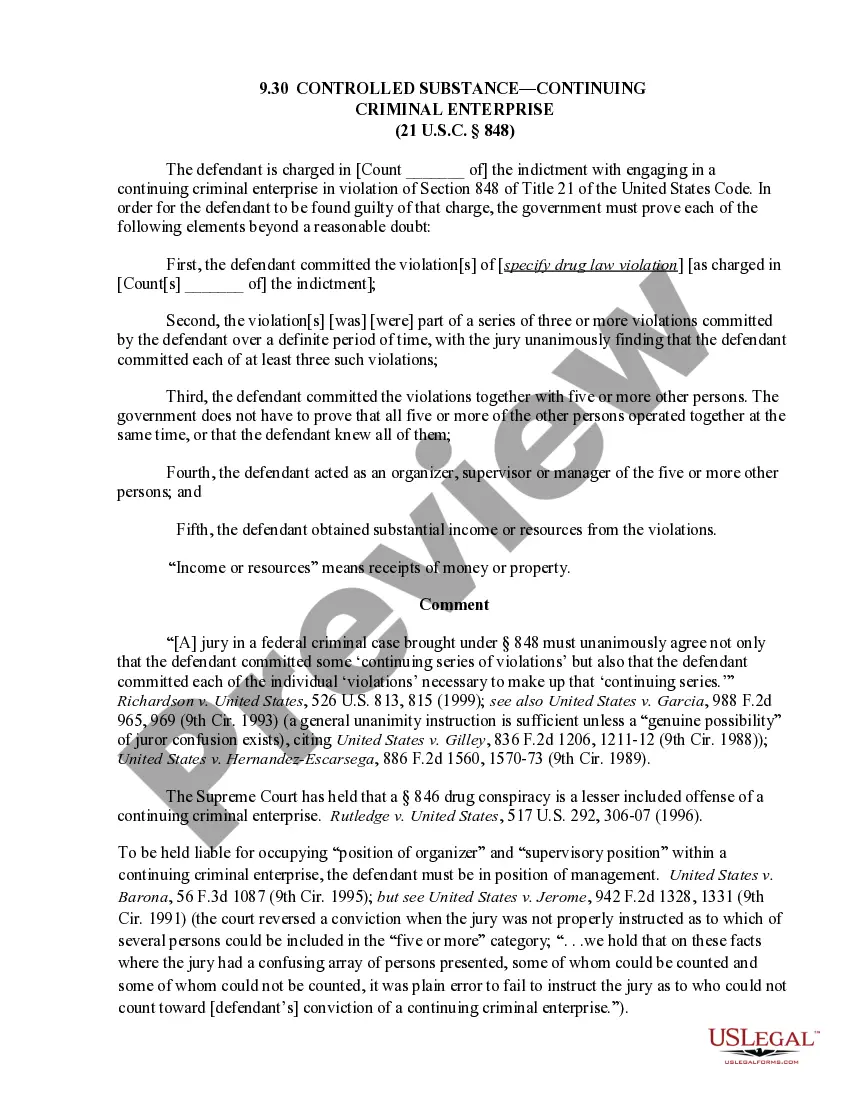
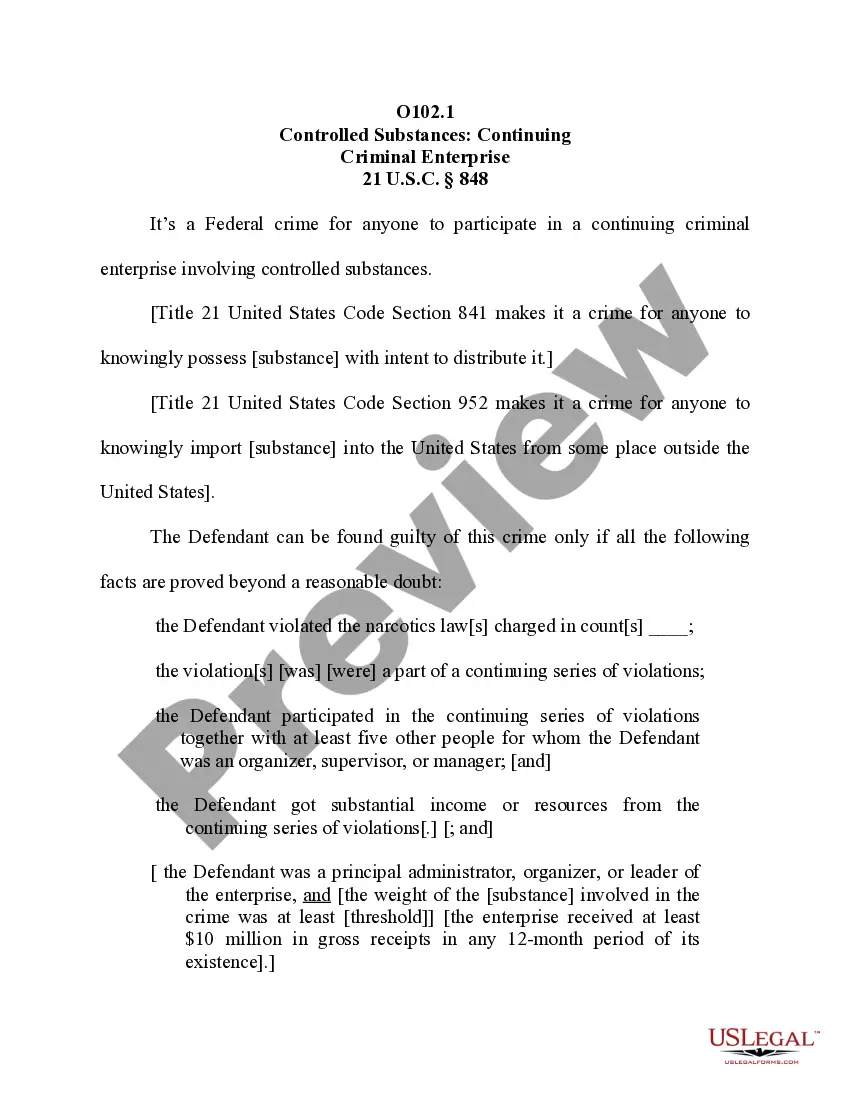
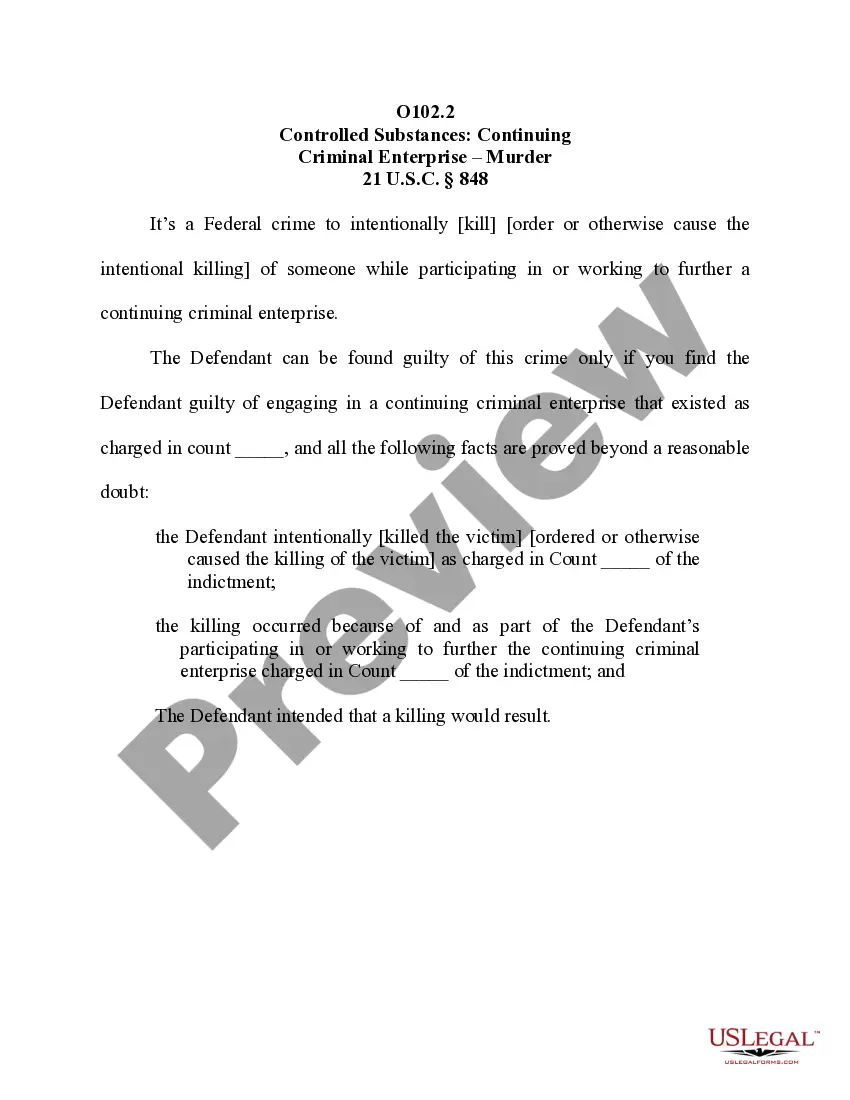
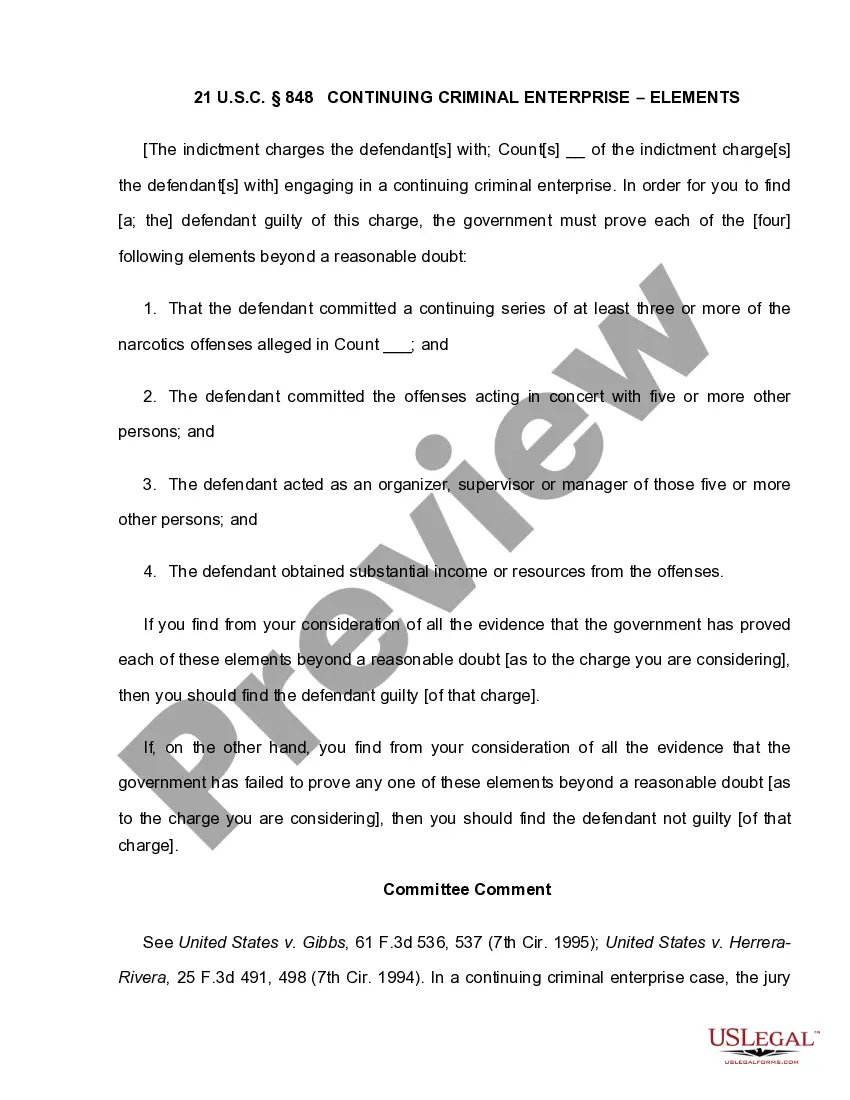
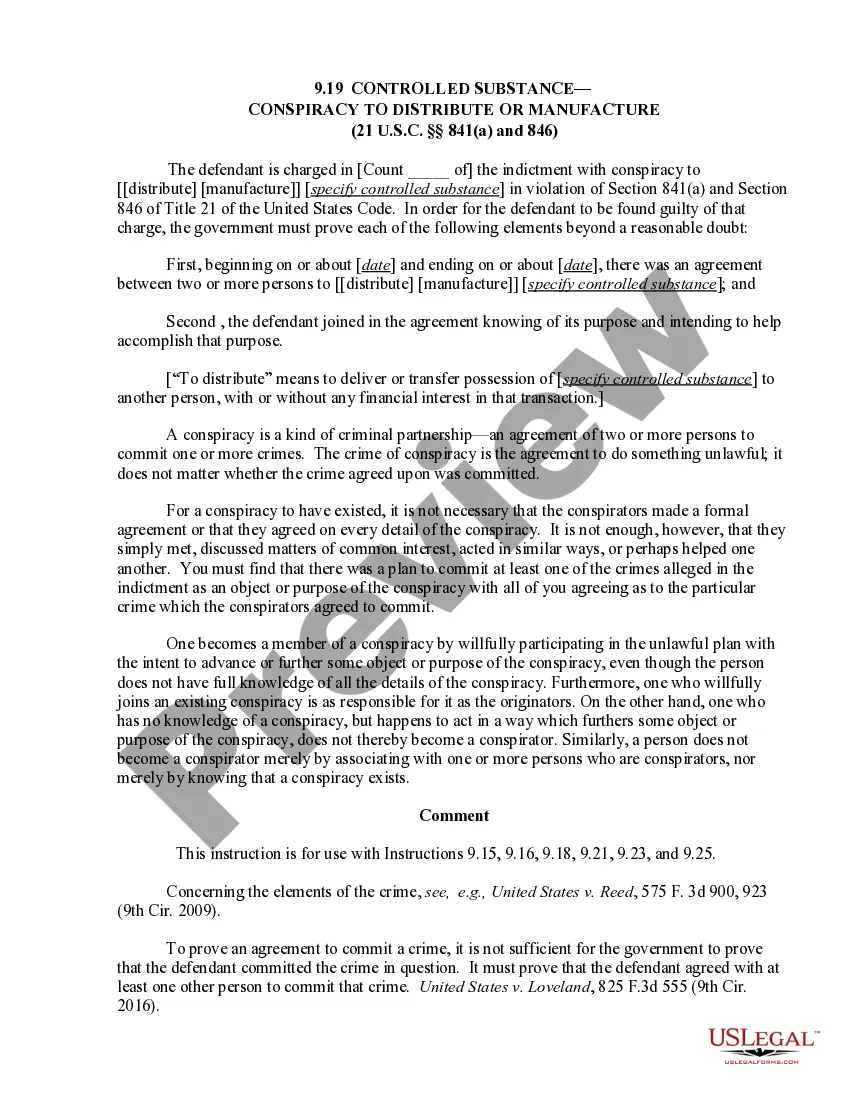
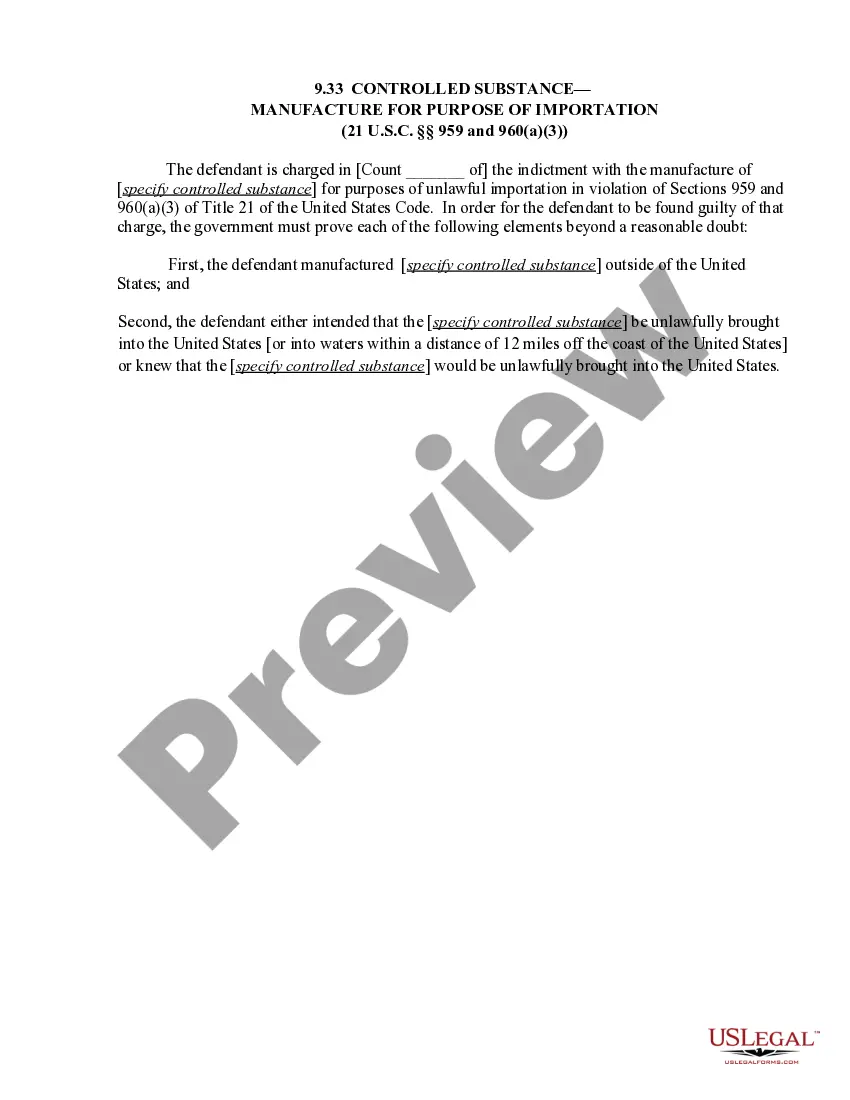
9.30 Controlled Substance-Continuing Criminal Enterprise (21 U.S.C. Sec. 848)
Notarization requirements for this form
This form does not typically require notarization to be legally valid. However, some jurisdictions or document types may still require it. US Legal Forms provides secure online notarization powered by Notarize, available 24/7 for added convenience.
Get your form ready online
Our built-in tools help you complete, sign, share, and store your documents in one place.
Make edits, fill in missing information, and update formatting in US Legal Forms—just like you would in MS Word.
Download a copy, print it, send it by email, or mail it via USPS—whatever works best for your next step.
Sign and collect signatures with our SignNow integration. Send to multiple recipients, set reminders, and more. Go Premium to unlock E-Sign.
If this form requires notarization, complete it online through a secure video call—no need to meet a notary in person or wait for an appointment.
We protect your documents and personal data by following strict security and privacy standards.

Make edits, fill in missing information, and update formatting in US Legal Forms—just like you would in MS Word.

Download a copy, print it, send it by email, or mail it via USPS—whatever works best for your next step.

Sign and collect signatures with our SignNow integration. Send to multiple recipients, set reminders, and more. Go Premium to unlock E-Sign.

If this form requires notarization, complete it online through a secure video call—no need to meet a notary in person or wait for an appointment.

We protect your documents and personal data by following strict security and privacy standards.
Looking for another form?
Form popularity
FAQ
Any person who engages in a continuing criminal enterprise shall be sentenced to a term of imprisonment which may not be less than 20 years and which may be up to life imprisonment, to a fine not to exceed the greater of that authorized in ance with the provisions of title 18 or $2,000,000 if the defendant is an
But what do we mean by ?criminal enterprise?? The FBI defines a criminal enterprise as ?a group of individuals with an identified hierarchy, or comparable structure, engaged in significant criminal activity.? Typically, we think of drug cartels, racketeering enterprises, or even the Gestapo.
The Continuing Criminal Enterprise Statute (abbreviated CCE) and the Racketeer Influenced and Corrupt Organizations Act (RICO) are two complex federal laws specifically designed to target organized crime.
State predicate crimes include murder, kidnaping, gambling, arson, robbery, bribery, extortion, and drug offenses. The statute defines enterprise to include any individual, partnership, corporation, association, or other legal entity, or any group of individuals who, though not a legal entity, are associated in fact.
The Continuing Criminal Enterprise Statute (commonly referred to as CCE Statute or The Kingpin Statute) is a Federal law that targets large-scale drug traffickers who are responsible for long-term and elaborate drug conspiracies.
The continuing criminal enterprise statute provides expanded opportunities for the government to investigate, prosecute, and punish persons involved in distributing illegal drugs.
Of gambling, prostitution, drug offenses, obscenity, theft, fraud, extortion, counterfeiting, bribery, obstruction of justice, cigarette boot- legging, and labor law violations. State predicate crimes include murder, kidnaping, gambling, arson, robbery, bribery, extortion, and drug offenses.
The Continuing Criminal Enterprise Statute is a federal law that punishes large scale drug traffickers. This serious crime can result in a mandatory minimum sentence of 20 years in prison and fines of up to $2 million.