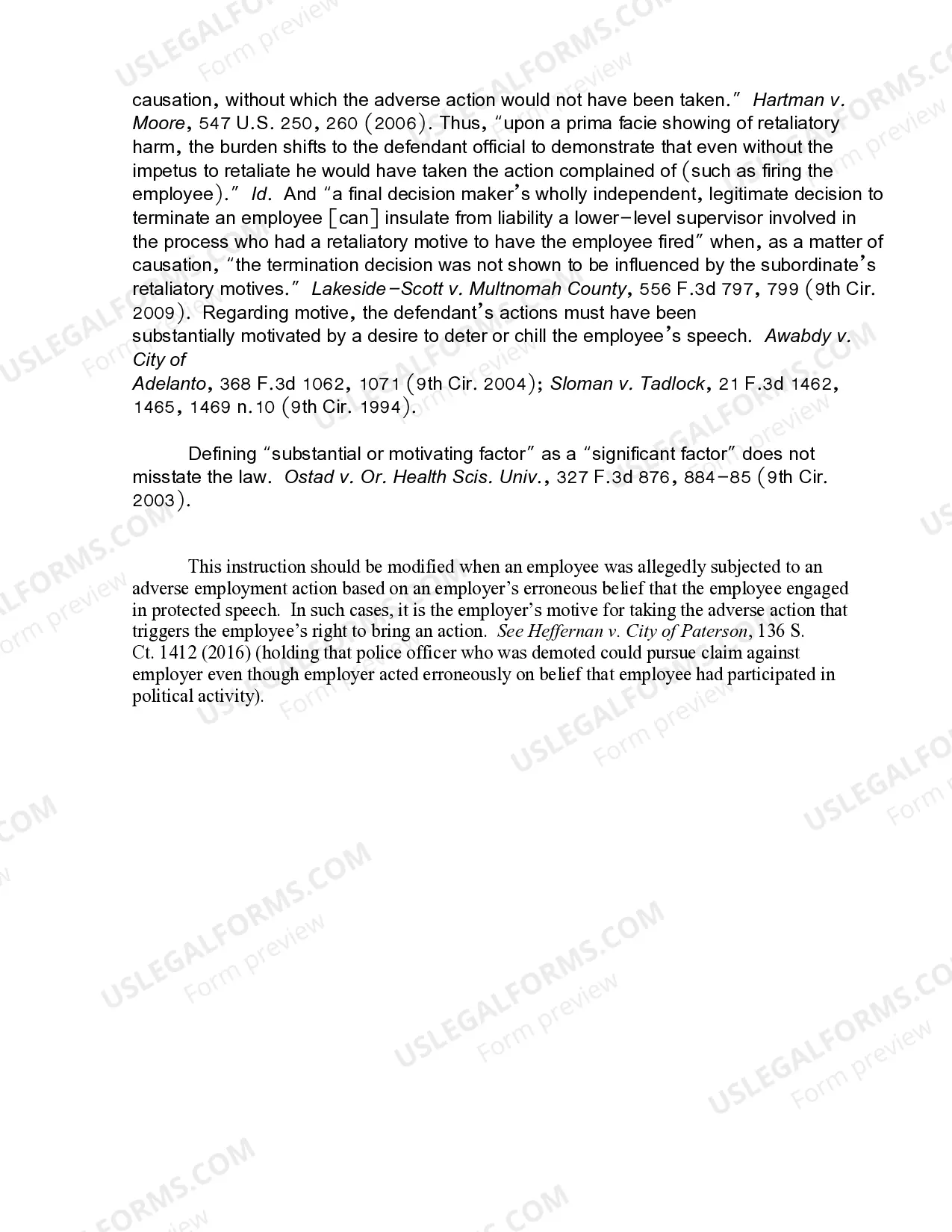
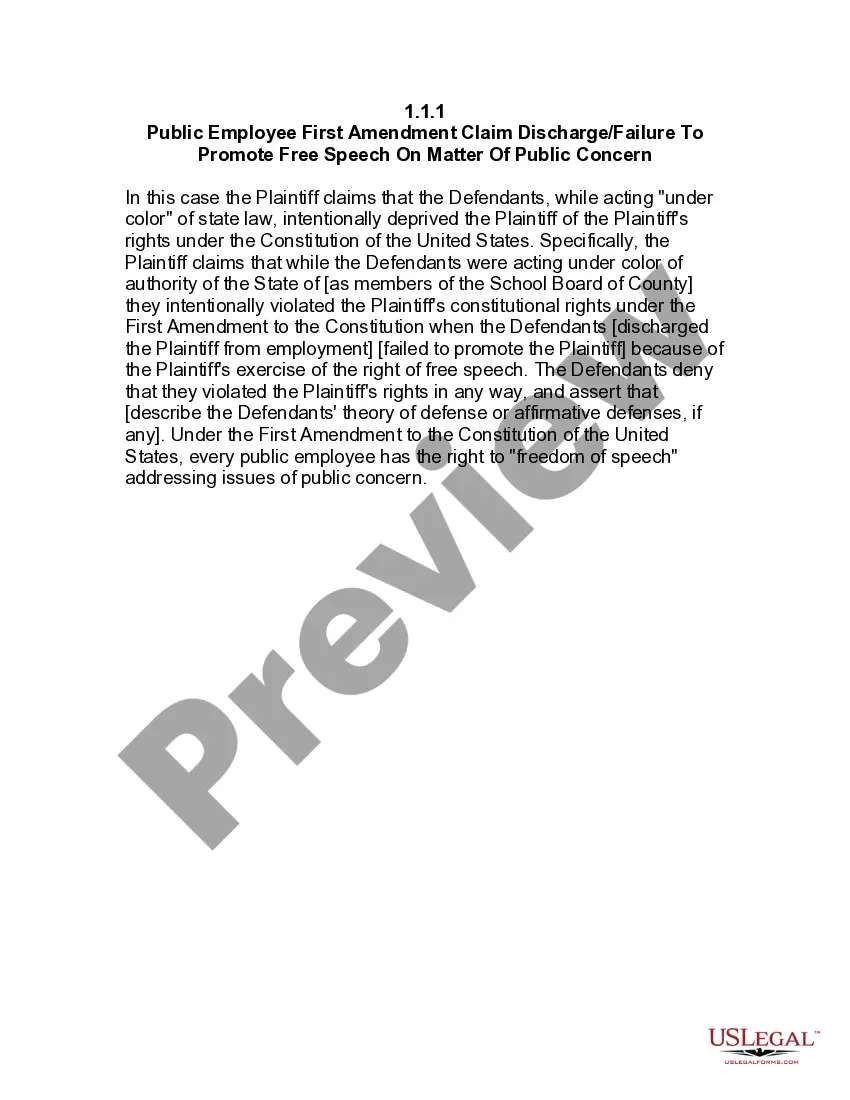
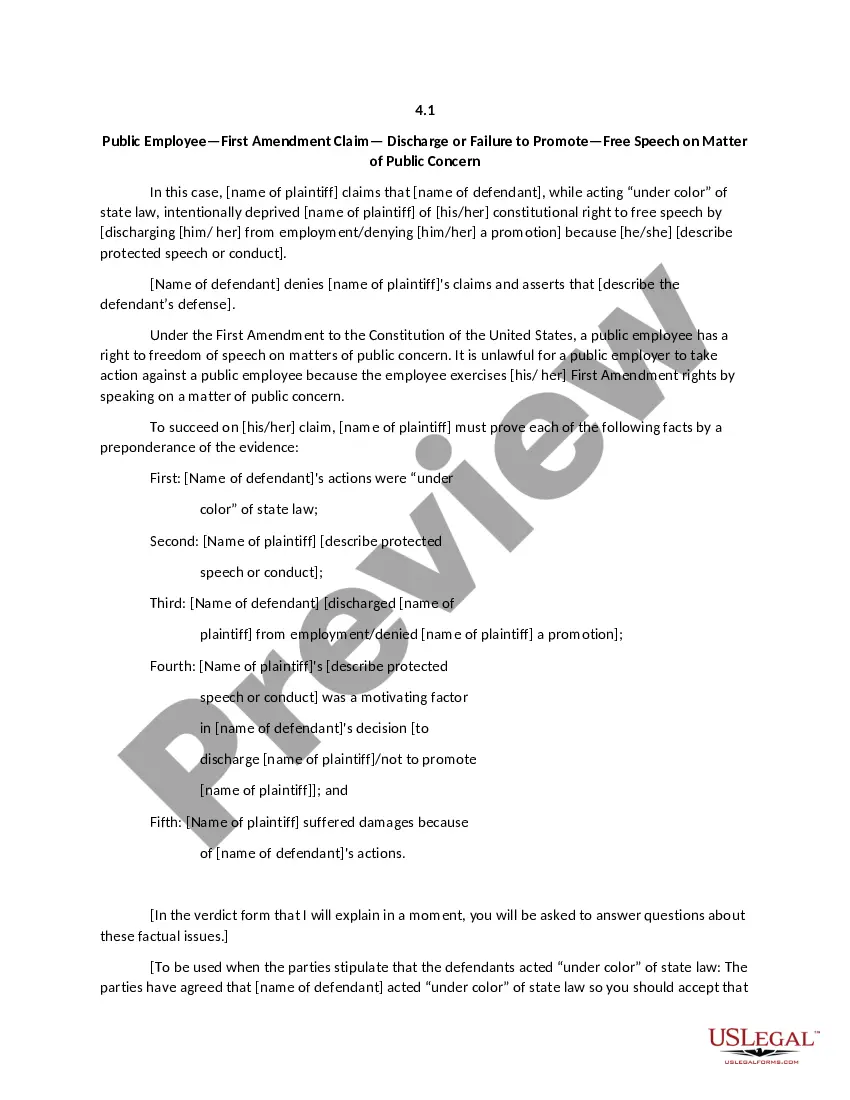
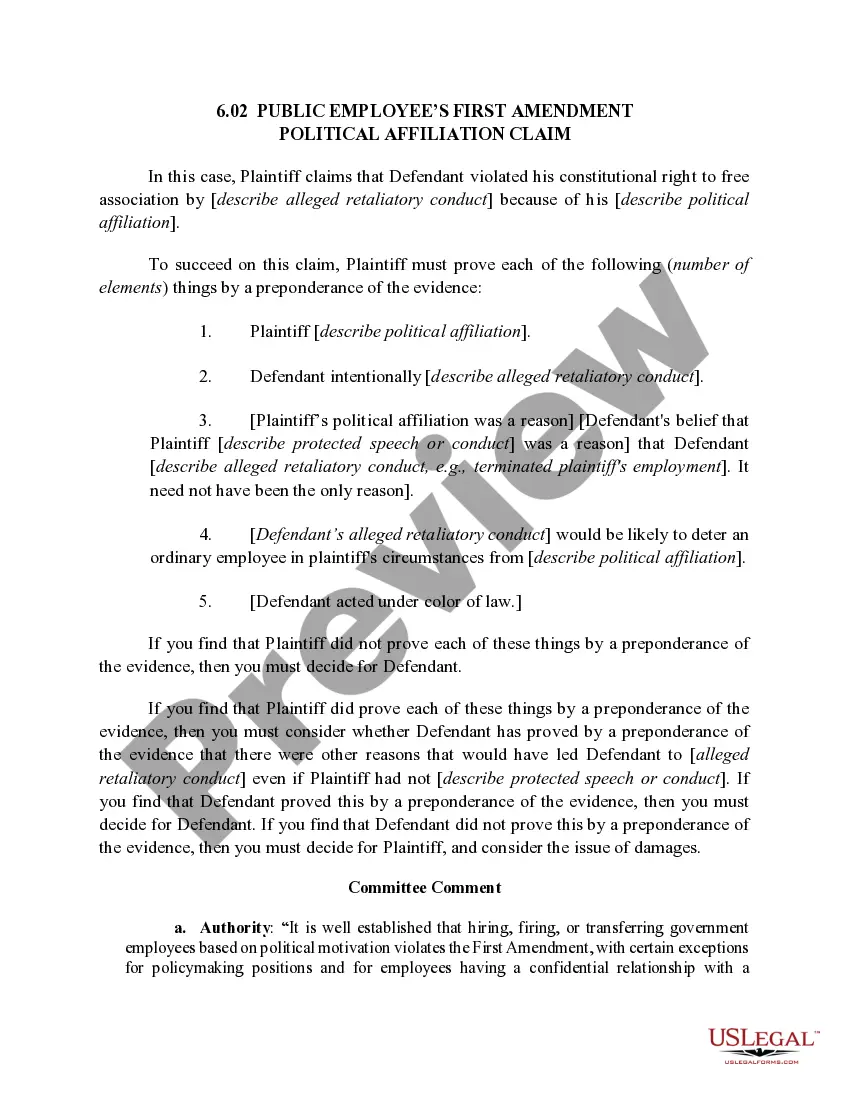
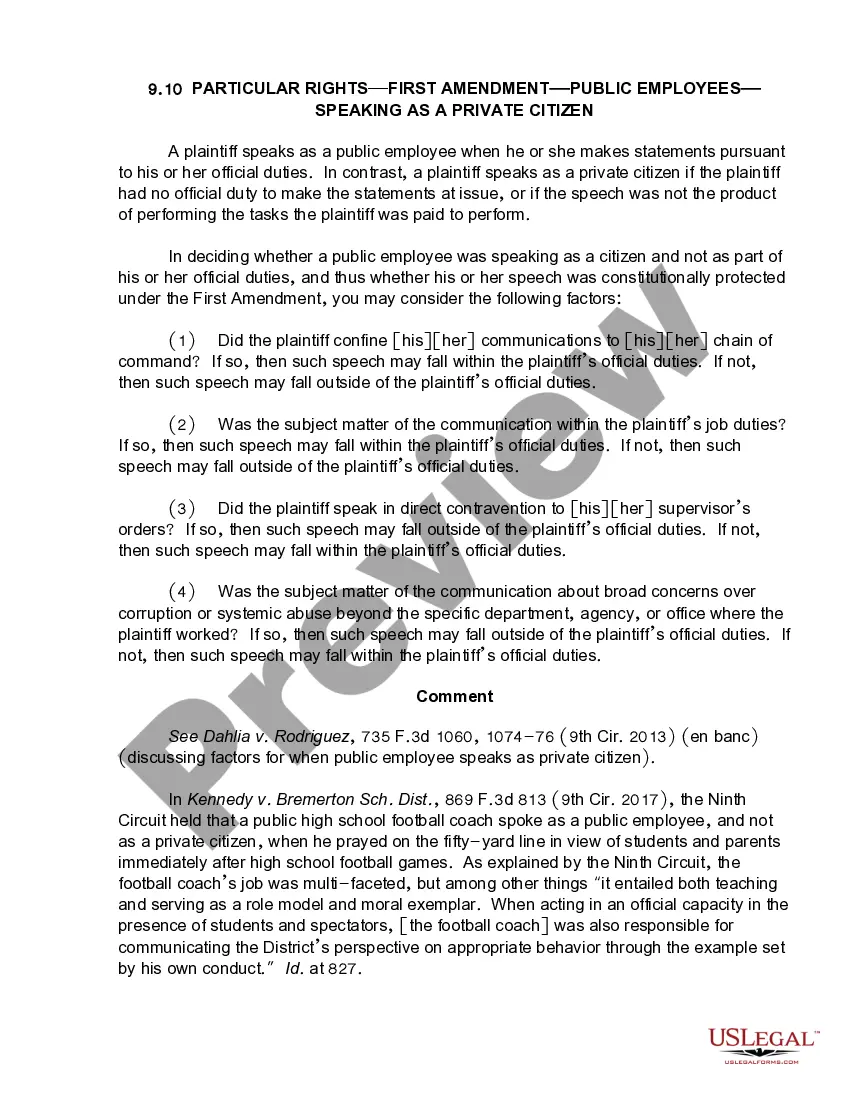
9.9 Particular Rights-First Amendment-Public Employees-Speech
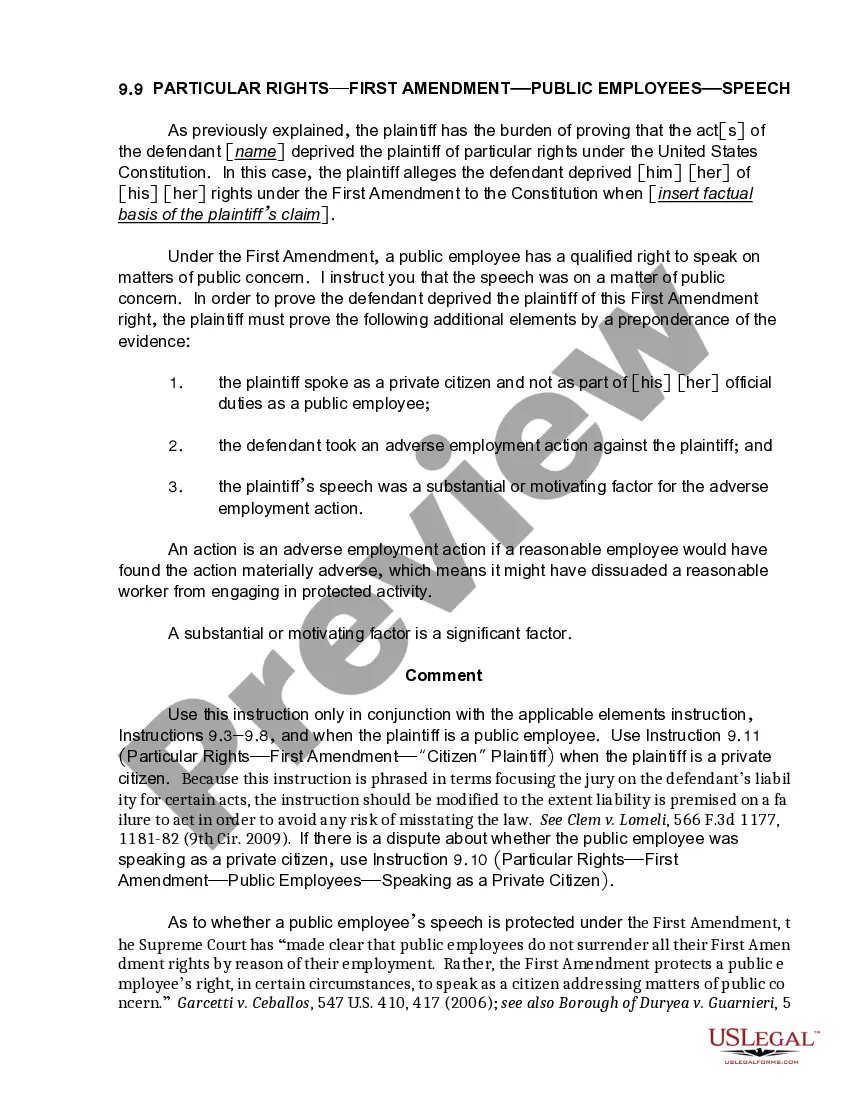
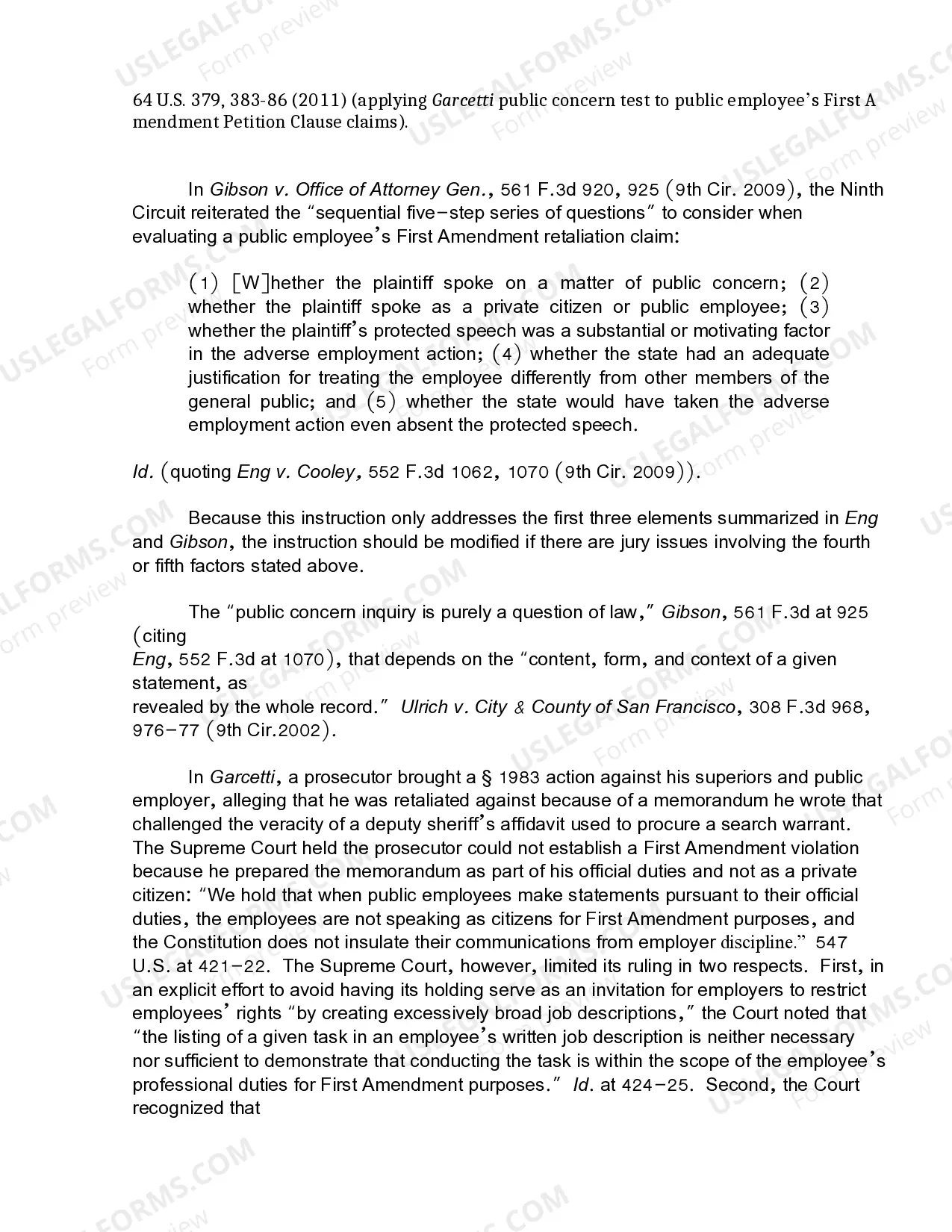
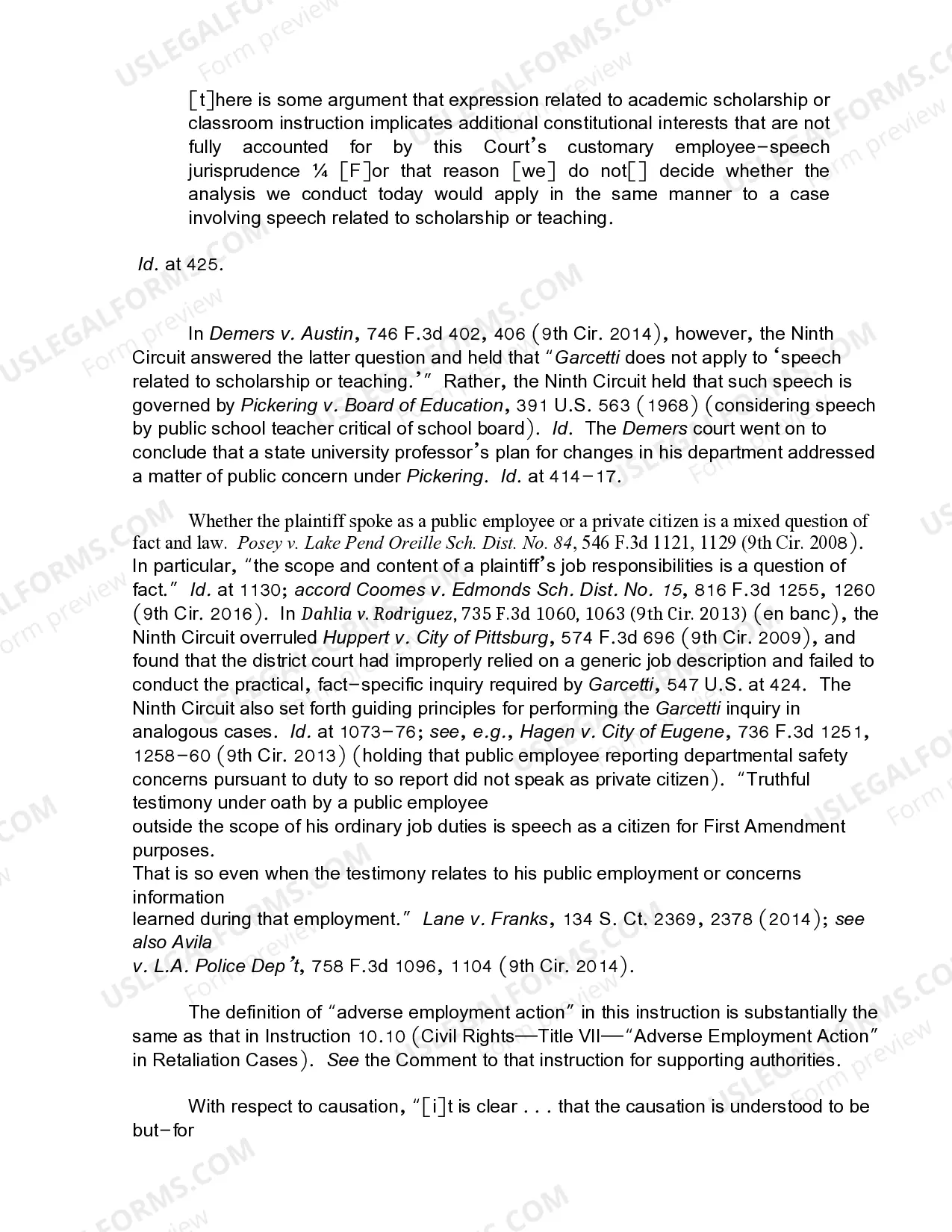
Does this form need to be notarized?
Notarization is generally not required for this form. However, certain states or situations might demand it. You can complete notarization online through US Legal Forms, powered by Notarize, using a verified video call available anytime.
Get your form ready online
Our built-in tools help you complete, sign, share, and store your documents in one place.
Make edits, fill in missing information, and update formatting in US Legal Forms—just like you would in MS Word.
Download a copy, print it, send it by email, or mail it via USPS—whatever works best for your next step.
Sign and collect signatures with our SignNow integration. Send to multiple recipients, set reminders, and more. Go Premium to unlock E-Sign.
If this form requires notarization, complete it online through a secure video call—no need to meet a notary in person or wait for an appointment.
We protect your documents and personal data by following strict security and privacy standards.

Make edits, fill in missing information, and update formatting in US Legal Forms—just like you would in MS Word.

Download a copy, print it, send it by email, or mail it via USPS—whatever works best for your next step.

Sign and collect signatures with our SignNow integration. Send to multiple recipients, set reminders, and more. Go Premium to unlock E-Sign.

If this form requires notarization, complete it online through a secure video call—no need to meet a notary in person or wait for an appointment.

We protect your documents and personal data by following strict security and privacy standards.
Looking for another form?
Form popularity
FAQ
If your employer is a private entity, the First Amendment offers you no protection from being fired on account of what you say. (You may still have protection from other sources described below, or in the one state that abolished employment-at-will, Montana).
As a government employee, you still have a First Amendment right to speak out on important issues. However, your government employer also has an interest in promoting an effective and efficient workplace. In this guide, we break down your speech rights under the Constitution.
If you're in the U.S., you have freedom of speech, religion, press, assembly and petition. The First Amendment is neither ?left-wing? or ?right-wing.? It can be used to push for social and political change, or to oppose change. The First Amendment is for everyone.
Courts have made clear that a person does not relinquish his or her First Amendment rights under either the state or federal constitution when accepting employment with the government.
If you work for a private employer, then, the First Amendment does not protect your speech in the workplace. Your employer can restrict your rights to free speech without implicating the First Amendment. Private employers are any entities that are not a part of the government.
Only that expression that is shown to belong to a few narrow categories of speech is not protected by the First Amendment. The categories of unprotected speech include obscenity, child ography, defamatory speech, false advertising, true threats, and fighting words.
California state law includes several laws that protect your free speech rights in the workplace, even if you work for a private employer. Two of them provide additional legal protections for your political speech and activity.