Licensing Agent Agreement
Understanding this form
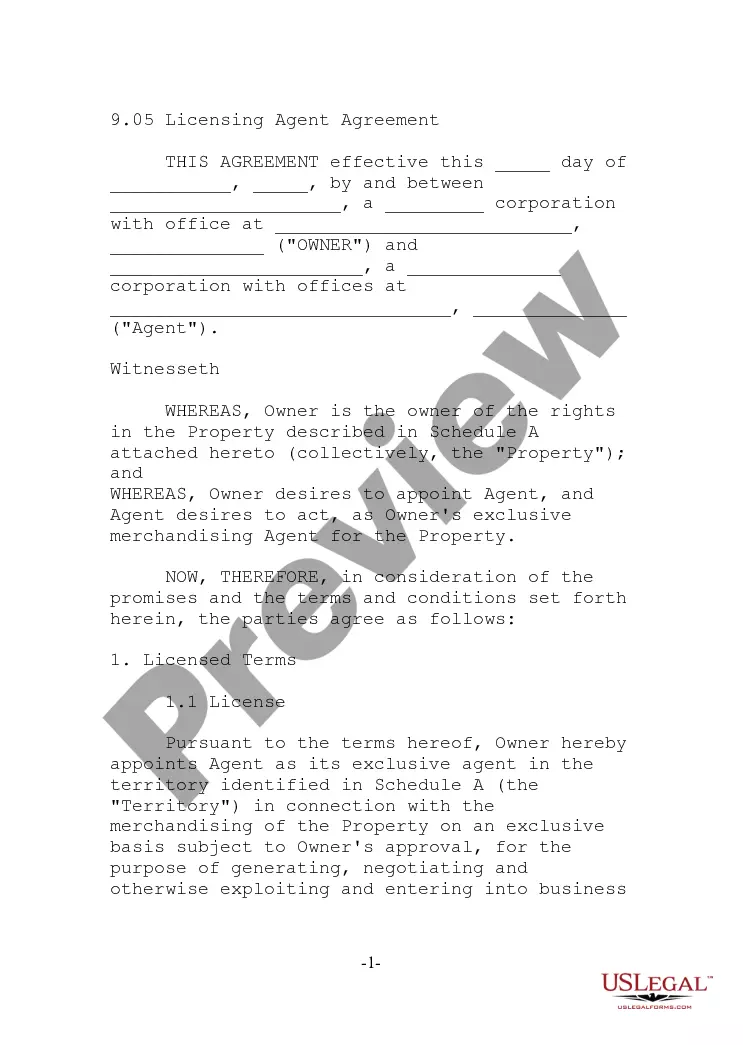
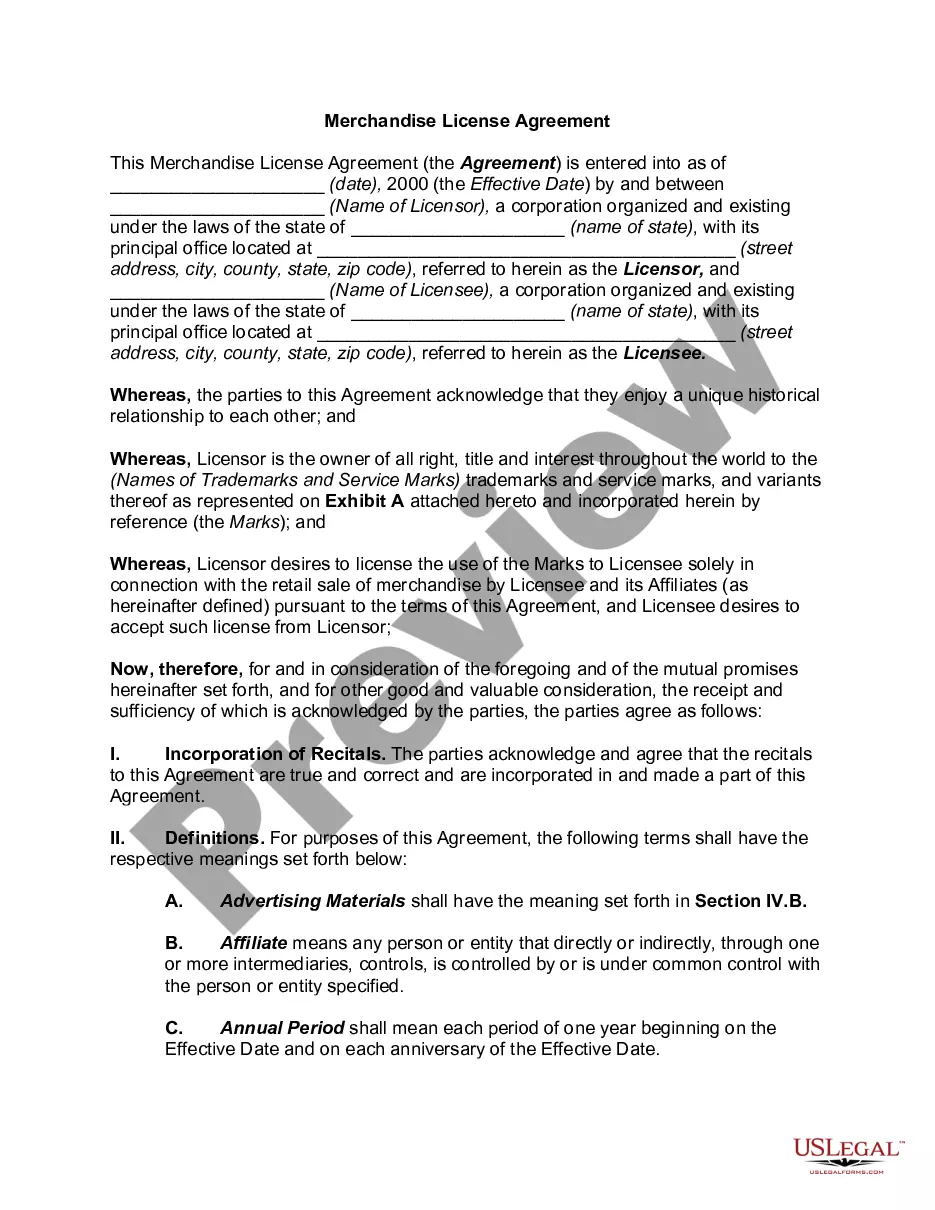
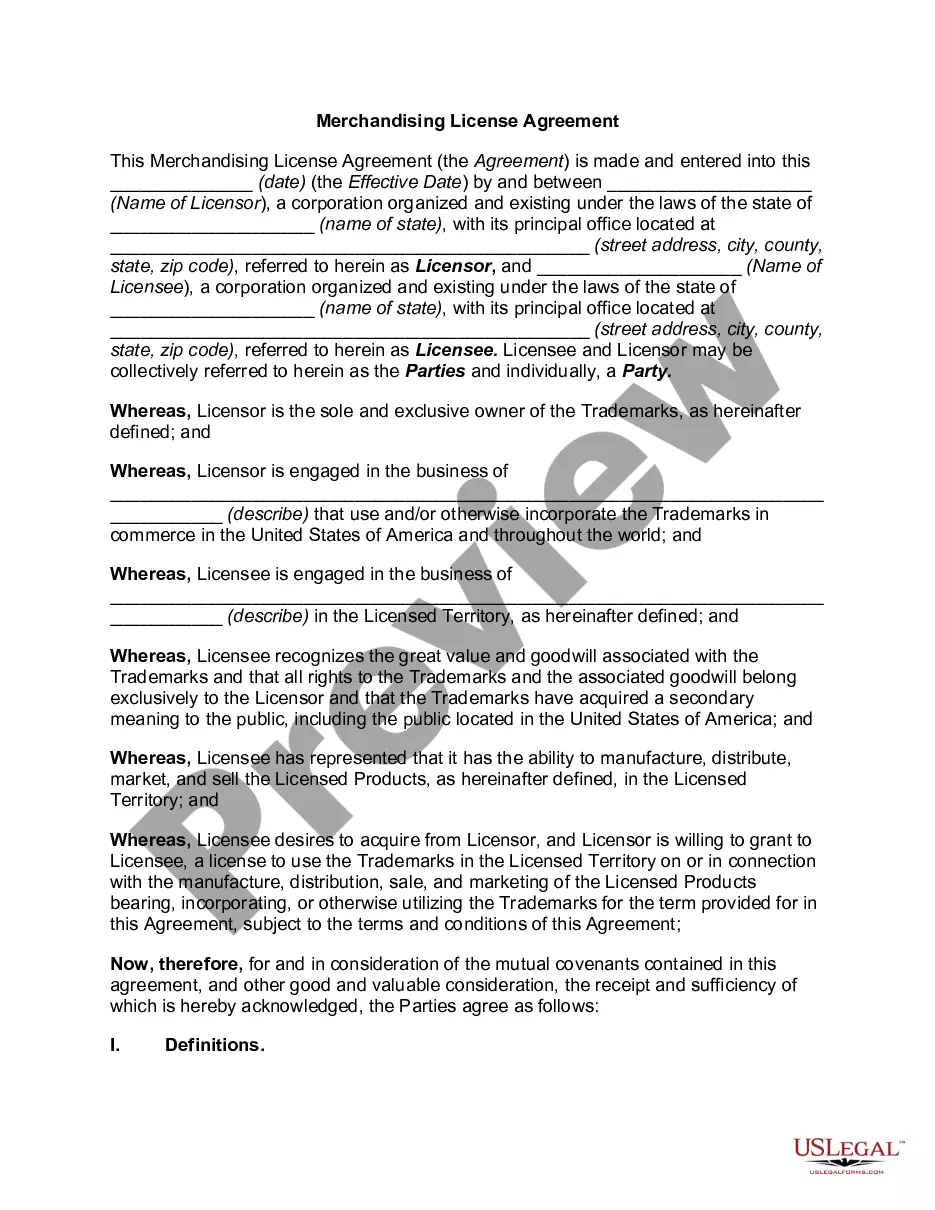
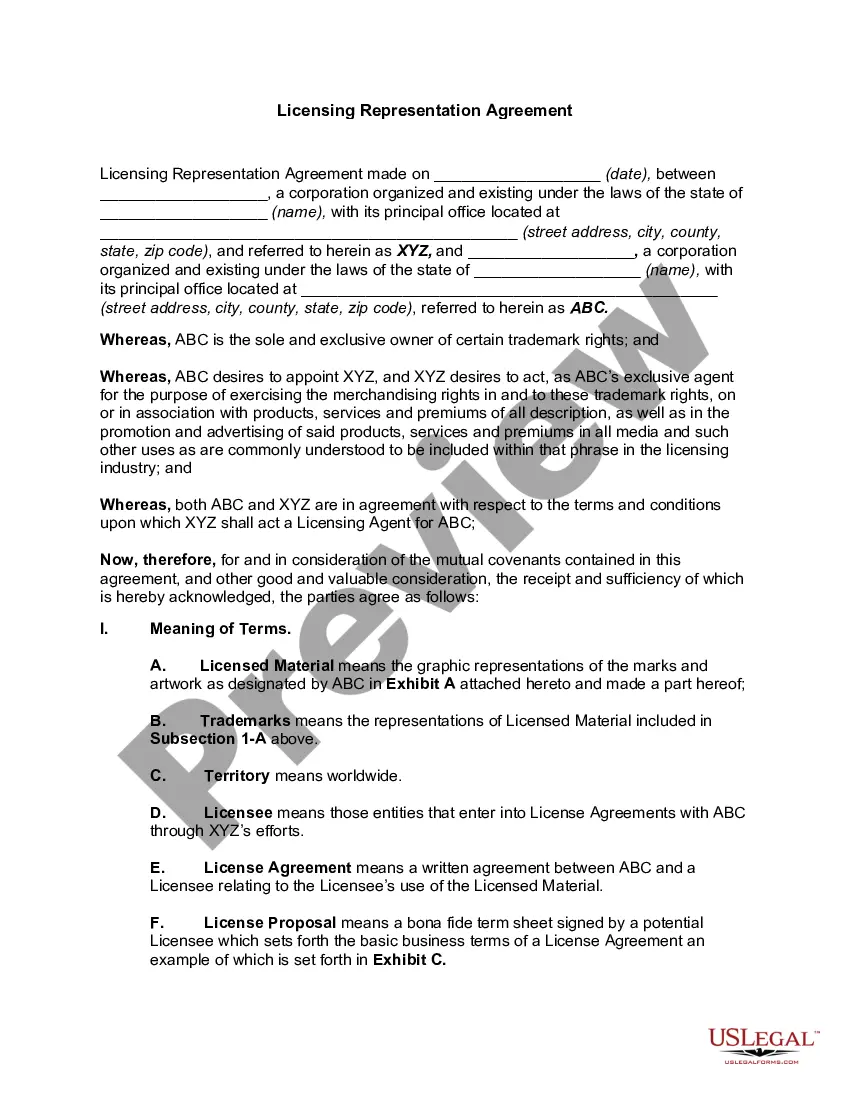
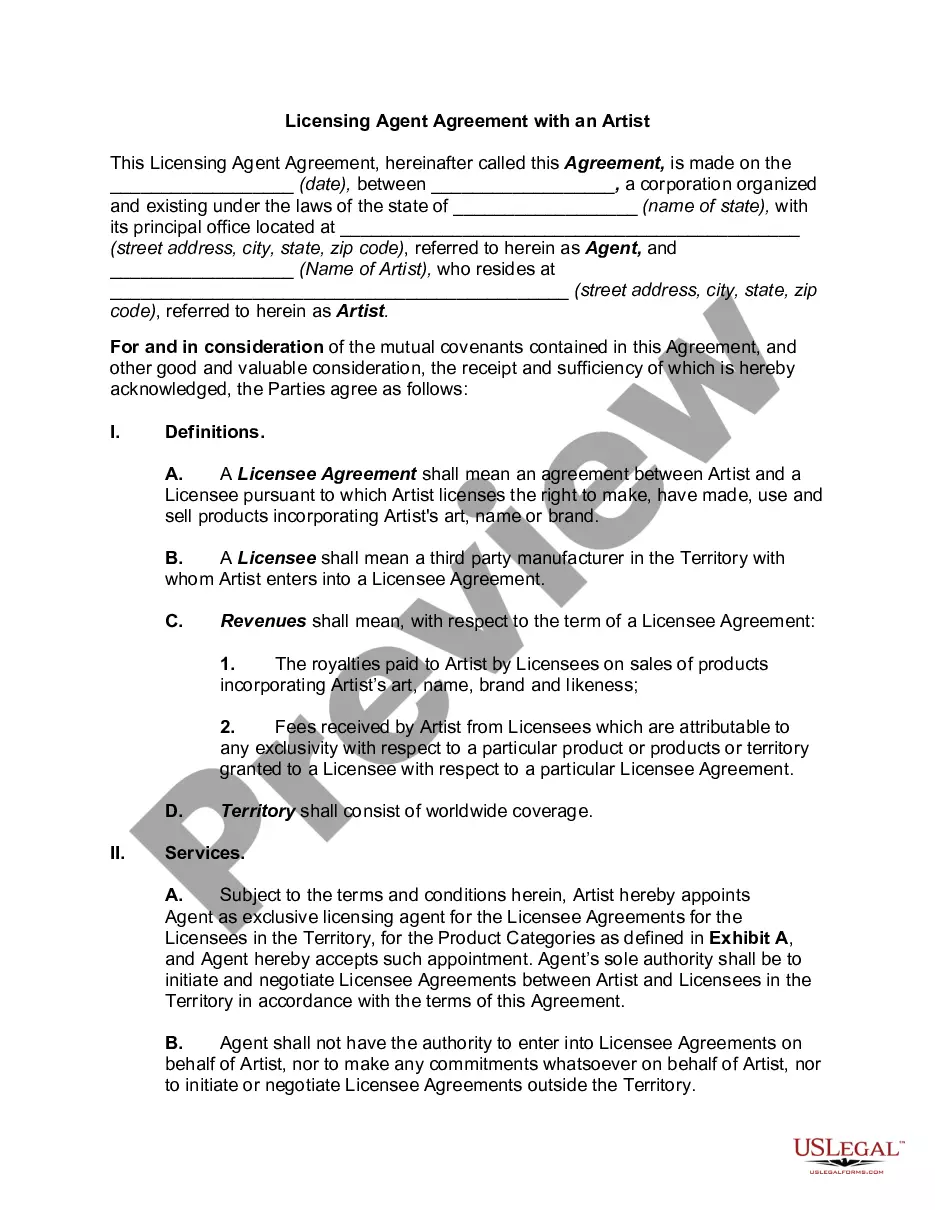
The Licensing Agent Agreement is a legal document that establishes a relationship between an owner of certain intellectual properties and an appointed agent. This form outlines the agent's exclusive rights to negotiate and secure deals for merchandising the specified properties. Unlike other agreements, this document focuses specifically on merchandising rights and covers various areas such as entertainment, new product development, and multimedia. It is adaptable, allowing owners to tailor it to fit their unique circumstances and needs.
Key components of this form
- Identification of the parties involved (owner and agent).
- Description of the licensed property and territory of exclusivity.
- Terms regarding the duration of the agreement, including termination and renewal options.
- Agentâs obligations, including negotiating licenses and monitoring third-party licensees.
- Ownerâs rights concerning oversight and approval of merchandising related to the property.
- Compensation structure for the agent based on gross income from third-party licenses.


When to use this document
This form is necessary when an entity or individual (the owner) wishes to appoint an agent to manage the merchandising rights of their intellectual property. It is typically used in scenarios such as launching a new product line, entering the entertainment industry, or expanding multimedia business opportunities. Additionally, this agreement ensures that the owner retains control over the commercialization of their properties while allowing the agent to operate on their behalf.
Intended users of this form
- Owners of intellectual properties, such as trademarks, copyrights, or patents.
- Entrepreneurs or businesses looking to expand product merchandising.
- Agents or firms specializing in merchandising and licensing.
- Individuals involved in the entertainment industry seeking to secure merchandising deals.
Instructions for completing this form
- Identify and enter the names of the owner and the agent at the beginning of the agreement.
- Specify the intellectual property and its description in Schedule A.
- Outline the exclusive territory where the agent will operate.
- Detail the terms of the agreement, including the initial term and conditions for renewal.
- Include any compensation percentages based on gross income from licensing activities.
Notarization requirements for this form
This form does not typically require notarization unless specified by local law. However, verifying all parties' identities and signatures can increase the document's validity and help avoid potential disputes.
Get your form ready online
Our built-in tools help you complete, sign, share, and store your documents in one place.
Make edits, fill in missing information, and update formatting in US Legal Forms—just like you would in MS Word.
Download a copy, print it, send it by email, or mail it via USPS—whatever works best for your next step.
Sign and collect signatures with our SignNow integration. Send to multiple recipients, set reminders, and more. Go Premium to unlock E-Sign.
If this form requires notarization, complete it online through a secure video call—no need to meet a notary in person or wait for an appointment.
We protect your documents and personal data by following strict security and privacy standards.

Make edits, fill in missing information, and update formatting in US Legal Forms—just like you would in MS Word.

Download a copy, print it, send it by email, or mail it via USPS—whatever works best for your next step.

Sign and collect signatures with our SignNow integration. Send to multiple recipients, set reminders, and more. Go Premium to unlock E-Sign.

If this form requires notarization, complete it online through a secure video call—no need to meet a notary in person or wait for an appointment.

We protect your documents and personal data by following strict security and privacy standards.
Common mistakes to avoid
- Failing to accurately define the licensed property and scope of territory.
- Neglecting to specify the renewal terms clearly.
- Overlooking to include signatures from both parties upon completion.
- Not providing a complete description of the agent's obligations.
Benefits of completing this form online
- Convenient downloading for immediate access and printing.
- Editability to customize the form according to specific needs.
- Reliable templates drafted by licensed attorneys to ensure legal compliance.
- This agreement is enforceable in a court of law, provided all parties have signed it and it is executed properly.
- The obligations and rights outlined within this agreement must be adhered to by both the owner and the agent to ensure compliance.
Key takeaways
- The Licensing Agent Agreement facilitates a clear relationship between property owners and their agents.
- It is essential to accurately define property, obligations, and compensation terms.
- Using this form can streamline the process of licensing and merchandising rights.
- Intellectual Property: Creations of the mind, such as inventions, literary works, designs, and symbols.
- Licensing: The act of permitting someone to use or produce a product under the owner's intellectual property.
- Agent: A person or entity authorized to act on behalf of another.
Looking for another form?
Form popularity
FAQ
Although rates ranging from 3% to 8% of net sales are common, each licensing agreement is unique and the only consensus that matters with respect to royalty rates is the one that occurs between the licensor and the licensee as a result of negotiations.
Exclusive or non-exclusive. In an exclusive license, the intellectual property holder is licensing the work only to one person, for that particular use/territory. Territory. Use. Attribution. Derivative works. Confidentiality. Time frame. Termination.
Download a template for a licensing agreement. Choose your role as the licensor or licensee. Define the license(s) in the agreement. Decide whether the license is exclusive or not. Settle the matter of fees and payment schedule. Add a renewal date and rules.
A license agreement is a business contract between two parties. The licensor (the seller of the license) owns the asset being licensed and the licensee (the buyer) pays for the right to use the license. The licensee pays royalties to the owner in exchange for the right to sell the product or use the technology.
An example of a licensing agreement is a contract between the copyright holders of software and another company, allowing the latter to use the computer software for their daily business operations.
In a typical licensing agreement, the licensor agrees to provide the licensee with intellectual property rights such as the licensor's technology, brand name, or product creation know-how.
The 3 P's of collegiate licensing are protection, promotion, and profit.
An example of a licensing agreement is a contract between the copyright holders of software and another company, allowing the latter to use the computer software for their daily business operations.