Software Sales and License - Back Agreement
Understanding this form
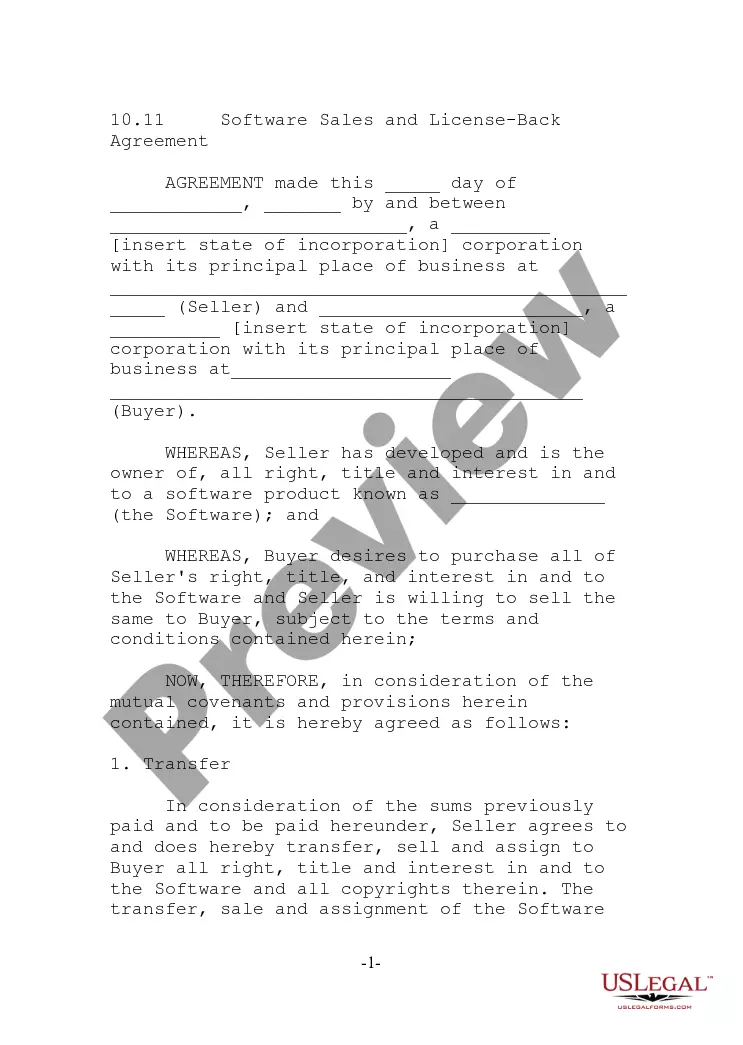
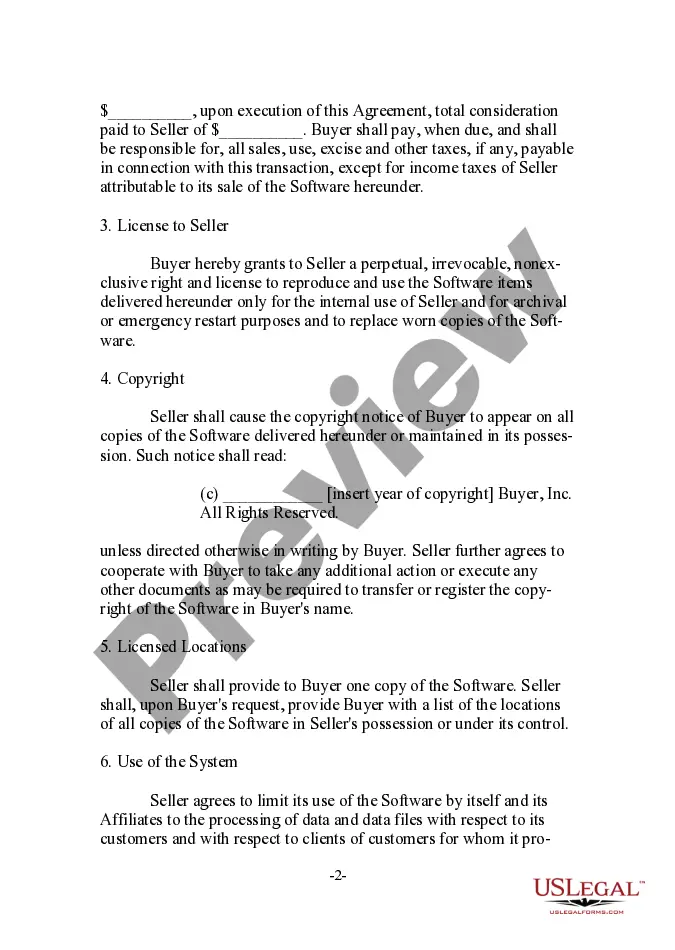
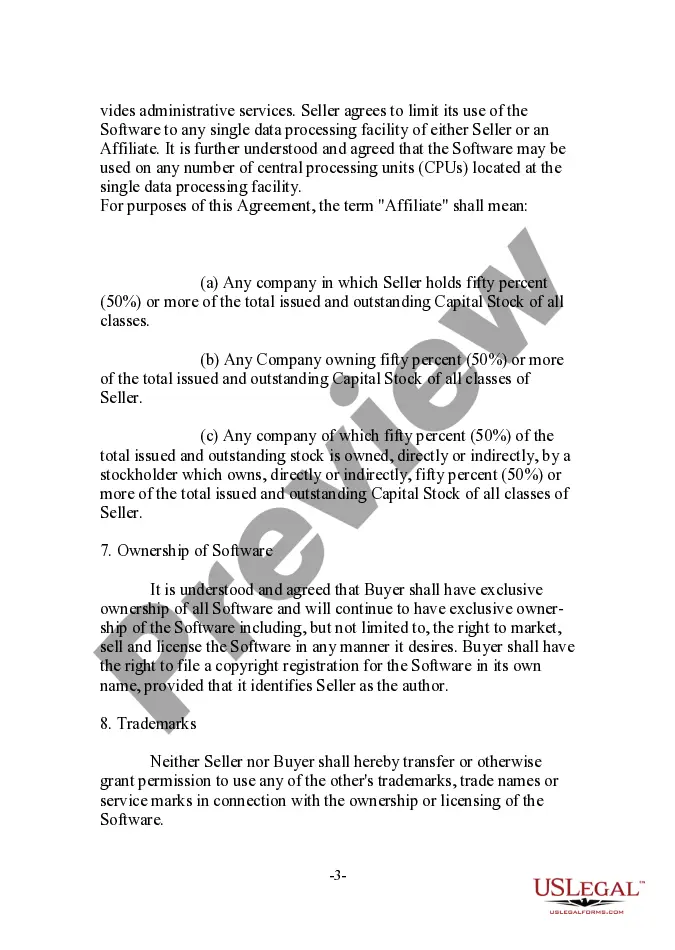
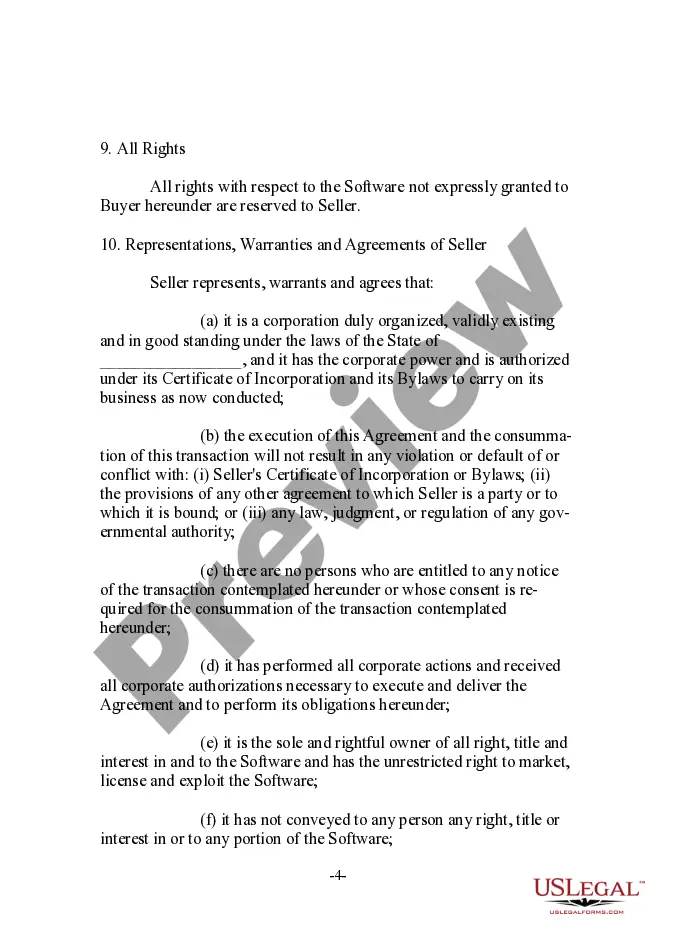
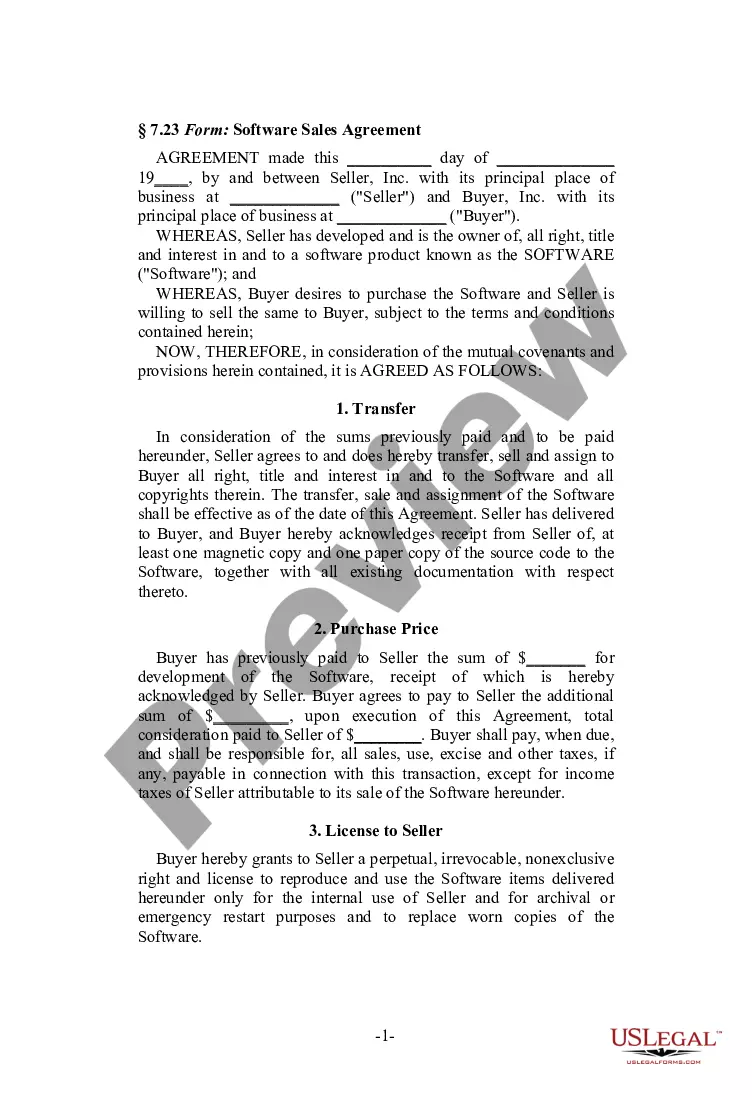
The Software Sales and License-Back Agreement is a legal document that outlines the terms for the sale of software from one party (the Seller) to another (the Buyer), while allowing the Seller certain usage rights. This agreement ensures that the Seller transfers all rights and ownership of the software to the Buyer, while retaining a license to use the software for internal purposes. It is essential for protecting intellectual property in software transactions and differs from other software agreements by combining both sales and licensing elements in a single document.
Main sections of this form
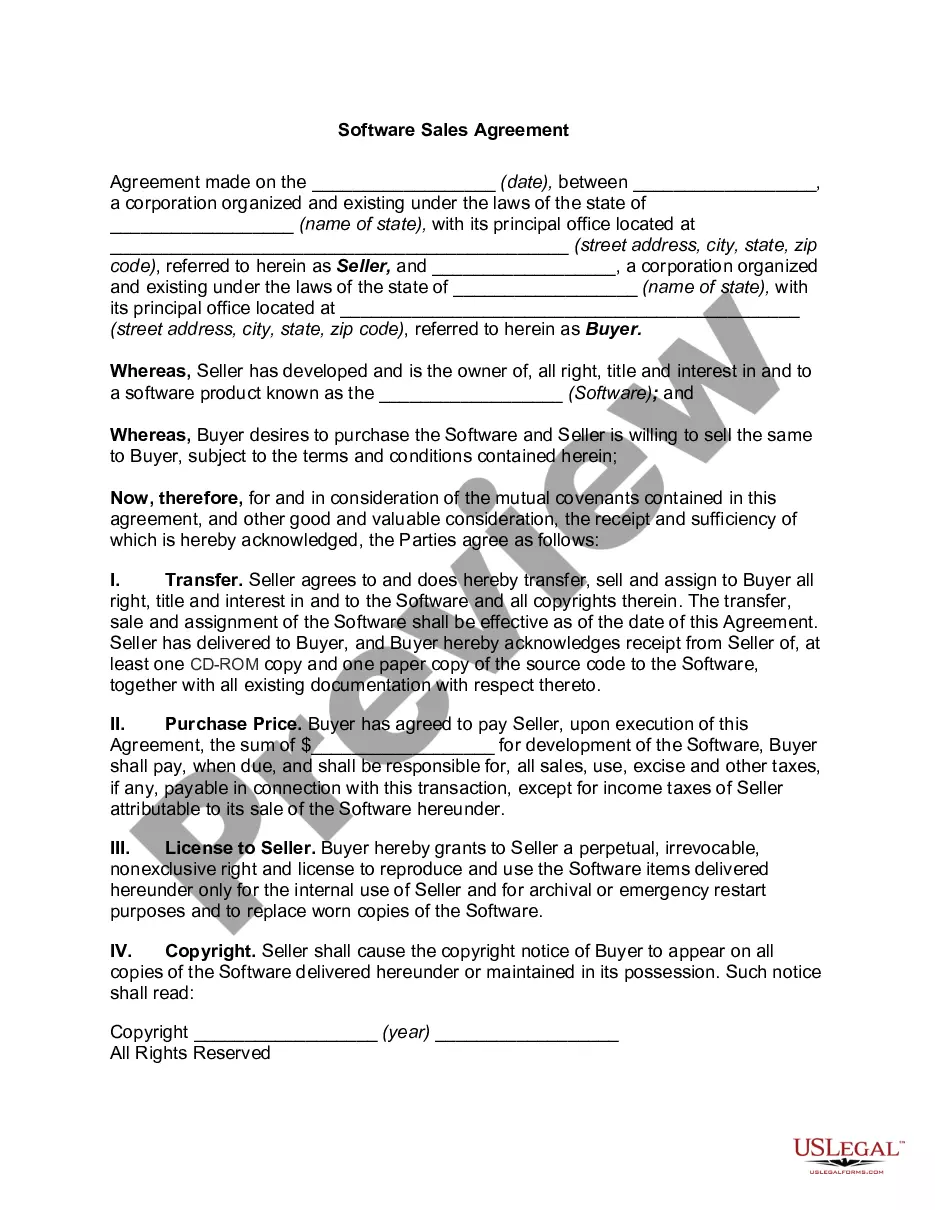
- Transfer of Ownership: Describes the transfer of software rights from Seller to Buyer.
- Purchase Price: Specifies the amounts to be paid for the software and related liabilities.
- License Rights: Grants the Seller a license to use the software for specific internal purposes.
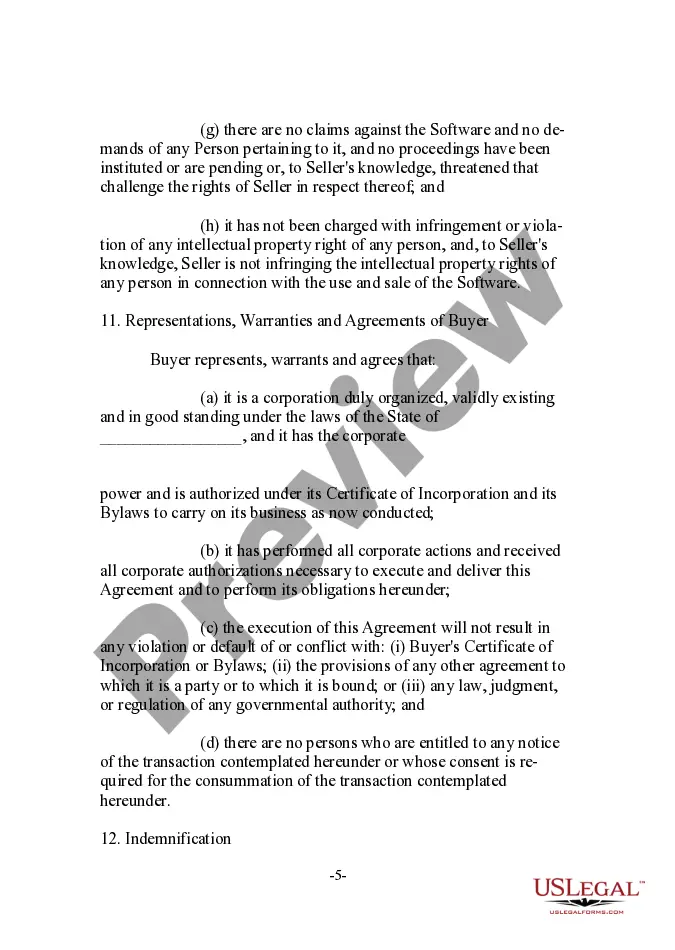
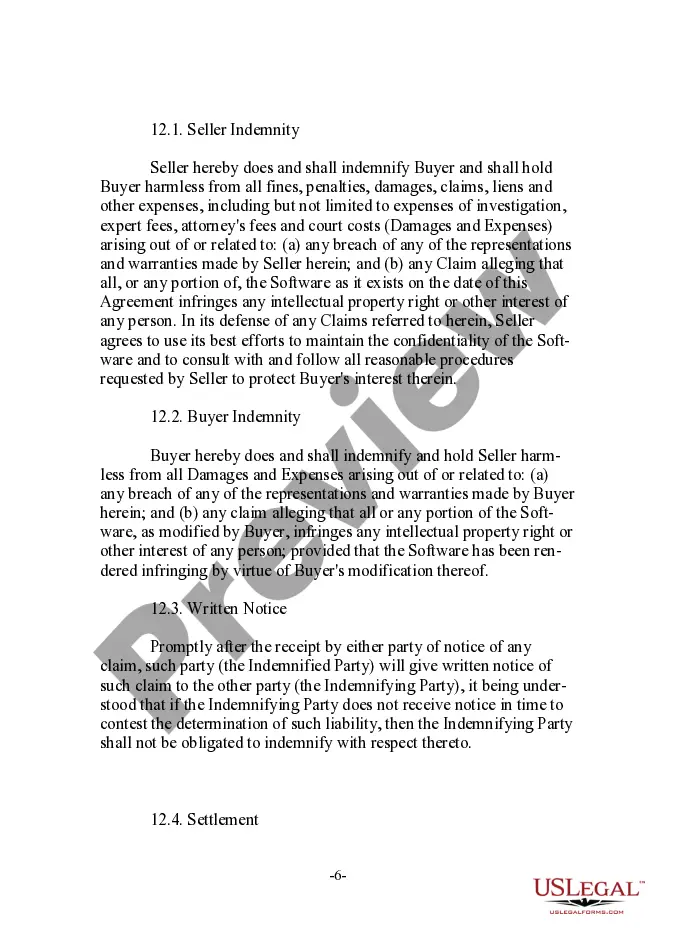
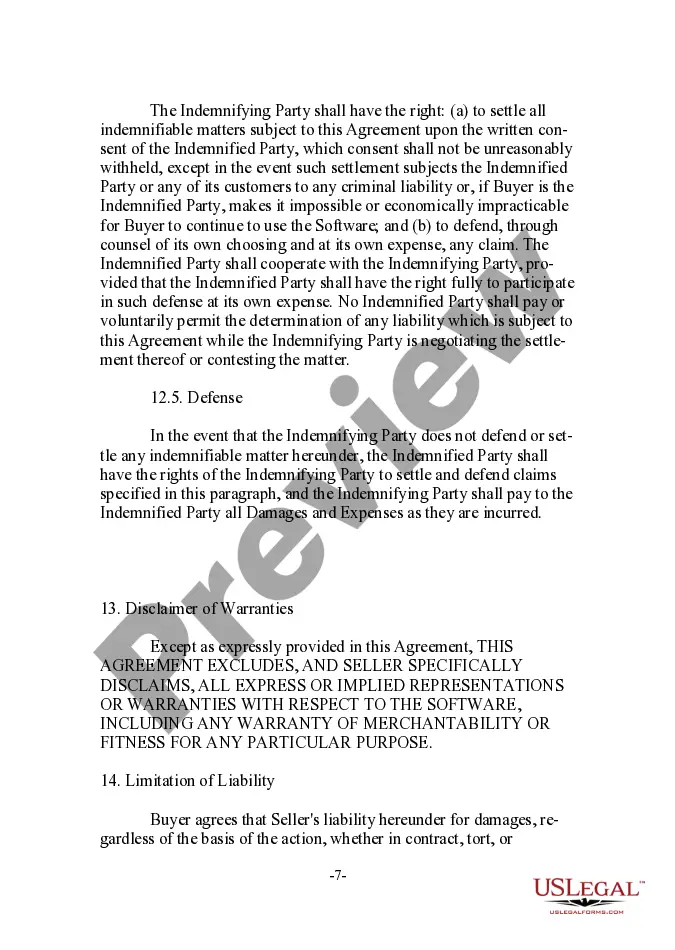
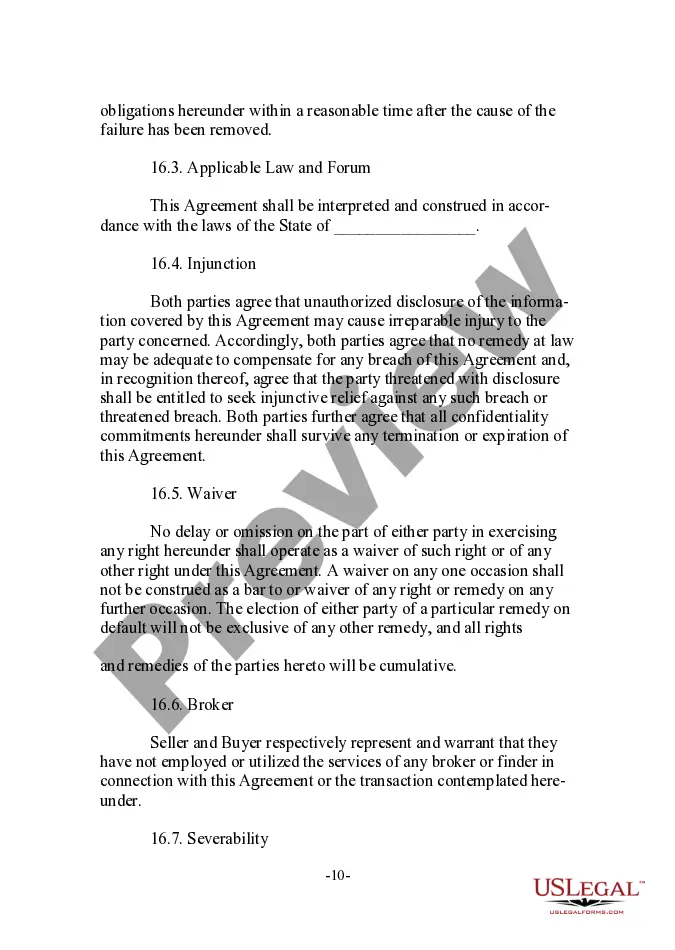
- Indemnification: Outlines the obligations for each party if claims arise related to the software.
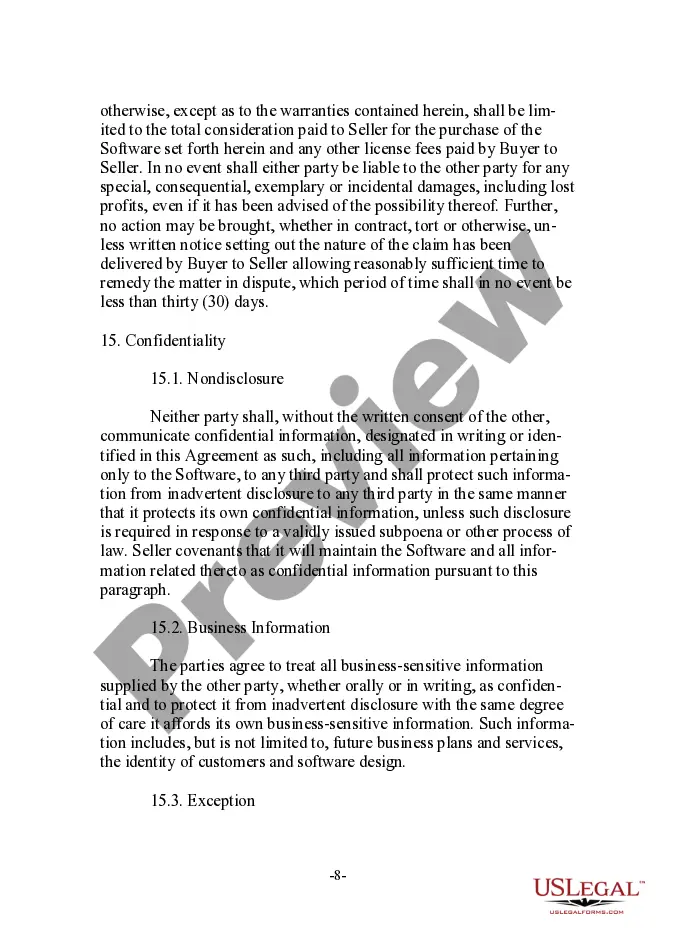
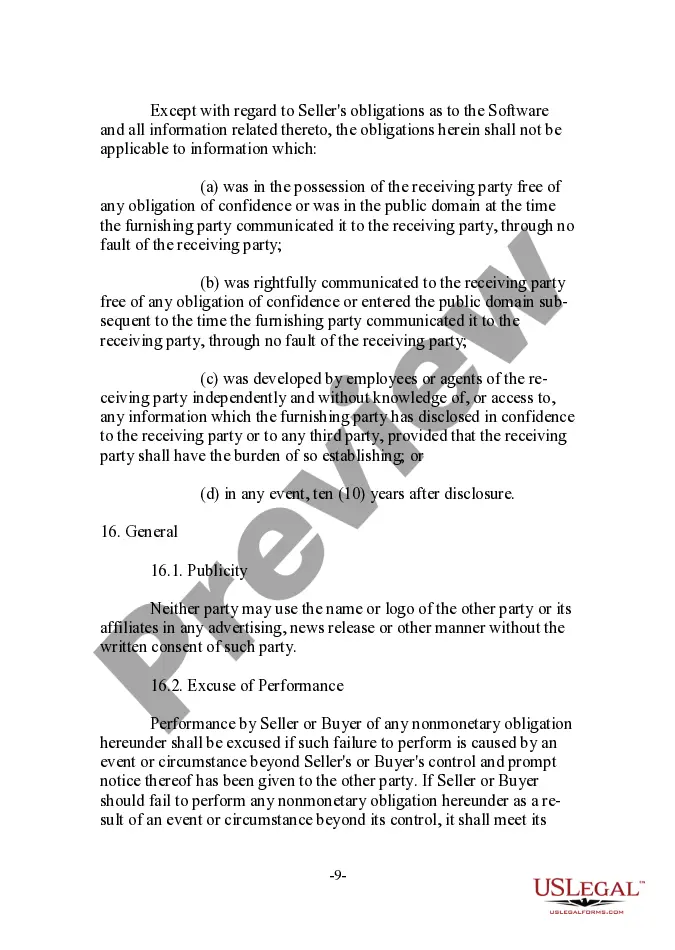
- Confidentiality: Ensures both parties protect confidential information related to the software.
- Governing Law: Indicates the state laws that will govern the agreement.

Common use cases
This form is used when a company intends to sell software that it has developed while retaining some rights to use it internally. It is particularly relevant in situations where a software development company wants to sell its product but also needs to maintain access to the software for its own purposes, such as support or development of future versions.
Who needs this form
- Software developers or companies looking to sell a software product.
- Businesses acquiring software and seeking to clarify ownership and usage rights.
- Companies that need to outline terms of software sales and licensing to protect their rights and interests.
- Legal professionals involved in software agreements within the technology sector.
How to prepare this document
- Identify the parties involved by filling in the names and business structures of the Seller and Buyer.
- Insert the day, month, and year of the agreement's execution.
- Specify the software name and any identifying details in the designated sections.
- Fill in the purchase price and any additional payment amounts agreed upon.
- Include necessary signatures from authorized representatives of both parties.
Does this form need to be notarized?
Notarization is generally not required for this form. However, certain states or situations might demand it. You can complete notarization online through US Legal Forms, powered by Notarize, using a verified video call available anytime.
Get your form ready online
Our built-in tools help you complete, sign, share, and store your documents in one place.
Make edits, fill in missing information, and update formatting in US Legal Forms—just like you would in MS Word.
Download a copy, print it, send it by email, or mail it via USPS—whatever works best for your next step.
Sign and collect signatures with our SignNow integration. Send to multiple recipients, set reminders, and more. Go Premium to unlock E-Sign.
If this form requires notarization, complete it online through a secure video call—no need to meet a notary in person or wait for an appointment.
We protect your documents and personal data by following strict security and privacy standards.
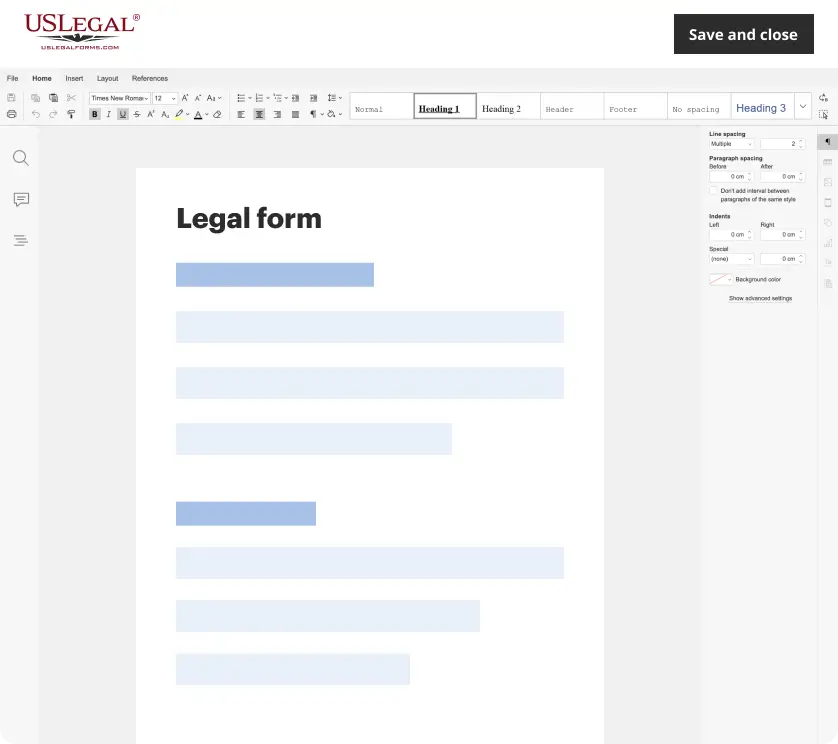
Make edits, fill in missing information, and update formatting in US Legal Forms—just like you would in MS Word.
Download a copy, print it, send it by email, or mail it via USPS—whatever works best for your next step.
Sign and collect signatures with our SignNow integration. Send to multiple recipients, set reminders, and more. Go Premium to unlock E-Sign.
If this form requires notarization, complete it online through a secure video call—no need to meet a notary in person or wait for an appointment.
We protect your documents and personal data by following strict security and privacy standards.
Common mistakes
- Failing to clearly define the software being sold.
- Not specifying the payment terms and conditions adequately.
- Overlooking the need for appropriate signatures from both parties.
- Neglecting to include clauses related to indemnification and liability.
Benefits of completing this form online
- Convenience of downloading and customizing the agreement to suit specific needs.
- Reliability of having a document drafted in accordance with legal standards.
- Immediate access to the form, saving time in legal consultations.
- Easy editing features for tailoring components of the agreement.
Legal use & context
- This agreement provides a clear framework for the transfer of software ownership and licensing rights, protecting both parties.
- Properly executed, the agreement is enforceable in court, provided it meets state-specific legal standards.
- It is essential to keep copies of the agreement for future reference and to uphold legal protections.
Quick recap
- The Software Sales and License-Back Agreement is vital for defining software ownership and usage rights.
- Customization based on specific state requirements ensures legal validity.
- Understanding the key components and process helps prevent common errors.
Looking for another form?
Form popularity
FAQ
A software license is a contract between the entity that created and supplied an application, underlying source code, or related product and its end user.
A software license agreement typically has broad-form confidentiality provisions that also provide that certain items fall into the bucket of one or the other party (e.g., the software for a licensor, certain data for a licensee, etc.).
Public domain. This is the most permissive type of software license. Permissive. LGPL. Copyleft. Proprietary.
As a general rule, companies do not own the software that they license. The corollary is that they then do not, unless expressly agreed, possess the right to transfer or assign the licensed software they use to a new entity when later involved in a merger, acquisition or internal corporate restructuring.
In general, it is the most restrictive type of licensing agreement wherein the original code was written by the programmers are not available to the users. Thus they can use the software but they cannot modify it or redistribute it.
A software license agreement gives a licensee a non-exclusive, non-transferable right to use software. A software license agreement defines how that software can be used and what happens in the event of breach.
Wisegeek explains software licensing as a type of contract which exists between the person of company who produces a type of software, and the end user, or person who purchases or downloads the software to use. This means that there are many different types of software licenses.
User agreements like EULAs are legally binding contracts between the software author and the end-user. End User License Agreements are enforceable as long as it is clear that it is a contract and both parties can understand the terms.