Pet Agreement for Single Tenant in a Lease
Understanding this form
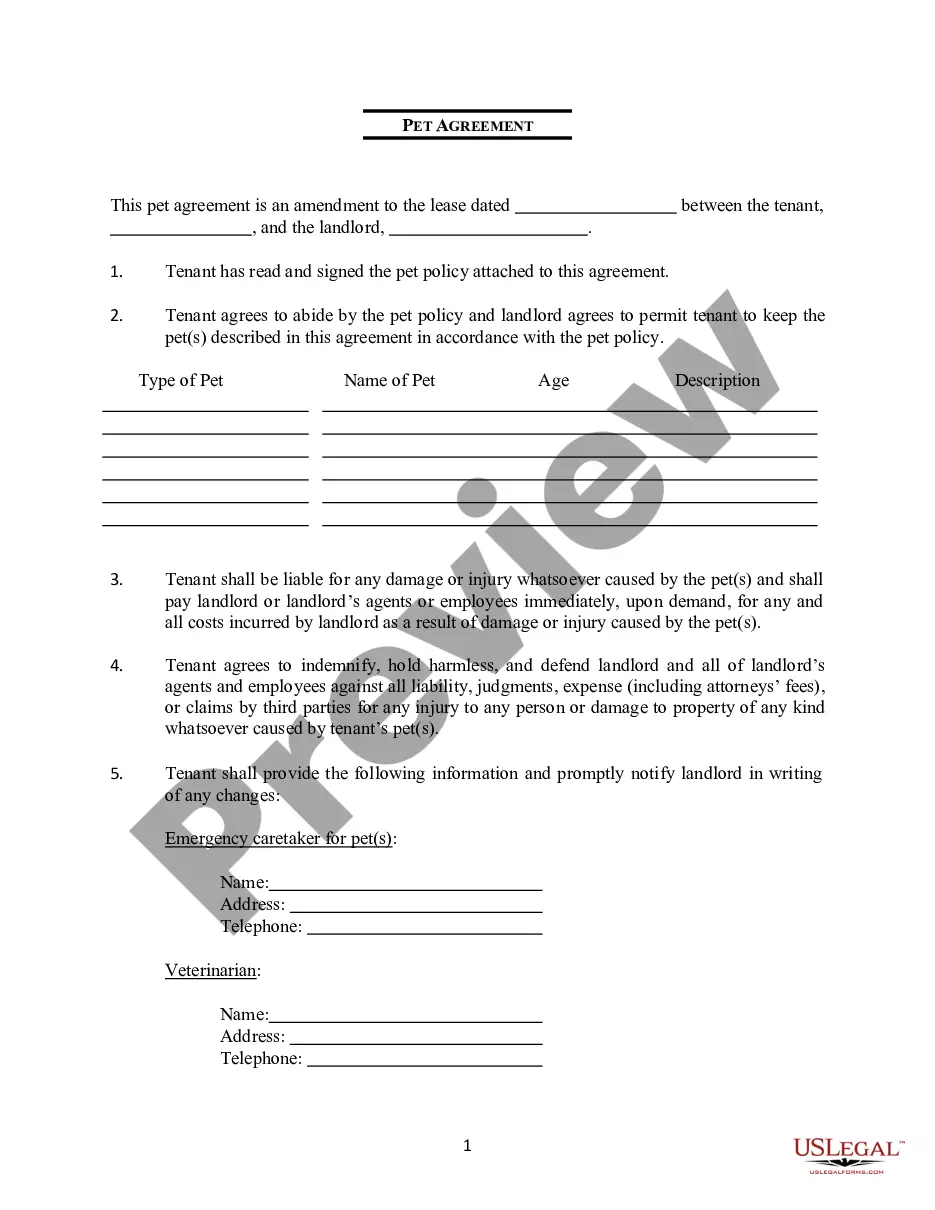
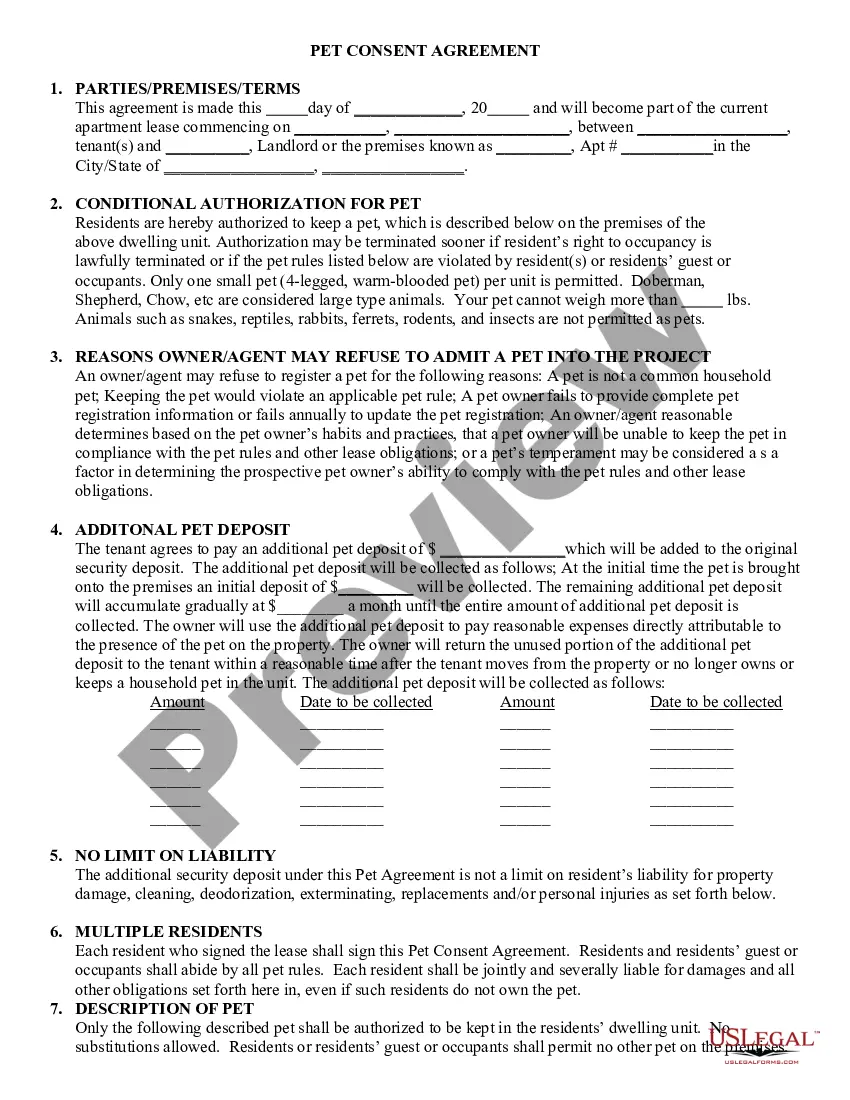
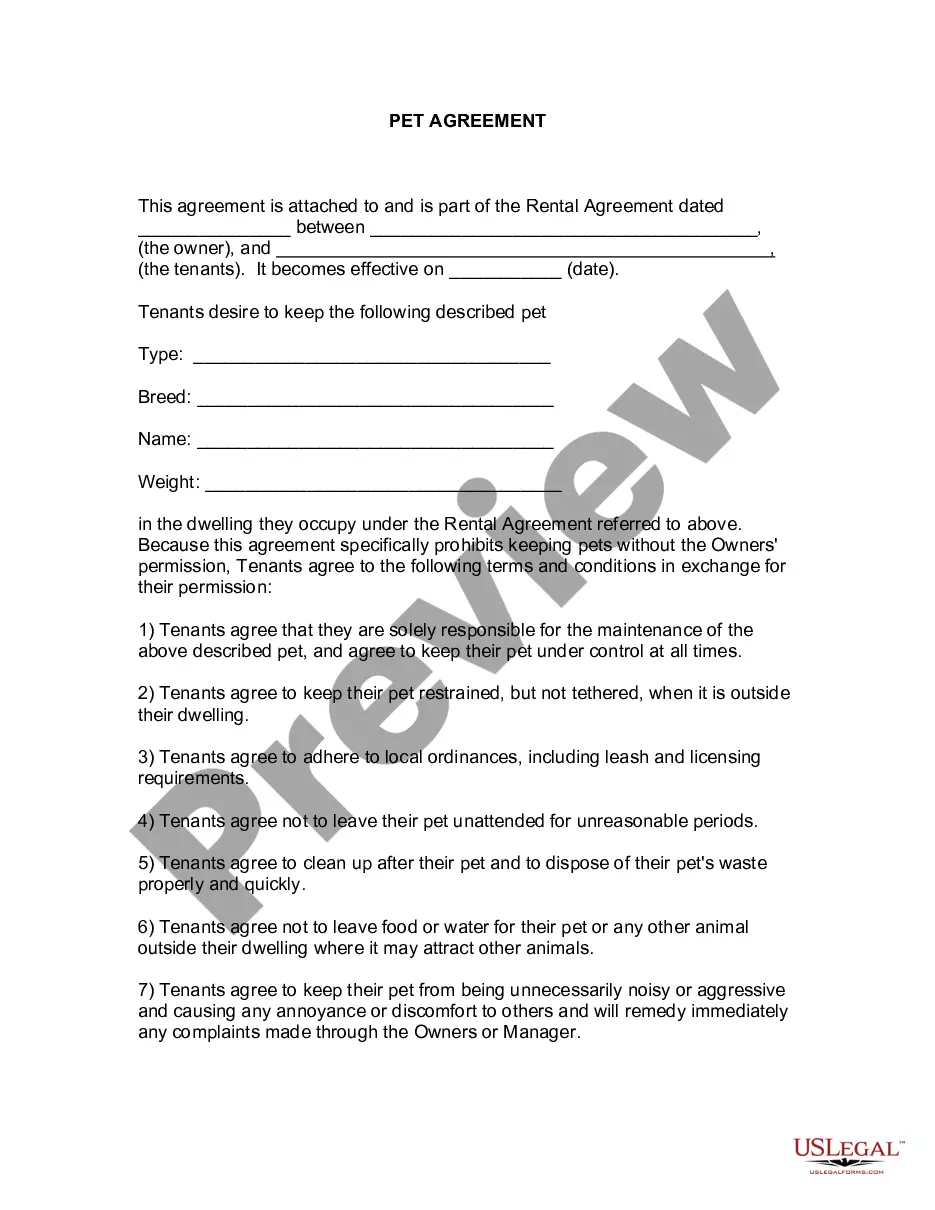
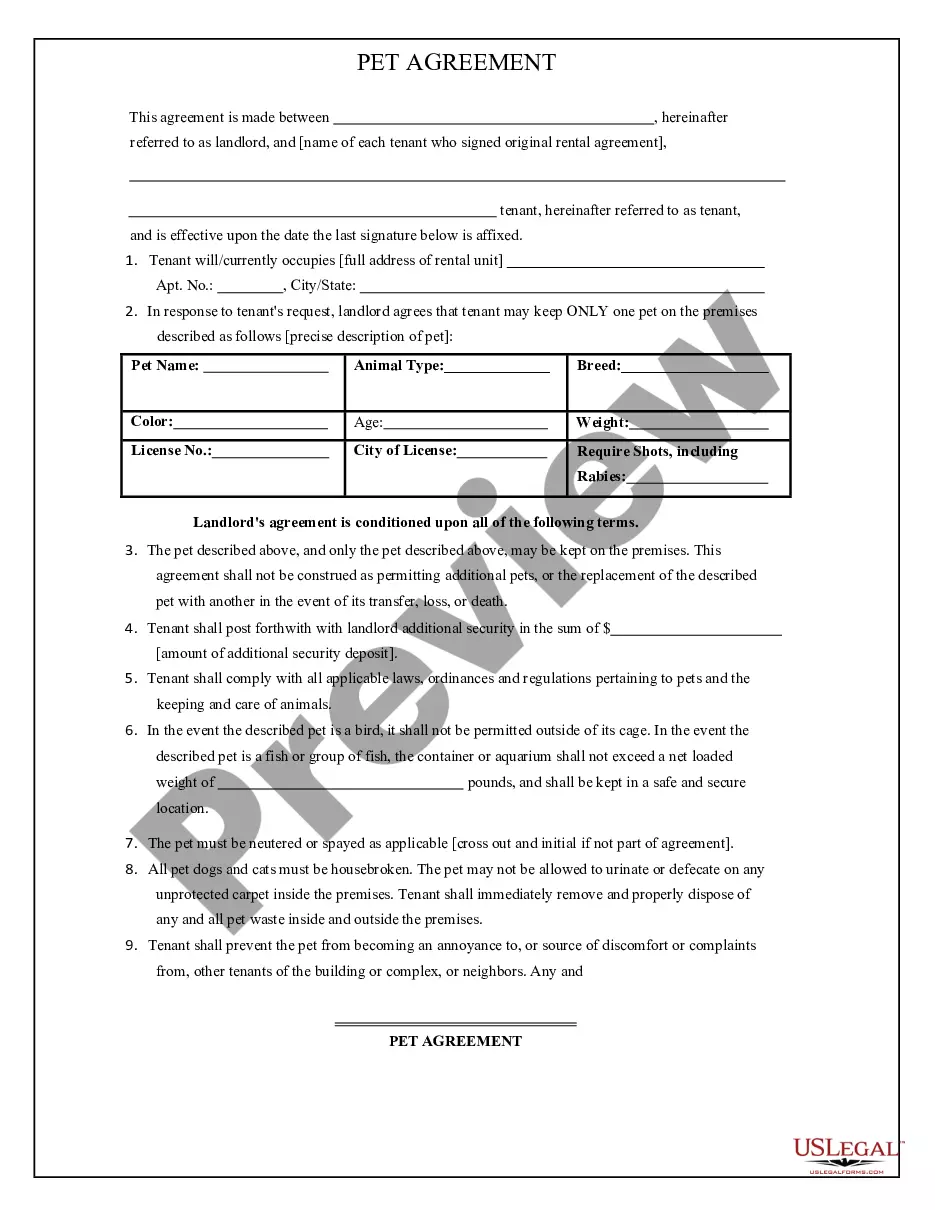
The Pet Agreement for Single Tenant in a Lease is a legal document that outlines the terms under which a tenant can keep a pet in a rental property. This agreement is an amendment to the existing lease and helps to clarify responsibilities for both tenants and landlords concerning pet ownership. Unlike a standard lease, this form specifically addresses pet-related policies, ensuring all parties are aware of their obligations and any potential liabilities associated with having a pet in the rented unit.
Key parts of this document
- Identification of parties: Names of the tenant and landlord.
- Pet details: Type, name, age, and description of the permitted pet(s).
- Pet policy acknowledgement: Confirmation that the tenant has read and agrees to the pet policy.
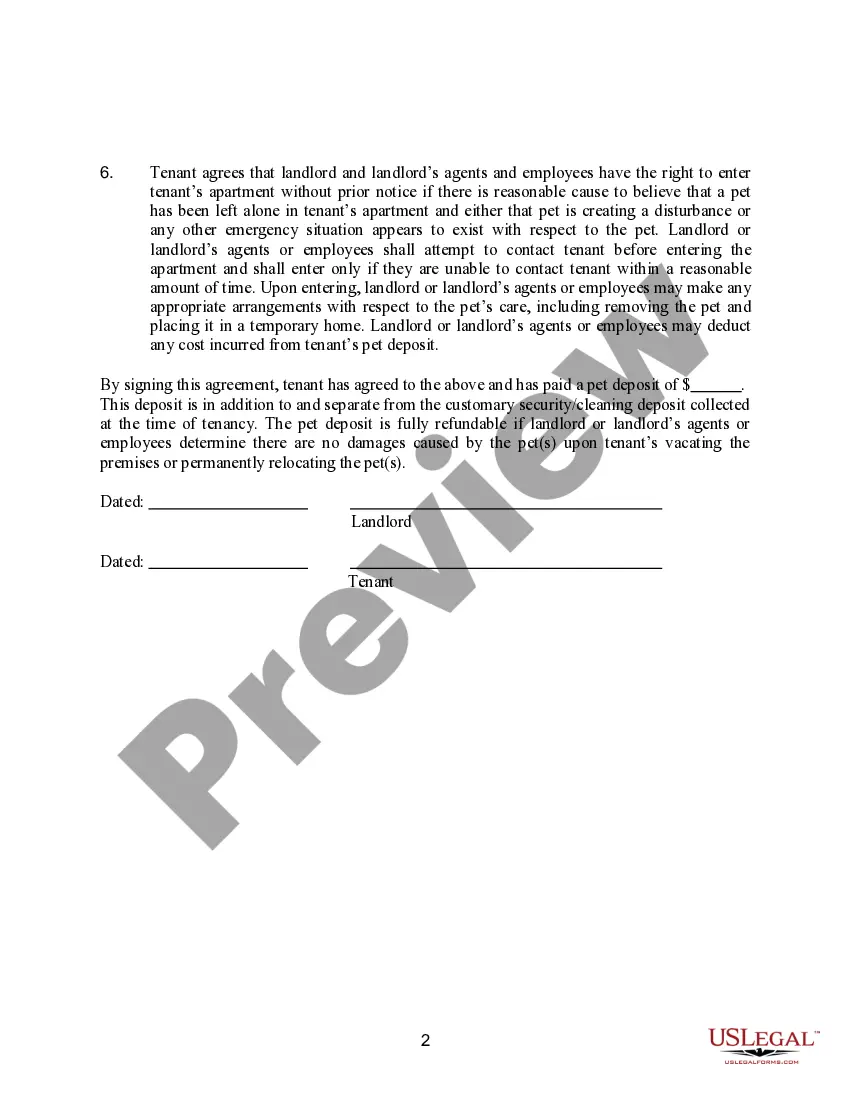
- Liability clause: Tenant's responsibility for any damage caused by the pet.
- Indemnification clause: Protection for the landlord against claims arising from the pet.
- Emergency caretaker information: Contact details for someone to care for the pet if necessary.
- Deposit terms: Details regarding the pet deposit and conditions for its refund.
When this form is needed
This form is used when a tenant wishes to keep a pet in a rental unit and needs written consent from the landlord. It is essential in situations where a landlord has specific pet policies or restrictions. Using this agreement ensures that both the landlord and tenant have a clear understanding of the expectations and liabilities involved in having a pet on the premises.
Intended users of this form
- Tenants who own pets and want to ensure compliance with lease agreements.
- Landlords who allow pets but want to stipulate conditions in writing.
- Property managers overseeing rental units where tenants may have pets.
- Anyone involved in the leasing process who needs clarity regarding pet ownership in rental properties.
Instructions for completing this form
- Identify the parties by entering the names of the landlord and tenant.
- Specify the details of the pet(s) by filling in the type, name, age, and description.
- Review the attached pet policy and ensure the tenant acknowledges it by signing.
- Enter the name and contact information for an emergency caretaker for the pet.
- Calculate and enter the amount of the pet deposit required.
- Obtain signatures from both the landlord and tenant to finalize the agreement.
Notarization requirements for this form
This form does not typically require notarization unless specified by local law. It is always a good practice to check state-specific regulations regarding notarization of agreements for enhanced legal enforceability.
Get your form ready online
Our built-in tools help you complete, sign, share, and store your documents in one place.
Make edits, fill in missing information, and update formatting in US Legal Forms—just like you would in MS Word.
Download a copy, print it, send it by email, or mail it via USPS—whatever works best for your next step.
Sign and collect signatures with our SignNow integration. Send to multiple recipients, set reminders, and more. Go Premium to unlock E-Sign.
If this form requires notarization, complete it online through a secure video call—no need to meet a notary in person or wait for an appointment.
We protect your documents and personal data by following strict security and privacy standards.

Make edits, fill in missing information, and update formatting in US Legal Forms—just like you would in MS Word.

Download a copy, print it, send it by email, or mail it via USPS—whatever works best for your next step.

Sign and collect signatures with our SignNow integration. Send to multiple recipients, set reminders, and more. Go Premium to unlock E-Sign.

If this form requires notarization, complete it online through a secure video call—no need to meet a notary in person or wait for an appointment.

We protect your documents and personal data by following strict security and privacy standards.
Common mistakes
- Failing to fill out all required fields, especially pet details and deposit amounts.
- Not reviewing the pet policy thoroughly before signing.
- Neglecting to inform the landlord about any changes to pet information or emergency contacts.
- Assuming the agreement is not necessary if pets are allowed in the lease.
Benefits of using this form online
- Convenience of downloading and completing the document from home.
- Editability allows for customization to fit specific needs.
- Access to professionally drafted content ensures legal reliability.
- Time-saving, as it eliminates the need for in-person consultations.
Main things to remember
- The Pet Agreement for Single Tenant in a Lease clarifies both tenant and landlord responsibilities regarding pet ownership.
- Utilizing this form protects landlords and tenants from potential disputes related to pets.
- It is crucial to complete all sections accurately to avoid misunderstandings.
- Consult local regulations to ensure compliance and understand any specific requirements that may apply.
Looking for another form?
Form popularity
FAQ
Paragraph of your Lease Agreement specifically prohibits pets. The pet must be removed from the premises immediately. An inspection of the property will be conducted on (Date and Time) to verify the unauthorized pet is no longer in the property.
Charging a 'Pet Deposit' In Ontario, landlords are not permitted to ask for any payment up front aside from first and last month's rent. This includes security deposits and pet deposits.
Landlords are free to screen and investigate whether or not their prospective tenants have pets. However, once a landlord accepts a tenant, in spite of any verbal agreements or contract stipulations, landlords cannot evict tenants for pet ownership under most circumstances.
How to work around breed restrictions when renting Don't hide your dog.Create a pet resume.Offer to pay an extra pet deposit or pet fee.Show training certifications.Pet DNA Testing.Provide references.Look into service animal certifications or emotional support licenses.Buy pet liability insurance.
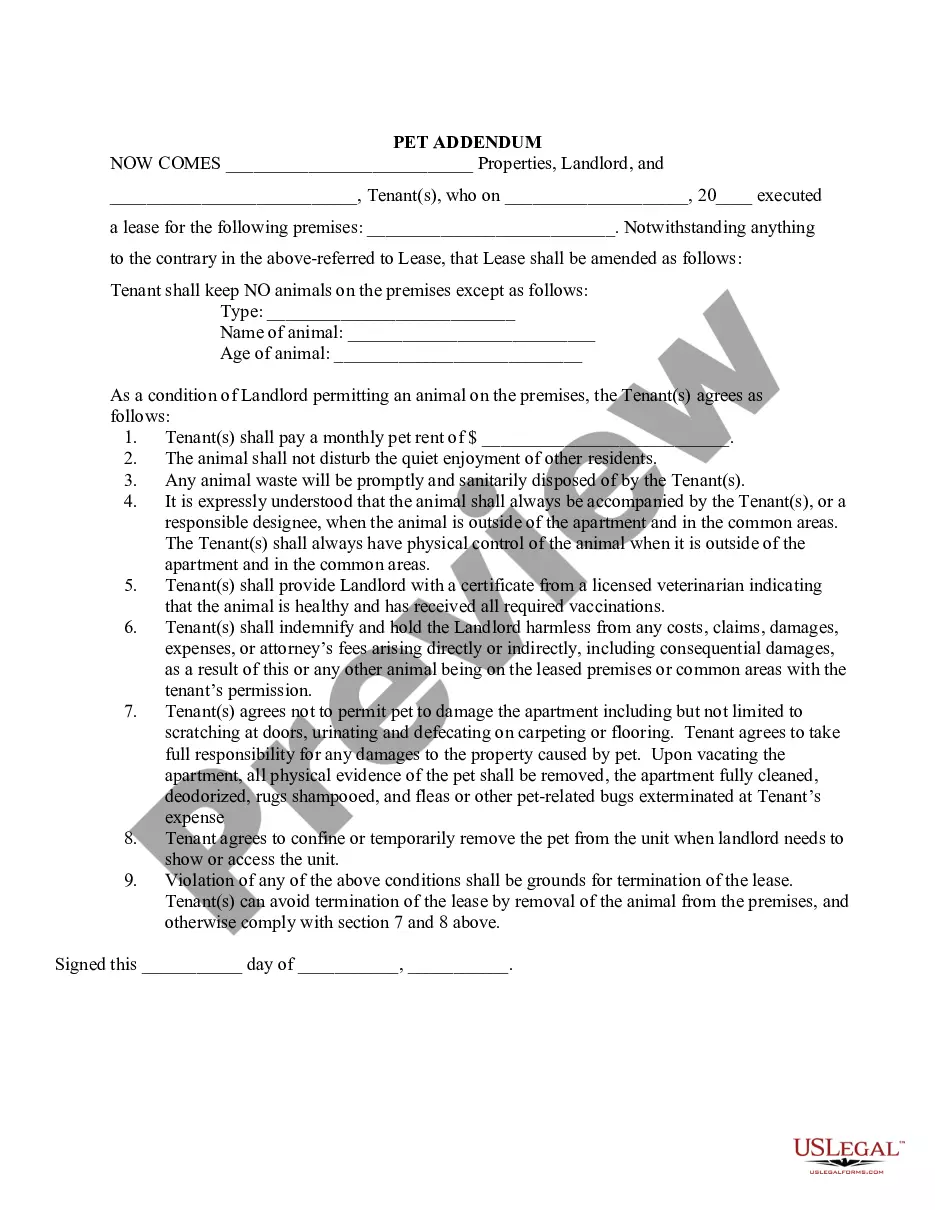
A pet addendum gives permission to allow the tenant to have pets on the rental property.
Even if you agreed not to have a pet and got one anyway, the landlord can not evict you simply for having a pet.
They include the following: Well-behaved dogs are permitted on the premises. Tenant agrees to repay any damages caused by any dog brought to the property by the tenant, its clients, employees or contractors. Dogs can use the common areas of the building while on a leash and under the control of their owner.
1) A landlord can advertise the unit as 'no pets'. This is perfectly legal as the landlord is expressing their preference that there are no pets in the unit. 2) A landlord is allowed to ask if you have any pets on an application form and you should be truthful when answering.