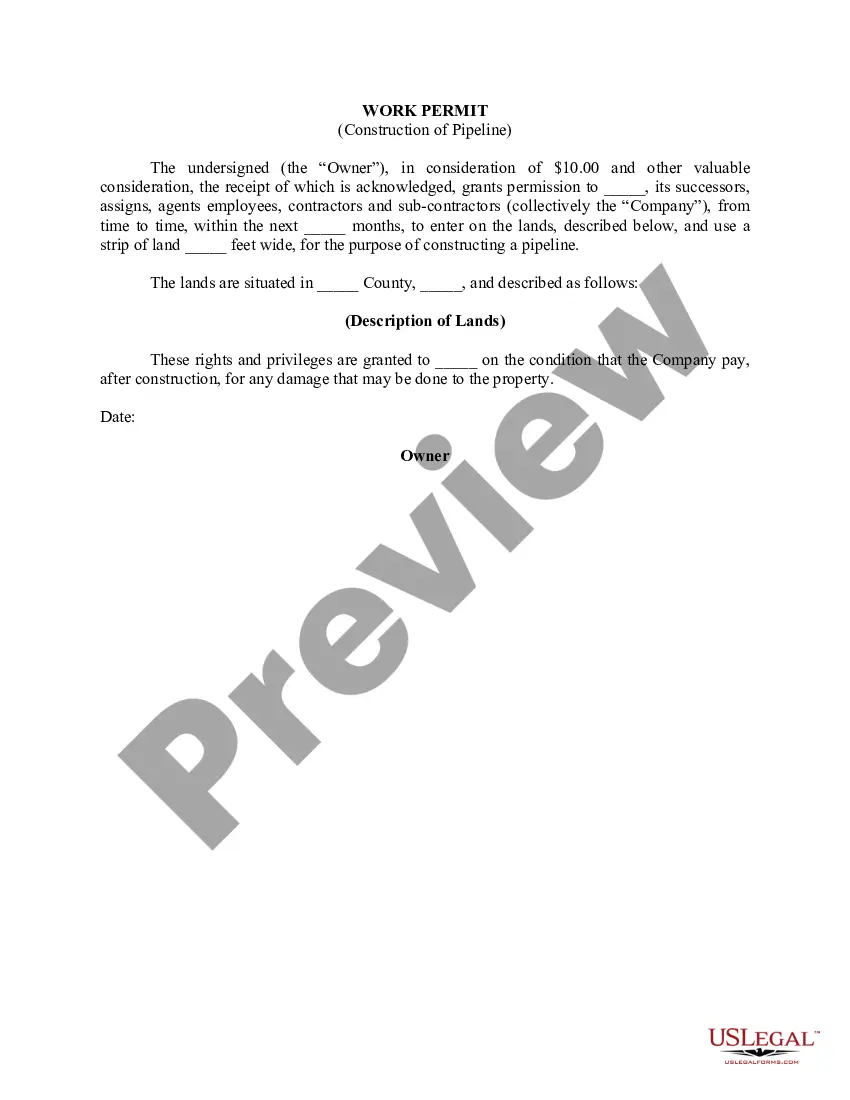
Work Permit (Construction of Pipeline)
About this form
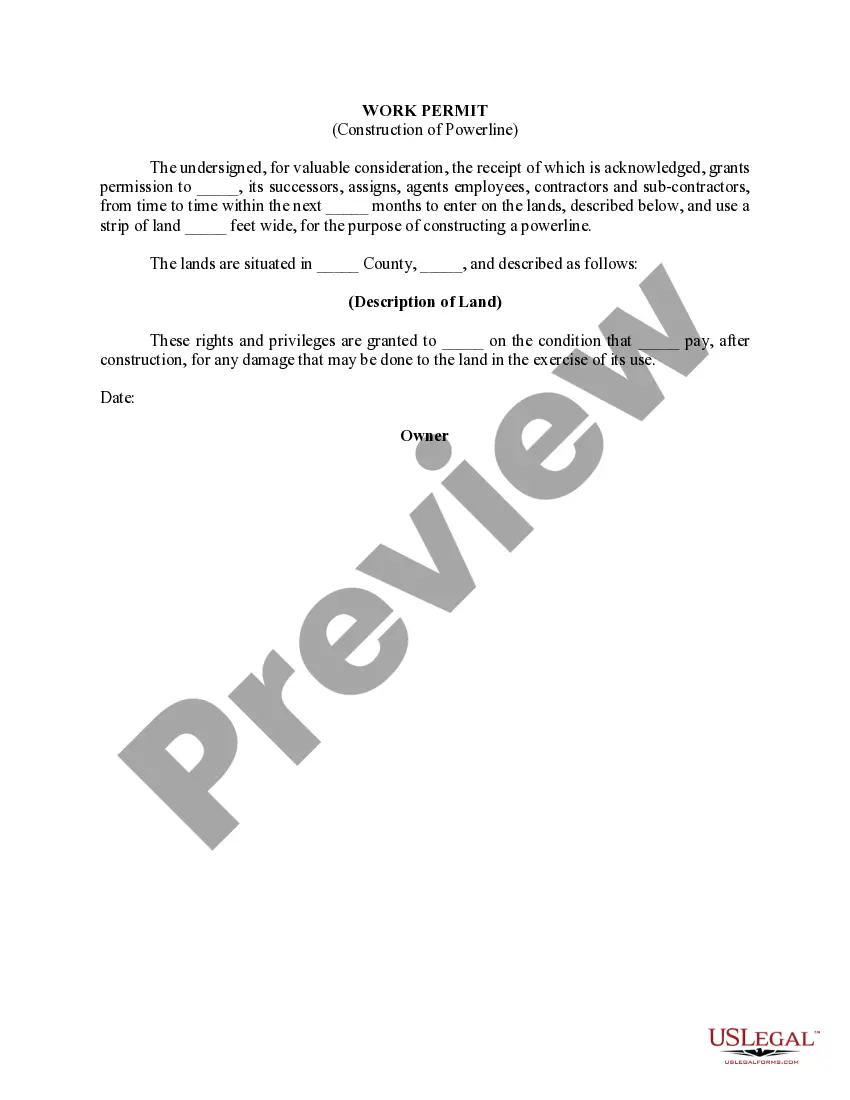
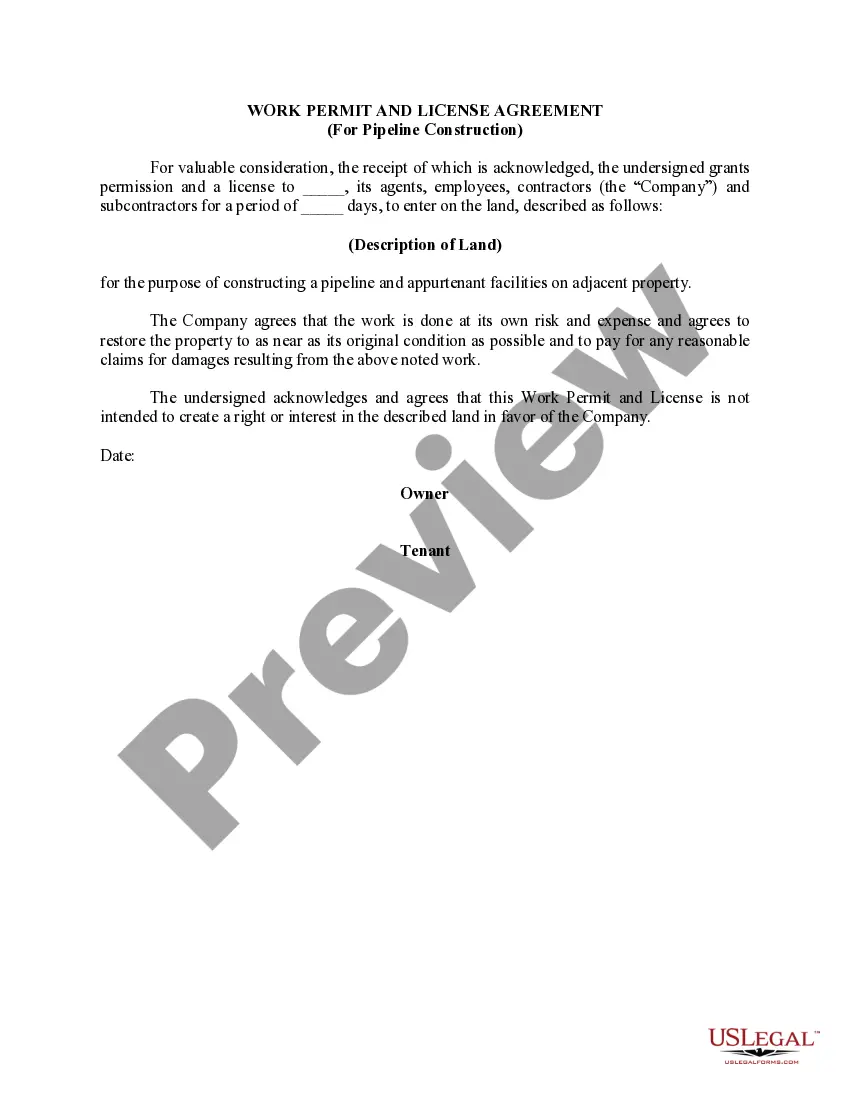
This Work Permit for Construction of Pipeline is a legal document that grants permission for construction activities on a specified property. This form allows contractors to access a designated strip of land for pipeline construction, distinguishing it from other types of permits by its specific purpose related to utility installations. It ensures that both landowners and contractors understand their rights and responsibilities during the project.
Key components of this form
- Identification of the property where the construction will occur.
- Details of the parties involved (landowner and contractor).
- Specifications of the width and duration of land use for the construction.
- Conditions for damage compensation after construction is completed.
- Signature and date fields for legal validation.
When to use this document
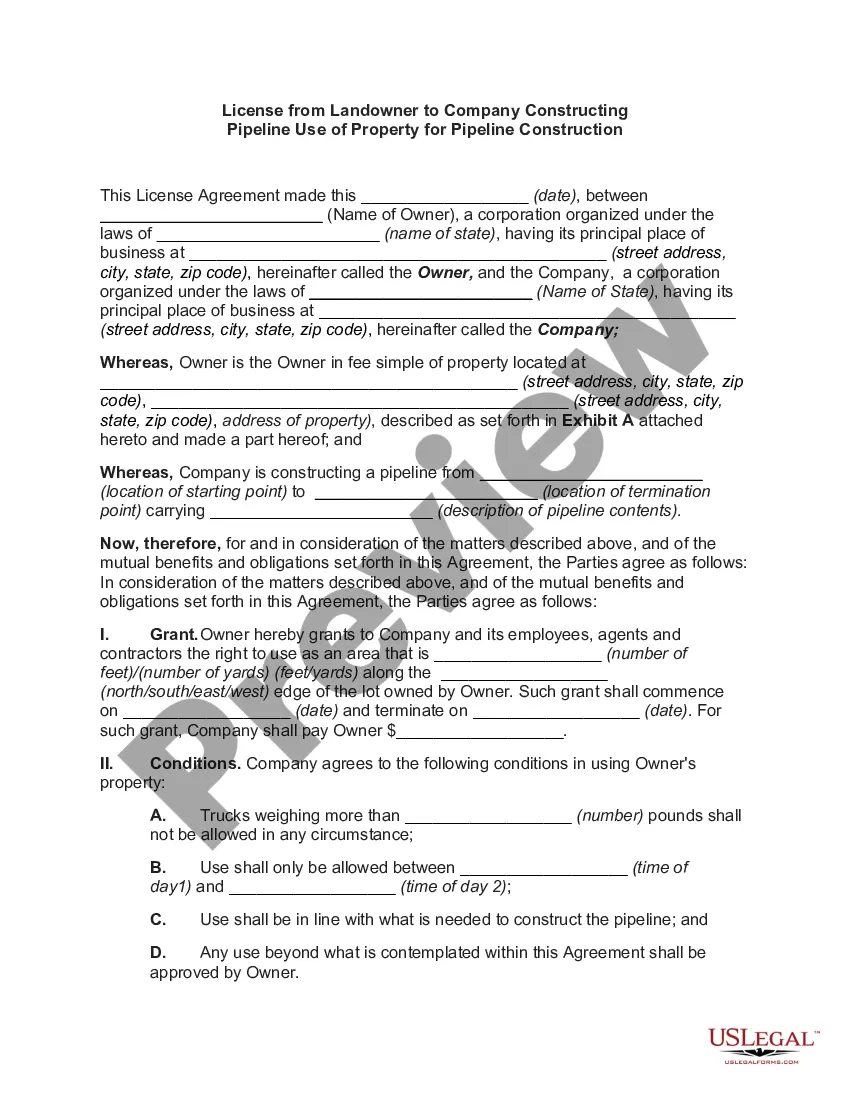
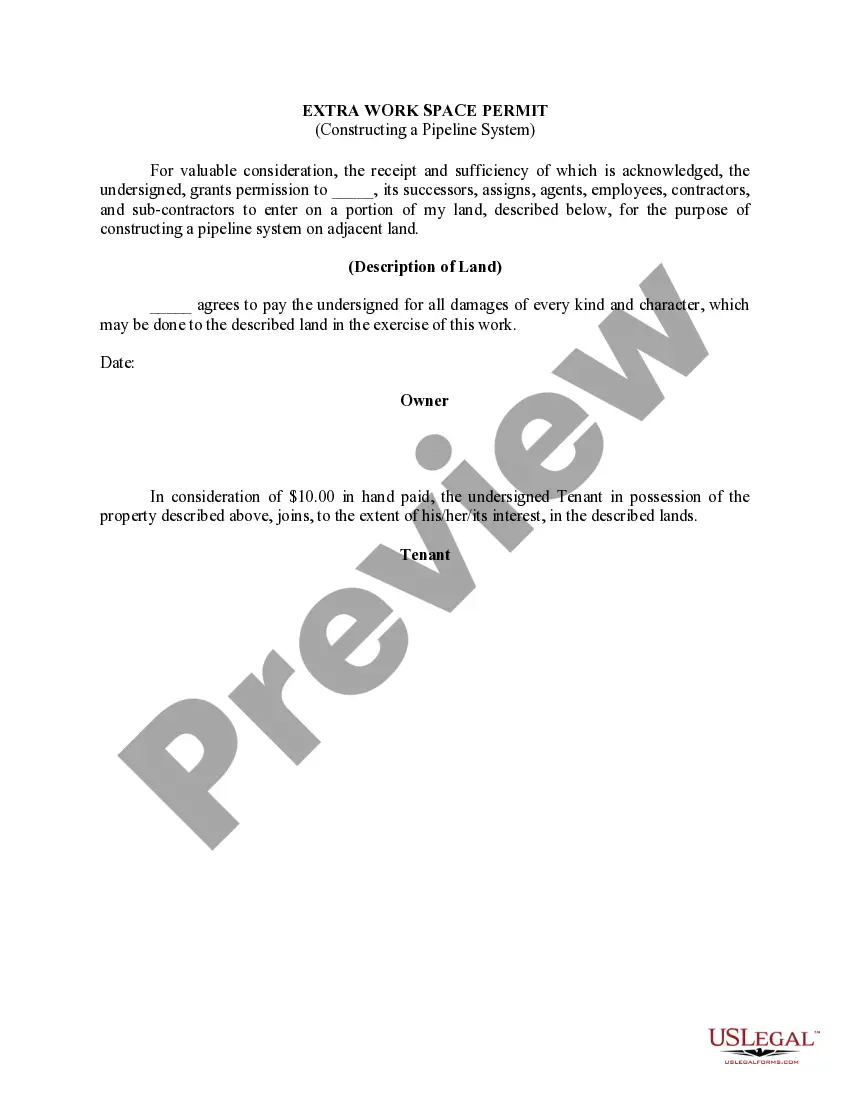
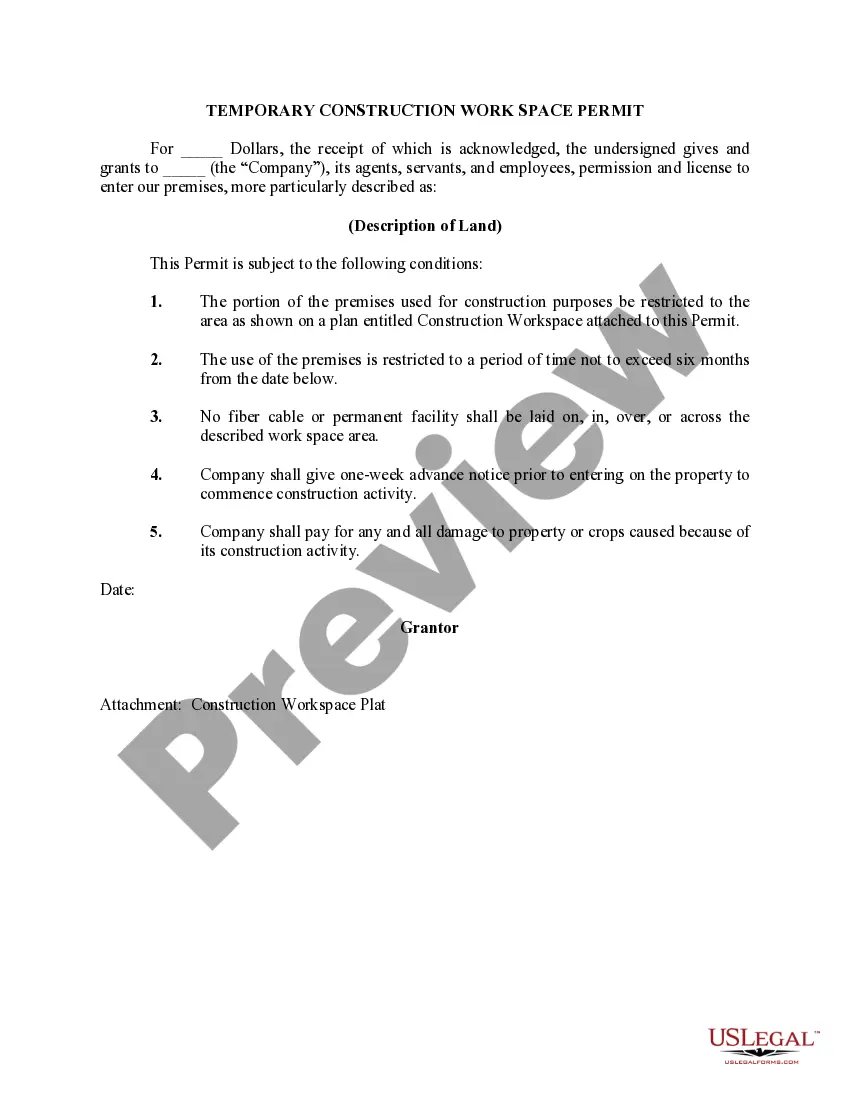
This work permit should be used when a construction company needs to install a pipeline and requires access to private land. It is essential for landowners and contractors to have a formal agreement in place to ensure legal clarity and set expectations for the construction activities. Scenarios may include energy companies installing oil, gas, or utility pipelines across private properties.
Who this form is for
- Landowners who are allowing access to their property for pipeline construction.
- Contractors or companies responsible for pipeline installation.
- Utility providers looking to secure necessary permissions from landowners.
Steps to complete this form
- Identify the parties: Fill in the names and contact information of the landowner and contractor.
- Specify the property: Clearly describe the location and boundaries of the property being accessed.
- Enter the width of the land strip: Indicate the width in feet that will be used for the pipeline.
- State the duration: Indicate how many months the construction access will be granted.
- Complete compensation terms: Ensure the agreement includes provisions for damage compensation after construction.
- Sign and date: Both parties must sign and date the document to make it legally binding.
Notarization requirements for this form
This form usually doesn’t need to be notarized. However, local laws or specific transactions may require it. Our online notarization service, powered by Notarize, lets you complete it remotely through a secure video session, available 24/7.
Get your form ready online
Our built-in tools help you complete, sign, share, and store your documents in one place.
Make edits, fill in missing information, and update formatting in US Legal Forms—just like you would in MS Word.
Download a copy, print it, send it by email, or mail it via USPS—whatever works best for your next step.
Sign and collect signatures with our SignNow integration. Send to multiple recipients, set reminders, and more. Go Premium to unlock E-Sign.
If this form requires notarization, complete it online through a secure video call—no need to meet a notary in person or wait for an appointment.
We protect your documents and personal data by following strict security and privacy standards.
Make edits, fill in missing information, and update formatting in US Legal Forms—just like you would in MS Word.
Download a copy, print it, send it by email, or mail it via USPS—whatever works best for your next step.
Sign and collect signatures with our SignNow integration. Send to multiple recipients, set reminders, and more. Go Premium to unlock E-Sign.

If this form requires notarization, complete it online through a secure video call—no need to meet a notary in person or wait for an appointment.
We protect your documents and personal data by following strict security and privacy standards.
Mistakes to watch out for
- Failing to clearly describe the boundaries of the property, leading to misunderstandings.
- Not specifying the width of the land strip, which may cause disputes during construction.
- Omitting signatures, which invalidates the permit.
- Not clarifying compensation terms for damages, risking future liabilities.
Why complete this form online
- Convenience of instant download and editing for personalized needs.
- Reliability of professionally drafted templates that comply with legal standards.
- Easy access to updates or changes that reflect new regulations or needs.
Looking for another form?
Form popularity
FAQ
STRINGING: Pipe is transported in to the easement and laid end to end next to where the trench will be dug.BENDING: Where required, specialized machinery is used to bend the pipe to conform with the contours of the land and the pipeline route. 6. WELDING AND NON-DESTRUCTIVE TESTING: Pipe sections are welded together.
Oil pipelines are made from steel or plastic tubes which are usually buried. The oil is moved through the pipelines by pump stations along the pipeline. Natural gas (and similar gaseous fuels) are pressurized into liquids known as Natural Gas Liquids (NGLs). Natural gas pipelines are constructed of carbon steel.
STRINGING: Pipe is transported in to the easement and laid end to end next to where the trench will be dug.BENDING: Where required, specialized machinery is used to bend the pipe to conform with the contours of the land and the pipeline route. 6. WELDING AND NON-DESTRUCTIVE TESTING: Pipe sections are welded together.
API recommends setbacks of 50 feet from petroleum and hazardous liquids lines for new homes, businesses, and places of public assembly (API 2003). It also recommends 25 feet for garden sheds, septic tanks, and water wells and 10 feet for mailboxes and yard lights.
API recommends setbacks of 50 feet from petroleum and hazardous liquids lines for new homes, businesses, and places of public assembly (API 2003). It also recommends 25 feet for garden sheds, septic tanks, and water wells and 10 feet for mailboxes and yard lights.
The process from staking the right-of-way to beginning restoration of the site can take place in as little as 10 days.
A right-of-way is a strip of land typically about 50 feet wide (depending on location) containing a pipeline or other utility. Many rights-of-way contain more than one underground pipeline or utility and can be wider depending on the number of infrastructure assets within.
1: Steel Pipeline. 2: Cast Iron Pipes. 3: Plastic Pipeline. 4: Concrete Pipeline. 5: Water Pipeline. 6: Oil Pipeline. 7: Slurry Pipeline. 8: Gas Transmission Pipeline.