Tenant's Affidavit of Possession
About this form
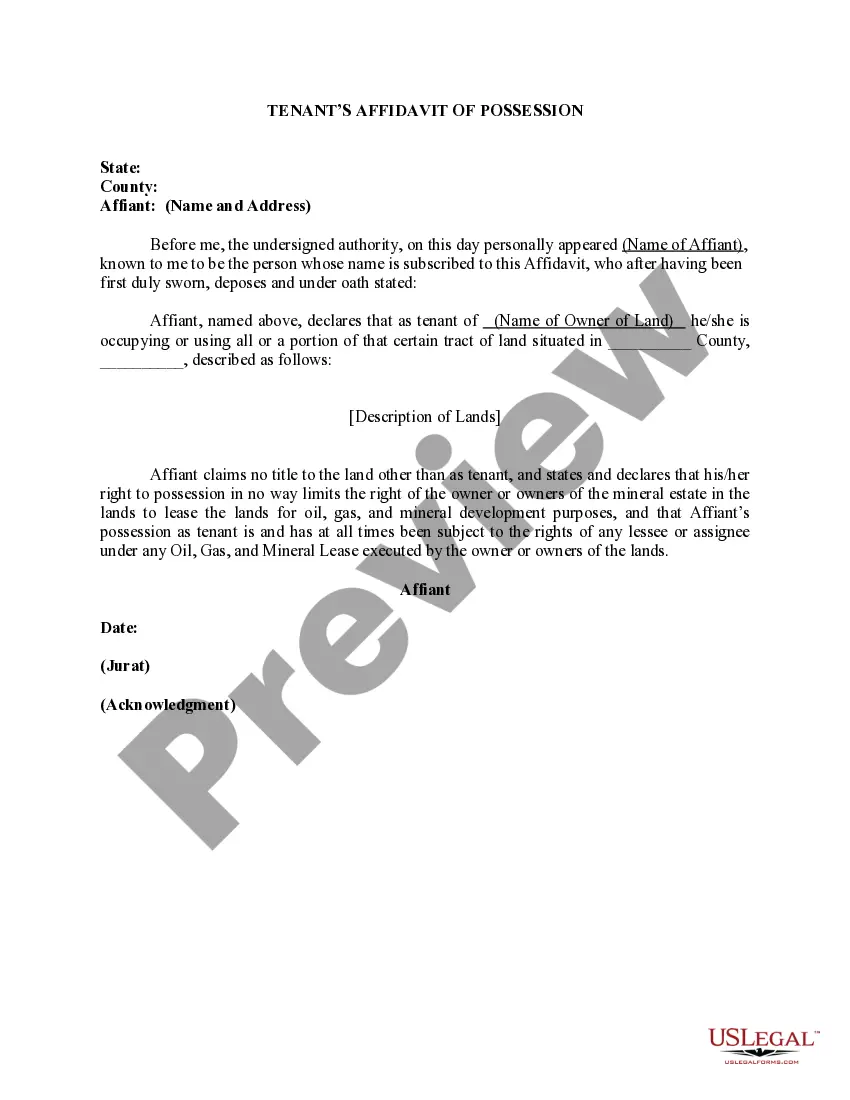
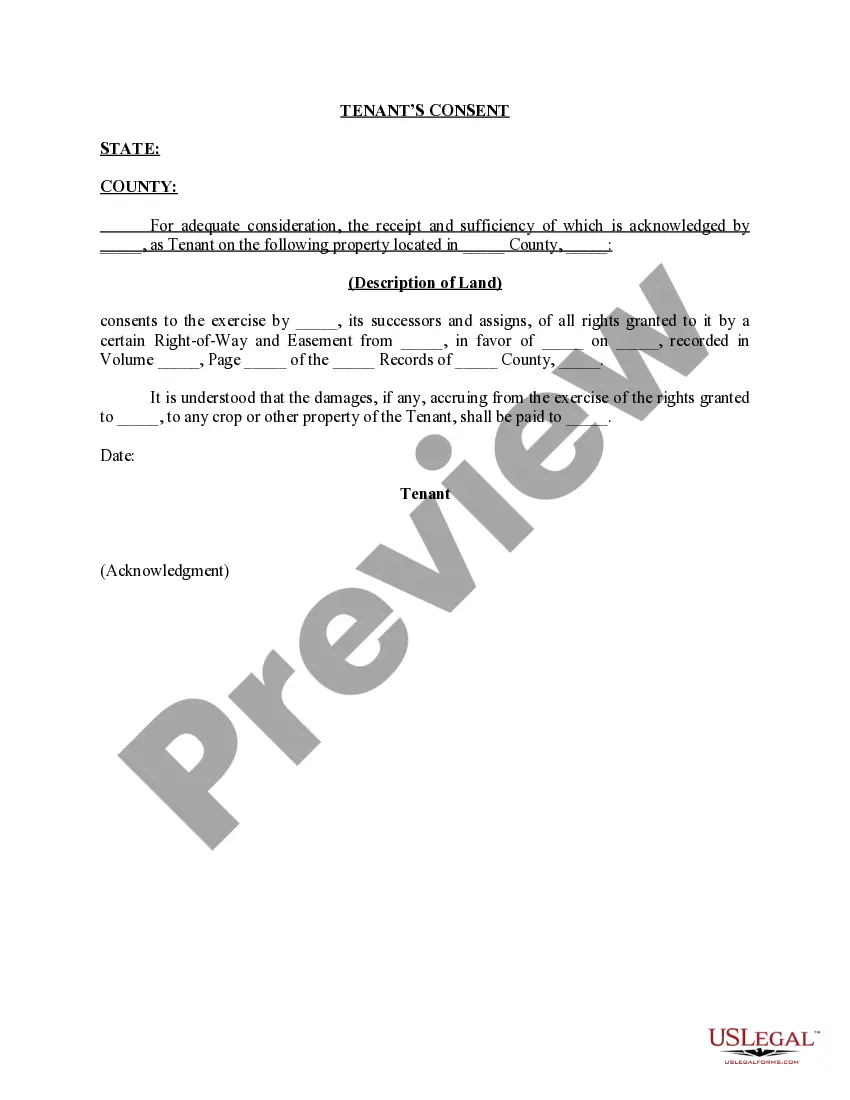
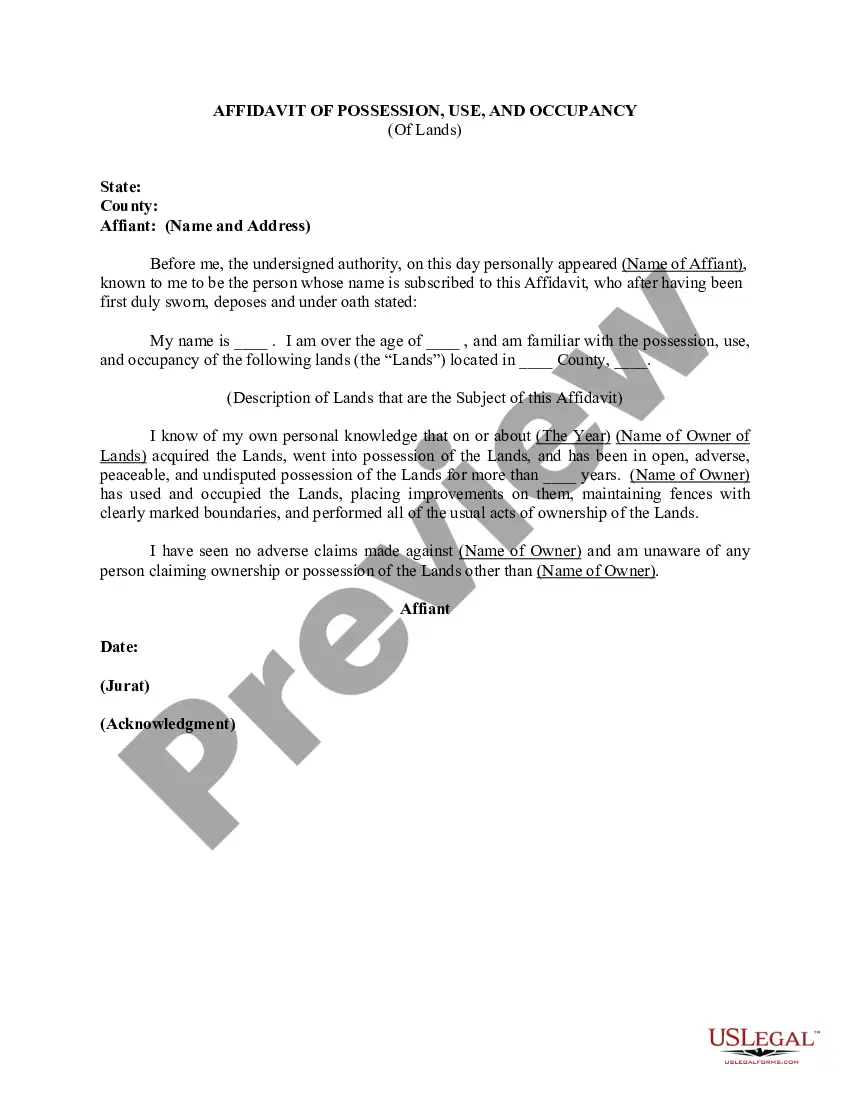
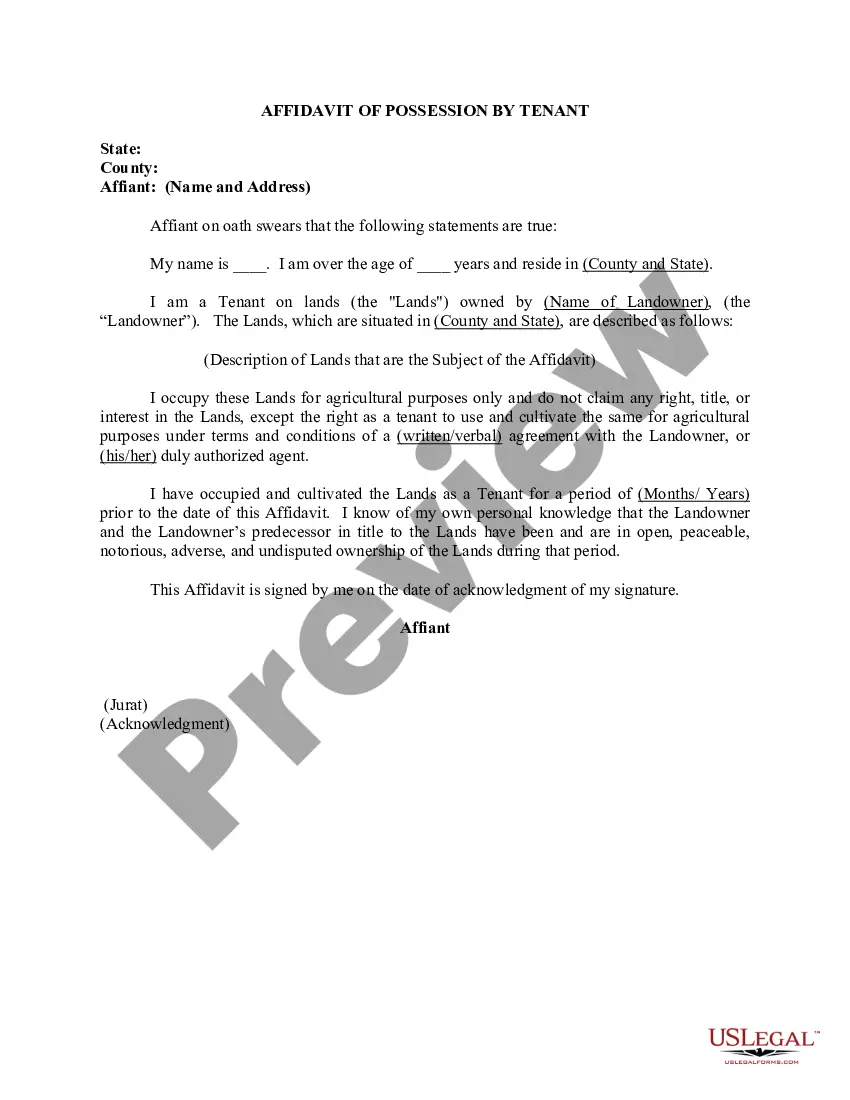
The Tenant's Affidavit of Possession is a legal document that allows a tenant to formally declare their occupancy of a property. This affidavit serves to establish the tenant's right to possess the property while clarifying that such possession does not convey any ownership rights. Unlike other tenancy agreements, this document addresses the tenant's relationship specifically in relation to the ownership of mineral rights associated with the property.
What’s included in this form
- Affiant Information: Details of the person declaring possession, including name and address.
- Property Owner Information: Name of the landowner for whom the tenancy applies.
- Property Description: A description of the land being occupied, including its county and state.
- Statement of Tenancy: A declaration by the tenant stating their occupancy does not claim ownership of any mineral rights.
- Date and Signature: The affiant must date the form and provide their signature before a notary.
When to use this form
This form is used when a tenant needs to affirm their possession of a property for legal or administrative purposes. It is particularly useful in scenarios where there may be disputes regarding occupancy, or when there is a need to clarify the tenant's rights in connection with mineral rights leasing. It can also be employed during legal proceedings related to eviction or property ownership issues.
Who can use this document
- Tenants currently occupying a rental property.
- Landlords or property owners requiring legal documentation of occupancy.
- Individuals involved in legal matters concerning property rights and mineral estates.
How to prepare this document
- Identify the affiant by entering their name and address at the top of the form.
- Specify the name of the landowner associated with the property.
- Provide a detailed description of the property, including its location.
- Declare a statement confirming occupation without claiming mineral rights.
- Sign and date the form in the presence of a notary public.
Notarization requirements for this form
This document requires notarization to meet legal standards. US Legal Forms provides secure online notarization powered by Notarize, allowing you to complete the process through a verified video call, available 24/7.
Get your form ready online
Our built-in tools help you complete, sign, share, and store your documents in one place.
Make edits, fill in missing information, and update formatting in US Legal Forms—just like you would in MS Word.
Download a copy, print it, send it by email, or mail it via USPS—whatever works best for your next step.
Sign and collect signatures with our SignNow integration. Send to multiple recipients, set reminders, and more. Go Premium to unlock E-Sign.
If this form requires notarization, complete it online through a secure video call—no need to meet a notary in person or wait for an appointment.
We protect your documents and personal data by following strict security and privacy standards.

Make edits, fill in missing information, and update formatting in US Legal Forms—just like you would in MS Word.

Download a copy, print it, send it by email, or mail it via USPS—whatever works best for your next step.

Sign and collect signatures with our SignNow integration. Send to multiple recipients, set reminders, and more. Go Premium to unlock E-Sign.

If this form requires notarization, complete it online through a secure video call—no need to meet a notary in person or wait for an appointment.

We protect your documents and personal data by following strict security and privacy standards.
Typical mistakes to avoid
- Failing to provide a complete property description.
- Not having the form notarized when required.
- Leaving out essential details of the tenant or property owner.
- Not signing the affidavit properly in the required presence of a witness or notary.
Benefits of using this form online
- Convenient access to downloadable formats anytime.
- Edit the form easily to fit specific circumstances.
- Save time with a straightforward and streamlined process.
- Reliable legal resources ready for use whenever needed.
Looking for another form?
Form popularity
FAQ
After you win an eviction lawsuit in Georgia, the court will issue an order called a writ of possession, allowing you to take back the rental unit and remove the tenant's property.After seven days, you may ask the county marshal's department to physically evict the tenant.
After you have a possession order (Section 21 or Section 8) Whichever procedure you use, you take the case to court to get the possession order. The court writes to the tenant to order them to leave. Usually this is 14 days later, but may extend up to 42 days if eviction will cause the tenant exceptional hardship.
You should check that the notice to quit or notice seeking possession meets the right legal requirements. For example, it might need to contain certain information. If the notice isn't correct, this could stop or delay your landlord from taking further action.
To recover money during a tenant eviction, you must request a money judgment in your initial eviction complaint. If the judge awards you with this money judgment, the tenant is legally required to pay you all the money that is owed plus interest.
Tell Them The Problem & Consequences. Explain the reason that you want the tenant to go. Offer Them a Way Out. Let the tenant know that you are willing to give them a lump sum of cash in agreement for leaving the property. The Release.
After you have a possession order (Section 21 or Section 8) Very few tenants remain in the property after receiving a court order.
Generally a possession order is enforceable any time up until six years after the possession order was made. After that, you will need to get permission from the court (CPR 83.2(3)(a)).
It is fairly common in rent arrears cases, for the suspended possession order to include a condition that the possession order will remain suspended as long as the tenant continues to pay the monthly rent, together with a contribution towards the arrears.
Be in writing. be signed and dated by you as the property manager, or by your client. be properly addressed to the tenant. give the day on which the residential tenancy agreement is terminated and by which the tenant is required to vacate. where appropriate, give the grounds or reason for the notice.