Expansion Option Clause
What this document covers
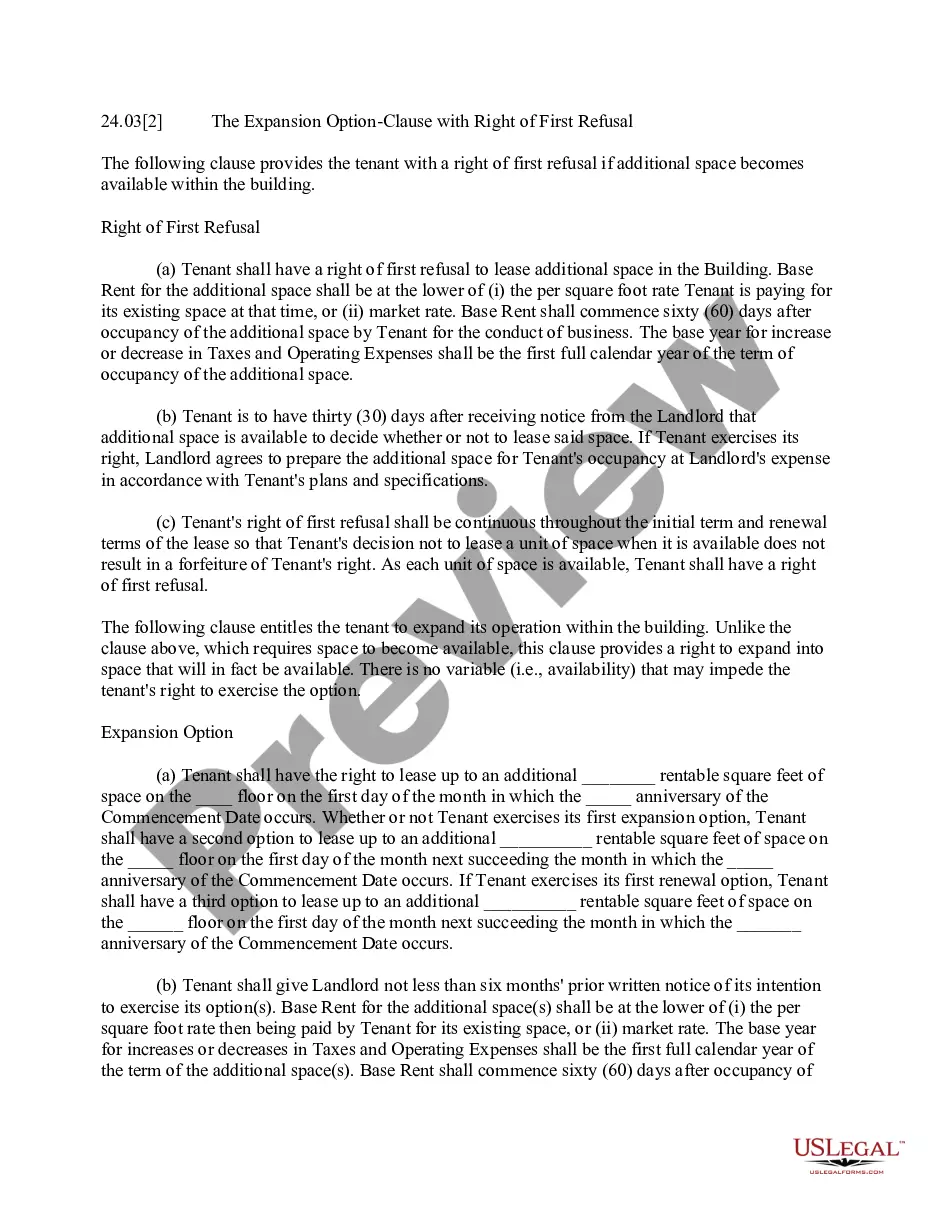
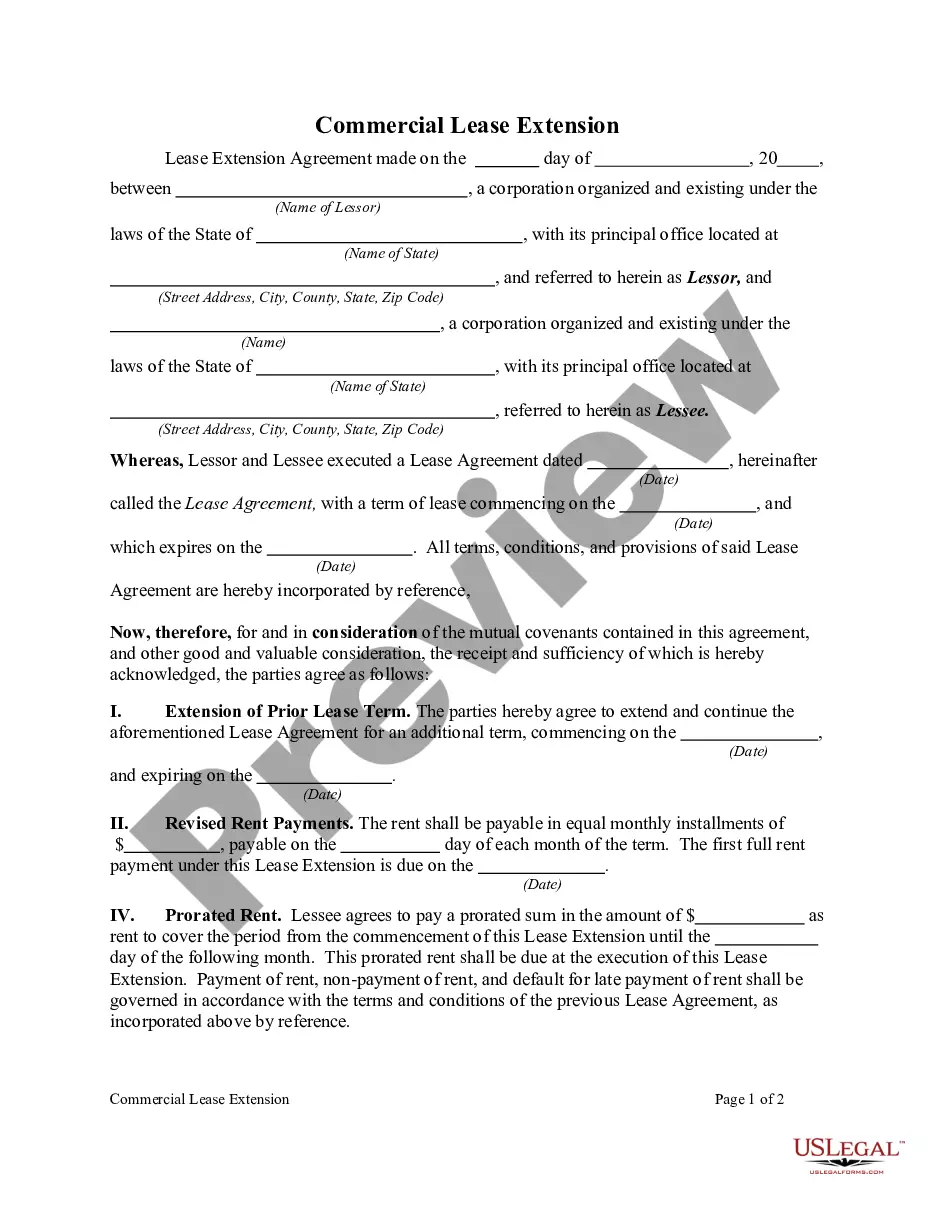
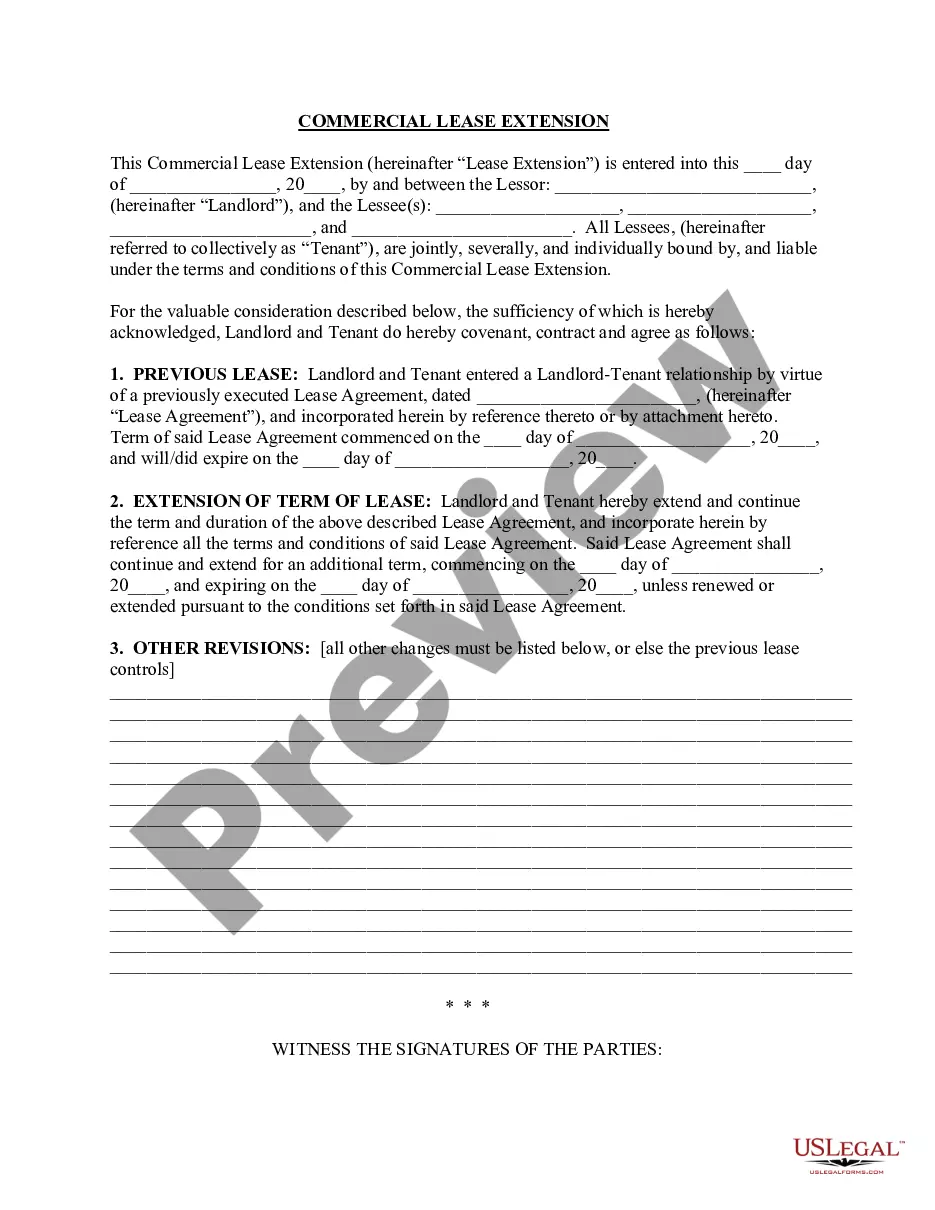
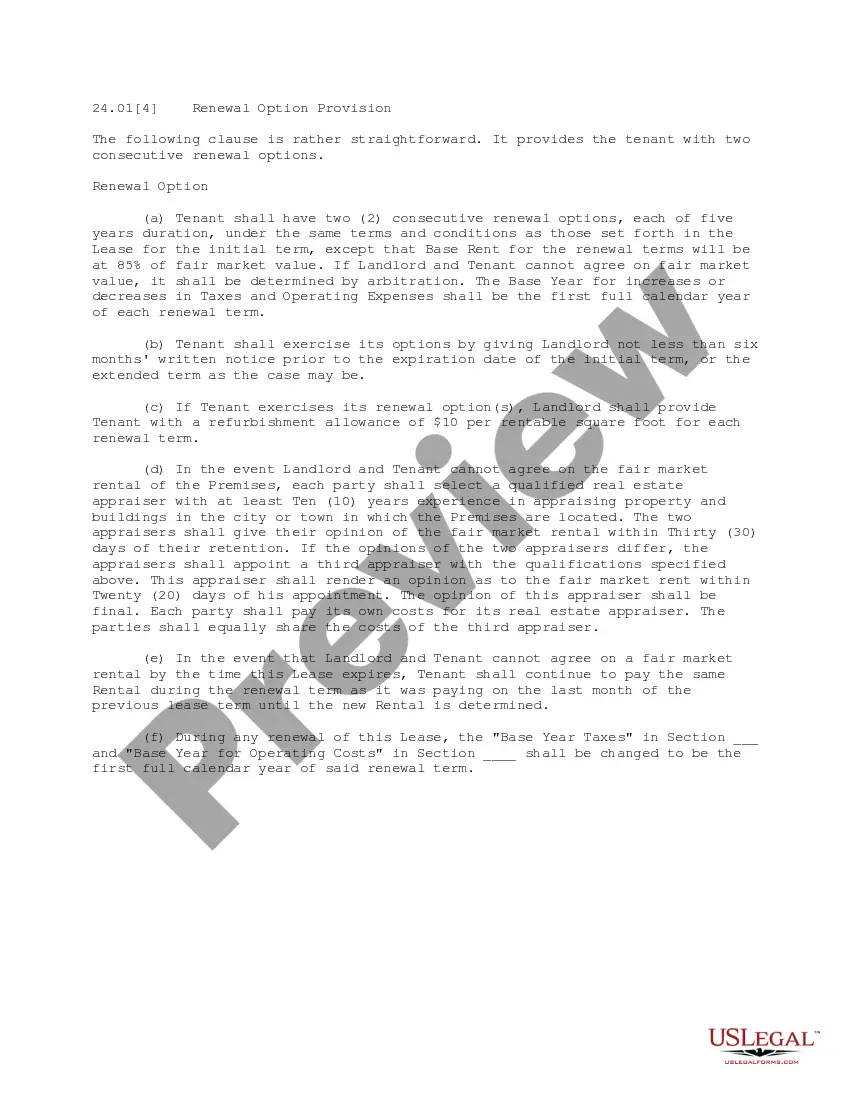
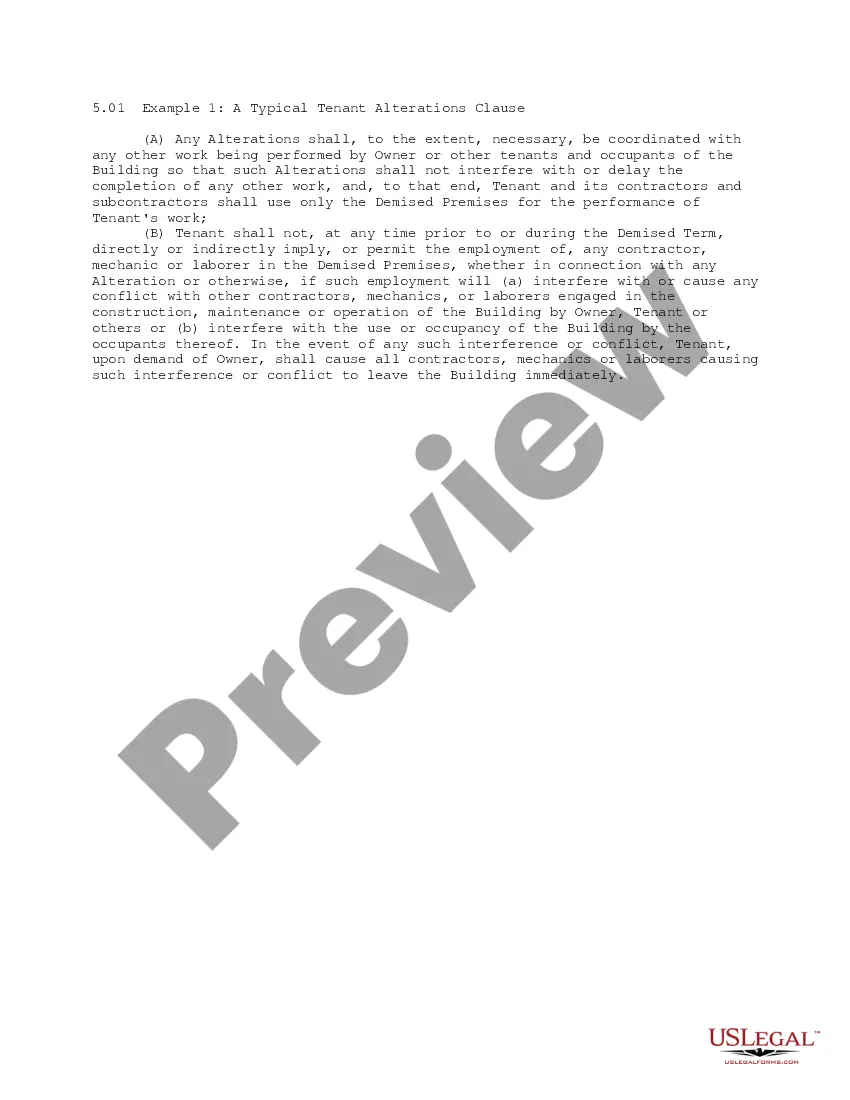
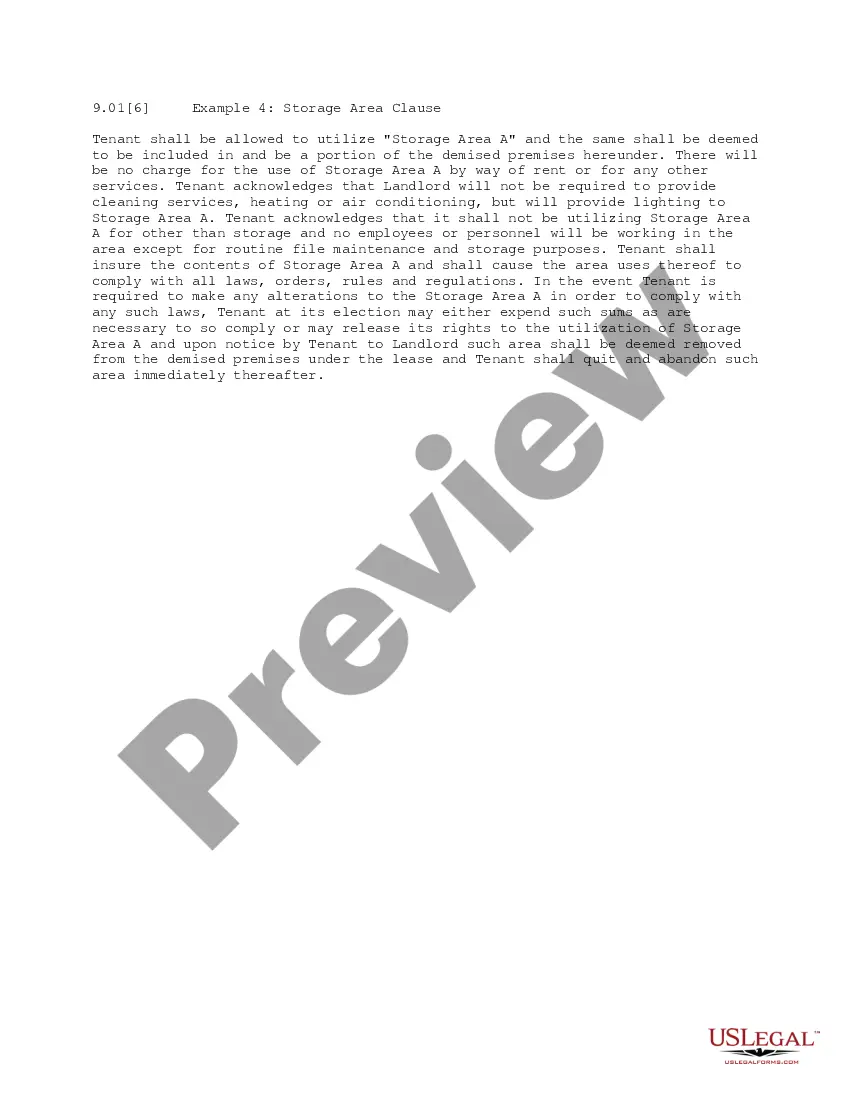
The expansion option clause is a critical component of an office lease that provides tenants the right of first refusal for additional space in the building. This form is essential for tenants who wish to secure the opportunity to lease more space as their business grows, ensuring they have priority access when new space becomes available. It enhances flexibility for tenants compared to a standard lease agreement, particularly in dynamic business environments where expansion may be necessary.
What’s included in this form
- Right of first refusal clause outlining the tenant's priority to lease additional space.
- Base rent determination for additional space based on current lease rates or market rates.
- Timeline for notification to the landlord regarding the tenant's intention to occupy new space.
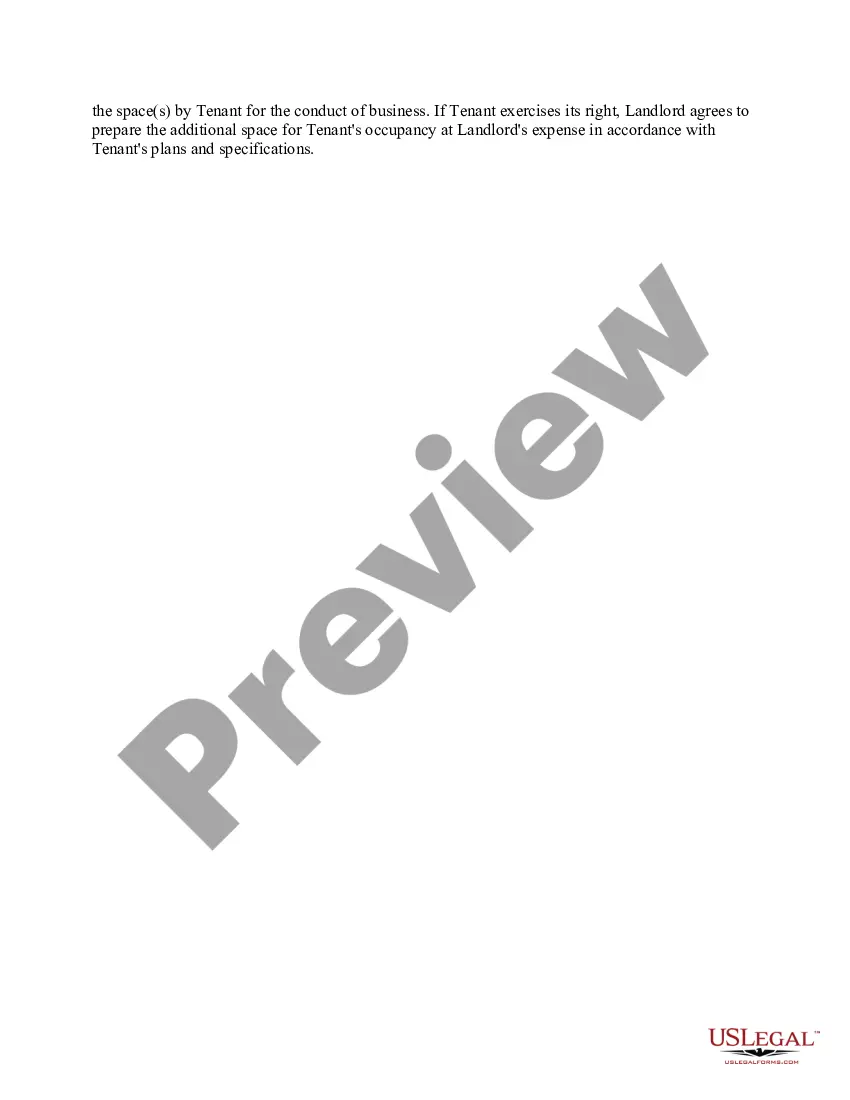
- Provisions for the landlord to prepare the additional space according to the tenant's specifications.
- Requirements for notice periods before exercising expansion rights.
Common use cases
This form is advisable when entering an office lease where future space needs are anticipated. If you are a tenant looking to ensure your capacity to expand as your business grows, this clause is essential. It provides peace of mind knowing that as your current space may become insufficient, you have secured the ability to expand without the need to negotiate new rental terms at that time.
Who should use this form
- Business tenants in commercial properties seeking room for future expansion.
- Landlords offering leases that may include additional rentable space in the future.
- Parties entering a lease agreement that anticipate growth or changes in space requirements.
- Any tenant wanting to protect their interests against market fluctuations for available space.
How to prepare this document
- Identify the parties involved in the lease agreement (landlord and tenant).
- Specify the additional square footage the tenant has the option to lease.
- Include details regarding timelines for exercising the option, including notice periods.
- Determine the base rent for the additional space and include it in the form.
- Sign and date the document to finalize the agreement.
Does this document require notarization?
This form usually doesn’t need to be notarized. However, local laws or specific transactions may require it. Our online notarization service, powered by Notarize, lets you complete it remotely through a secure video session, available 24/7.
Get your form ready online
Our built-in tools help you complete, sign, share, and store your documents in one place.
Make edits, fill in missing information, and update formatting in US Legal Forms—just like you would in MS Word.
Download a copy, print it, send it by email, or mail it via USPS—whatever works best for your next step.
Sign and collect signatures with our SignNow integration. Send to multiple recipients, set reminders, and more. Go Premium to unlock E-Sign.
If this form requires notarization, complete it online through a secure video call—no need to meet a notary in person or wait for an appointment.
We protect your documents and personal data by following strict security and privacy standards.

Make edits, fill in missing information, and update formatting in US Legal Forms—just like you would in MS Word.

Download a copy, print it, send it by email, or mail it via USPS—whatever works best for your next step.

Sign and collect signatures with our SignNow integration. Send to multiple recipients, set reminders, and more. Go Premium to unlock E-Sign.

If this form requires notarization, complete it online through a secure video call—no need to meet a notary in person or wait for an appointment.

We protect your documents and personal data by following strict security and privacy standards.
Mistakes to watch out for
- Failing to specify the exact square footage of the expansion option.
- Not providing clear timelines for exercising the option, which can lead to disputes.
- Ignoring the necessity for landlords to prepare the space to tenant specifications.
- Assuming verbal agreements are sufficient to exercise the option.
Why complete this form online
- Convenient access to legal forms anytime and anywhere.
- Ability to fill out and customize the form to meet specific business needs.
- Instant download of templates drafted by licensed attorneys.
- Secure storage options for important legal documents.
Legal use & context
- The expansion option clause is legally enforceable and bolsters a tenant's position in commercial agreements.
- It allows for a clearer understanding of rights regarding future space needs, which can prevent disputes.
- Legislation regarding lease agreements may differ by state; ensure compliance during use.
Looking for another form?
Form popularity
FAQ
A holdover tenant is a renter who remains in a property after the expiration of the lease. If the landlord continues to accept rent payments, the holdover tenant can continue to legally occupy the property, and state laws and court rulings determine the length of the holdover tenant's new rental term.
To evict a hold over tenant, the landlord must treat the tenant as a trespasser who does not have permission to be on the property and who is acting wrongfully by staying on the property from the moment the lease ends. The best way to deal with a trespasser will depend on the laws of your state and locality.
Make good refers to the clause in a lease that set out how a tenant should leave a property when the lease comes to an end, whether by the expiry of the term or earlier termination. Make good is one of the most commonly disputed provisions of a lease.
Holding over is simply a tenant remaining in occupation of premises once the original term of their letting has come to an end.
Make Good Costs means the reasonable costs required to repair the Facility and return it into a useable area based on a like for like replacement of any damaged materials.
A make good obligation requires you, the tenant, to leave your business premises in a certain condition at the end of the lease. Most commercial leases contain this obligation. Typically, make good will require you to remove your shop fit out when the lease is over, but it can reach much further than that.
A holdover clause simply states that if a. tenant remains after the lease expires, the tenancy becomes month-to-month. at the increased rental rate.
A commercial make good provision is a clause in a lease that requires a tenant to return a property to its original condition before handing back the keys. As part of the make good, tenants are usually required to remove their property from the space and leave the area clean and tidy.
A hold-over clause in a commercial lease typically provides that if a tenant remains in possession of the leased premises after the expiration of the stated lease term, the tenant must pay rent to the landlord in an amount substantially in excess of the rental rate at the end of the term often as high as 150 percent