License Agreement for Intellectual Property
About this form
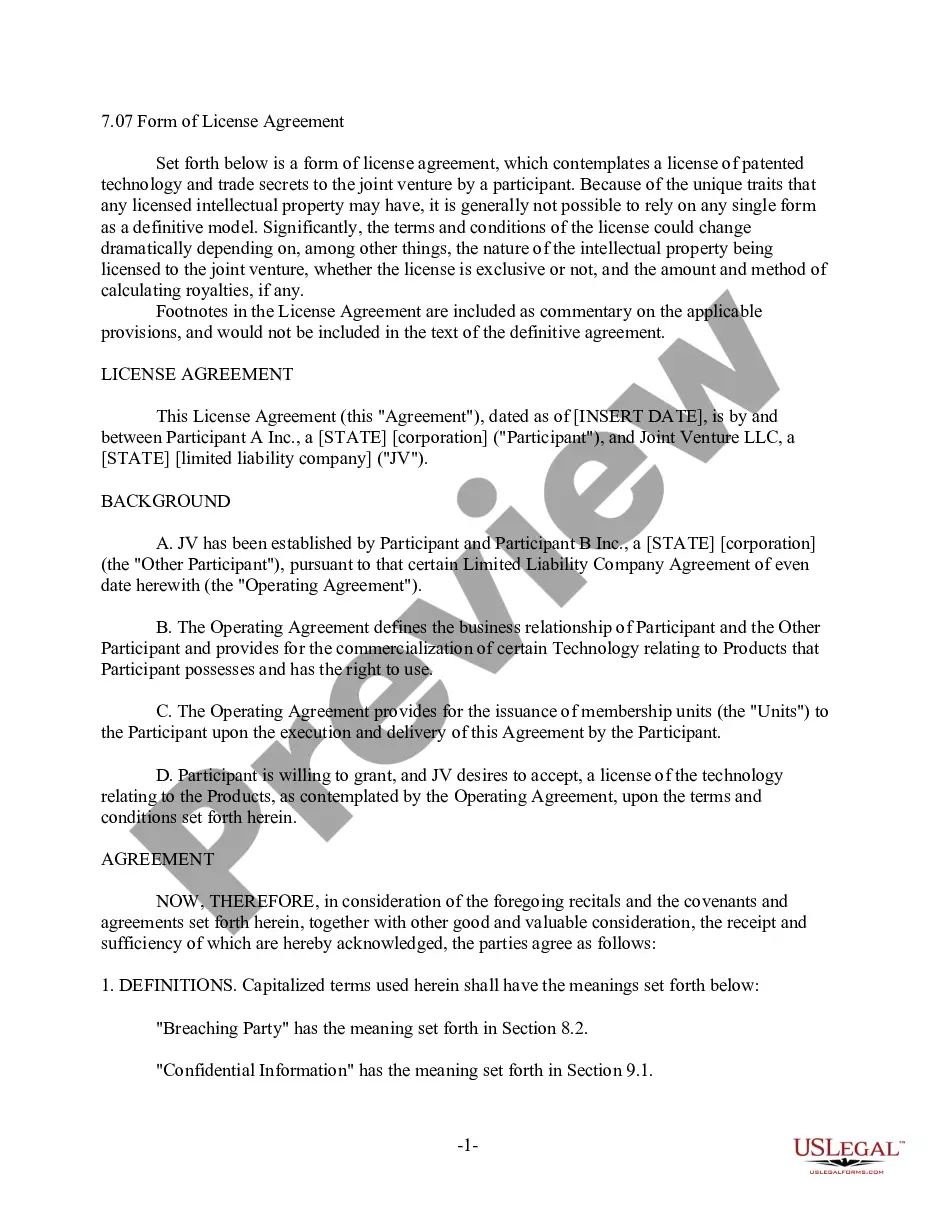
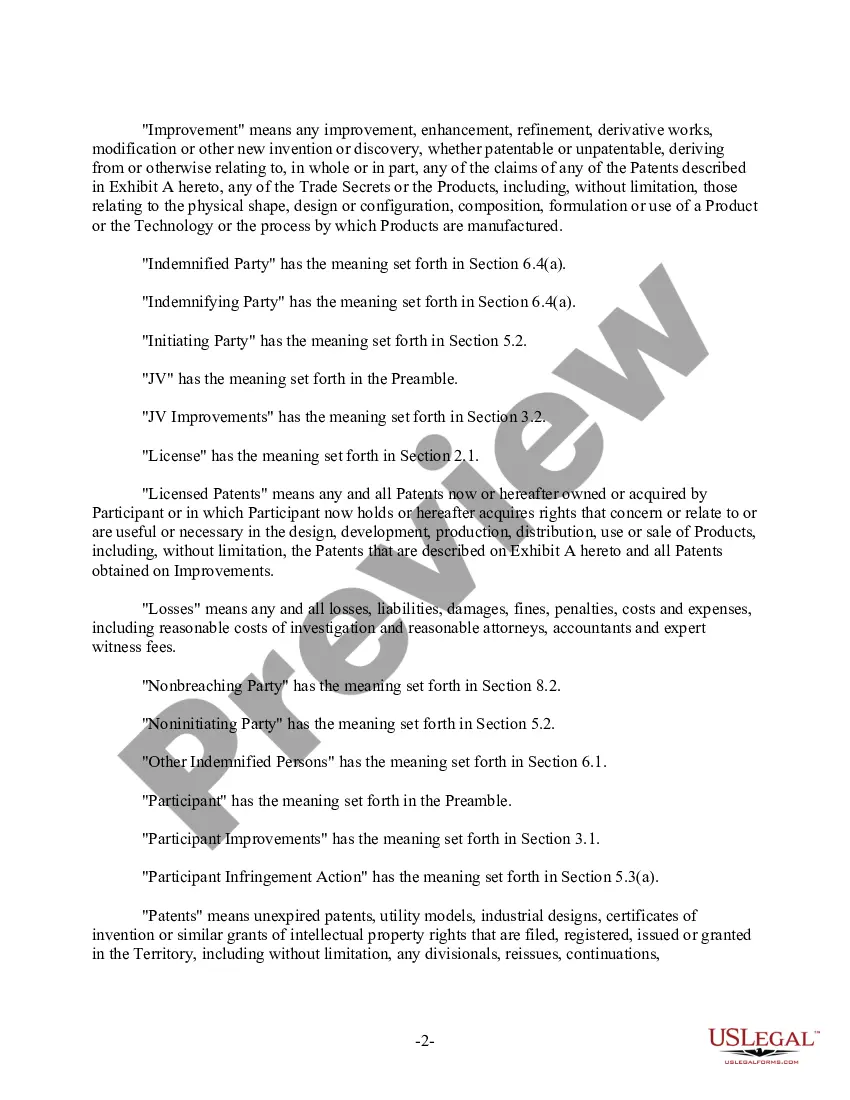
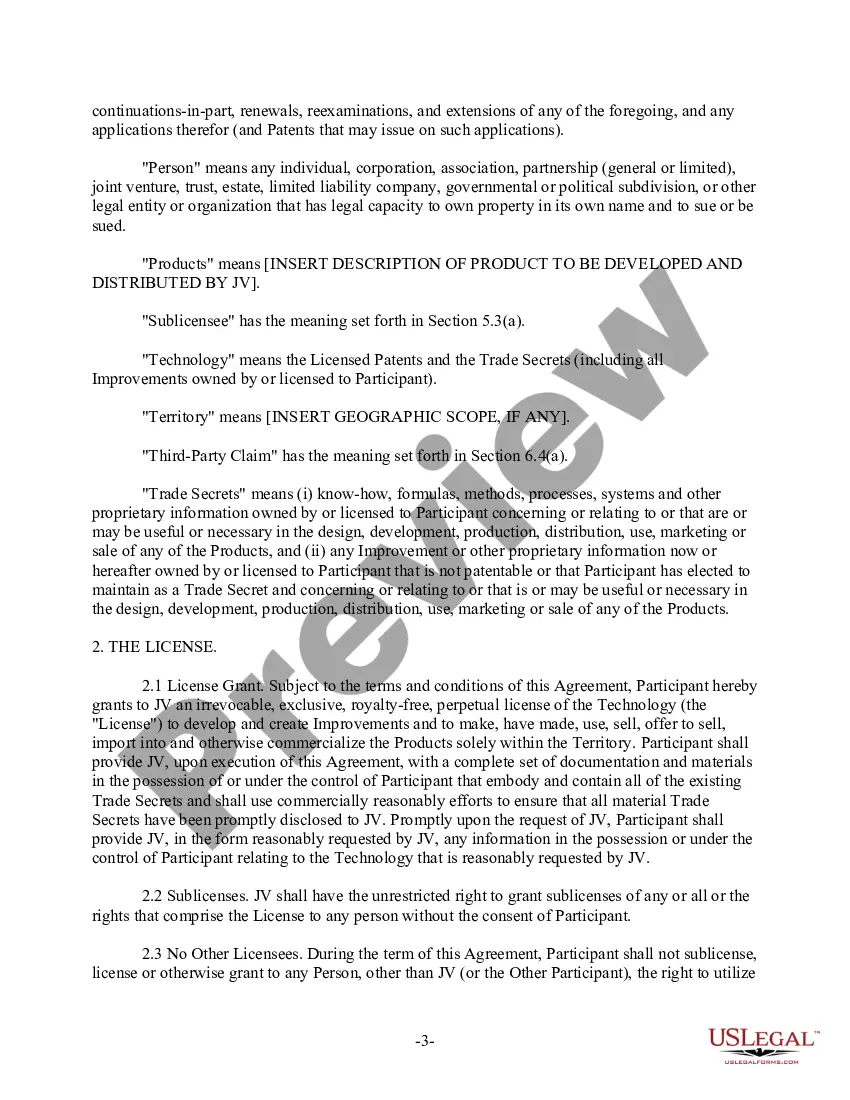
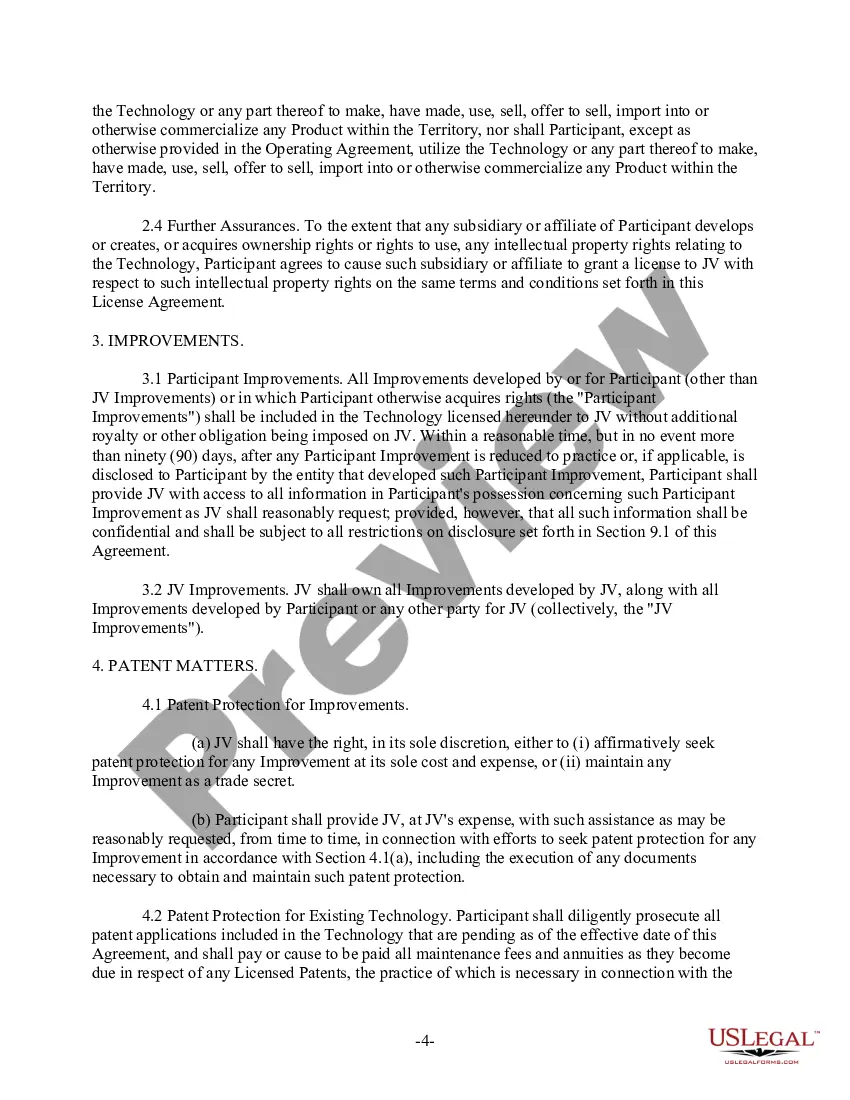
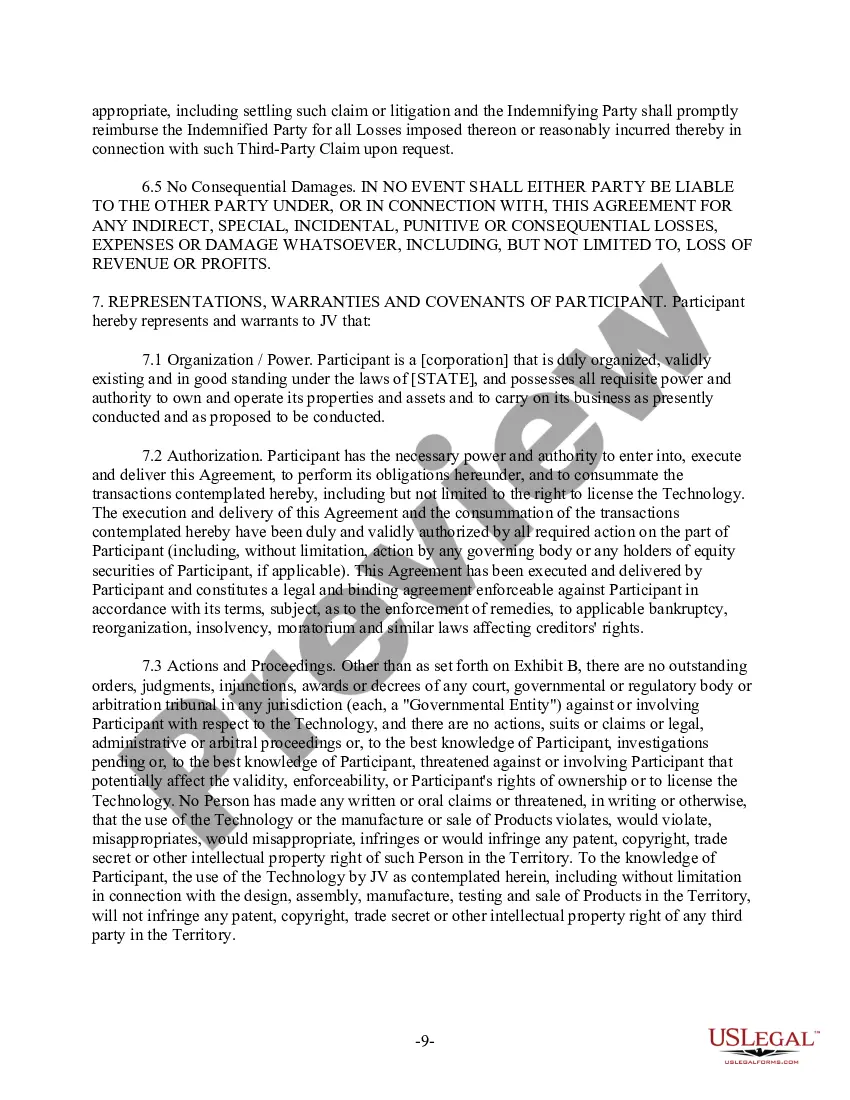
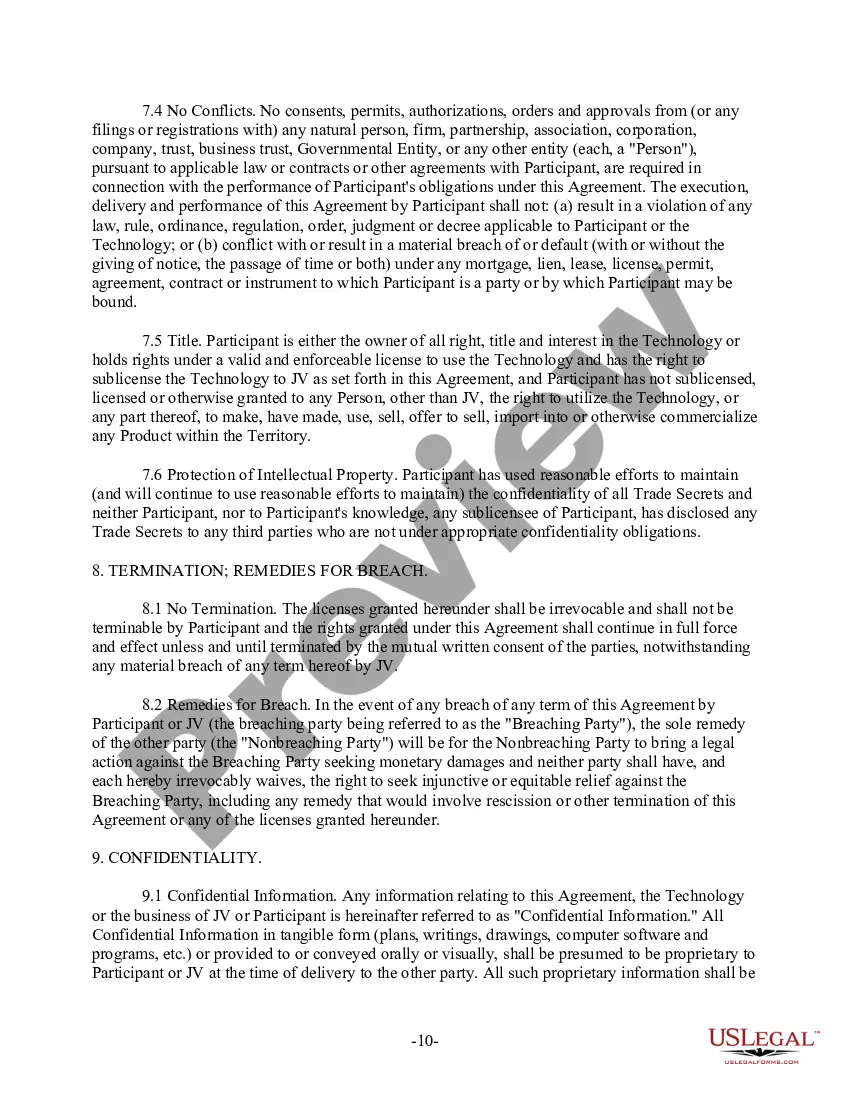
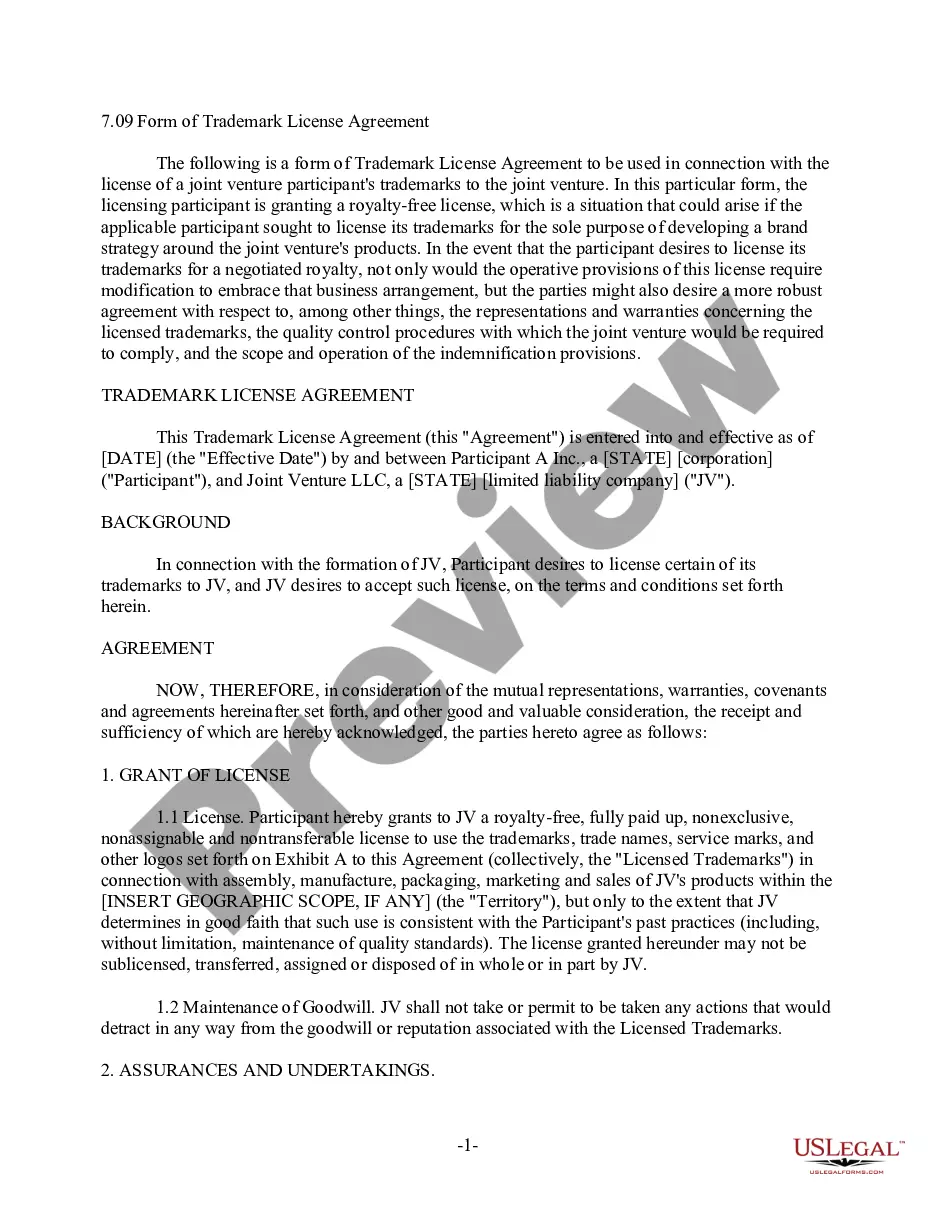
The License Agreement for Intellectual Property is a legal document that outlines the terms under which one party (the Participant) grants another party (the Joint Venture) the rights to use certain patented technology and trade secrets. This agreement is essential in ensuring that both parties understand their rights and responsibilities when it comes to using the intellectual property involved. Unlike generic licensing agreements, this form is specifically structured for joint ventures, making it suitable for collaborative partnerships that require detailed terms related to commercializing shared technology.
Key components of this form
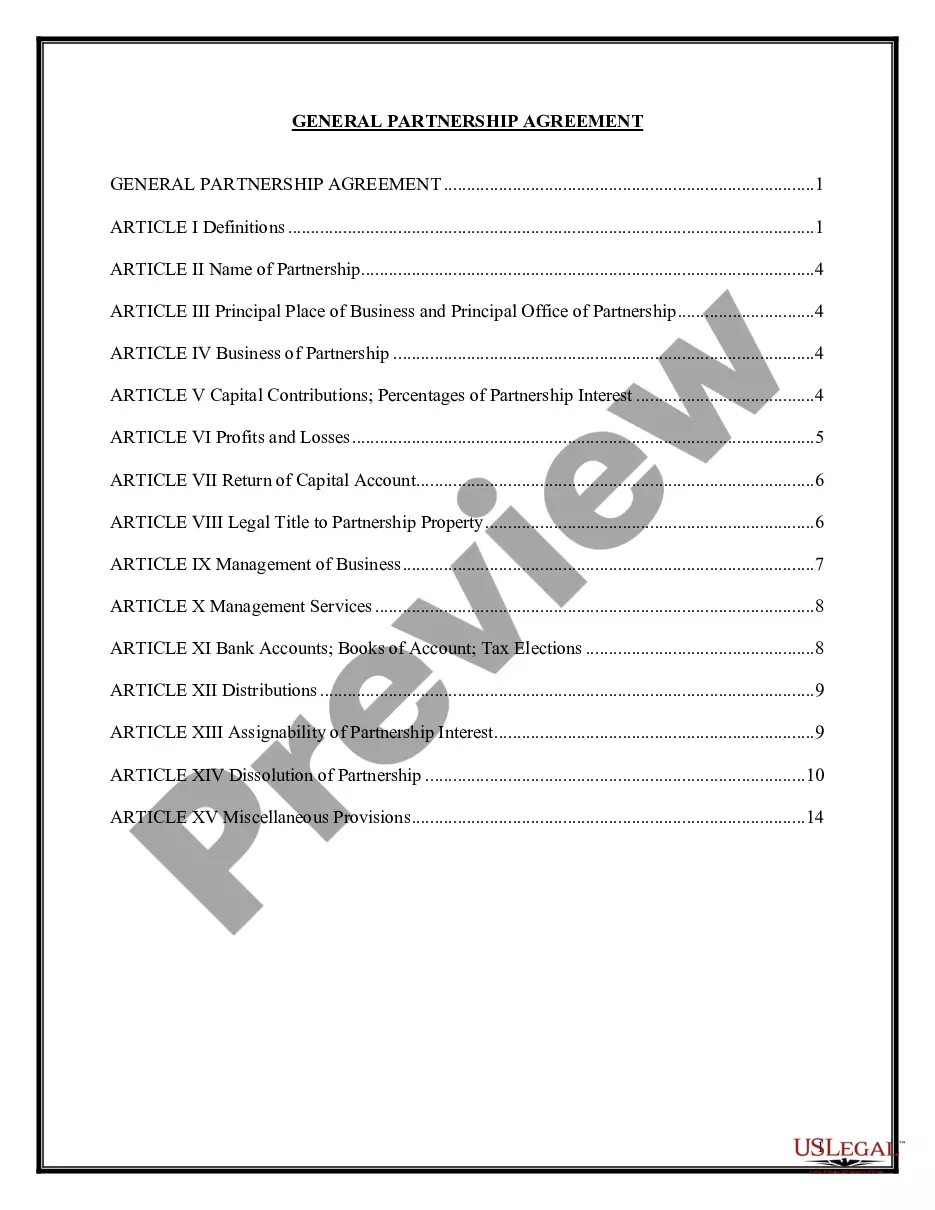
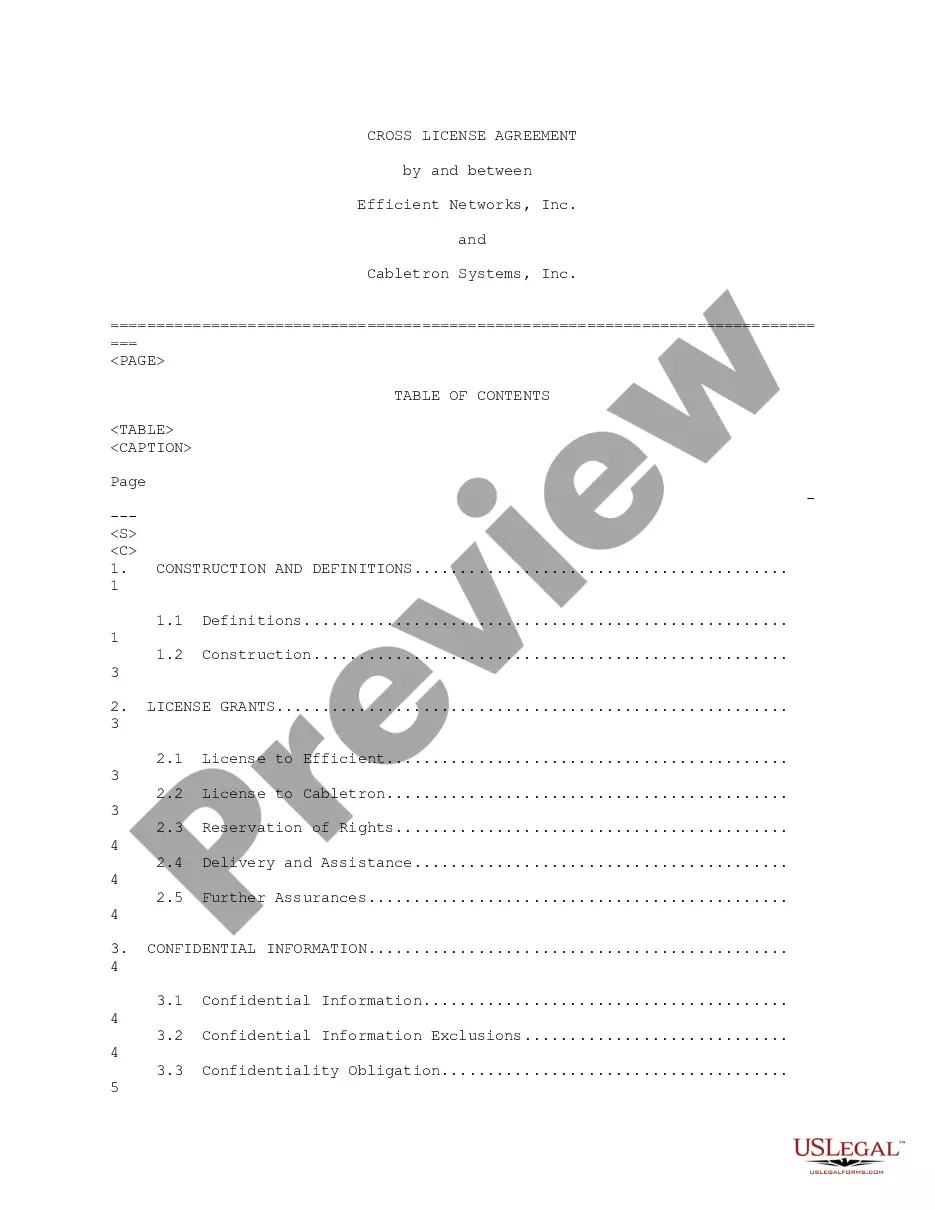
- Definitions: Includes specific definitions of key terms used throughout the agreement.
- License Grant: Details the scope and nature of the license provided to the Joint Venture.
- Improvements: Outlines ownership rights and responsibilities for any improvements developed from the technology.
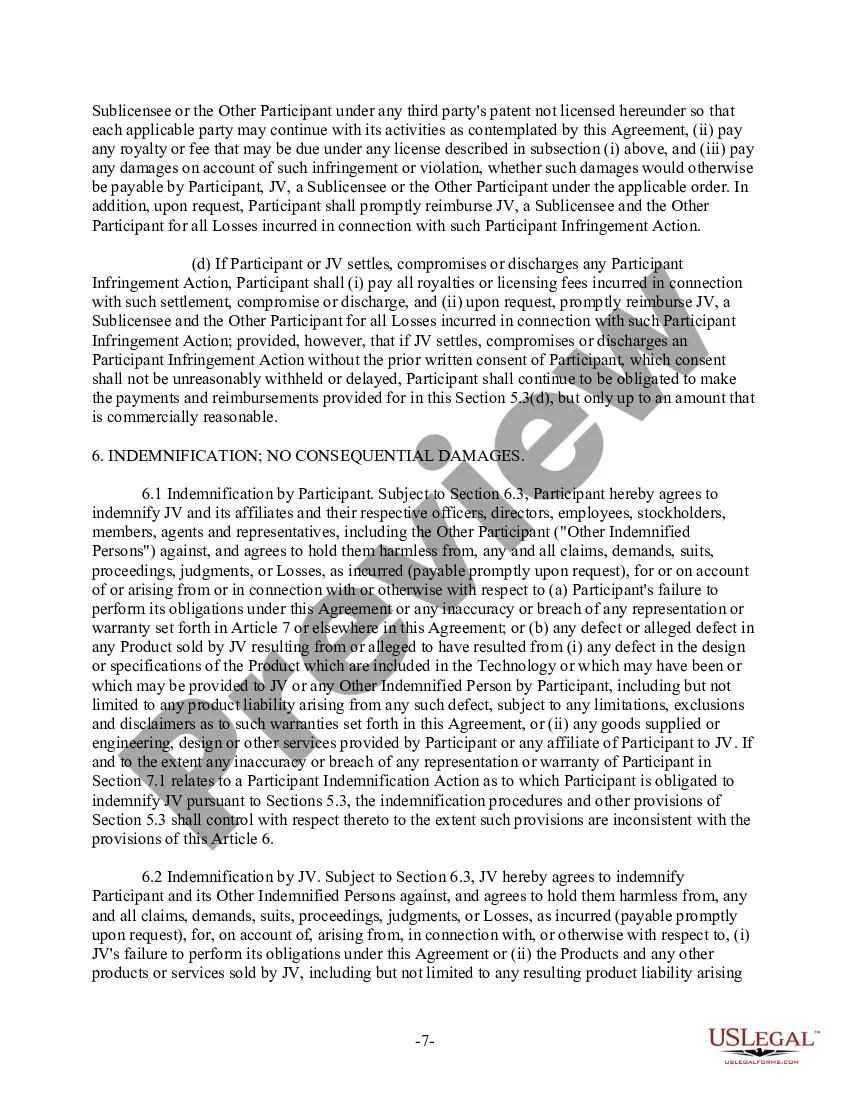
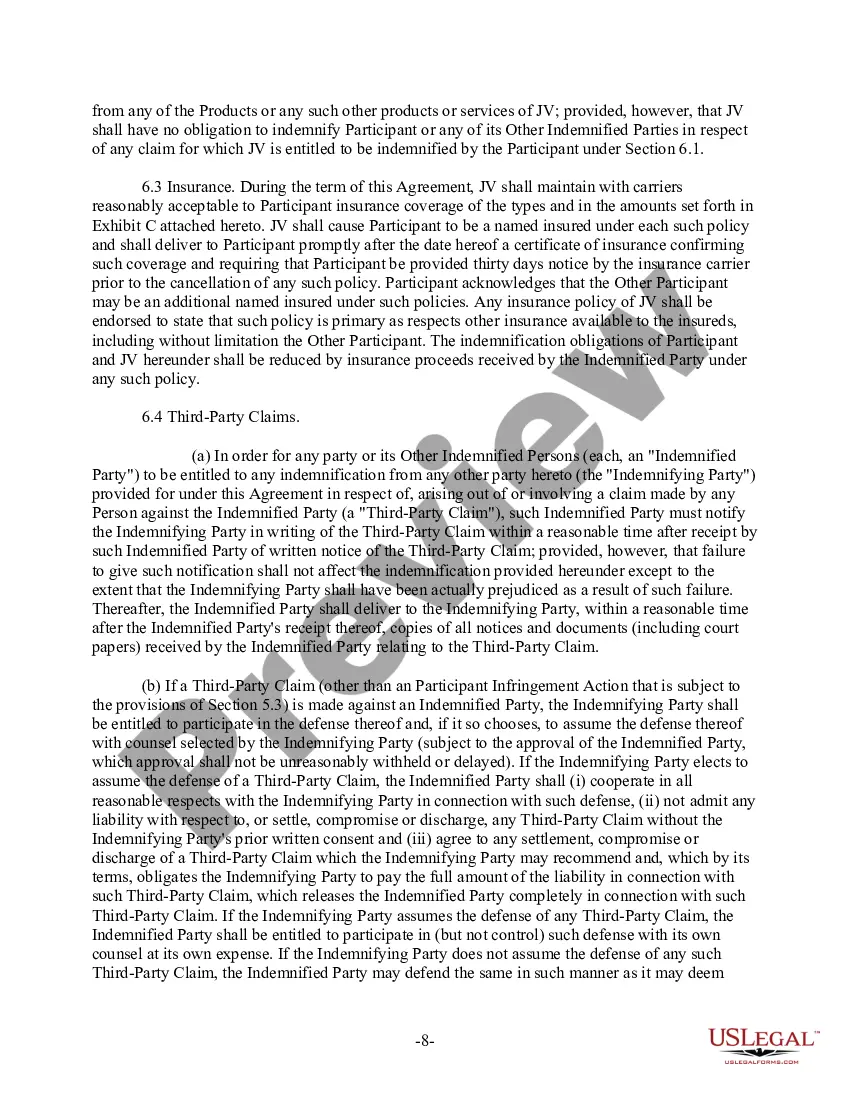
- Indemnification: Specifies the obligations of parties to protect each other against claims and liabilities.
- Confidentiality: Establishes requirements to protect sensitive information shared between parties.

Situations where this form applies
This form is suitable for use when two or more entities are entering into a collaborative effort to develop or commercialize a product using shared intellectual property. It is particularly useful when one party holds patented technology or trade secrets that the other party will need access to for joint ventures. Examples include tech startups collaborating on product development or companies forming partnerships to leverage their respective technologies for mutual benefit.
Who needs this form
- Businesses looking to form a joint venture involving shared intellectual property.
- Startups that require access to patented technologies owned by another entity.
- Research institutions partnering with corporate entities to commercialize research findings.
- Legal representatives drafting legal agreements for corporate collaborations.
Instructions for completing this form
- Identify the parties involved, including full legal names and addresses.
- Specify the dates for the agreement and its term duration.
- Define the technology or products being licensed, including a description of the intellectual property.
- Outline royalty details, if applicable, including the calculation method and payment schedule.
- Ensure all confidentiality requirements are addressed and the agreement is signed by authorized representatives.
Does this form need to be notarized?
This form does not typically require notarization unless specified by local law. However, ensure that all parties sign the agreement to validate it.
Get your form ready online
Our built-in tools help you complete, sign, share, and store your documents in one place.
Make edits, fill in missing information, and update formatting in US Legal Forms—just like you would in MS Word.
Download a copy, print it, send it by email, or mail it via USPS—whatever works best for your next step.
Sign and collect signatures with our SignNow integration. Send to multiple recipients, set reminders, and more. Go Premium to unlock E-Sign.
If this form requires notarization, complete it online through a secure video call—no need to meet a notary in person or wait for an appointment.
We protect your documents and personal data by following strict security and privacy standards.

Make edits, fill in missing information, and update formatting in US Legal Forms—just like you would in MS Word.

Download a copy, print it, send it by email, or mail it via USPS—whatever works best for your next step.

Sign and collect signatures with our SignNow integration. Send to multiple recipients, set reminders, and more. Go Premium to unlock E-Sign.

If this form requires notarization, complete it online through a secure video call—no need to meet a notary in person or wait for an appointment.

We protect your documents and personal data by following strict security and privacy standards.
Typical mistakes to avoid
- Failing to clearly define the scope of the license granted.
- Neglecting to specify payment terms for royalties, if applicable.
- Not addressing the handling of improvements and new inventions.
- Overlooking local laws that may affect the agreement's enforceability.
- Not including necessary confidentiality clauses.
Benefits of using this form online
- Convenient access to a legally vetted document that saves time and resources.
- Easy customization to adapt the agreement for specific partnerships and technologies.
- Downloadable format allows for offline editing and secure storage.
Legal use & context
- The agreement helps protect each partyâs intellectual property rights amidst commercialization efforts.
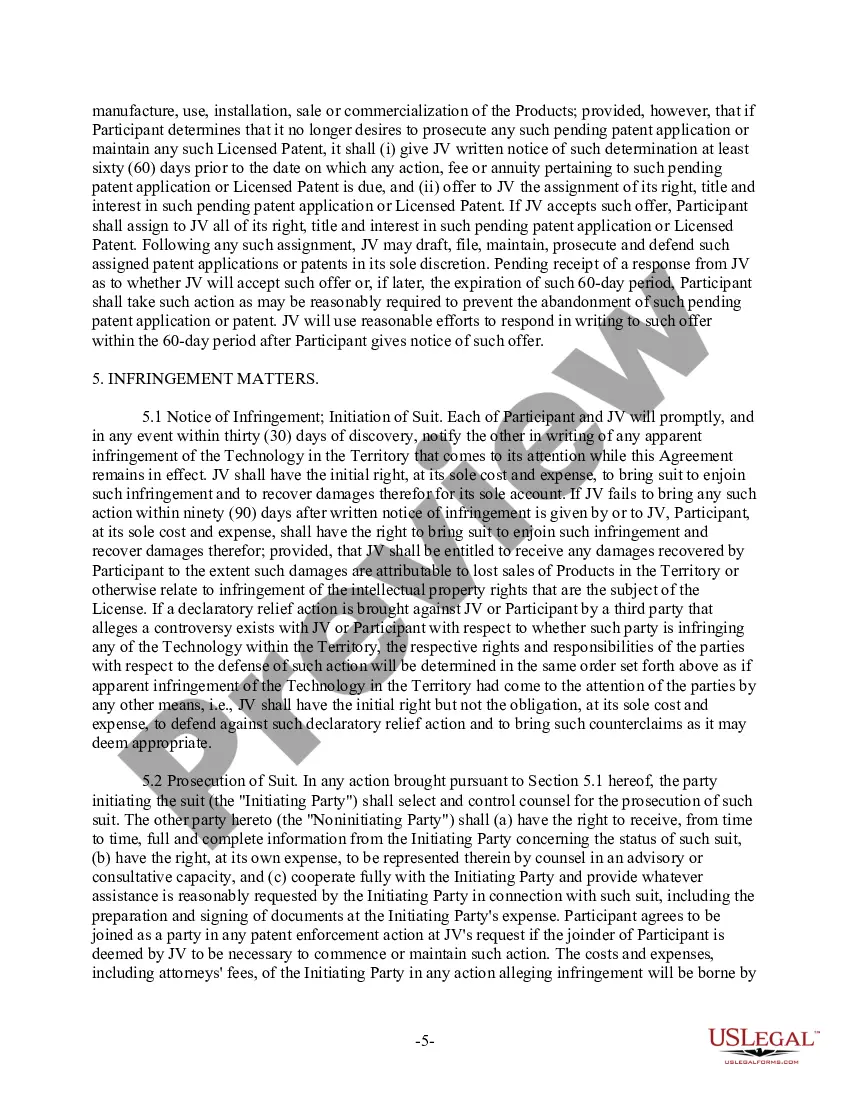
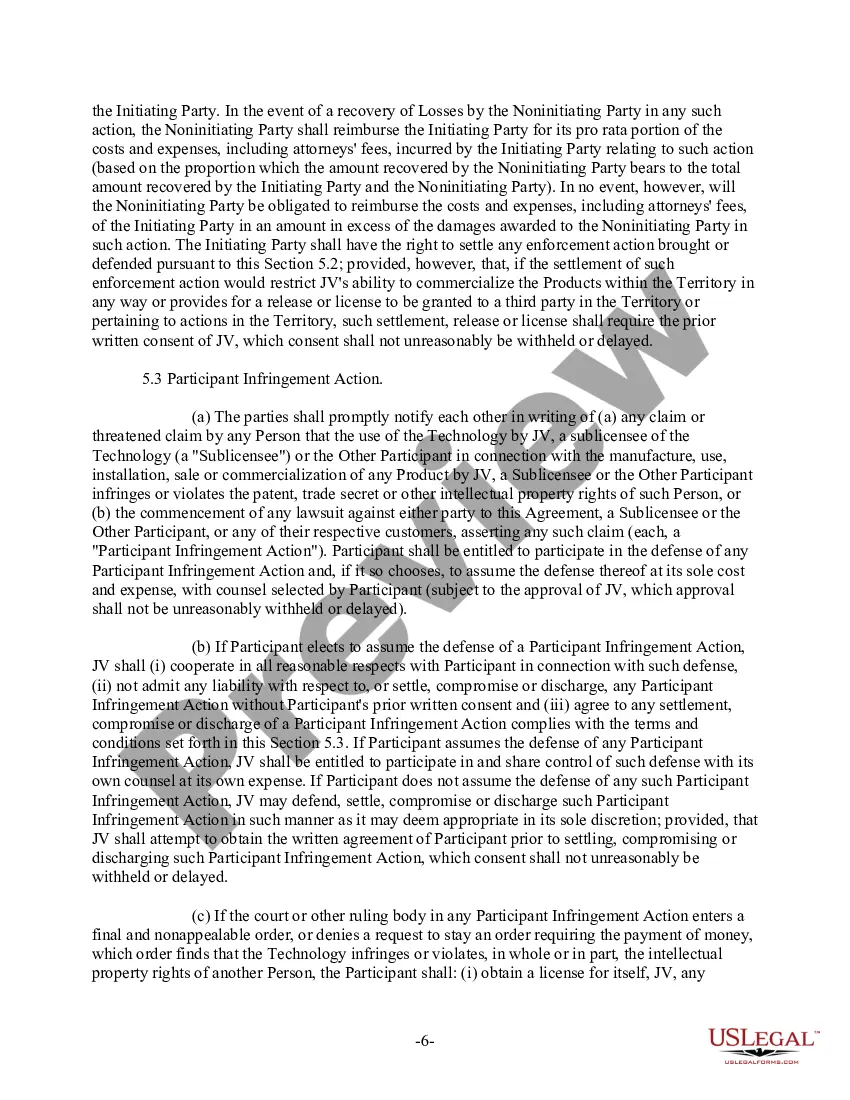
- Infringement actions can be addressed with clear guidelines on legal responsibilities and liabilities.
- This form emphasizes the significance of confidentiality to prevent any potential misconduct or misappropriation of trade secrets.
What to keep in mind
- The License Agreement for Intellectual Property establishes clear guidelines for the use of patented technology and trade secrets.
- It is essential for businesses entering joint ventures that involve intellectual property.
- Understanding the components and completing the form accurately can prevent misunderstandings and legal issues.
Key terms explained
- Intellectual Property: Creations of the mind, such as inventions, literary and artistic works, symbols, names, and images used in commerce.
- License: A legal permission to use intellectual property under certain conditions.
- Joint Venture: A commercial enterprise undertaken jointly by two or more parties which retains its separate legal status.
- Indemnification: An obligation to compensate for any loss or damage incurred by another party.
Looking for another form?
Form popularity
FAQ
In a typical licensing agreement, the licensor agrees to provide the licensee with intellectual property rights such as the licensor's technology, brand name, or product creation know-how.
The 3 P's of collegiate licensing are protection, promotion, and profit.
Download a template for a licensing agreement. Choose your role as the licensor or licensee. Define the license(s) in the agreement. Decide whether the license is exclusive or not. Settle the matter of fees and payment schedule. Add a renewal date and rules.
An example of a licensing agreement is a contract between the copyright holders of software and another company, allowing the latter to use the computer software for their daily business operations.
A license agreement is a business contract between two parties. The licensor (the seller of the license) owns the asset being licensed and the licensee (the buyer) pays for the right to use the license. The licensee pays royalties to the owner in exchange for the right to sell the product or use the technology.
Exclusive or non-exclusive. In an exclusive license, the intellectual property holder is licensing the work only to one person, for that particular use/territory. Territory. Use. Attribution. Derivative works. Confidentiality. Time frame. Termination.
An example of a licensing agreement is a contract between the copyright holders of software and another company, allowing the latter to use the computer software for their daily business operations.
What is an IP licensing agreement? An IP licensing agreement occurs between an IP rights owner (licensor) and someone who is authorised to use the rights (licensee) in exchange for monetary value in the form of a fee or a royalty.