Parent - Child Contract For Alcohol And Drug Awareness
What this document covers
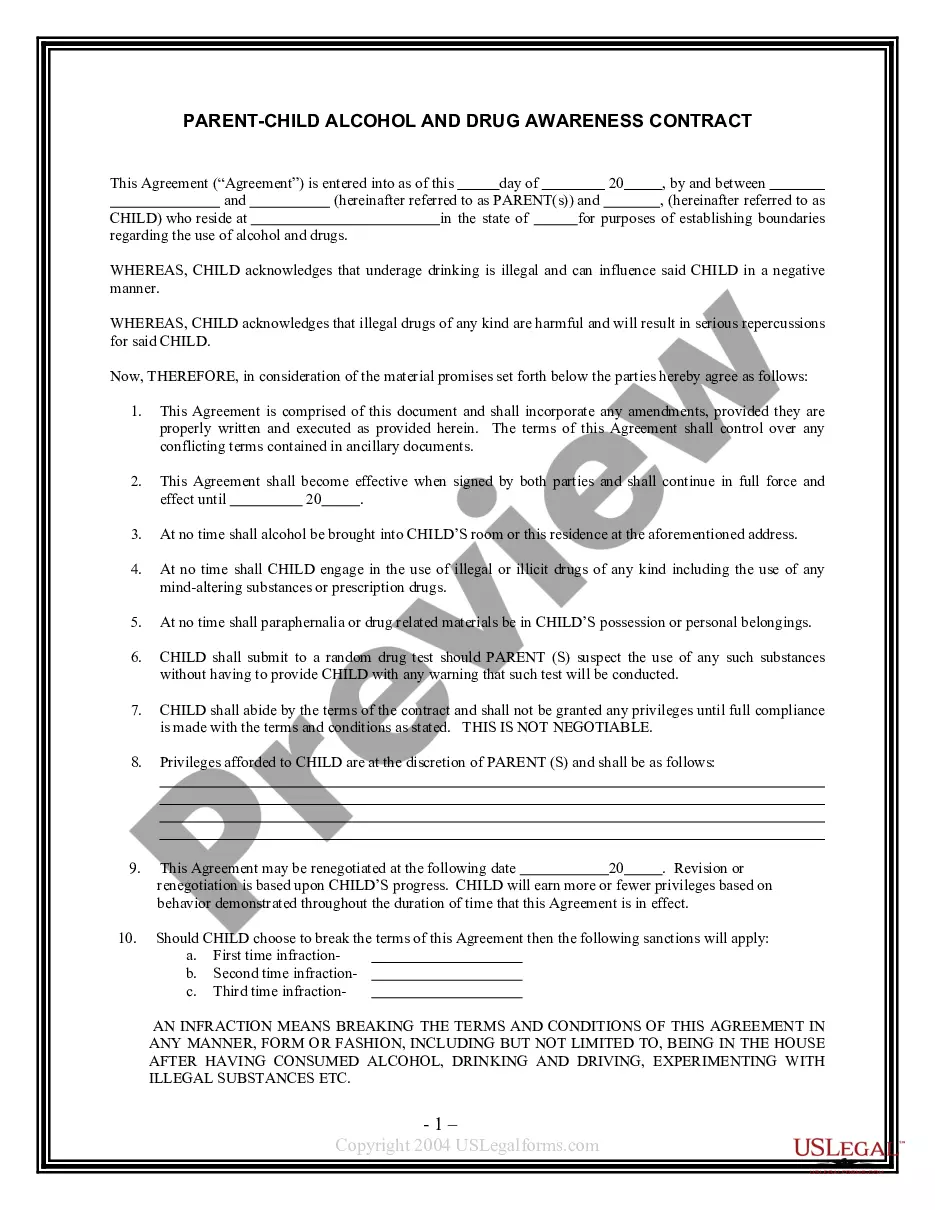
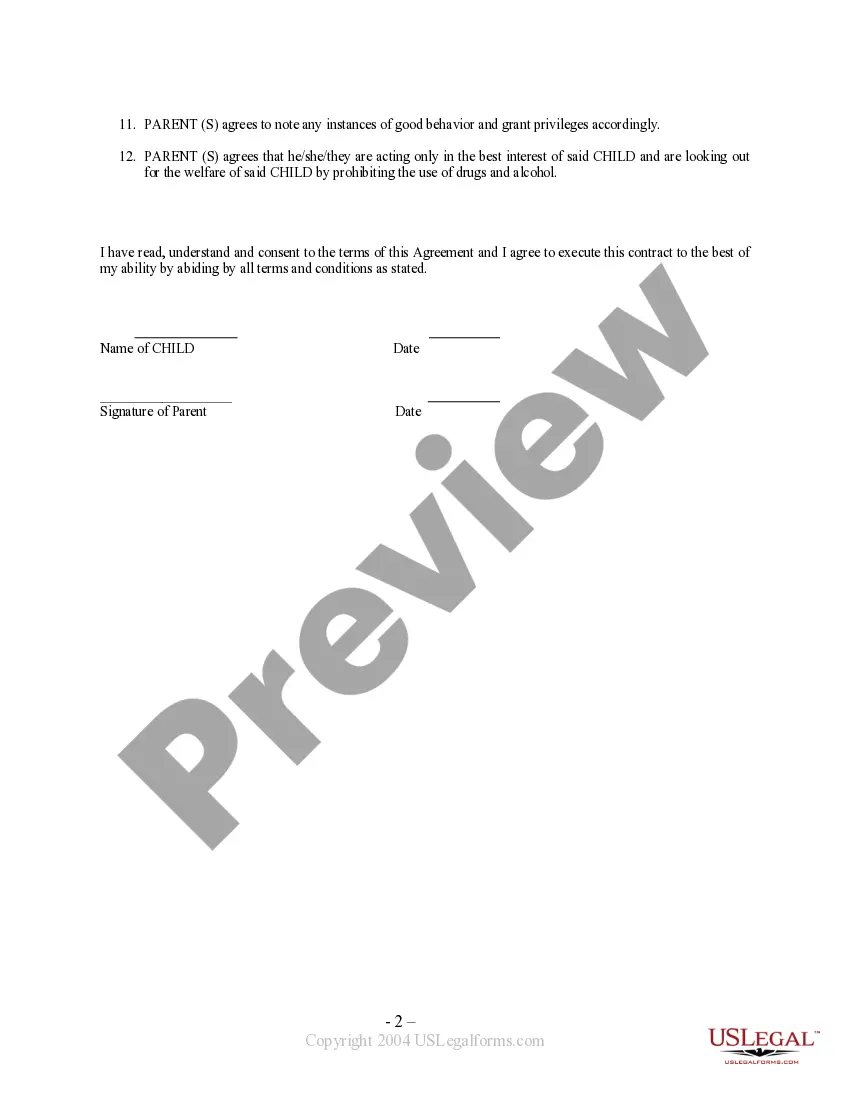
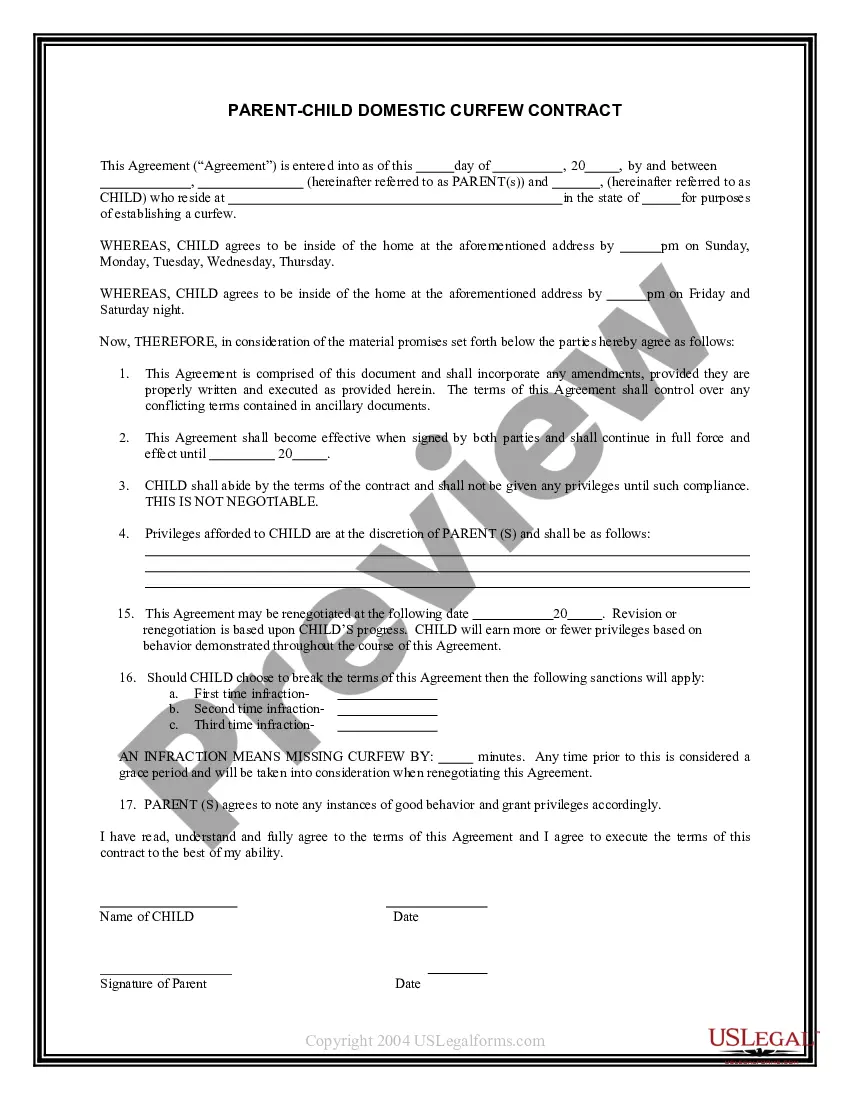
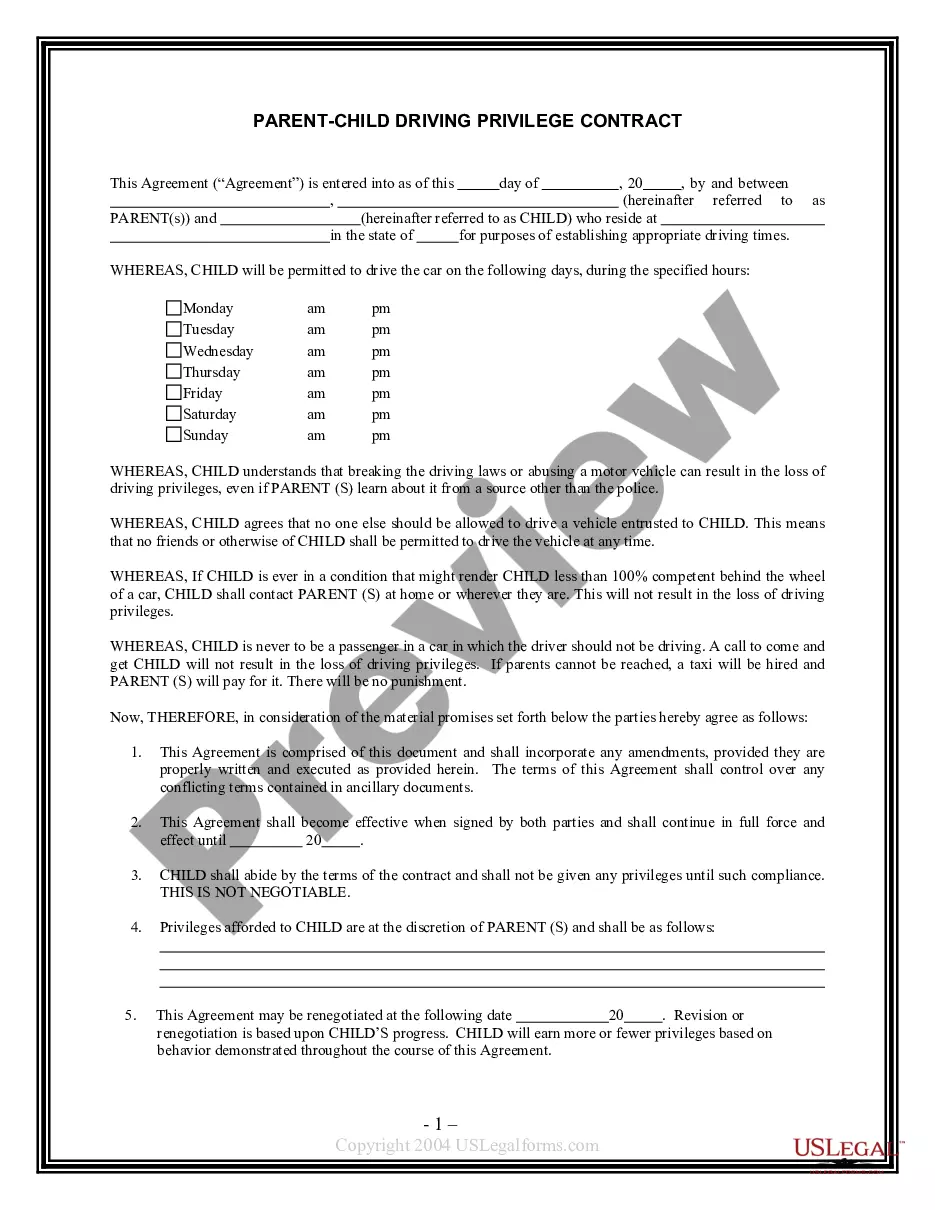
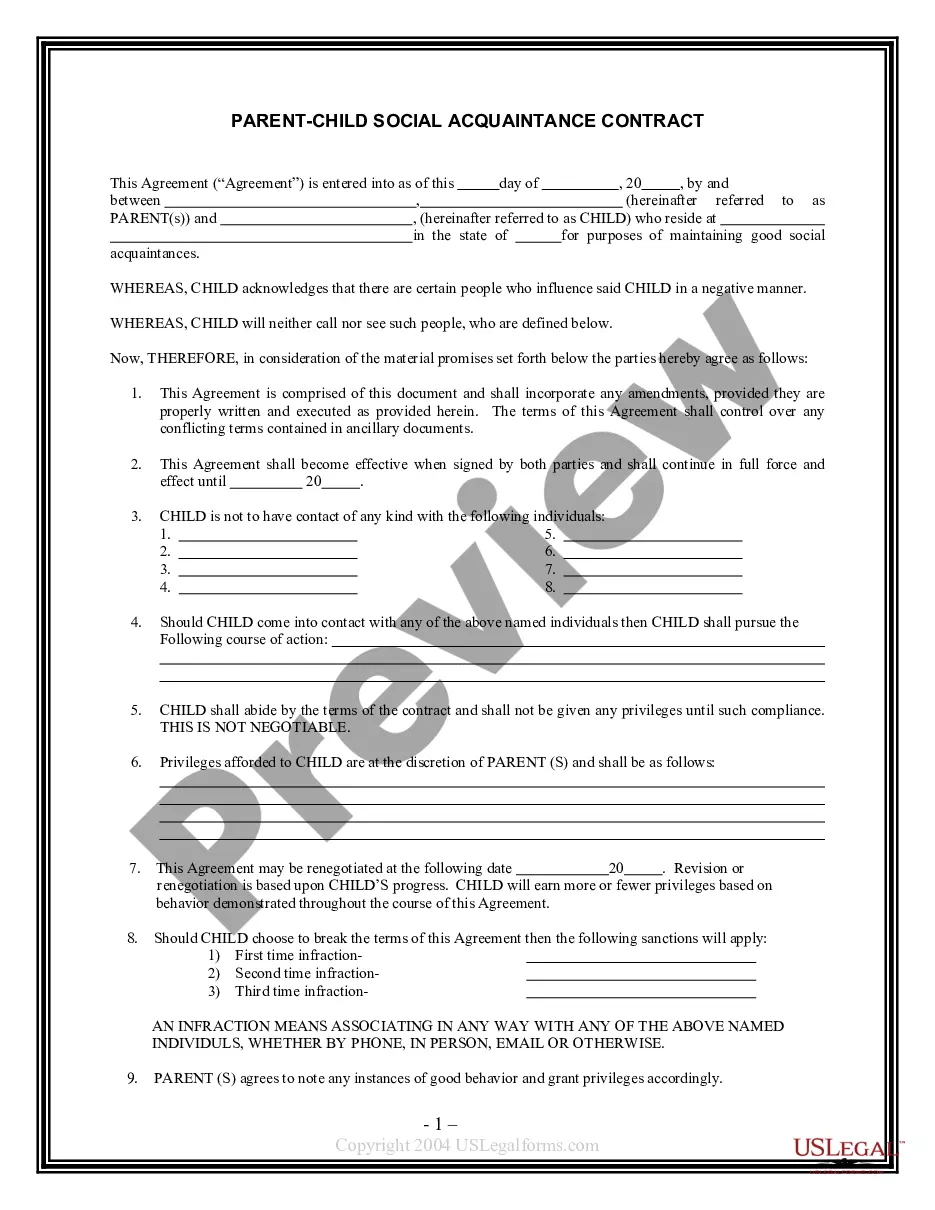
The Parent - Child Contract for Alcohol and Drug Awareness is a legal agreement established between parents and their child regarding the usage of drugs and alcohol. This contract emphasizes the seriousness of substance abuse and outlines both repercussions for non-compliance and privileges for good behavior. Unlike general agreements, this specific contract provides a structured framework aimed at fostering accountability and promoting healthy choices among minors.
Key components of this form
- Recognition of harmful effects: The child acknowledges the dangers of illegal drugs and alcohol.
- Prohibition of substances: The contract specifies that the child shall not use illegal drugs or possess drug-related materials.
- Random drug testing: Parents reserve the right to conduct random drug tests without prior notice.
- Compliance enforcement: The child must fulfill contract terms to receive any privileges.
- Privileges outline: Conditions for privileges based on good behavior are determined by the parents.
When this form is needed
This form is ideal for parents who wish to establish a clear understanding with their child regarding the dangers of substance use. It is particularly useful when addressing concerns about drug or alcohol experimentation, setting expectations during pivotal developmental phases, or reinforcing family values related to responsible behavior. Use this contract to promote open communication and accountability in your household.
Who should use this form
- Parents or guardians with minor children.
- Families looking to prevent substance abuse.
- Parents who wish to create a formal agreement outlining behavioral expectations.
- Families wanting to promote accountability and good conduct.
How to prepare this document
- Identify the parties: Clearly state the names of the parents and child involved in the contract.
- Specify terms: Clearly define the unacceptable behaviors and consequences for violations.
- Outline privileges: List any privileges that the child may earn through good behavior.
- Include signatures: Ensure that all parties sign the contract to acknowledge their understanding and agreement to the terms.
- Store the agreement: Keep a signed copy accessible for reference and accountability.
Is notarization required?
Notarization is not commonly needed for this form. However, certain documents or local rules may make it necessary. Our notarization service, powered by Notarize, allows you to finalize it securely online anytime, day or night.
Get your form ready online
Our built-in tools help you complete, sign, share, and store your documents in one place.
Make edits, fill in missing information, and update formatting in US Legal Forms—just like you would in MS Word.
Download a copy, print it, send it by email, or mail it via USPS—whatever works best for your next step.
Sign and collect signatures with our SignNow integration. Send to multiple recipients, set reminders, and more. Go Premium to unlock E-Sign.
If this form requires notarization, complete it online through a secure video call—no need to meet a notary in person or wait for an appointment.
We protect your documents and personal data by following strict security and privacy standards.

Make edits, fill in missing information, and update formatting in US Legal Forms—just like you would in MS Word.

Download a copy, print it, send it by email, or mail it via USPS—whatever works best for your next step.

Sign and collect signatures with our SignNow integration. Send to multiple recipients, set reminders, and more. Go Premium to unlock E-Sign.

If this form requires notarization, complete it online through a secure video call—no need to meet a notary in person or wait for an appointment.

We protect your documents and personal data by following strict security and privacy standards.
Typical mistakes to avoid
- Failing to clearly define terms, which can lead to misunderstandings.
- Not obtaining signatures from all parties involved.
- Neglecting to discuss the contract with the child beforehand.
- Trying to modify the contract without mutual agreement.
Why complete this form online
- Convenience: Easily download and fill out the contract from home.
- Customizability: Tailor the agreement to fit your family's values and needs.
- Reliability: Access professionally drafted templates created by licensed attorneys.
Legal use & context
- This contract establishes a mutual agreement that can be enforced within the bounds of family law.
- While it may not be binding in a court like a formal contract, it serves as a strong guideline for behavior expectations.
- It reinforces open communication between parents and children regarding substance use.
Looking for another form?
Form popularity
FAQ
Several grounds for fault divorce include adultery, cruelty, abandonment, mental illness, and criminal conviction. There are, however, additional grounds that are acceptable in some states such as drug abuse, impotency, and religious reasons.
Fault Theory. Under this theory, marriage can be ended when one party to the marriage is responsible or liable for the offence under matrimonial offences done against another spouse. Mutual Consent. Irretrievable Breakdown. Adultery. Cruelty. Desertion. Conversion. Insanity.
If one parent has a significant criminal history or there are signs of substance abuse, those issues can definitely play into a custody determination. A history of alcohol or drug abuse can significantly affect your custody agreement and influence the Court's decision when granting access to your child.
Drug abuse interferes with a parent's ability to care for their children and provide a safe, nurturing environment in which they can thrive. Children with a family history of substance abuse are at high risk of developing physical and emotional issues, as well as suffering from addiction later in life.
Substance abuse can simply be defined as a pattern of harmful use of any substance for mood-altering purposes. "Substances" can include alcohol and other drugs (illegal or not) as well as some substances that are not drugs at all.
Children also may be endangered when parents' substance use interferes with their ability to raise their children and provide a safe, nurturing environment. Parents' substance use may affect their ability to consistently prioritize the child's basic physical and emotional needs over their own need for substances.
Even in the no-fault divorce states, you can still state evidence as to your spouse's abuse of alcohol and drugs. The reason you may want to do this is because of child custody or other related issues that may come up during the divorce.
Parents who misuse substances may have difficulty: staying organised and giving their children effective and consistent support. keeping their home and family clean. recognising and responding appropriately to their own and their children's physical needs.
When it comes to child custody, family courts review a variety of factors to decide whether granting a parent these rights is in the best interests of their child.A history of alcohol or drug abuse can significantly affect your custody agreement and influence the Court's decision when granting access to your child.