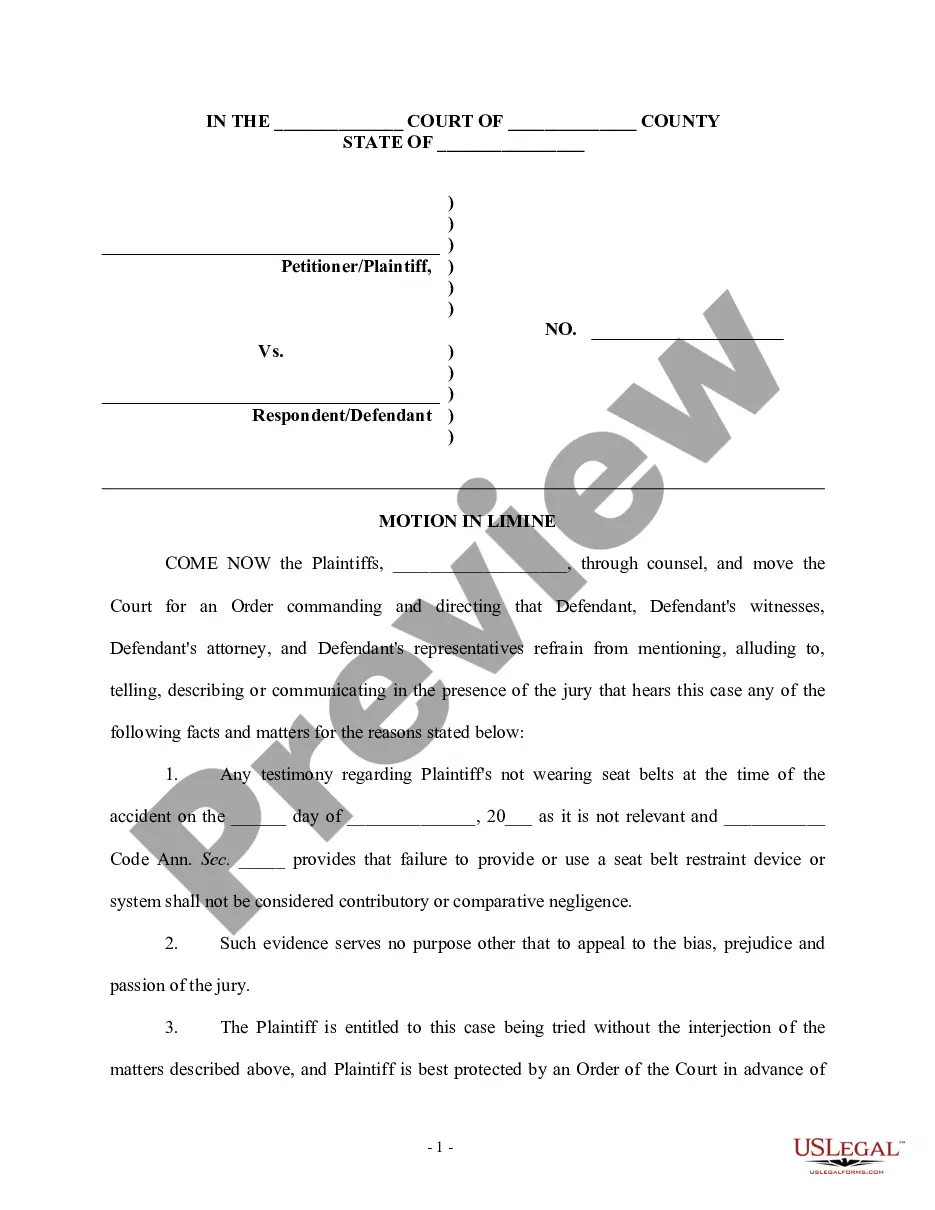
This form is a motion in limine requesting that the court issue a ruling prohibiting the defense from disclosing certain facts to the jury in an personal injury case.
Motion in Limine - Civil Trial
State:
Multi-State
Control #:
US-PI-0058
Format:
Word;
Rich Text
133 downloads
Description
Free preview
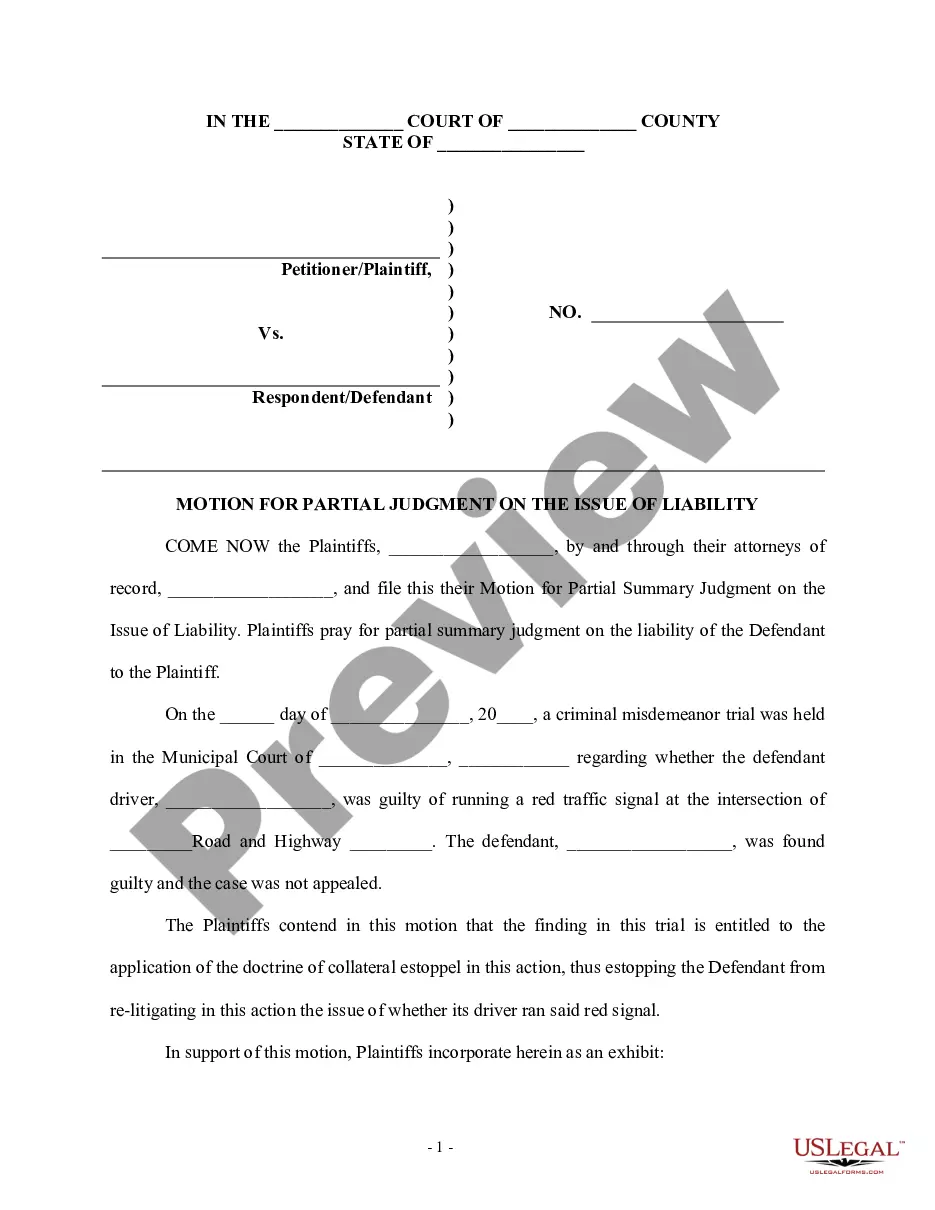
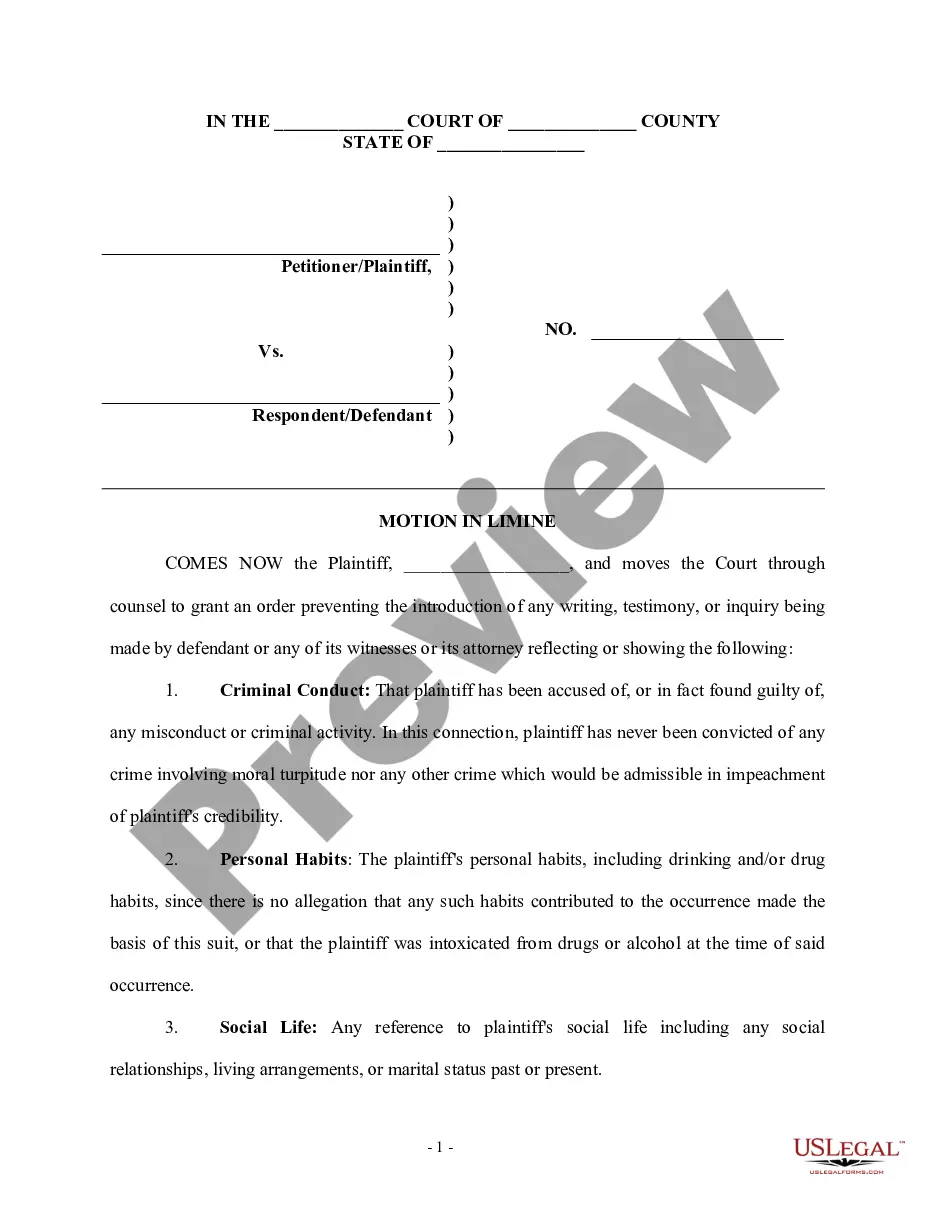
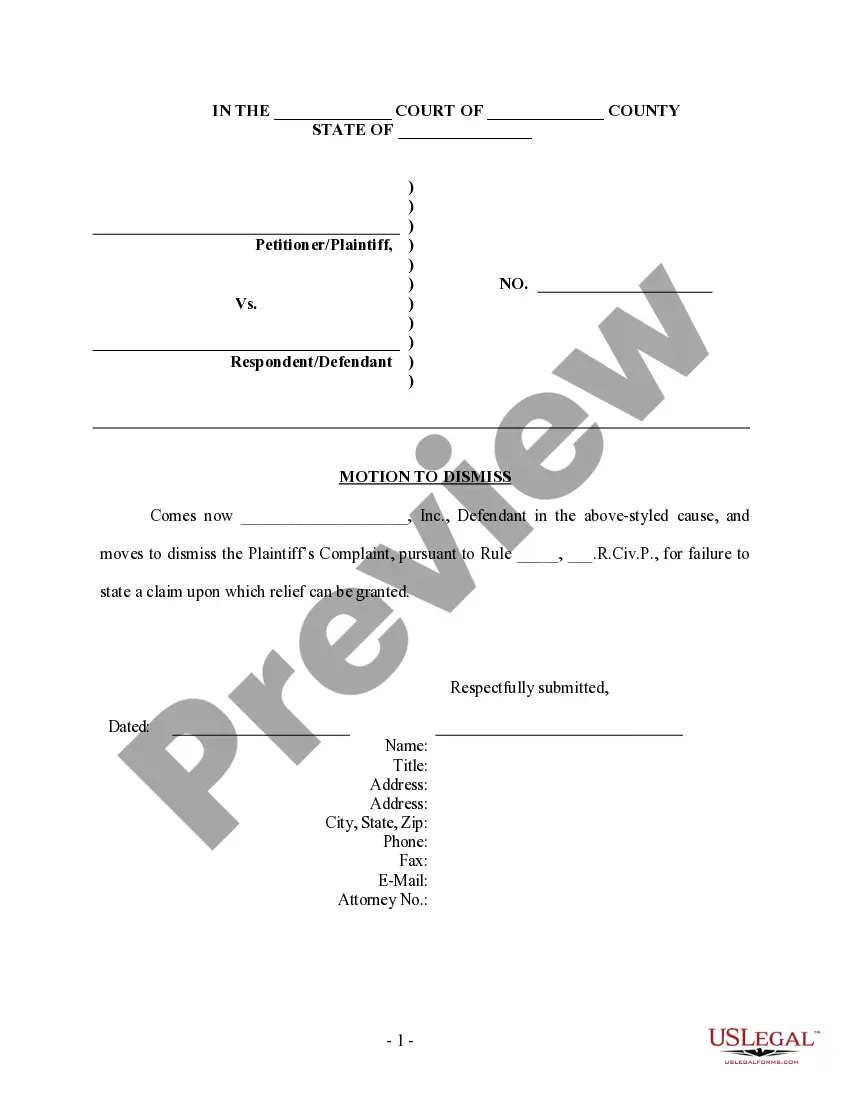
Get your form ready online
Our built-in tools help you complete, sign, share, and store your documents in one place.
Built-in online Word editor
Make edits, fill in missing information, and update formatting in US Legal Forms—just like you would in MS Word.
Export easily
Download a copy, print it, send it by email, or mail it via USPS—whatever works best for your next step.
E-sign your document
Sign and collect signatures with our SignNow integration. Send to multiple recipients, set reminders, and more. Go Premium to unlock E-Sign.
Notarize online 24/7
If this form requires notarization, complete it online through a secure video call—no need to meet a notary in person or wait for an appointment.
Store your document securely
We protect your documents and personal data by following strict security and privacy standards.

Make edits, fill in missing information, and update formatting in US Legal Forms—just like you would in MS Word.

Download a copy, print it, send it by email, or mail it via USPS—whatever works best for your next step.

Sign and collect signatures with our SignNow integration. Send to multiple recipients, set reminders, and more. Go Premium to unlock E-Sign.

If this form requires notarization, complete it online through a secure video call—no need to meet a notary in person or wait for an appointment.

We protect your documents and personal data by following strict security and privacy standards.
Looking for another form?
How to fill out Motion In Limine - Civil Trial?
When it comes to drafting a legal form, it is easier to leave it to the experts. However, that doesn't mean you yourself can’t get a template to utilize. That doesn't mean you yourself cannot find a template to utilize, however. Download Motion in Limine - Civil Trial from the US Legal Forms web site. It gives you a wide variety of professionally drafted and lawyer-approved forms and samples.
For full access to 85,000 legal and tax forms, users simply have to sign up and choose a subscription. After you are signed up with an account, log in, search for a particular document template, and save it to My Forms or download it to your gadget.
To make things much easier, we’ve included an 8-step how-to guide for finding and downloading Motion in Limine - Civil Trial promptly:
- Be sure the document meets all the necessary state requirements.
- If available preview it and read the description before buying it.
- Hit Buy Now.
- Choose the appropriate subscription to suit your needs.
- Make your account.
- Pay via PayPal or by credit/credit card.
- Choose a preferred format if several options are available (e.g., PDF or Word).
- Download the document.
Once the Motion in Limine - Civil Trial is downloaded you may complete, print and sign it in almost any editor or by hand. Get professionally drafted state-relevant documents within a matter of minutes in a preferable format with US Legal Forms!
Form popularity
FAQ
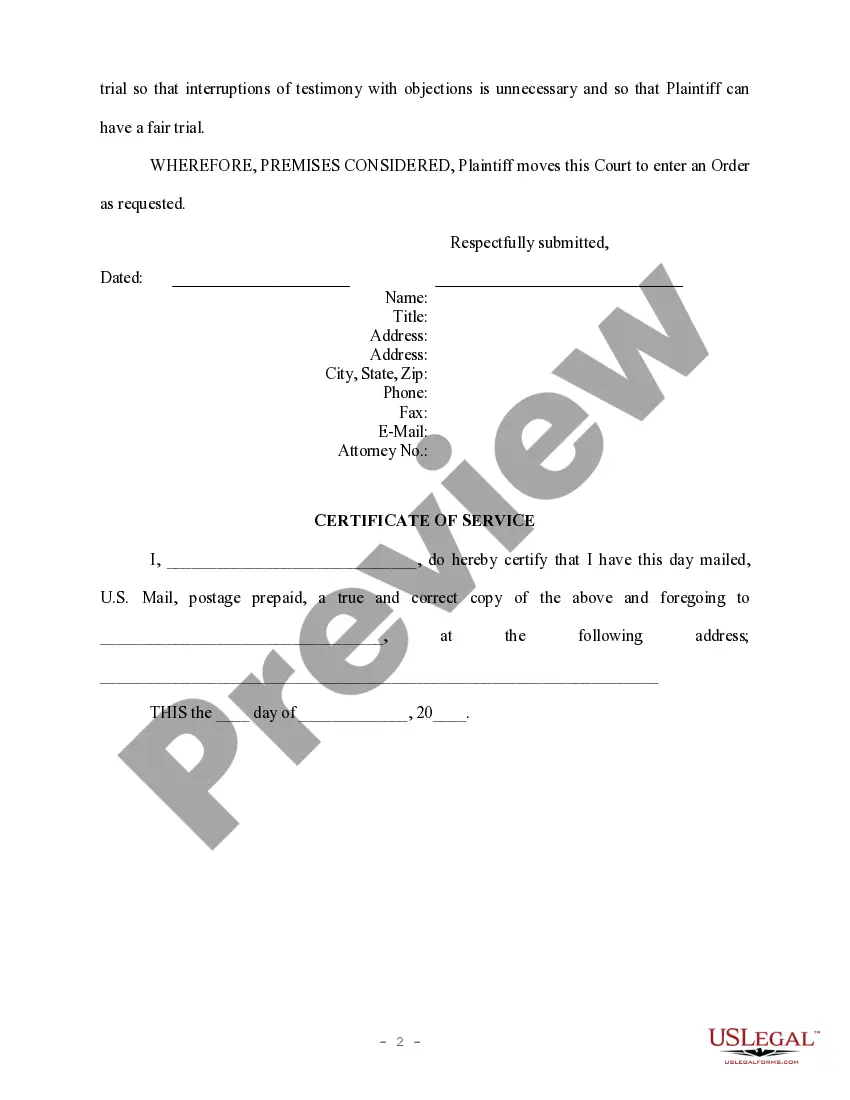
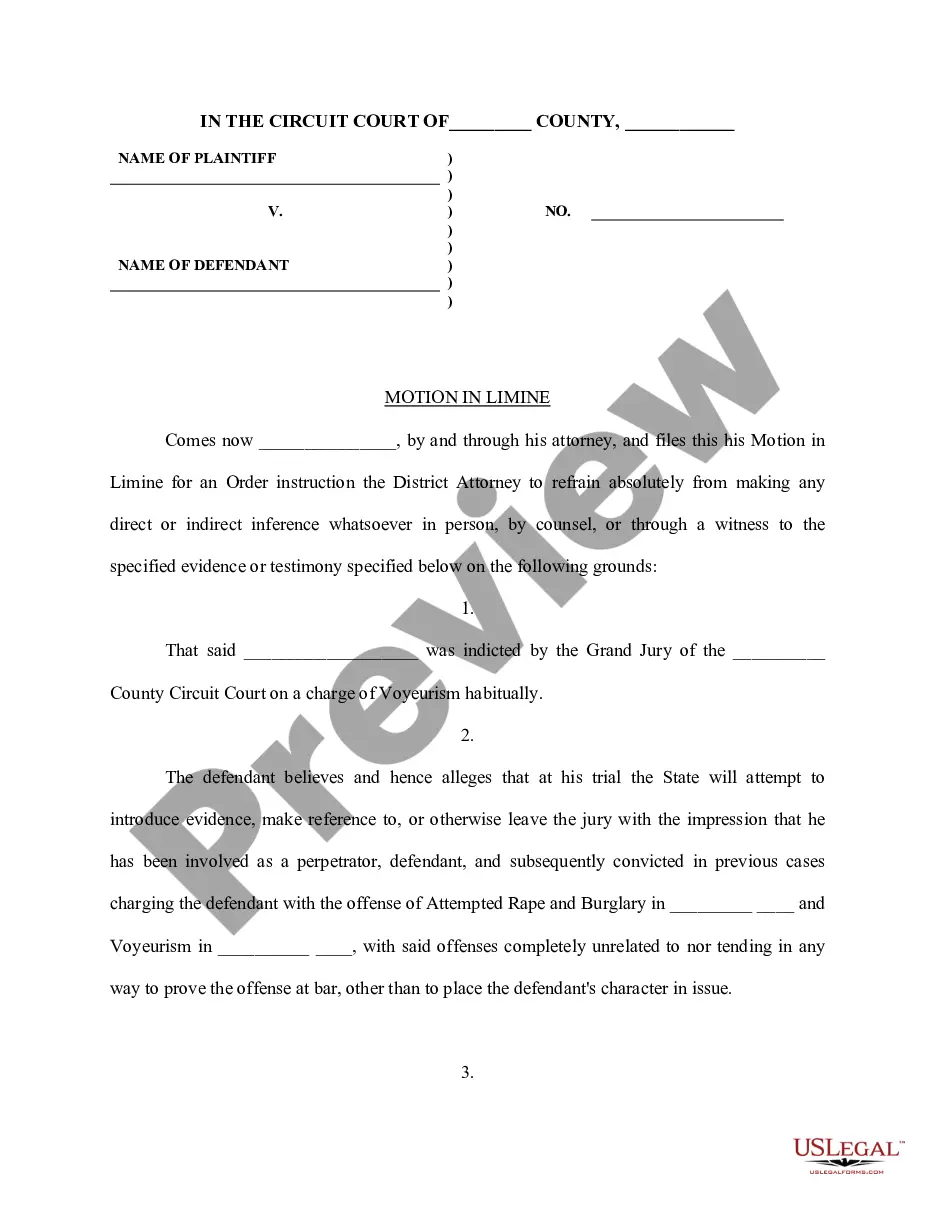
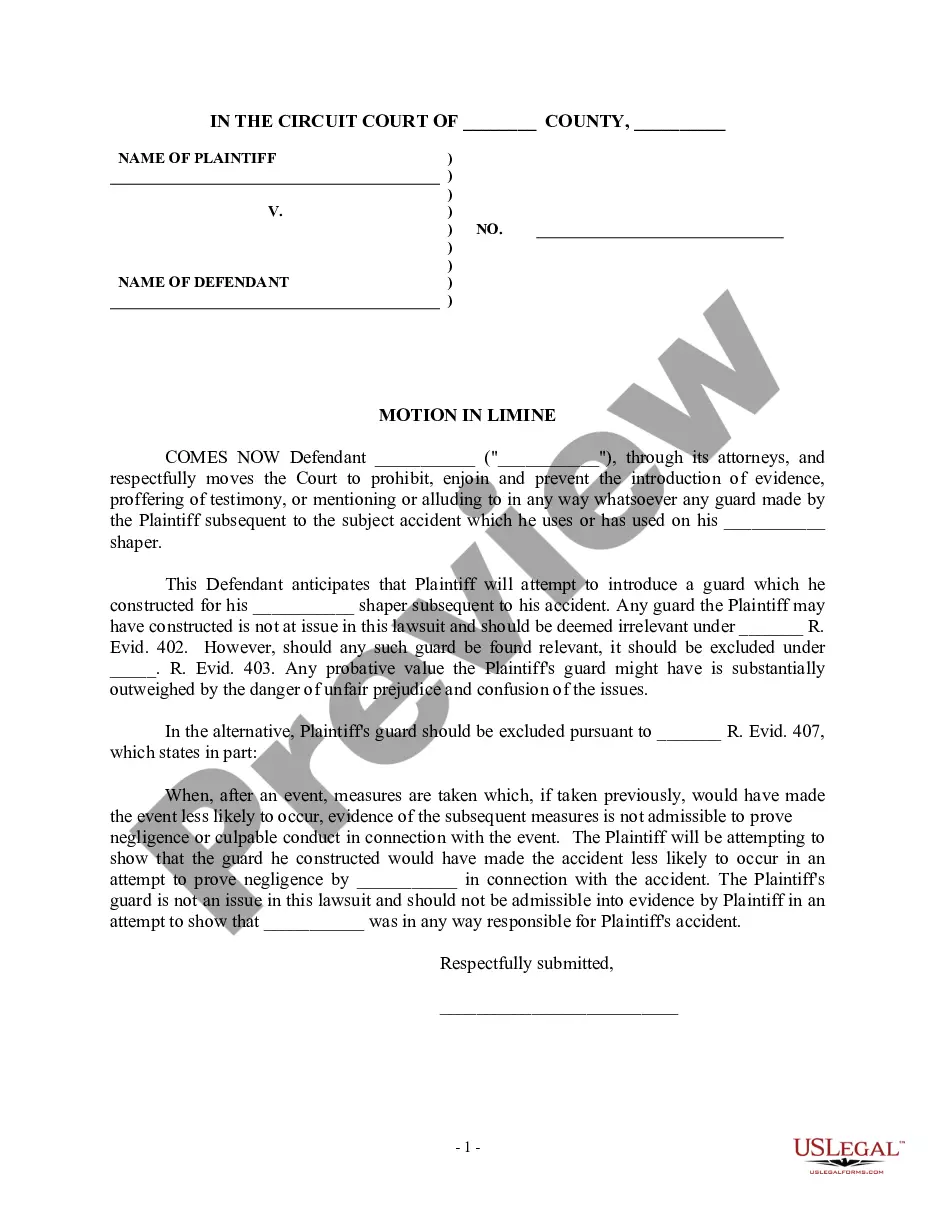
Motion in Limine - Civil Trial is a pretrial evidentiary motion used in civil personal injury cases to ask the court to bar certain evidence from being shown to the jury. It targets prejudicial or irrelevant testimony and items to ensure a fair trial before evidence is presented. The motion identifies the specific evidence, explains its grounds, requests a court order, and includes service certification.
Using a Motion in Limine helps keep the jury from seeing prejudicial or irrelevant evidence, clarifies admissibility issues before trial, and can shorten proceedings. It focuses the court on what may be admitted, supports the plaintiff's case by narrowing the issues, and requires a service-certified order to ensure the opposing party is notified.
Common examples include excluding evidence or testimony about seat belt usage, and other prejudicial topics unrelated to the case. The motion must identify the specific items to be excluded and explain why they are irrelevant or prejudicial.
If granted, the court issues an order barring the identified matters from being introduced at trial. The motion also requires a copy be sent to the opposing party, ensuring both sides are aware of the evidentiary limitation before or during trial.
Generally not a final judgment. A motion in limine addresses specific evidentiary issues for the trial, guiding what may be presented to the jury. It can be revisited or challenged as trial conditions change and does not dispose of the entire case.
It is specifically designed for civil personal injury trials and focuses on admissibility before the trial begins, seeking a court order to prevent certain matters from being introduced. The form requires identifying the excluded evidence, stating legal grounds, and certifying service to the opposing party, distinguishing it from other pretrial or in-trial exclusion requests.