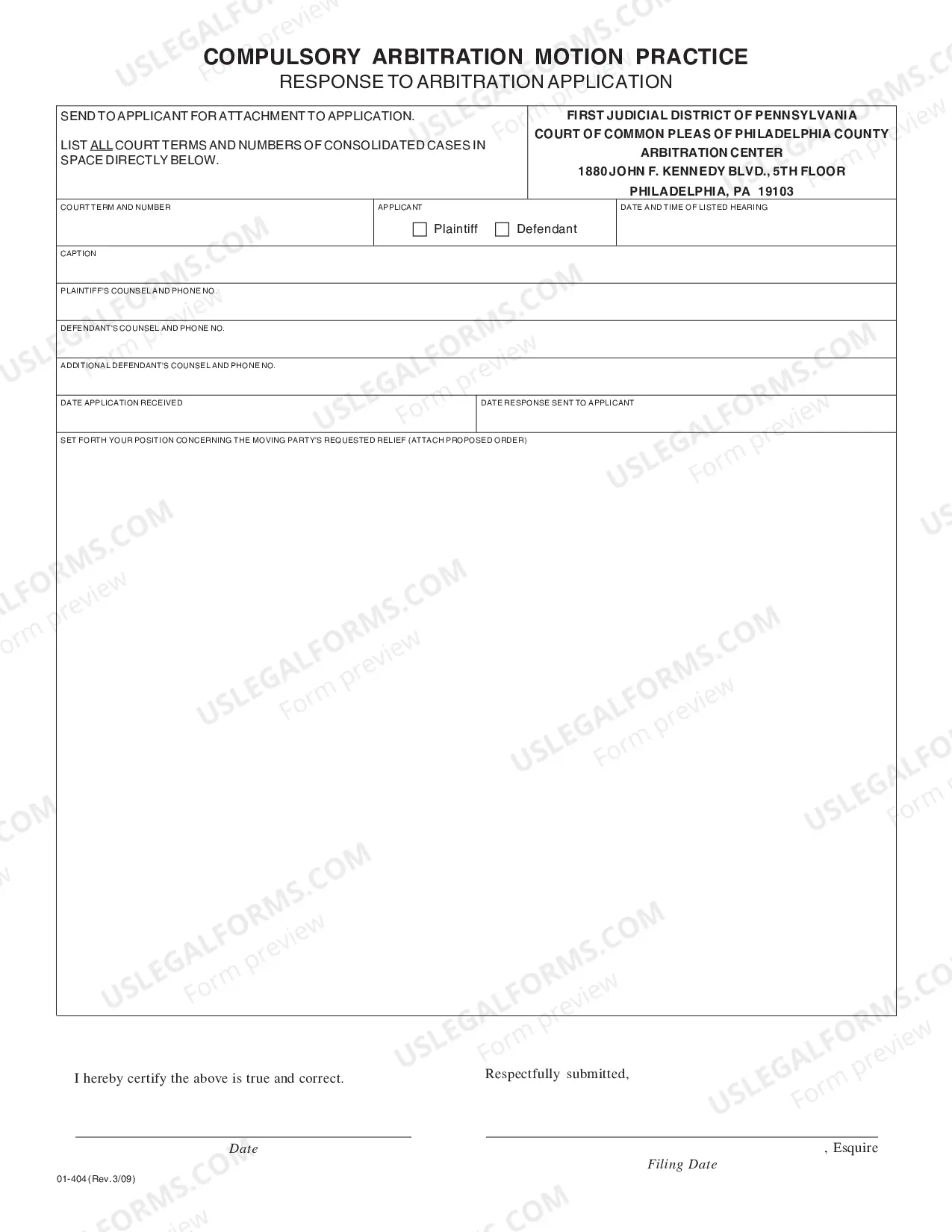
Separate Answer and Defenses to Amended Complaint
About this form
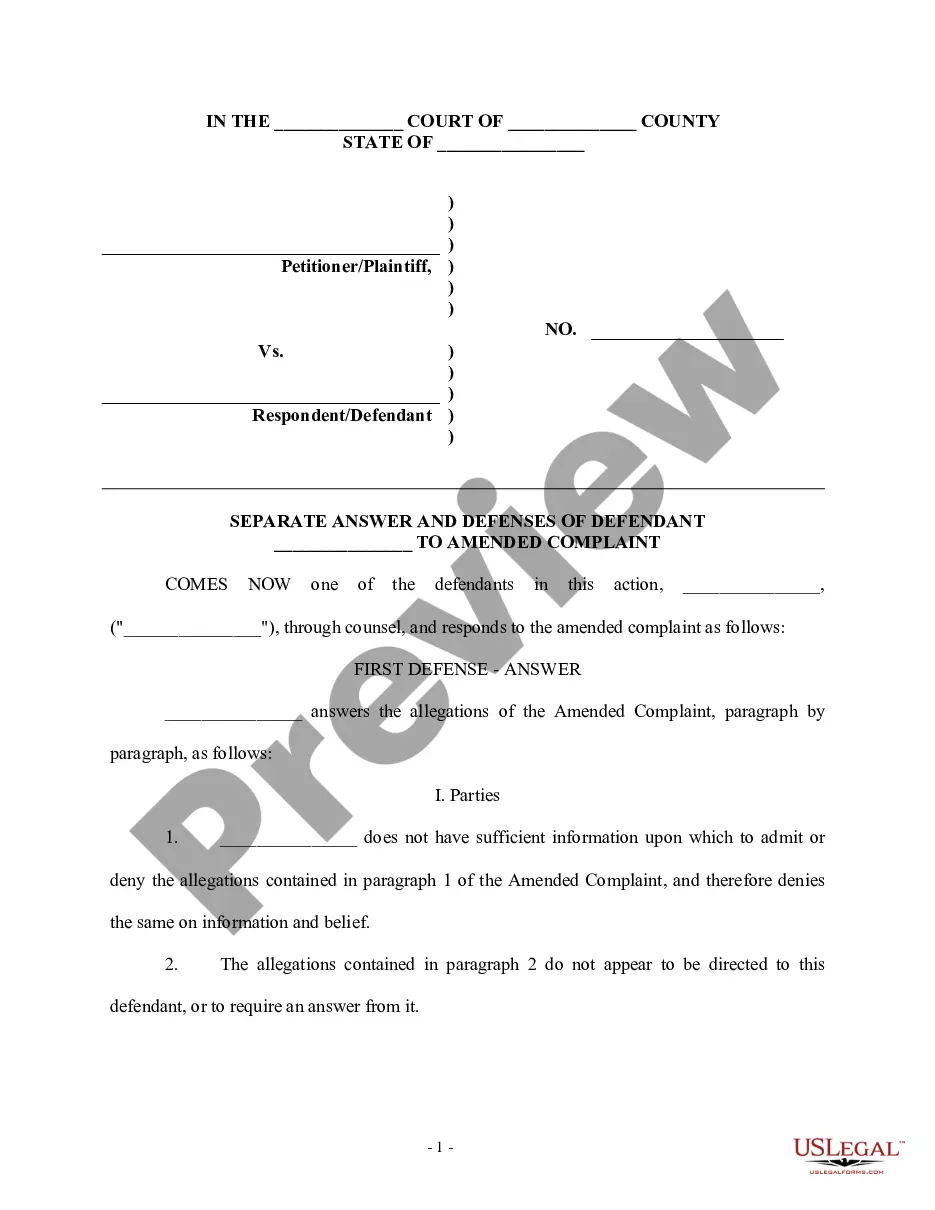
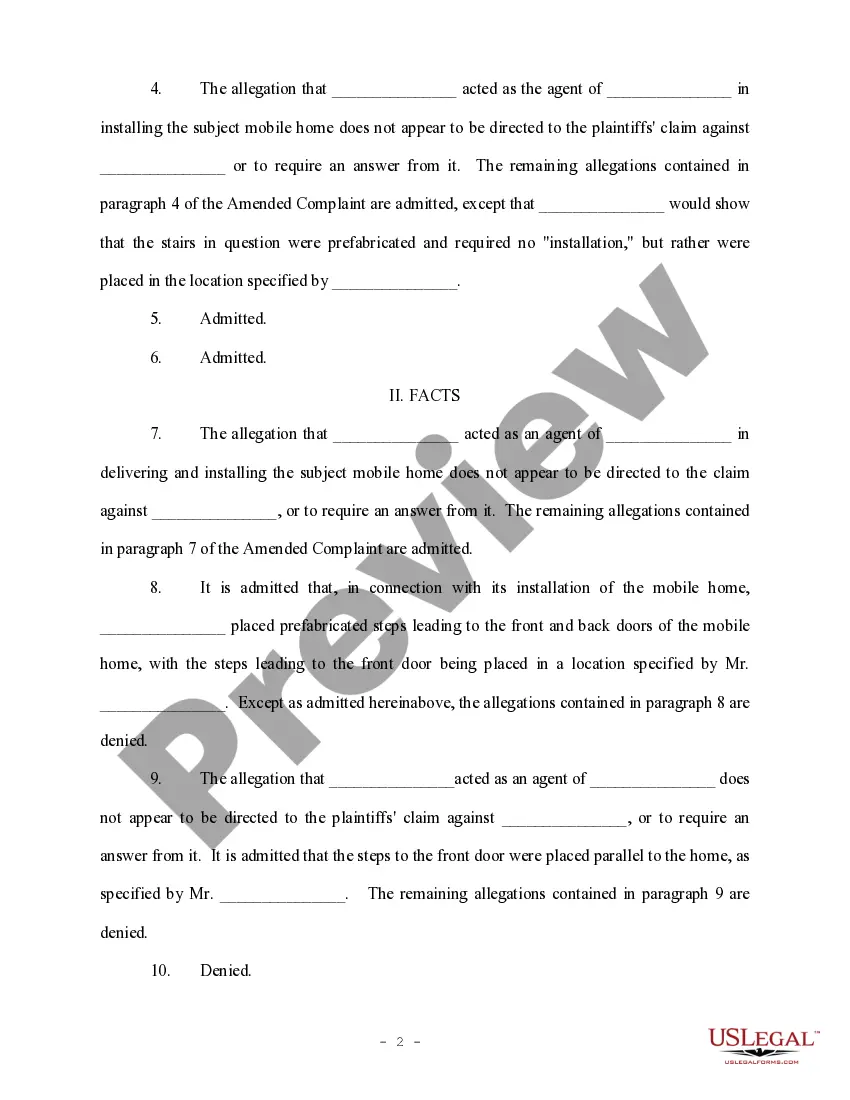
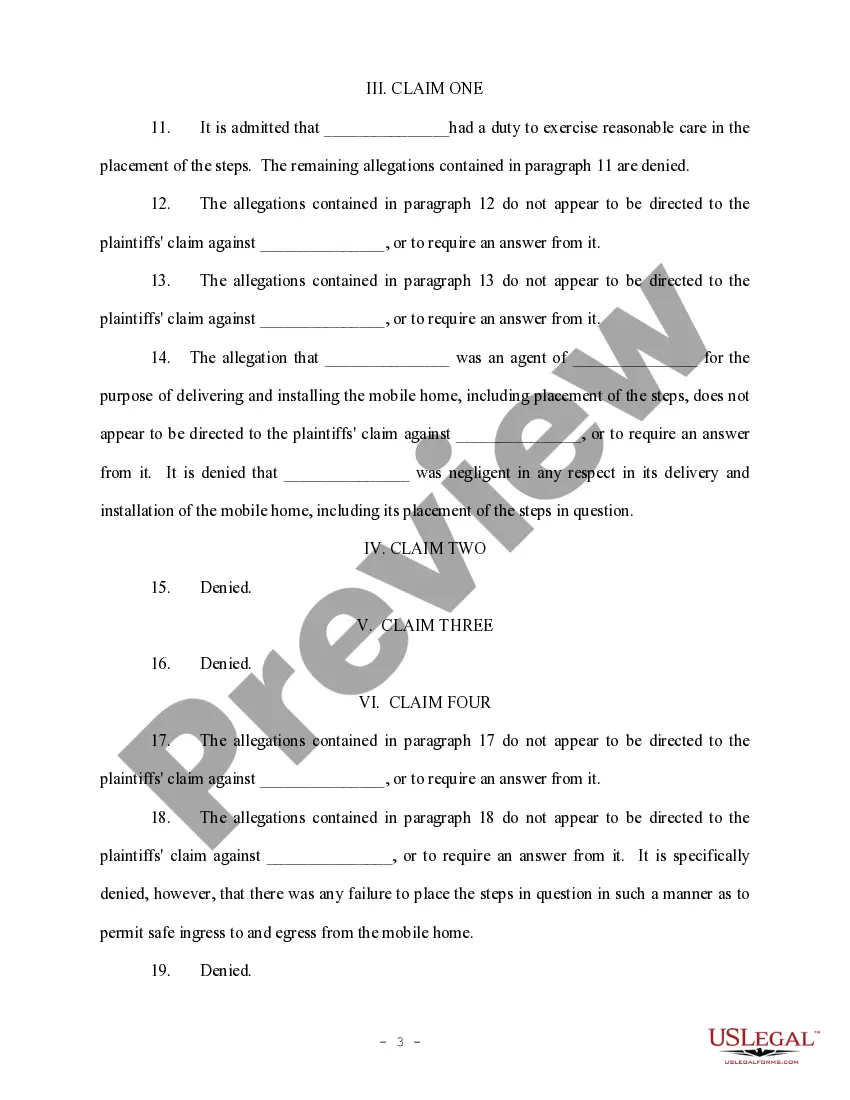
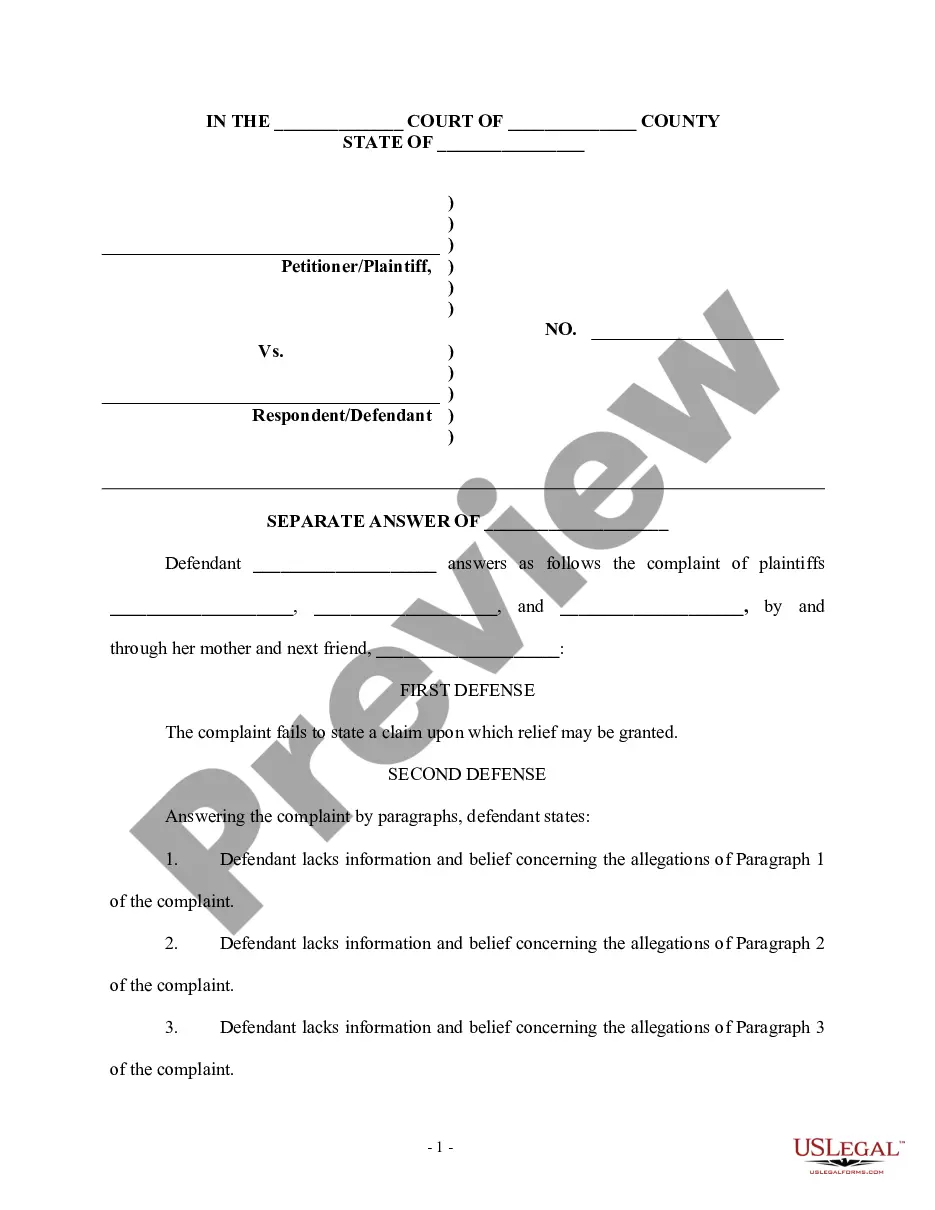
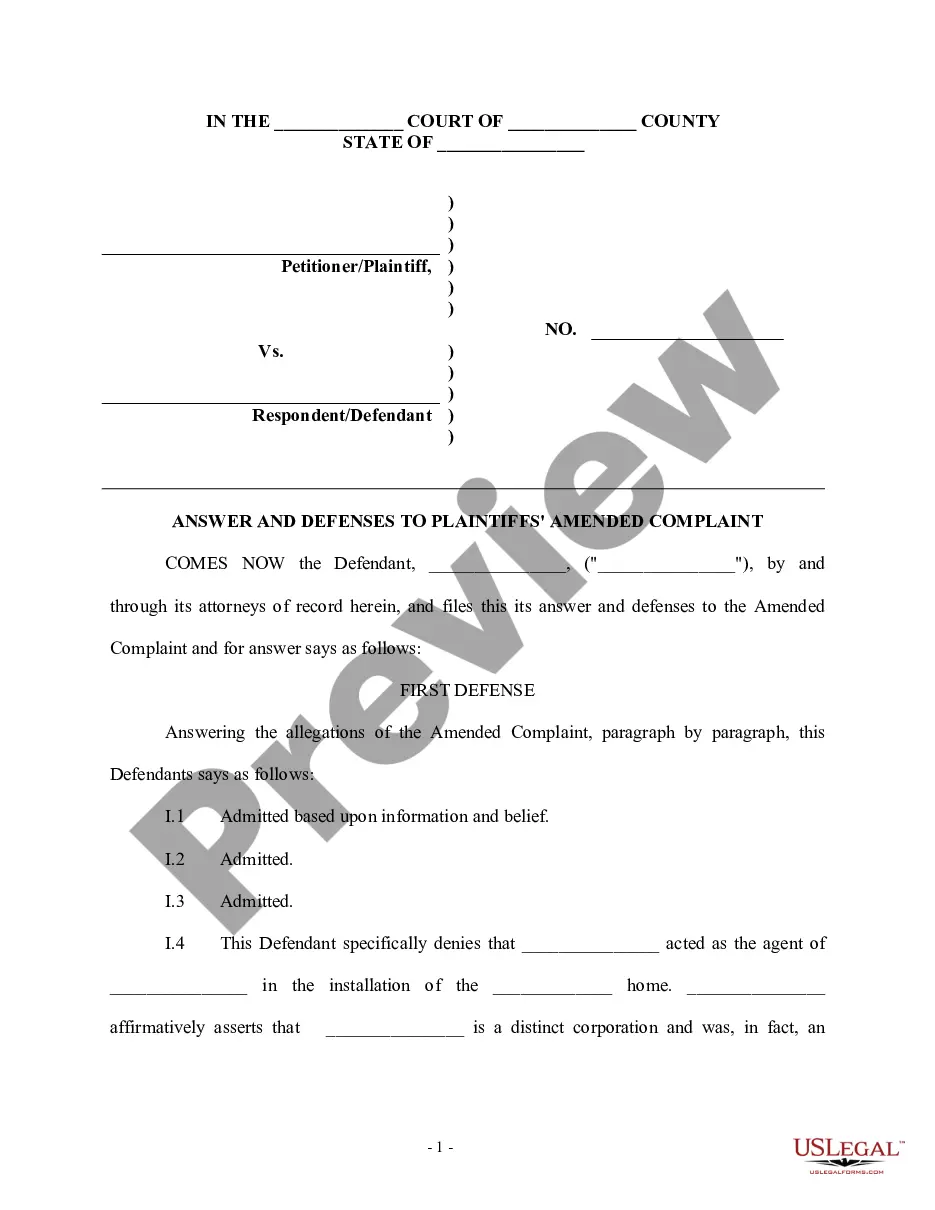
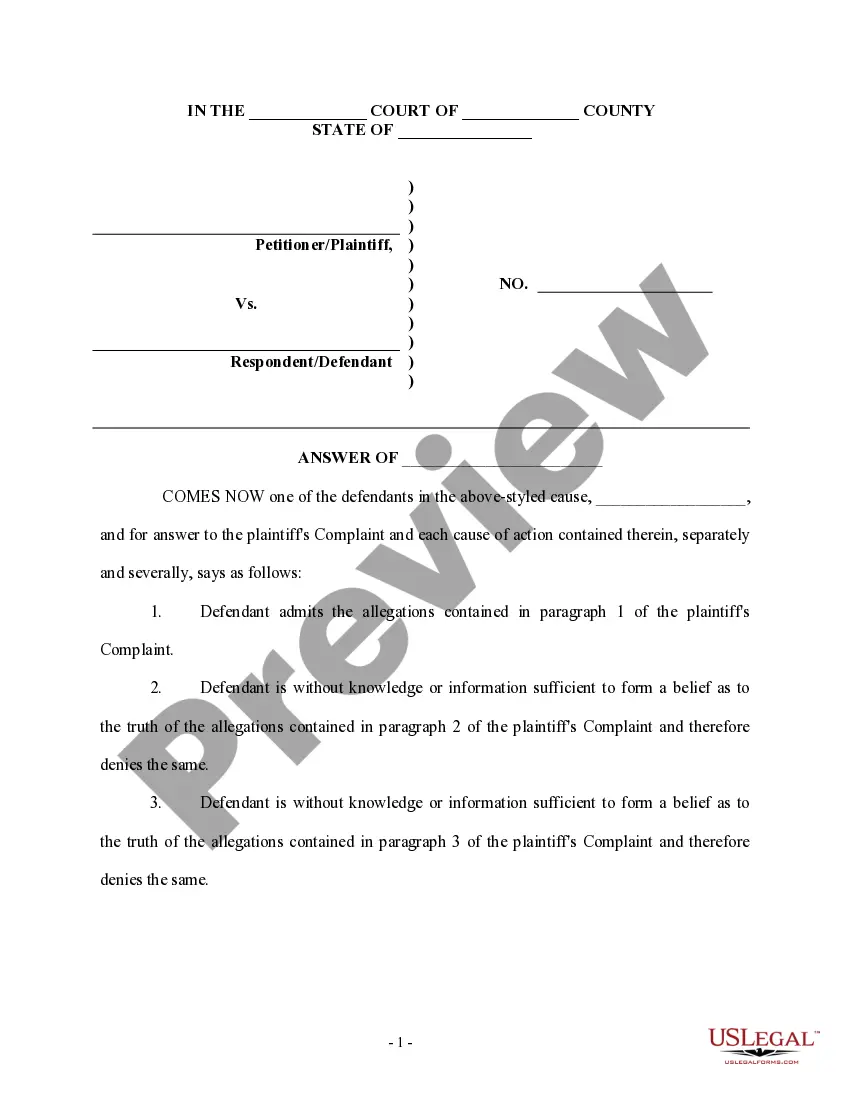
The Separate Answer and Defenses to Amended Complaint is a legal document filed by a defendant in response to a personal injury action. It allows the defendant to address the allegations presented in the amended complaint, providing specific admissions and denials. This form is essential for any defendant wishing to formally reply to claims made against them and outline defenses against those claims, distinguishing it from other forms of legal pleadings used in similar cases.
What’s included in this form
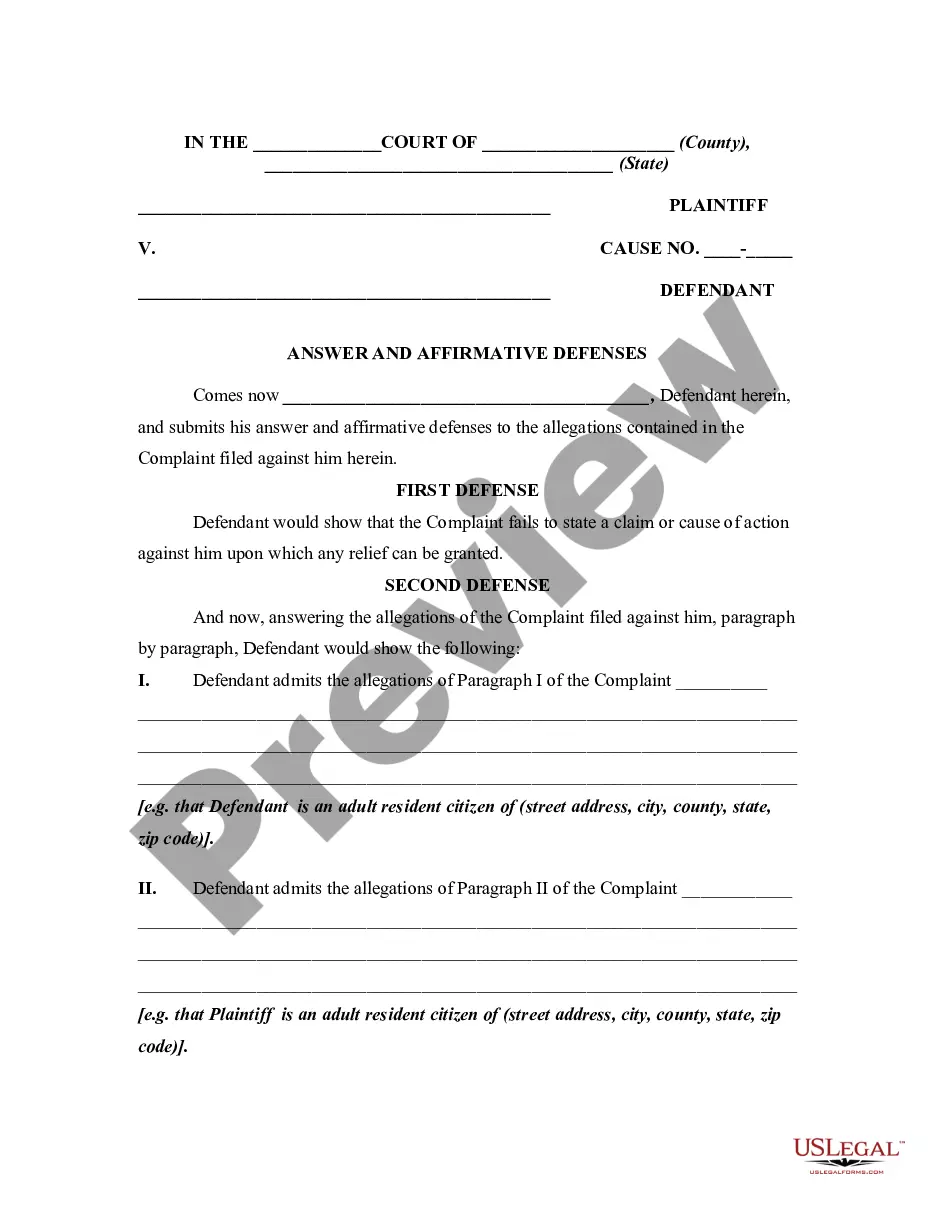
- First Defense - A section where the defendant responds to the allegations paragraph by paragraph.
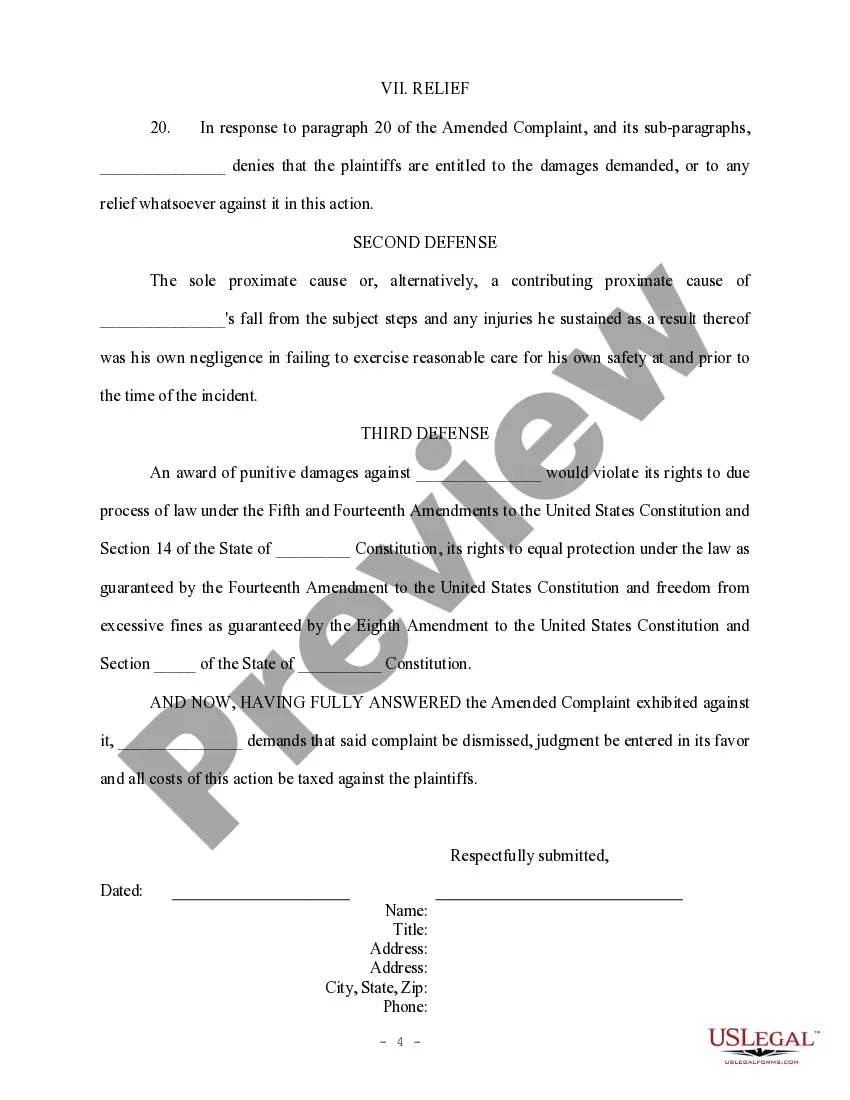
- Second Defense - A statement asserting contributory negligence as a defense.
- Third Defense - A declaration regarding due process rights and challenges to punitive damages.
- Relief - A section where the defendant requests dismissal of the complaint and denial of the plaintiffs' damages.
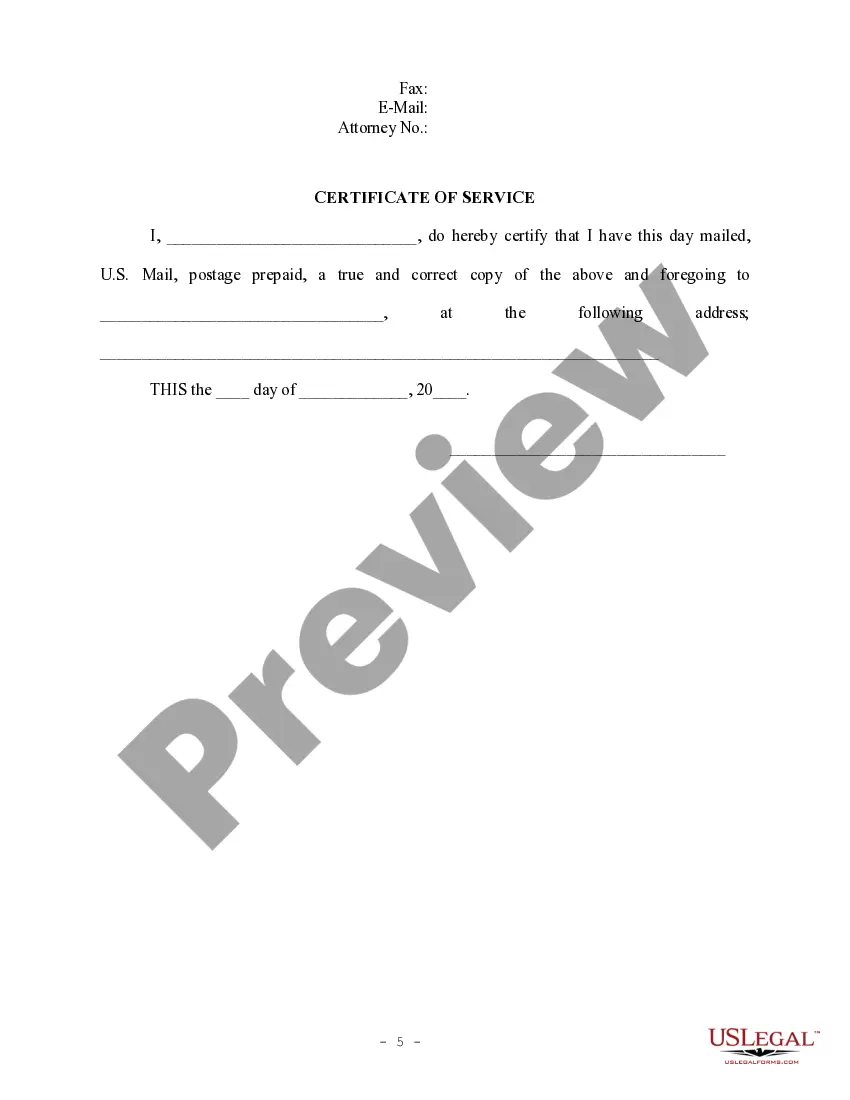
- Certificate of Service - A declaration certifying the proper mailing of the document to the opposing party.
When to use this form
This form is used when a defendant in a personal injury case wishes to formally contest the amended complaint filed against them. It is suitable in situations where a defendant needs to clearly state their response, outline any defenses, and address the implications of the claims made, particularly in cases where the legal arguments may base on factual discrepancies or contributory negligence.
Who can use this document
- Defendants in personal injury lawsuits who need to respond to an amended complaint.
- Individuals or entities seeking to assert specific defenses against claims made in legal proceedings.
- Attorneys representing defendants who require a structured format to address allegations and defenses.
Completing this form step by step
- Identify the parties involved by filling in the names of the defendants and plaintiffs as applicable.
- Respond to each paragraph of the amended complaint, indicating whether you admit or deny the allegations.
- Outline specific defenses clearly in the designated sections of the form.
- Include any requests for dismissal of the case or specific claims for relief.
- Complete the certificate of service to certify that you have shared the response with the plaintiff.
Does this document require notarization?
This form does not typically require notarization to be legally valid. However, some jurisdictions or document types may still require it. US Legal Forms provides secure online notarization powered by Notarize, available 24/7 for added convenience.
Get your form ready online
Our built-in tools help you complete, sign, share, and store your documents in one place.
Make edits, fill in missing information, and update formatting in US Legal Forms—just like you would in MS Word.
Download a copy, print it, send it by email, or mail it via USPS—whatever works best for your next step.
Sign and collect signatures with our SignNow integration. Send to multiple recipients, set reminders, and more. Go Premium to unlock E-Sign.
If this form requires notarization, complete it online through a secure video call—no need to meet a notary in person or wait for an appointment.
We protect your documents and personal data by following strict security and privacy standards.

Make edits, fill in missing information, and update formatting in US Legal Forms—just like you would in MS Word.

Download a copy, print it, send it by email, or mail it via USPS—whatever works best for your next step.

Sign and collect signatures with our SignNow integration. Send to multiple recipients, set reminders, and more. Go Premium to unlock E-Sign.

If this form requires notarization, complete it online through a secure video call—no need to meet a notary in person or wait for an appointment.

We protect your documents and personal data by following strict security and privacy standards.
Typical mistakes to avoid
- Failing to respond to each allegation in the amended complaint.
- Not clearly identifying defenses or providing sufficient information.
- Omitting the certificate of service or incorrectly filling it out.
Benefits of using this form online
- Convenient access to legal forms at any time.
- Edit and personalize templates to fit your specific case needs.
- Reliable resources developed by licensed attorneys, ensuring legal compliance.
Summary of main points
- The Separate Answer and Defenses to Amended Complaint allows defendants to respond to personal injury claims.
- Properly filling out this form is essential to establishing a legal defense.
- State-specific requirements may affect the use of this form; consult local laws for accuracy.
Looking for another form?
Form popularity
FAQ
A motion to amend a complaint is a request to the court to change the original court filing documents. It means to change the basis for the case in some way. A motion to amend a complaint is the formal way of asking the court for permission to change the original complaint.
To amend is to change by adding, subtracting, or substituting. One can amend a statute, a contract, the Constitution of the United States, or a pleading filed in a law suit.
When the answers respond to the factual assertions of an opponent's prior pleading, for example, by denying them, they are called responsive pleadings.The distinguishing feature of a responsive pleading is that it replies to the merits of the allegations raised by an opposing party.
The defendant shall answer the amendments, or the complaint as amended, within 30 days after service thereof, or such other time as the court may direct, and judgment by default may be entered upon failure to answer, as in other cases.
Once a defendant has answered, a first amended complaint can only be filed and served with leave of court. If the plaintiff did not get the court's permission, it is not deemed a valid first amended complaint.
A party shall plead in response to an amended pleading within 10 days after service of the amended pleading unless the court otherwise orders.
Amended Answer Rules A proposed amendment or amended pleading must be serially numbered to differentiate it from previous pleadings or amendments.An amendment to a pleading must not be made by alterations on the face of a pleading except by permission of the court. The court or the clerk must initial all alterations.