Field Trip Permission and Waiver
About this form
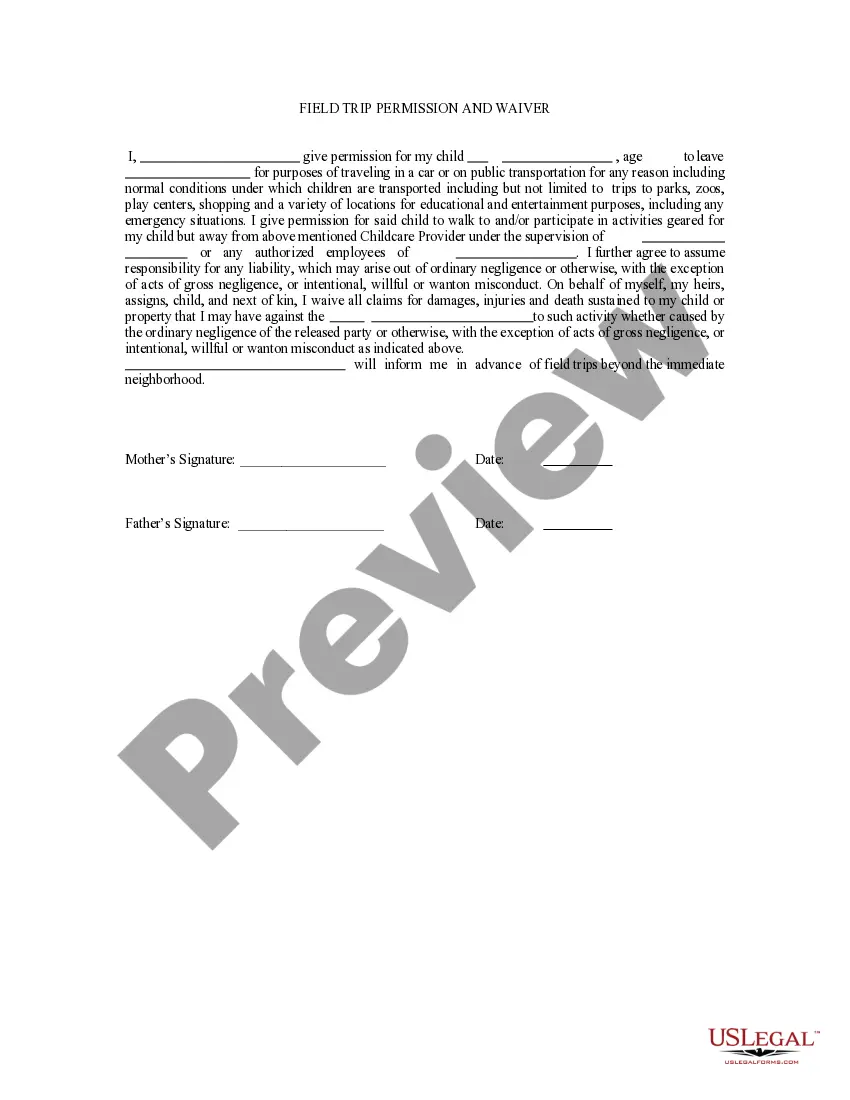
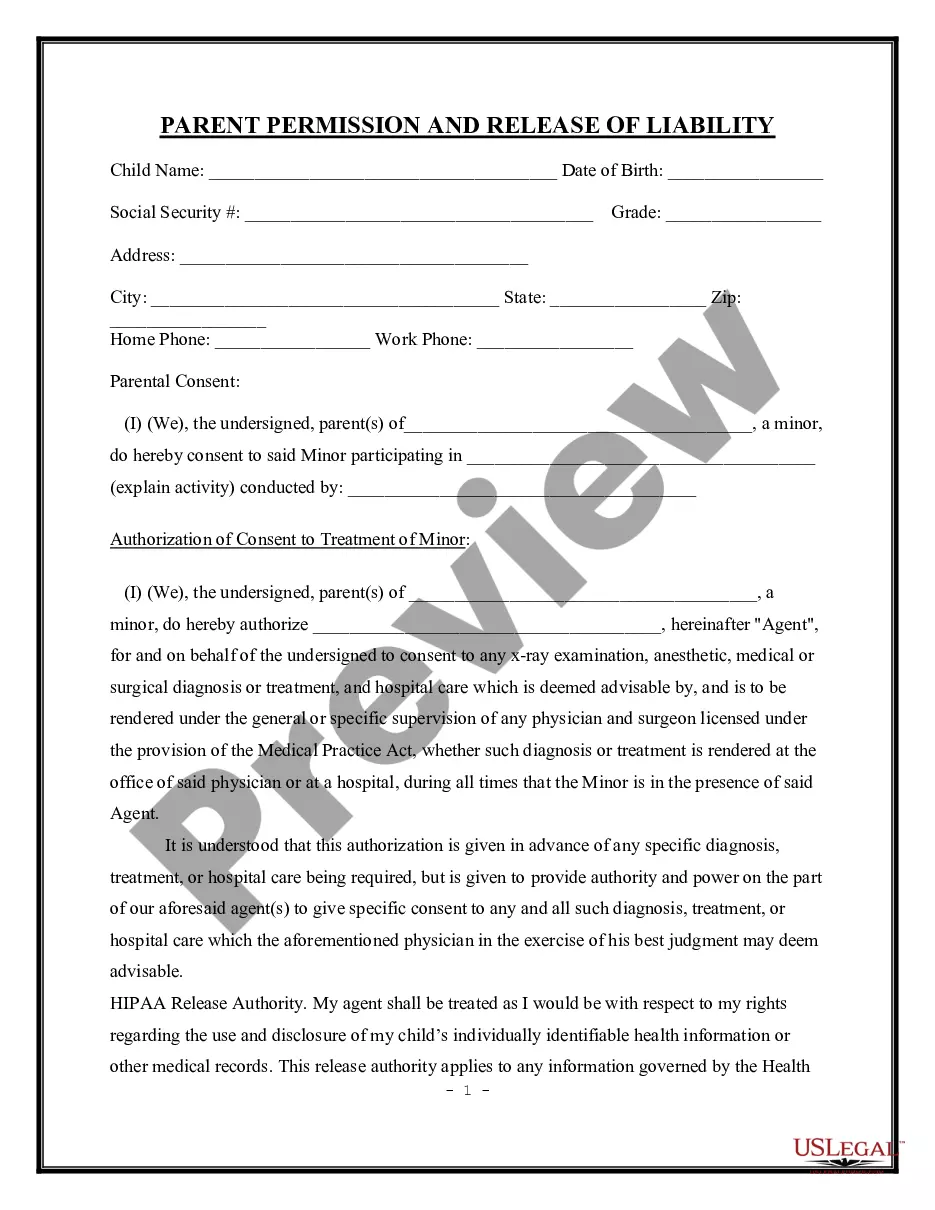
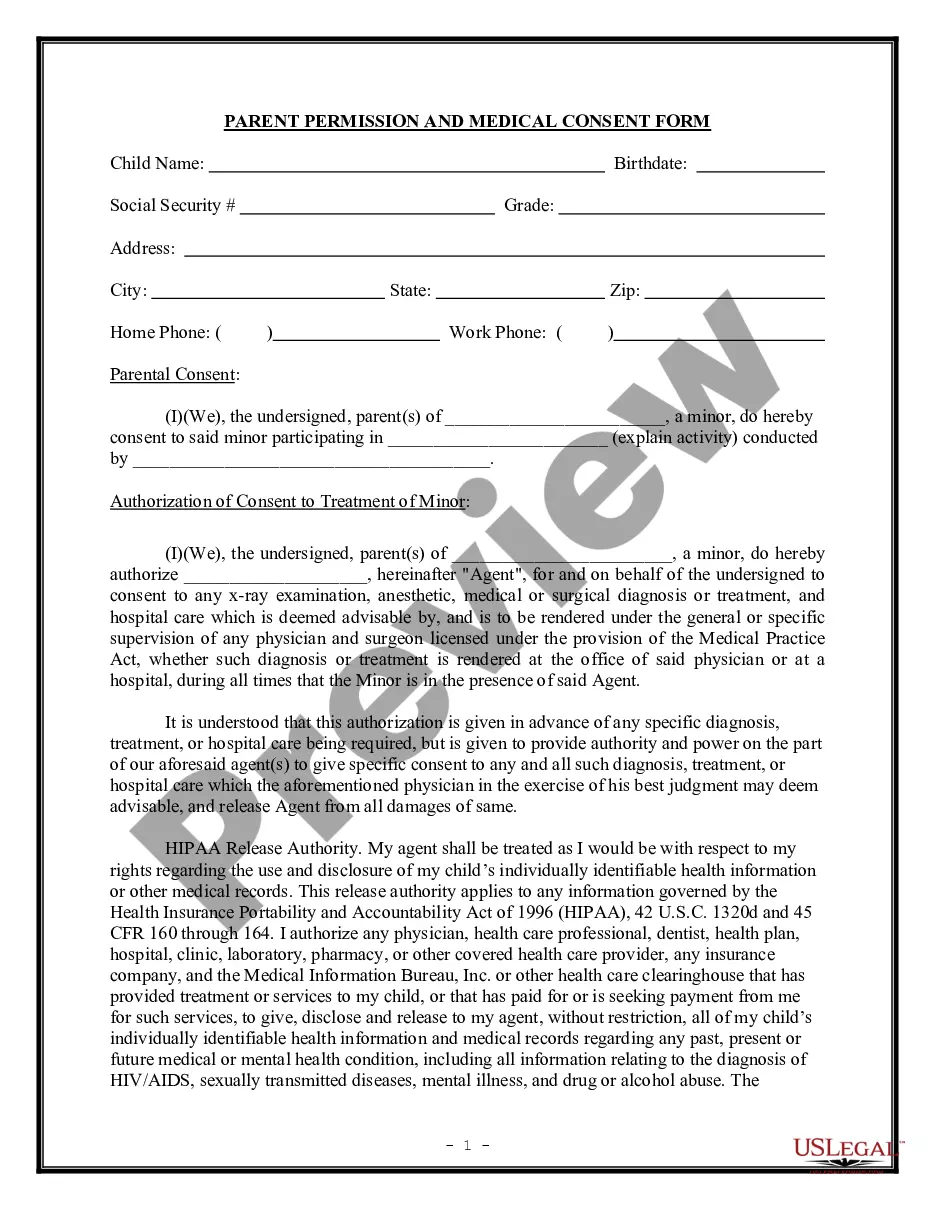
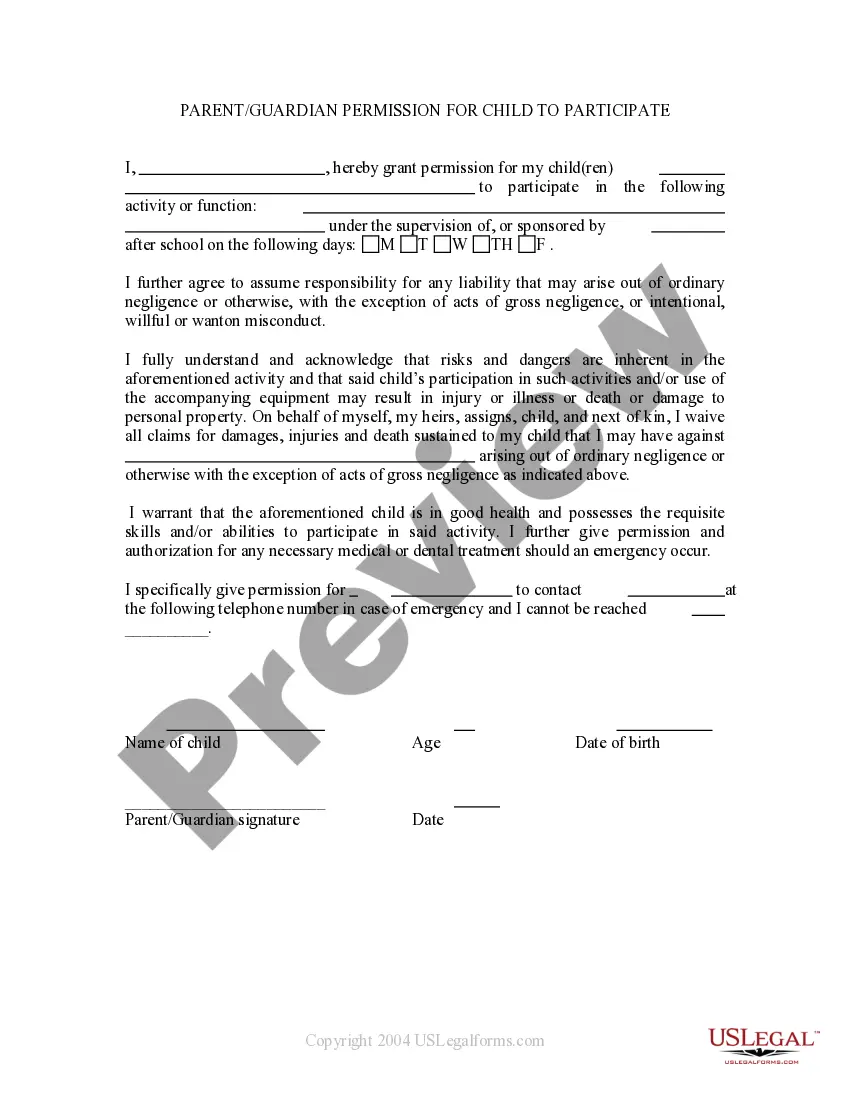
The Field Trip Permission and Waiver is a legal document that allows parents to grant permission for their child to participate in field trips or school events held off the school premises. This form also releases the school or daycare from liability for any ordinary negligence that may occur during these activities. Unlike general permission slips, this waiver specifically includes liability considerations, making it a crucial document for safeguarding both the institution and the parentsâ interests.
Main sections of this form
- Child's name and details, ensuring clarity on who is participating.
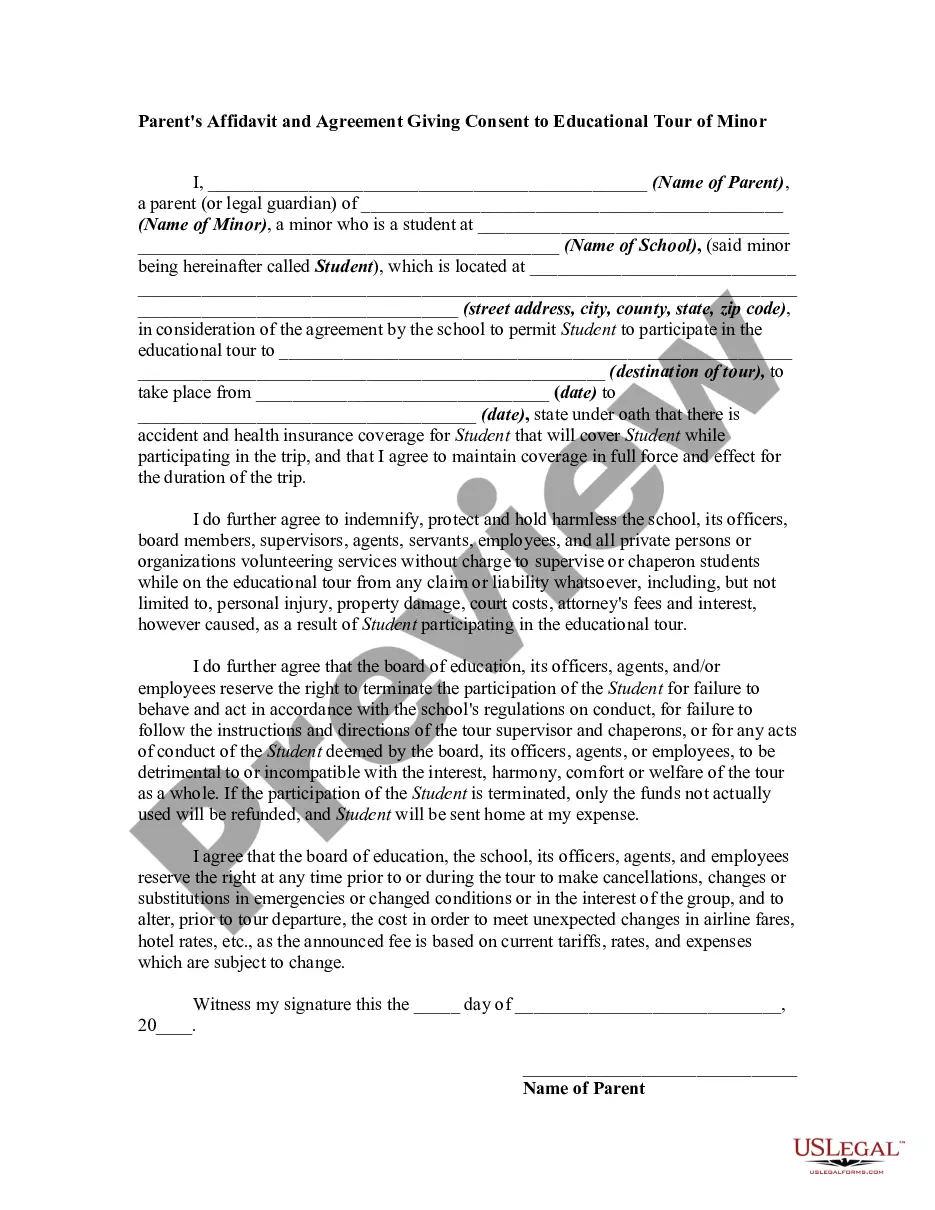
- Event information, including dates and locations of the field trip.
- Parental consent section, where parents acknowledge understanding and agreement.
- Liability waiver clause, relieving the school or daycare from responsibility for ordinary negligence.
- Emergency contact information for quick access if needed during the event.
Common use cases
This form should be used whenever a child is scheduled to attend a field trip or any off-site school events, such as educational outings or sports activities. It is essential in situations where the child will be away from school premises and where liability waivers are necessary to protect the school or organization from potential legal issues arising from ordinary negligence during these outings.
Who needs this form
- Parents or guardians of students participating in off-campus school events.
- Schools or organizations planning field trips or educational events for children.
- Daycares or childcare providers seeking parental consent and liability protection for outings.
Steps to complete this form
- Identify the child by writing their full name and any relevant identification details.
- Fill in the event details, including the date, time, and location of the field trip.
- Complete the section where parents provide their signature, indicating consent for their child to participate.
- Review the liability waiver clause carefully before signing.
- Provide emergency contact information for immediate access during the event.
Does this document require notarization?
This form does not typically require notarization unless specified by local law. Always check with your local regulations to confirm any notarization requirements specific to your jurisdiction.
Get your form ready online
Our built-in tools help you complete, sign, share, and store your documents in one place.
Make edits, fill in missing information, and update formatting in US Legal Forms—just like you would in MS Word.
Download a copy, print it, send it by email, or mail it via USPS—whatever works best for your next step.
Sign and collect signatures with our SignNow integration. Send to multiple recipients, set reminders, and more. Go Premium to unlock E-Sign.
If this form requires notarization, complete it online through a secure video call—no need to meet a notary in person or wait for an appointment.
We protect your documents and personal data by following strict security and privacy standards.

Make edits, fill in missing information, and update formatting in US Legal Forms—just like you would in MS Word.

Download a copy, print it, send it by email, or mail it via USPS—whatever works best for your next step.

Sign and collect signatures with our SignNow integration. Send to multiple recipients, set reminders, and more. Go Premium to unlock E-Sign.

If this form requires notarization, complete it online through a secure video call—no need to meet a notary in person or wait for an appointment.

We protect your documents and personal data by following strict security and privacy standards.
Common mistakes to avoid
- Forgetting to include the childâs full name and details.
- Neglecting to fill out emergency contact information.
- Overlooking the liability waiver clause, which may lead to misunderstandings.
- Not ensuring both parents or guardians sign the form if applicable.
Why use this form online
- Convenient access to a pre-drafted legal form tailored to field trips.
- Editability allows you to customize the form for specific events.
- Reliable legal language provided by licensed attorneys, ensuring compliance and protection.
- Downloadable format makes it easy to print or store electronically.
Quick recap
- The Field Trip Permission and Waiver is essential for allowing children to participate in school trips safely.
- It protects the school and daycare from liability related to everyday risks.
- Completing the form accurately helps ensure compliance with legal requirements and facilitates smooth participation in school activities.
Looking for another form?

Form popularity
FAQ
Field trips provide alternative educational opportunities for children and can benefit the community if they include some type of community service. Field trips also provide students the opportunity to take a break from their normal routine and experience more hands on learning.
Decide on a Destination. Ask Your Administrator. Arrange Transportation. Decide on a Food Plan. Plan Your Schedule for the Day. Arrange Supervision and Volunteers. Create a Permission Slip. Decide Who's Allowed to Go.
The main objective of conducting a field trip for students is to reinforce experiential and contextual learning. Field trips are a way of enhancing classroom learning by making real world connections. Field trips expose students to different lifestyles, places and eras.
School trips give students the opportunity to visualise, experience and discuss information on a subject. Going on field trips offers students a unique cultural learning experience. It allows students to be involved in new environments, key to encouraging curiosity about a given subject.
Educational field trips help teachers widen their horizons of knowledge and broadening the scope of their syllabus. Most educational trips pay much attention to outdoor activities with a wide range of aspects in life. It means the trips allow the teacher to connect the classroom with real-life and authentic experience.
Field trips and hands on learning make concepts more memorable. Just think back to what you learned in school, the field trips you took, and what you learned on them are still some of the clearest concepts. Additionally, field trips are important because students are able to engage with content in a variety of ways.
First Aid Kit. Having a basic first aid kit on a field trip is super important. Clipboards or Notebooks. Something to write with is another staple in my bag. Tools for Investigations. Camera. Walking Rope. Name Tags and/or Bright T-Shirts. List of Questions. Bags for Collections.
Overview. Field trips are recognized as important moments in learning; a shared social experience that provides the opportunity for students to encounter and explore novel things in an authentic setting.
1) Art Museum. Art Museums are a great way to connect art and history- a subject that young students struggle to identify with. 2) Aquarium. 3) TV Station. 4) Botanical Gardens. 5) Theatre. 6) Movies. 7) Zoo. 8) Farm.