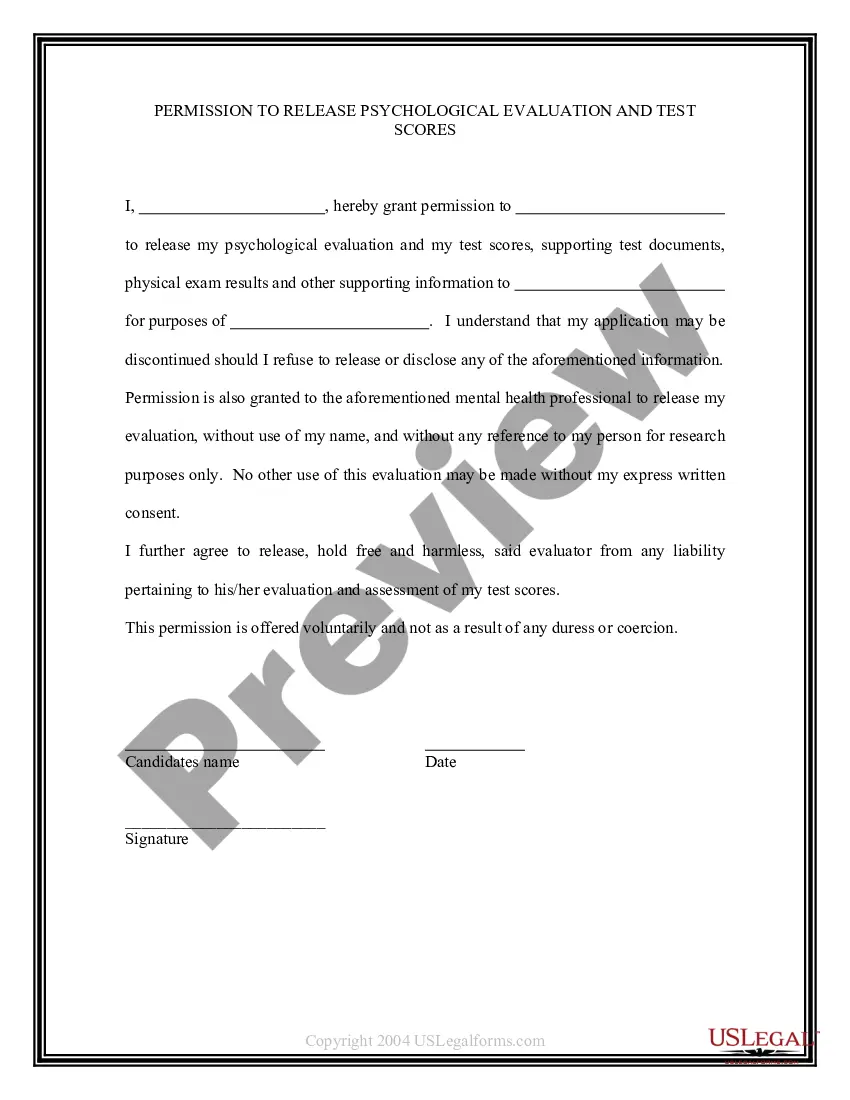
Permission To Release Psychological Evaluation And Test Scores
What this document covers
This form, Permission to Release Psychological Evaluation and Test Scores, allows a candidate to authorize the release of their psychological evaluation results and test scores to designated parties. This is important for individuals in fields such as military service or clergy where evaluations may be required. By using this form, the candidate also releases the evaluator from any liability in the process of sharing this sensitive information.
Key parts of this document
- Signature of the candidate granting permission for release.
- Designation of the evaluator and organization receiving the information.
- Clause releasing the evaluator from liability related to the evaluation.
- Confirmation that permission is given voluntarily without coercion.
- Date of signing the permission form.
When to use this document
This form should be used when a candidate needs to share their psychological evaluation and test scores with third parties, such as military recruiters or churches. It is particularly useful in situations where transparency of mental assessment is required for application or employment purposes.
Who should use this form
- Candidates applying to the military or related organizations.
- Individuals undergoing evaluation for positions within religious institutions.
- Any person who needs to release psychological evaluations for professional assessments.
Completing this form step by step
- Fill in your full name and contact information at the top of the form.
- Identify the evaluator and the organization to whom you are granting access.
- Read and acknowledge the liability release clause by signing in the designated section.
- Ensure the form accurately reflects that the permission is granted voluntarily.
- Write the date your permission is granted, usually at the bottom of the form.
Notarization requirements for this form
Notarization is generally not required for this form. However, certain states or situations might demand it. You can complete notarization online through US Legal Forms, powered by Notarize, using a verified video call available anytime.
Get your form ready online
Our built-in tools help you complete, sign, share, and store your documents in one place.
Make edits, fill in missing information, and update formatting in US Legal Forms—just like you would in MS Word.
Download a copy, print it, send it by email, or mail it via USPS—whatever works best for your next step.
Sign and collect signatures with our SignNow integration. Send to multiple recipients, set reminders, and more. Go Premium to unlock E-Sign.
If this form requires notarization, complete it online through a secure video call—no need to meet a notary in person or wait for an appointment.
We protect your documents and personal data by following strict security and privacy standards.
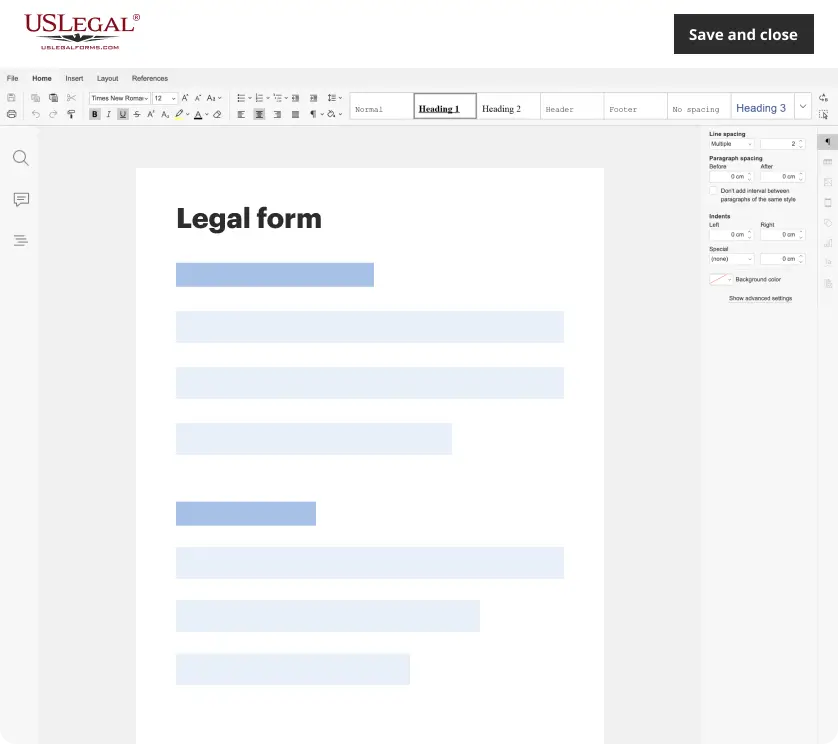
Make edits, fill in missing information, and update formatting in US Legal Forms—just like you would in MS Word.
Download a copy, print it, send it by email, or mail it via USPS—whatever works best for your next step.
Sign and collect signatures with our SignNow integration. Send to multiple recipients, set reminders, and more. Go Premium to unlock E-Sign.
If this form requires notarization, complete it online through a secure video call—no need to meet a notary in person or wait for an appointment.
We protect your documents and personal data by following strict security and privacy standards.
Common mistakes
- Failing to include the evaluator's details, which may delay the process.
- Not signing the form, rendering it invalid.
- Neglecting to include the date on which the permission is granted.
- Providing incomplete or incorrect personal information.
Advantages of online completion
- Convenient access to ready-made templates that save time.
- Editability allows for customization based on specific needs.
- Reliable formatting that adheres to legal standards.
What to keep in mind
- The form is essential for candidates needing to authorize the release of psychological evaluations and test scores.
- It helps protect evaluators from liability when sharing sensitive information.
- Completing the form correctly ensures that the process of releasing information is efficient and legally sound.
Looking for another form?


Form popularity
FAQ
Test takers have the right to request and receive information regarding whether or not they can obtain copies of their test answer sheets or their test materials, if they can have their scores verified, and if they may cancel their test results.
There's No Pass or Fail Just as there's no cookie-cutter approach to psychological testing, there aren't right or wrong answers to any test questions. This means you can't pass or fail a test, which eliminates the need to study.
A "test-taker" is a person who takes a test. Here "taking" a test means doing the test.
Psychological testing requires a clinically trained examiner. All psychological tests should be administered, scored, and interpreted by a trained professional, preferably a psychologist or psychiatrist with expertise in the appropriate area. Psychological tests are only one element of a psychological assessment.
Psychological testing and evaluation, sometimes called psychological assessment, involves a series of tests that help a qualified therapist determine the cause of mental health symptoms. The goal of this type of testing is to identify the correct diagnosis and provide the appropriate treatment.
Importance of Test Security The primary goal of test security is to protect the integrity of the examination and to assure that results are accurate and meaningful. All summative test items and test materials are secure and must be appropriately handled.
Old versions of the test should be destroyed in a secure manner, in much the same manner that would occur with patient records. The materials can be recycled through a secure shredding process, or they can be shipped back to test publishers for secure recycling.
Informed Consent. Debrief. Protection of Participants. Deception. Confidentiality. Withdrawal.
Psychologists and other test users have devised several methods for protecting testing material and procedures, including developing alternate/parallel test forms; proctoring testing sites; physically and electronically securing locations of test materials and results; monitoring and analyzing test response data for