Heirship or Descent Affidavit Questionnaire
Understanding this form
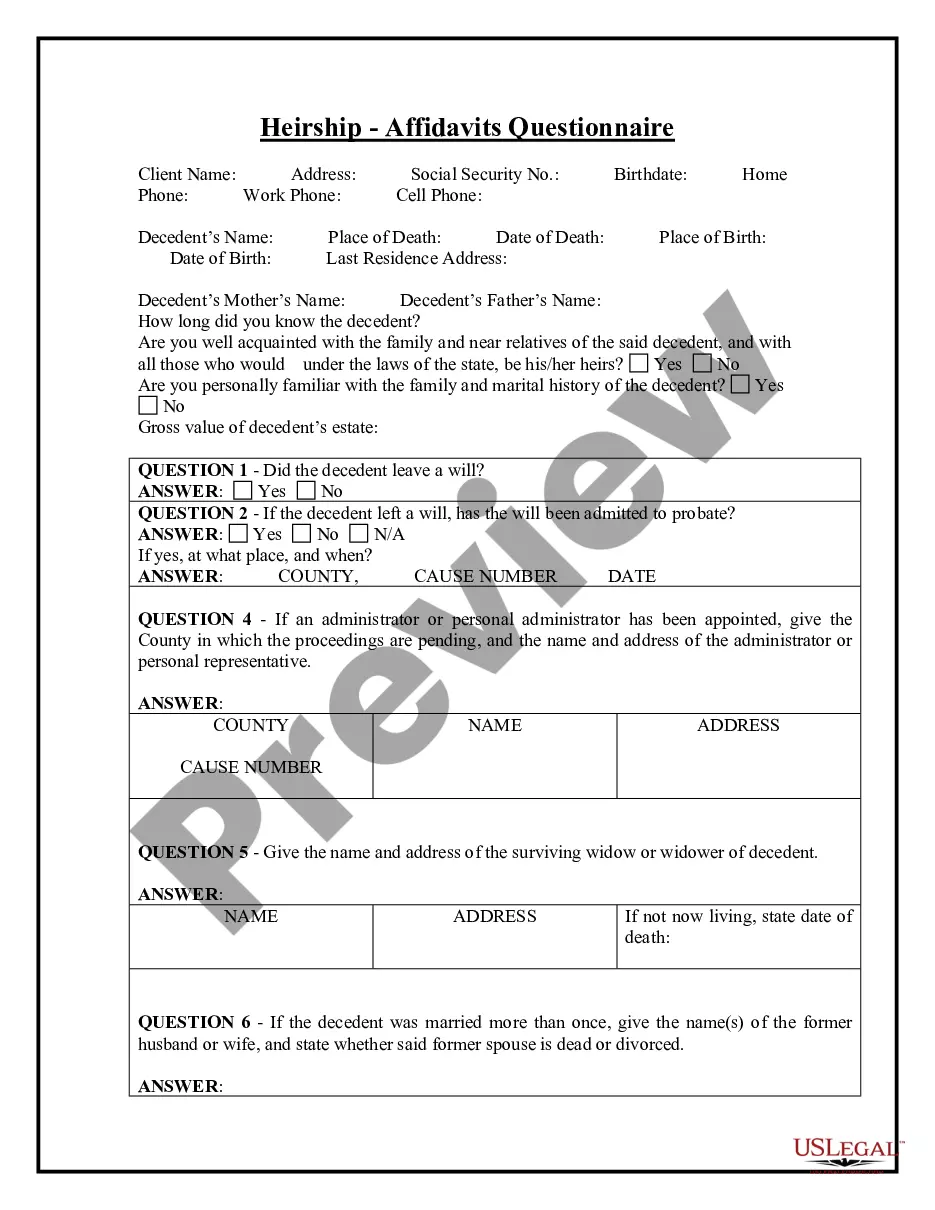
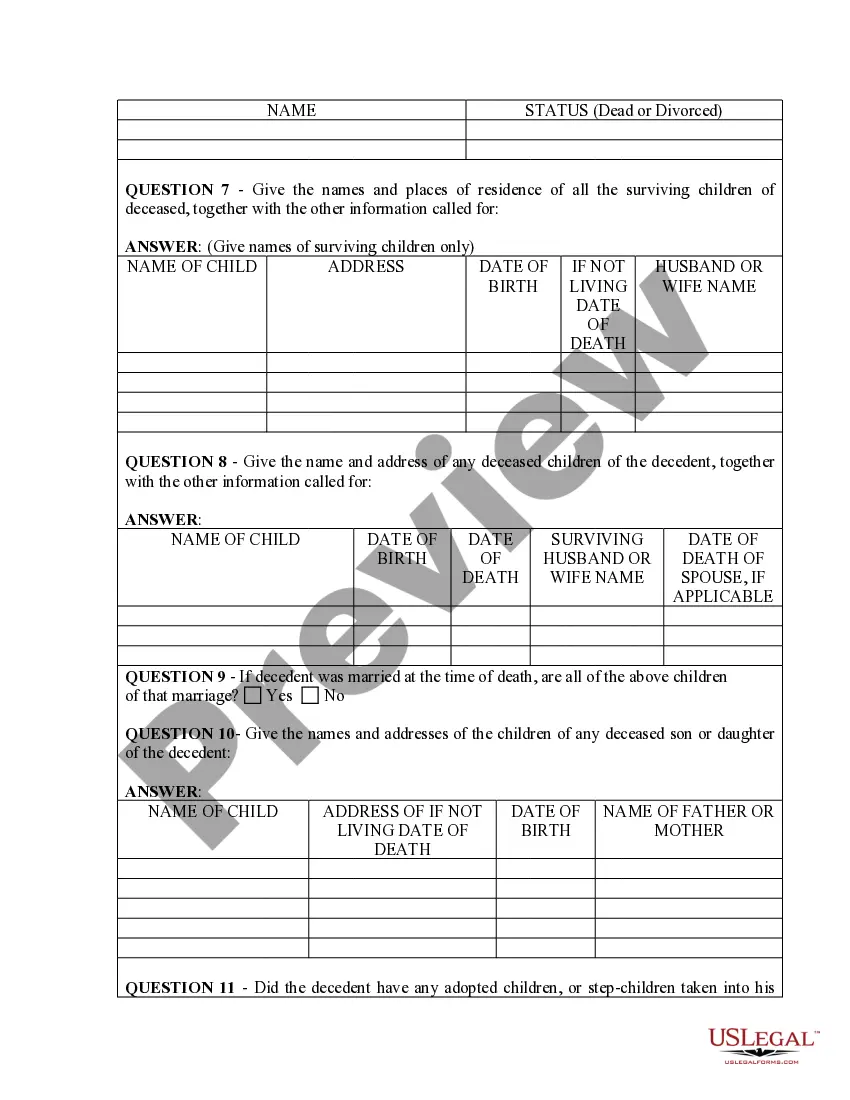
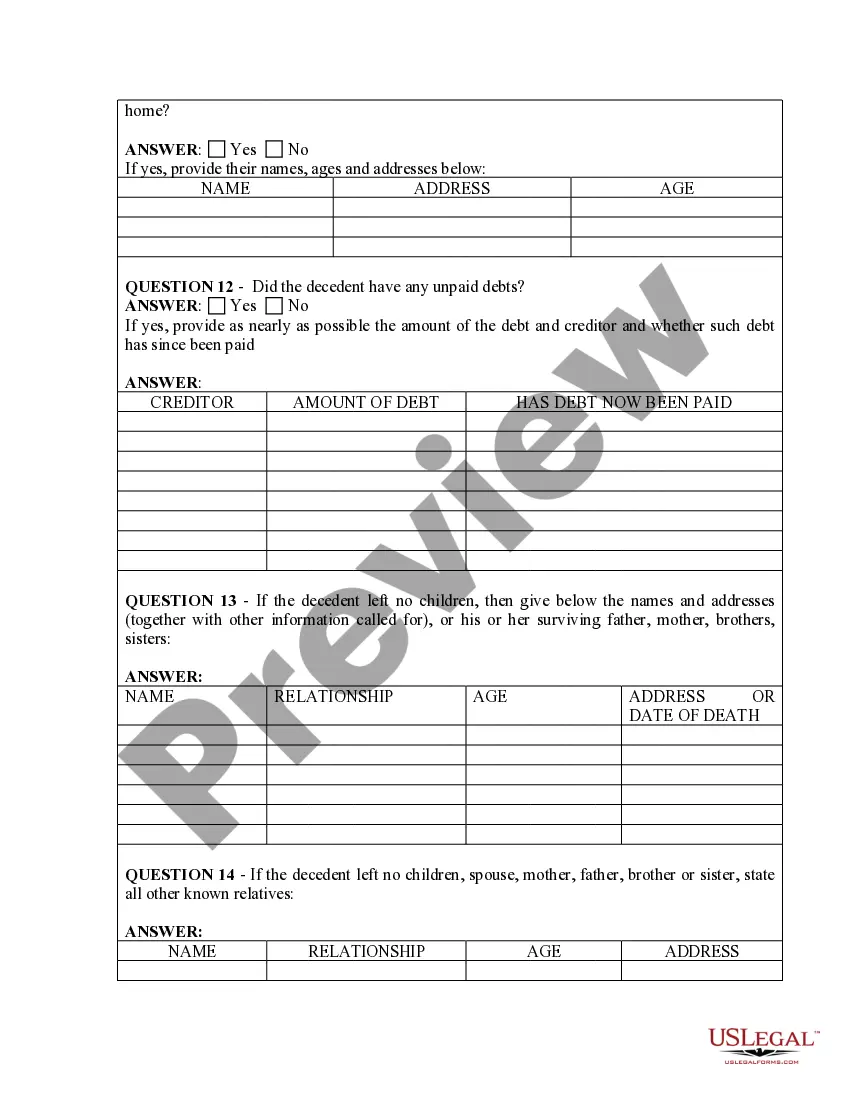
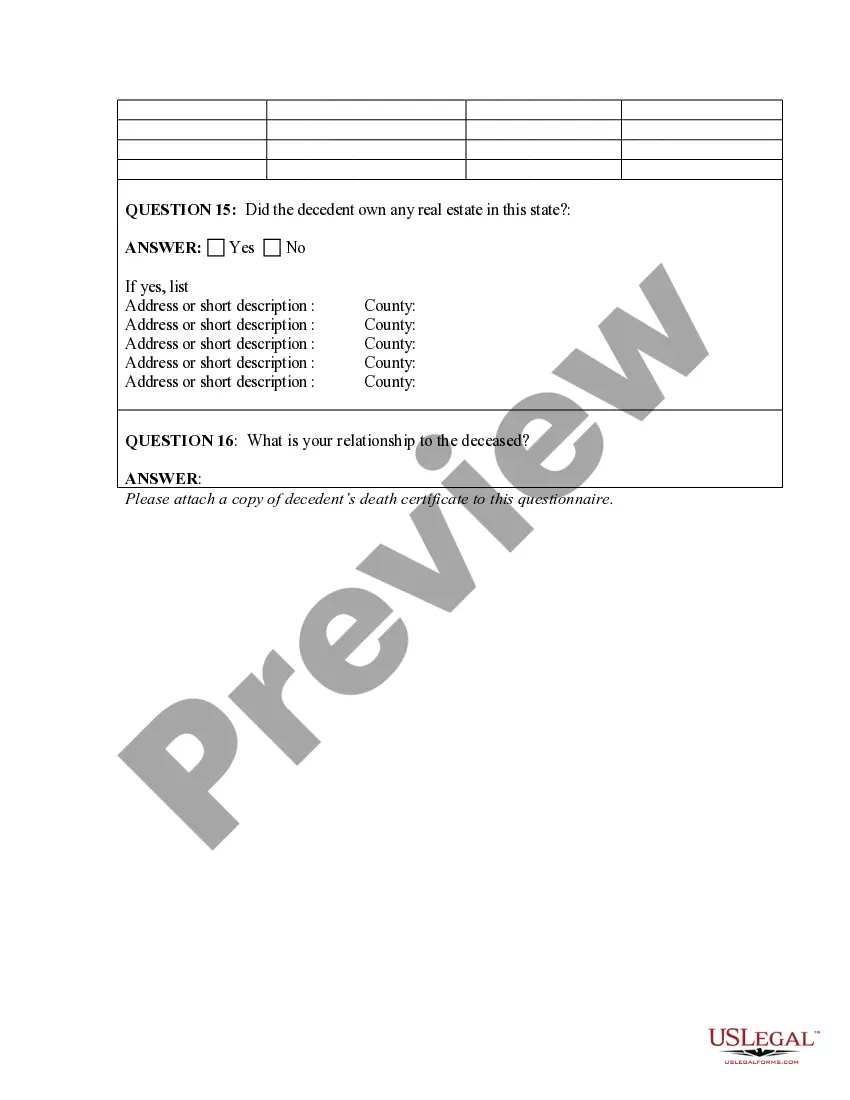
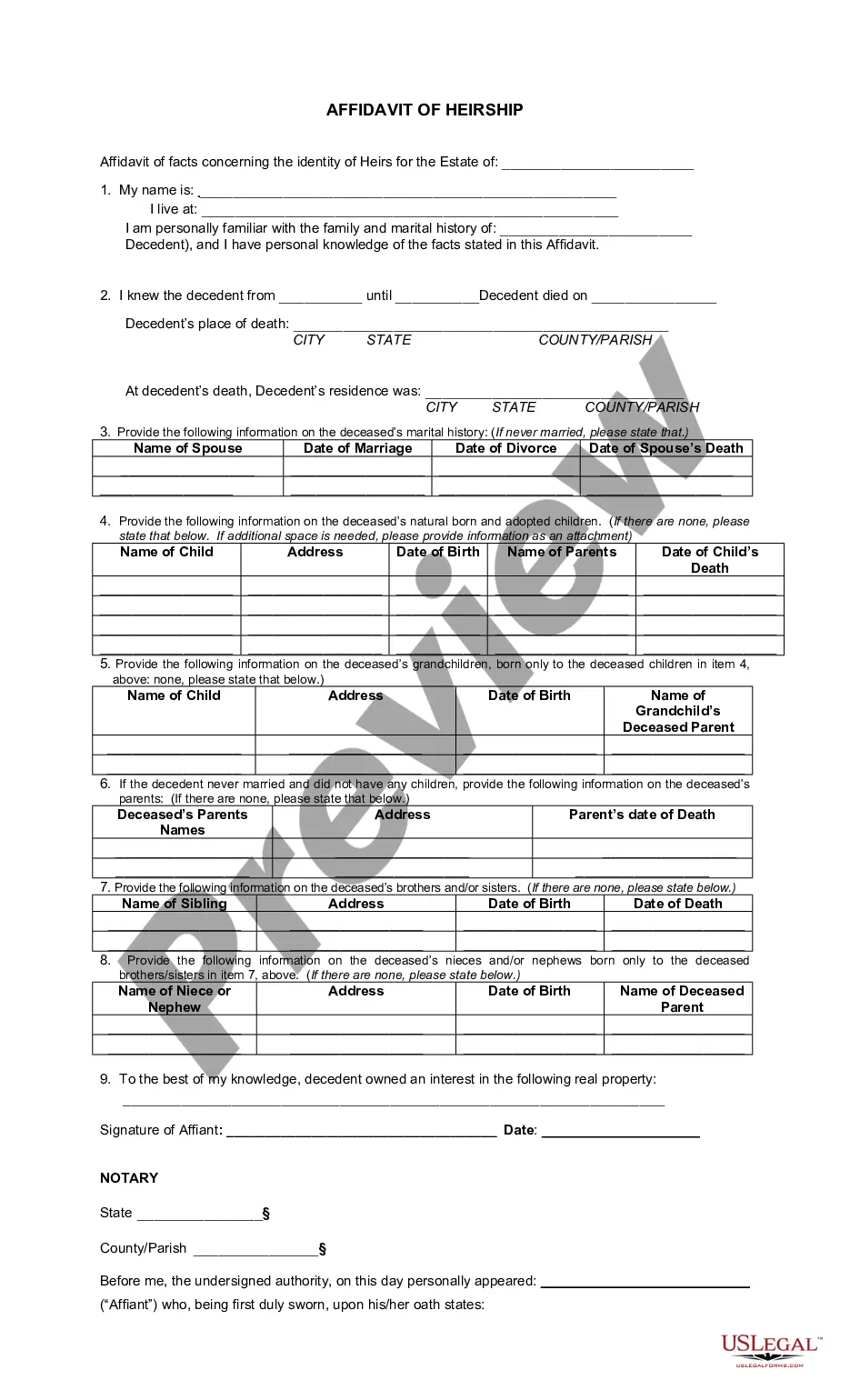
The Heirship or Descent Affidavit Questionnaire is a legal document designed to assist individuals in identifying crucial issues related to heirship matters. This questionnaire helps gather pertinent information, making it easier for attorneys to evaluate cases effectively. Unlike other legal forms that may pertain to wills or trusts, this questionnaire focuses specifically on establishing the rightful heirs of a deceased person's estate.
Form components explained
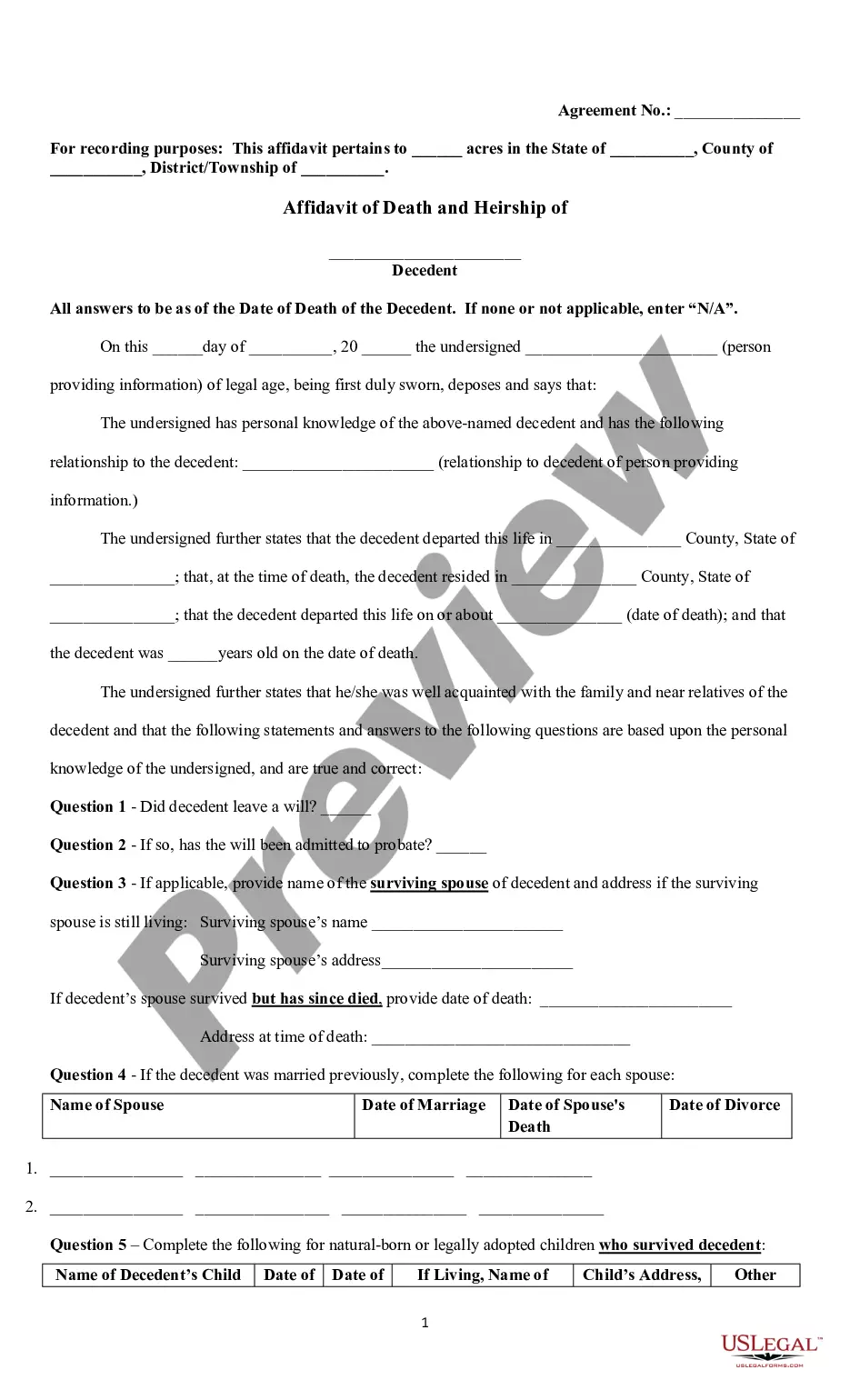
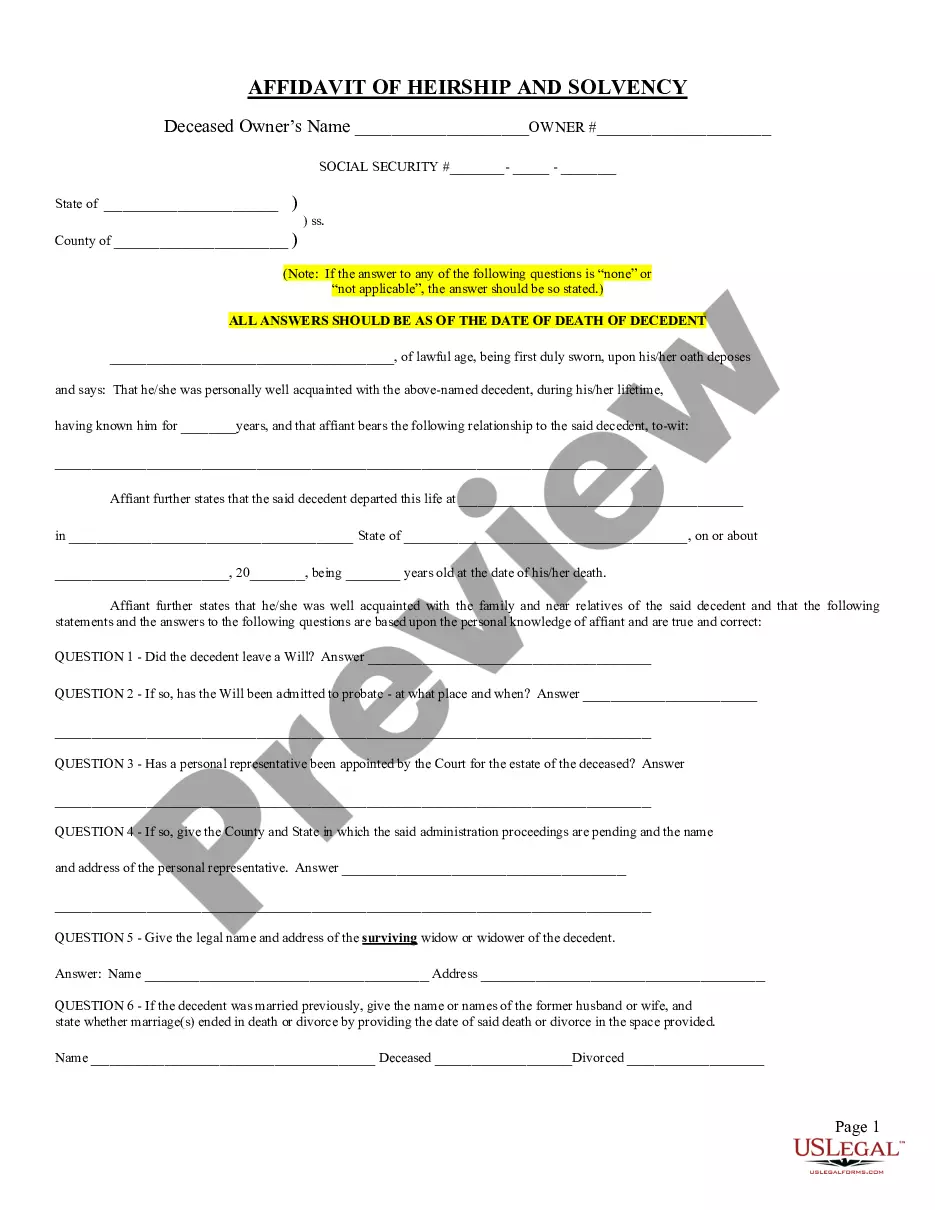
- Questions regarding whether the decedent left a will.
- Inquiries about the probate status of the will.
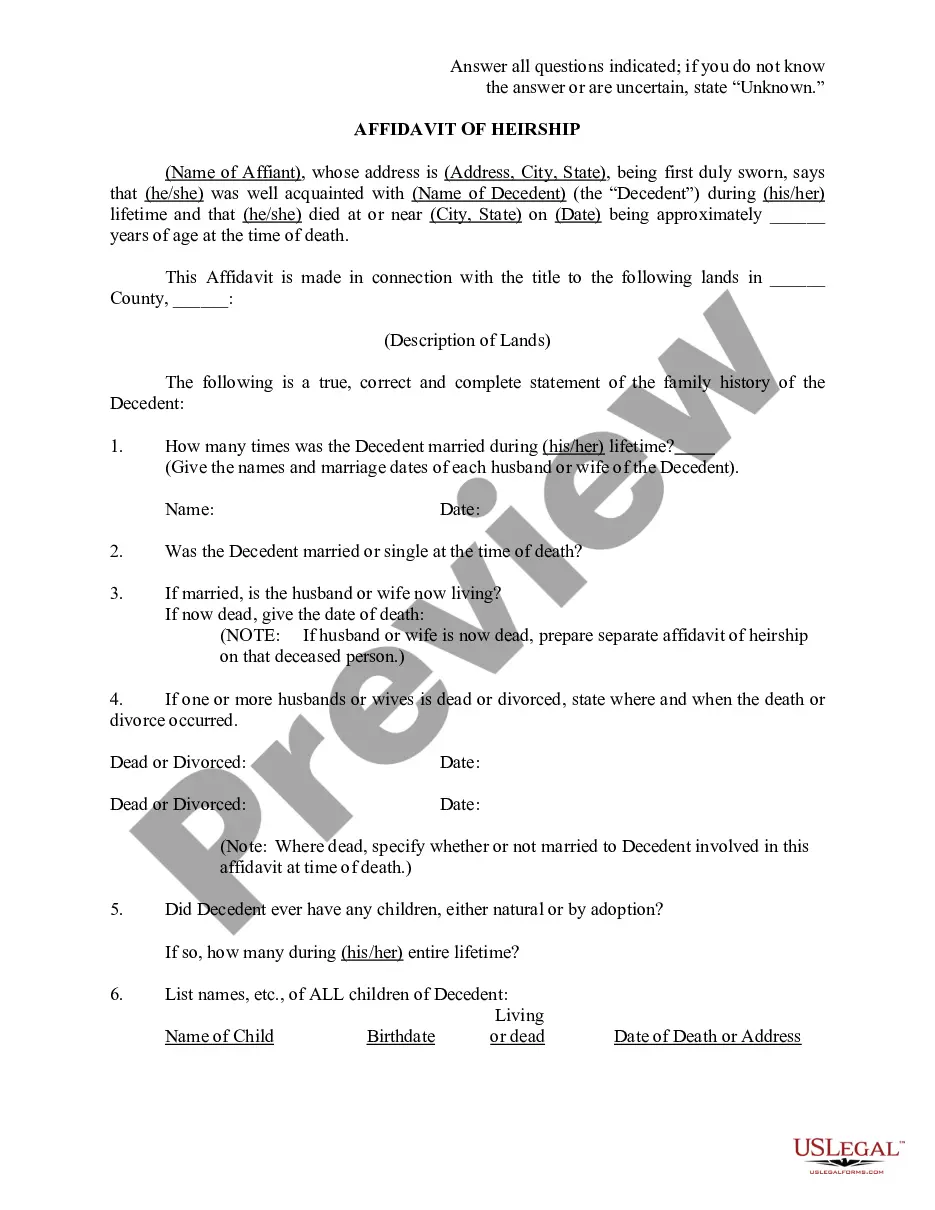
- Identification of potential heirs and their relationships to the decedent.
- Information on previous estate planning documents, if any.
- Space to provide supporting details that may affect heirship claims.
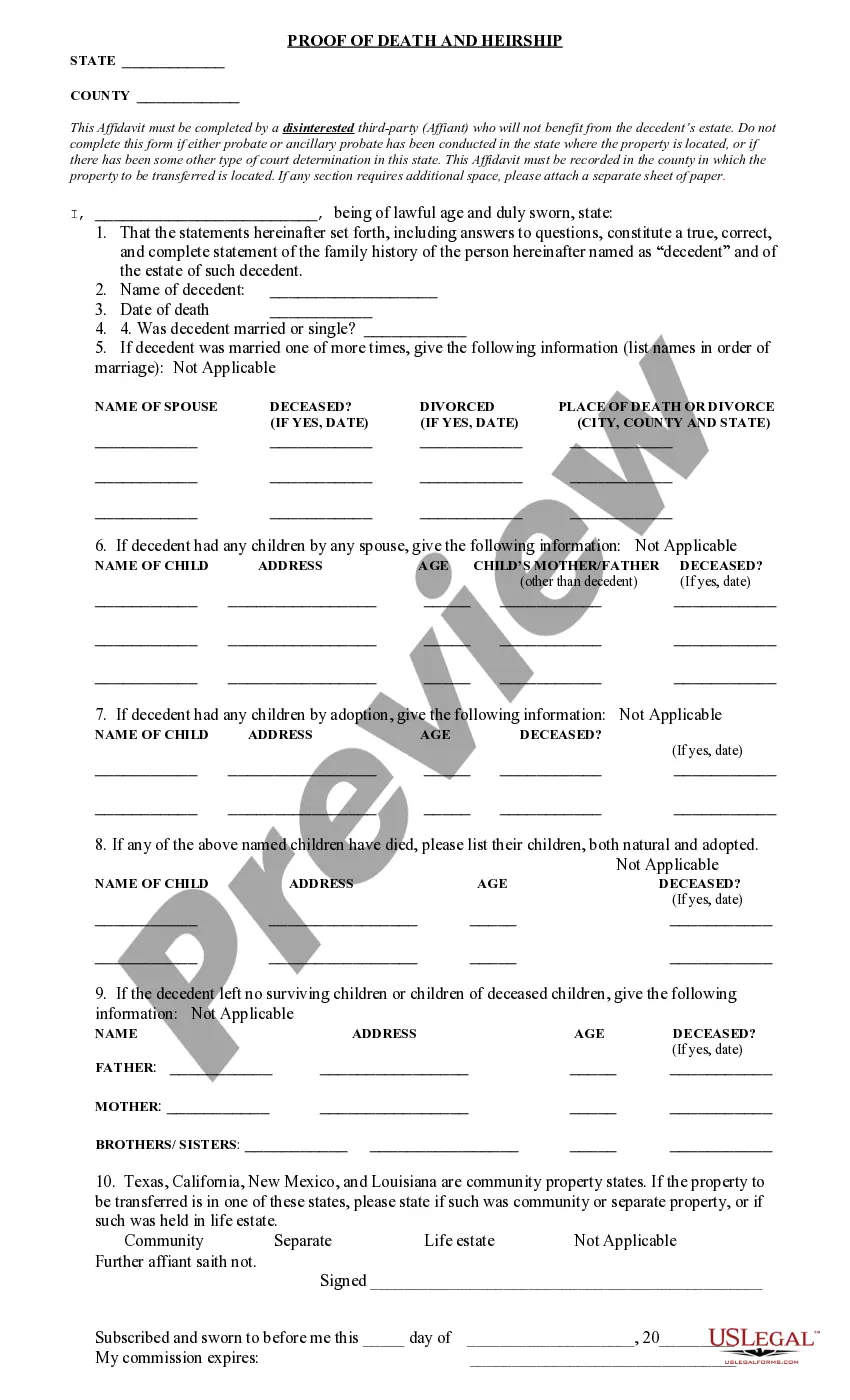
When this form is needed
This form is essential when dealing with an estate where the legal heirs need to be identified. It is particularly useful in situations where a decedent has passed away without clear documentation regarding their heirs or if disputes arise among potential heirs. Completing this questionnaire before meeting with an attorney can significantly streamline the legal process.
Who can use this document
Individuals or families who may need to determine the rightful heirs of a deceased person's estate should use this form. Additionally, attorneys can utilize it to gather necessary information from new clients regarding heirship matters.
- Individuals seeking to claim inheritance rights.
- Families dealing with disputes over heirship.
- Attorneys working with clients on estate planning or probate cases.
How to prepare this document
- Identify the decedent's full name and date of death.
- Answer questions about the existence of a will and its probate status.
- List all potential heirs along with their relationship to the decedent.
- Provide any additional relevant information regarding the estate or previous estate planning documents.
- Review the completed questionnaire for accuracy before submitting it to an attorney.
Notarization guidance
Notarization is generally not required for this form. However, certain states or situations might demand it. You can complete notarization online through US Legal Forms, powered by Notarize, using a verified video call available anytime.
Get your form ready online
Our built-in tools help you complete, sign, share, and store your documents in one place.
Make edits, fill in missing information, and update formatting in US Legal Forms—just like you would in MS Word.
Download a copy, print it, send it by email, or mail it via USPS—whatever works best for your next step.
Sign and collect signatures with our SignNow integration. Send to multiple recipients, set reminders, and more. Go Premium to unlock E-Sign.
If this form requires notarization, complete it online through a secure video call—no need to meet a notary in person or wait for an appointment.
We protect your documents and personal data by following strict security and privacy standards.

Make edits, fill in missing information, and update formatting in US Legal Forms—just like you would in MS Word.

Download a copy, print it, send it by email, or mail it via USPS—whatever works best for your next step.

Sign and collect signatures with our SignNow integration. Send to multiple recipients, set reminders, and more. Go Premium to unlock E-Sign.

If this form requires notarization, complete it online through a secure video call—no need to meet a notary in person or wait for an appointment.

We protect your documents and personal data by following strict security and privacy standards.
Mistakes to watch out for
- Failing to answer all sections of the questionnaire.
- Not providing adequate details about relationships to the decedent.
- Overlooking the need to clarify the status of any existing wills.
Benefits of using this form online
- Convenience of accessing and completing the form at any time.
- Ability to save and edit responses before final submission.
- Access to a reliable legal format prepared by licensed attorneys.
Quick recap
- The Heirship or Descent Affidavit Questionnaire helps identify legal heirs efficiently.
- This form is critical for both individuals and attorneys in heirship matters.
- Completing this questionnaire can potentially save time and legal fees when working with an attorney.
Looking for another form?






Form popularity
FAQ
An affidavit of heirship should be signed by two disinterested witnesses. To qualify as a disinterested witness, one must be knowledgeable about the deceased and his or her family history, but cannot benefit financially from the estate.
1. This form should be completed by someone other than an Heir. This person should be someone who is familiar with the family history of the deceased (decedent), and who will obtain no benefit from the Estate. The person who fills out the form is referred to as the AFFIANT.
Find the most recent deed to the property. It is helpful to begin by locating the most recent deed to the property (the deed that transferred the property to the current grantor). Create the new deed. Sign and notarize the deed. File the deed in the county land records.
An affidavit of heirship must be filed with the real property records in the county where the land is located. Call the county clerk and ask how much their filing fees are. The filing fees vary from county to county.
Affidavit must be filed by the new owner with the assessor for the city or township where the property is located within 45 days of the transfer.
In accordance with Michigan State Law, a Property Transfer Affidavit must be filed with the local assessor's office whenever real estate or some types of personal property transfer ownership (a transfer of ownership is generally defined as: a conveyance of title to, or present interest in, a property, including
The transfer by affidavit process can be used to close a person's estate when the deceased has $50,000 or less in assets subject to administration in Wisconsin. It is an alternative to using a court process for smaller estates.
An affidavit of heirship must be filed with the real property records in the county where the land is located. Call the county clerk and ask how much their filing fees are. The filing fees vary from county to county.
Step 1 At the top, write in the name of the decedent. Step 2 Under Section 1, write in the date of birth, the date of death, the residential address of decedent. Step 3 In Section 2, check the box that describes you as the person filling out the affidavit.