Termination of Contract on premises
What this document covers
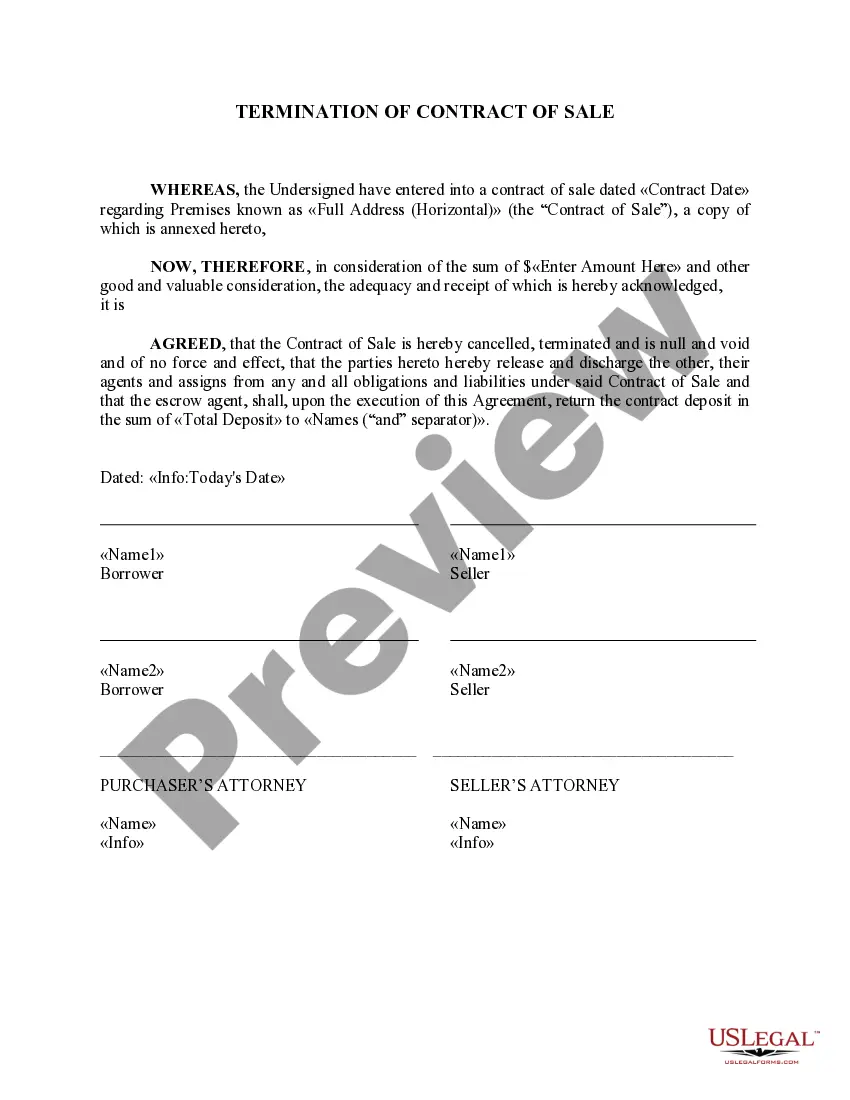
The Termination of Contract on premises form is a legal document that provides a formal notice of cancellation for a real estate sales contract. This form serves to notify all parties involved that the agreement is null and void, releasing each party from any obligations or liabilities. This form specifically addresses the return of the contract deposit, ensuring that the relevant parties receive their funds while acknowledging the termination of the sale of property.
What’s included in this form
- Date of the original contract.
- Full address of the property involved.
- The amount of consideration acknowledged for cancellation.
- Names of the parties involved in the agreement.
- Signature lines for both parties and their attorneys.


Common use cases
This form is used when parties to a real estate contract decide to terminate the agreement prior to closing. Situations may arise where buyers or sellers wish to cancel the contract due to changes in circumstances, such as financial difficulties, disagreements over property condition, or the discovery of other issues that could affect the sale. It ensures a clear understanding that the contract is canceled and helps facilitate the return of any deposits made.
Intended users of this form
This form is intended for:
- Property buyers and sellers who need to terminate a sales contract.
- Real estate agents facilitating the termination process.
- Attorneys representing parties in real estate transactions.
How to complete this form
- Identify the original parties involved in the contract.
- Fill in the date of the original real estate contract.
- Clearly specify the property address and legal description.
- Determine and enter the amount to be acknowledged for the cancellation.
- Ensure all parties sign and date the form, including their attorneys if applicable.
Does this document require notarization?
This form does not typically require notarization unless specified by local law. However, it's advisable to confirm this based on your jurisdiction to ensure compliance with any additional legal standards.
Get your form ready online
Our built-in tools help you complete, sign, share, and store your documents in one place.
Make edits, fill in missing information, and update formatting in US Legal Forms—just like you would in MS Word.
Download a copy, print it, send it by email, or mail it via USPS—whatever works best for your next step.
Sign and collect signatures with our SignNow integration. Send to multiple recipients, set reminders, and more. Go Premium to unlock E-Sign.
If this form requires notarization, complete it online through a secure video call—no need to meet a notary in person or wait for an appointment.
We protect your documents and personal data by following strict security and privacy standards.

Make edits, fill in missing information, and update formatting in US Legal Forms—just like you would in MS Word.

Download a copy, print it, send it by email, or mail it via USPS—whatever works best for your next step.

Sign and collect signatures with our SignNow integration. Send to multiple recipients, set reminders, and more. Go Premium to unlock E-Sign.

If this form requires notarization, complete it online through a secure video call—no need to meet a notary in person or wait for an appointment.

We protect your documents and personal data by following strict security and privacy standards.
Avoid these common issues
- Failing to include the full address of the property.
- Omitting signatures from all necessary parties.
- Not specifying the correct amount for the return deposit.
- Using outdated versions of the form that may not comply with current laws.
Why use this form online
- Convenient access to professionally drafted legal documents.
- Easy to download and complete at your own pace.
- Reliable resources and templates designed by licensed attorneys.
Looking for another form?
Form popularity
FAQ
In other words, if the employment contract stipulates that the employee must give 2 months notice for termination of the contract, then the employer must also give the employee 2 months notice if the employer wishes to terminate the contract or dismisses the employee.
You need to make sure to: Give appropriate notice: Your contract will most likely require you to provide 30 to 90 days notice to be able to terminate the contract. If you do not request termination within the given timeframe, there is a chance you can be charged with a breach of contract.
Termination of contract for breach. Termination of contract by performance. Termination of contract by agreement. Termination of contract by frustration or force majeure.
Under the Indian Contract Act of 1872, parties to a contract may terminate it for valid reasons such as frustration, repudiatory breach, termination by prior agreement, rescission, or completion. This termination may occur by mutual agreement or by operation of law.
In summary, any party is entitled to terminate a contract, even if their contract does not have a termination clause. But reasonable notice must be given, and if there is a dispute, the reasonableness of that notice will be the subject of court review.
Discharge by agreement Release. Where one party has fully performed their obligations under a contract but the other party has some obligations outstanding, the contract may be discharged at any time before breach by release by deed.Rescission by agreement.Contractual termination.Variation.Waiver.Financial difficulty.